Newly crowned world's richest man Elon Musk has another bold declaration!
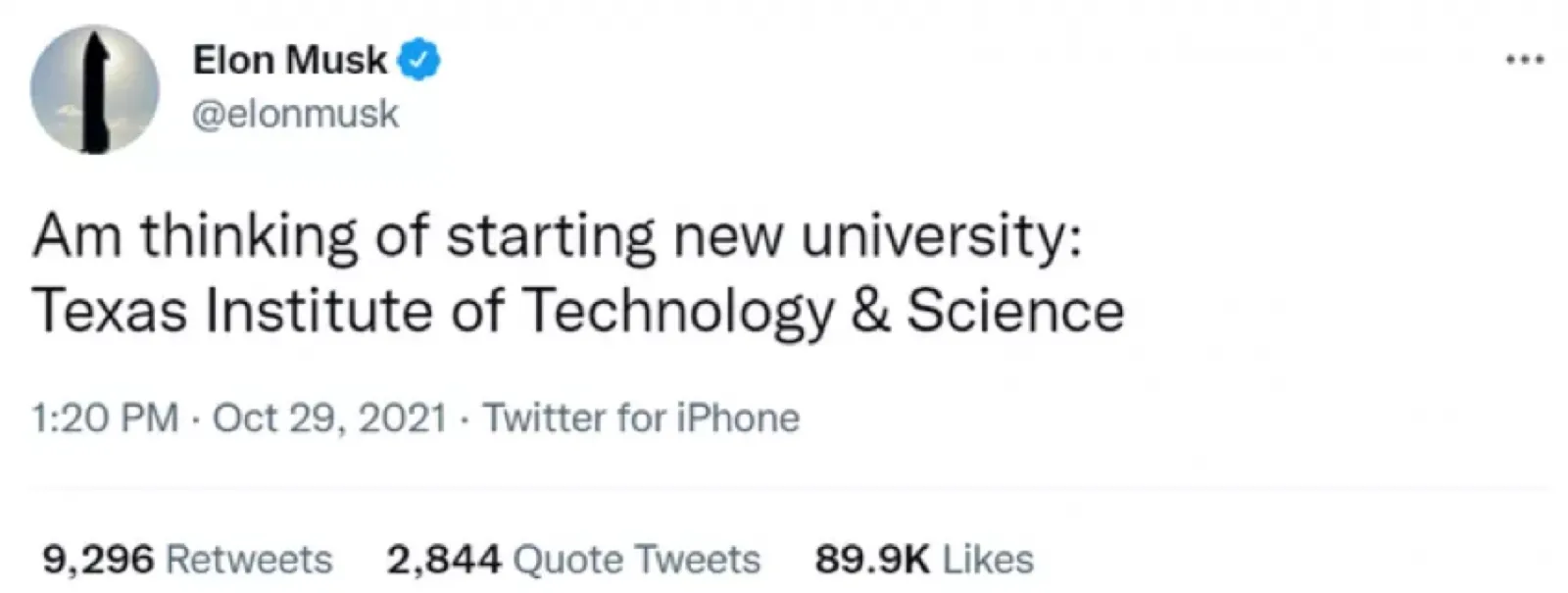
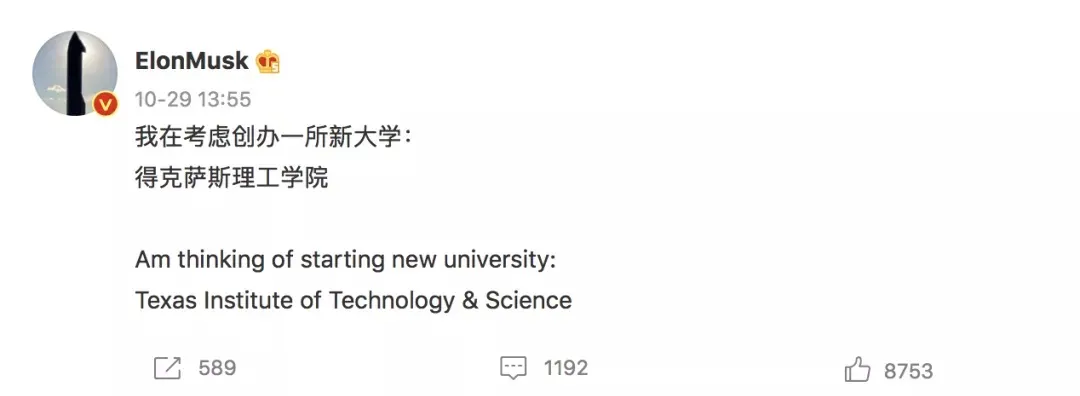
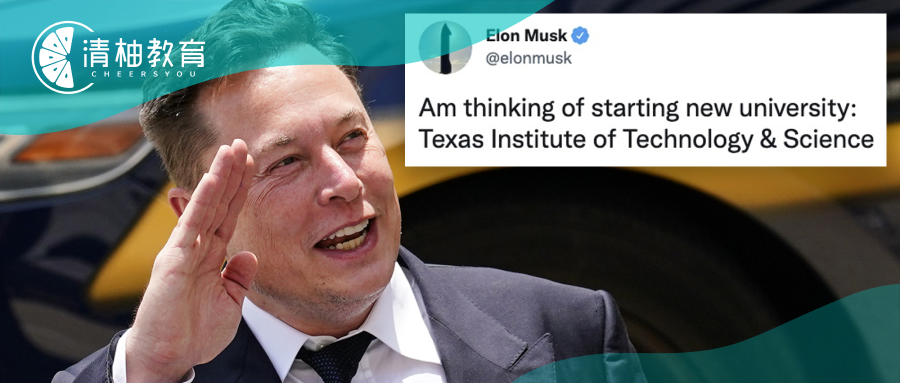
In late October, Tesla and SpaceX CEO Elon Musk tweeted that he is "considering starting a university in Texas, and plans to name it Texas Institute of Technology & Science."
The news immediately drew widespread attention online, with netizens pushing the school's abbreviation T.I.T.S straight onto trending lists.
The Idea of Founding a University Is No Whim
- You think this is just a whim of the world's richest man?
- That would be naive!
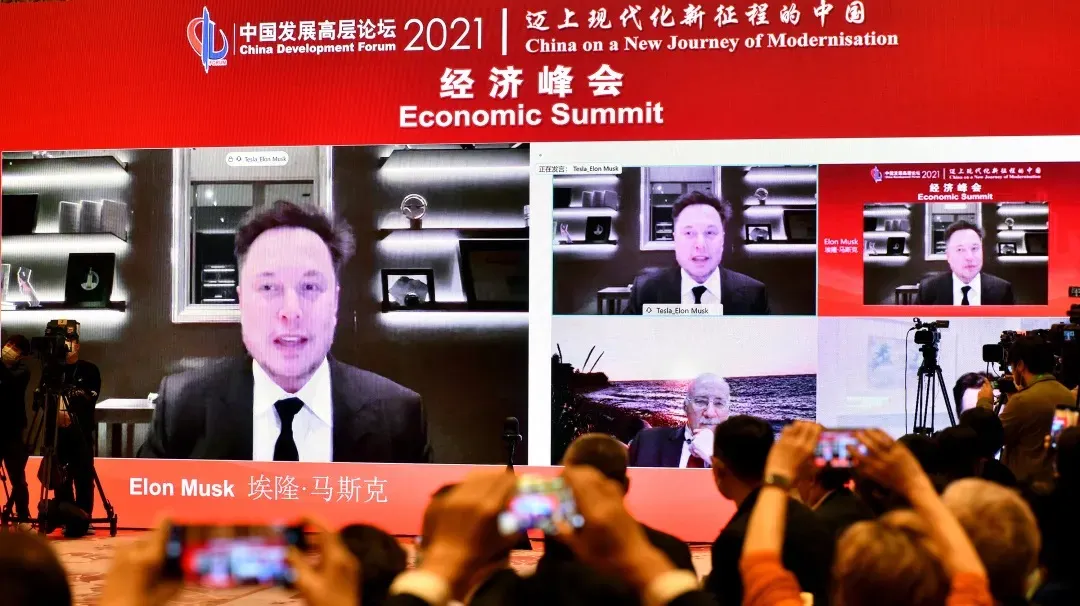
Back in March, at the China Development Forum's 'Next Disruptive Innovation' plenary session, Musk already stated that there is a severe shortage of programming talent in the robotics field within the tech industry, and he is very eager to start university education in that area.
Actually, this isn't Musk's first foray into education. In 2014, Musk had already established a mysterious high school that only admits genius teenagers—Ad Astra—on the SpaceX campus in California.
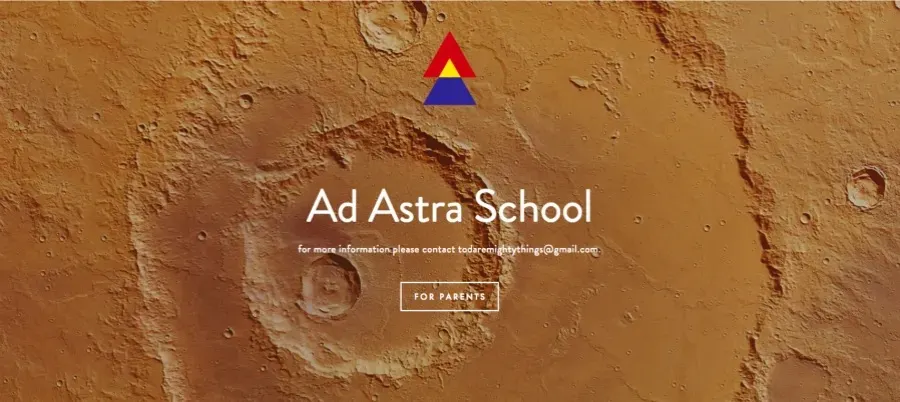
The school rejects traditional education, focusing on developing students' abilities in computer science, mathematics, engineering, and similar subjects, while eliminating irrelevant courses like foreign languages and music.
Musk believes that in the future, AI will be able to translate foreign languages directly, making language courses largely meaningless. That idea sounds quite high-minded!
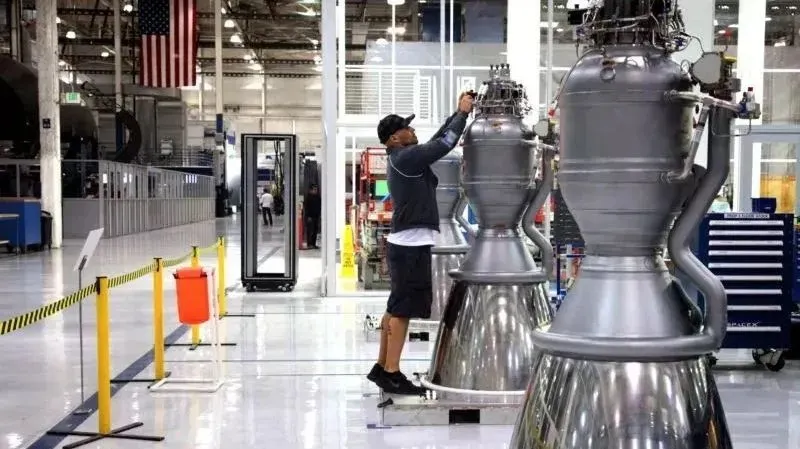
Moreover, during the COVID-19 pandemic last year, Musk didn't slow down, continuously expanding his influence in Texas, as if aiming to become the 'King of the West' in the Lone Star State. He not only moved his residence to Texas but also relocated Tesla's headquarters to the Austin area.
These moves reveal Musk's ambition. Texas's biggest advantage is no personal income tax, relatively low living costs, strong universities, and events like the famous tech festival South by Southwest. Following Oracle and HP's relocation to Texas, Apple also invested $1 billion to build a campus in Austin, Texas.
Texas, like a rising star, is attracting a large number of tech companies and talent, its future potential clearly evident.
College Is Just for Fun
Musk's attitude toward traditional universities has always been ambiguous. He has repeatedly mocked his own college experience on public platforms and even stated that there is absolutely no college degree requirement when applying to Tesla.
Last year, Musk said multiple times: 'College is just for fun,' and 'Although we need some evidence to prove we are outstanding, going to college doesn't really prove how exceptional a person is.'
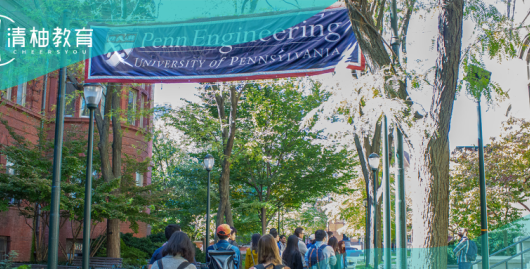
However, one shouldn't take Musk's words at face value—he himself is an academic standout from a prestigious school, transferring with a scholarship to the Wharton School of the University of Pennsylvania to study economics.
During college, Musk began delving into three fields that influence humanity's future: the internet, clean energy, and space. After earning his bachelor's in economics, he stayed another year to obtain a dual degree in physics.
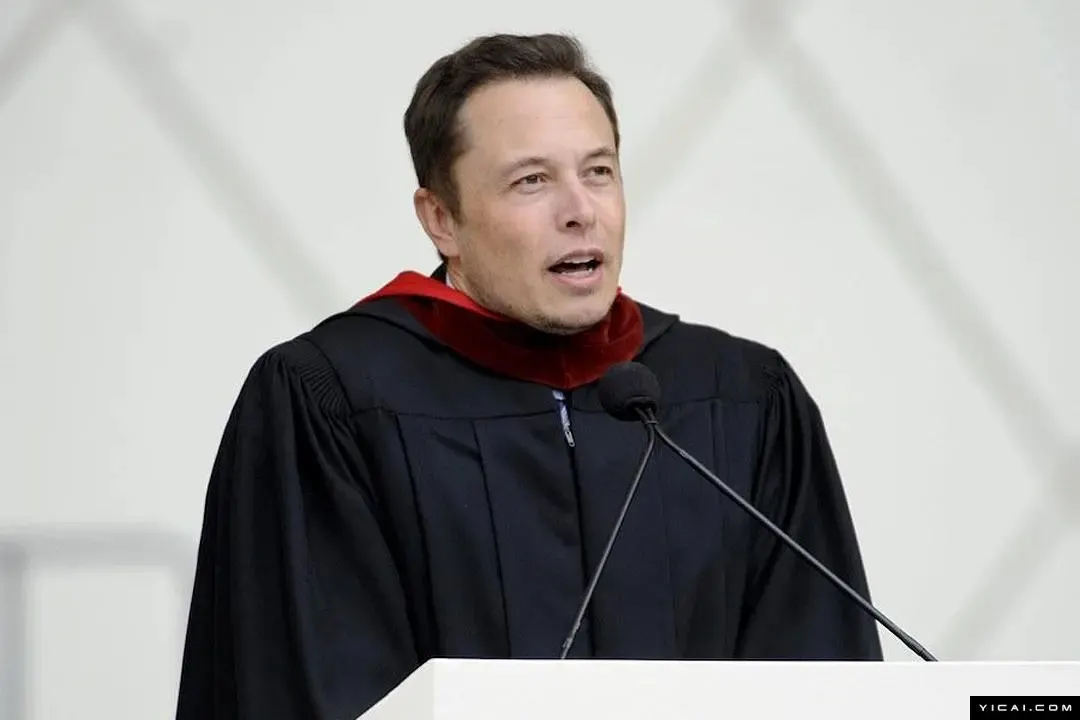
At Stanford University, 24-year-old Musk enrolled in a PhD program in materials science and applied physics. However, the day after he started, he decided to leave and begin his own business.
He successfully applied physics knowledge to business, leading Tesla to spark an electrification revolution in the automotive industry and kickstarting humanity's commercial interstellar journey.
Future Prospects for Musk University
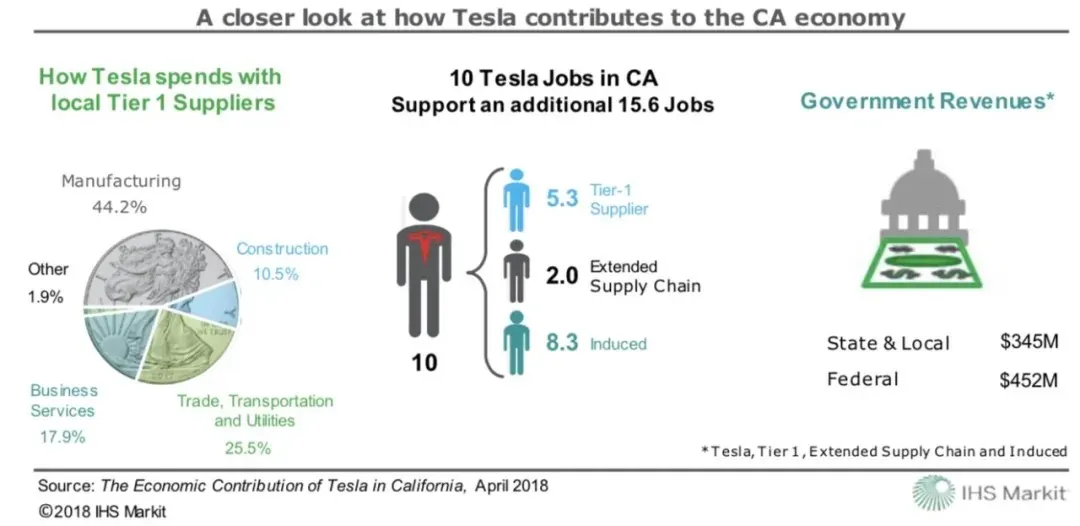
According to statistics, in 2017 alone, Tesla contributed over $5 billion (about 32 billion RMB) to California's economy, paying $328 million directly to state and local tax authorities. That same year, it provided more than 50,000 jobs in California.
Funding for the university is surely not a problem, and neither is its future ranking. Back when Santa Clara University, located in Silicon Valley and focused on STEM, leveraged its top-10 graduate salary ranking and excellent employment outcomes to debut in the U.S. News rankings at a strong top 60.
Once Musk's TITS is built, with its unique advantages in location, employment, etc., its ranking will surely not disappoint.
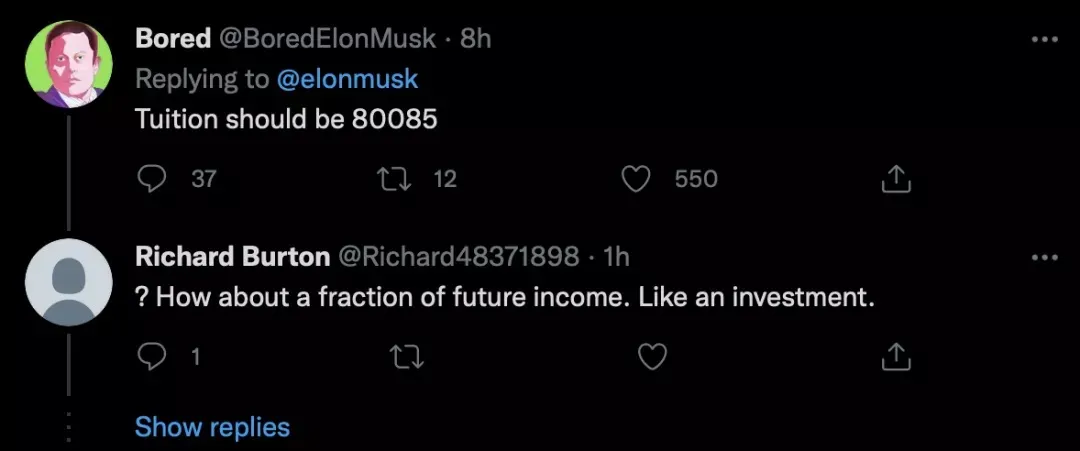
After the news broke, a netizen asked on Twitter what portion of their income the tuition would take.
Musk, using his alt account, gave a precise figure: $80,085, roughly 510,000 RMB. Compared to other universities, this tuition alone exceeds the total cost of attendance including housing, living expenses, etc. at other schools...
Additionally, Musk's main account also mentioned that tuition will be payable in Dogecoin, and if you have a dog, you can get a discount.
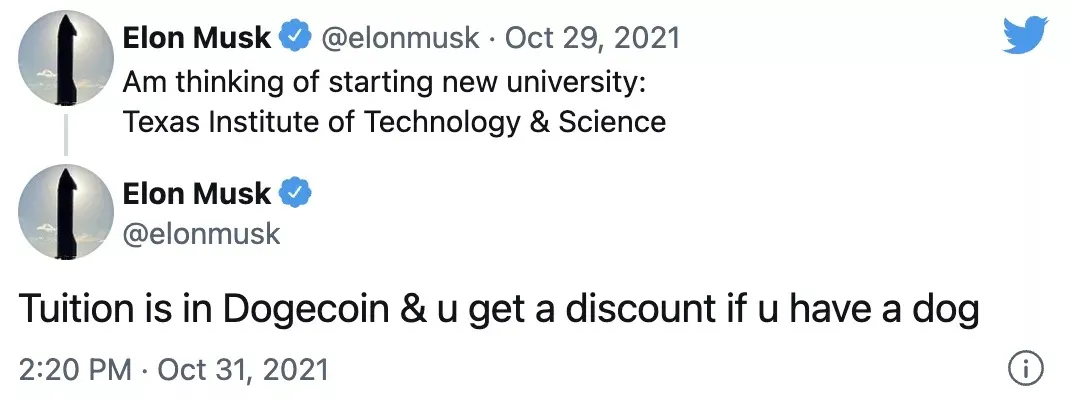
It seems that to attend Musk's university, you need not only the money but also the Dogecoin!
Rather Than Wait for the Unknown, Seize the Present
Of course, it's still unclear how serious the billionaire is about starting a university. Whether it becomes another MIT or fizzles out will be for the future to decide.
Rather than wait for the unknown, seize the present. CS has long been one of the top choices for international students, and many schools already have dedicated computer science departments offering popular programs in artificial intelligence, software engineering, etc., already covering many of the possibilities Musk's university promises.
Carnegie Mellon University
MS in Computer Science
CMU's computer science is renowned nationwide and considered a leader in the field. CMU has an independent School of Computer Science covering all specialties: artificial intelligence, software engineering, computer science, etc., with many programs far ahead of other top schools. CMU itself is very pragmatic, with the motto 'My heart is in the work.'
Stanford University
MS in Computer Science
Stanford holds a leading position in all areas of CS, both in the U.S. and globally. Its faculty includes over 40 members, among them several renowned Turing Award winners and leading figures in various fields. As an MSCS student, you can choose from nine predefined specializations for your studies.
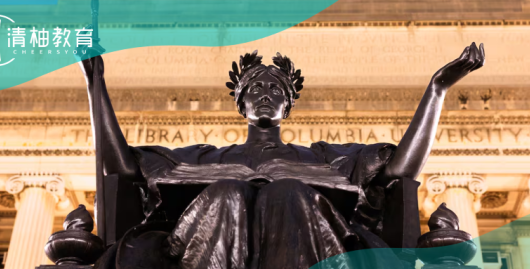
Columbia University
MS in Computer Science
Columbia's advantage lies in its basically top-tier scientific research equipment on the East Coast, such as robotics labs, natural language processing (NLP) labs, computer vision labs, etc. In these labs, you can see cutting-edge equipment like IBM robotic arms, 3D workstations, wearable computer prototypes.
Imperial College London
MSc Computing Science
Imperial's CS program is quite interesting. Besides Computing and Advanced Computing, it offers five specialized tracks for applicants, including: Artificial Intelligence, Artificial Intelligence and Machine Learning, Management and Finance, Security and Reliability, and Software Engineering, among others.
University College London
Computer Science MSc
UCL is a European leader in big data analytics, machine learning, and computational finance, with its programs fully accredited by the British Computer Society and the Institution of Engineering and Technology. Its CS master's is specifically designed for students without a computer science background, meeting industry demands while laying a solid foundation for academic research.
Despite the hair-pulling late nights coding, the abundant job opportunities and high salaries after graduation make CS-related majors highly desirable for countless international students every year.
The application process itself is an information competition and a journey of continuously improving cognitive ability and knowledge reserves. Students aiming to apply must plan early, prepare early, and seize the advantage—opportunities are reserved for those who are prepared, and well-prepared.