
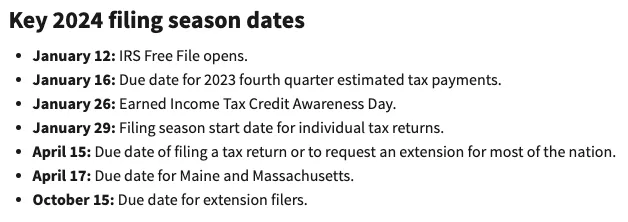
The IRS officially announced last week: The 2024 individual tax filing season begins on January 29, 2024!
Here are the key dates for the 2024 tax season:
When you start getting bombarded with TurboTax ads, you know tax season in the US is about to kick off in earnest.

Many students who just arrived in the US hear the word "tax filing" and think it has nothing to do with them and they can just ignore it.
That could not be more wrong!
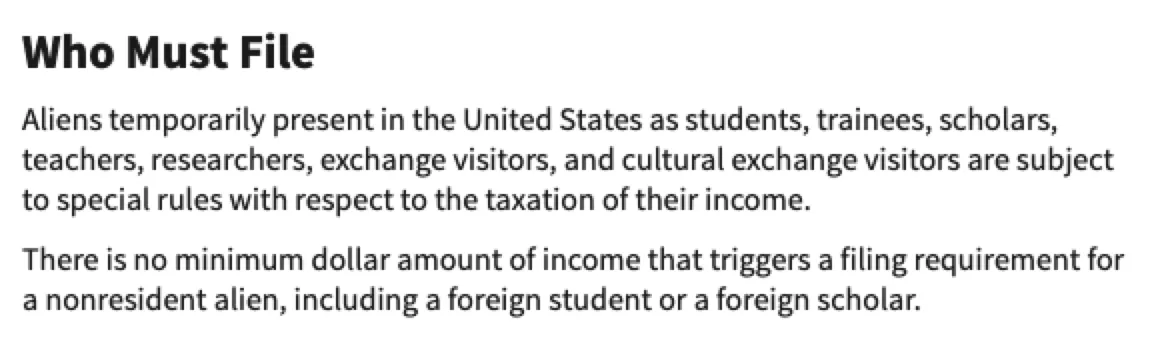
According to IRS regulations, any foreign student holding an F, J, or M visa, or any foreign scholar holding a J or Q visa, who is temporarily residing in the US must report their tax status to the IRS, regardless of their income level.

Different Tax Statuses for F-1 Students
Proactively filing your taxes in the US not only helps you maintain a good immigration record but also builds credit for your future development in the US.
As an international student, you will typically fall into one of these three tax statuses:
-
F-1 visa student with no income
-
F-1 visa student with lawful income (Non-Resident Alien for tax purposes)
-
F-1 visa student with lawful income (Resident Alien for tax purposes)
*If you are an F-1 visa holder studying in the US, you are generally considered a Non-Resident Alien if you have been in the US for 5 years or less. If you have been in the US for more than 5 years and are present in the US for at least 183 days during the sixth year, you may be treated as a Resident Alien starting from that sixth year.
Note: The terms "resident" and "non-resident" here are defined under US tax law and differ from immigration status definitions.
Tax Filing Tips for the Three Statuses
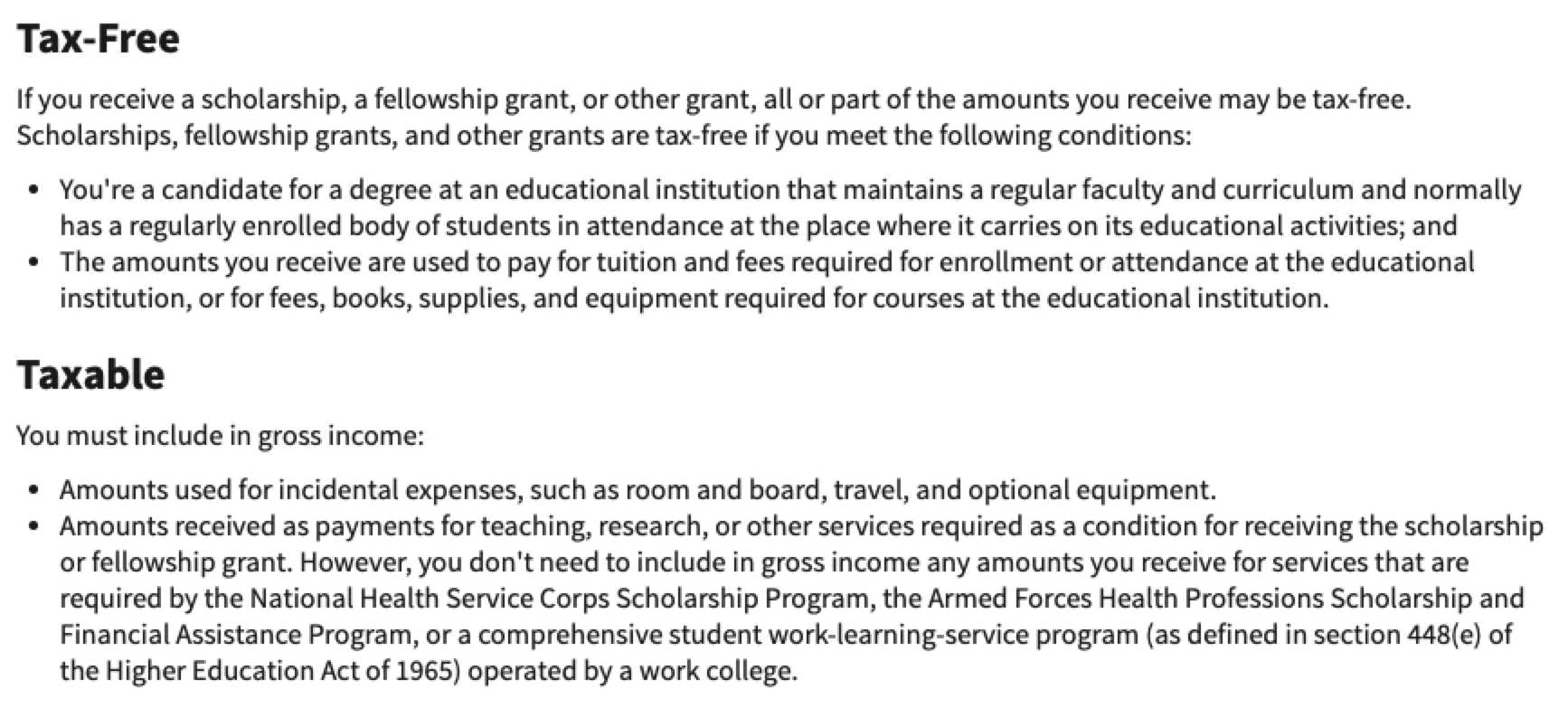
First, you need to understand: what types of income are taxable?
Income such as wages, scholarships, bank account sign-up bonus interest, stock investment gains, rental income—most of these are generally taxable.
Below are tax filing notes for F-1 students in different situations:
1 F-1 visa student with no income
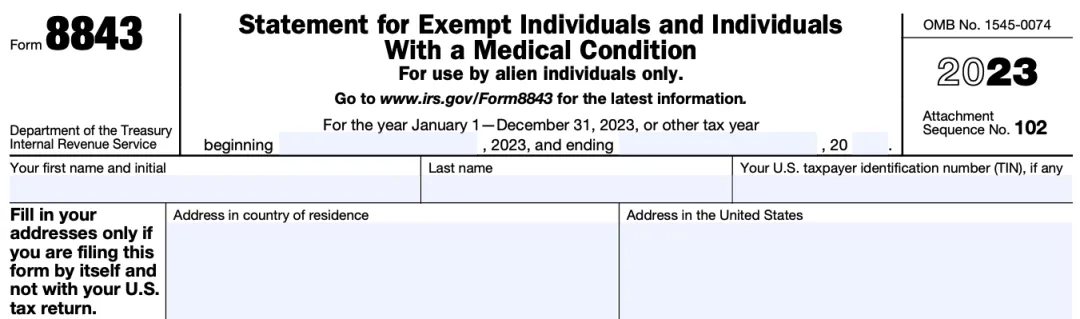
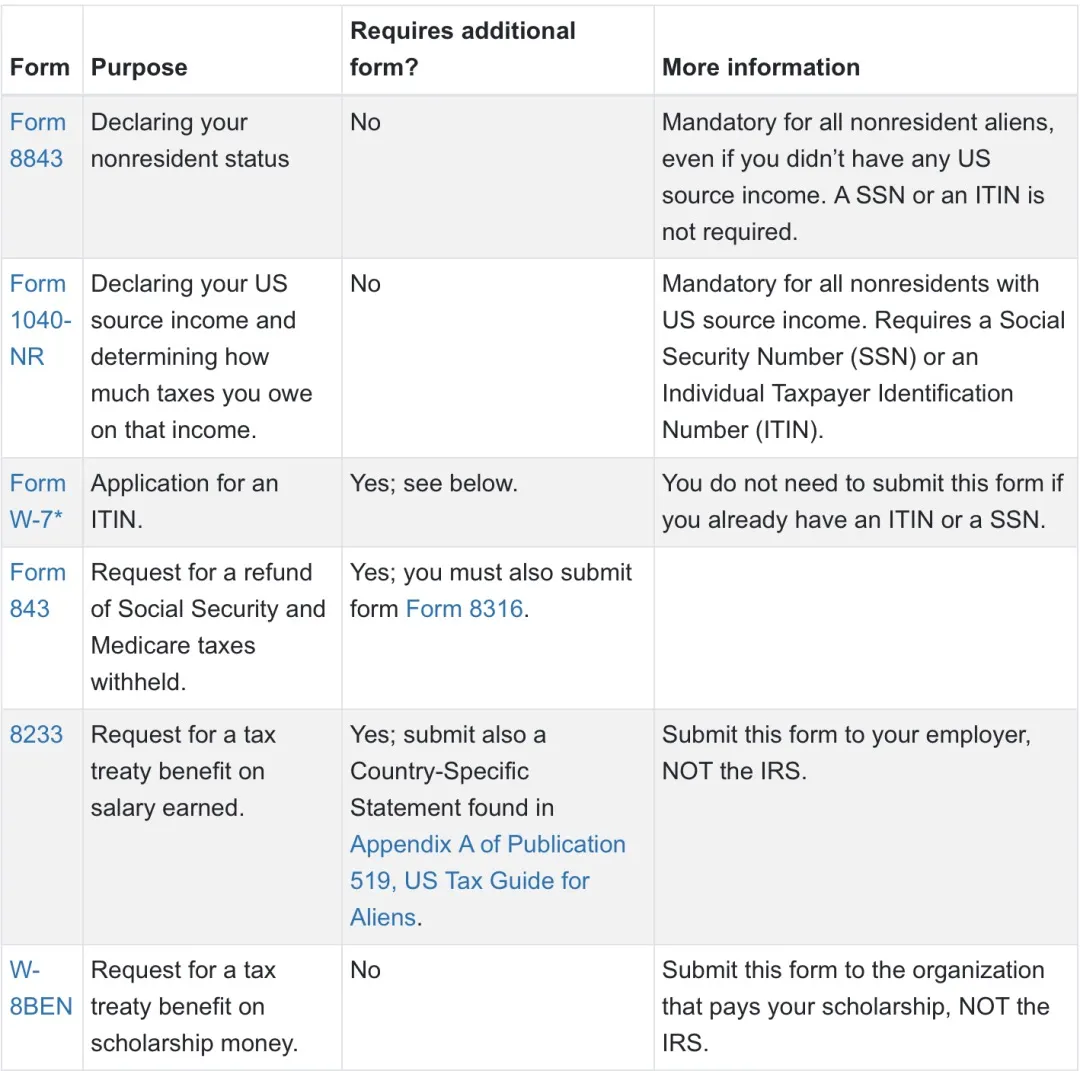
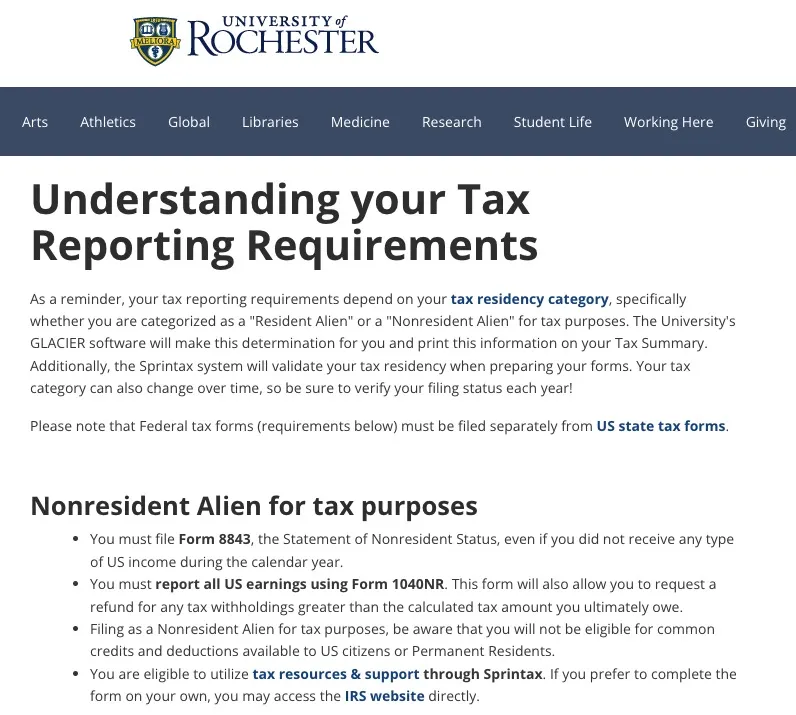
If you have no income at all, you simply need to file Form 8843. The full title of Form 8843 is: Statement for Exempt Individuals and Individuals with Medical Condition.
The purpose of this form is to inform the IRS that your status is that of a non-resident alien with no income. You do not need an SSN or ITIN to fill this out. Complete and print the form, sign it, and mail it using an approved shipping service such as UPS or FedEx, following the instructions on the form.
2 F-1 visa student with lawful income (Non-Resident Alien)
These students need to pay close attention to the filing process, as they have lawful income in the US and possess an SSN.
You will need the following forms:
- Form 8843
- Form 1040-NR / 1040-NR-EZ
- Other related forms
Additionally, you must gather documents such as your passport information, home address, I-94 arrival/departure record, I-20, income statements, and proof of health insurance.
3 F-1 visa student with lawful income (Resident Alien)
If you have been in the US for more than 5 years and meet the substantial presence test for the sixth year, your tax filing process is essentially the same as that of a US citizen.
This means all of your worldwide income may be subject to US tax laws.
Forms you will need:
- Form 1040-NR
- Form 8833 and other related forms
You will also need to prepare your passport information, home address, I-94 record, I-20, income documents, proof of health insurance, etc.
All the forms and information mentioned above can be found on the IRS official website, and most university websites have dedicated pages as well. If there are any changes or updates, always refer to the latest official guidance.
To avoid mistakes due to unfamiliarity with the process and language, we recommend that international students seek assistance from professionals or specialized agencies when filing their taxes.
.png)