Recently, U.S. News has been hit by another college rankings scandal, and the main character this time is Columbia University, the beloved dream school of many.
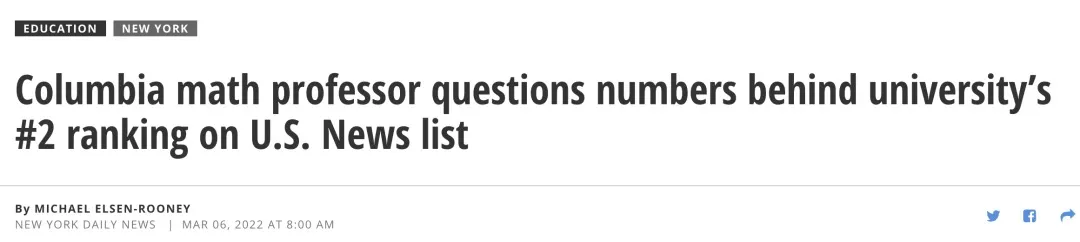

The revelation of this Columbia rankings scandal stems from a Columbia professor's act of whistleblowing against his own school...
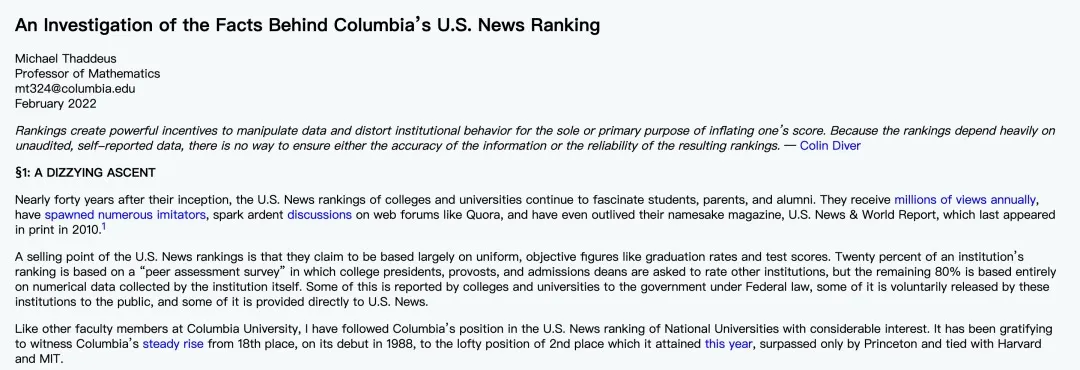
Columbia Professor Blows the Whistle on Rankings Fraud in a Detailed Report
Michael Thaddeus, a professor in the Mathematics Department at Columbia University, published a tens-of-thousands-word report a few weeks ago, accusing the Columbia administration of providing false data to U.S. News to boost its ranking.
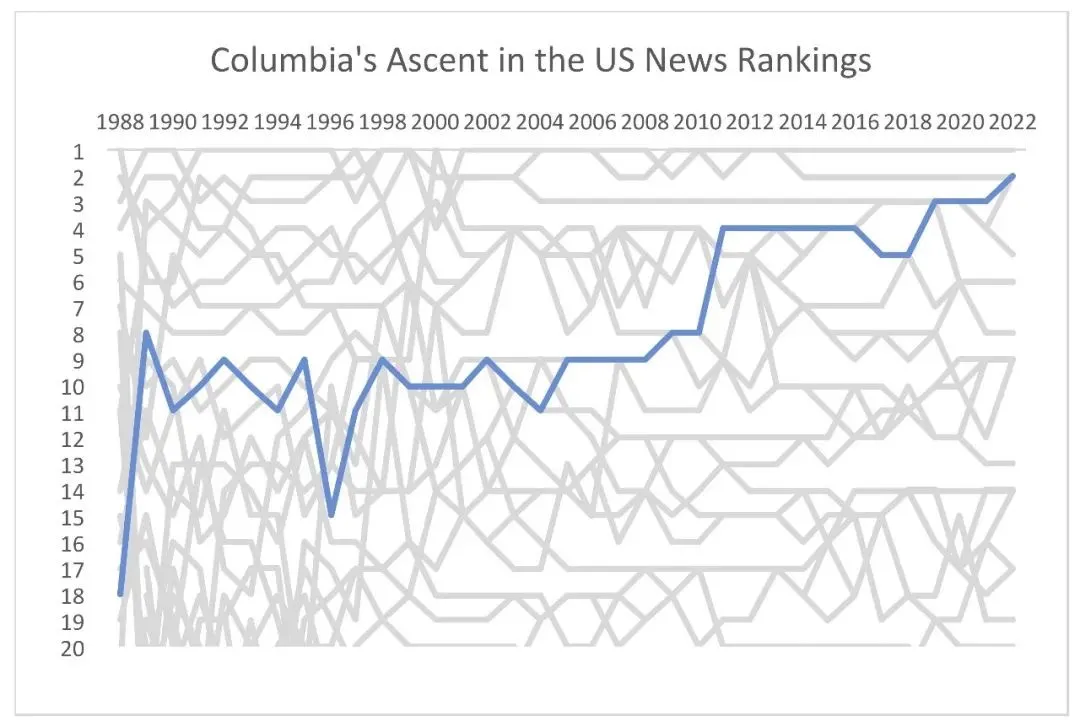
Notably, Columbia was ranked 18th in 1988, but by 2022 it had jumped to second place nationally, tied with Harvard and MIT.
In fact, Columbia's endowment size is far below that of the other top-five schools (Harvard, Stanford, MIT, Yale, and Princeton); those institutions' endowments are roughly two to four times larger than Columbia's.
Additionally, Professor Thaddeus listed six instances of data falsification, including undergraduate class sizes, the proportion of full-time faculty with doctoral degrees, student-faculty ratio, research output, instructional spending, and other ranking-related metrics.
He concluded in the report, "Several key figures supporting Columbia's high ranking are inaccurate, dubious, or highly misleading."

Class Sizes Questioned as Fabricated
Among them, the data Columbia reported to U.S. News showed that 82.5% of its classes had fewer than 20 students, a proportion higher than any other school in the U.S. News Top 100.
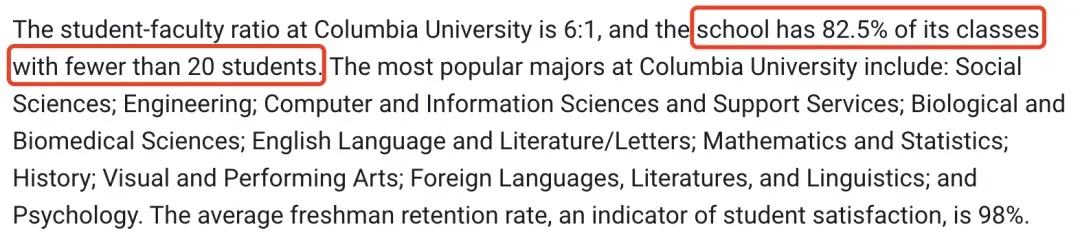
According to Professor Thaddeus's investigation of Columbia's course registration data, from fall 2019 to fall 2022, only about 63% to 67% of classes had fewer than 20 students, a sharp contrast to the official data provided to U.S. News.
Thaddeus also found that roughly 10.6% to 12.4% of classes had more than 50 students, while Columbia reported only 8.9% for this metric.
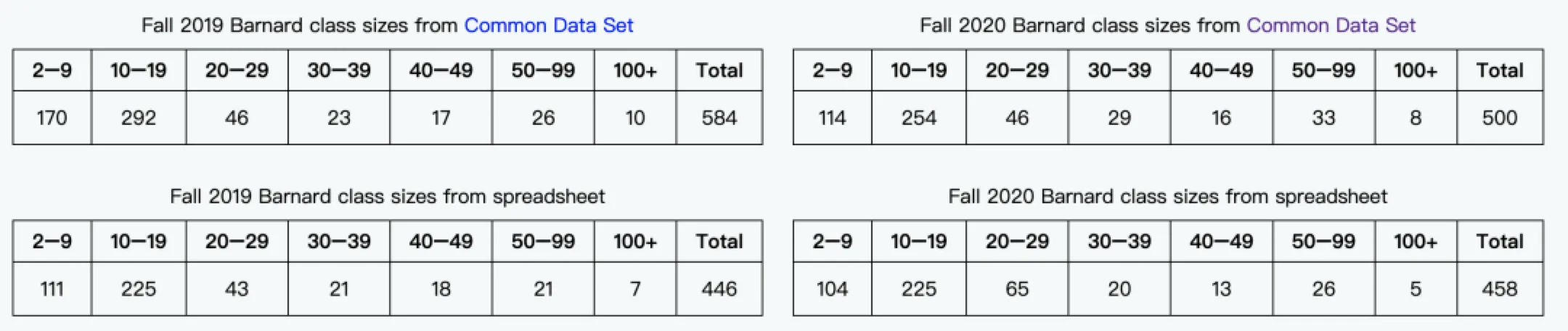
In response to this discrepancy, Columbia officials countered that enrollment numbers in the online course catalog have not been verified by the registrar and may deviate from official statistics.
Instructional Spending Questioned
Another data point arousing Thaddeus's suspicion is Columbia's reported instructional spending.
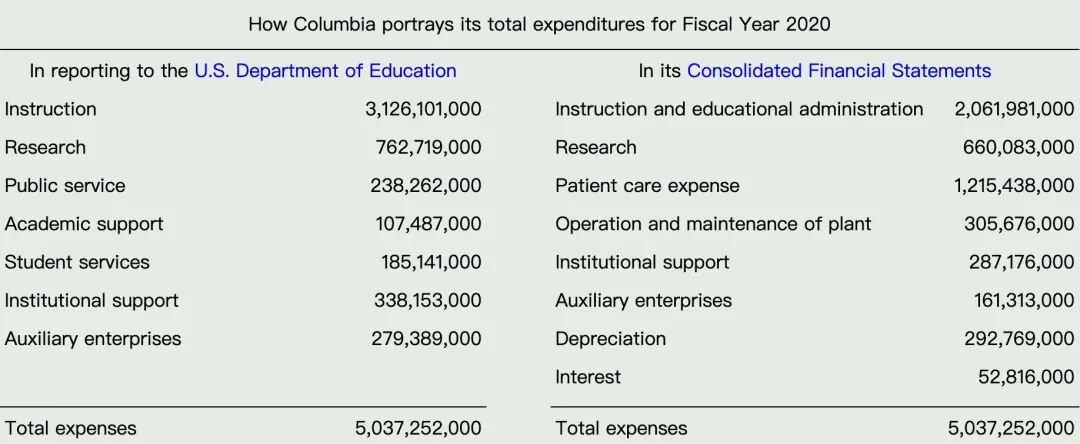
Columbia claimed that its instructional spending for the 2019-2020 academic year amounted to a staggering $3.1 billion, a figure higher than the combined instructional expenditures of Harvard, Yale, and Princeton.
By scrutinizing the university's financial records, Thaddeus found that Columbia's $3.1 billion "instructional spending" includes patient care costs at its university hospital. In fact, other universities, including New York University, explicitly exclude patient care expenses from instructional spending.
Columbia responded that patient care costs are indeed counted as instructional spending because, while medical faculty provide patient services, they may also train and mentor students. Expenses from non-medical faculty were not included in the rankings data.
Challenging the Authority of Rankings
Of course, Professor Thaddeus acknowledges that his analysis is not foolproof. While calling for an independent investigation of Columbia's data, he also noted that the dubious data and rankings involve some responsibility on the part of U.S. News itself.
If even the second-ranked school in the nation has unclear or inaccurate data, it is easy to question the veracity and reliability of the entire ranking information.
He believes the whole concept of college rankings is a "catastrophic idea," because everyone needs "different things," and he hopes to challenge the so-called "authority" of rankings through this exposure.
"Data Falsification" in University Rankings Is Nothing New
In fact, U.S. News is no stranger to scandals involving "false data," and Columbia is not the first American institution to have fudged its numbers.
UC Berkeley Removed for Ranking Data Fraud
In 2019, U.S. News released a statement that five U.S. universities, including UC Berkeley, admitted to misreporting data used to calculate the 2019 Best Colleges rankings.
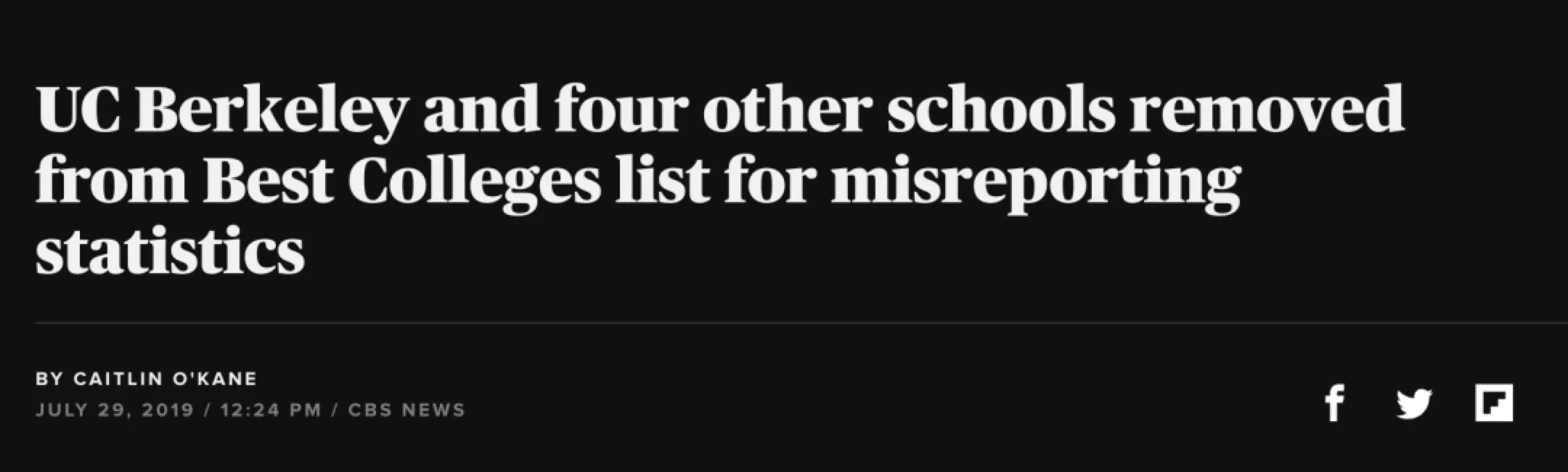
U.S. News noted that Berkeley initially reported alumni giving rates of 11.6% for 2016 and 2017, but later revised the figure to 7.9%. Berkeley officials argued that the 11.6% figure included "pledged donations," but U.S. News had long specified that pledges should not be counted.
Ultimately, U.S. News removed these five universities from the 2019 Best Colleges rankings.
Emory University Misreported Data for at Least a Decade
In 2012, an internal investigation at Emory University found that staff and administrators deliberately misreported data for at least 10 years, inflating admitted students' SAT/ACT scores, class rank, and GPA by replacing them with enrollees' data to make the numbers look better.
The erroneous data was also reported to third parties such as the U.S. Department of Education and U.S. News. Although investigations later found that the misreporting had minimal impact on Emory's rankings, the public widely condemned the university's actions.

When Elite Schools Lead in "Fraud," the Consequences Are Severe
Setting aside the data falsification for a moment, UC Berkeley, Emory, and Columbia are all top-tier institutions that have long been favored by outstanding students and parents worldwide.
Emory is one of the most distinguished institutions in the Southern U.S., Berkeley is considered the best public university in the nation and possibly the world, and Columbia is unquestionably an Ivy League powerhouse.

Many students and parents wonder: with such prestige, is it really necessary to cheat for a ranking? But for universities, there is no ceiling on rankings; they always aim higher, and the reasons behind this may not be fully fathomable.
Moreover, if elite schools are fudging data to boost their rankings, it's hard to imagine that other institutions' data are entirely truthful. As the saying goes, "if the upper beam is not straight, the lower ones will go aslant." This may be why U.S. News and other entities are cracking down on data fraud among top universities.
View Rankings Rationally; Reject the "Ranking-Only" Mentality
For a long time, annual rankings like U.S. News and QS have been key references for parents and students when choosing schools.
Many companies in China even stipulate that they will only hire graduates from top-50 global universities, fueling the "ranking-only" mentality. In reality, rankings are merely a reference and do not prove whether a school is the best fit for you.
Although these rankings aggregate various metrics from different dimensions, cold quantitative numbers alone cannot fully reflect a school's true value.

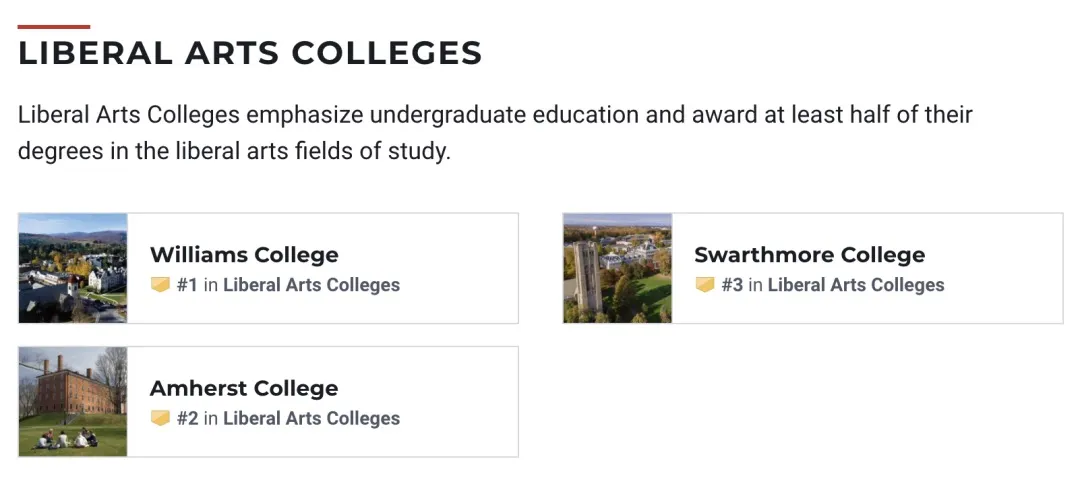
For example, many liberal arts colleges offer far fewer majors or courses than comprehensive universities, so their achievements in certain fields may not stand out. However, this does not mean that such a school is not worth attending.
Most public universities have lower tuition and often rely on state or federal subsidies to sustain daily operations; their alumni donations and instructional spending are nowhere near those of large private universities.
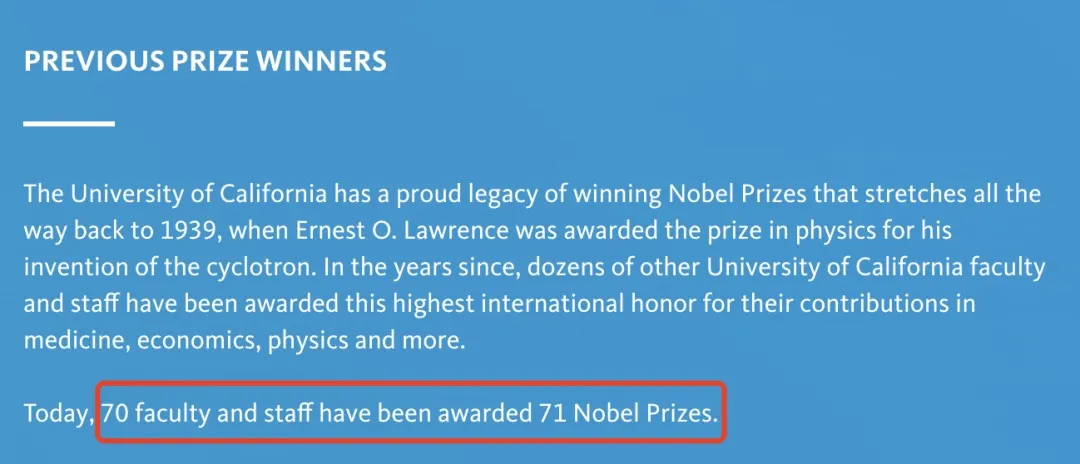
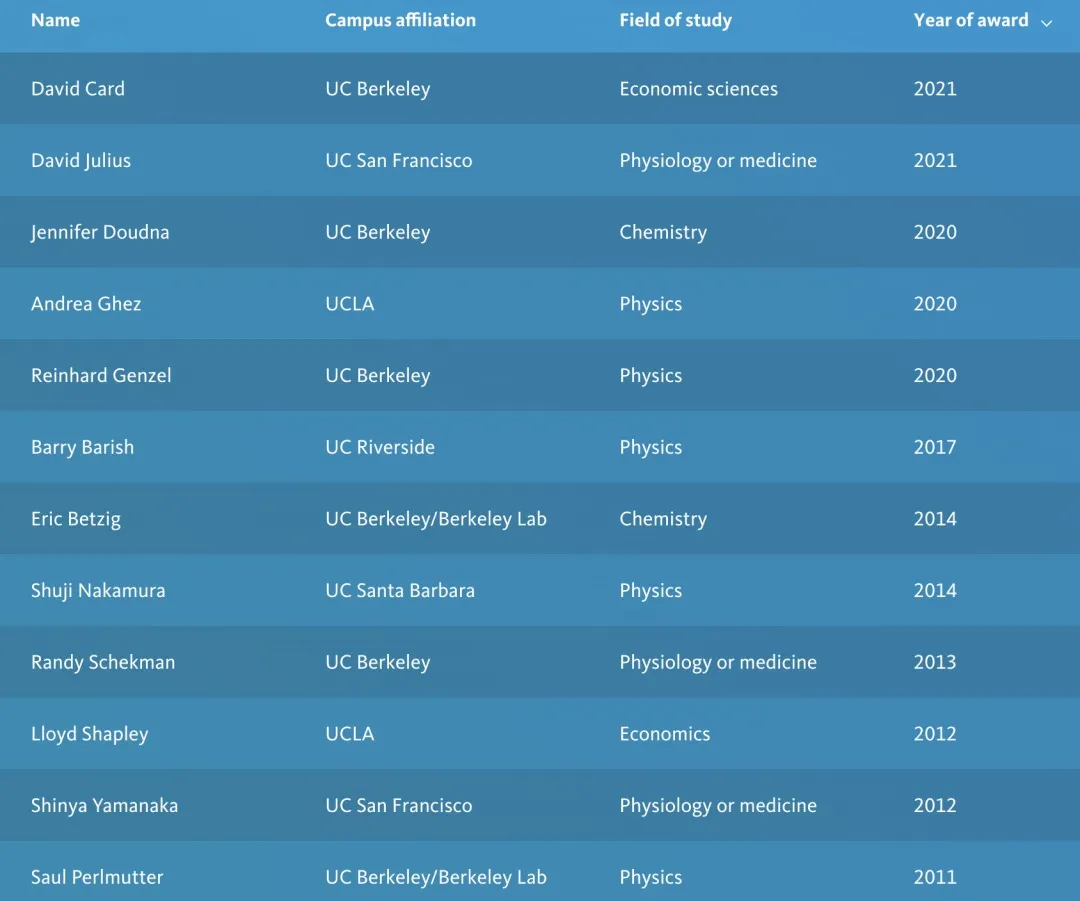
But this does not negate the fact that many public schools boast top-notch faculty and educational resources. For instance, the UC system alone has produced over 70 Nobel laureates, reflecting its exceptional research caliber.
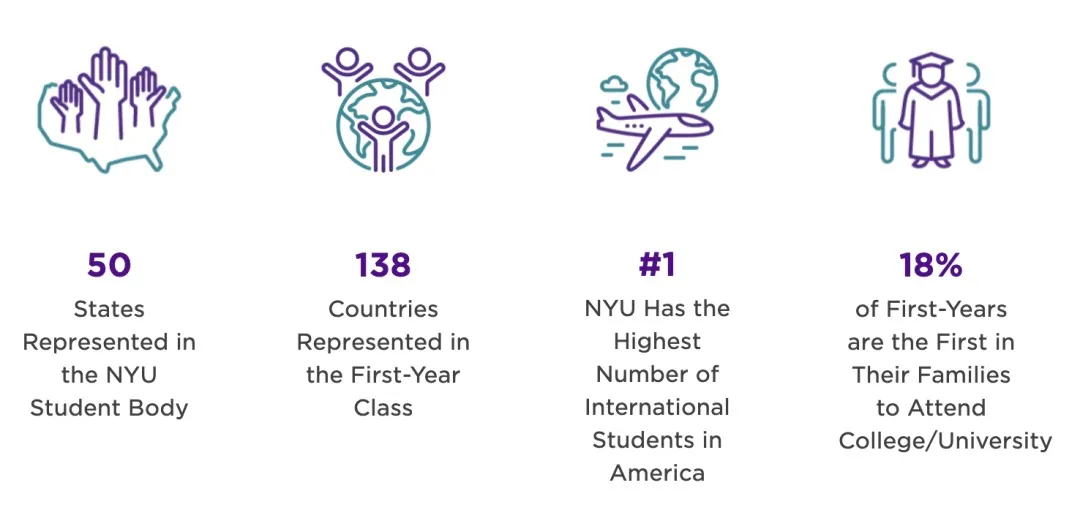
Beyond rankings, factors to consider during study-abroad applications should be more multi-dimensional and comprehensive, including curriculum design, faculty, location, campus atmosphere, international student ratio, and more.
Every student and parent should have their own set of criteria, weighing schools and programs based on what matters most to them, and ultimately choose the one that best fits their needs.
Michael Thaddeus also said that he spent so much time investigating Columbia and chose to expose it because he believes the ranking system creates unnecessary anxiety and vicious competition. This is clearly not a healthy educational environment.
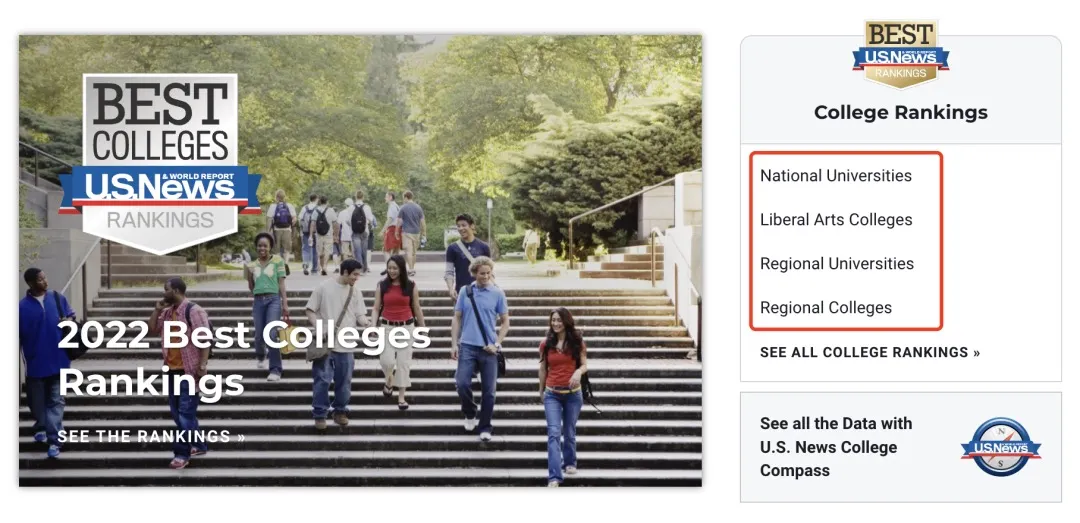
When it comes to rankings, there are various dimensions—not just national or global rankings, but also rankings for public universities, liberal arts colleges, specific programs, student satisfaction, and so on.
When using rankings to select a school, you should also consider the areas you wish to study or research, and evaluate each school's strengths in those specific fields, rather than relying on rankings blindly.
Rankings like U.S. News have been around for so long that these incidents may not seriously affect their overall authority.
The main takeaway from this revelation is that everyone should not be overly constrained by rankings; choosing a dream school that you truly like and that suits you is what matters most!