This year's four major fashion weeks ended on a low-key note. Did you even notice they happened?

In previous years, NYFW always led the charge, kicking off Fashion Week with a bang and making sure to grab headlines. But this year, that drama queen turned into a wallflower.

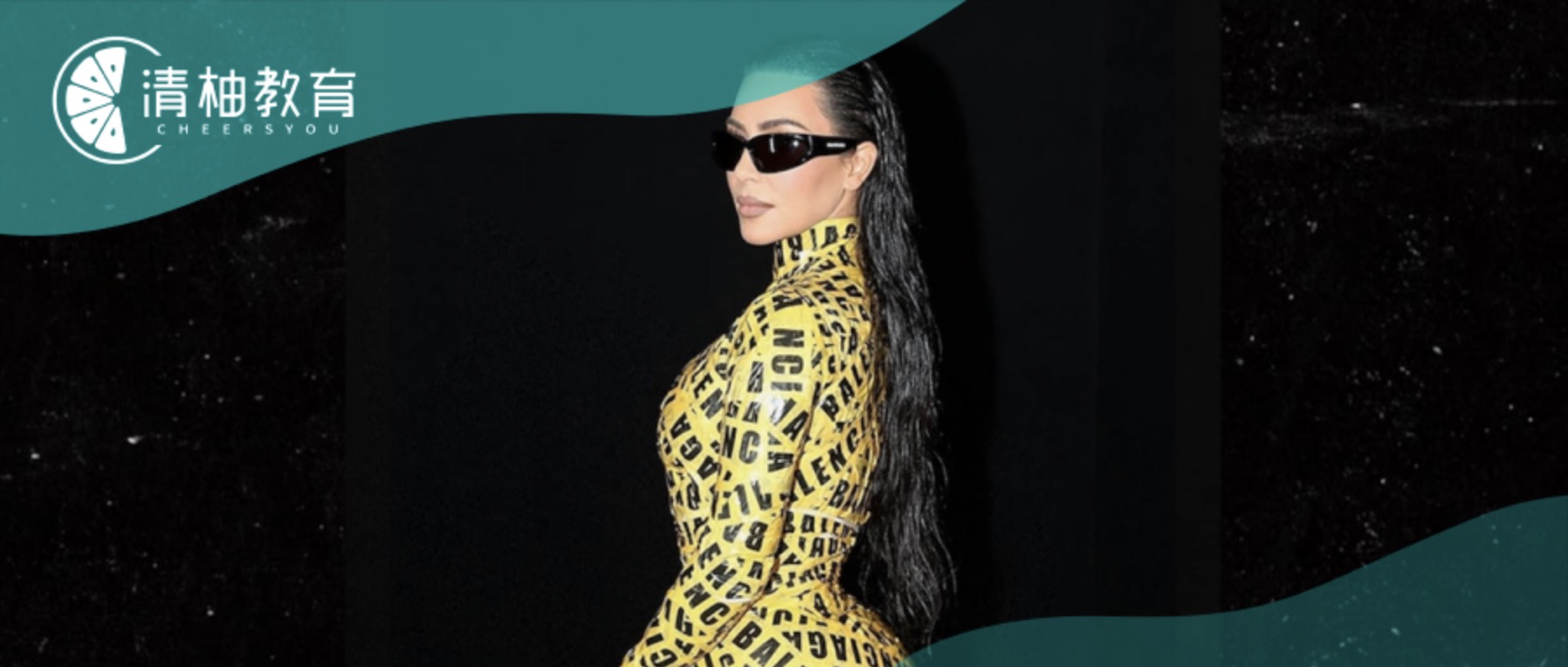
Thanks to Kim Kardashian's tape-wrapped Balenciaga look at Paris Fashion Week that went viral, people suddenly realized: Hey, Fashion Week is already in Paris?!

The Truth Behind Fashion Week’s Cooling Popularity
It’s not really Fashion Week’s fault that interest has waned. After all, there were too many major events this year: the Winter Olympics just ended, and then the Russia-Ukraine conflict broke out, pushing Fashion Week into the background.
But on the other hand, Fashion Week has indeed changed, especially after the pandemic. Physical runway shows have started to lose momentum.
The Big Changes in Fashion Runways
Looking back at fashion shows from the last century, it's not hard to see the huge changes. In the past, the front rows were filled with renowned editors-in-chief, seasoned fashion critics, and upper-class socialites.
Everyone had their own perspectives on fashion, and sharp critiques of designs laid the foundation for many classic brands—designs that withstood high standards were the ones people would pay for.

Nowadays, apart from a few editors who hold the fort, the front rows are filled with popular celebrities and bloggers, and you can even buy front-row seats. Moreover, with the internet so advanced, videos and photos of shows are easily searchable, and anyone with a keyboard can critique them. Fashion is no longer out of reach.
Brands also boost their reputation by collaborating with celebrities and influencers. Meanwhile, fashion week media coverage has gradually lost its authority and started pandering to the masses. The roles are reversing.

The Fashion World: From Snobby to Accessible
For a long time, the stereotypical image of a fashion magazine editor-in-chief has been the 'haughty, cold-hearted devil-woman.' Vogue editor-in-chief Anna Wintour, with her ever-present sunglasses, perfectly fits this perception. So much so that when the public hears about her strict, demanding, and unsympathetic reputation, they rationalize that attitude as just part of the 'editor-in-chief' persona.
But in recent years, as an industry bellwether, Vogue has launched series like '73 Questions', 'Go Ask Anna', and 'Anna Wintour MasterClass' that intimately engage the public and reveal behind-the-scenes secrets. This has broken down the barriers between ordinary people and the fashion world, making it no longer untouchable.

It’s not just editors-in-chief engaging with the public. 'Dream collaborations' between brands have also become increasingly frequent in recent years.
Some artists whose styles align with a designer’s vision also engage in creative collaborations with brands. For example, the collaboration between Dior and Travis Scott received relatively positive feedback.

Many brands have also started to break into the digital world—like Louis Vuitton partnering with Honor of Kings and Burberry with League of Legends—generating massive buzz for the brands.

LVMH even introduced a virtual ambassador this year. She will present statements on innovation, technology, and digitalization for the LVMH group and its brands at the VivaTechnology conference in Paris.

As luxury and fashion brands that have always emphasized heritage and cultural identity, what is the point of all these painstaking efforts?
Of course, it's to make more money! By collaborating with partners from different styles and trying creative things in various aspects, brands can become known to different circles of people.
More importantly: to be recognized by the younger generation.
Where is the Fashion Industry Heading?
So...
"How will the fashion industry evolve in the future?"

Fashion Shows in the Internet Age
At the peak of the pandemic, many brands canceled runway shows and instead released collections in the form of look books. With the internet so advanced now, whether through social media or brand and magazine websites, you can view complete new season collections.
This approach also reduces costs for brands, since holding a fashion show is extremely expensive. In comparison, shooting a look book faces far fewer restrictions.
Celebrities and bloggers have become the new fashion PR, interacting online to help amplify exposure. Although this method has certain drawbacks, it saves a lot in terms of manpower, resources, and money.

The Digital Development of the Fashion Industry
The world is going digital, and the fashion industry is no exception. With the NFT and metaverse trends in full swing, young people are chasing metaverse fashion.
Many of the old-guard editors-in-chief have left, replaced by very young new ones. It's not hard to imagine that in the near future, these young editors will plant fashion in the metaverse, achieving a digital migration of the entire industry.

For those aspiring to develop a career in the fashion industry, enriching your knowledge in various aspects and strengthening your irreplaceability is the most urgent thing to ensure you can stay in this highly competitive industry.
Having a macro-to-micro understanding of the industry you're in, knowing its roots and culture, and predicting its trends and prospects are all extremely important.
If you plan to return to your home country after graduation, you should also pay close attention to trends in the domestic fashion industry. Although the Chinese fashion scene is rising and gaining more prestige, it started later, and the helm is still in the hands of Europe and the U.S., so developments in domestic and international fashion circles are quite different.

The Evolution of Art and Design Knowledge
More and more interdisciplinary content is being integrated into art and design-related majors. To gain a foothold in the fashion industry, well-rounded talent is now needed more than ever. Artists and designers need much more than just talent.
Many art and design schools have successively opened non-art majors, and quite a few even make basic business, law, and media courses mandatory to ensure students have knowledge in all aspects.

In New York, the fashion capital, the most famous fashion design schools are the Fashion Institute of Technology (FIT) and Parsons School of Design. FIT offers a rich and long-standing selection of business programs, but it only recently introduced new master's programs, specifically in International Fashion Management, Art Market Studies, and Cosmetics and Fragrance Marketing Management, all of which are the most sought-after directions in the industry today.
Parsons, known as an art school that pursues design philosophy above all, also launched master's programs in Fashion Management, Strategic Design and Management, and Leadership Management a few years ago. These programs lean towards innovation and media, blending business with the school's free-spirited ethos, making them perfect for aspiring entrepreneurs.

Long-established art schools like the School of Visual Arts (SVA) are also focusing on business development. Not only does each major come with corresponding business courses, such as branding, operations, and media, but they have recently added basic law courses to ensure students have a fundamental understanding of the rights associated with artistic works.
The largest art school in the U.S., Savannah College of Art and Design (SCAD), besides art and design, is offering more and more business programs. These mainly revolve around different areas within the fashion circle, such as Luxury Management, Cosmetics and Fragrance Marketing Management, and Fashion Management, teaching students how to systematically take charge of the money of the beautiful and stylish.

Finally, let's look at London, where fashion has declined the fastest. Although it has long become an obscure wallflower, they haven't fallen behind when it comes to making money!
Central Saint Martins and the London College of Fashion, two flagship colleges, are both part of the University of the Arts London (UAL) system. And UAL has created a business version of almost every art and design major, such as Commercial Photography, Fashion Journalism, Fashion Statistics and Forecasting, Creative AI and Data...
Looking at these programs, one can't help but exclaim: 'So competitive!'

The fashion industry has always been ever-changing, and its core essence is 'dream-making'.
To make dreams for others, you must understand the latest trends in the industry.
Keeping your nose to the grindstone is no longer enough to keep up with today's fashion development. Only by being keen on discovery and exploration can you better establish yourself in the industry. Master your studies, craft your dreams, and earn your money. Wishing every hardworking art and design student can successfully realize this ideal!