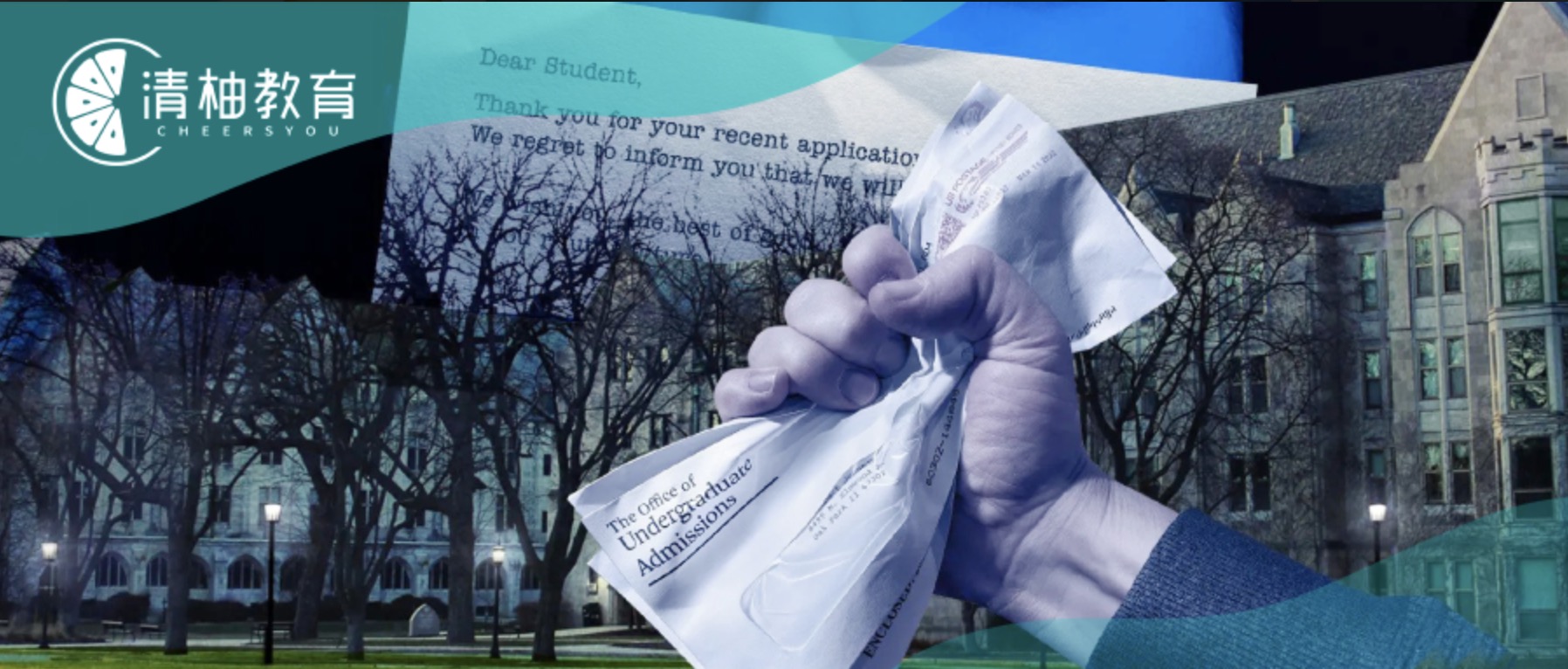
Most US universities have released their Regular Decision results for the 2022 freshman class, drawing the 2026 undergraduate application season to a close.
This year, international applicants surged by 31% compared to pre-pandemic levels, with Chinese students' application fervor remaining undiminished.
According to the latest Common App data, the total number of US undergraduate applicants for the 2022 academic year exceeded 1.1 million, with nearly 50% submitting standardized test scores!

Weren't the barriers supposed to be lower? Instead, the competition keeps getting fiercer...

In the post-pandemic era, it's also clear that offers from US universities to international students are decreasing year by year with a noticeable downward trend. Many Top 30 schools have had disappointing admission outcomes in China, with significant cuts to their quotas.
Without further ado, let's dive into the latest admission data for this year's US undergraduate applications.
Undergraduate Admission at Top US Universities
What we thought was a record low last year turned out to be surpassed again this year at many top US universities.
Even among Ivy League schools, which have relatively stable acceptance rates of 3%-7%, many reported acceptance rates below 5%—a truly brutal landscape.

Harvard University
Harvard's overall acceptance rate fell to an all-time low of 3.19%, with a 2.3% RD rate and a 7.9% EA rate.
Harvard received 61,220 applications this year, nearly 7% higher than last year's 57,435. The surge in applicants naturally led to a sharp drop in the acceptance rate.

Columbia University
Columbia's overall acceptance rate was 3.73%, with 60,377 applicants (slightly down from last year) and 2,253 admitted.

Yale University
Yale's overall acceptance rate was 4.46%, admitting 2,234 students out of 50,015 applicants. The growth rate of international students also outpaced that of domestic students.

Brown University
Brown admitted a total of 2,546 students, with its acceptance rate dropping to a historic low of 5%.
The acceptance rates for 2020 and 2021 were 6.9% and 5.4%, respectively, showing a clear downward trend.

Dartmouth College
Dartmouth's acceptance rate was 6.24%, among its lowest historically, though slightly up from last year's 6.17%.
Thanks to need-blind admission for international students, Dartmouth admitted more international students this year.

Tufts University
Tufts had nearly 30,000 applicants this year and an acceptance rate of 9%, a record low.
Since 2020, applications to Tufts have surged by 50%. Since 2019, Black student applicants have increased by nearly 90%. Students considering Tufts as a safety school really need to think twice.

Rice University
Rice received 31,424 applications this year with an acceptance rate of 8.56%. While still a record low, it's relatively lenient compared to other schools. The admissions office also noted they admitted more freshmen than before, aiming to increase enrollment over the next three years.
.jpg?x-oss-process=style/opt-webp)
University of California, Berkeley
UC Berkeley received a staggering 128,000 applications this year! That includes over 20,000 international students. Last year, for every new student admitted, UC Berkeley rejected six applicants. This year's admissions situation is even bleaker.
After the "enrollment freeze" controversy, many lamented that "the vanished offers came back." However, judging by current admissions results, very few of those offers went to Chinese students; the university still tilts admissions in favor of California residents.

University of California, Los Angeles
UCLA received a total of 149,799 freshman applications and 24,907 transfer applications this year. With its admitted class remaining steady at around 15,000 as in previous years, UCLA's acceptance rate has officially entered single-digit territory.

Application numbers rose across all nine UC campuses for Fall 2022. Beyond the drastic cuts in acceptance rates at popular campuses like UCLA, UCB, and UCSD, schools like UCI and UCD are also issuing offers more cautiously, factoring in a student's likelihood of enrollment.
Under the influence of policies and various proposals, the UC system has been forced to compress enrollment shares for international and out-of-state students, a trend that will become even more pronounced in the coming years.
Final Thoughts
The admission data so far makes it clear that fierce competition in US undergraduate applications is an undeniable reality.
While test-optional policies appear to offer more opportunities, they actually raise the bar in other application components like GPA and extracurricular profiles. Not to mention that so many applicants still chose to submit standardized test scores.
With the applicant pool continuing to expand and only a few schools announcing enrollment increases, competition will only intensify. Whether applying Early Decision or Regular Decision in the future, students need to be thoroughly prepared.