
Recently, the Chinese Embassy in the United States issued an announcement, declaring a relaxation of return policies, marking the first major easing of such policies in nearly two years!
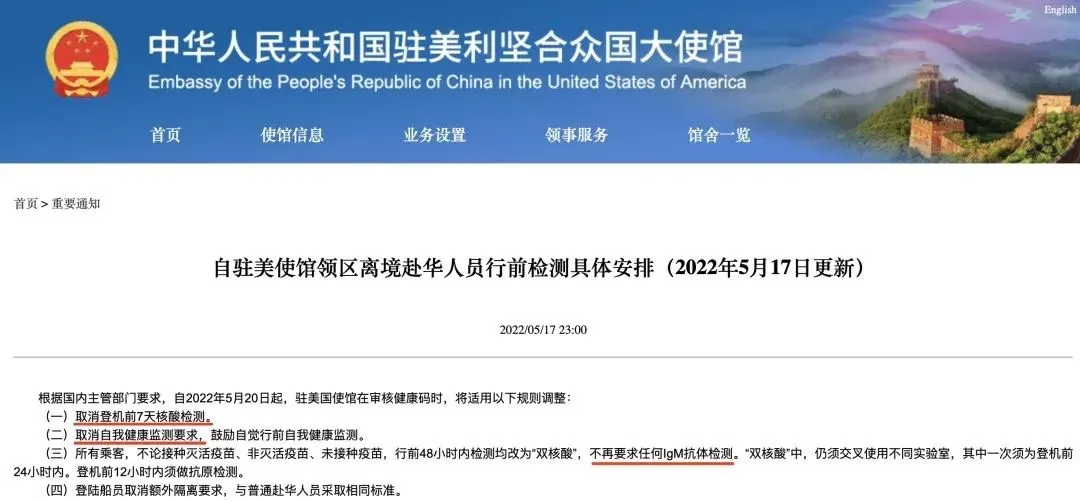
In brief, the new policy from the U.S. Embassy for all flights after May 20 includes the following changes:
1. Cancel the 7-day pre-departure nucleic acid test – meaning you no longer need to arrive at the departure city seven days in advance for testing.
2. Cancel the self-health monitoring requirement.
3. Regardless of vaccination status, the 48-hour pre-departure testing has been changed to “dual nucleic acid tests,” no longer requiring any IgM antibody testing. The “dual tests” must still be conducted at two different laboratories recognized by the embassy.
4. Disembarking crew members no longer face additional quarantine requirements and follow the same standards as ordinary travelers to China.
At present, at least 20 embassies abroad, including the U.S. Embassy, have gradually relaxed return policies and simplified the return process.
Next, we will continue to use the U.S. Embassy’s new policy as an example to explain the return policy and procedures.
Specific Return Procedures After the New Policy
After the new policy is released, the return process is basically divided into the following five steps:
Step 1: Choose a direct flight
Step 2: Go to designated institutions for testing
Step 3: Apply for a health code
Step 4: Wait for embassy review and approval
Step 5: Check-in verification
Now let’s see how to complete these five steps!
1 Choose a Direct Flight
As of now, the following direct flights between China and the United States are available, and passengers must submit testing certificates and other materials to the corresponding embassy/consulate.
1. American Airlines: AA 127 (Dallas→Shanghai) – reviewed by the U.S. Embassy
2. Delta Air Lines: DL 283 (Detroit→Shanghai) – reviewed by the Chicago Consulate General; DL 287 (Seattle→Shanghai) – reviewed by the San Francisco Consulate General
3. United Airlines: UA 857 (San Francisco→Shanghai) – reviewed by the San Francisco Consulate General
4. Air China: CA 988 (Los Angeles→Beijing/Tianjin), CA 770 (Los Angeles→Shenzhen) – reviewed by the Los Angeles Consulate General
5. China Southern Airlines: CZ 328 (Los Angeles→Guangzhou) – reviewed by the Los Angeles Consulate General
6. Xiamen Airlines: MF 830 (Los Angeles→Xiamen) – reviewed by the Los Angeles Consulate General
7. China Eastern Airlines: MU 588 (New York→Shanghai) – reviewed by the New York Consulate General
Note: The above-listed flights may have “technical stops,” but this does not affect their status as “direct flights.”
2 Go to Designated Institutions for Testing
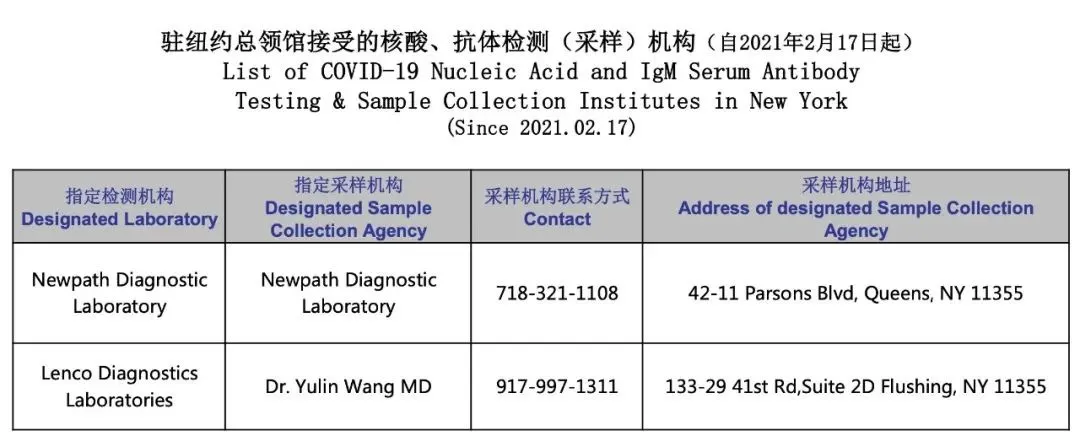
1. Within 48 hours before boarding, take two nucleic acid tests at two different testing institutions designated by the consulate. The second test must be completed within 24 hours before boarding. For example, if the China-bound flight departs on June 10, the first test sample can be collected on June 8 or 9 (any time), and the second test sample can only be collected on June 9 (any time) and must be from a different testing institution than the first.
2. An antigen test within 12 hours before boarding must be completed after 14:00 on the day before departure at a designated testing facility in Dallas. For example, if the China-bound flight departs on June 10, the sample must be collected after 14:00 on June 9.
*For designated institutions, please check the embassy website for details.
3 Apply for a Health Code
After completing the tests, please prepare scanned or screenshot copies of the following materials to apply for the health code:
1. Provide the results of the “dual nucleic acid tests”
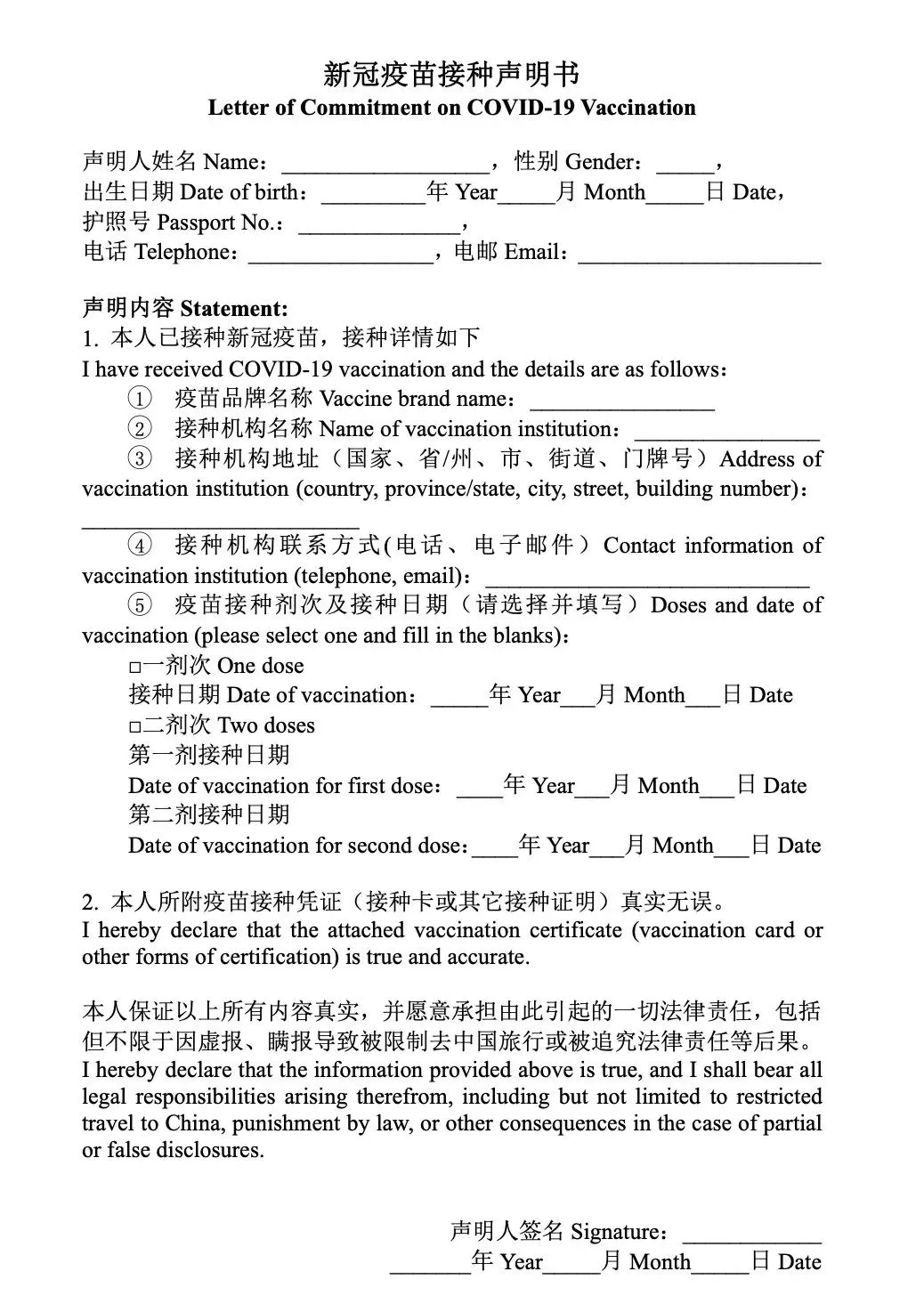
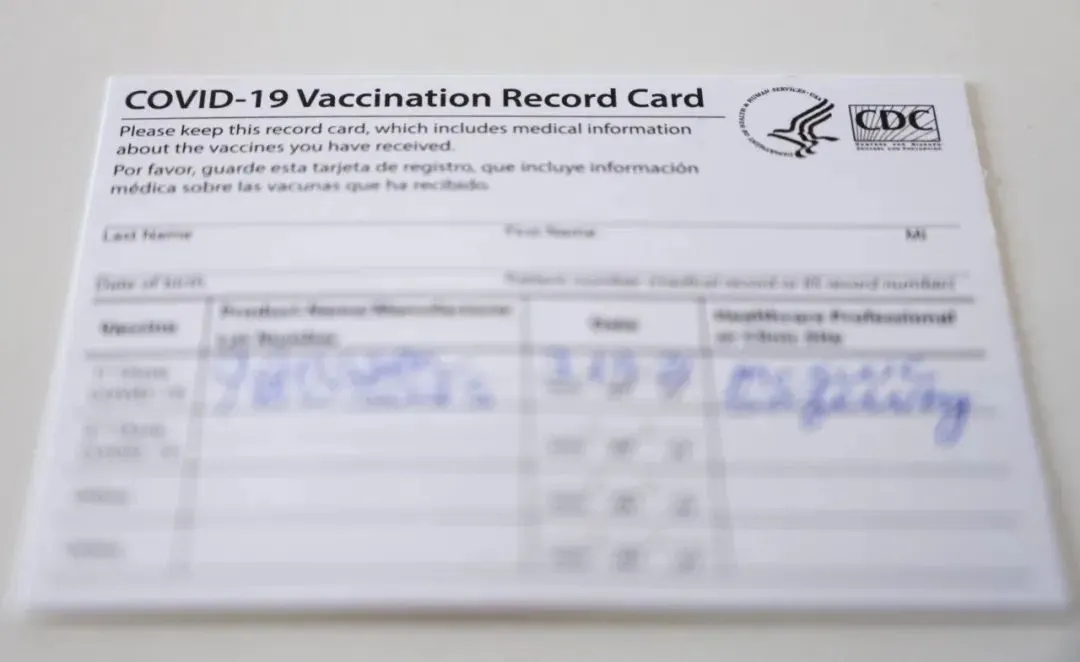
2. For vaccinated individuals, additionally provide a completed “Vaccination Declaration Form,” proof of vaccination (e.g., CDC vaccination card), etc.
3. Flight ticket or itinerary for the direct China-bound flight
4. Valid travel documents for boarding (e.g., passport, travel permit, etc.) and proof of legal residence in the U.S. (e.g., visa, “green card,” I-20 form, etc.). For non-Chinese citizens, upload passport and valid China visa.
* Do not upload other non-essential materials such as on-site photos, to avoid delaying the review process.
* Individuals with a history of illness, close contacts, or those with suspected symptoms must provide additional nucleic acid reports and supplementary materials as required by the embassy.
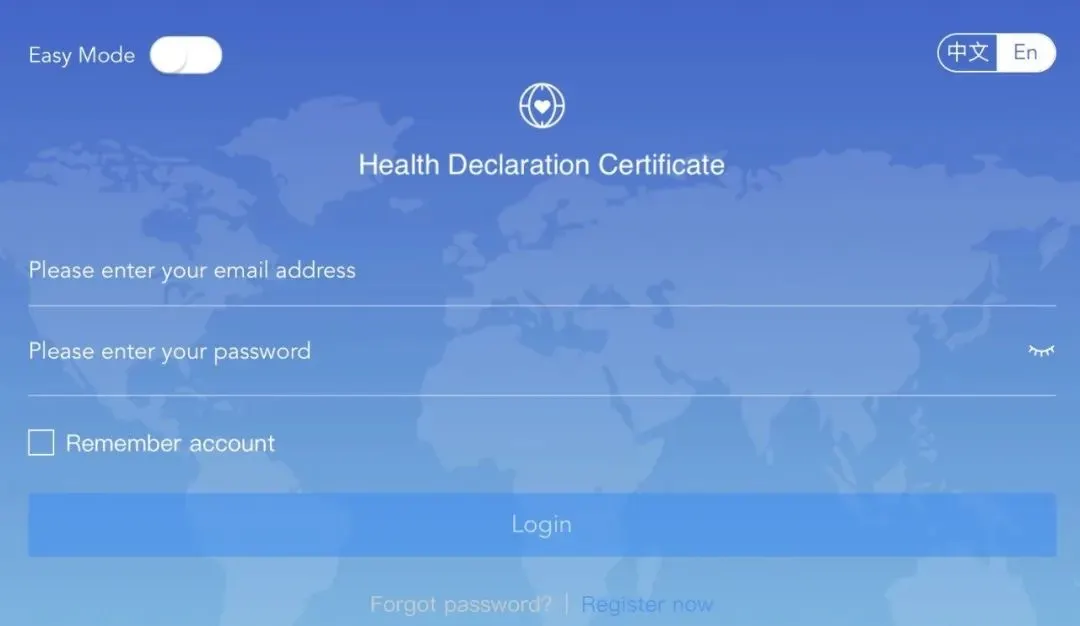
After gathering the above materials, Chinese citizens (including those holding Chinese passports, travel permits, “Home Visit Permit,” “Mainland Travel Permit for Taiwan Residents”) can search for “防疫健康码国际版” on WeChat or scan the following QR code to enter the WeChat mini-program for the international version of the health code, fill in the information, and submit the application:

Non-Chinese citizens need to log in and fill out the “Foreigner Health Declaration Form” at the following URL: https://hrhk.cs.mfa.gov.cn/H5/
4 Wait for Embassy Review and Approval
Passengers returning from the United States will receive a blue code if all materials pass. With the “blue code” and the antigen test report taken within 12 hours before boarding, they can board the flight.
Note: This health code is only applicable for boarding the return flight and is different from the domestic health code used within China. After returning home, please follow domestic requirements to apply for the local health code.
The embassy states: “After submitting the application, please be patient and check the results online on your own; there is no need to contact us for inquiries or to urge processing.”
5 Check-in Verification
1. Upon arriving at the airport, the airline will verify the health code at check-in. All China-bound passengers must open and log in to the mini-program or webpage on-site to display the health code; screenshots, printed versions, or other forms of health code display are not accepted.
2. Boarding is allowed with “blue code + original antigen test report within 12 hours.” Currently, both paper and electronic versions of the antigen test report are accepted, and the result must be negative.
3. Those who test positive on the rapid antigen test on the day of boarding should undergo a nucleic acid test as soon as possible. If that nucleic acid test result is positive, they will be considered as individuals with a history of illness and must follow the embassy’s requirements for “individuals with a history of illness” for additional testing and monitoring. If the nucleic acid test result is negative, they will be considered as close contacts and must follow the “close contacts” section of the embassy’s requirements for additional testing and monitoring.
4. Different airlines may adopt additional epidemic prevention measures based on their regulations; please refer to the specific requirements of the airline.
Determination of Individuals with a History of Illness, Close Contacts, or Suspected Symptoms
The embassy has different determination requirements for individuals with a history of illness, close contacts, and asymptomatic persons:
1 Individuals with a History of Illness
Determination of individuals with a history of illness:
1. Persons clearly diagnosed with the illness are considered as individuals with a history of illness.
2. A positive nucleic acid test result will also be regarded as having a history of illness.
Additional testing requirements for individuals with a history of illness: Starting from the date of the positive report:
1. Two additional nucleic acid tests must be taken (at any reputable laboratory in the United States), with a sampling interval of more than 24 hours.
2. After the second nucleic acid test, a 6-week quarantine and health monitoring period is required. If symptoms such as fever, cough, or diarrhea occur during quarantine, a new nucleic acid test should be taken promptly. If negative, the 6-week quarantine and monitoring period restarts; if positive, treatment should be sought. When applying for the health code again, restart the process based on the new diagnosis date and complete the above steps again. After quarantine and health monitoring, plan your trip.
3. After completing the above process, follow the embassy’s regular return procedure for pre-boarding tests within 48 hours, just like individuals without a history of illness. If the test remains positive, the previous steps must be repeated, and a health code cannot be obtained.
4. When applying for the health code, submit the additional nucleic acid test reports mentioned above, routine pre-boarding test reports, passport, flight ticket, and other materials. The U.S. Embassy will comprehensively determine whether to issue a health code based on the test results, the number of days and results of quarantine and health monitoring, vaccination status, and information obtained through other channels.
2 Close Contacts
Determination of close contacts:
1. Persons who have had close contact with suspected or confirmed cases starting from 2 days before symptom onset, or with asymptomatic infected persons starting from 2 days before sample collection, without effective protection.
2. Persons whose antigen test result within 12 hours before boarding is positive.
Special requirements for close contacts:
1. The U.S. Embassy will not issue a health code for close contacts.
2. Close contacts must undergo a 14-day quarantine and health monitoring from the date of close contact, with nucleic acid tests on days 1, 4, and 7 during the monitoring period. If all results are negative, they may plan their trip.
3. After completing the quarantine and health monitoring, follow the embassy’s regular return procedure for pre-boarding tests within 48 hours, just like individuals without a history of illness. When applying for the health code, submit the additional nucleic acid test results taken during the monitoring period along with the pre-boarding test results.
3 Individuals with Suspected Symptoms
Determination of individuals with suspected symptoms:
1. Those who report having suspected symptoms such as fever, cough, or diarrhea within the past 14 days.
2. Persons denied boarding by the airline due to high body temperature or suspected symptoms.
Special requirements for individuals with suspected symptoms:
1. The U.S. Embassy will not issue a health code for individuals with suspected symptoms.
2. Individuals with suspected symptoms must undergo a 14-day quarantine and health monitoring from the date of determination, with nucleic acid tests on days 1, 4, and 7 during the monitoring period. If all results are negative, they may plan their trip.
3. After completing the quarantine and health monitoring, follow the embassy’s regular return procedure for pre-boarding tests within 48 hours, just like individuals without a history of illness. When applying for the health code, submit the additional nucleic acid test results taken during the monitoring period along with the pre-boarding test results.
This revision of the return policy is the first easing since the outbreak of the pandemic. It is good news for those planning to travel to China in the near future, especially for international students who are about to graduate and return home. However, everyone still needs to carefully read the latest requirements and comply accordingly.
We hope all students stay healthy and return home smoothly!