Recently, Unilever's "dog-walking" behavior of canceling this year's summer internship program sparked a huge uproar across social media platforms.

Students who were "played" have been venting their frustrations online, and onlookers agree that Unilever has really burned its goodwill, wasting everyone's time and energy.

What looked like a promising "green card express" turned out to be nothing more than a VI interview; such a casual dismissal has also been heavily criticized.

Keep in mind, by now it's almost the end of June, and the summer internship offer that was almost in hand vanished just like that. Other internships are too late to scramble for, leaving many students who were counting on a summer internship to boost their graduate school applications with no choice but to tell themselves "it's a total bust"...
Hoping to find fellow "stranded" souls by scrolling through social media, they end up seeing another wave of "offer boasts" that make them feel utterly hopeless.

Open any platform and search for "internship", and "Big-Tech internships" take up half the screen. No matter the year or major, Big Tech seems to have become everyone's ultimate internship goal.
Some even link the title of an internship company to overseas graduate school applications, dividing companies into hierarchies and judging the value of an internship by the company's brand and industry.

Putting aside what graduate school admissions committees really focus on when evaluating applicants' internship experience, judging an internship's "value" purely by the company's title is quite misguided.
Of course, aside from the overachievers' steaming fresh offers and the anxiety-driven marketing from influencers, quite a few students who have actually interned at big companies are also shouting:
"Don't do it, run!"

Adding to the recent wave of canceled internships, campus recruitment offer rescissions, and layoff dramas, it forces us to rethink once again:
Are Big-Tech internships really that great?
Big-Tech Internships? Not as Good as You Think!
First, it's undeniable that Big Tech is the hottest job destination right now, and landing a position at a big company more or less reflects personal ability.
However, when it comes to HR practices, job content, and work intensity, big companies may not be as rosy as you imagine.
HR System
Big companies recruit a large number of interns every year, always emphasizing quantity over quality. Their internship employment systems and training mechanisms are actually not that mature.
After starting, big companies usually arrange job-related training directly, the sooner you can get started the better. This results in many interns being pushed to start working urgently without even getting familiar with their department structure or long-term work arrangements.
On top of that, due to the pandemic, many big companies are only slowly getting back on track, and intern training can be said to be an even lower priority. The situation where you don't even know who your mentor is after one or two weeks happens every year, but it's especially common this year!

.jpg?x-oss-process=style/opt-webp)
Job Content
Since most big-company internships are used by students to gain experience during winter or summer breaks, they are basically short-term stints of 2-3 months, so companies naturally won't invest much time or effort in training these short-term interns.
For big-company interns, they won't enjoy the proper training mechanisms of the company, nor will they have the chance to get involved in core work.
What they are more likely to face is repetitive, marginal busywork, all sorts of process-related "dirty work," or even tasks where they become the "fall guy".
Work Intensity
You may not have experienced the workload intensity at a Big Tech company firsthand, but you've definitely felt it through trending topics.
As a big-company intern, you might not get the same benefits as full-time employees, but you'll get a 100% taste of the full-time workload.
Take, for instance, the ByteDance intern who was ridiculed for going to bed before midnight:

You think there's no overtime problem at foreign Big Tech companies? You're probably taking your intern status too seriously...
Status and Eligibility
This point is specifically for students looking for internships abroad.
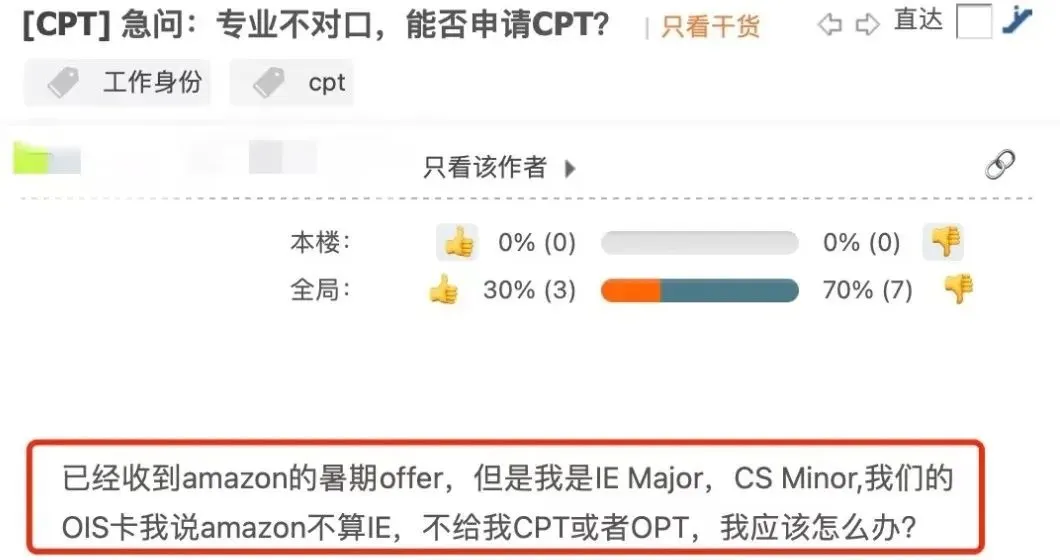
Taking the U.S. as an example, if you want to intern as a current student, you need to apply for CPT (Curricular Practical Training). And the primary requirement for CPT is that the internship must be directly related to your major.
So, for those wanting to intern across disciplines or for humanities/social sciences students aiming for Big Tech, the application itself can be hard to pass. It's not just the company that will vet it; many U.S. universities also have strict requirements when approving CPT to ensure the internship company and position align with the student's major.
Unpaid Labor
Additionally, many big companies rely on their prestigious titles to attract waves of outstanding students for "unpaid internships"—no salary, no housing allowance, no meal subsidy.
And these internships, apart from being unpaid, come with no less work intensity or working hours. This phenomenon is practically par for the course in the fashion industry.


Take the United Nations, an organization countless students are dying to get into. Most of its internship positions are not only unpaid but also require a full-time commitment of five days a week, seven hours a day...

Such "unpaid internships" have been criticized multiple times by various sectors of society, yet they still appear in the recruitment materials of many big companies/organizations, and each year numerous applicants still scramble to join.
What Do Graduate Schools Look for in Internships?
So for graduate school applications, how do admissions committees actually view applicants' internship experience?
The Necessity of Internships
First, graduate programs abroad, especially master's programs, are mostly employment-oriented. Admissions officers want to see that students have a clear career plan, so internships are quite necessary for graduate school applications.
Philip D. Gardner, research director at the Michigan State University Collegiate Employment Research Institute, once said: "In today's job market, having internship experience is a prerequisite for getting a recruiter to read your resume."
A valuable internship experience not only allows students to apply academic knowledge in practice but also helps them broaden their horizons and develop more professional skills on the job.
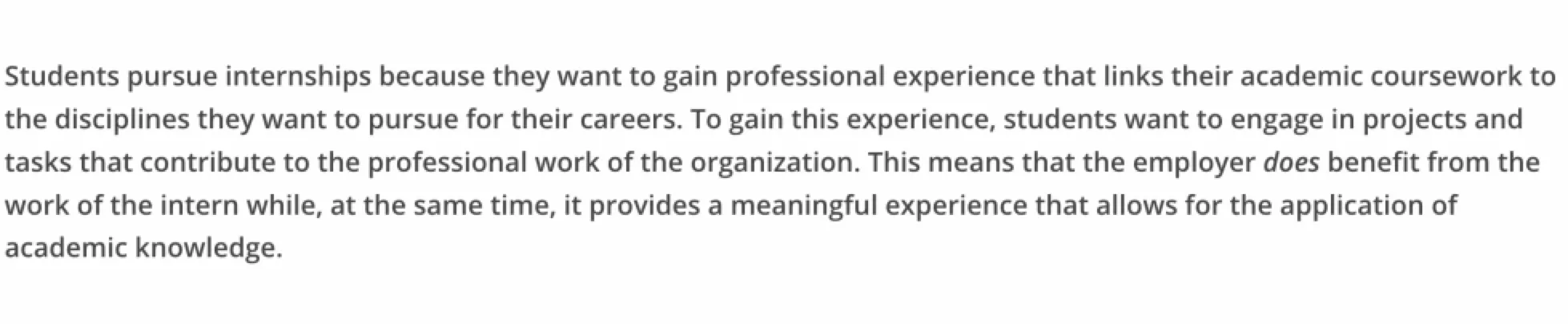
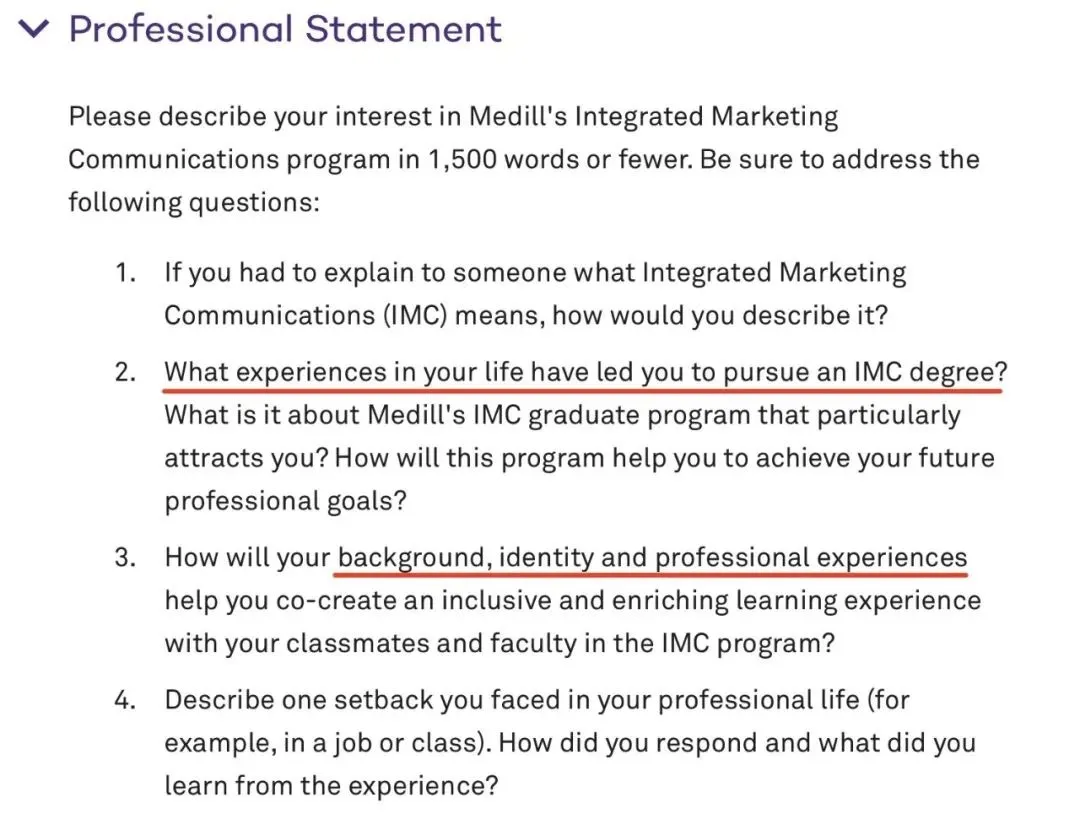
Take Northwestern University's IMC program as an example. Although it does not explicitly require relevant work/internship experience, the application instructions repeatedly emphasize a desire to see applicants' related internship experiences.
The Value of an Internship
For graduate school applications, the value of an internship is not determined merely by the words "big company." While specific standards vary by school, the general priority is: relevance > company reputation > quantity.
Relevance here mainly refers to how well the internship content matches the requirements of the graduate program and its future career development path.
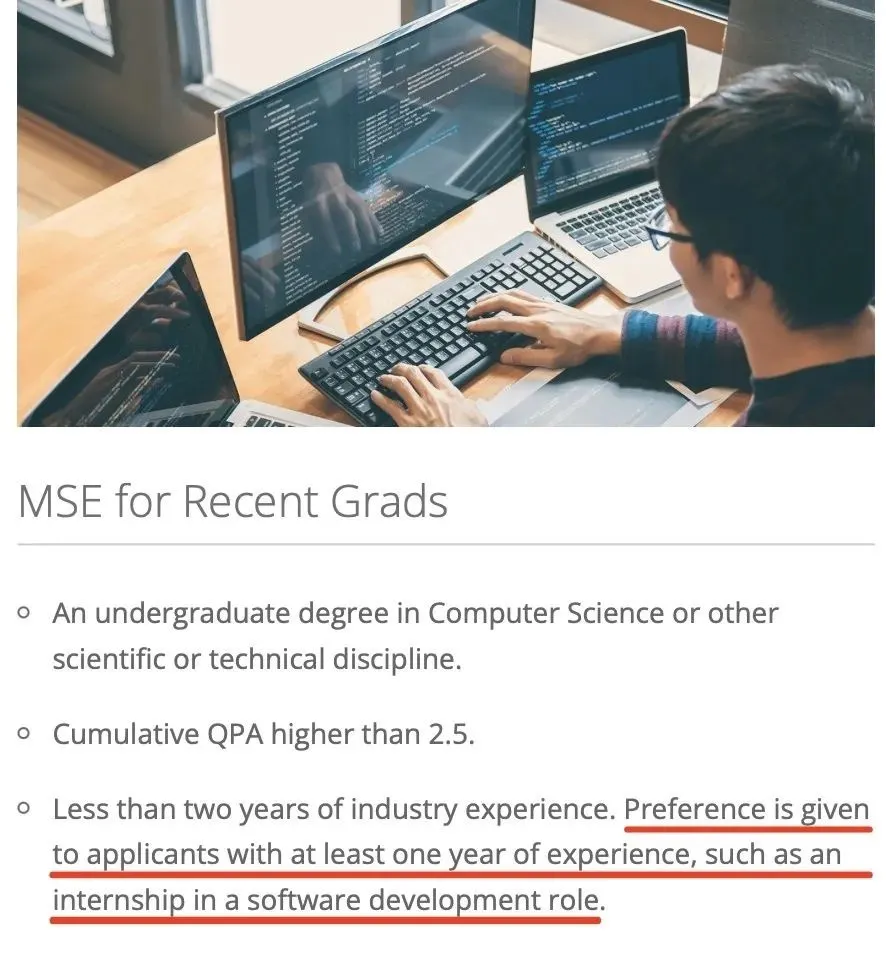
Some programs directly spell out their requirements in the application conditions when it comes to internship value. For instance, Carnegie Mellon University's Master of Software Engineering program, besides the standard prerequisites, explicitly advises: "Applicants with more than one year of software development internship experience have a higher probability of admission."
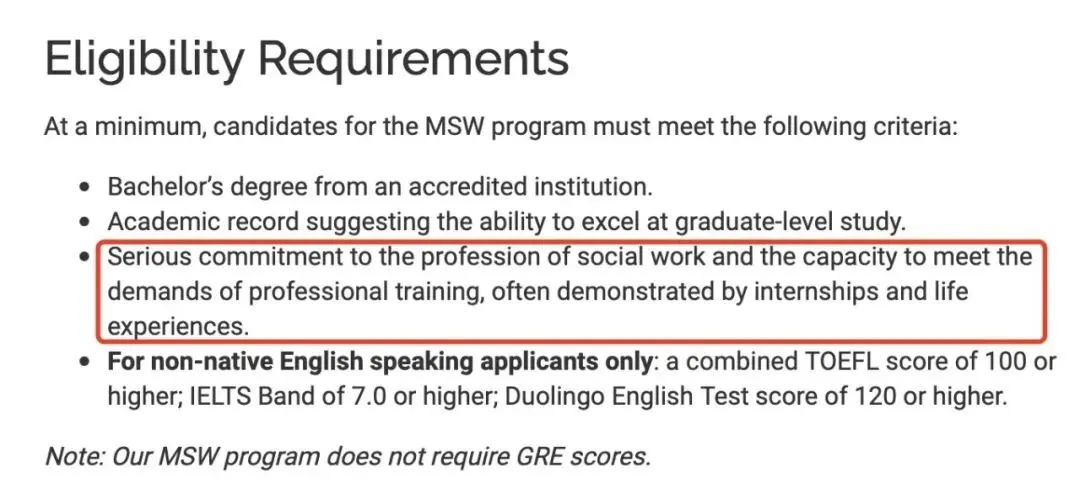
For some humanities and social science majors, the nature of the activity itself becomes even more important. For example, Columbia University's Master of Social Work application requirements explicitly mention the need for in-depth involvement in social work.
In such cases, internship activities like volunteering and community service hold more value than other internships and are more likely to be recognized by admissions officers.
Looking at it this way, for boosting your internship background for graduate applications, a big-name company is not the only path. Finding a high-quality internship that aligns with your target direction and truly matches the needs of the admissions committee might be the most crucial thing.
How to Find a High-Quality Internship
On-Campus Internships
First, the most convenient way is to check your school's existing resources. Typically around April and May, schools begin posting summer job openings. If you have a clear idea of your internship goals and direction, you can search by keyword to find matching positions.
Take the University of Pennsylvania as an example. After logging into the school's Workday interface, find "Find Jobs for Student Employment" to see the latest openings.
If you only want media and communication related jobs, you can type "communication" in the search section.
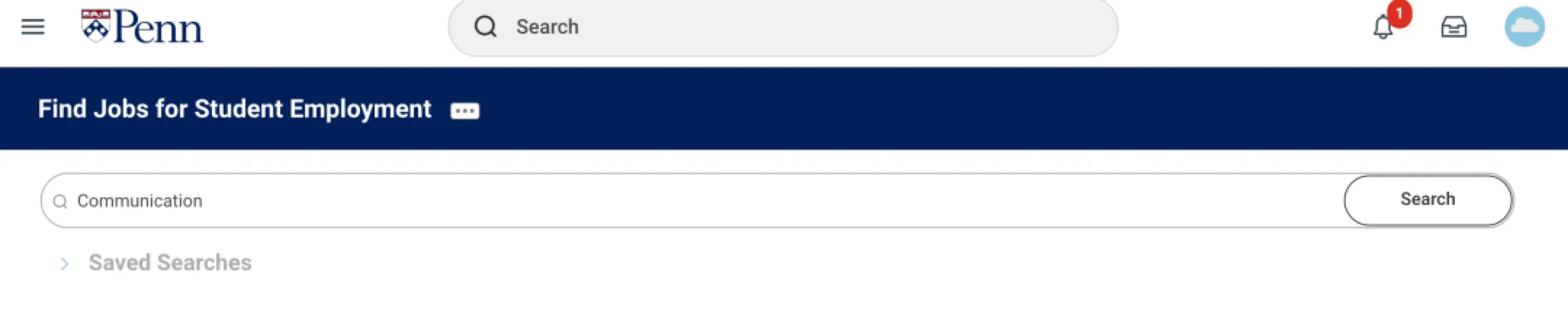
After entering the keyword, the page will display a list of related jobs. If you don't find a suitable position under "communication," try a similar keyword, which can often bring up many relevant openings.
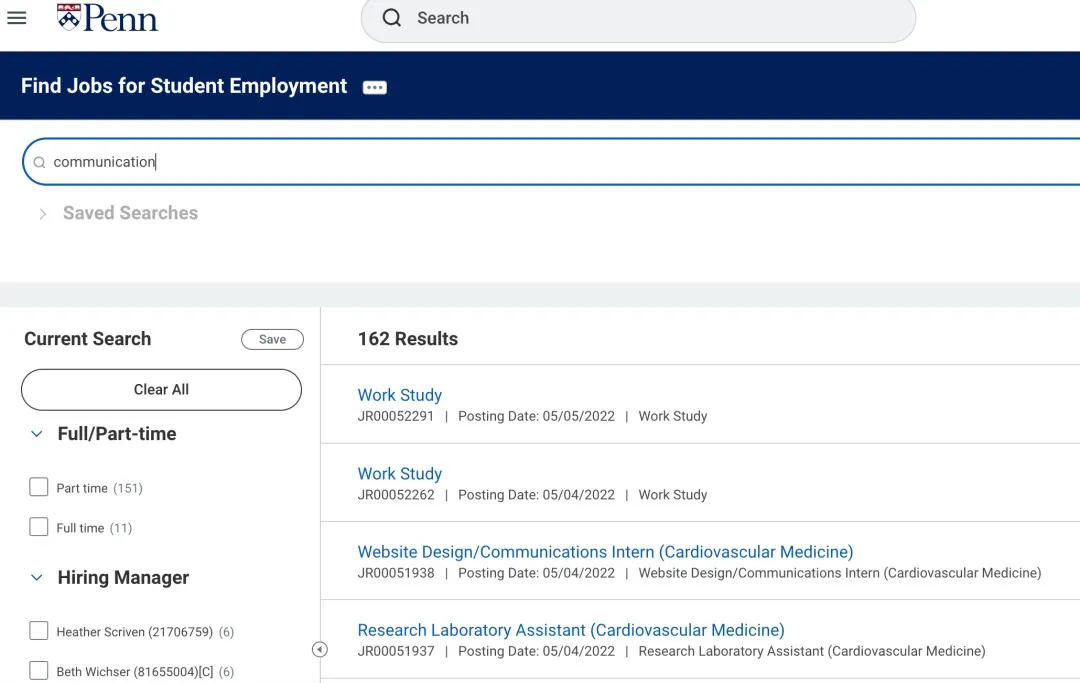
Though on-campus jobs may not be as diverse or abundant as off-campus opportunities, they don't require additional time to apply for CPT. Plus, the work environment and benefits on campus are quite good.
Off-Campus Internships
Off-campus internships can generally be found through your school's career services or by applying directly on the company's official website.
Each school's career service constantly updates available internship positions. Students can search based on their interests and then apply directly.
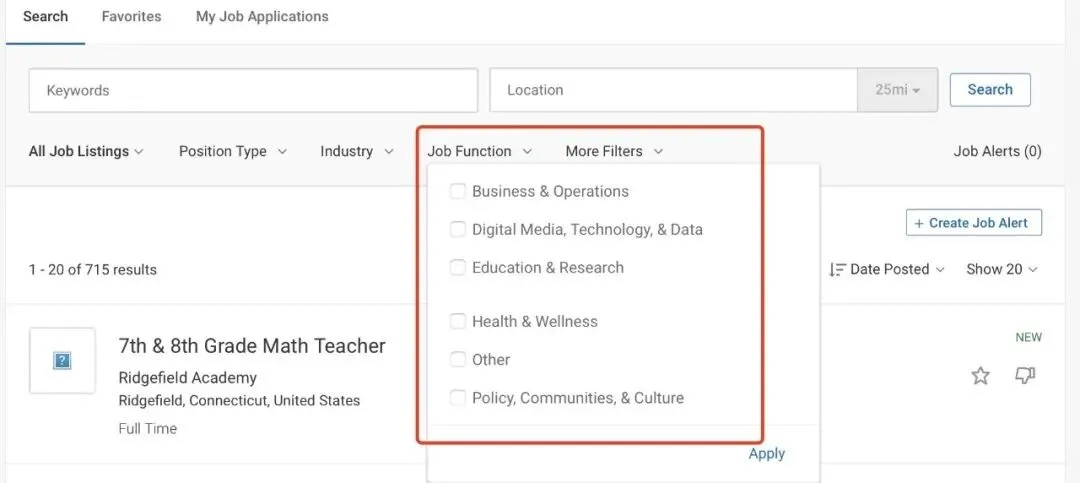
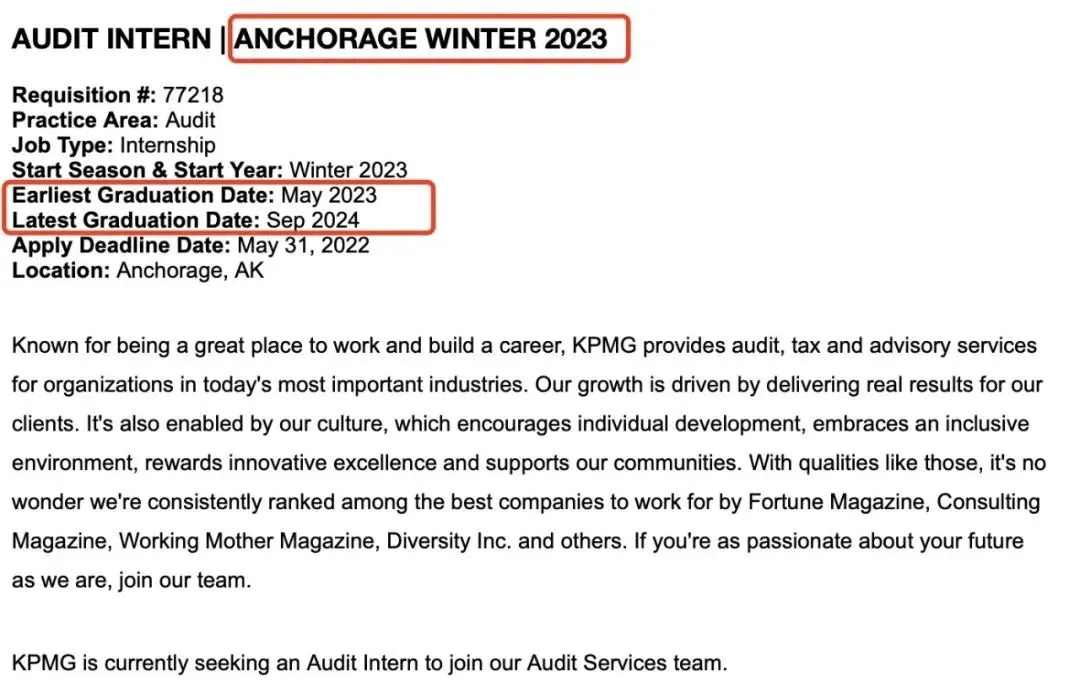
If applying through a company's official website, pay special attention to the position's requirements and whether there are grade-level restrictions for students.
Using KPMG, which has already opened its Winter 2023 internships, as an example: for the Audit Intern position, the earliest required graduation date is May 2023 and the latest is September 2024.
In other words, current freshmen and sophomores do not meet the eligibility requirements for this position.
Networking & An Impressive Resume
Internship applications also heavily rely on connections and networking. If you can get to know a full-time employee at the company or a well-known professor/expert and secure a referral, it's like getting a Fast Pass to an offer.
At the same time, having an eye-catching resume or LinkedIn profile can further boost a candidate's image.
Overseas resumes are very different from domestic ones. For example, English resumes have strict formatting requirements, you cannot include a personal photo, and you must clearly indicate your proficiency level for each skill.
If you fail to meet these resume standards, no matter how excellent all other conditions are, you might be considered an unprofessional applicant by the company.
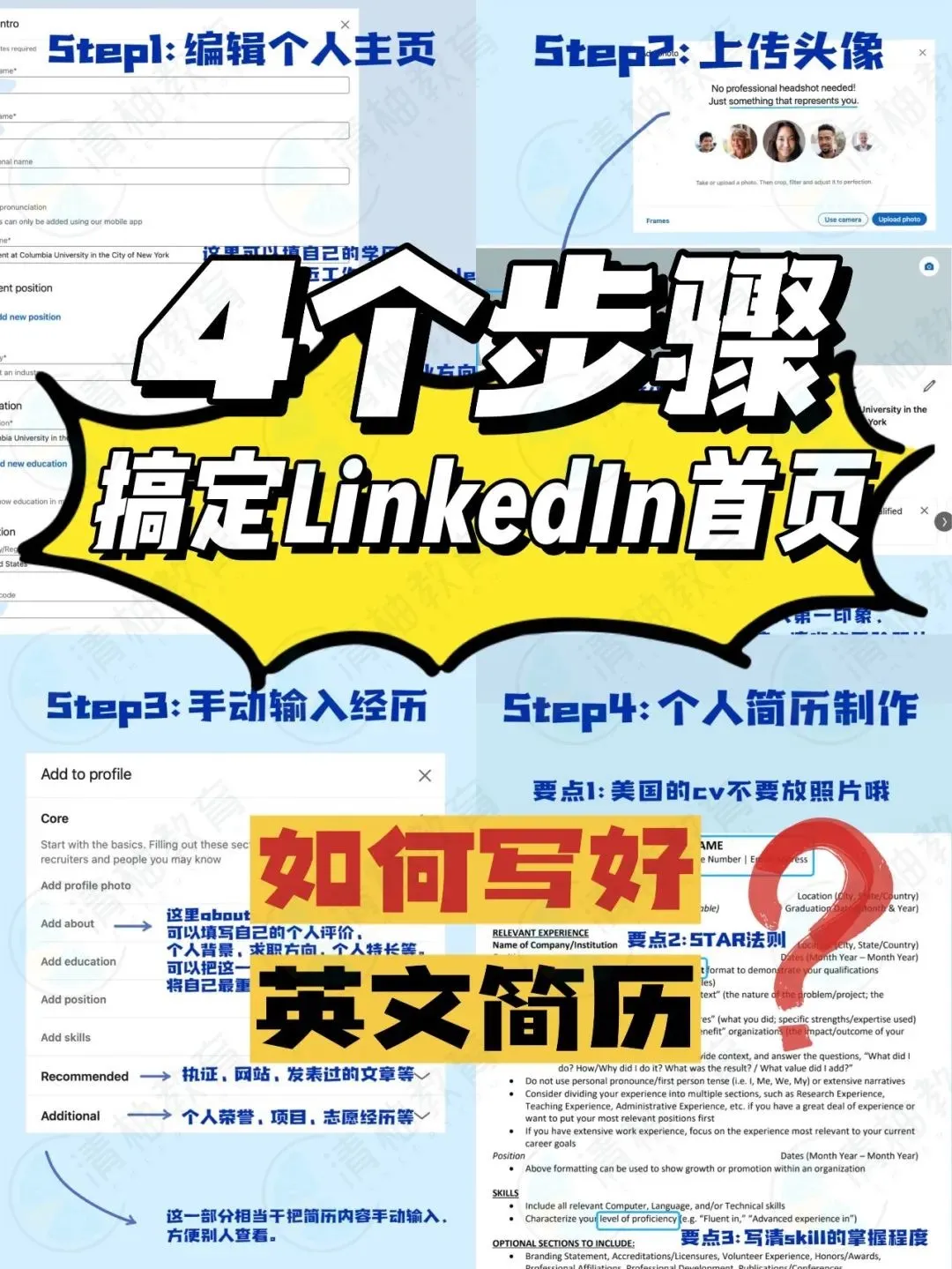
LinkedIn Resume Optimization Guide
How to Get the Guide
To get the "LinkedIn Resume Optimization Guide"
Please follow the official account "CheersYou(清柚教育) Study Abroad"
and reply with "resume" in the backend to receive it for free.

Everyone's path to success unfolds at a different pace. The position everyone is coveting may not necessarily be right for you.
The most important significance of an internship is to broaden your horizons and gain genuine knowledge through practice. What you have learned from an internship experience is what matters most, and it's what admissions committees are even more eager to see.
We hope every student can find their own development path and choose the internship best suited for them!