
With inflation, recurring pandemic outbreaks, and the Russia-Ukraine war driving sustained high oil prices, the already bleak economic outlook has become even more worrying. Even former hiring powerhouses—major tech companies are now freezing recruitment, rescinding job offers, and even conducting mass layoffs.

Is the Internet's Harsh Winter Approaching?
Recently, many tech giants have tightened their hiring needs and started to tighten their belts.
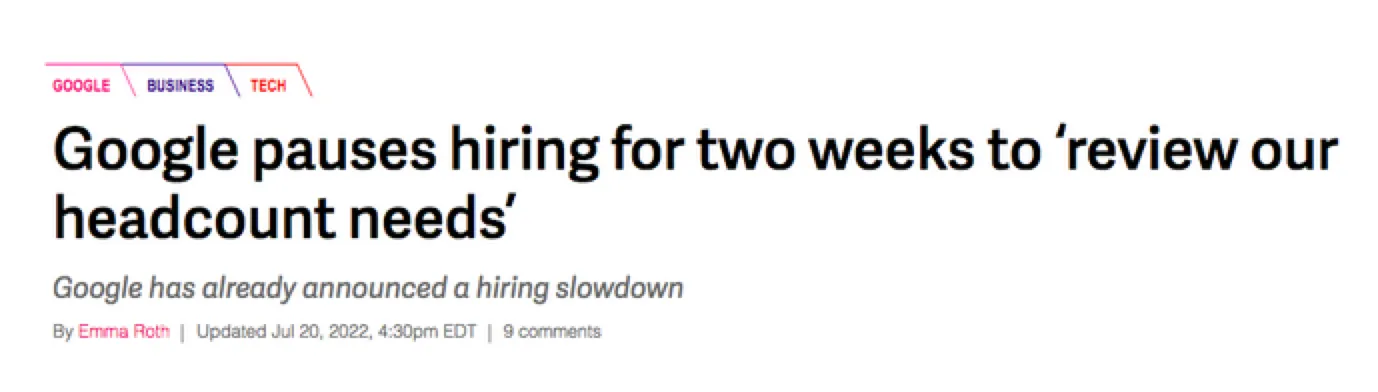
Google will suspend hiring for the next two weeks and slow down the recruitment pace through the end of the year.
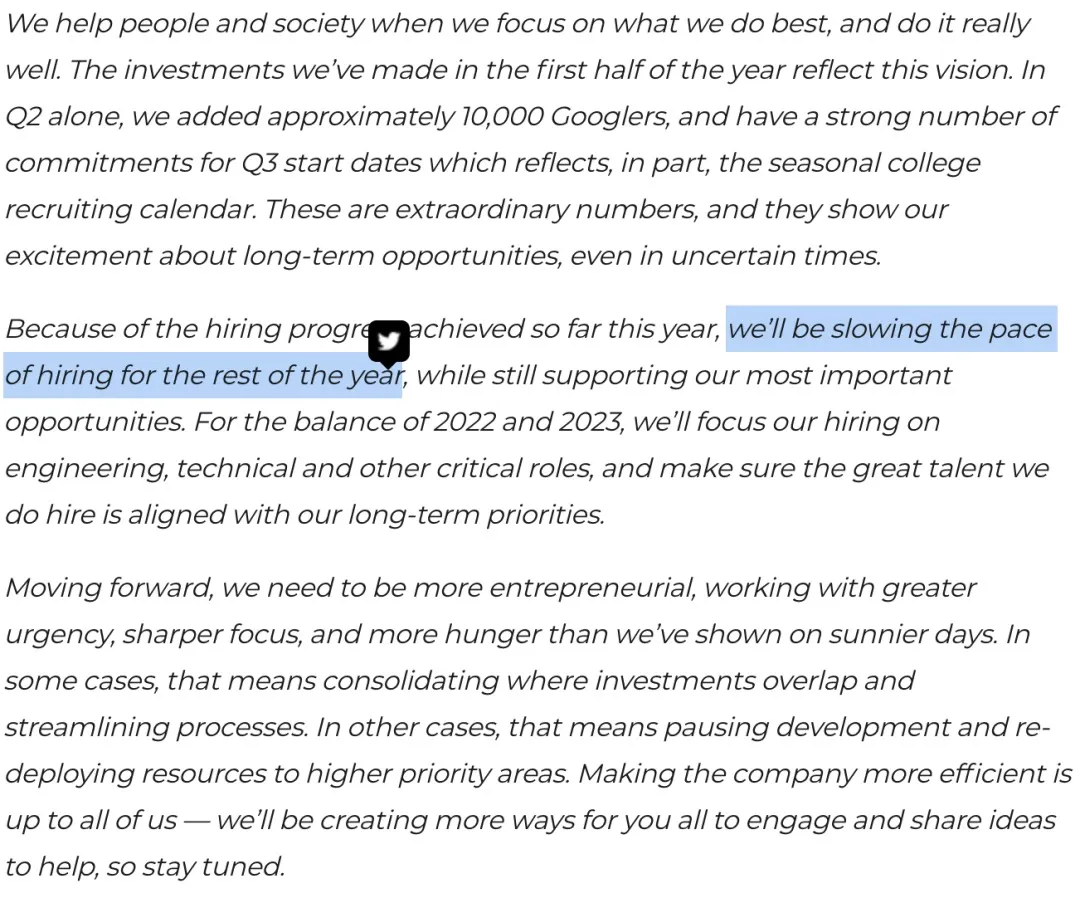
In an internal memo to employees, Google CEO Sundar Pichai said: The economic situation this year is not good, and Google is not immune. We already hired 10,000 people in Q2, so we will slow down recruitment for the next six months. Additionally, the company will accelerate consolidation and streamline personnel.
In short, if you don't work hard, you're out.
Apple
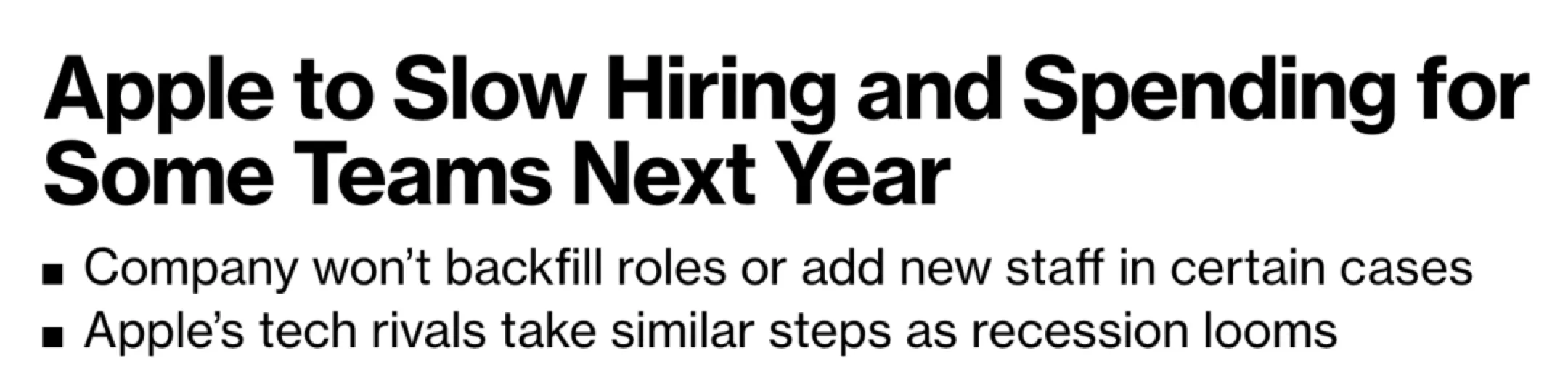
Apple also plans to slow down hiring and reduce spending. Some vacant positions will not be filled or replaced with new hires.
Lyft
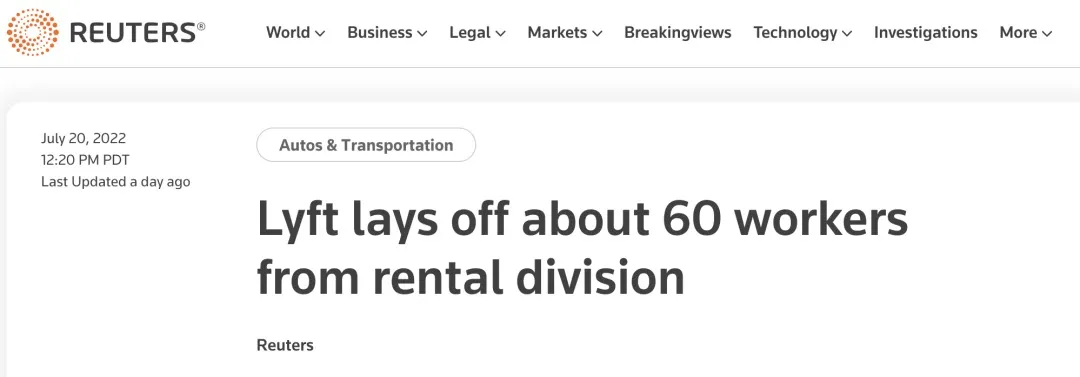
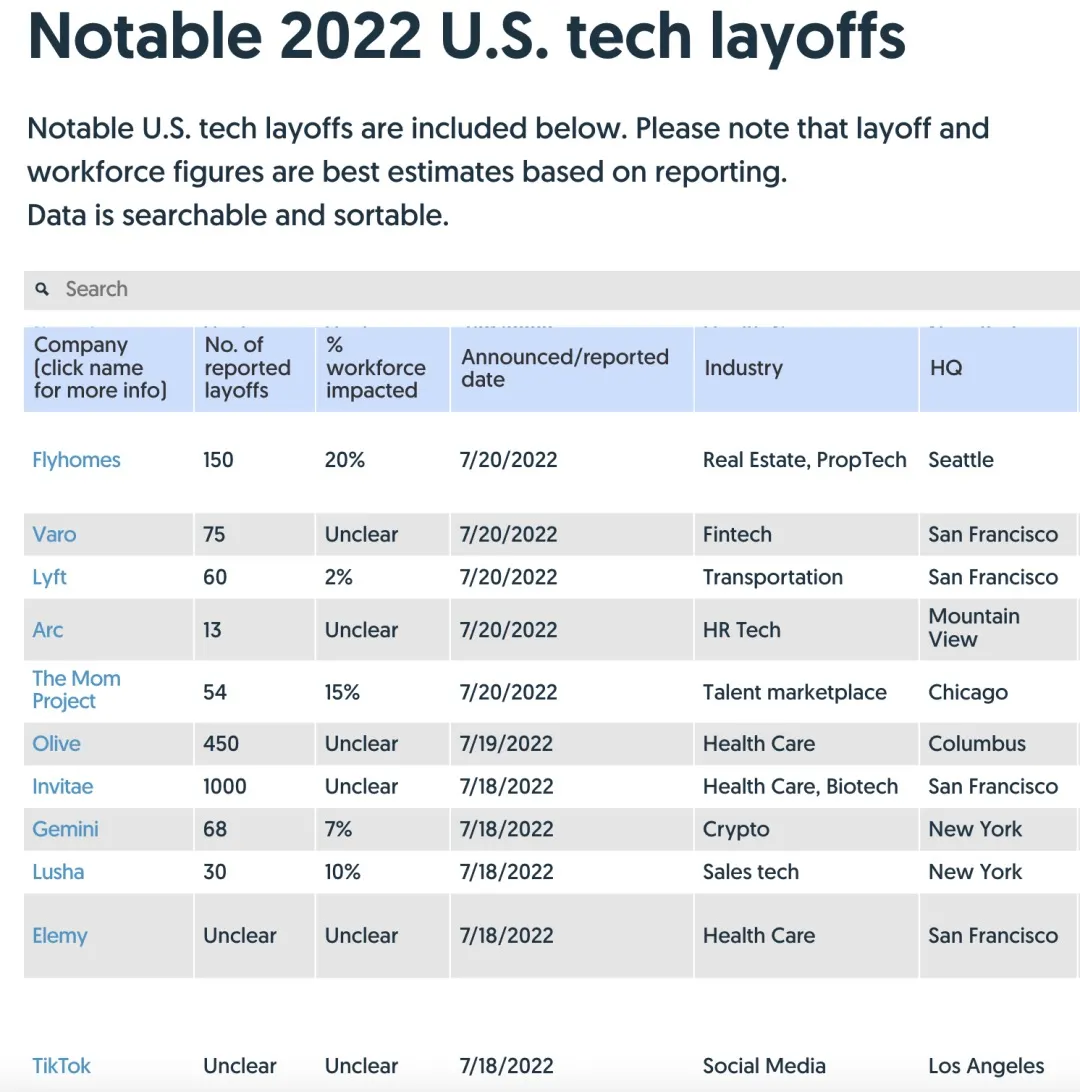
Lyft even axed an entire division, laying off 60 people.
The unlucky ones let go were from Lyft's long-term car rental business. Lyft will switch to partnering with rental companies like Hertz to cut operating costs.
Meta
Meta also implemented a severe hiring freeze, cutting engineer recruitment by at least 30%. CEO Mark Zuckerberg told employees he expects one of the worst economic downturns in recent years.

Tesla
Tesla recently laid off 229 employees. Elon Musk said he feels the economic situation will be very bad.

Microsoft
Microsoft stated that amid the economic downturn, it has canceled new job openings and laid off about 1% of its workforce.

Coinbase
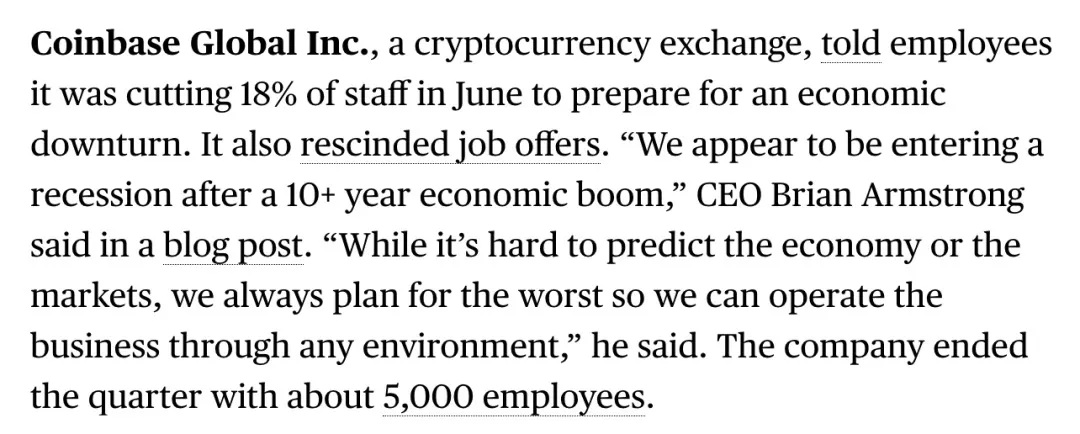
Coinbase laid off 18% of its staff to weather the economic winter. It also rescinded job offers that had already been extended.
Other companies joining the layoff wave include:
- Netflix: about 150 people
- PayPal: 83 people
- Robinhood: over 300 people
- Peloton: over 2,800 people
- Redfin: 6%
- JPMorgan Chase: over 1,000 people
- Twitter: about 100 people
......
This is just the tip of the iceberg of big tech layoffs. According to Crunchbase data, as of the end of July 2022, US tech layoffs have exceeded 30,000.
International Students' Job Search Gets Even Tougher
Amid this economic winter, the layoffs, hiring slowdowns, and forced PIP at these tech companies make life even harder for international students.
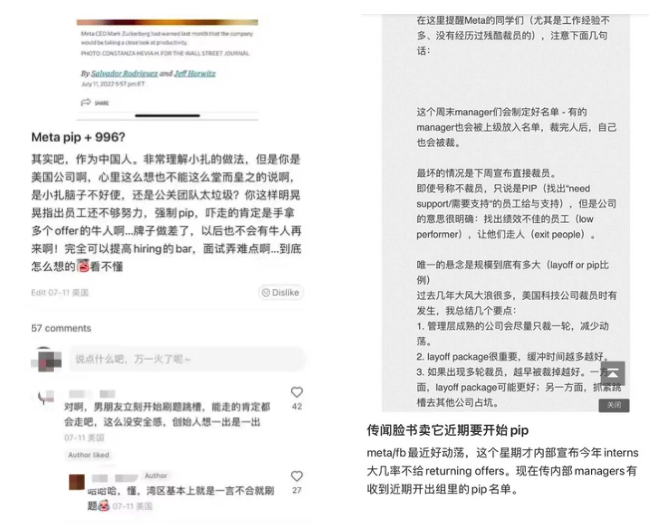
Meta was particularly brutal this year, directly not offering return offers to interns.

If you can't get a return offer, you might as well start grinding LeetCode early and leave. So there's now a Meta ex-intern LeetCode group chat 👇

Moreover, with Meta not giving return offers this year, many strong candidates will re-enter the job market, making this year's already hellish big tech job hunt even more competitive. With Google potentially slowing down hiring at year-end, it's a perfect storm.

Coinbase has indefinitely extended its hiring freeze and even revoked offers on the spot, causing many new grads to be blindsided.
Same goes for Pinterest:

Amid the economic winter, hiring freezes and cancellations of return offers at major companies make it even harder for new grads, as the brunt of the slowdown falls on entry-level positions.
Although the current cash flow at major companies isn't bad enough for mass layoffs, smaller-scale layoffs keep happening.
For example, the nerve-wracking PIP (Performance Improvement Plan) is widely recognized as the company's unspoken rule for firing employees. It's said that regardless of performance, many top-tier companies must cut 6-10% of their workforce each year, with some as high as 10%-15%.
With the bad economy, Meta has blatantly resorted to PIP, essentially meaning "if you don't work hard, go home." This will likely discourage another batch of new employees.
For someone who just got their H1B, or a student whose OPT is about to expire, suddenly facing a layoff makes things even worse and puts their immigration status in an awkward position. After all, both H1B transfer and solving work authorization issues after OPT expiration are difficult challenges.

Is There Still Hope to Break into a Big Tech Company?
This year's poor situation makes big tech job hunting even more difficult. But with effort, there's still a chance to take a shot and turn a bicycle into a motorcycle.
After all, in this era where everyone is switching to coding, grinding LeetCode is a case of short-term pain for long-term gain.
So what exactly do you need to prepare if you want to break into a big tech company?
Identify Your Professional Direction
Tech roles at major companies usually have strict academic background requirements, often necessitating a STEM degree. Therefore, choosing the right, relevant major is the first step to successfully entering a big tech company.
We recommend that everyone identify their career development direction as early as possible, understand the background requirements for different positions, and then strategically choose a major and select courses to build a solid academic foundation.
Gain Internship/Work Experience
Academic ability alone is not enough; having relevant internship or work experience is preferable. Big tech companies have always valued relevant practical experience, and many return offers are obtained after outstanding performance during an internship.
The threshold for core technical positions at major companies will only get higher. We suggest that after determining your career direction, you pursue as many relevant internships as possible.
Networking + a Standout Resume
When job hunting abroad, networking is essential, and big tech applications are no exception. If you know someone within the company, an alumni senior, or can get a referral from a renowned professor or industry expert, your chances of landing an offer are higher.
Moreover, a standout resume is a must. Resumes abroad differ greatly from those in China, so you need to pay extra attention to adjusting and polishing your resume content when applying overseas.
Consider Further Studies
For undergraduates, if you can't get a desired offer immediately and don't want to settle, we suggest considering graduate school. Pursuing further studies is one of the shortcuts to enhancing job competitiveness, and many master's programs themselves are employment-oriented.
During an economic downturn, taking time to study and transition can not only increase your knowledge base and gain more practical experience, but also improve your competitiveness and uncover better job opportunities.
No matter the macro environment, continuously improving yourself is always the hard truth. Only by standing higher can you spot more opportunities.
We hope all international students can keep calm, handle things without panic, and trust that success will eventually come to you!