Studying abroad as an educational investment has become a choice for many families. However, compared to studying domestically, the high cost of overseas education creates financial pressure for average families, so cost is an unavoidable factor when deciding where to study.
In addition, the value for money of studying abroad is also a major concern. Scholarships, the cost of living, salary levels, and employment policies in the destination country all affect how quickly international students can recoup their costs and improve their return on investment.
In the 2023 application season, many students continue to consider multi-country or multi-region application strategies. So what are the cost differences when studying in different countries or regions? And what are the latest favorable policies that can help students recover costs faster? CheersYou(清柚教育) will guide you through the details today.
United States
Undergraduate programs in the U.S. typically last 4 years, while most master’s programs take around 1.5 to 2 years.
Tuition at public universities is cheaper than at private universities:
Private university tuition: approximately $25,000–$55,000 per year
Public university tuition: approximately $15,000–$40,000 per year
In terms of living expenses:
Tier-1 cities (largest U.S. metropolitan areas): living costs $1,000–$2,000 per month
Tier-2 cities (large U.S. cities): living costs $800–$1,000 per month
Tier-3 cities (some states in the South, Midwest, and Southeast): living costs $600–$800 per month
Tier-4 cities (Oklahoma, Missouri, Louisiana, etc.): living costs $450–$600 per month

Overall, the total cost for a 4-year undergraduate degree in the U.S. is approximately RMB 540,000 to 1.8 million; a 1-year master’s degree costs about RMB 200,000 to 400,000; and a 2-year master’s degree costs about RMB 400,000 to 800,000.
Favorable policies for studying in the U.S.
High degree recognition
U.S. education emphasizes the cultivation of critical thinking and practical skills, and its degrees are highly valued. Graduates are more competitive in the job market.
Three-year work authorization for STEM programs + 22 new STEM fields added
For international students seeking to work in the U.S., non-STEM programs grant 1 year of OPT work authorization, while STEM programs offer 3 years. Earlier this year, the U.S. government added 22 new fields of study to the STEM list.
Work visa returns to random lottery
At the end of last year, the U.S. Department of Homeland Security officially announced the restoration of the original H-1B random lottery, eliminating the previous administration's wage-level-based allocation system that was extremely unfriendly to non-STEM students.
Abundant scholarship resources
The U.S. is a country with substantial education funding and generous scholarships, most of which are open to international students.
Biggest winner from the UK's HPI work visa
The new High Potential Individual visa is open to recent graduates of top global (non-UK) universities seeking work opportunities in the UK, and U.S. institutions account for half of the eligible universities list.
United Kingdom
Undergraduate programs in the UK are generally 3 years, and postgraduate programs are 1 year.
Tuition is influenced by university ranking, location, and subject:
Higher-ranked institutions tend to charge more.
Tuition in developed areas is higher than in other regions.
STEM tuition is higher than humanities.
Arts, medicine, and design are more expensive than STEM.
Undergraduate level:
Humanities: approximately £11,250–£16,650
STEM: approximately £11,500–£18,200
Medicine: approximately £11,950–£20,200
Postgraduate level:
Humanities: approximately £11,750–£22,000
STEM: approximately £11,500–£25,950
Medicine: approximately £12,200–£30,400
Additionally, international students may choose to take a 1-year foundation course. Undergraduate foundation tuition is roughly £10,000–£18,000 per year, and postgraduate foundation courses range from £10,000 to £21,000.

Living expenses vary by regional consumption levels and personal habits. According to official data from the UK's National Union of Students (NUS), including food, accommodation, transport, and shopping, students in England (excluding London) spend at least £14,580 per year.
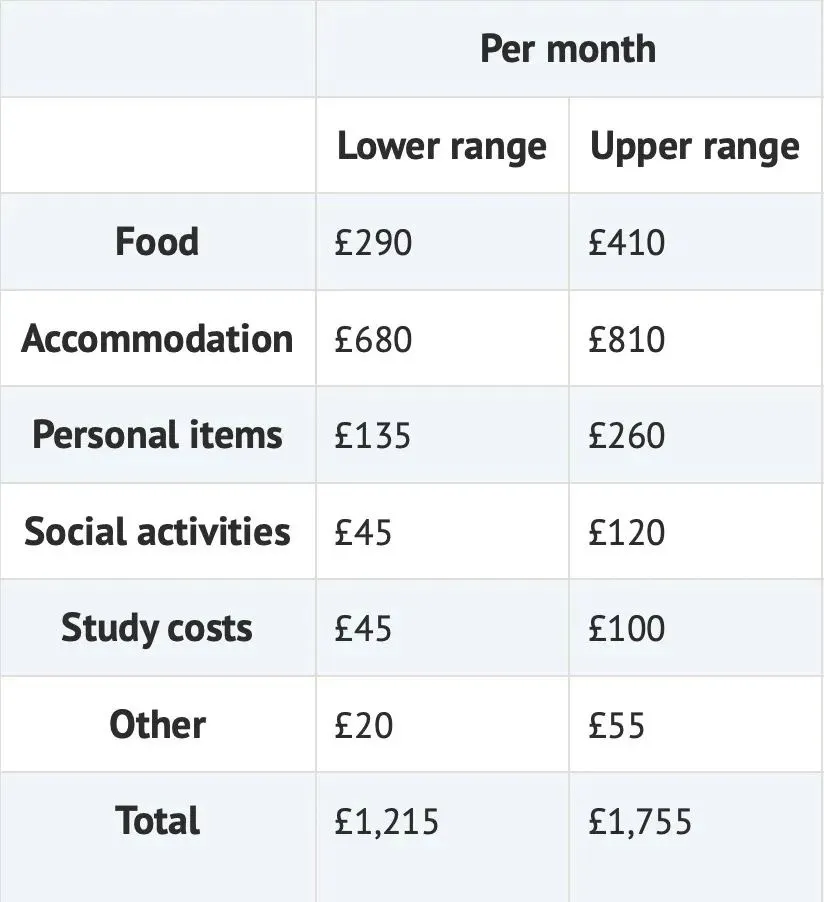
If studying in London, annual expenses can reach £15,600. These figures allow for a relatively comfortable lifestyle without working. Some students who work part-time and live frugally can limit their annual spending to under £7,000; in London, with active work and frugal habits, costs can be kept under £10,000.
Overall, the cost for a 3-year undergraduate degree in the UK is approximately RMB 510,000–750,000, and a 1-year master’s degree costs about RMB 190,000–280,000.
Favorable policies for studying in the UK
Extended student visa period
International students who graduate with a degree from a UK institution are granted a 6-month to 1-year visa extension, allowing them to seek employment without restriction in the UK.
Reinstatement of the PSW work visa
International students graduating in summer 2021 and thereafter are eligible for the new Graduate Route visa, valid for two years (three years for PhD graduates). Individuals can work or look for work in any sector and at any level.
Canada
Undergraduate study in Canada typically lasts 3 to 4 years, and master’s programs vary by field, generally 1 to 2 years.
Tuition fees at Canadian higher education institutions are generally lower than in countries like the UK, US, and Australia. The exact cost depends on the institution, degree, and program.
Undergraduate tuition in Canada ranges from CAD 20,000 to 40,000 per year. For postgraduate studies, research-based master’s programs cost around CAD 10,000 per year, while professional master’s programs cost CAD 20,000–30,000 per year.
Depending on the type of institution and location, study costs can vary by about CAD 8,000–10,000.

In terms of living expenses, annual costs range from CAD 10,000 to 15,000 depending on the city.
Overall, the cost for a 3-year undergraduate degree in Canada is RMB 330,000–660,000, and for a 4-year degree it is RMB 440,000–780,000. A master’s degree costs approximately RMB 110,000–600,000.
Favorable policies for studying in Canada
Work permit policy
Graduating international students are unconditionally eligible for a work permit of up to 3 years. Spouses of international students can apply for an open work permit. Last year, Immigration Canada extended the policy that "online study from abroad does not affect eligibility for the Post-Graduation Work Permit (PGWP)" until August 31, 2022.
Other benefits
If one parent is an international student in Canada, their children can attend public primary and secondary schools tuition-free. Additionally, the Minister of Immigration recently mentioned that they are considering resuming Express Entry pathways to help international students and temporary foreign workers gain permanent residency.
Australia
Undergraduate programs in Australia typically take 3 years, while science, engineering, and medicine-related programs often take 4 years. Master’s programs are more flexible, with lengths of 1, 1.5, or 2 years.
Annual undergraduate tuition: approximately AUD 13,000–23,000. Master’s tuition: approximately AUD 16,000–25,000 per year.
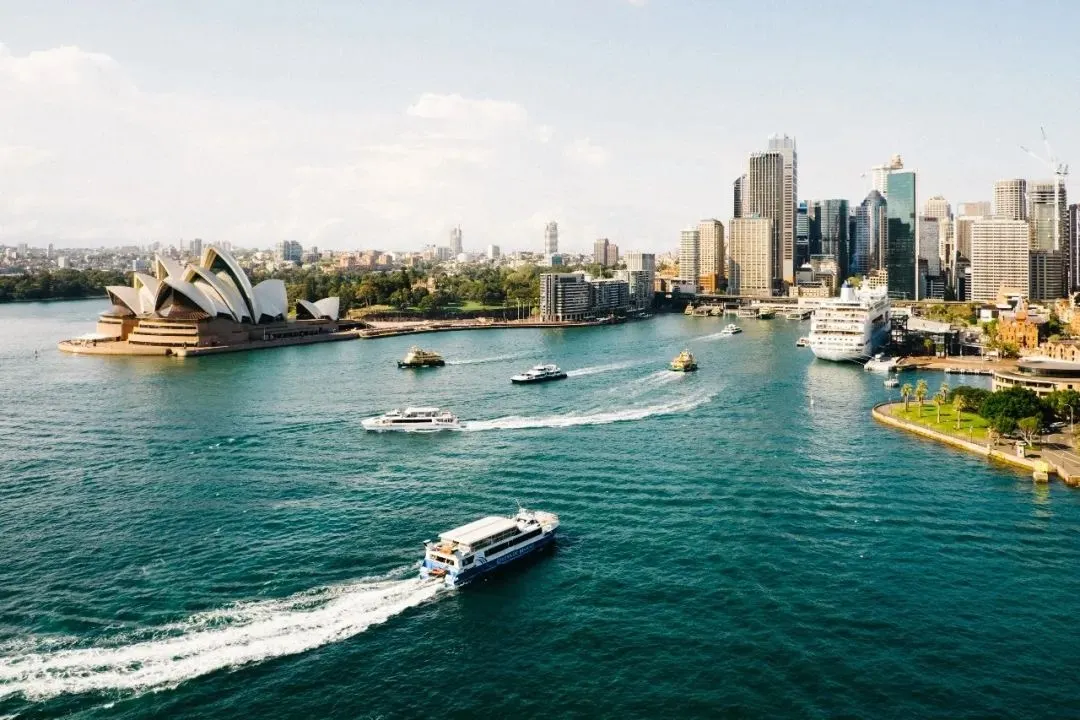
For international students, the Australian government suggests an official living cost of AUD 12,000 per year. Living costs are highest in Sydney, while Melbourne, Queensland, Canberra, South Australia, and Western Australia are somewhat lower.
Overall, a 3-year undergraduate degree in Australia costs about RMB 450,000–630,000; a 4-year degree costs RMB 600,000–840,000. A master’s degree: 1-year costs RMB 160,000–220,000; 1.5-year costs RMB 240,000–330,000; 2-year costs RMB 320,000–440,000.
Favorable policies for studying in Australia
Automatic two-year post-study work visa
A 2-year work visa is granted after graduation with no field restrictions. International students in cities outside Sydney, Melbourne, and Brisbane are eligible for an additional year, resulting in a 3-year work visa.
Significant increase in skilled migration quotas
In the 2022–23 fiscal year, Australia’s skilled migration quota increased by over 30,000. The quota for the Skilled Independent visa (subclass 189) has also risen to 16,652, which is good news for students in high-demand fields like medicine.
Government's "Immigration Skills Incentive" program
At the end of April this year, the Australian government announced an AUD 17.9 million investment in the "Immigration Skills Incentive" program, providing free career-related training to skilled migrants.
Singapore
Undergraduate programs at public universities in Singapore last 4 years; research-based master’s degrees take 1.5–2 years, and taught master’s degrees take 1–1.5 years. Private university undergraduate programs take 2–3 years, and master’s programs can usually be completed in 1–1.5 years.
Fees vary by type of institution, but living expenses are relatively similar.
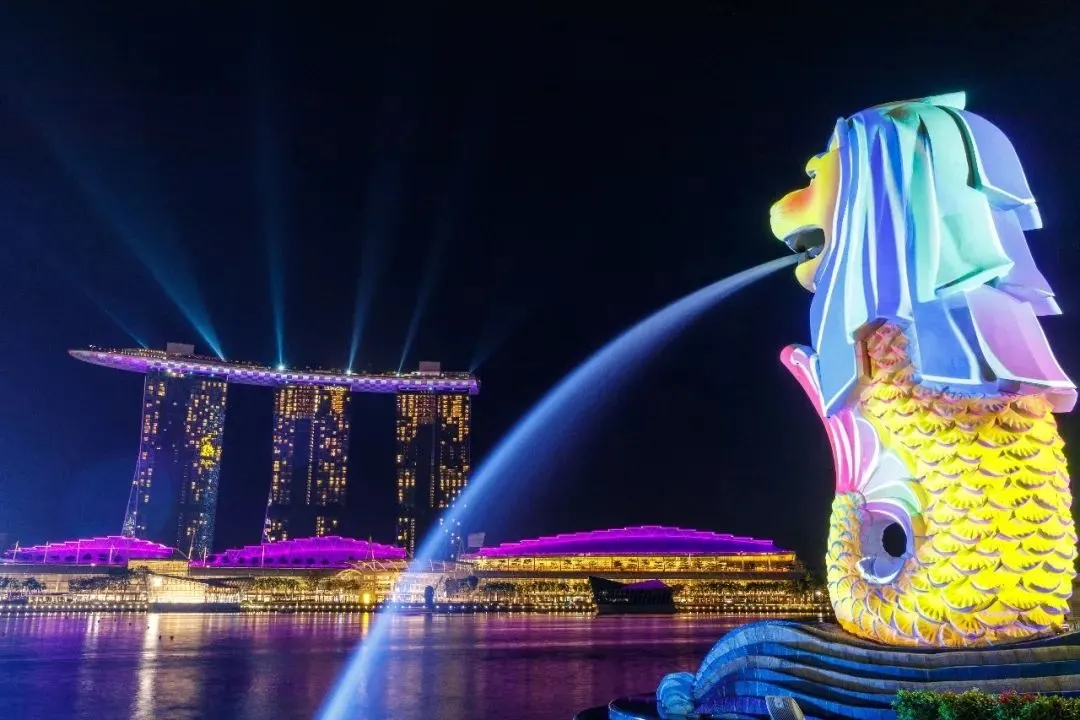
Singapore's public universities offer bachelor’s, master’s, and doctoral programs. For most programs, tuition is around SGD 20,000 per year; medical students pay about SGD 80,000 per year; art students about SGD 40,000 per year.
Private university foundation course tuition: SGD 8,000–12,000 per year. First and second years of specialized study: SGD 6,000–10,000 per year; third year: SGD 16,000–25,000 per year.
Overall, the cost of studying in Singapore for one year is approximately RMB 150,000–250,000. Total cost can be estimated based on the actual duration of study.
Favorable policies for studying in Singapore
Government tuition grant
STEM graduates who work in Singapore for three years after graduation can apply for a government grant of about SGD 20,000. Students in other fields who accept a work obligation are also eligible for grants.
Language advantage
Chinese is one of the official working languages in Singapore, so Chinese international students can leverage their native language to better integrate into the local work and cultural environment.
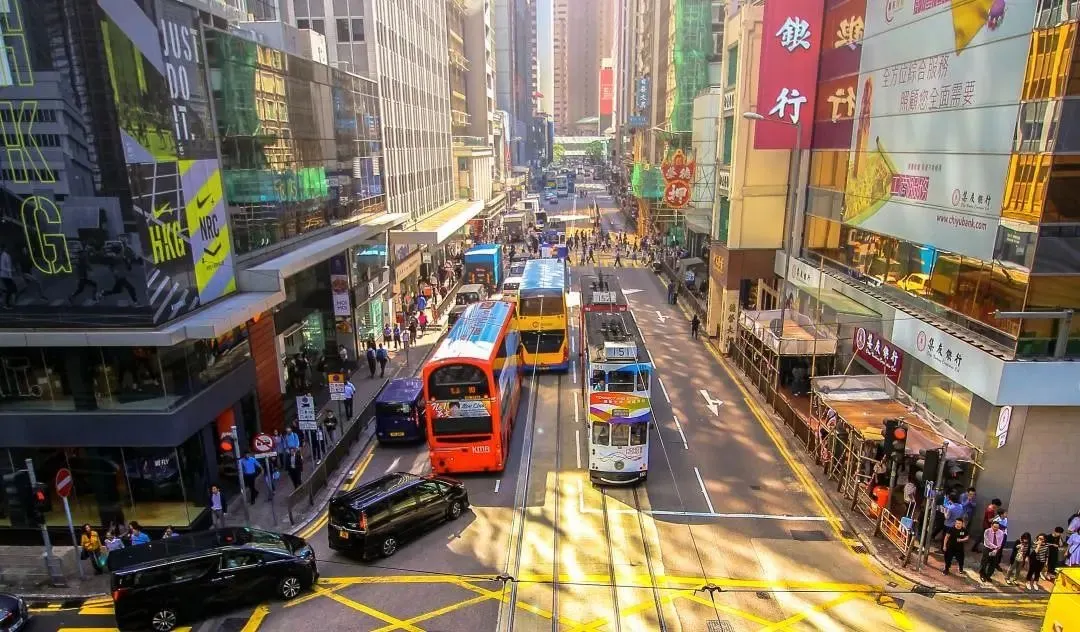
Hong Kong
In Hong Kong, undergraduate programs last 4 years, and postgraduate programs typically last 1 year.
Tuition generally ranges from HKD 100,000 to 200,000, with business programs usually higher at HKD 150,000–300,000.
Living in Hong Kong, cooking at home costs about the same as on the mainland, but rent and transport are significantly more expensive. Annual living expenses are around HKD 80,000–150,000.
In total, an undergraduate degree in Hong Kong costs approximately HKD 700,000–1.5 million, and a postgraduate degree costs around HKD 200,000–400,000.
Favorable policies for studying in Hong Kong
12-month stay after graduation
Non-local fresh graduates who apply can unconditionally renew their visa for 12 months upon expiry, allowing them to freely seek employment locally.
Permanent residency
After residing in Hong Kong for 7 consecutive years, one can obtain permanent residency. For international students, this means studying for 4 years and working for 3 years meets the requirement.
Work visa advantages
A Hong Kong work visa covers the spouse, who can also work in Hong Kong without restrictions. Both spouse and children are entitled to Hong Kong's medical and social services.
The above summarizes the study-abroad costs in major popular destinations, though specifics may vary by time and individual circumstances. All favorable policies are subject to the latest official updates.
No matter how external circumstances change, finding the program that best fits your development goals, putting in the effort, and persevering is truly the key to making studying abroad a high-value investment.
The new application season is about to begin—your grad school preparation can't be delayed any longer! Best of luck to everyone in receiving offers from your dream schools~