Finally!!
After traveling to multiple places just to get home, closely following the latest return policies
From a 7-day self-health surveillance to two tests within three days before boarding
Various nucleic acid proofs, vaccination proofs, green health codes
Return tickets harder to get than gold, quarantine longer than the vacation itself
Those days
ARE. FINALLY. OVER!
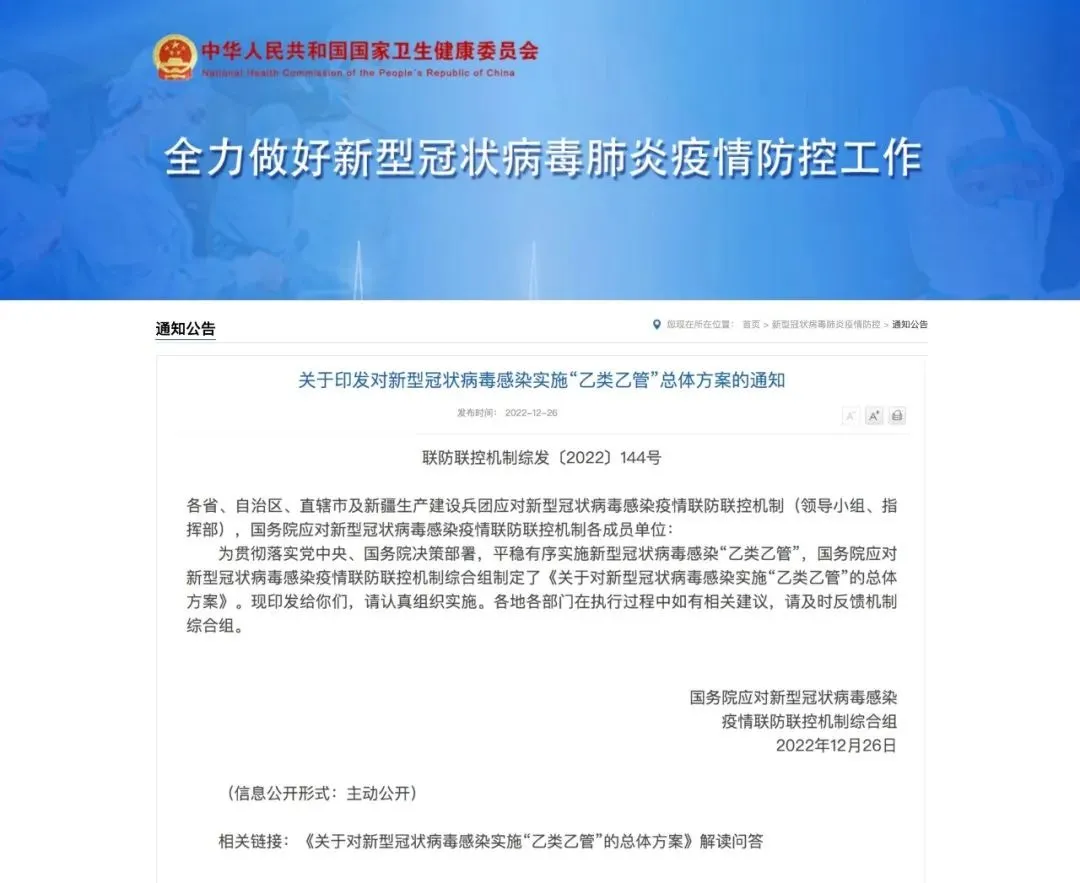
On the evening of December 26, the State Council Joint Prevention and Control Mechanism issued the "Overall Plan for Implementing Category B Infectious Disease Management for COVID-19."
The latest policy highlights Optimizing Cross-Border Personnel Flow Management:
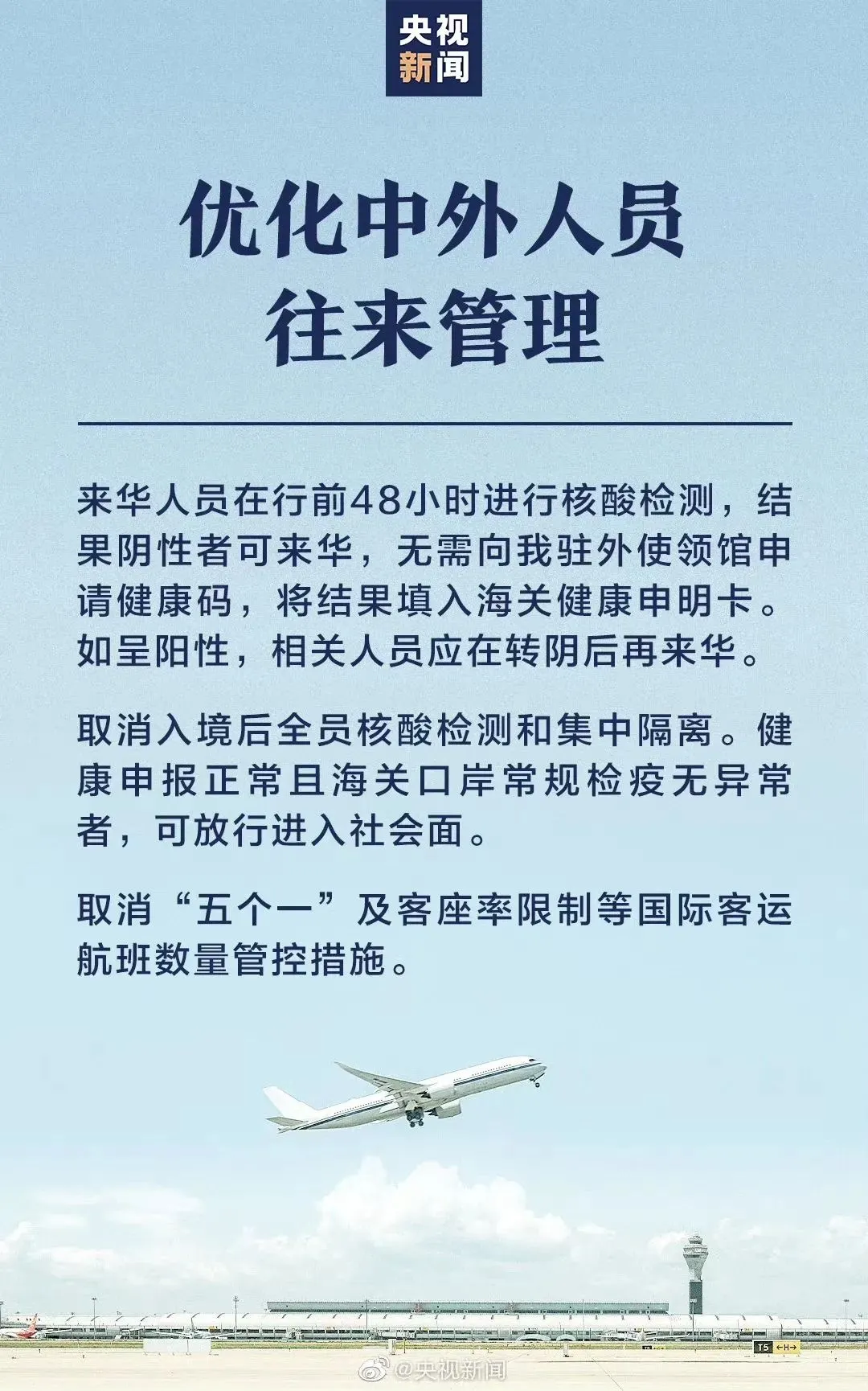
Starting January 8, 2023, individuals traveling to China only need to take a nucleic acid test within 48 hours before departure. Those with negative results may enter China without applying for a health code from Chinese embassies or consulates abroad; they simply report the result in the customs health declaration card. If positive, they should delay travel until testing negative.
Mandatory nucleic acid testing and centralized quarantine upon arrival are eliminated. Individuals with normal health declarations and passing routine port quarantine checks are allowed to enter the community freely.
The "Five One" and passenger load cap policies, as well as other quantitative controls on international passenger flights, are terminated.
Airlines are to continue on-board epidemic prevention measures, and passengers must wear masks during flights. Further optimize arrangements for foreign nationals traveling to China for work resumption, business, study, family visits and reunions, and provide corresponding visa convenience. Gradually resume water and land port passenger entry and exit.
Depending on international epidemic developments and service support capacities, orderly resume outbound tourism by Chinese citizens.
A simple summary:
● A negative nucleic acid test within 48 hours before boarding and you can come home!
● No more on-arrival nucleic acid testing and centralized quarantine, no more being taken to a hotel!
● The "Five One" and load restrictions are gone, international flights fully reopened!
● Masks required on board, outbound tourism to resume in an orderly manner!
Also, according to the "Category B Management" plan, starting January 8, the return process for overseas Chinese will be greatly simplified. Now only the following six steps remain:
1) Book a flight ticket
2) Take a nucleic acid test within 48 hours before boarding
3) Present the negative test report when boarding
4) Onboard, fill out the customs health declaration card distributed by the crew (similar to a tax declaration form)
5) Clear customs with a normal declaration
6) Whether direct or transit, head straight home
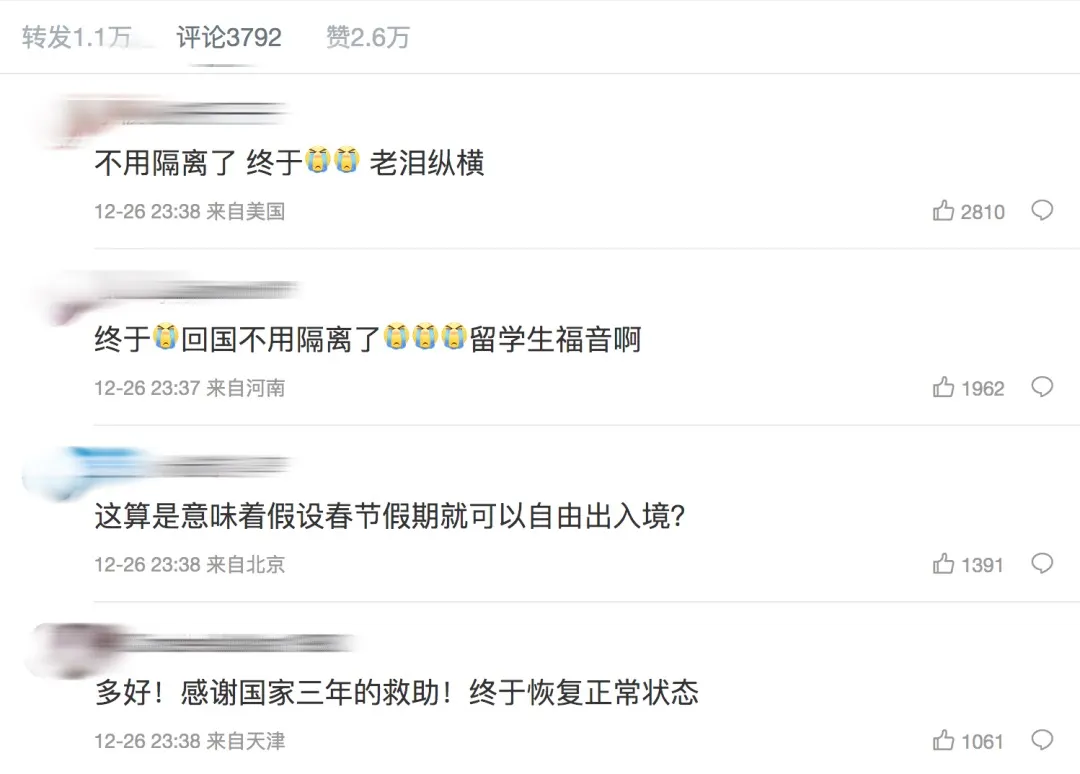
For international students, this was a sudden piece of great news, with many expressing under related Weibo posts, "The tough three years are finally over!"
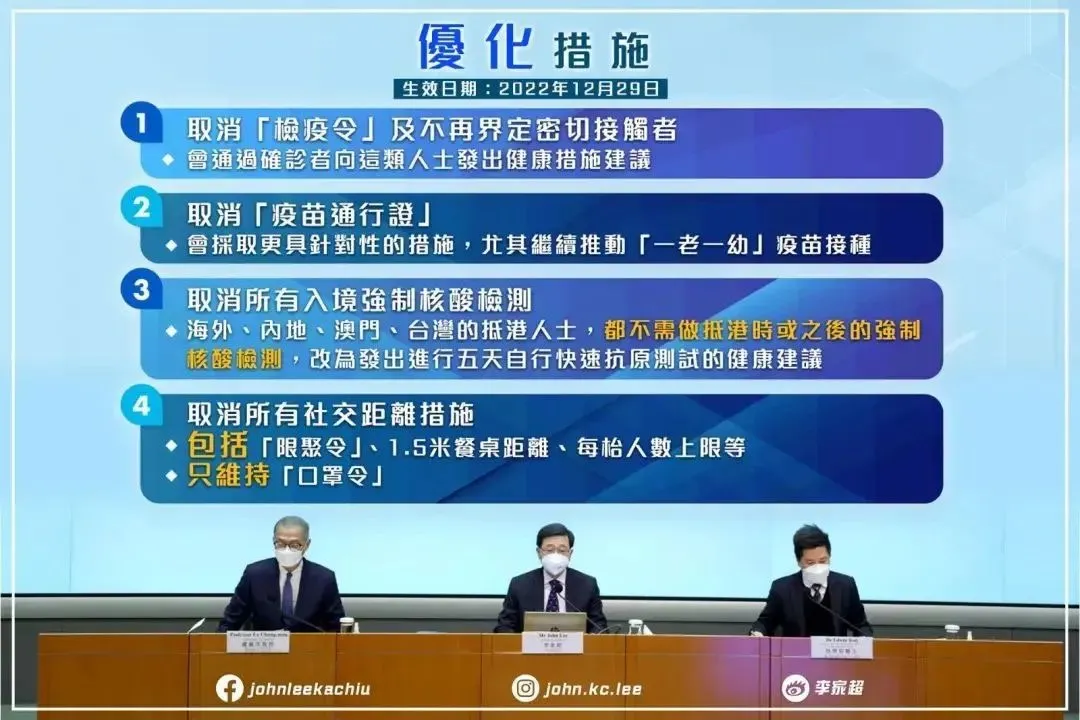
In addition, on December 28, the Hong Kong Special Administrative Region announced relaxed COVID measures! Except for wearing masks, other restrictions are largely lifted. Optimization details are as follows:
1) Quarantine orders are canceled, and identification of close contacts is abandoned;
2) The "vaccine pass" measure is scrapped, replaced with more targeted measures including promoting vaccination for the elderly and children;
3) All mandatory on-arrival nucleic acid testing is lifted;
4) All social distancing measures, including gathering bans and venue capacity limits, are removed; the "mask mandate" remains in effect.
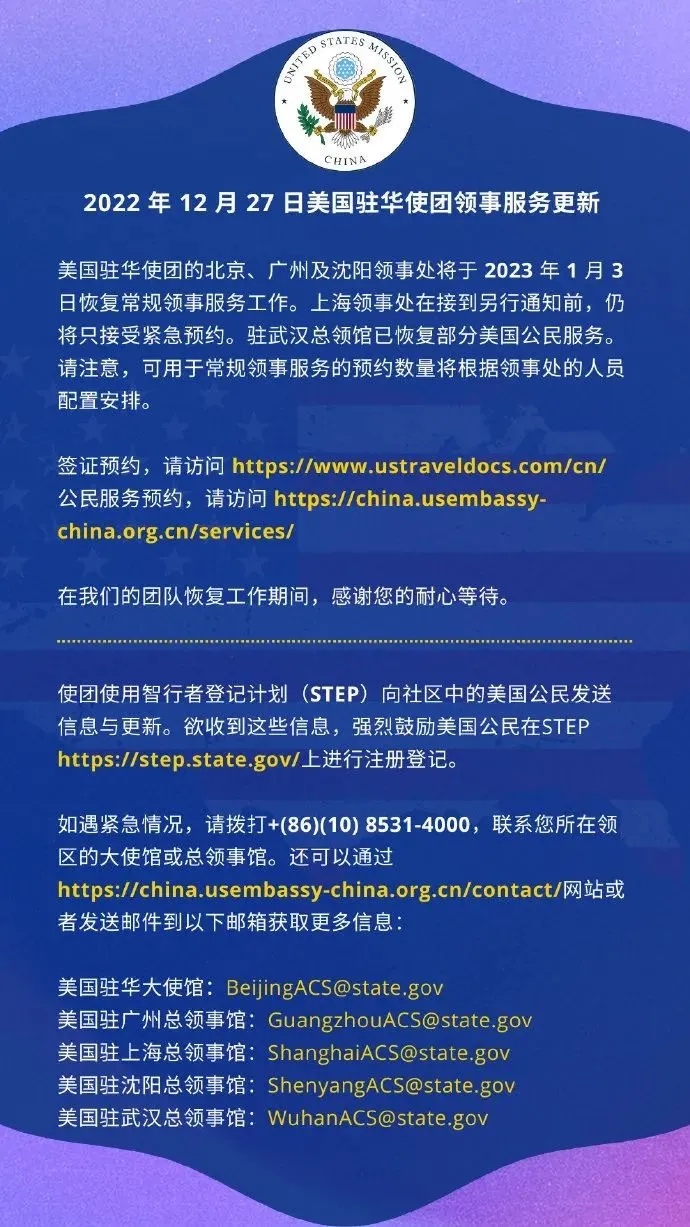
Following the easing of entry policies, the U.S. Embassy in China has also been gradually resuming operations and announced on its official Weibo:
● The U.S. Mission in China’s consular sections in Beijing, Guangzhou, and Shenyang will resume routine consular services on January 3, 2023.
● The Shanghai consulate will still accept only emergency appointments until further notice.
● The U.S. Consulate General in Wuhan has resumed some American citizen services.
● Please note that the number of appointments available for routine services will be based on staffing levels at each consular section.
Travelers from China to the U.S. Must Present Negative Nucleic Acid Report!
As China relaxes entry rules for inbound travelers, some countries have begun tightening their own border measures, imposing additional checks on visitors from China.
On December 28, the U.S. Centers for Disease Control and Prevention (CDC) announced that starting January 5, 2023, travelers from Mainland China, Hong Kong, and Macau flying to the United States will be required to provide a negative COVID test or documentation of recovery.
The CDC stated this is to reduce the number of infected passengers boarding flights, "helping slow the emergence of the virus." The agency also said it will continuously monitor the situation and adjust (U.S. entry) measures as needed.
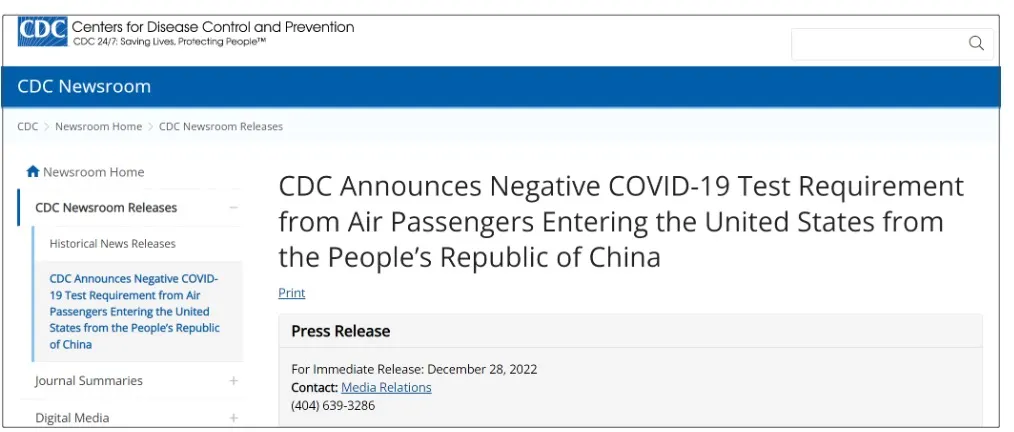
A summary of the CDC announcement:
1) Effective date:
12:01 AM Eastern Time on January 5, 2023
(Passengers boarding flights to the U.S. before this time are not subject to the requirement)
2) Who needs to test:
● All passengers aged 2 and older on direct flights from Mainland China, Hong Kong, and Macau to the U.S., regardless of nationality or vaccination status, must provide a COVID test report.
● Passengers departing from Mainland China, Hong Kong, and Macau and transiting in the U.S. to other countries/regions also need a test report.
● Those transiting at Seoul Incheon (ICN), Vancouver (YVR), or Toronto Pearson (YYZ) airports, if they have travel history to China within the previous 10 days, are considered as departing from China and need a test report.
For passengers departing from Mainland China, Hong Kong, or Macau and transiting elsewhere, the CDC has not specified a test requirement but said it will continue to monitor and adjust dynamically.
Additionally, passengers arriving in the U.S. via land border crossings (from Canada or Mexico) or water ports do not need a COVID test report.
3) Test requirements:
● A negative PCR nucleic acid test result taken within 2 days before departure, or
● A negative antigen test result taken within 2 days before departure using a self-test kit under remote medical supervision, or
● Documentation of recovery from COVID-19 issued by a doctor, if the positive test was more than 10 days prior. [If you have already tested negative, a nucleic acid or antigen test is sufficient; this documentation is not needed.]
No designated testing institutions, but the report must come from a provider accredited by its home country or the U.S. FDA.
4) Verification:
Checked by the airline. Whether the report needs to be in both Chinese and English is up to the airline.
5) Vaccine proof:
Passengers aged 18 and older holding non-immigrant visas (B/C/F/J/H/L/M/O, etc.) must still present proof of vaccination meeting CDC requirements.
6) After arrival:
Upon landing, CDC officials may voluntarily take a nasal swab for PCR testing to detect new variants. Passengers are swabbed and free to go; no charge, and no additional restrictions if positive.
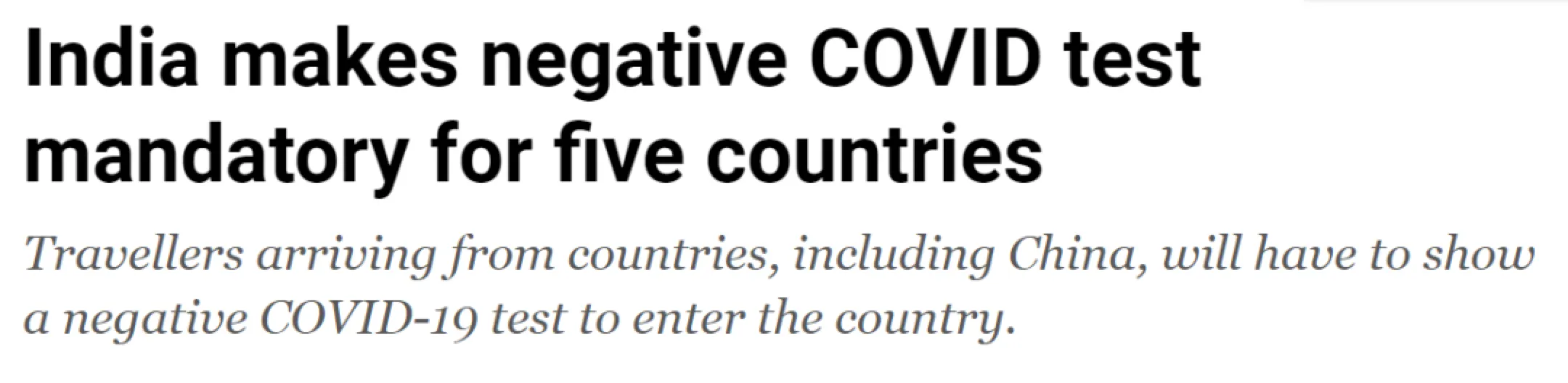
In addition to the U.S., Japan, South Korea, India, and Italy have also announced new measures targeting travelers from China.

Of course, there is no need to panic. A Foreign Ministry spokesperson stated that all parties need to fight the epidemic scientifically, work together to ensure safe cross-border movement, maintain the stability of global industrial and supply chains, and promote world economic recovery. China has always believed that countries' COVID measures should be science-based and proportionate, not affecting normal personnel exchanges.
Although some countries have tightened rules for Chinese travelers, many countries respond with a friendly and open attitude.
Embassies and tourism boards of multiple countries have posted on Weibo, extending travel invitations and welcoming Chinese tourists! Among them are Canada, Australia, New Zealand, Denmark, the Netherlands, Spain, Portugal, Austria, Switzerland, and more.

Summary of Direct Flights between China and the U.S.
As policies continue to open up, CheersYou(清柚教育) has compiled the latest direct flight routes from China to the U.S. for major airlines. Take a look!
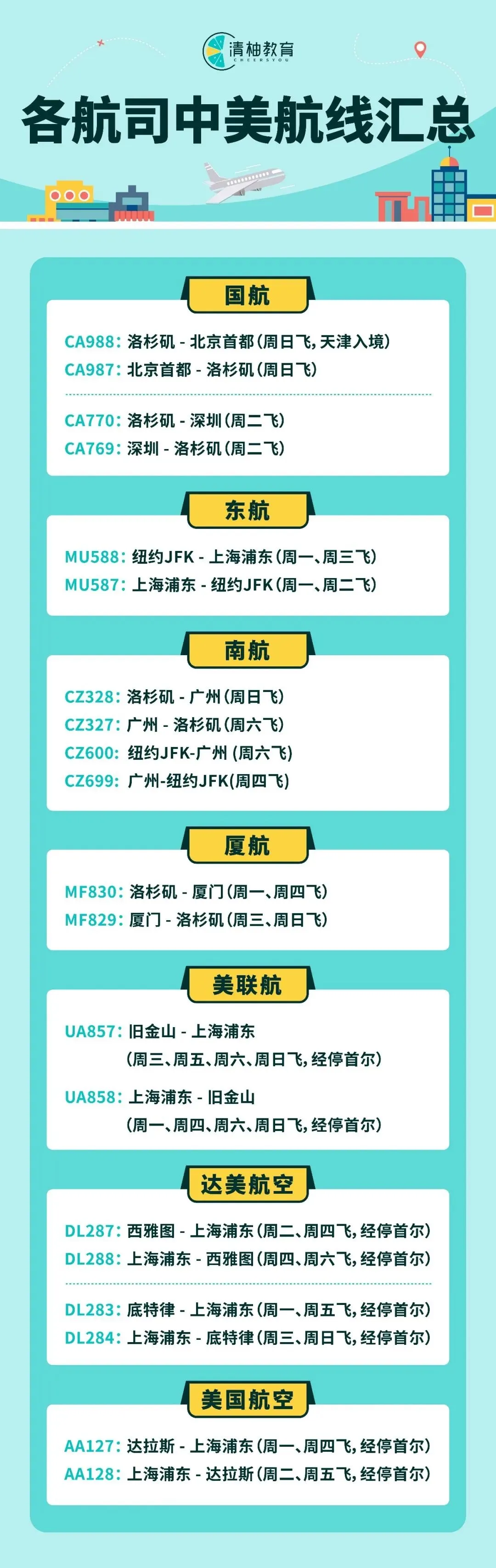
With the relaxation of entry quarantine policies, ticket prices for direct China-U.S. flights have fallen again.
Overall, it is foreseeable that in 2023, travel for study abroad will become more convenient, gradually returning to pre-pandemic levels. If you are planning to study abroad, start taking action now!
.png)