
This year kicked off with major news from both the education and capital markets. Earlier this month, the University of California announced a $4 billion investment in Blackstone's Real Estate Investment Trust (BREIT)!
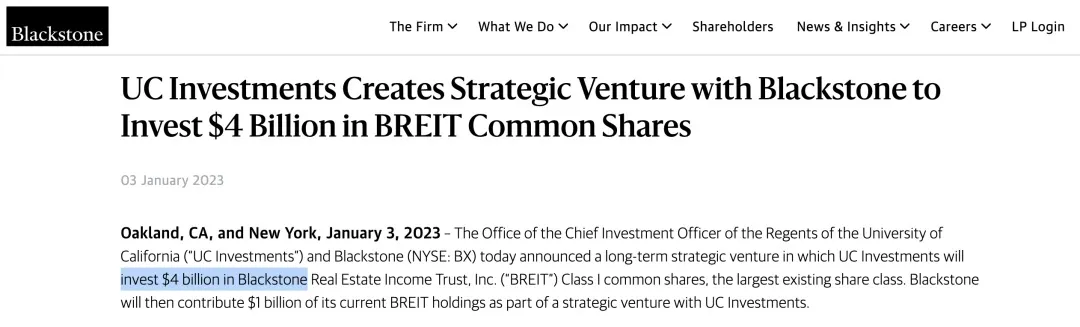
In this massive investment, UC Investments poured $4 billion into Blackstone's BREIT with a 6-year holding period. Blackstone also co-invested $1 billion, demonstrating strong commitment.
However, the terms were quite stringent. Blackstone and UC Investments reached a strategic agreement: Blackstone must guarantee UC an annualized return of at least 11.25% for the first six years, with Blackstone receiving a 5% commission on any excess returns, subject to clawback provisions.
The two are long-time partners; over the past decade, UC Investments has already invested $2 billion with Blackstone's funds, deepening their relationship.

Regent Richard Sherman, Chair of the UC Investment Committee, stated: "This type of large-scale investment will effectively leverage the UC's portfolio of over $150 billion, benefiting our 10 campuses and 600,000 students and faculty."

Yes, 150 billion—we're counting the zeros already.
University Investment Offices: Quietly Making Fortunes
Now everyone knows just how wealthy UC is—it's not unfair to call it a "public-sector tycoon."
While Harvard, Yale, Princeton, Stanford, and MIT are known for their immense wealth, the University of California is the one quietly raking in huge profits.
As of last June, UC Investments managed a staggering $152.3 billion in assets. Though down from the $168 billion peak the previous year, the total has grown by about 60.5% since 2014.
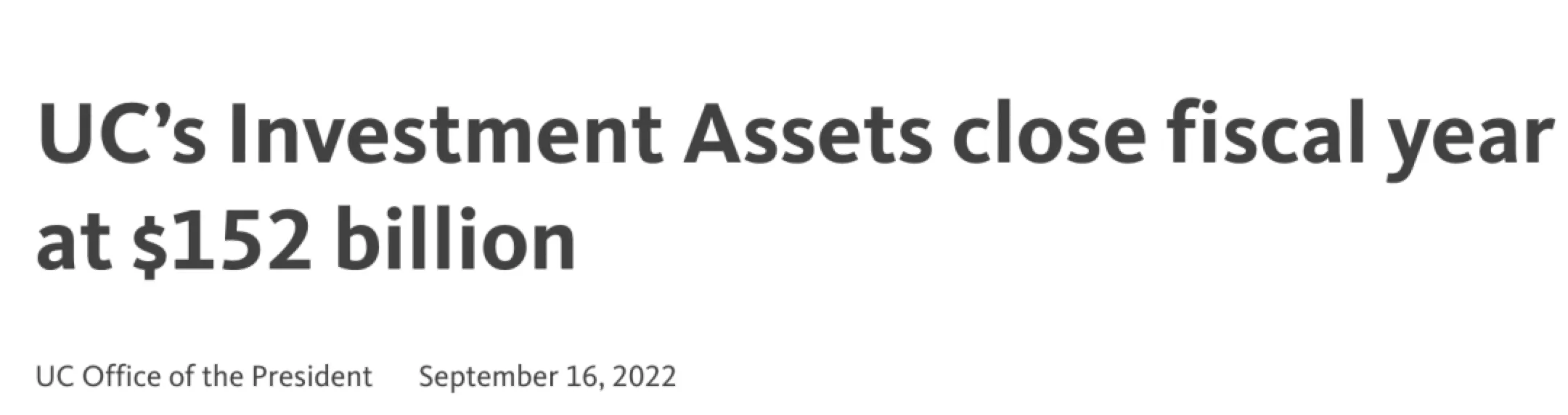
Sources of UC's investment funds include endowments, pension funds, retirement funds, short-term investments, long-term investments, and tuition, among others.
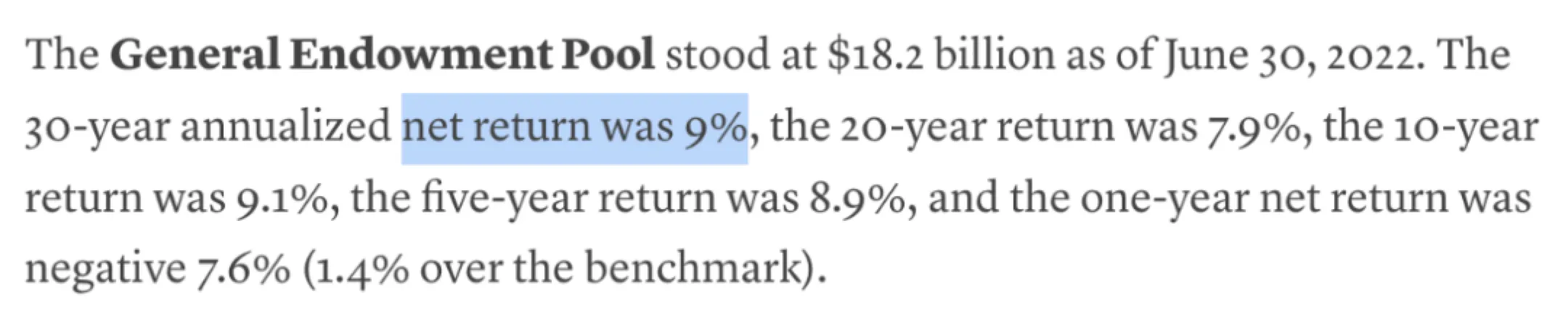
The endowment, in particular, has achieved a 30-year annualized net return of as high as 9%, far exceeding market rates, which is a key reason for UC's long-term growth.
When it comes to rivaling national treasuries, Harvard still leads the pack.
Harvard's endowment alone stands at $50.9 billion, even after last year's investment losses. Over the past two decades, a 10% return has been baseline; in 2021, returns hit 33.6%, allowing them to profit effortlessly.
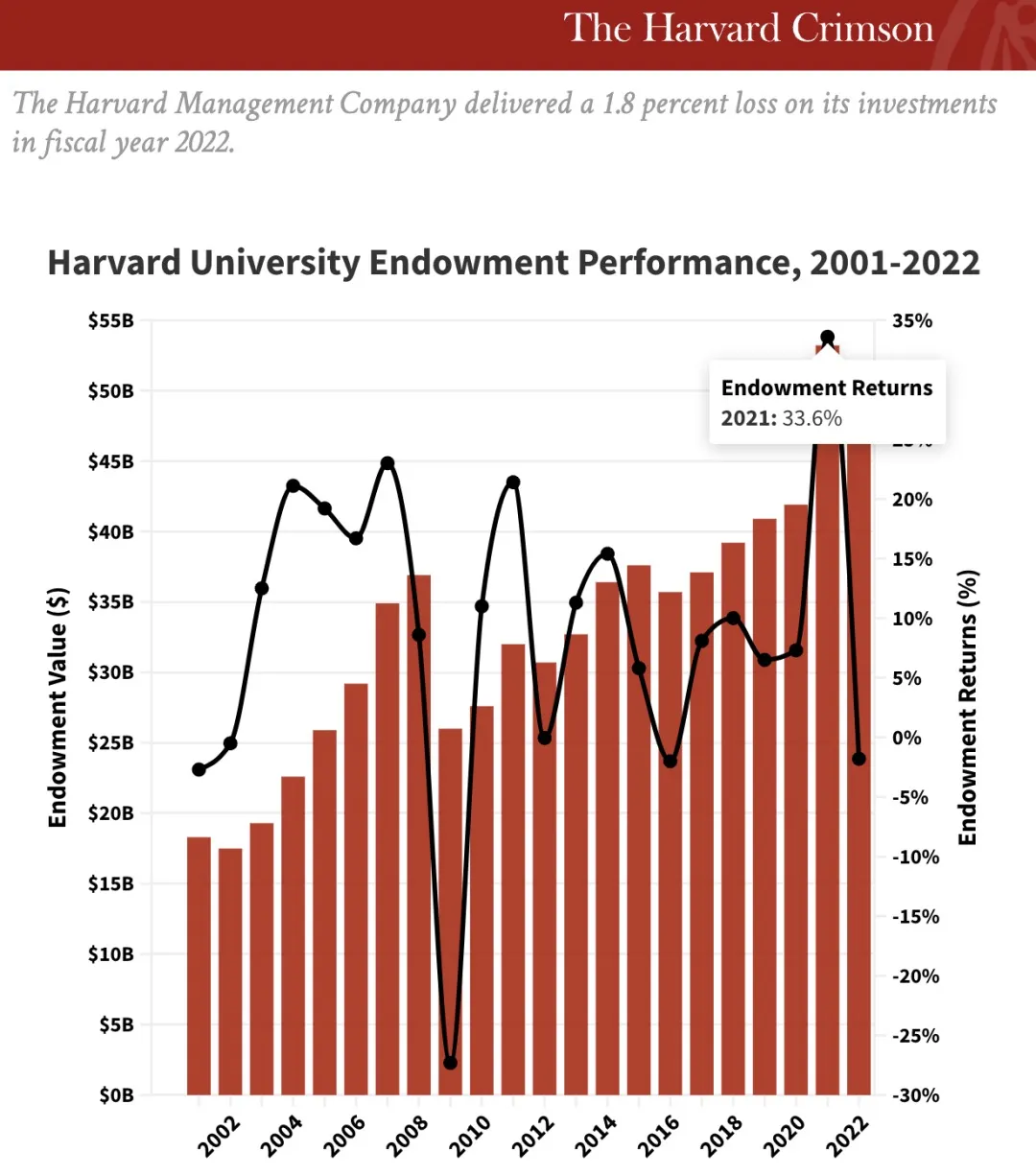
However, last year, university endowments across the board performed poorly. Harvard, MIT, Brown, Dartmouth, Duke, Cornell, and UPenn all saw negative investment returns. MIT even lost 5.3%, and only Yale managed a meager 0.8% gain.
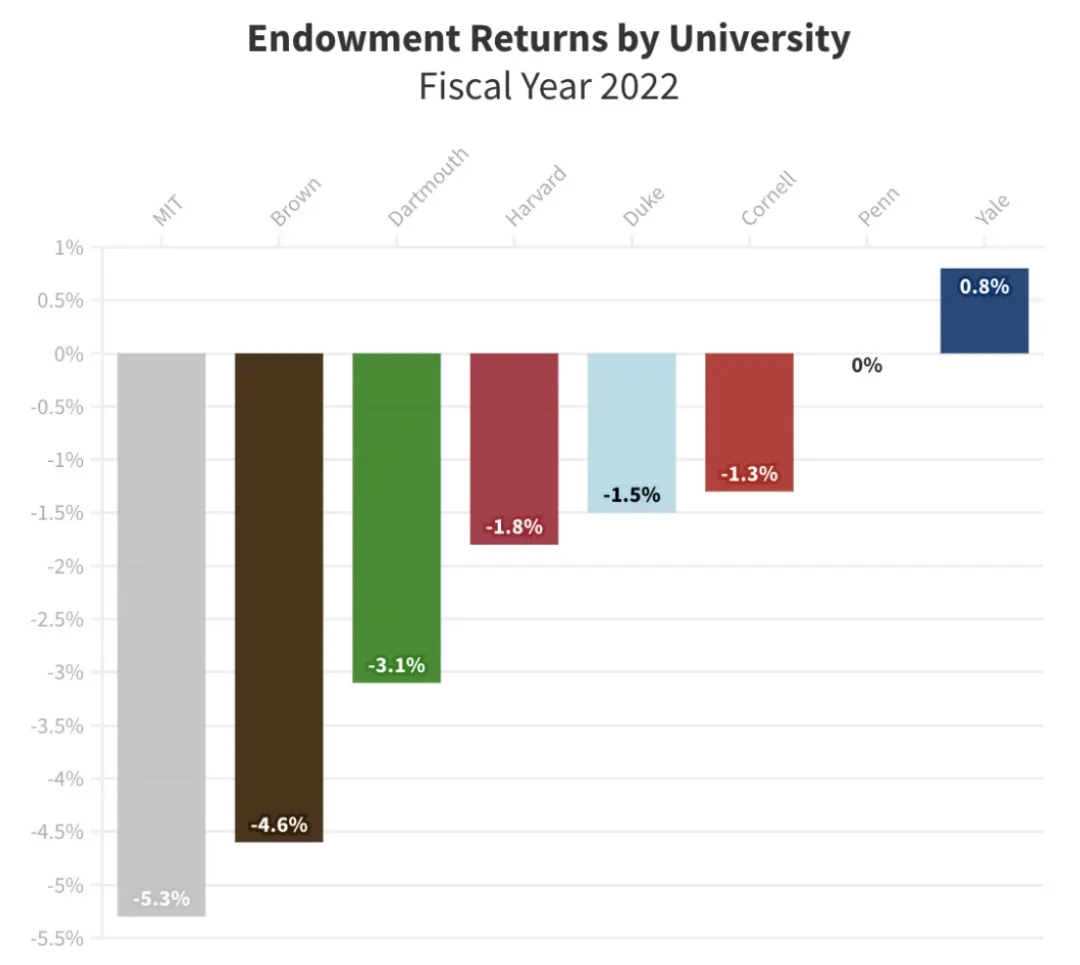
In short, as U.S. tech stocks tumbled last year, every university suffered an investment Waterloo—UC included. It's no wonder they decided to hand over the reins to a professional firm.
But Blackstone's BREIT has been making headlines for the wrong reasons recently, and betting on real estate in this high-interest-rate environment is quite bold. Whether they can actually help UC achieve the 11% expected return is anyone's guess.
Beyond Real Estate and Stocks: Angel Investing and Venture Capital
Besides betting on tech stocks and real estate, how else can you get rich quick? U.S. university investment offices have already figured it out.
At the beginning of January, the University of Chicago and Tulane University announced they would invest in startups. In fact, from the federal government to research universities, everyone is pushing the commercialization of academic research.
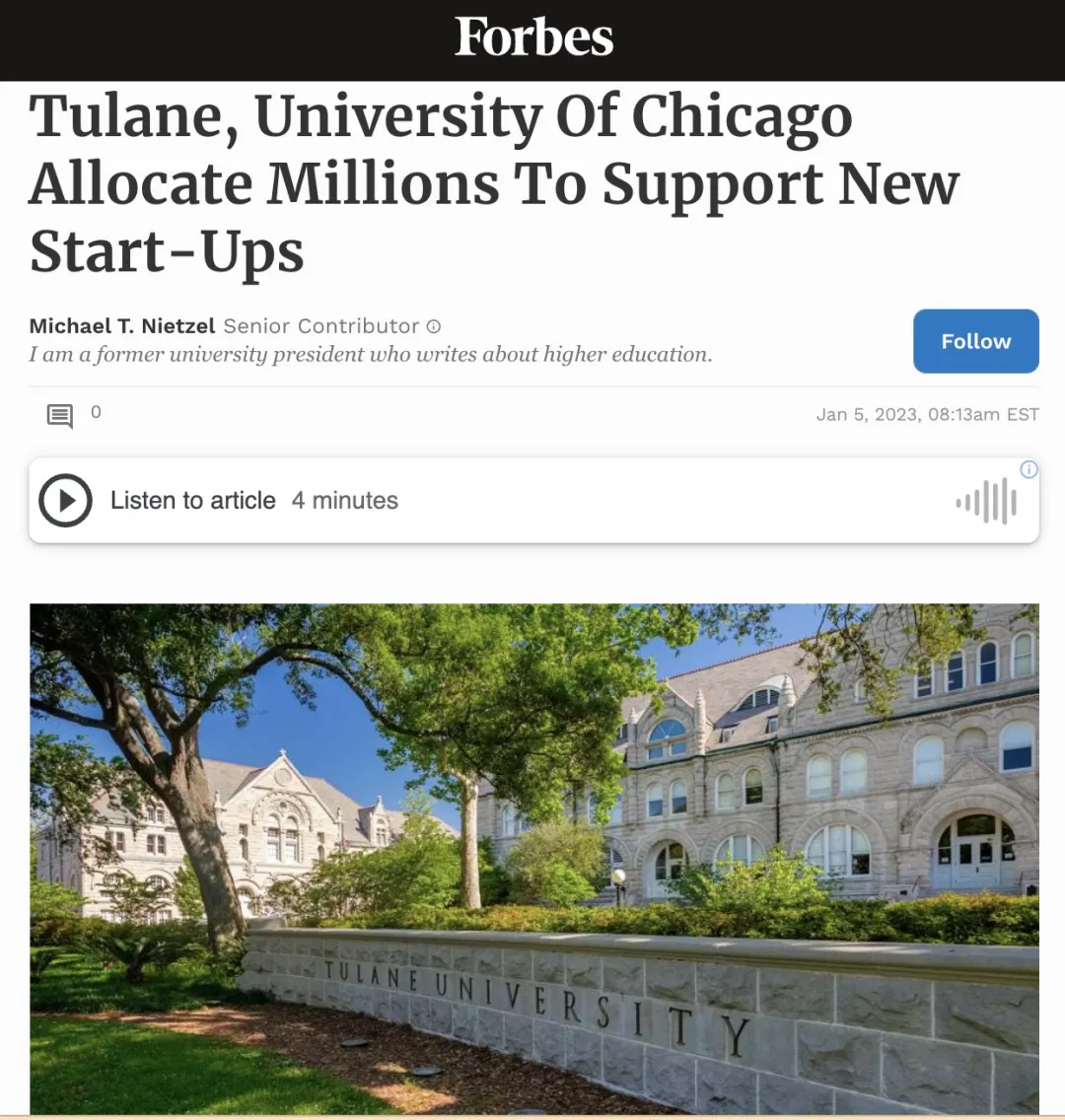
Put simply: making money.
In an economic downturn, doing research without making money is just fooling around.
University of Chicago
The University of Chicago will allocate $25 million to invest in startups founded by students, faculty, and alumni, primarily for Series A funding rounds.
The university's investment office, wielding a multi-billion-dollar fund, will oversee this entrepreneurial investment program as part of its private equity and venture capital portfolio.
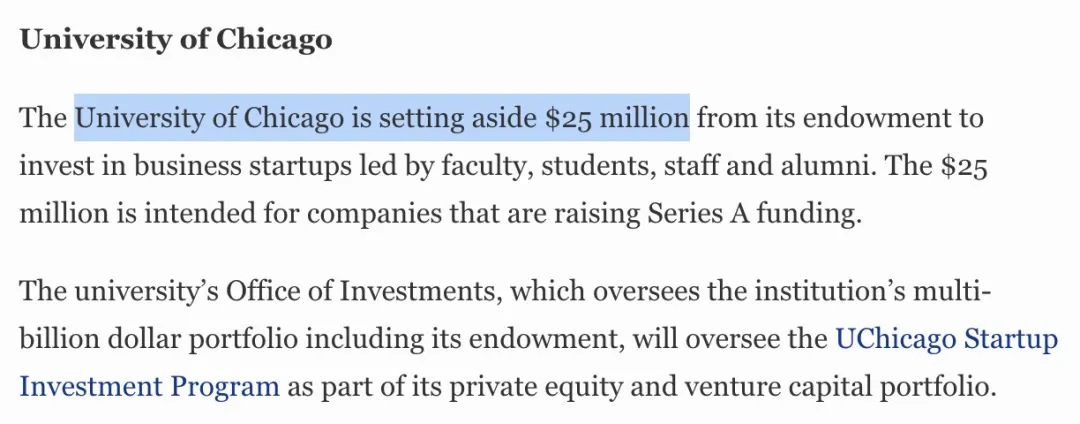
UChicago plans to invest in 3 to 4 new companies annually over the next decade, with a maximum initial investment of $500,000 or 20% of the funding round per company.
Tulane University
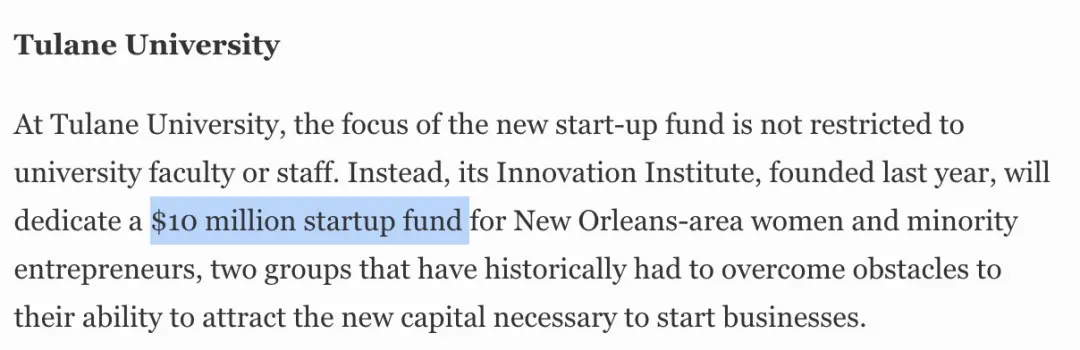
Tulane's program is not limited to university affiliates. Tulane Ventures, established last year, will provide $10 million in startup funding for local women and minority entrepreneurs—half from federal funds and half from the university.
At the seed stage, each applicant can receive up to $200,000, invested over five years. Tulane Ventures is a self-sustaining fund: when a portfolio company is sold, the proceeds are reinvested into the fund pool.
In addition to seed capital, Tulane will offer extra support such as innovation research consulting and mentorship for entrepreneurs.
It's easy to understand why universities pursue money. Funding enables research, and research generates more funding, creating a virtuous cycle.
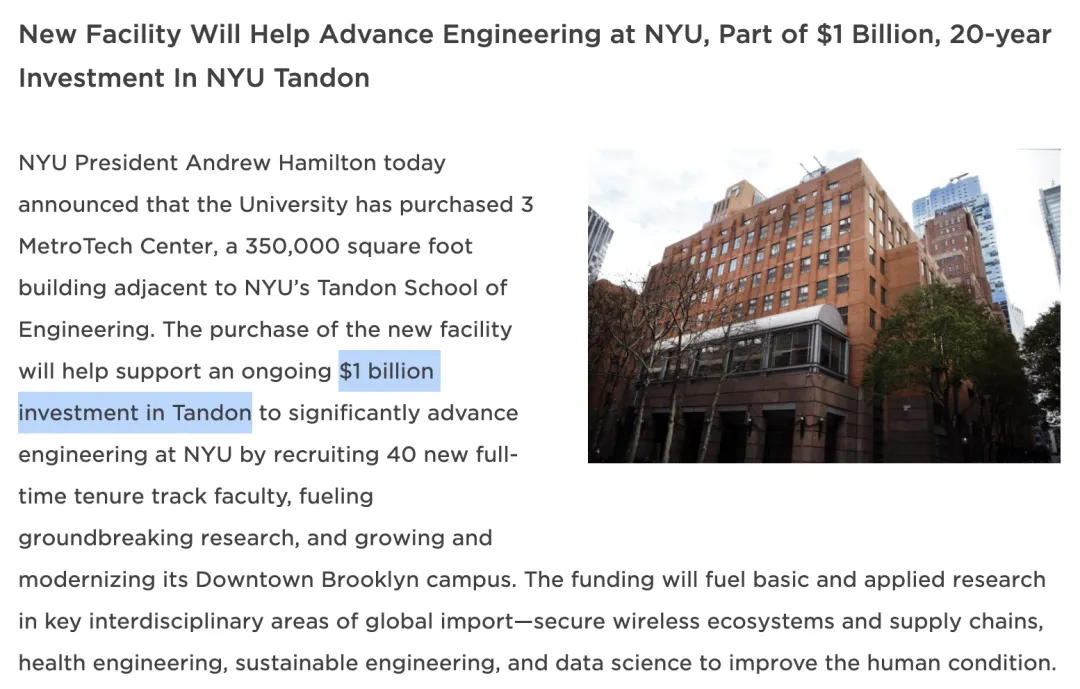
Just like NYU's bold $1 billion investment in the Tandon School of Engineering earlier this year—flush with cash, they can acquire buildings, recruit top faculty, and fund research to drive technological innovation by top talent.
In the Post-Pandemic Era, Is Investment Management More In-Demand?
In the post-pandemic era, capital markets are returning to rationality—no longer a time when simply buying guaranteed profits. Professional skills are more critical than ever.
There is huge demand for asset management talent, and major universities are steadily launching new programs. From the prestigious Yale Master's in Asset Management to Georgetown's new Master's in Global Real Estate, and UCL's pioneering Alternative Assets program... CheersYou(清柚教育) will bring you introductions to these programs and their application requirements.
Yale School of Management: Master's in Asset Management
The Master's in Asset Management program at Yale, launched in 2019, is housed within the Yale School of Management (SOM).
The one-year, STEM-designated program costs $79,500 in tuition and trains talent in investment analysis, valuation, asset allocation, portfolio construction, performance measurement, and fiduciary responsibilities. Graduates earn a Master of Management degree and can pursue careers in investment analysis, portfolio management, financial management, and more.
Curriculum
The program spans four semesters, with the first and second semesters focusing on required courses including:
-
Financial Econometrics and Machine Learning
-
Quantitative Investing
-
Asset Pricing Theory
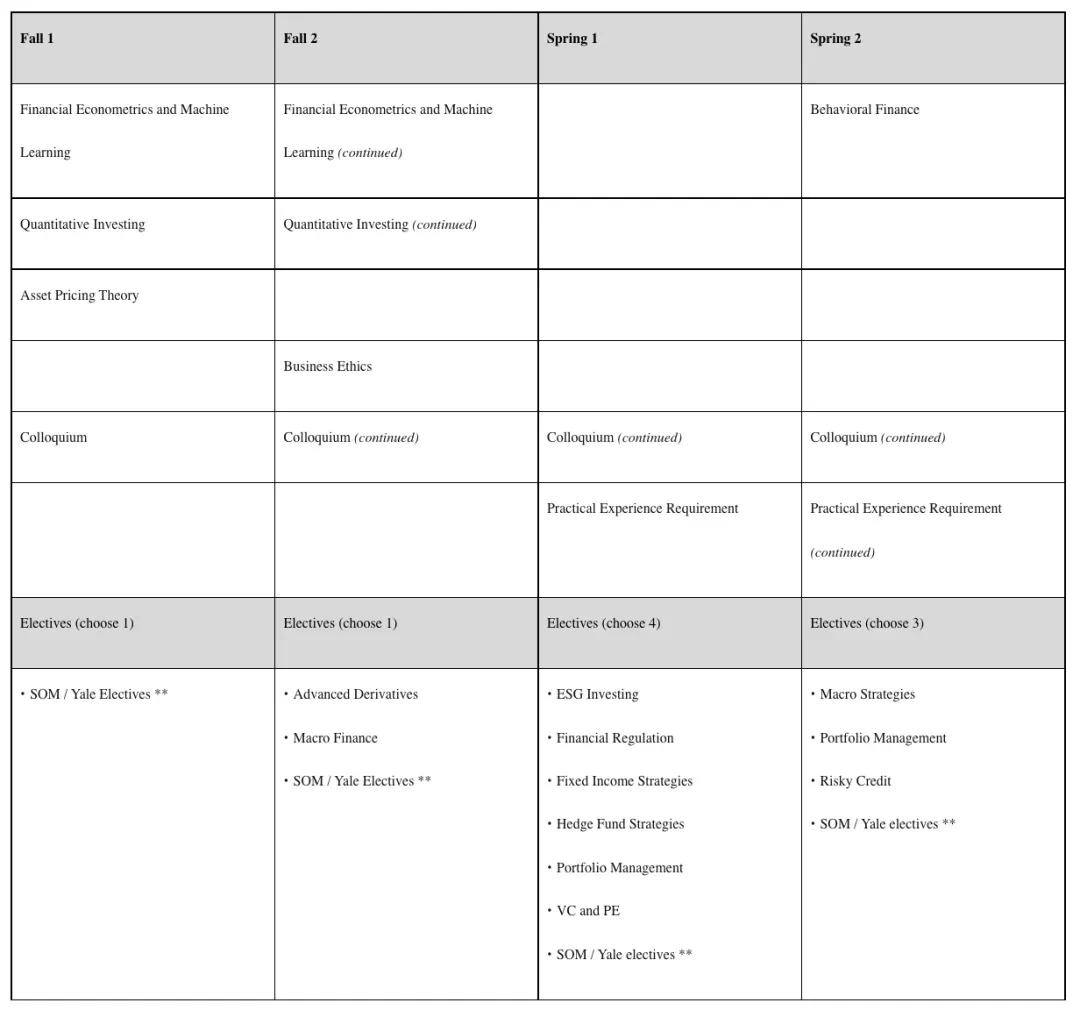
A program highlight is the Asset Management Colloquium, featuring talks by senior executives and investors on topics such as client relations, risk management, data technology, and venture capital.
Application Requirements
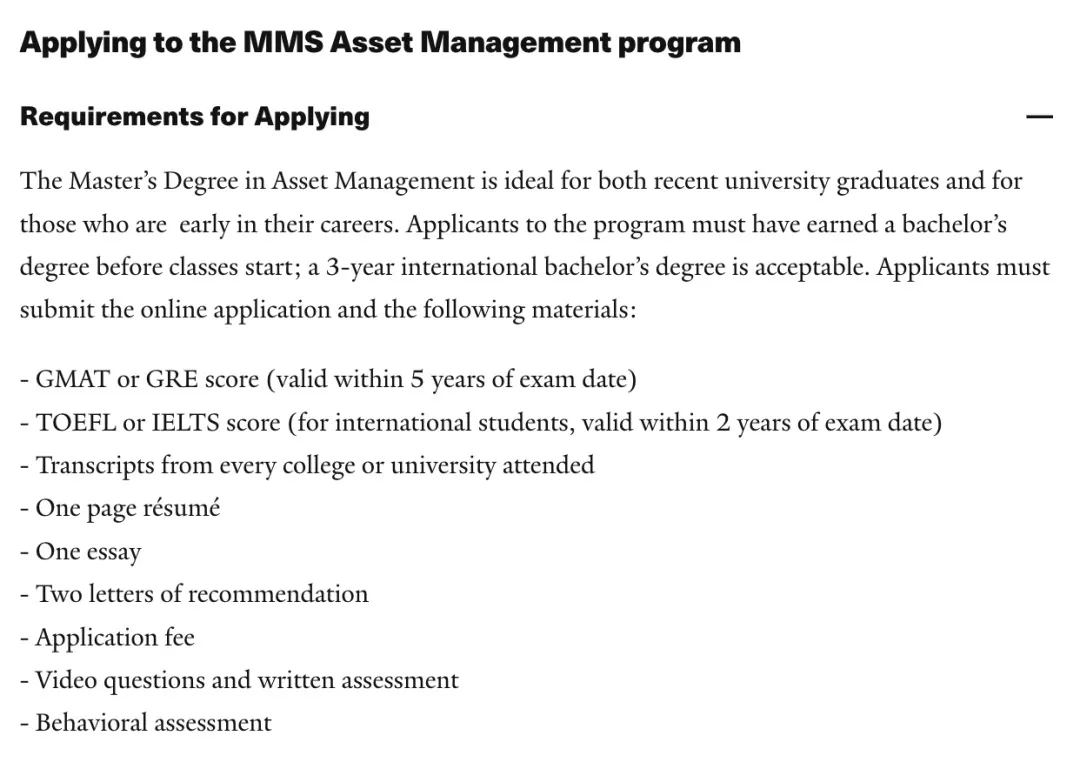
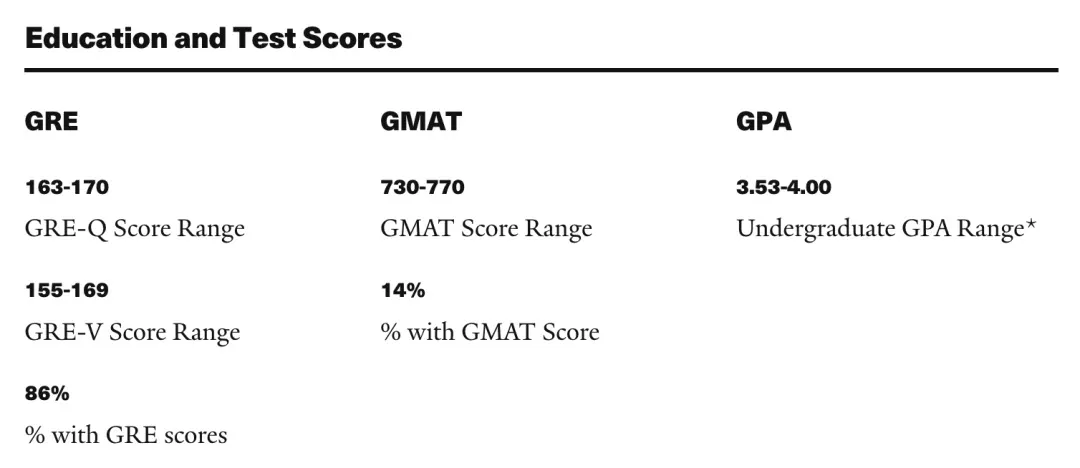
The Yale Master's in Asset Management is ideal for recent undergraduates or early-career professionals with an interest in finance and a quantitative background.
Application materials include:
-
Bachelor's degree
-
GMAT or GRE scores
-
TOEFL or IELTS scores (if applicable)
-
University transcripts
-
Resume/CV
-
Essays
-
Two letters of recommendation
-
Video questions, written assessment, and behavioral assessment
23Fall application deadline: January 11, 2023
Georgetown University: Master's in Global Real Estate
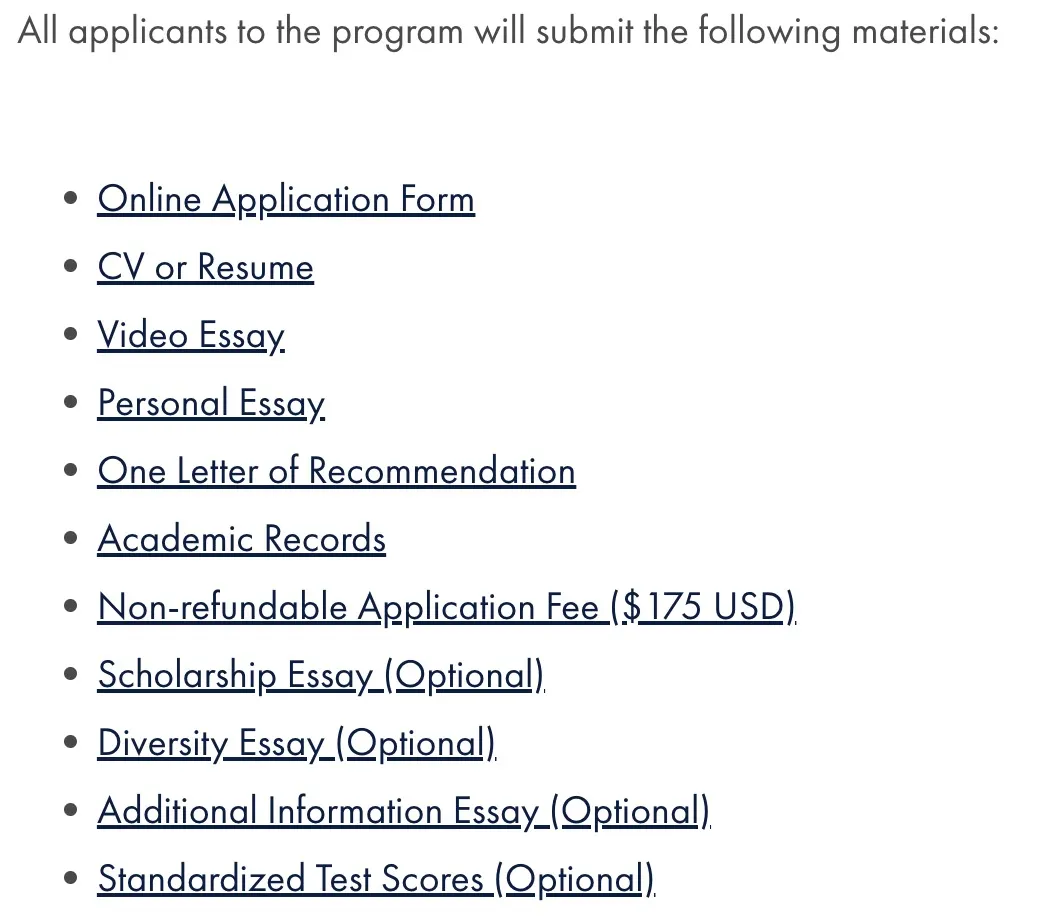
Georgetown University's McDonough School of Business recently launched a new Master's in Global Real Estate program, now accepting applications. GRE and GMAT scores are optional.

This one-year program integrates innovative education on real assets, global capital flows, and ESG to enhance students' competitiveness in the job market.
Key courses include:
-
Sustainable Financial Management
-
Corporate Analysis and Strategy
-
Housing Markets and Social Infrastructure
-
Real Asset Strategy
-
Infrastructure Finance
-
Real Estate Public Equity
Application materials: resume, essays, letters of recommendation, undergraduate transcripts, and standardized test scores (optional).
2023 Fall application deadlines:
-
Round 1: February 15, 2023
-
Round 2: April 15, 2023
-
Round 3: May 15, 2023
-
Round 4: June 15, 2023
University College London: MSc in Finance and Alternative Assets
UCL recently launched an MSc in Sustainable Finance and Alternative Assets, tailored for students with backgrounds in finance, economics, mathematics, computer science, or quantitative fields.
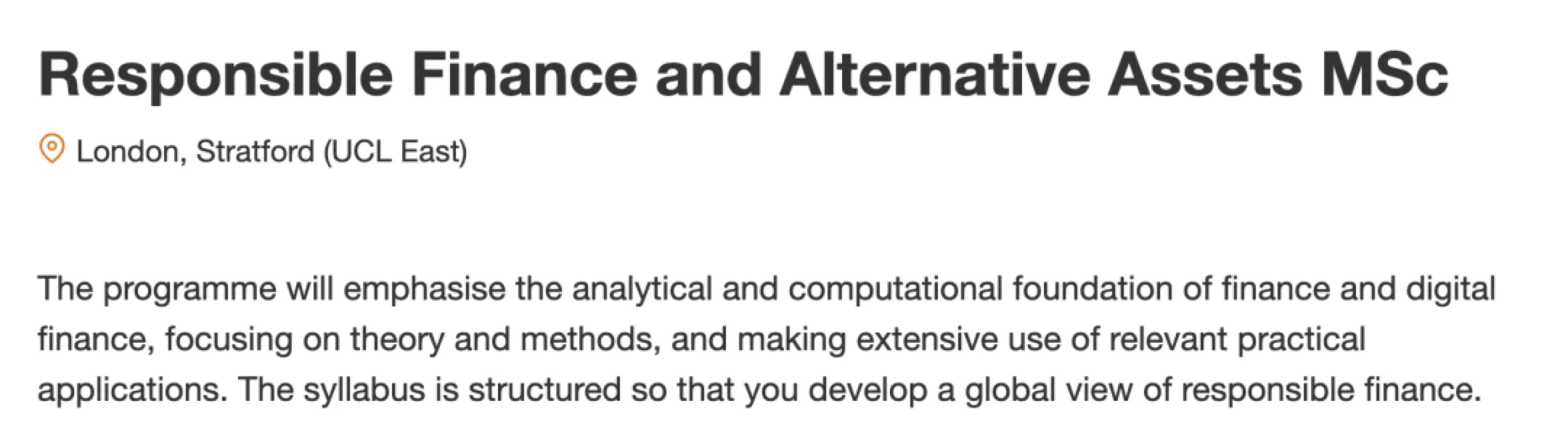
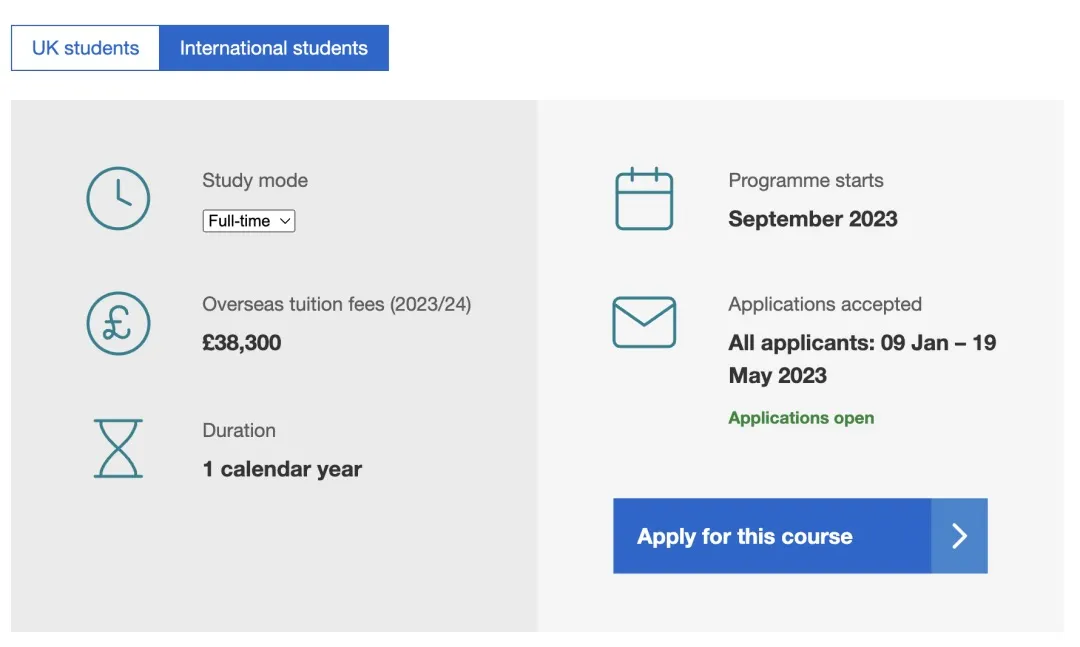
This one-year program starts in September and is built on analytical and computational foundations in finance and digital finance, emphasizing theory, methods, and practical application to cultivate a global perspective in finance.
Admission Requirements
-
Academic: Upper second-class (2:1) or equivalent, i.e., weighted average of 85%+ for 985/211/Double First Class universities, 90%+ for other institutions
-
Language: Level 2, i.e., IELTS 7.0 (minimum 6.5 in each component) or TOEFL 96 (Reading and Writing 24, Speaking and Listening 22)
23Fall application window:
January 9, 2023 – May 19, 2023
With tech giants laying off workers left and right, even offers from Google and Amazon have lost their luster. Those who worked hard to pivot into tech are trembling. Perhaps it's time to consider a different path, like financial asset management.
Though the economic winter is cold, money never sleeps on Wall Street—both bull and bear markets can be profitable.
Mastering financial asset management is an excellent choice for employment, entrepreneurship, or personal investing. Crises always contain opportunities. Seize the moment, choose a major with bright career prospects, and position yourself to ride the next wave.