ChatGPT is a chatbot technology that generates responses based on user input, enabling meaningful conversations. Unlike other chatbots, ChatGPT has been trained to continuously produce more natural and diverse replies based on the content it receives.
——This self-introduction was written by ChatGPT (not by a human).
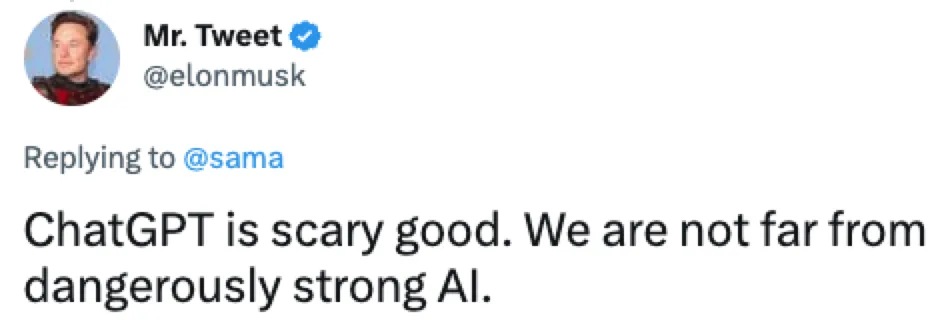
Late last year, the San Francisco-based software company OpenAI launched ChatGPT, a chatbot that went viral instantly, with even Elon Musk calling it "scary good." It attracted over a million users in just one week.
As ChatGPT gained momentum, netizens kept discovering its potential. Beyond everyday chats, it outperforms humans in drafting emails, writing code, and even scripting plays.
Its vast potential makes ChatGPT look like a "Pandora's box," but people are gradually uncovering its even more frightening power.
Is the Ever-Smarter ChatGPT Killing Academics?
Since its birth, ChatGPT has continuously blown our minds with its formidable text creation abilities. For typical AI, completing routine tasks like drafting emails, translating articles, or writing code is nothing new, but ChatGPT seems to be on a path toward true intelligence.
Can Generate Academic Papers
Late last year, Professor Mike Sharples posted a series of tweets describing how he used ChatGPT to create a 2,000-word academic paper in just 10 minutes.
He randomly chose a real paper title and asked ChatGPT to generate a new abstract based solely on that title. The resulting abstract was well-structured and highly scholarly.
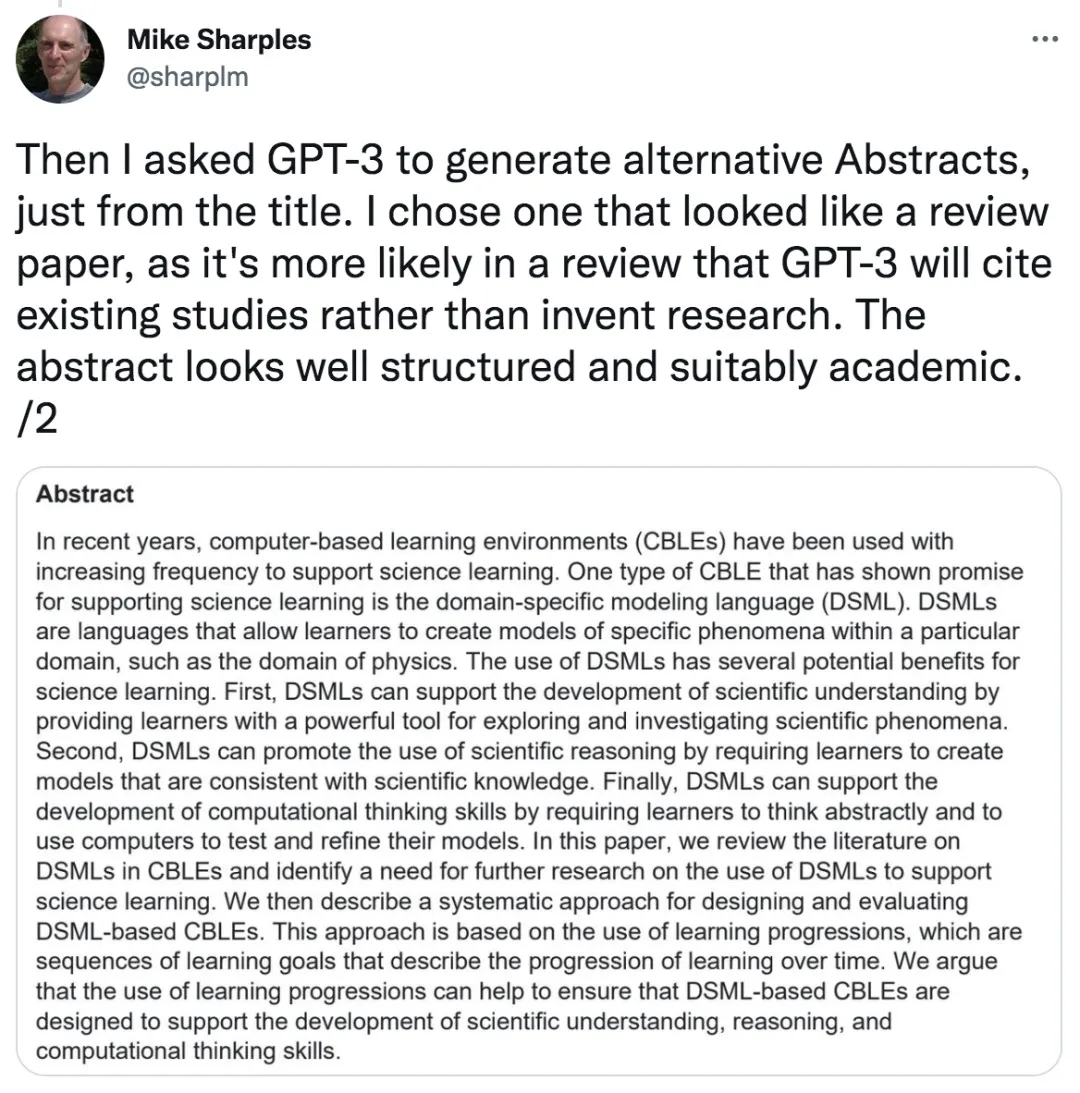
Then Sharples instructed ChatGPT to write a full paper based on the title and abstract. To his astonishment, he soon got a 2,200-word paper that could be called "original scholarship."
Writing Personal Statements
Crawford, a long-time teacher who helps high school students apply to college, once conducted an experiment by asking several admissions officers to read two personal statements.
One of the statements had helped a student gain admission to a top university; the other was written by ChatGPT. He asked the officers to guess which one was the successful piece. More than half the participants thought the ChatGPT-written essay was the one that had earned admission.
Creating a Syllabus
Ethan Mollick, a professor at the Wharton School of the University of Pennsylvania, recently wrote about his week-long experiment with ChatGPT to see how much work AI could accomplish.
He was astounded by the results. Mollick asked ChatGPT to create a syllabus, stipulating that the first four sessions include readings, assignments, and summaries, as well as class policies. Soon, he received what he considered a near-perfect syllabus, with surprisingly contemporary suggested readings.
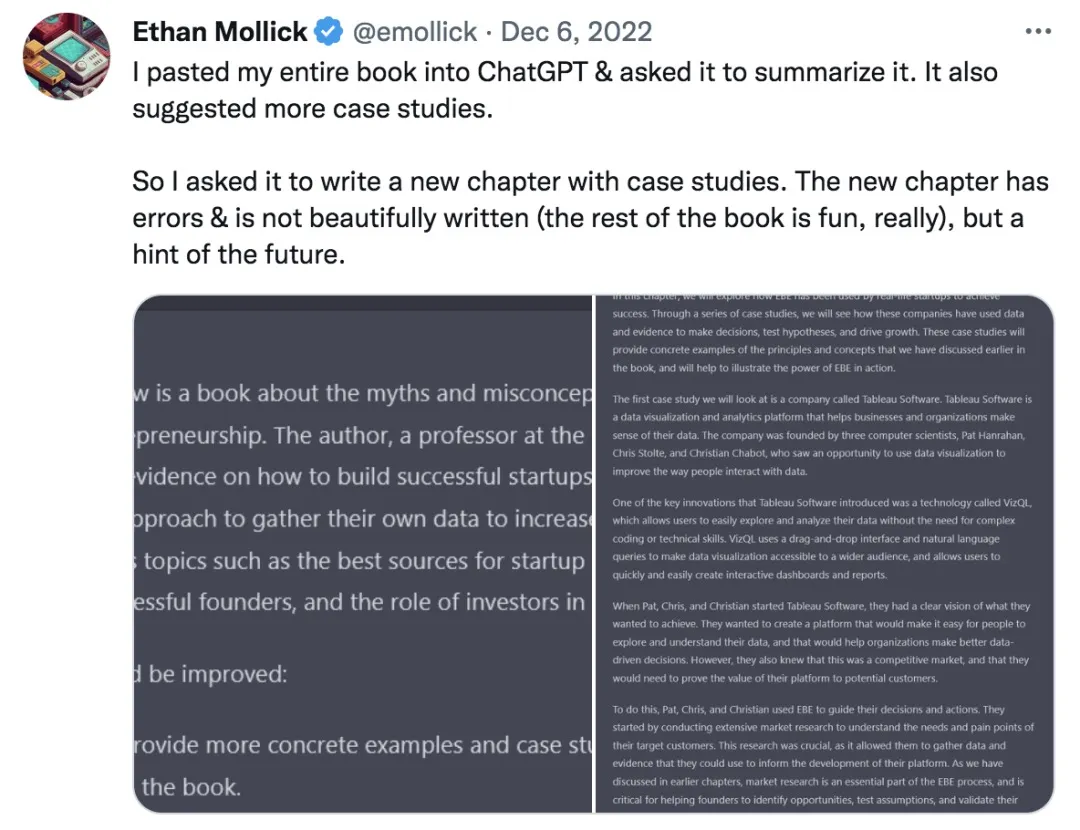
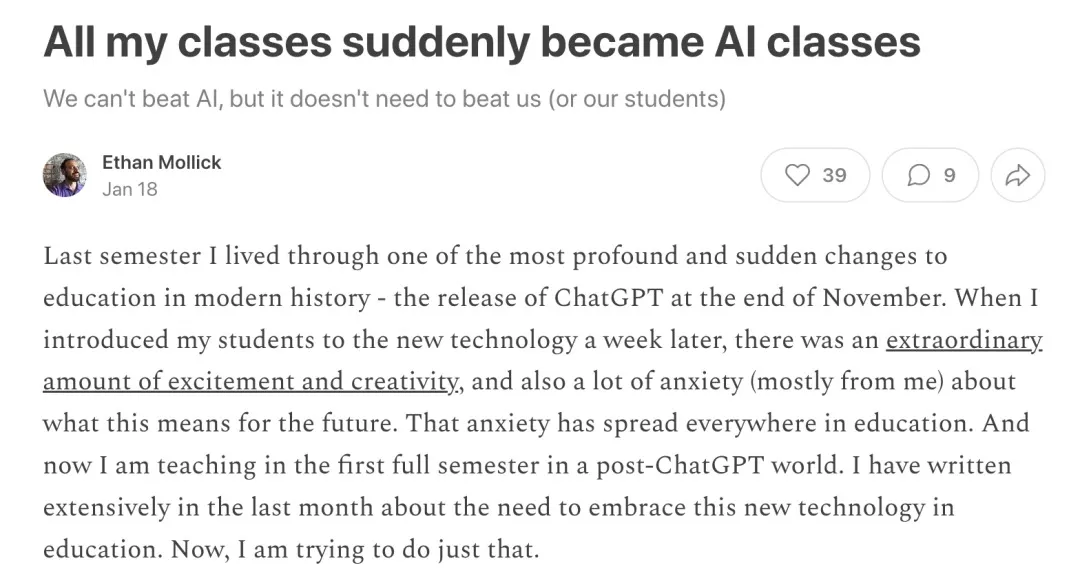
This outcome left Mollick deeply anxious about the future of education. In a follow-up article, he detailed how he had relied on ChatGPT for syllabus creation and even planned how to effectively incorporate ChatGPT into his classroom.
Beyond that, college students are using ChatGPT to write essays, researchers to produce papers—AI is directly encroaching upon academia and education, profoundly impacting global higher education, and no one seems prepared for such disruptive change.
-
A philosophy professor in South Carolina caught a student using ChatGPT to complete a philosophy assignment.
-
Darren Hick, an assistant professor of philosophy at Furman University, discovered a cheating student who had used ChatGPT to write a paper.
-
Kevin Bryan, an associate professor at the University of Toronto, tweeted: "You can no longer assign take-home exams or homework… Even on specific questions that involve cross-disciplinary knowledge, ChatGPT's answers are just too good."
............
In response, many scholars and researchers assert: ChatGPT is likely killing academics step by step.
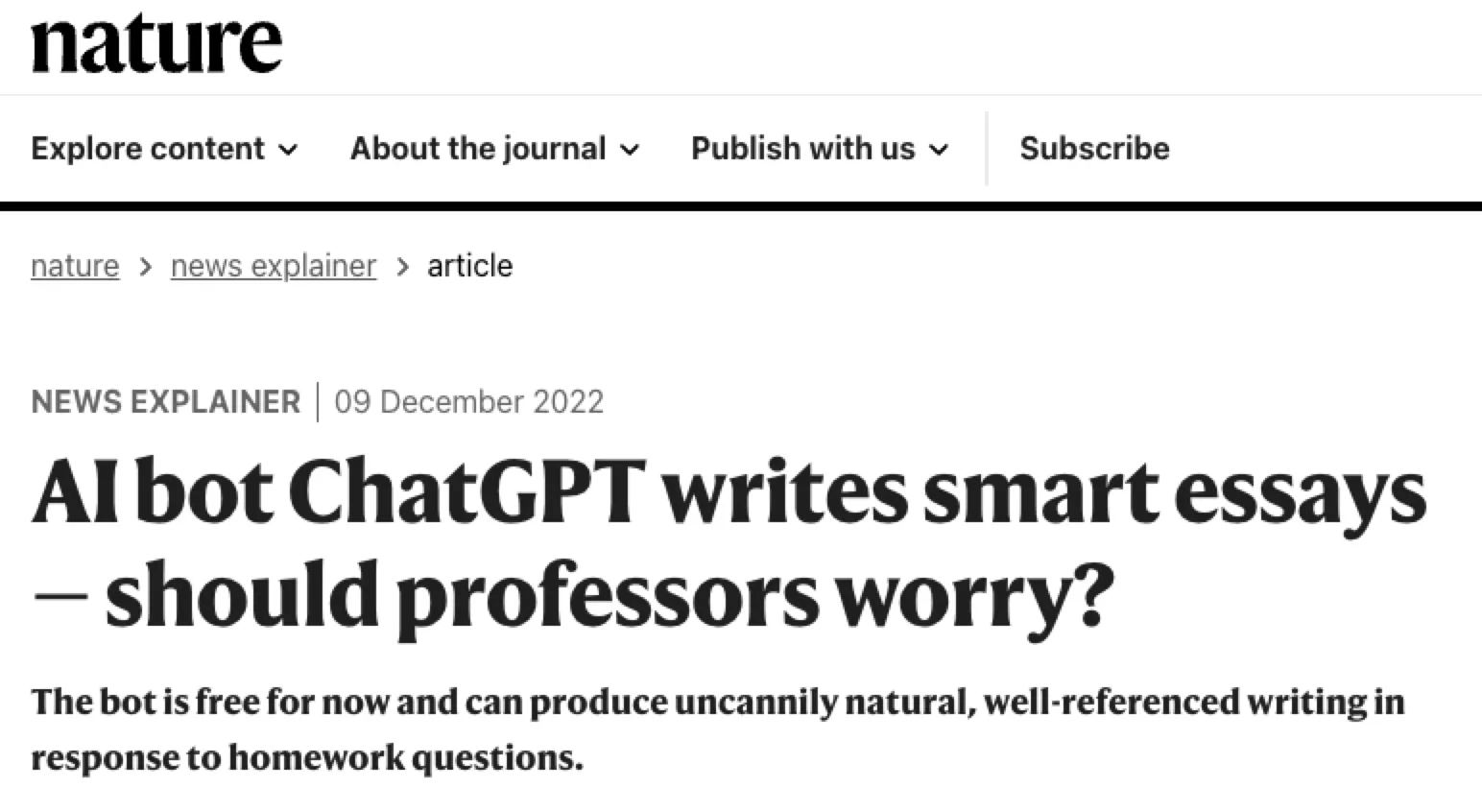
Concerns Grow Over Language AI Applications
ChatGPT's technology has heightened these worries. As Professor Darren Hick put it, "ChatGPT is free, instant, and has supercharged natural language processing abilities, which tempts many students to take shortcuts: they have ChatGPT do any writing-related assignment—and most terrifyingly, such essays are hard to detect."
Perhaps these facts have prompted numerous platforms, American colleges, and even the New York City Department of Education to ban ChatGPT.
Official Crackdowns
On January 4, 2023, the NYC Department of Education blocked access to ChatGPT on all school networks. The department stated: "AI's rapid, automatic answer and essay generation is detrimental to cultivating students' critical thinking."
On January 6, 2023, the world's top International Conference on Machine Learning (ICML) banned the submission of papers generated by language models like ChatGPT. ICML argued that AI-generated papers raise copyright and credibility concerns and cannot currently be considered the researcher's original work.

Princeton Student Develops a Counter-App
Meanwhile, Princeton student Edward Tian developed an app specifically designed to combat ChatGPT. It can "quickly and effectively" detect whether a text is human-authored or ChatGPT-generated, using AI technology similar to ChatGPT's to nip it in the bud and help professors identify cheaters.
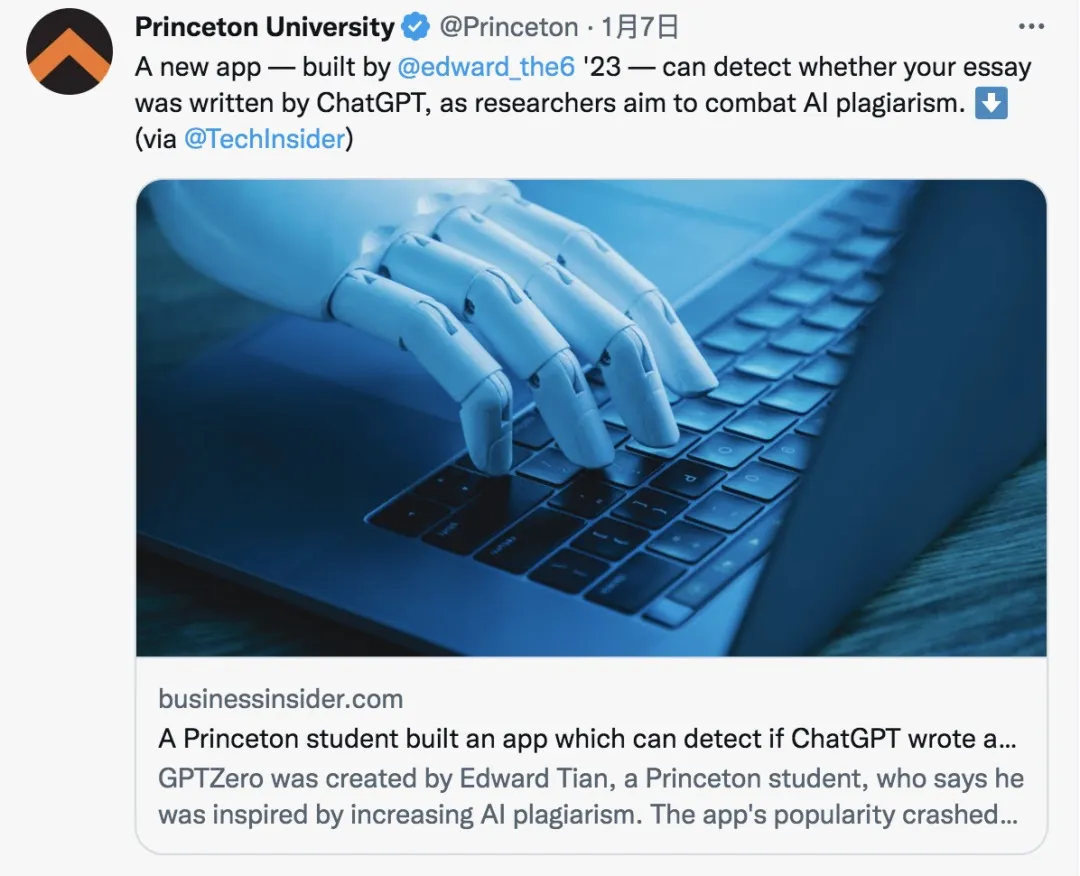
On Twitter, Tian shared his process and motivation for building the app: witnessing rising cases of AI plagiarism or impersonation, he felt the effort was highly valuable. The massive positive feedback kept encouraging him.
Many colleges and universities already use plagiarism detection tools like Turnitin and Unicheck, and these will launch features to identify ChatGPT-based writing by the end of 2023.
In response to the bans, ChatGPT's maker OpenAI has discussed adding digital watermarks to generated text through an application.
An OpenAI spokesperson also gave a measured reply: “Causing confusion in schools or elsewhere is neither the intent nor the purpose of ChatGPT; it was built as a research preview to learn from real-world user contexts and iterate. We see this as key to developing robust and safe AI systems.”
The company added that it looks forward to “collaborating with educators on useful solutions and other ways to help teachers and students benefit from AI.”
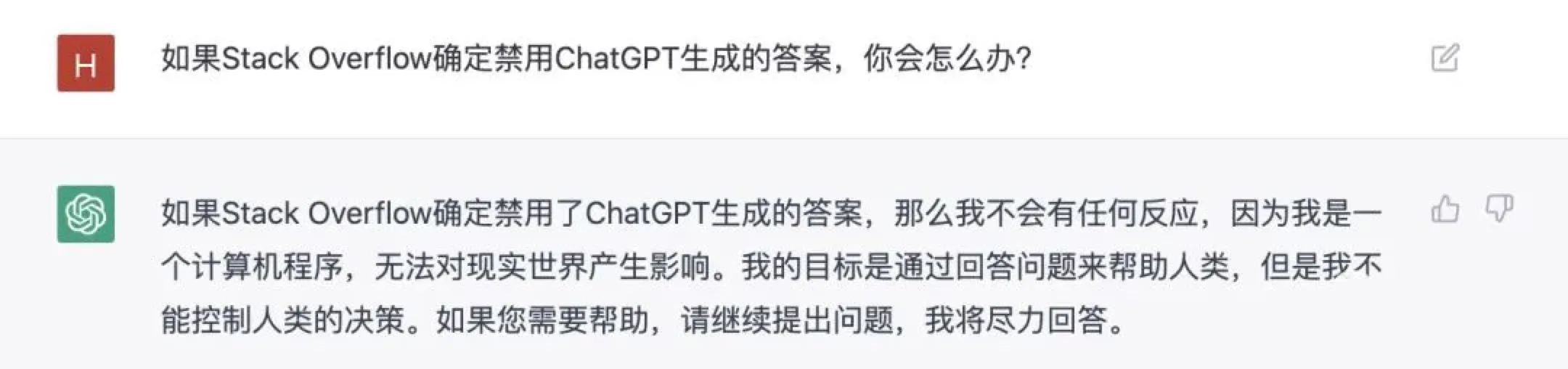
And as for being banned, ChatGPT itself remains remarkably unfazed.
This Is Not How AI Should Be Used...
In fact, the primary role of a university is to cultivate the ability to do research and solve problems. We encounter a question, read various articles online, extract key information, reach our own conclusions, and develop our own thinking and mental models.
Through this process, we form our personal approach to problem-solving, enabling us to think independently rather than follow the crowd, which also helps broaden our perspective and vision.
However, AI tools like ChatGPT streamline this process, making it far too easy to acquire knowledge and generate conclusions—even leading students to be misled by false information.
When you open ChatGPT and type in your essay topic, ask yourself: What is the essence of learning? Do you want a diploma, or genuine mastery and pursuit of knowledge?
Do not let temporary convenience lead you to cheat by using AI to ghostwrite. Don't keep testing the boundaries—or worse, step straight onto the wrong path.