Safety during study abroad has always been a focal concern for Chinese parents and students.
Living and studying overseas, no matter how many precautions one takes, malicious intent is hard to prevent, and violent incidents still occur from time to time, posing risks to public safety.
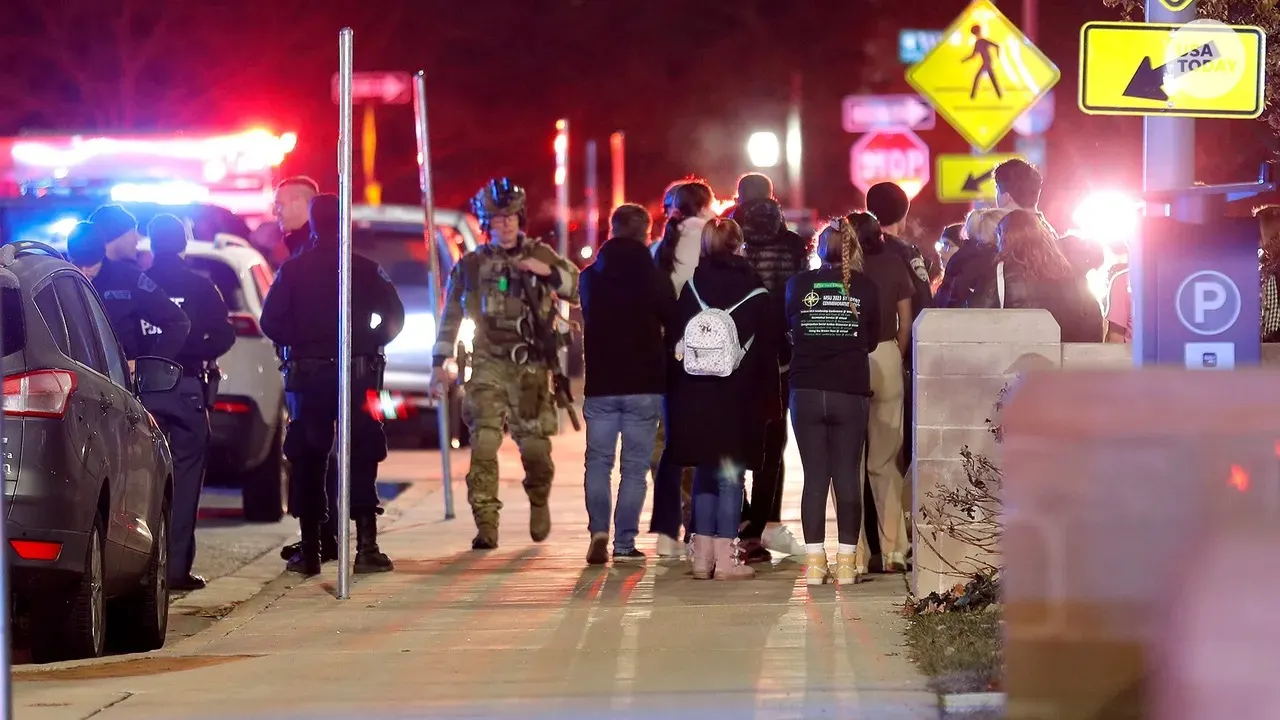
Yesterday, a campus shooting occurred at Michigan State University in the United States, resulting in one death and multiple injuries. The issue of study abroad safety has once again become a focal point of concern.
We may not be able to change the current environment, but we can learn to reduce the chances of danger approaching us.
Safety Guide for International Students
CheersYou(清柚教育) has compiled a safety guide for international students from four perspectives: campus, dormitory, personal, and online, based on the latest information from Safewise, an authoritative safety survey website.
Campus Safety Tips
1. Create Campus Emergency Contacts
Save the emergency contact numbers of the campus police to your phone so that you can easily seek help in an emergency.
2. Know the Locations of Safety Facilities on Campus
Most schools will set up emergency phones and emergency help centers on campus. It is recommended that you familiarize yourself with the specific locations and functions of these facilities in emergencies as soon as possible.
3. Activate School Alert Notifications
If your school has a mass safety notification system (text or email alerts), it is advisable to turn on notifications to stay informed about the latest safety developments on campus.
4. Familiarize Yourself with Campus Building Layouts
Pay attention to hidden or poorly visible areas. Avoid walking alone to sparsely populated or unfamiliar areas after dark.
Dormitory Safety Tips
1. Upgrade to a More Secure Door Lock
Before changing the lock, make sure to communicate with your dorm advisor or landlord to ensure it does not violate the lease agreement.
2. Place Personal Valuables in a Safe
Keep your valuables secure. You can also install a camera or motion sensor at home, which can record the physical characteristics of an intruder.
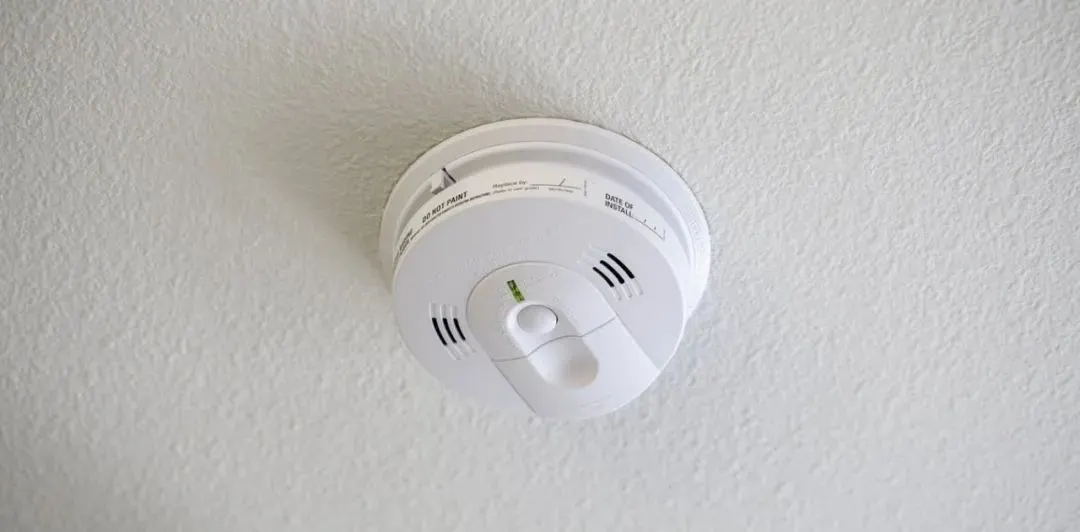
3. Check Smoke Alarms and Carbon Monoxide Detectors
Check the battery capacity to ensure these life-saving devices are functioning properly.
Personal Safety Tips
1. Try Not to Go to Unfamiliar Places Alone
Whether it's day or night, try not to venture into unfamiliar areas alone. It is best to go with a companion.
2. Watch Your Step and Be Aware of Your Surroundings
When walking, do not constantly stare at your phone. Remember to look up at the road. When listening to music with headphones, keep the volume low enough to still hear the sounds around you.
3. Download Emergency Apps
These can send out a distress signal with the touch of a button, allowing you to get help more quickly.
4. Lock Your Bicycle and Vehicle
It's best to park your bicycle or car in a well-lit and visible area, and make sure to lock it to prevent theft.

Telecom and Online Security
1. Keep Personal Online Accounts Strictly Confidential
Always use a strong password and do not casually reveal it to others to prevent personal information from being leaked online and used for fraud.
2. Public Wi-Fi May Have Security Vulnerabilities
It is recommended not to use public Wi-Fi for online shopping and financial transactions.
3. Beware of Telecom Fraud
Telecom fraud is just as rampant in developed countries. International students can be intimidated and mentally manipulated if they are not careful.
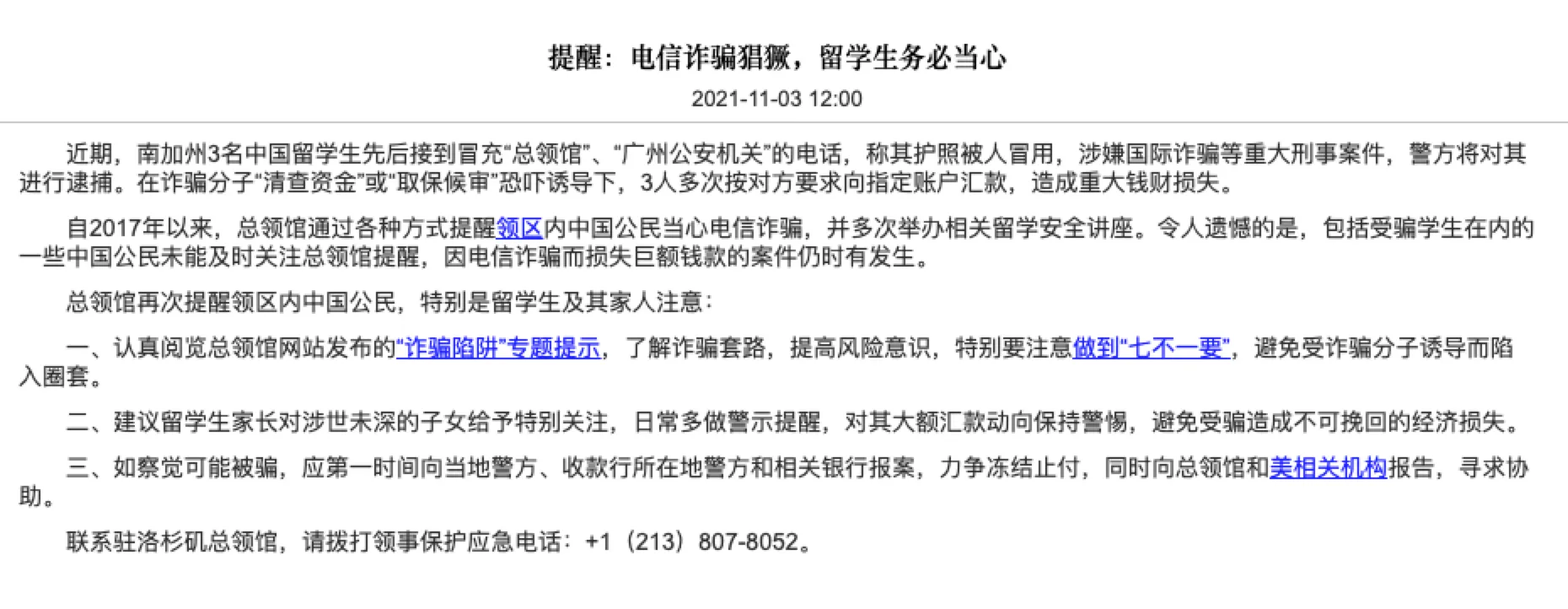
Telecom and online fraud are the security issues international students most easily encounter. Do not take this lightly!
Emergency Contact Information for International Students
The safety of students studying abroad has always been a focus of attention in the study abroad community and society at large. In the post-pandemic era, protecting the personal safety and mental health of international students has become a top priority for all sectors, including government agencies.
The Ministry of Education has repeatedly reminded those planning to study abroad to enhance their safety awareness, pay attention to potential risks they may encounter, strengthen their self-protection awareness and capabilities, and respond calmly and properly.
If you encounter danger, students can call the following emergency numbers for assistance.
Emergency Contacts for Students in the United States
Students studying in the U.S., if you encounter danger or an emergency, please call 911 immediately. Insist on speaking Chinese, and Chinese language services will be provided.
For consular assistance, please call the Ministry of Foreign Affairs' 24-hour Global Consular Protection and Services Emergency Call Center (0086-10-12308 or 0086-10-59913991; if calling from the U.S., please dial 01186-10-12308 or 01186-10-59913991), or contact the Chinese embassy or consulate in the U.S.
Consular Protection and Assistance Numbers for Chinese Embassy and Consulates in the U.S.:
Embassy in the U.S.: 202-4952216
Consulate General in New York: 212-6953125
Consulate General in San Francisco: 415-2168525
Consulate General in Los Angeles: 213-8078052
Consulate General in Chicago: 312-7800170
Emergency Contacts for Students in Canada
"911" is also the nationwide emergency number in Canada. If there is a life-threatening or special emergency, you can call this number for help. In addition, local police stations also have general non-emergency reporting numbers.
Consular Protection and Assistance Numbers for Chinese Embassy and Consulates in Canada:
Embassy in Canada: 001-613-5621616 (Service areas: Ottawa region, Newfoundland and Labrador, Nova Scotia, Prince Edward Island, and Nunavut)
Consulate General in Toronto: 001-416-5942308 (Service areas: Ontario, Manitoba)
Consulate General in Vancouver: 001-604-3369926 (Service areas: British Columbia and Yukon Territory)
Consulate General in Calgary: 001-403-5376907 (Service areas: Alberta, Saskatchewan, Northwest Territories)
Consulate General in Montreal: 001-514-9338891 (Service areas: Quebec, New Brunswick)
Emergency Contacts for Students in the United Kingdom
Students studying in the UK, if you encounter danger or an emergency, please call 999. The UK's police, fire, and ambulance emergency number is 999. If you have hearing difficulties, you can text 18000 to 999.
Consular Protection and Assistance Numbers for Chinese Embassy and Consulates in the UK:
Ministry of Foreign Affairs Global Consular Protection and Services Emergency Call Center: 0086-10-12308 or 0086-10-59913991;
Embassy in the UK: +44-20-74368294 (24-hour consular protection and assistance);
Consulate General in Manchester: +44-7828529201 (24-hour consular protection and assistance);
Consulate General in Edinburgh: +44-131-3379896 (24-hour consular protection and assistance);
Consulate General in Belfast: +44-7895306461 (mobile)
Emergency reporting website: emergencySMS service
Non-emergency police number: 101. If you have hearing difficulties, you can text 18001 to 101.
Emergency Contacts for Students in Australia
If you study in Australia and encounter an emergency, please promptly call the Australian police and emergency number: 000. This number connects you to police, ambulance, and fire services. For Chinese-language reporting, you can call 131 444 to report non-emergency crimes or incidents.
Consular Protection and Assistance Numbers for Chinese Embassy and Consulates in Australia:
Chinese Embassy Consular Protection Duty Phone: 02 6228 3948
Consulate General in Sydney: 02 9550 5519
Consulate General in Melbourne: 03 9824 8810
Consulate General in Perth: 08 9221 3729
Consulate General in Brisbane: 07 3012 8090
Consulate General in Adelaide: 08 8268 8806
The emergency phone numbers of the embassy and consulates in Australia are for use only by Chinese citizens in Australia in cases involving consular protection emergencies.
How to Protect Yourself in Case of a Shooting Incident
Gun violence remains an intractable problem, and international students must stay vigilant. If you encounter a sudden shooting incident, it is crucial to know how to protect your life.

Run Away Quickly
If you encounter a shooting in a public place, you must react calmly and swiftly. First, find a suitable area to temporarily take cover from the shooter, then look for an exit to flee the scene when the opportunity arises.
Find a Safe Place to Hide
Since shooters in mass shootings fire indiscriminately in public areas, if you cannot find an opportunity to escape and there are no emergency passages or exits nearby, you need to find a safe hiding place and wait for police rescue.
Look for a room or closet that can be locked. Turn off the lights, close the doors and windows, and most importantly, silence your phone.
Protect Yourself
In situations where the first two options are not possible—if you cannot escape the scene and cannot find a suitable hiding place—you need to quickly find any objects around you that can be used as makeshift weapons. These objects can be used to obstruct the shooter's line of sight, knock away the gun, or render them incapable of attacking.
While studying abroad and pursuing your dreams, please make sure to take good care of yourself. We hope these safety tips are remembered by everyone, but never needed!
Wishing all students a safe and successful completion of their studies! We are not overly paranoid, but we must never let our guard down!