

Recently, a Chinese shopping website officially acknowledged a data breach affecting 11 million users, leading to a surge of "pig-butchering" scams targeting Chinese expatriates in the U.S., including international students.
Many students say it feels like trouble descending from the sky when they're just sitting at home—impossible to guard against!
In recent years, as online life has expanded, the "pig-butchering" scam market has also seen explosive growth.
When you open the news, you often see headlines like "22-year-old female student scammed out of $360,000," "$150,000 lost in a 10-day online romance," or "Tall, rich, and handsome boyfriend vanishes, leaving student $200,000 AUD poorer"...
According to incomplete media statistics, the amount of money involved in pig-butchering scams has multiplied in recent years, frequently reaching millions, and the number of cases has risen sharply. Many of these scams now target international students, who are perceived as "kind-hearted and wealthy."

What is a "Pig-Butchering" Scam?
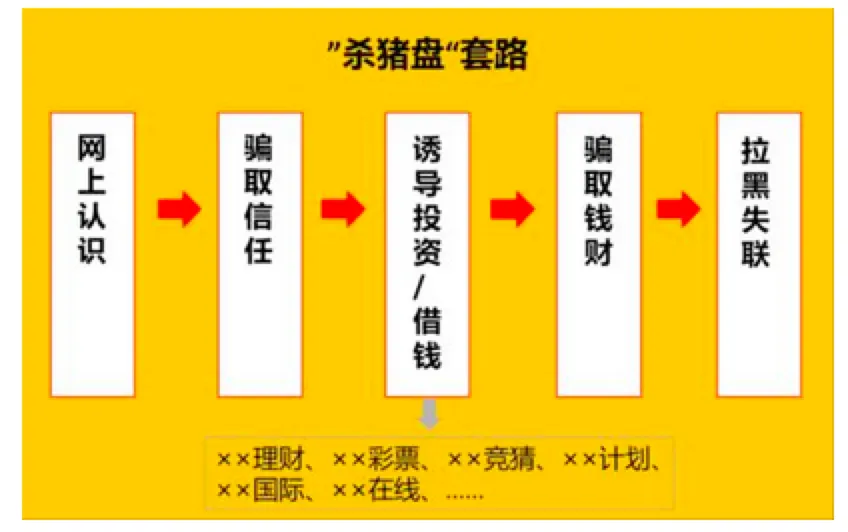
"Pig-butchering" is a type of telecommunications fraud where scammers use online dating to lure victims into investing or gambling. Unlike other "hit-and-run" scams, these scammers play the long game—"fattening the pig" so they can slaughter it for a bigger payoff later.
The fraudsters typically create a fake persona—"tall, rich, handsome" or "beautiful and wealthy"—and search for potential victims on dating sites and social media. They then use romantic overtures to build intimacy and trust, a process known as "raising the pig." Once trust is established, they guide the victim to invest money on fake investment or gambling platforms they control.
At first, they let the victim make small profits, believing they've found both love and a lucrative opportunity. Once the victim invests a large sum, the scammers take all the money and disappear without a trace.

Today, the definition of "pig-butchering" has broadened, and the schemes have become more diverse, making them increasingly difficult to detect.
Online Romance? The Kind That Leaves You Broke and Heartbroken
During the pandemic, many international students were stuck at home, their already limited number of friends and social interactions dwindling further, leading to restlessness and intensified loneliness.
These factors created the perfect opening for "pig butchers," who set their sights on lonely but relatively well-off international students and overseas workers. Online romance plus cryptocurrency investment has almost become the standard formula for overseas scams.
A woman in North America posted online that her close friend met a so-called "high-quality man" through Zhihu. After they started an online romance, the man introduced an investment platform, claiming they would build a future together, making her happy and wealthy.
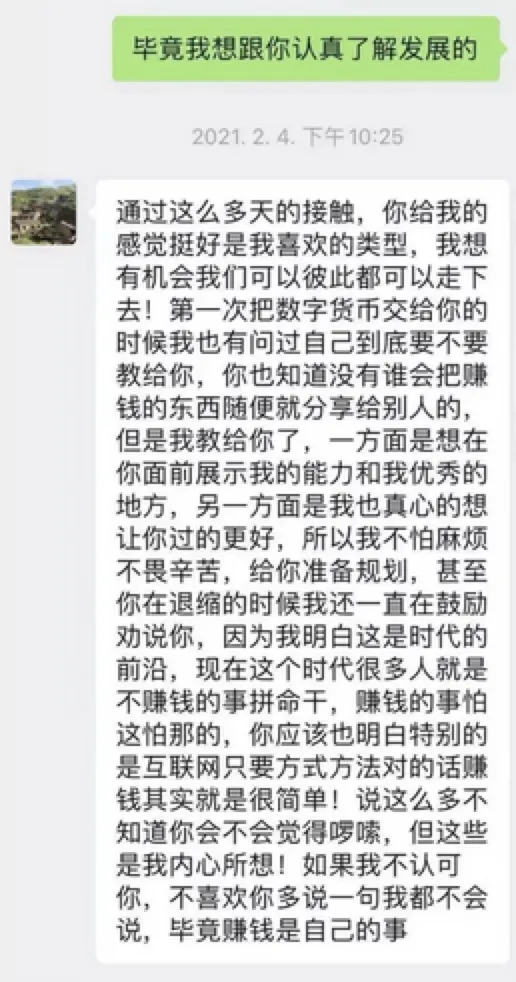
Over the next few days, caught up in the "honeymoon phase," the woman put her entire $300,000 in savings plus $200,000 borrowed from friends—$500,000 in total—into the platform, only to have her so-called "boyfriend" vanish. His photos, name, and identity were all fake, nothing but bait to reel her in. She fell into severe depression.

Another 22-year-old woman, who returned to China last year after studying in Boston, met her "ideal boyfriend" on a dating app. He was an expert at making grand promises, talking about opening a hot pot restaurant together and planning a cross-country U.S. road trip. She believed that sweet love had finally come her way.
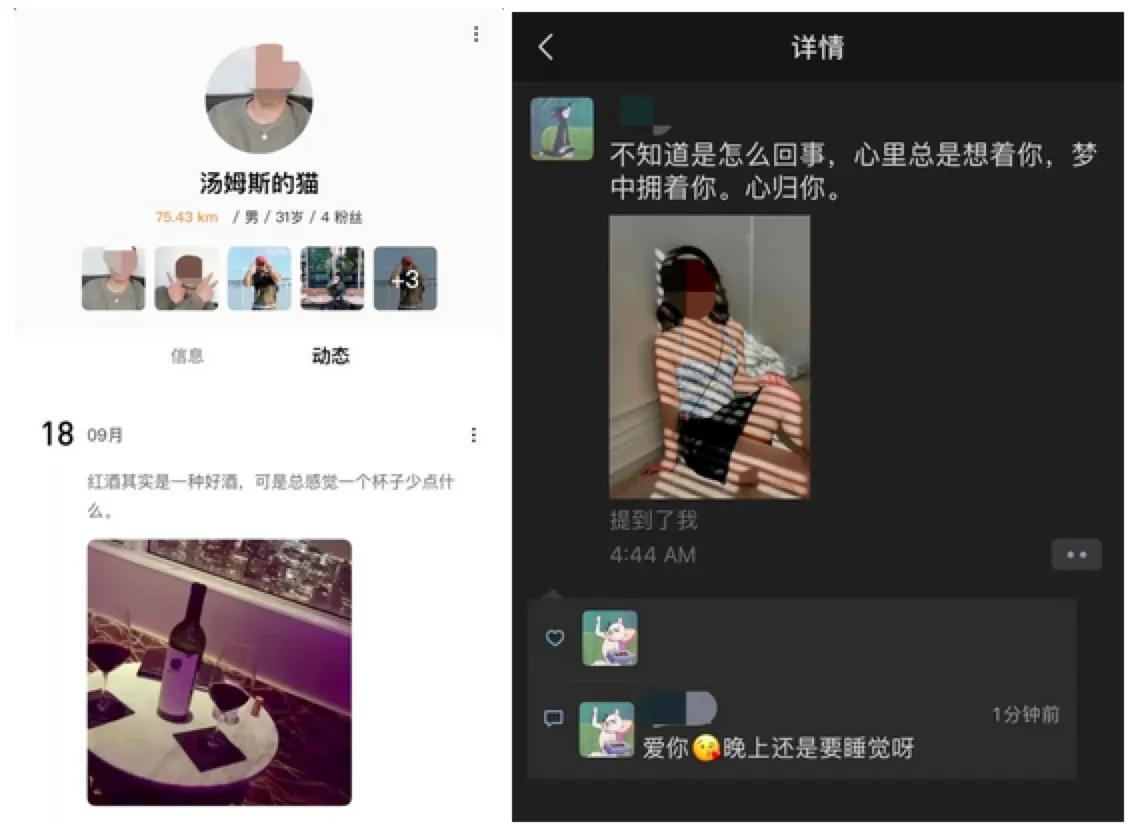
Once her heart was hooked, he introduced a forex trading app called DSOFX, claiming it was a guaranteed money-maker. She tentatively invested $3,000, but he kept pushing her to put in more, eventually tricking her into investing $360,000. Then the money couldn't be withdrawn, and he vanished.
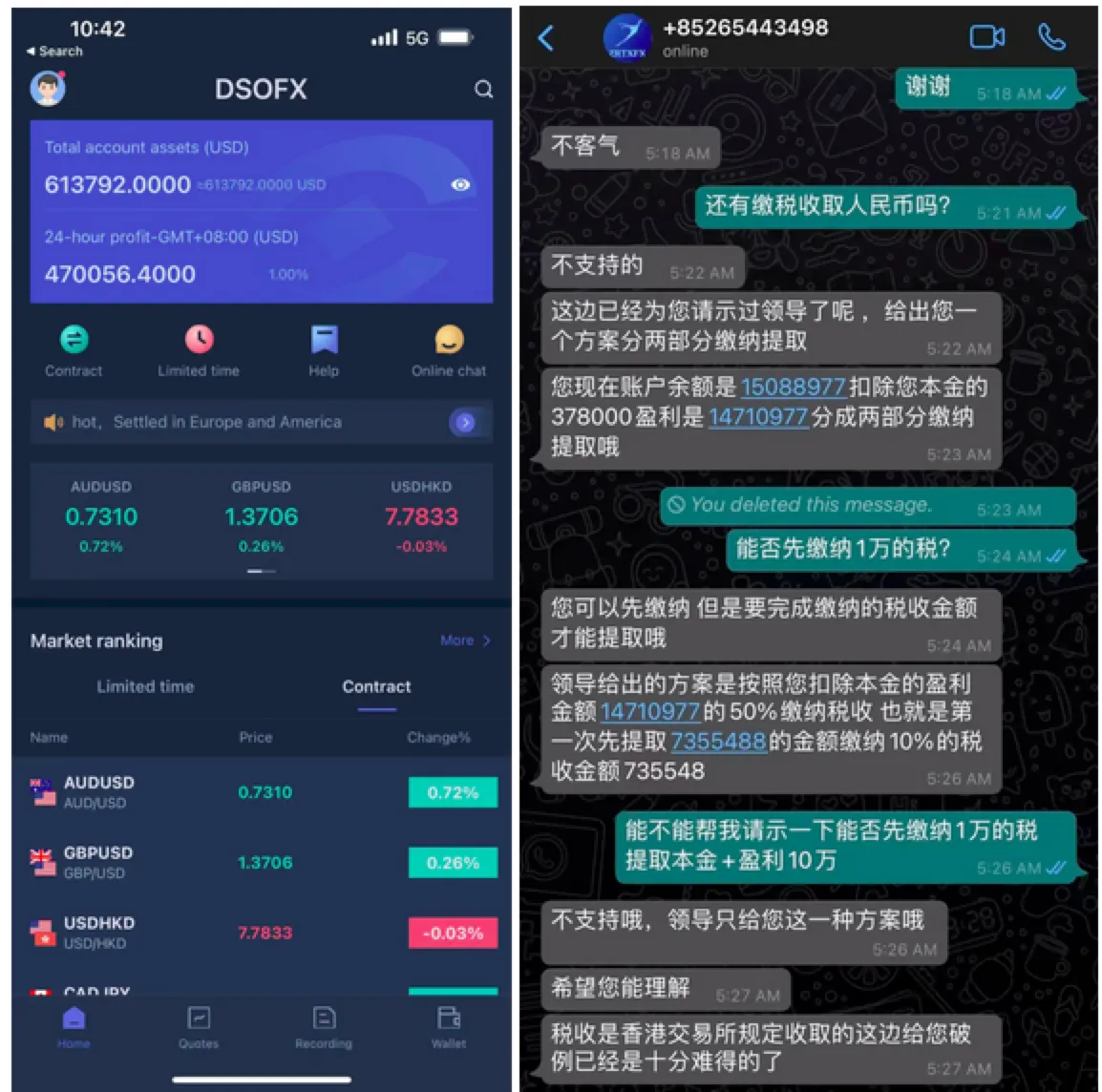
Everyone should be more careful and cautious with dating apps. Always scrutinize unsolicited flirtatious messages from strangers on social media like Instagram, Xiaohongshu (RED), and Weibo. The scripts these scammers use are basically all the same, starting with excessive flattery and praise.

Think about it: most genuinely tall, rich, and handsome men, or hardworking, high-quality guys, don't have time to send DMs to strangers all day. Plus, ask them to say a few more sentences in English and they'll quickly give themselves away.
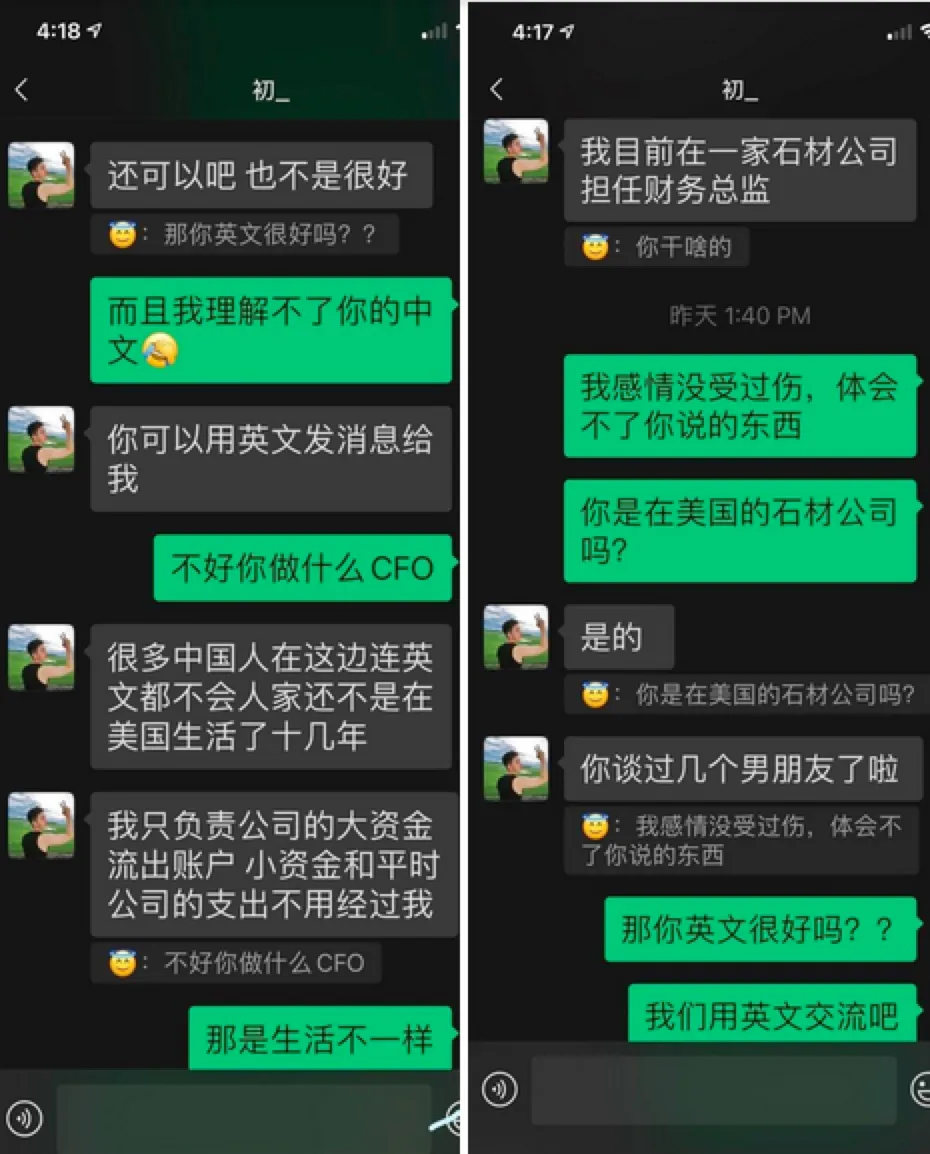
Even if you do want to pursue an online romance, be on high alert the moment money is mentioned. No legitimate person would ask you to invest or send money without even meeting in person.
Job Hunting? The "CEO Falls for Me" Scam
In addition to the usual social media platforms, pig-butchering scammers are now even targeting LinkedIn.
Lately, if someone with a Chinese profile, a decent-looking photo, and claims of being a Harvard, Yale, Princeton, Stanford, or MIT grad and current CEO suddenly adds you, saying they think you're outstanding and want to exchange experiences, it's almost certainly a scammer.
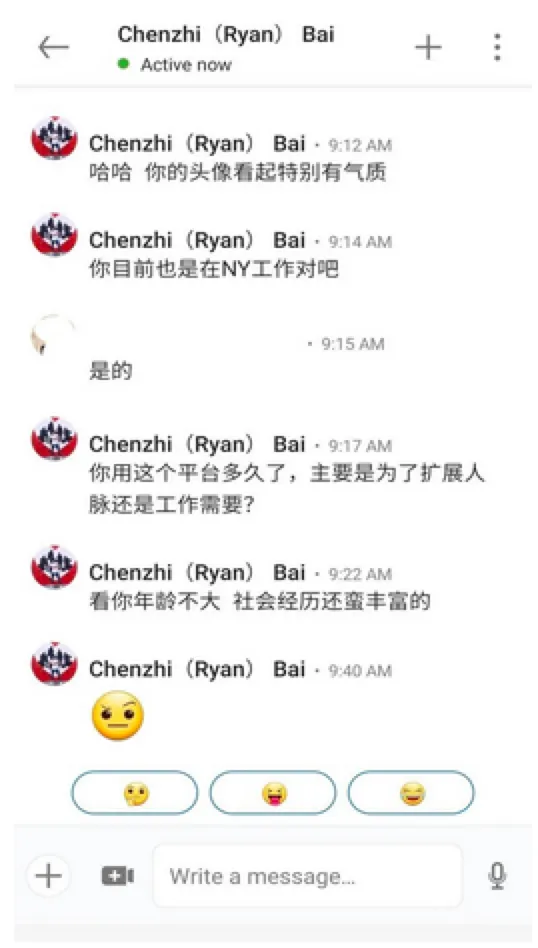
An elite persona is standard issue for these scammers. Most sport titles like top-school graduate, finance returnee, or startup CEO. They might speak a few words of English and chat briefly about business, but their cover tends to blow when conversations go deeper.
As we all know, North American investment banking and startup circles run on connections. It's ridiculous for a supposed Harvard grad and Goldman Sachs star to have only a dozen connections—definitely a scammer.
Despite this, some people still fall for the "LinkedIn pig-butchering" scam and lose $500,000. The playbook is always the same: dazzling elite credentials, long chats to build rapport, and then a request for emergency money or a fake investment before disappearing.
For cross-border scams like these, it's usually very difficult to catch the perpetrators, and victims have to bear the losses themselves. Just remember this one tip: if you see that kind of suspicious opening line, immediately block and delete—no questions asked.
Ghostwriting? The Kind That Gets You Expelled Through Blackmail
You thought pig-butchering was only about romance and dating? In student circles, the scam has evolved to shocking levels, seeping even into essay-writing and exam-taking services.
For example, a Chinese international student at a public university in California hired someone to do his assignments based on a WeChat friend's recommendation. Soon after, he received an anonymous email demanding $5,000 in hush money, threatening to report him for academic dishonesty. Fearing expulsion, he paid up.

Services offering essay-writing, exam-taking, and class-attending lure students with slogans like "You go chase your dreams, we'll handle your homework." Many students are tempted. Some even say they chat so well with the writers that they receive personal concern and a full suite of services.
Some do it out of laziness, while others want a perfect GPA, and they risk expulsion or deportation by taking this "shortcut."
Little do they know that malicious actors are watching, ready to extort them. Although this student chose to pay up, he now lives in constant fear of being exposed.
As we all know, universities abroad impose severe penalties for academic dishonesty, ranging from warnings to expulsion. Never hire a ghostwriter out of temporary laziness. As long as you don't resort to these services, this type of pig-butchering won't come knocking.
Renting? Consider the Deposit as Tuition Paid to Scammers
While studying abroad, you also need to watch out for pig-butchering scams when renting housing.
For instance, scammers post fake listings on Facebook with attractive photos, great prices, and prime locations. They're very accommodating when you ask for a video tour or detailed information. They'll even produce a fake property deed that looks real if you ask.
They have an answer for everything, making the conversation seem perfect. Once you take the bait, they demand rent and a deposit. After receiving the money or if the scam is detected, they block you and disappear.
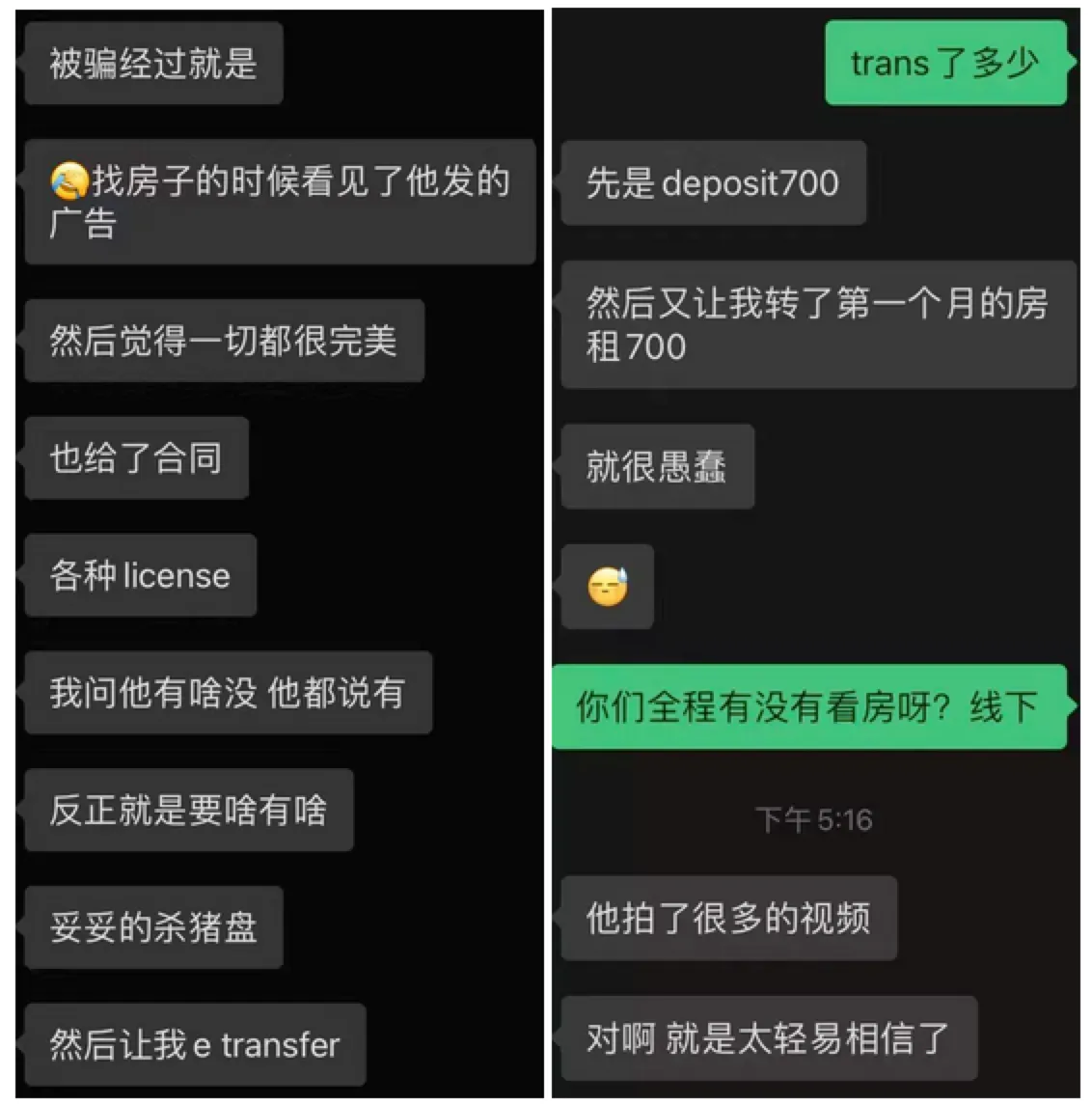
It's not just about finding a rental; renting out your own place also carries risks.
The latest trick involves fake checks. Scammers pose as tenants, view the place, and then readily write you a check. Be warned: the check amount is far higher than your rent! For example, if your rent is $500, the check they give is for $3,900, and they ask you to transfer the remaining $3,400 back to them.
Needless to say, the check is fake. Even if it appears to clear initially, it will eventually bounce. The $3,400 you send back is real money, and it's gone.
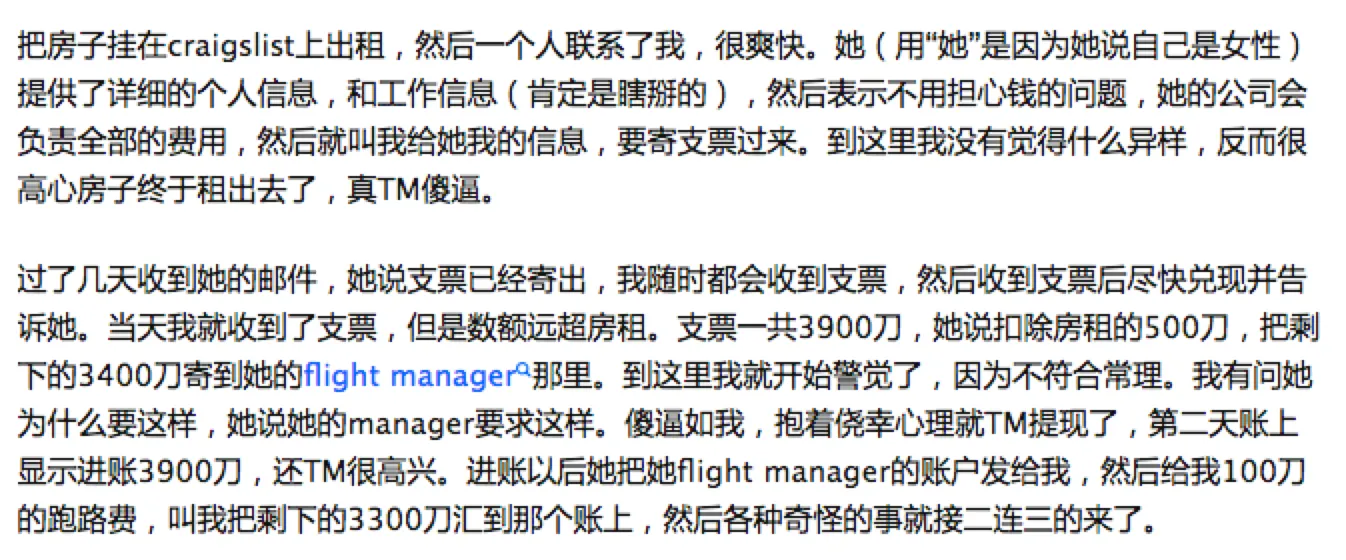
So, whether you're looking for a rental or renting out your place, always stay alert. Don't make large transfers to strangers, avoid checks if possible, and never be tempted by a deal that seems too good to be true. Ask to see more identification, and be extra cautious to stay safe.
How to Avoid Pig-Butchering Scams?
Many victims of pig-butchering scams are highly educated, come from well-off families, and have some investment experience. After losing huge sums, many are too ashamed or guilt-ridden to tell their families or friends, unable to believe they fell for it.
So how can you prevent a pig-butchering scam from happening to you? Keep these points in mind:
Be Cautious in Online Dating, and Never Discuss Money
It's understandable that international students, with their limited social circles, use apps to meet friends and broaden their networks.
However, the moment someone asks to borrow money or tries to lure you into an investment, raise your guard. Money talk should be an immediate dealbreaker.
Don't Be Greedy—There's No Such Thing as a Free Lunch
Almost every scam lets you taste some small gains at first.
Even in a fake investment, they'll let you earn a little to lower your defenses, all to set you up for the big haul. Or they might send you money, making you think you've scored a deal, when in reality, a bigger trap awaits.
Stay Grounded, and Communicate with Family
Pig-butchering scammers target lonely international students and workers precisely because they know they're more vulnerable to emotional manipulation and dependency.
Communicate regularly with your parents and family. Seek advice from experienced people when facing difficulties. Family and true friends will always be your safest harbor.
Finally, if all else fails, consider downloading the National Anti-Fraud Center App.