Every application season, JHU is bashed. Many forum posts will rationally advise you to 'avoid pitfalls,' and lists of 'watered-down' programs invariably include JHU, such as JHU MFin, JHU AE. So, what is Johns Hopkins University really like? Is it really that 'watered down'? Is it worth attending?
Let’s uncover the truth about Johns Hopkins University together!
JHU is indeed a world-class private university and one of the 14 founding members of the Association of American Universities (AAU). It is particularly renowned in medicine and public health, on par with Harvard Medical School, and has consistently ranked first in the U.S.
JHU Rankings
Based on the 2023 U.S. News National University Rankings:
Top1 Princeton University, Princeton
Top2 Massachusetts Institute of Technology
Top3 Harvard University, Cambridge
Top3 Yale University, New Haven
Top3 Stanford University, Stanford
Top6 University of Chicago
Top7 University of Pennsylvania
Top7 Johns Hopkins University
Based on the 2023 QS World University Rankings:
Top1 Massachusetts Institute of Technology
Top2 University of Cambridge
Top3 Stanford University
Top4 University of Oxford
Top5 Harvard University
Top6 California Institute of Technology
Top6 Imperial College London
Top8 University College London
Top9 ETH Zurich - Swiss Federal Institute of Technology
Top10 University of Chicago
Top11 National University of Singapore
Top12 Peking University
Top13 University of Pennsylvania
Top14 Tsinghua University
Top15 The University of Edinburgh
Top16 Swiss Federal Institute of Technology in Lausanne
Top16 Princeton University
Top18 Yale University
Top19 Nanyang Technological University
Top20 Cornell University
Top21 The University of Hong Kong
Top22 Columbia University
Top23 The University of Tokyo
Top24 Johns Hopkins University
Ranked 24th globally by QS and 7th nationally by U.S. News — truly a top-tier university. Next, let’s look at JHU’s subject rankings:
Based on the 2023 U.S. News Subject Rankings:
USNEWS Accounting Global Rank 151
USNEWS Aerospace Engineering and Science Global Rank 45
USNEWS Anthropology Global Rank 51
USNEWS Atmospheric Sciences Global Rank 101
USNEWS Basic Medicine Global Rank 5
USNEWS Life Sciences Global Rank 27
USNEWS Biological Engineering Global Rank 12
USNEWS Biostatistics Global Rank 50
USNEWS Chemical Engineering Global Rank 51
USNEWS Chemistry Global Rank 51
USNEWS Clinical Medicine Global Rank 2
USNEWS Mass Communication and Journalism Global Rank 151
USNEWS Computer Engineering Global Rank 51
USNEWS Computer Science Global Rank 51
USNEWS Economics Global Rank 51
USNEWS Education Global Rank 19
USNEWS Electrical/Electronic Engineering Global Rank 101
USNEWS Electronic Engineering Global Rank 101
USNEWS English Global Rank 51
USNEWS Environmental Engineering Global Rank 34
USNEWS Environmental Science Global Rank 51
USNEWS Epidemiology Global Rank 2
USNEWS Finance Global Rank 151
USNEWS Geology Global Rank 101
While the subject rankings cannot cover all graduate programs, it is not difficult to see that medicine-related programs are all top-ranked, followed by education policy and environmental engineering. This also reminds every student: Compared to the UK, Hong Kong, and Singapore, the U.S. offers a greater variety of graduate programs; at the same time, admission requirements and competitiveness for similar majors can vary greatly. When choosing a school, be sure to fully understand and make the choice that suits you best.
Overall, Johns Hopkins University has a high degree of internationalization, strong global recognition, and substantial academic freedom and creativity. However, there are always voices online calling JHU's certain programs 'watered down,' suggesting they are open to almost anyone with too low an admission bar; courses are too easy, yielding little learning and poor employment prospects. These include no small amount of bias.
Teacher Acelin also hopes to use this opportunity to guide everyone in viewing the pros and cons objectively, and not to let some hearsay biases affect their choice of programs that truly suit them.
Does Uneven Student Quality Make It 'Watered Down'?
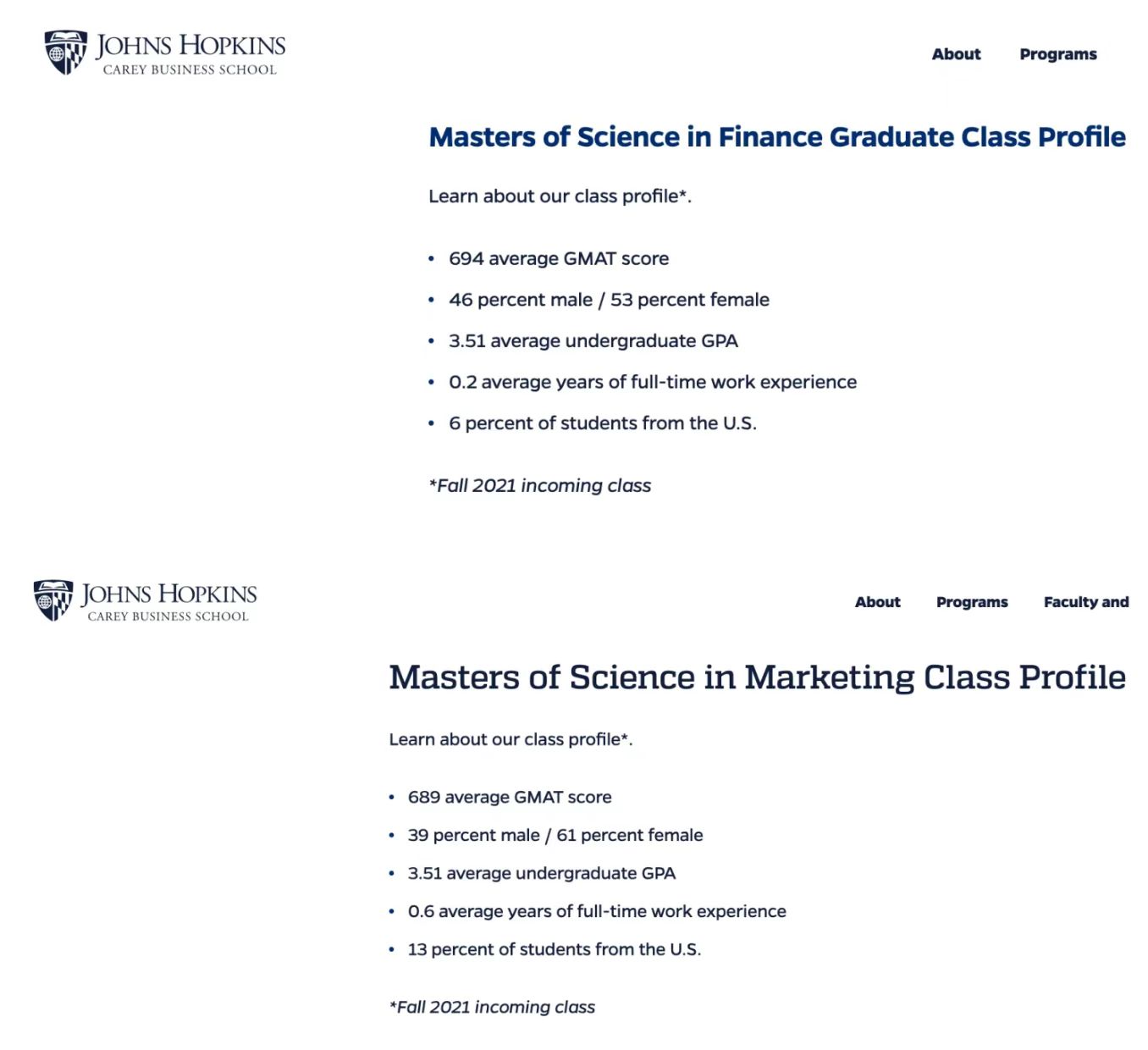
Take the often-criticized JHU Carey Business School: countless people label its programs as 'notorious for being watered down,' with Finance and Marketing frequently targeted, and many hoping to avoid them. Indeed, the admission standards at JHU Carey are somewhat 'mysterious,' with wide gaps in student academic backgrounds and a large number of Chinese students. However, an average admitted student profile of GMAT 690 and GPA 3.5+ is a real fact:
Furthermore, admission thresholds are relative concepts. Harvard's 'low threshold' is relative to Harvard's 'high threshold'; Columbia's 'low threshold' is relative to Columbia's 'high threshold'—it's not your doorstep's threshold. A lower admission threshold and less competitive application process absolutely do not mean everyone can get in; nor does it mean you can just coast through. So why put 'watered down' in quotes?
If you think these programs are all about comfortably and casually earning a prestigious diploma, you have completely misunderstood what 'watered down' means! A low barrier means the admission rate is relatively higher compared to the university's overall ranking or some of its highly elusive programs.
At JHU Carey, admission still relies heavily on standardized test scores to filter applicants. Despite the high proportion of Chinese students and occasional admission of slightly lower scores, the average student quality remains very high; every year, top-5 university undergraduates enroll. If 'anyone can go,' then first try scoring 700 on the GMAT?
Does a Large Number of Chinese Students Make It 'Watered Down'?
Of course not! Why are there many Chinese? Because we are good at math. Many people think that a program with many Chinese students is a 'watered down' program. This is particularly unfair for certain STEM fields. Why are there many Chinese? Because STEM is our strength!
For example, MIT's Master of Finance, NYU's Financial Engineering, Columbia's IEOR—the bar is astronomically high, requiring GRE 330 and GPA above 3.8/3.9 to be safe; yet the Chinese proportion exceeds 70%. But who would dare call these programs 'watered down'?
Does Poor Employment Make It 'Watered Down'?
Finally, let's look at the career outcomes of JHU graduates, taking the often-considered-'watered-down' Marketing program as an example:
.jpeg)
The average salary in Asia is lower than in North America; thus, after graduating from JHU's Marketing program, the starting salary in China is around RMB 255,000. If you use STEM designation to apply for a 36-month OPT, the annual salary in North America will be at least around RMB 600,000.
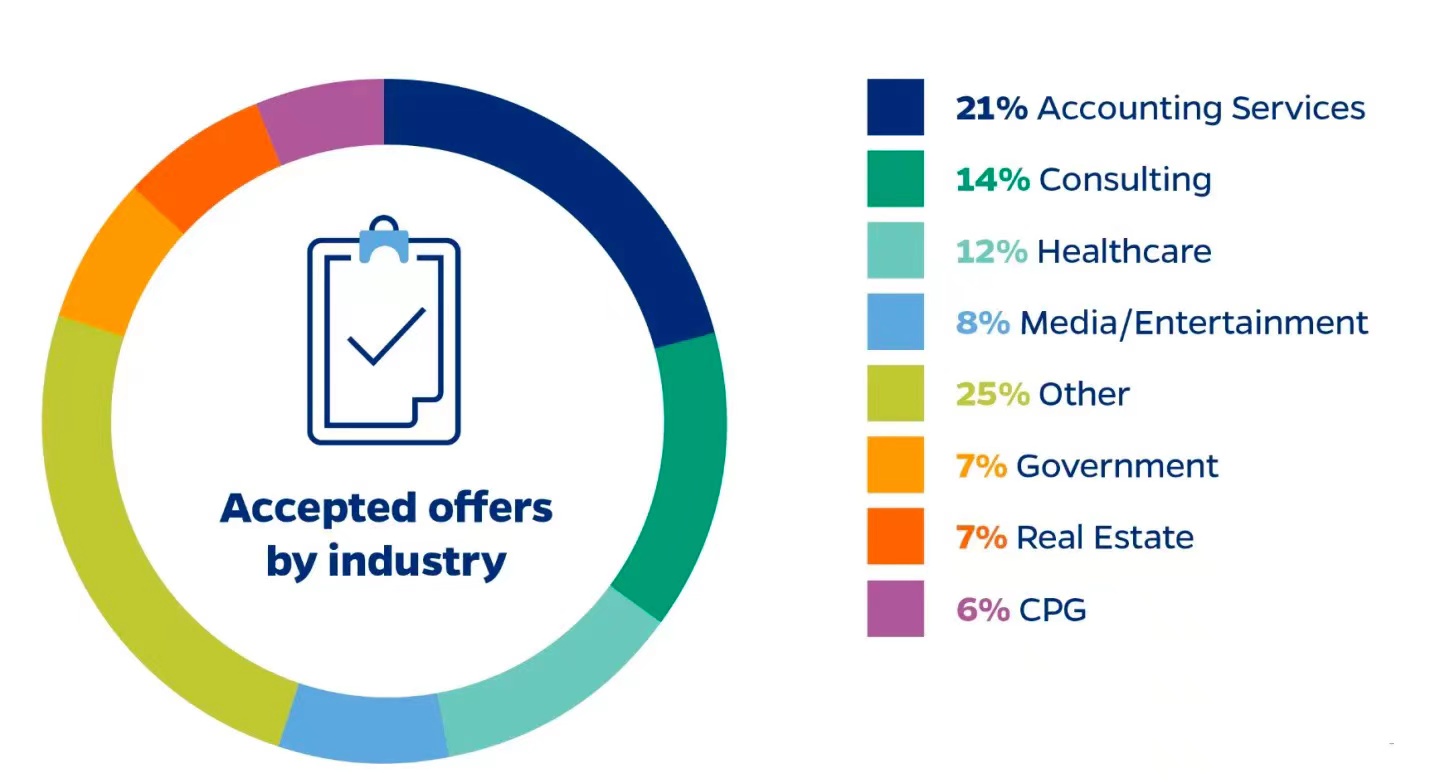
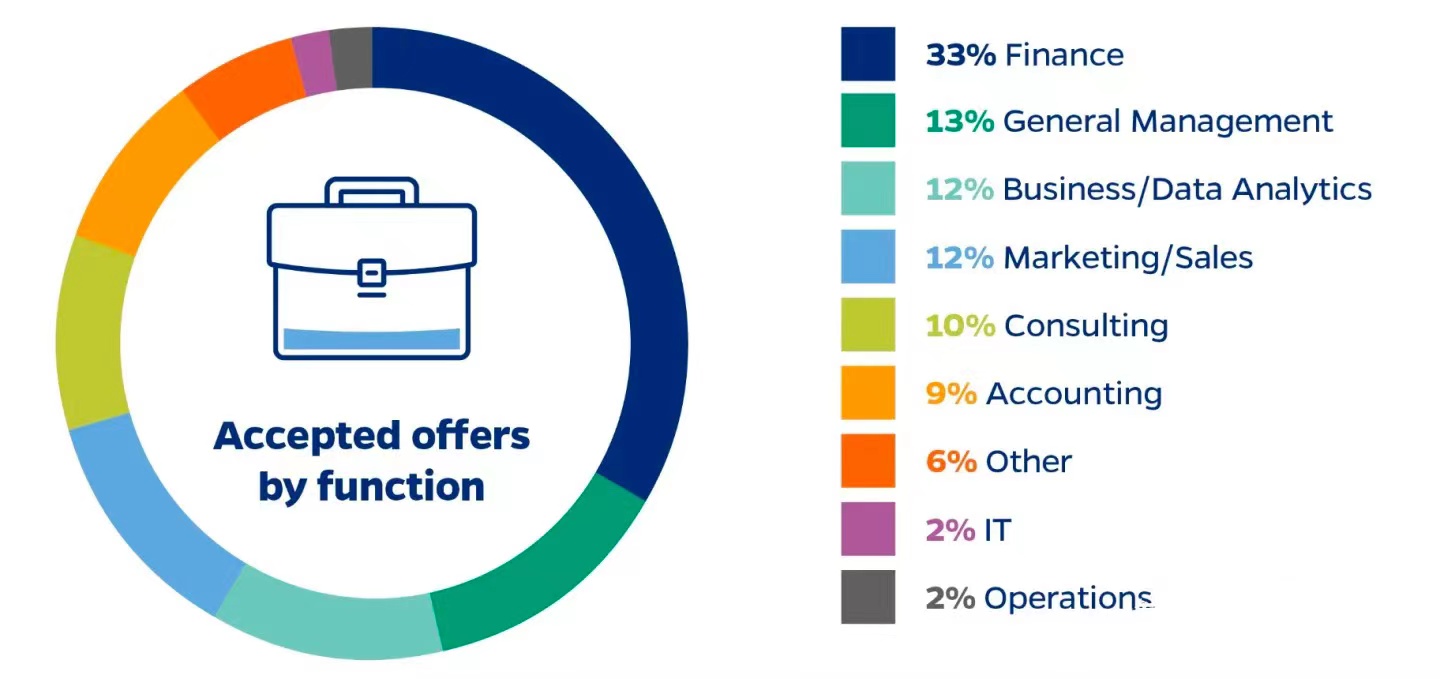
As for industries and specific roles, such statistics may also exceed some students' expectations—it turns out a Marketing graduate can also pursue pure finance and data analysis jobs, and can also enter Big Four accounting firms, healthcare, media, government, and other sectors. In fact, the proportion of these is not low.
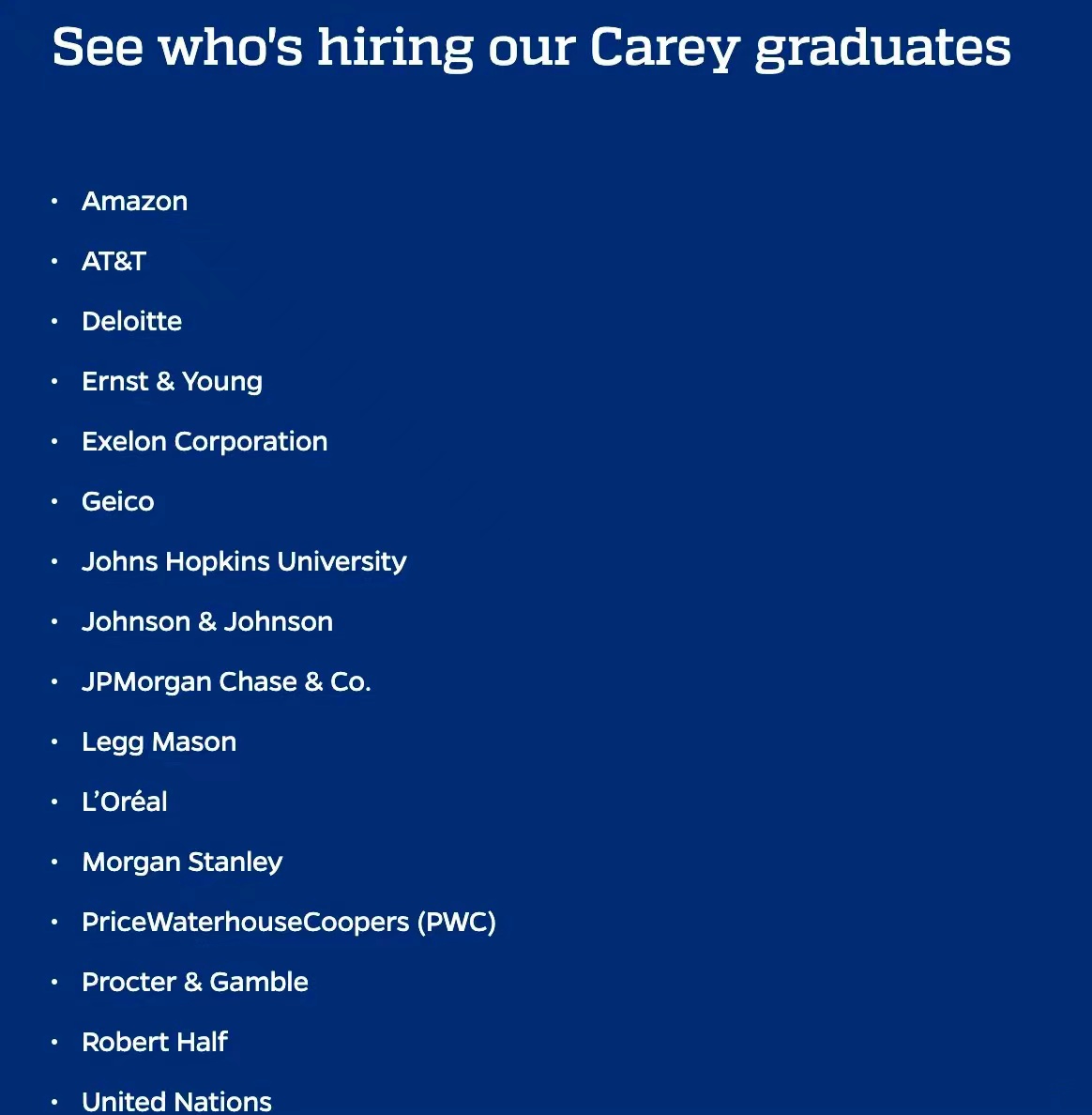
Which specific employers hire JHU Marketing graduates?
Answer: Well-known ones include Amazon, Johnson & Johnson, JPMorgan Chase, L'Oréal, as well as the U.S. government and the United Nations.
In summary, Teacher Acelin can very responsibly tell everyone that these graduate programs under the umbrella of a prestigious university can have excellent curriculum design, top-notch faculty, and broad career prospects. As long as you put in the effort, you can leverage these unique advantages to boldly build a bright future~ If you still have doubts about certain prestigious programs, be sure to talk to a truly knowledgeable friend or teacher, figure out what you want, and then decide—that's the kind of thinking a mature adult should have, right?
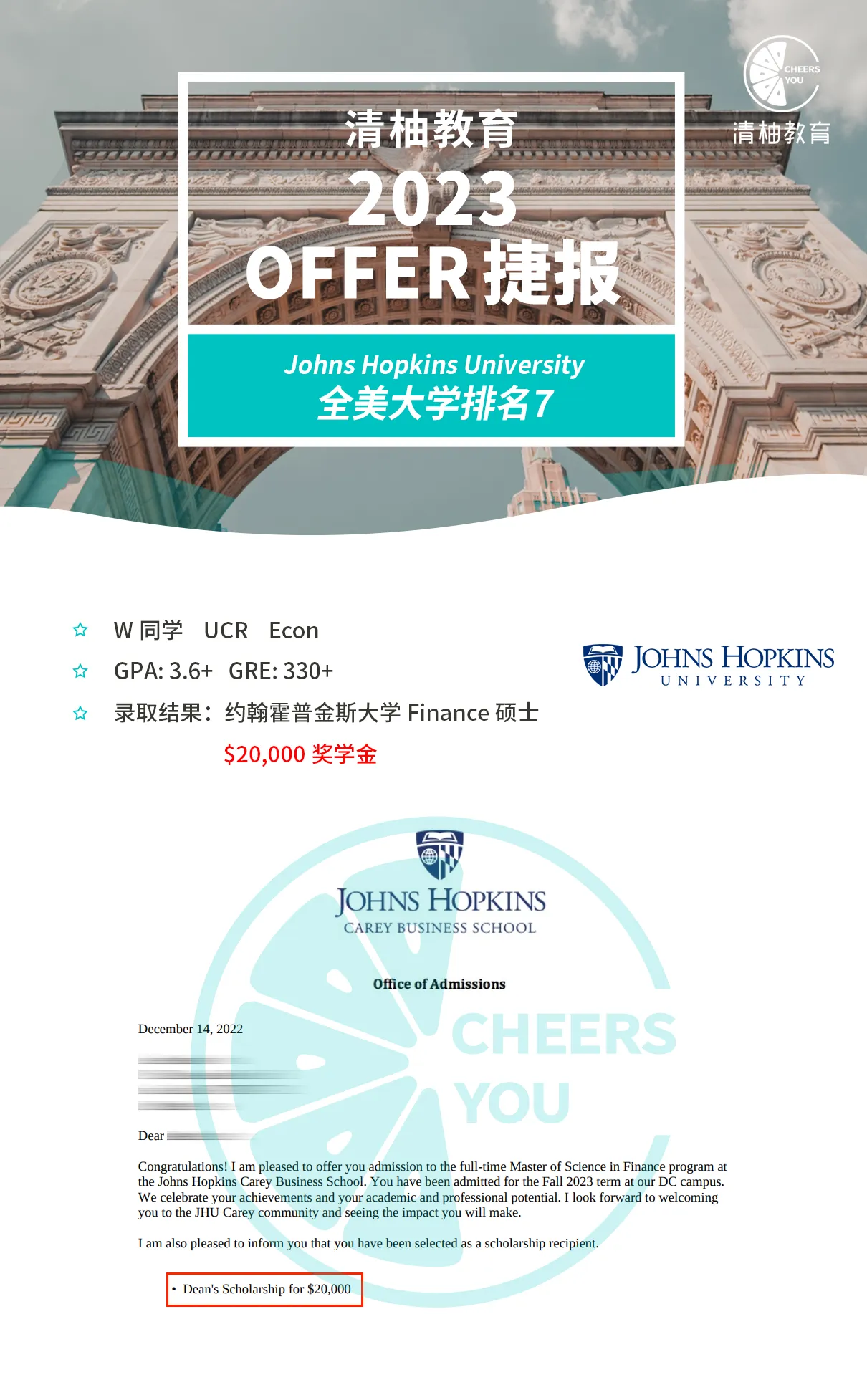
Finally, let's take a look at the latest JHU offers with scholarships!
.png?x-oss-process=style/opt-webp)
————————————————
Welcome to scan the QR code below for a one-on-one study abroad consultation~
.png?x-oss-process=style/opt-webp)