
This year, public health applications are extremely popular. Which is better: the Master of Public Health (MPH) program at the University of Hong Kong (HKU) or the Chinese University of Hong Kong (CUHK)? From the perspective of academic accreditation and networking, if you want more in-depth development in the field of public health, for example, HKU is strong in infectious diseases and is a WHO Collaborating Centre, then HKU is recommended. If you prefer cross-regional and cross-industry exchanges and seek an international perspective to study population and global health, behavioral psychology, or even policy research, then CUHK might be the better choice.
Overall, HKU's MPH program is relatively weaker in mathematical statistics. CUHK's MPH program, on the other hand, is stronger in mathematical statistics and has broader offerings in some other fields than HKU.

But then again, rather than agonizing over which one to choose, it's better to first figure out what area you're interested in. Which school has stronger professors, higher reputation, and better partner institutions in that field? Finally, combine your purpose for pursuing an MPH and your interests to make a more rational school choice.
Below is a detailed introduction to these two programs: HKU – MPH
HKU MPH (Master of Public Health)
[Application Timeline]
Applications open on November 1, 2022. The early decision deadline is February 15, 2023, and the final deadline for mainland Chinese students is April 28, 2023.
[Tuition]
HKD 200,000 per year
[Student Profile from Previous Years]
Full-time students account for 39%, while 14% are practitioners from other health-related fields and 18% are from completely other industries, indicating a very rich and diverse alumni network. Mainland Chinese students make up less than 42%.
[Application Requirements]
HKU's public health program offers multiple concentrations and covers a wide range, so the background requirements are relatively broad: however, a medical background (biology/psychology/economics are also acceptable) is still necessary. HKU first restricts the students' academic background, and then the GPA and internship must match the program requirements—the higher the grades, the better. Given the medical orientation of HKU's MPH, the GPA requirement is understandably high; aim to maintain a GPA of 3.6+.
[Concentrations]
Four concentrations are available: Control of Infectious Diseases (CID), Epidemiology and Biostatistics (EB), Health Economics, Policy and Management (HEPM), and Public Health Practice (PHP).
[Credit Structure]
A total of 69 credits are required, including 42 course credits, 12 practicum credits, and 15 capstone credits. The 18 credits of compulsory courses consist of six subjects.
[Academic Accreditation]
Hong Kong Medical Council
Continuing Medical Education (CME)
Continuing Professional Development (CPD)
Council on Education for Public Health (CEPH)
It is worth noting that CEPH is the world's oldest accrediting body for public health schools and programs. The School of Public Health at HKU is the first and only academic program in Hong Kong to receive CEPH accreditation.
After completing a CEPH-accredited MPH, students are eligible to take the Certified in Public Health (CPH) exam and obtain the CPH credential. The CPH exam and certification are administered by the National Board of Public Health Examiners in the United States.
[Exchange Opportunities]
.jpeg)
In addition to the collaborations shown above with Switzerland, India, and Singapore, future partnerships are being explored with Bangladesh and Australia.
CUHK MPH (Master of Public Health)
[Application Timeline]
For full-time applicants, the early decision deadline is February 28, 2023, and the final application deadline is May 1, 2023.
[Tuition]
HKD 187,200
[Student Profile from Previous Years]
Fresh graduates account for only 17%, while nurses and doctors make up nearly 40%. The remaining students come from backgrounds relatively directly related to public health, meaning that the alumni network tends to be more professionally oriented. Mainland Chinese students account for less than 26%, a figure that also includes students from other overseas regions; thus, non-local students are relatively few.
[Application Requirements]
This point is more lenient than HKU. CUHK accepts students with health-related backgrounds as well as those from non-health-related fields, such as biomedical sciences, education, journalism, business, computer science, psychology, and engineering. From the admissions preference, it can be seen that non-local students are at a disadvantage. I recommend that students from 985/211 universities have a GPA of 3.6+, overseas university students have 3.5+, and those from non-prestigious Chinese universities have at least 85+ before considering applying.
[Concentrations]
Five concentrations are available: Epidemiology and Biostatistics (EPBI), Health Promotion and Social Behavior (HPSB), Health Systems, Policy and Management (HSYS), Environmental/Occupational Health and Infectious Diseases (OENV/ID), and Population and Global Health (POPG).
[Credit Structure]
36 credits must be completed within one year:
[Exchange Opportunities]
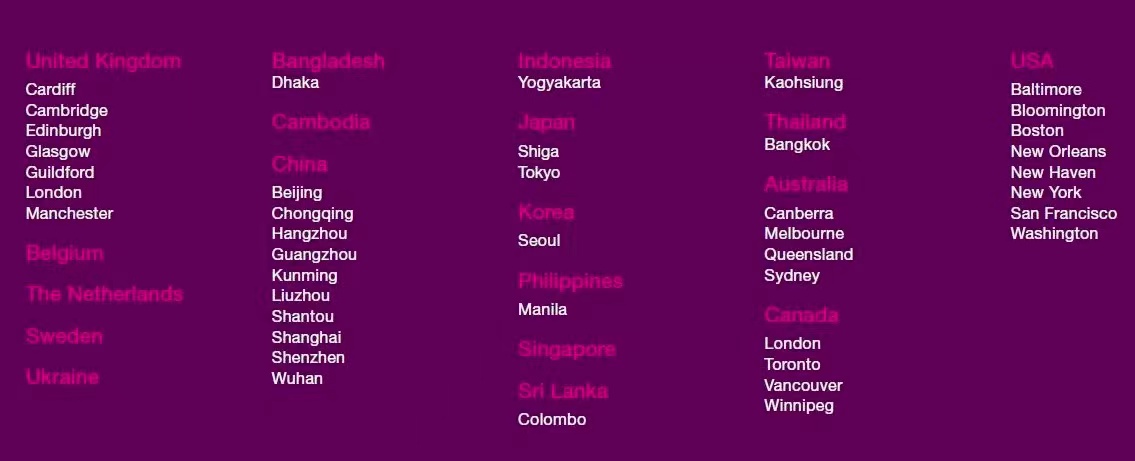
CUHK's MPH program offers much richer exchange opportunities with various regions. The school is known for its extensive international connections. Since its establishment in 2001, the school has been committed to building partnerships with different international organizations. In recent years, it has established closer ties with over 90 prestigious universities and institutions across 19 different countries, especially extensive collaborations with mainland China.
————————————————————
If you are interested in pursuing an MPH degree abroad, feel free to scan the QR code below and start a one-on-one study abroad consultation right away~
.png?x-oss-process=style/opt-webp)