
Columbia's ERM program has often been criticized as a "watered-down" master's. On one hand, it is housed under the School of Professional Studies (SPS). On the other hand, admitted students' GPAs range from 3.8 down to 2.9—a wide spectrum! But don't underestimate this program. Each class averages about 30 students, and the curriculum is far from easy. Core courses include Enterprise Risk Management, Traditional Risk, and ERM Practices, among others. Moreover, students gain access to a high-quality alumni network: a global, active community of over 7,000, with excellent career prospects.
Let's take a detailed look at the program!
Columbia University Enterprise Risk Management (ERM)
Columbia's ERM program is part of the School of Professional Studies (SPS). Here's some context about SPS:
.png?x-oss-process=style/opt-webp)
Many top-30 U.S. universities have popular programs housed under their SPS schools, with Columbia's being among the best known.
SPS programs are fully accredited and hold equal standing with other schools within the university. Some may see evening classes as akin to adult education, but that's not accurate. Because many U.S. graduate programs are career-oriented, they encourage internships and practical experience, which often leads to evening class schedules. Many engineering and business school courses also run in the evenings.
Instructors are often senior executives who share real-world experience, giving you a natural advantage in networking. If leveraged well, the connections and career opportunities can be immensely beneficial.
Returning to the program itself, it covers all aspects of ERM, including frameworks, risk governance, risk identification, risk quantification, risk-return decision-making, and risk communication. Students learn to quantify all types of risk—strategic, operational, financial, and insurance—and to design and implement tailored ERM frameworks and risk governance structures for any organization.
Curriculum
Full-time students complete the program over three semesters.
.png?x-oss-process=style/opt-webp)
.png?x-oss-process=style/opt-webp)
.png?x-oss-process=style/opt-webp)
.png?x-oss-process=style/opt-webp)
.png?x-oss-process=style/opt-webp)
.png?x-oss-process=style/opt-webp)
.png?x-oss-process=style/opt-webp)
As you can see, besides required courses, there is a wide range of electives: risk-category courses covering strategic, operational, financial, and insurance risk management. Finance-oriented options include Introduction to Finance, Financial Risk Regulation, Derivatives Risk Management, as well as credit risk, market risk, quantitative risk, and more. These courses are highly quantitative, requiring data analysis to estimate risks and support corporate decision-making.
Admission Requirements
GPA: 3.5+
GRE: 320+
Language Scores: TOEFL 100+ / IELTS 7+
Applicants should also supplement their background with relevant internships. Don't be mistaken—this is still a Columbia program, so admission is competitive. It's not that students with any scores can get in; it's simply somewhat more accessible compared to equally ranked schools and programs.
Career Outcomes
.png?x-oss-process=style/opt-webp)
Graduates of the ERM program have found positions at JPMorgan Chase, KPMG, PwC, Deloitte, Ping An Securities, and other firms. The Big Four, banking, investment banking, finance, consulting—all present significant opportunities. Columbia itself is a target school for most top employers, giving students dedicated recruitment channels and significantly higher hiring rates. Moreover, the connections with instructors and classmates—many of whom work at leading companies—can provide invaluable support for your future career.
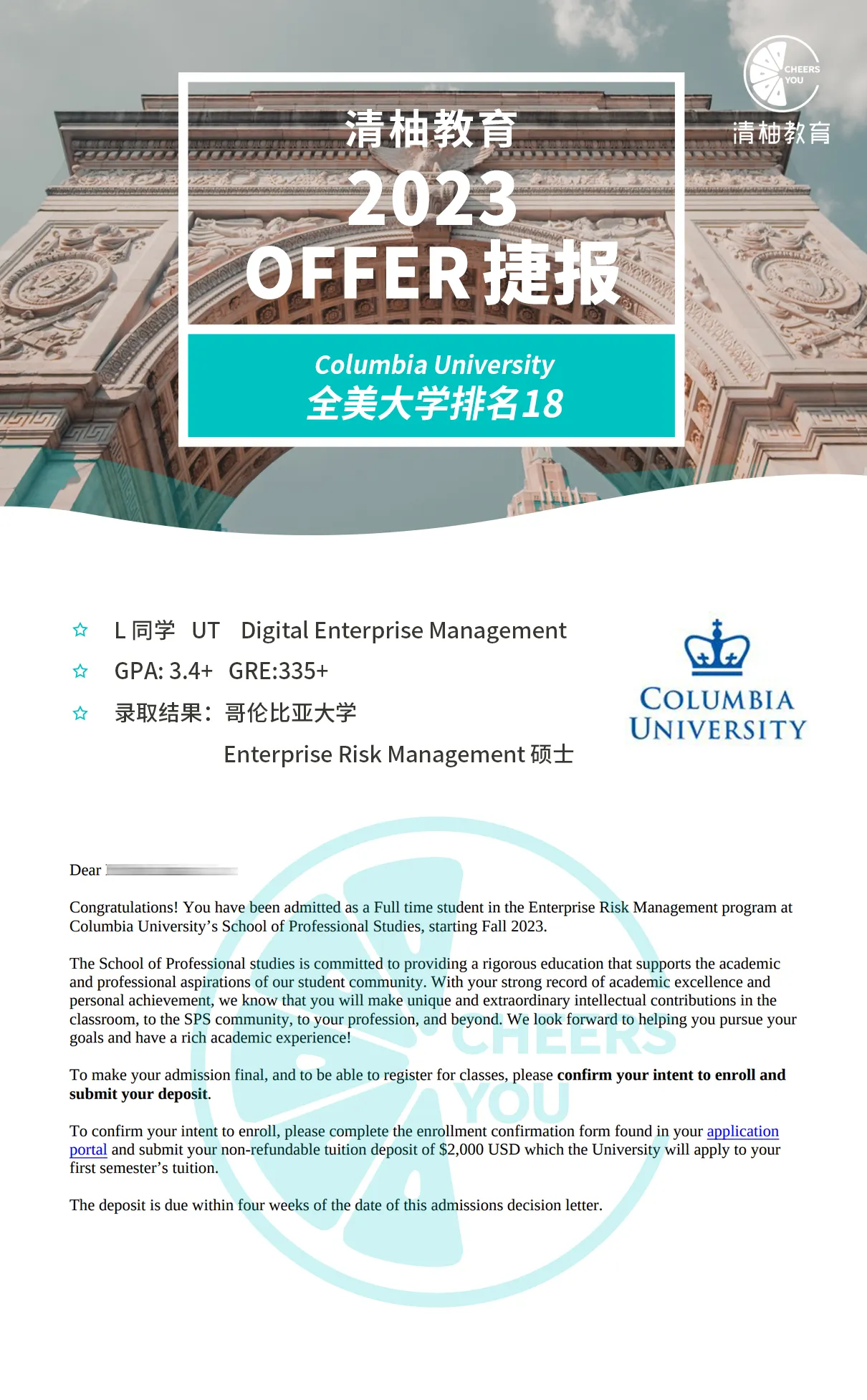
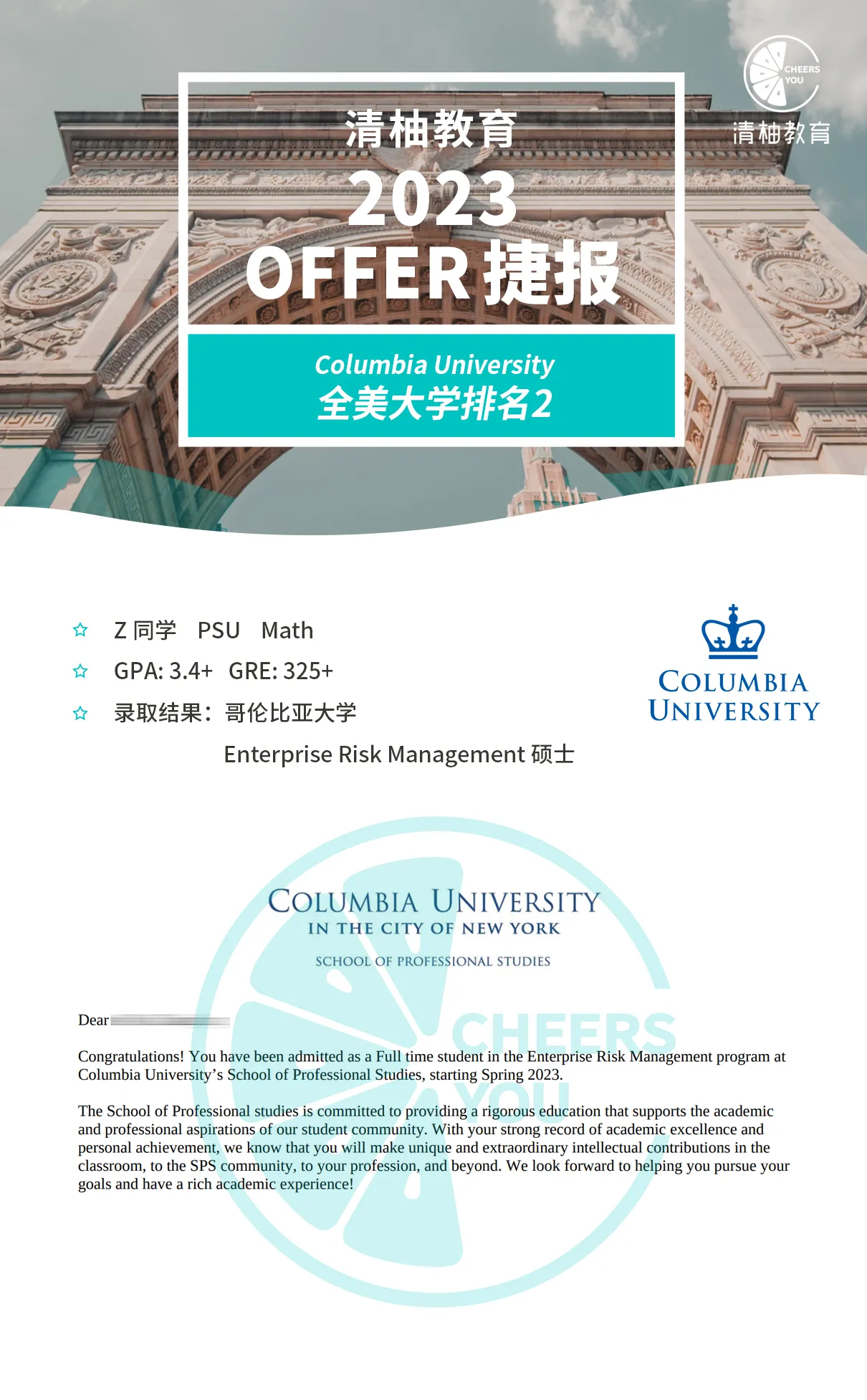
Check out some tempting Columbia offers below~
————————————————————
That wraps up this introduction to Columbia's ERM program. If you'd like to learn more about schools and positioning, feel free to reach out to teacher Acelin for professional guidance!
.png?x-oss-process=style/opt-webp)