In the era of big data, data science is ranked among the careers with the greatest prospects. As the DS field gains recognition, many applicants choose data science, leading to increasingly intense competition. Columbia University's MS in Data Science is among the most competitive data science master's programs in the U.S. Admitted students are predominantly from U.S. undergraduate institutions, with GPAs above 3.8 and strong GRE scores. So, what exactly is Columbia's Data Science program like? What are its core courses, and what does the future career outlook look like?
Data Science Applicant Profile
If you have strong programming background and a solid mathematical foundation, you are highly competitive. For example, students with a bachelor's in Computer Science have an advantage, as most data work is performed through programming and database techniques.
In addition, students from statistics or applied mathematics backgrounds with some programming skills can also apply. However, for business majors, if you have a strong quantitative background and want a STEM major, you can apply to a mix of Data Science, Data Analytics, and Business Analytics. The latter is more business-oriented and may be a better match.
Industries with the highest demand for DS include: pharmaceutical, computer software, internet, scientific research, IT services, and biotechnology. In fact, big data professionals can work in a wide range of fields, from defense departments and internet startups to financial institutions, where big data projects drive innovation. In Silicon Valley, entry-level data scientists already earn six-figure dollar salaries, with very lucrative compensation.
With all this background on DS, let's take a look at the specific program.
Columbia University MS in Data Science Program
.png?x-oss-process=style/opt-webp)
Official Website (https://datascience.columbia.edu/education/programs/m-s-in-data-science/)
Columbia University's MS in Data Science is an integrated program combining statistics, computer science, operations research, and more. Though housed in the School of Engineering, it also draws on resources from statistics and computer science. It is a 1.5-year program (can be completed in one year but not recommended). It offers spring and fall admission and includes four foundational courses required for professional achievement certification. Building on this foundation, students can apply data science techniques to their fields of interest. The program requires 7 core courses, including machine learning, visualization, statistical and inference modeling, etc. Elective courses can be taken from Journalism, Computer Science, Business School, ECE, etc.
For example, cloud computing and analytics, big data, etc. The program requires 30 credits, with no thesis requirement. Students have opportunities to conduct original research and interact with industry partners and faculty. The courses are excellent and challenging, with special training sessions in Python and R provided as needed.
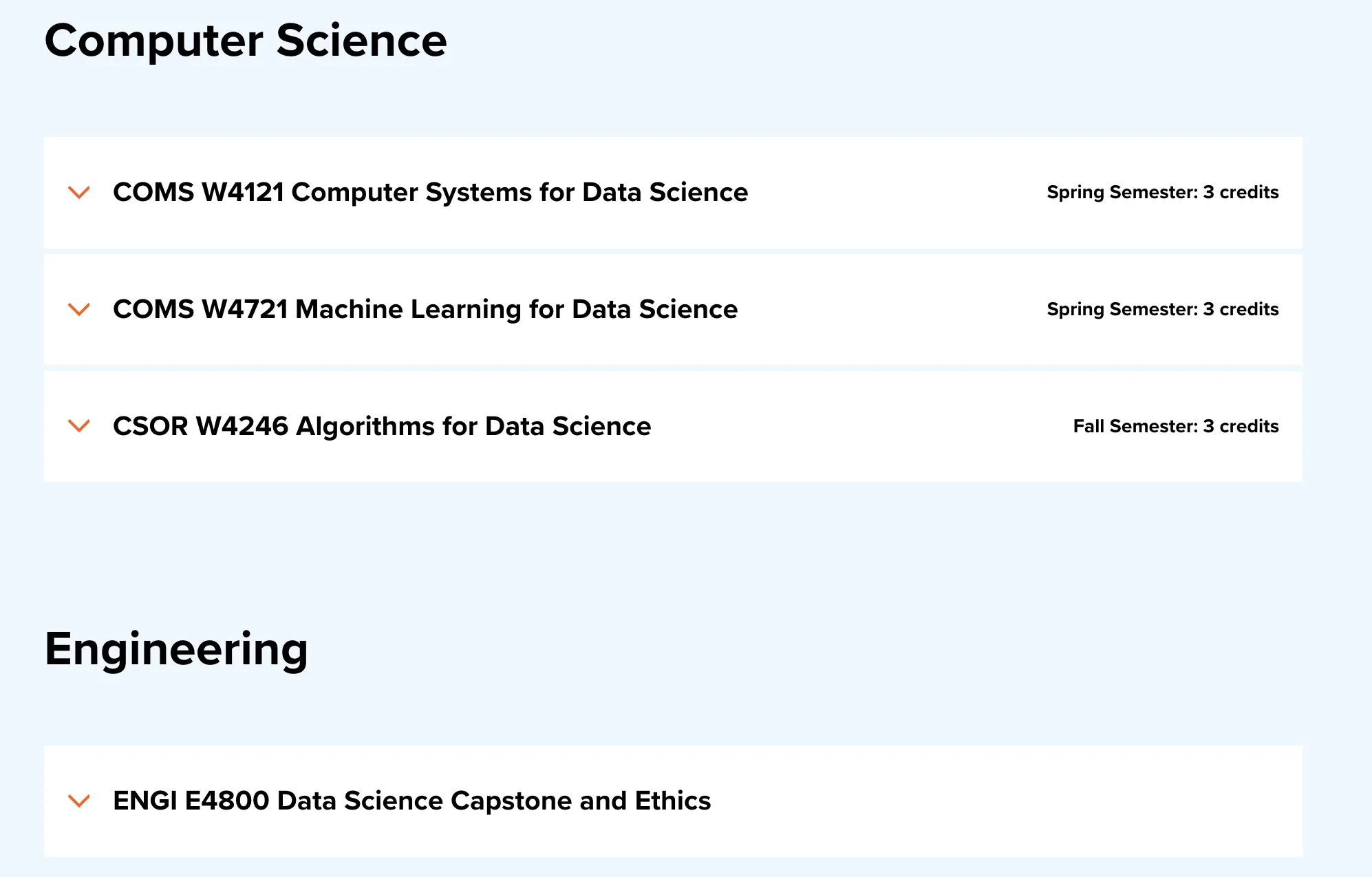
Core Courses
Computer Science
- Data Science Computer Systems
- Data Science Machine Learning
- Data Science Algorithms
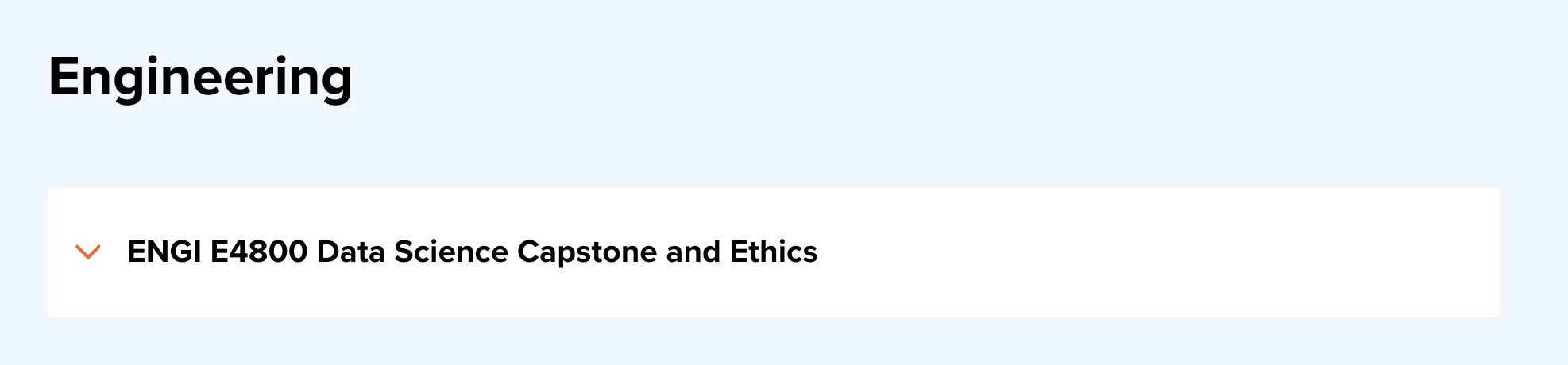
Engineering
- Data Science Capstone and Ethics
Statistics
- Probability and Statistics for Data Science
- Exploratory Data Analysis and Visualization
- Statistical Inference and Modeling
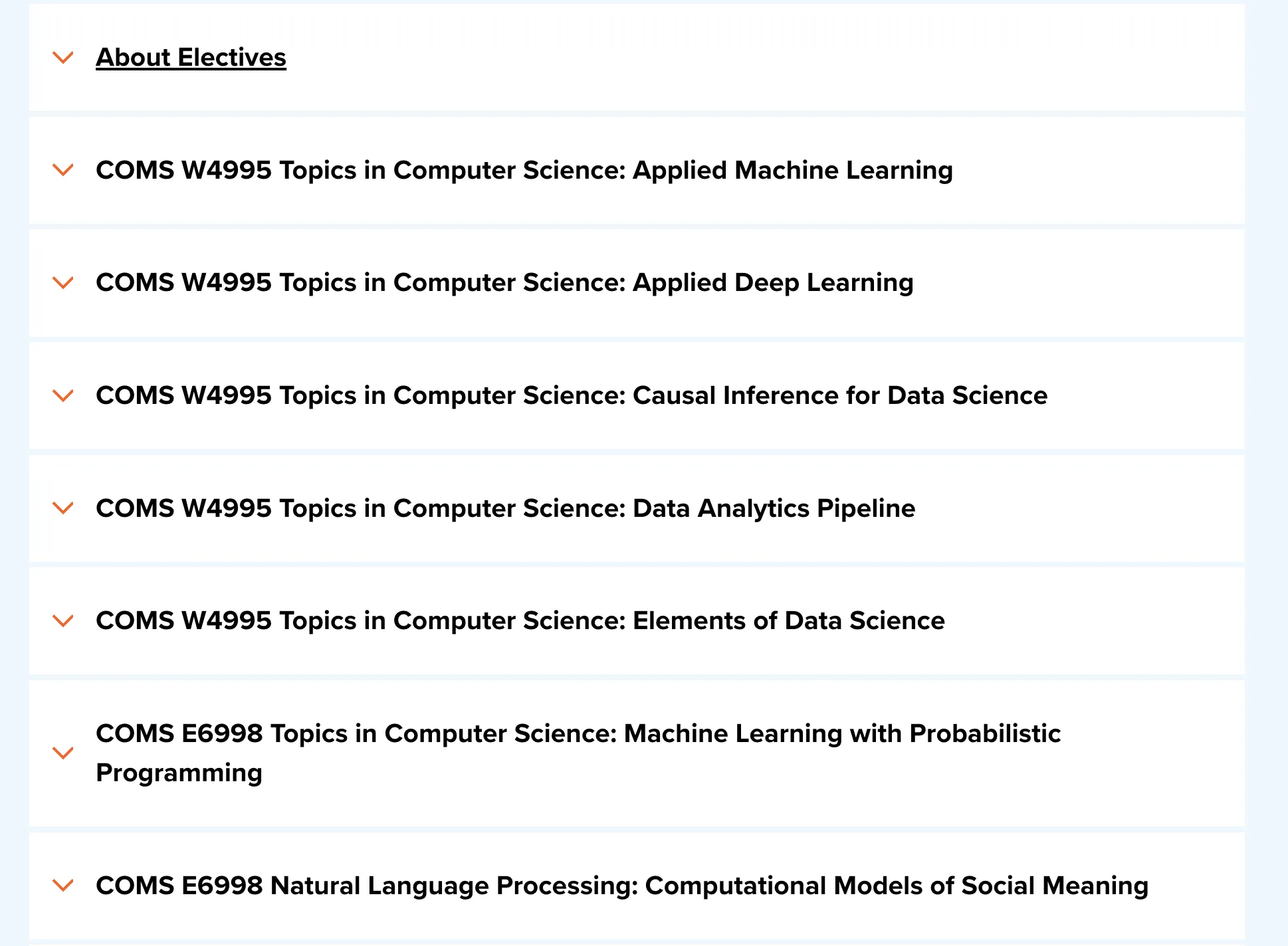
Elective Courses
- Applied Machine Learning
- Applied Deep Learning
- Causal Inference for Data Science
- Data Analysis Pipelines
- Elements of Data Science
- Machine Learning and Probabilistic Programming
- Computational Models of Social Meaning
- Deep Learning for Computer Vision, Speech, and Language
- Theory and Applications of Personalization
- Big Data in Finance
- Applied Machine Learning for Financial Modeling and Forecasting
- Applied Machine Learning for Image Analysis
Admission Requirements
The program requires applicants to have a foundation in mathematics and programming, ideally having taken courses in calculus, linear algebra, computer programming, etc. GRE scores are required and cannot be substituted with GMAT.
English proficiency: TOEFL 100+ or IELTS 7+. There are no mandatory work experience requirements, but it is recommended that applicants fully prepare their academic and personal backgrounds, which may serve as an advantage.
Required Application Materials
- Personal Statement
- Transcripts
- Three Letters of Recommendation
- Resume/CV
- GRE Scores (optional)
- TOEFL, IELTS, or PTE Academic Scores
Application Deadlines
- Deadline: January 15
- Final Deadline: February 15
Career Directions
Data science graduates typically pursue three main job roles:
- Machine Learning Engineer: primarily develops machine learning systems and solves practical problems.
- Data Analyst: extracts insights from data, estimates ROI, provides product recommendations, generally using fundamental tools.
- Data Scientist: focuses on advanced modeling, designing technical solutions for complex problems. It's not just about writing SQL or knowing some code; it requires deep domain knowledge.
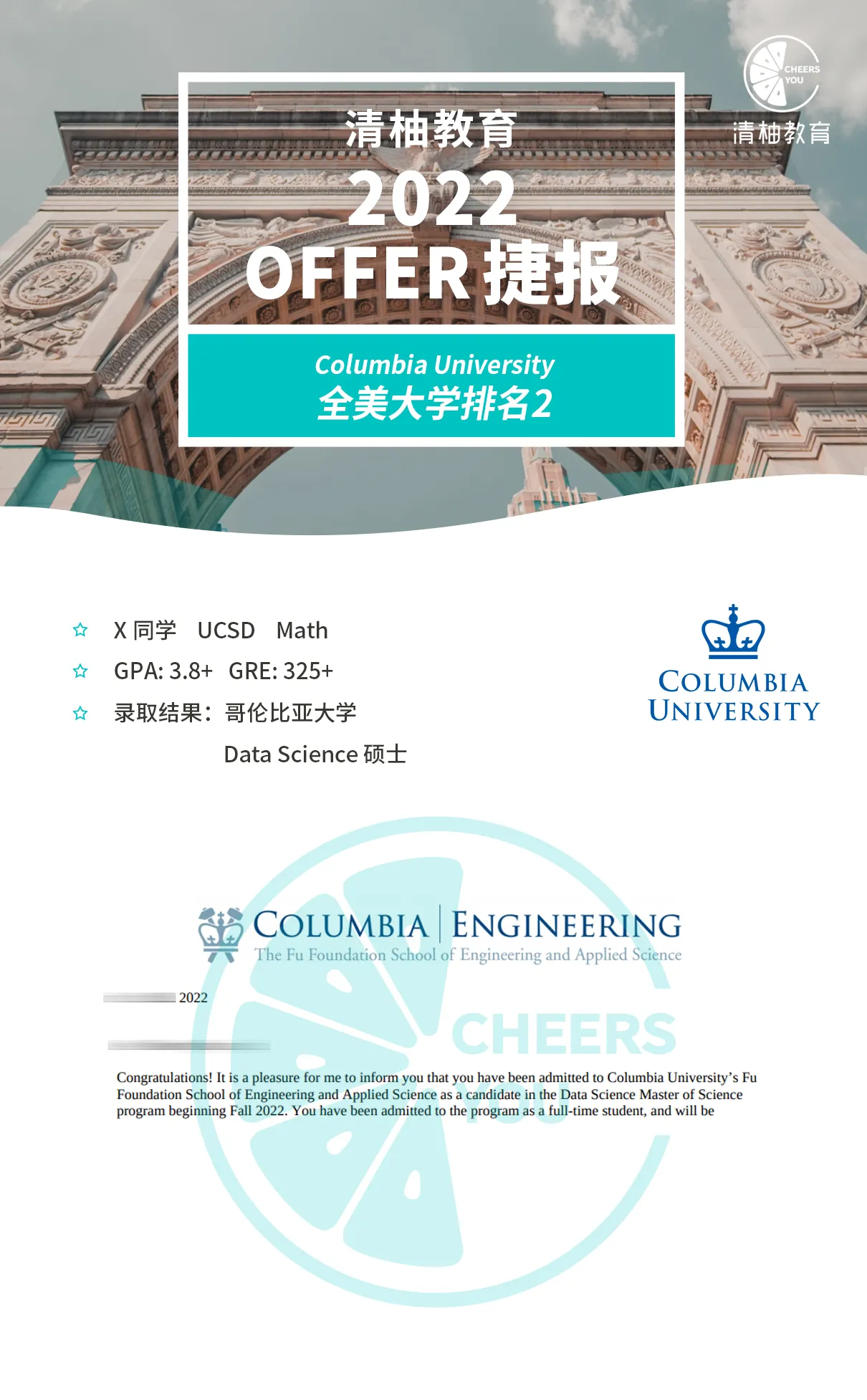
Here are a few Columbia DS offers~
.png?x-oss-process=style/opt-webp)
If you are interested in studying abroad in the DS field, feel free to scan the QR code below to start a one-on-one consultation immediately~
.png?x-oss-process=style/opt-webp)