
Many law students wonder: while their peers in other fields choose to study abroad, should they follow suit? Won't the different legal systems make studying difficult? And can they effectively apply what they learn? Don't worry—today, CheersYou(清柚教育) breaks down everything about the LLM, the top choice for Chinese law students, covering study destinations, legal systems, application requirements, career prospects, and recommended schools!
LLM Overview

The LLM is a one-year Master of Laws. For international students, only a TOEFL score and a bachelor's degree (or higher) in law are required for admission—no LSAT or GRE is needed—making it an advanced legal course. Additionally, as it takes only one year, tuition is much lower.
Generally, LLM programs are chosen by working lawyers or law undergraduates. Due to its short duration and high return, many Chinese lawyers pursue an LL.M. to enhance their qualifications.
Study Destinations for Law
The three most popular destinations for LLM programs are: the United States, the United Kingdom, and Hong Kong, China. All three follow common law systems and emphasize interactive classroom teaching, but each has its own strengths for legal studies.
United States
The U.S. is the most popular choice for LLM applications because LLM graduates can sit for the Bar (U.S. bar exam). With top law firms handling more international business, having a Bar qualification provides a huge advantage.
For those aiming to join foreign firms, especially elite "Red Circle" law firms or U.S. law offices, having a Bar is crucial. This advantage is why U.S. LLM graduates enjoy high recognition among most Chinese law firms upon returning.
The U.S. legal system differs significantly from China's. American universities do not offer law at the undergraduate level; law is a professional education pursued only after completing a bachelor's degree. Therefore, only students with a bachelor's degree or higher can apply to law school. Unlike U.K. and Hong Kong LLM programs, U.S. graduates can take the California or New York bar exams.
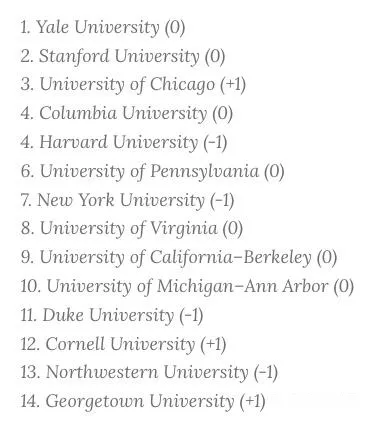
Those interested in U.S. law schools are no stranger to the T14, the most authoritative ranking of U.S. law schools, essential for school selection and positioning.
United Kingdom
The UK is the birthplace of the common law system. Its legal system not only forms the basis of many other countries' legal frameworks, but its universities' law programs also enjoy high global reputation and top-tier teaching quality.
For those whose undergraduate law degree is not from a common law jurisdiction, obtaining a UK solicitor's license requires completing a one-year Graduate Diploma in Law (GDL) training and exam.
This course is generally designed for one-year LLM graduates, focusing on core common law knowledge. After completing the GDL, graduates, like LLB or MA graduates, are eligible to proceed to the next stage: the Legal Practice Course (LPC). The one-year LPC provides practical skills training, including debates, legal writing, etc.
Hong Kong, China
Only three institutions in Hong Kong offer LLM programs: The University of Hong Kong, The Chinese University of Hong Kong, and City University of Hong Kong. First and foremost, their university rankings are very impressive.
Secondly, Hong Kong's legal market is closely tied to the mainland. With a mature legal market, Hong Kong serves as the Asia-Pacific headquarters for many law firms, offering diverse options and broad career prospects. Thus, many LLM graduates work in Hong Kong for a period before returning to the mainland—salaries in Hong Kong are better, and mainland firms offer higher pay to those with work experience.
A third clear advantage is that Hong Kong LLM programs are affordable: annual tuition is around RMB 120,000–160,000, and with living expenses, most students can complete the year for about RMB 200,000–250,000.
LLM Application Background Requirements
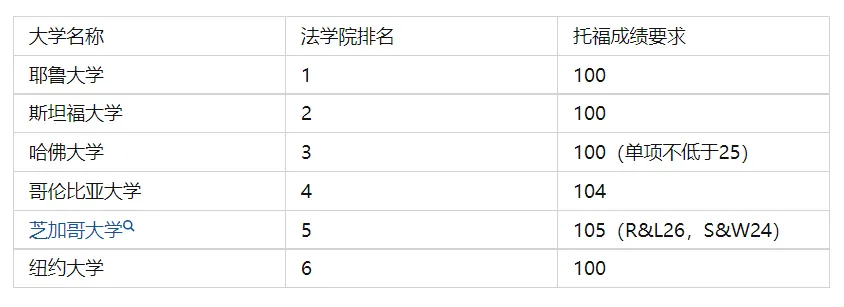
Since the LLM itself is heavily language-dependent, most schools require a minimum TOEFL score of 100 or IELTS 7.0. Some also have minimum subsection requirements, especially for speaking. For G5 or Ivy League law schools, the average admitted IELTS score is around 7.5.
Successful applicants typically have a GPA around 3.5, but many law schools have average admitted GPAs between 3.6 and 3.8, making competition fierce. Aside from standardized scores, applicant background is also critical, with legal internships, social practice, or even legal aid work highly valued. Academic exchange activities are also a key assessment factor.
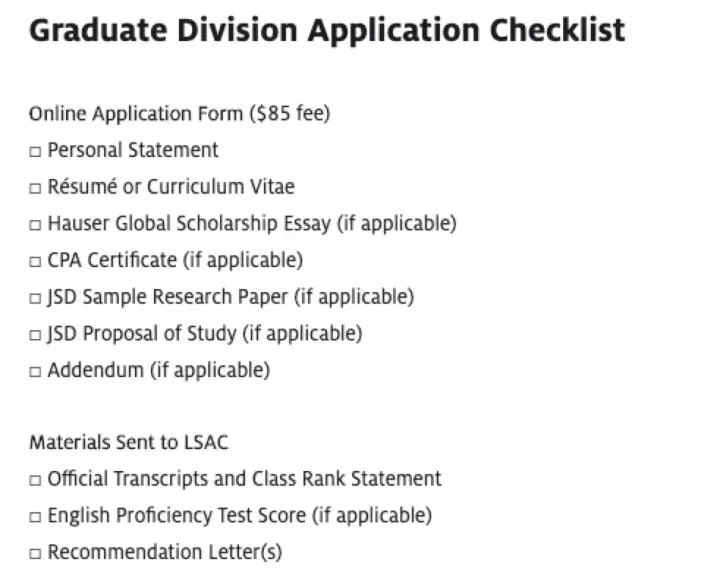
Applicants should leverage their strengths and tailor their application strategy to each school's requirements. Most U.S. law school applications explicitly require submission through the LSAC (Law School Admission Council), and many schools recommend it.
LSAC is an organization that evaluates undergraduate transcripts. Students must send both transcripts and TOEFL scores to LSAC, which then forwards the evaluated GPA and scores to the schools.
LLM Career Prospects
Once you graduate from a top law school and pass the bar exam, incomes are very high. In the U.S., some prestigious law firms and trial lawyers earn astronomical sums. Beyond high income, lawyers also enjoy considerable social respect. For instance, in the U.S., class action lawyers are seen as key drivers of social progress, and trial lawyers are regarded as a fourth branch of power in the political system.
Even graduates from lower-ranked law schools can find well-paying jobs. However, legal work is also extremely demanding; a lawyer may have to invest significant time and money preparing a case without any guarantee of fees.
Although UK LLM graduates, like Hong Kong LLM graduates, cannot directly take the licensing exam, they can start as trainees in British firms, gain experience step by step, and rise to associate (non-litigation lawyer). UK law is widely used in international mergers and acquisitions and enjoys strong recognition.
As an international financial hub and trade center, Hong Kong is closely tied to both domestic and international markets. It hosts the Asia-Pacific headquarters of many international law firms, all the major Red Circle firms have offices there, and there are numerous offshore law firms. After LLM graduation, career opportunities are plentiful, making it excellent for gaining experience—the primary benefit of studying in Hong Kong.
Because the LLM also suits career changers seeking legal advancement, your classmates will include many professionals already working in Central—great for networking. During your studies, you gain frontline experience and knowledge, making it easier to grasp the practices of local law firms and recruitment information.
Recommended Schools
Yale Law School
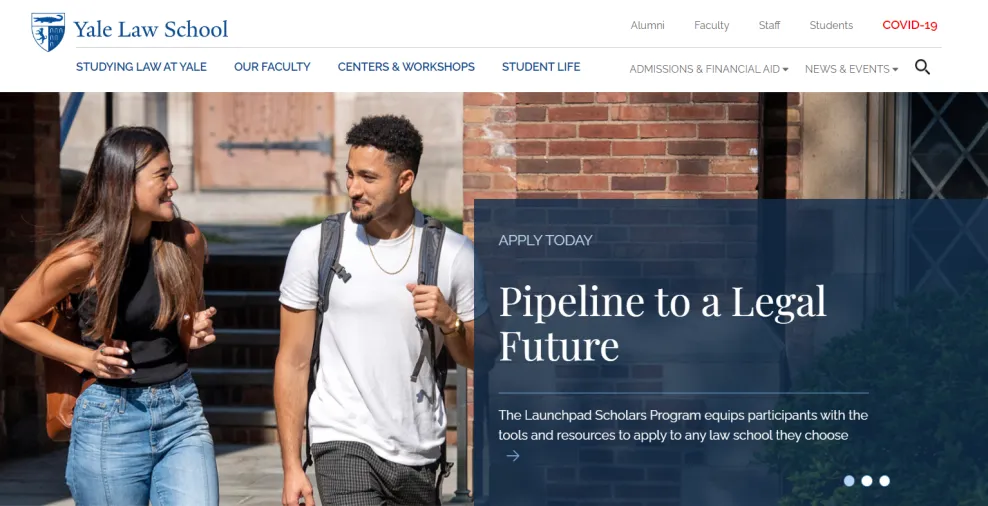
Yale University is an unrivalled titan in American legal education. Ever since U.S. News began ranking law schools, Yale Law School has consistently held the top spot, widely regarded as the finest law school in the nation.
Yale Law's admissions standards are notoriously rigorous. Its student body is relatively small—about 180 new students per year—with a student-faculty ratio of 7.5:1, the lowest among all U.S. law schools. The school emphasizes rigorous, non-utilitarian academic teaching, and its professors, who wield great influence in the global legal community, underscore its professional and pedagogical preeminence. Several U.S. presidents are Yale Law alumni.
Overall, Yale Law is better suited for young scholars or doctoral applicants who already have some academic achievements.
Columbia Law School

Columbia Law School's teaching philosophy is more akin to Harvard's; its enrollment numbers are comparable, and it places a greater emphasis on practical skills. Located in New York City, its numerous employment advantages attract a large pool of outstanding applicants. Its strongest program, financial law, is top-notch nationally.
Columbia's admissions criteria are slightly less stringent than those of the top three law schools, but it prefers applicants with years of experience at top-tier law firms, making the student body highly elite. Since 2011, Columbia Law School has never admitted a single applicant without full-time work experience.
Additionally, Columbia is one of the few schools using a non-binding application process, so applicants should prepare materials early.
NYU School of Law

As a relatively weaker member of the T7 “Super Law Schools,” NYU's shortcomings lie mainly in institutional reputation and campus facilities. However, in terms of teaching quality and career prospects, it outshines some of its rivals.
NYU Law's tax law and international law programs are ranked first in the nation; financial law and business law are also very strong. The faculty includes renowned professors like Jerome Cohen (Kong Jierong), who has long been celebrated in China. Such outstanding faculty secures NYU's place among the super law schools.
NYU Law's admissions criteria are relatively rigid, prioritizing hard metrics like GPA and TOEFL scores.
It places less weight on personal statements and recommendation letters. Its high acceptance rate—the largest among elite schools—makes applying to NYU Law much easier. However, situated in the heart of Manhattan, NYU's advantages are obvious: as the law school that admits the most top-notch students, NYU is highly regarded by law firms.
UCL Faculty of Laws
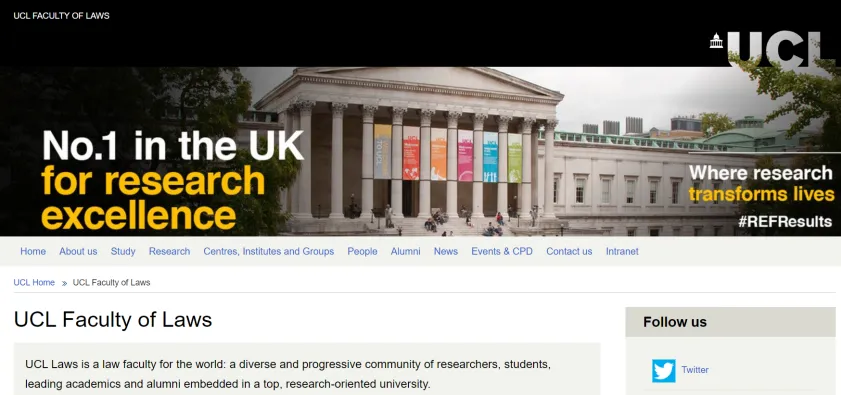
UCL's LLM program is the law school's flagship, lasting ten months and widely recognized as one of the world's top LLM programs. It ranked 15th globally in the QS 2021 Law subject rankings.
The curriculum is rich, covering commercial and corporate law, human rights law and global health governance, environmental law, intellectual property law, and legal history. Students can freely explore their interests or specialize in a particular area of legal research.
Applicants must hold a 2:1 Bachelor of Laws (LLB) degree. Those without a law degree must have at least five years of full-time, law-related work experience. They must submit a personal statement, written work, and reference, demonstrating strong motivation, analytical and reasoning skills, and communication abilities.
For students from mainland China, language requirements are an IELTS score of 7.5 with no subsection below 7.0, or a TOEFL score of 109 with Reading and Listening no lower than 25, Speaking no lower than 23, and Writing no lower than 27.
Edinburgh Law School

As Scotland's premier university and one of the UK's seven ancient universities, Edinburgh Law School boasts a long, prestigious tradition. In the QS Law subject rankings, it consistently ranks among the top 25 globally, demonstrating formidable overall strength.
The program offers a broad range of specialized courses, many taught by internationally renowned experts and legal industry professionals. Areas include: commercial law, criminal law, criminology, EU law, intellectual property, media and technology law, international law, legal history and legal theory, medical law, private law, and public law.
Applicants should note the following:
- Commercial Law, Corporate Law, and Intellectual Property Law are Band B programs, open only to students on the priority list, with a minimum average of 80%.
- Other programs are Band C: priority list students need 80%, while graduates of other recognized universities require at least 85%.
HKU Master of Laws
Three universities in Hong Kong have law schools: The University of Hong Kong, The Chinese University of Hong Kong, and City University of Hong Kong. HKU's Faculty of Law, established in 1969, is the oldest. CityU's School of Law was founded in 1987, while CUHK's Faculty of Law, the youngest, was established in 2006. With only about a decade of history, CUHK's overall university ranking is higher than CityU's, and it has recruited many renowned faculty, showing promising growth.
In terms of overall law school ranking, the general consensus is: HKU > CUHK > CityU
HKU offers the most diverse range of specializations: General, Arbitration and Dispute Resolution, Chinese Law, Corporate and Financial Law, Human Rights, Intellectual Property and Technology Law, Compliance (launched in 2016), and Master of Common Law.
Each HKU LLM student must select eight courses during the study period, or write a dissertation to substitute for one course. Because HKU offers many specializations, General LLM students have a wide range of courses to choose from. They can essentially select courses from any specialization, but no more than five from a single one. The General track is designed to encourage students to take diverse courses; if you wish to specialize, choose a designated specialization.
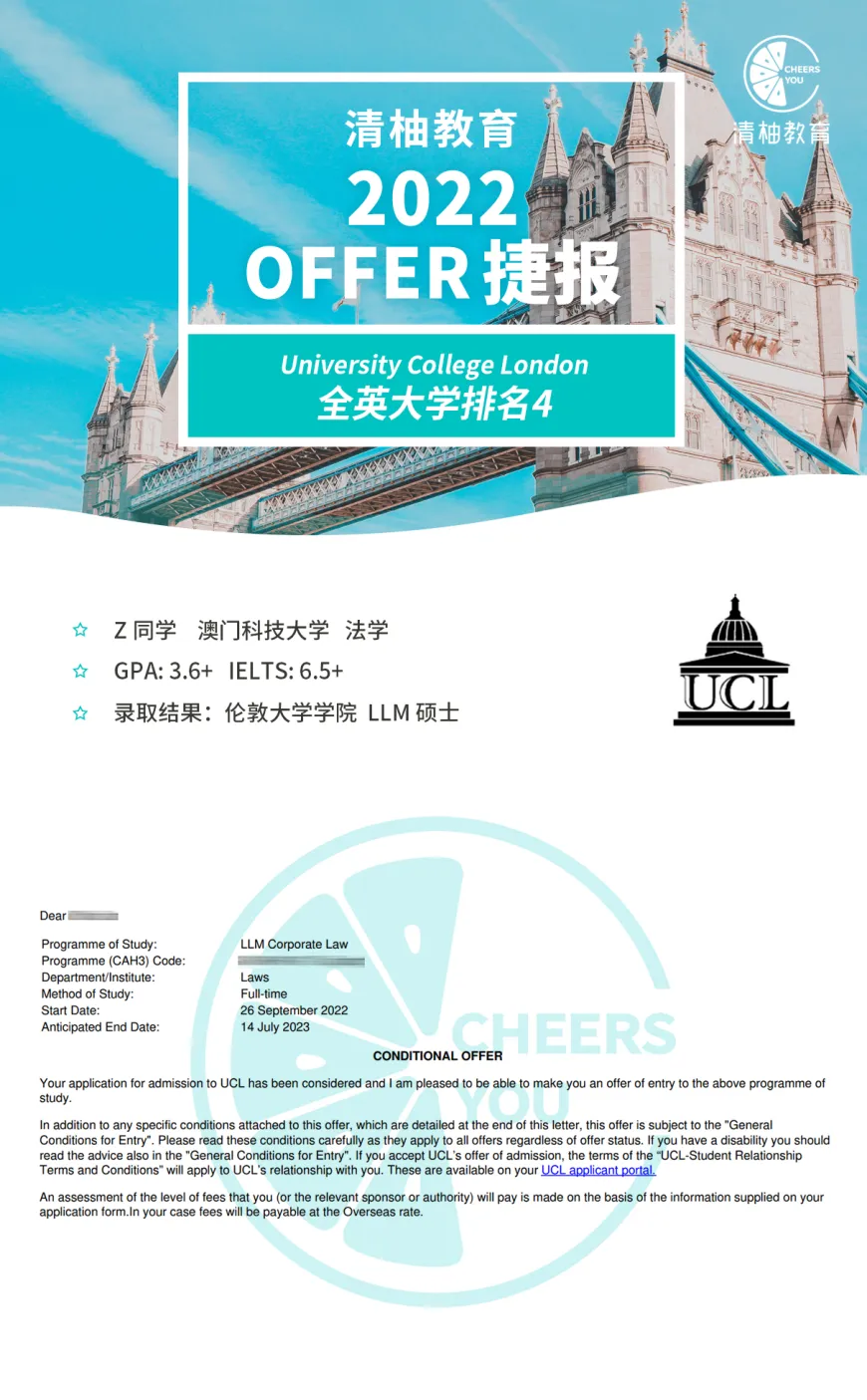
Below are some LLM offer samples~
For more LLM application details, scan the QR code below to learn more and consult~