Recently, shocking news came out of Silicon Valley. Silicon Valley Bank (SVB) suddenly announced bankruptcy!
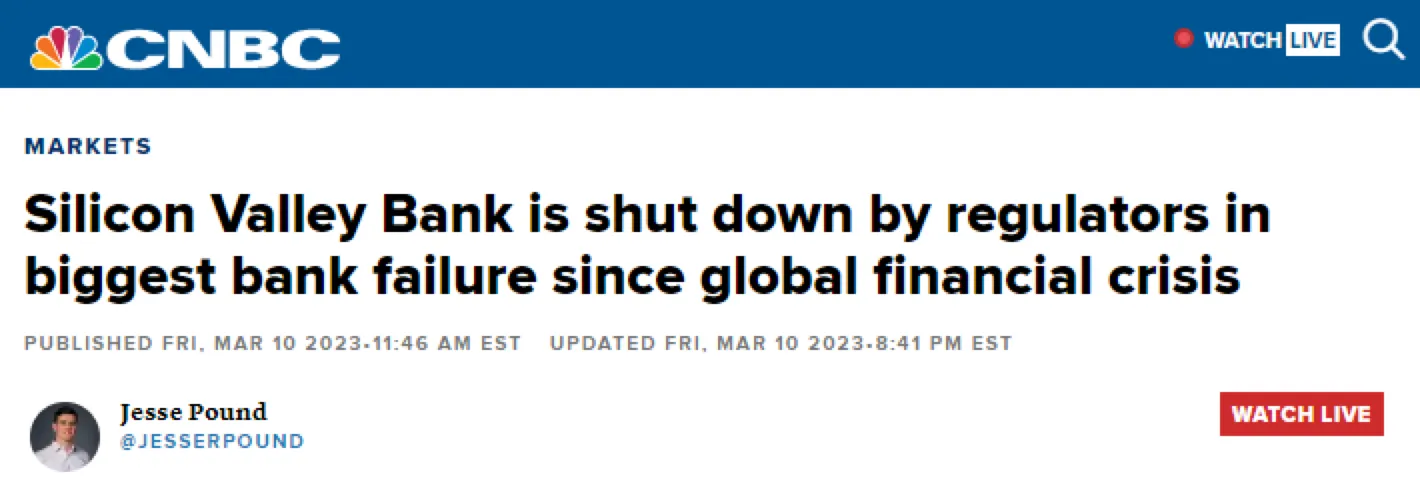
It all happened too fast.
.png)
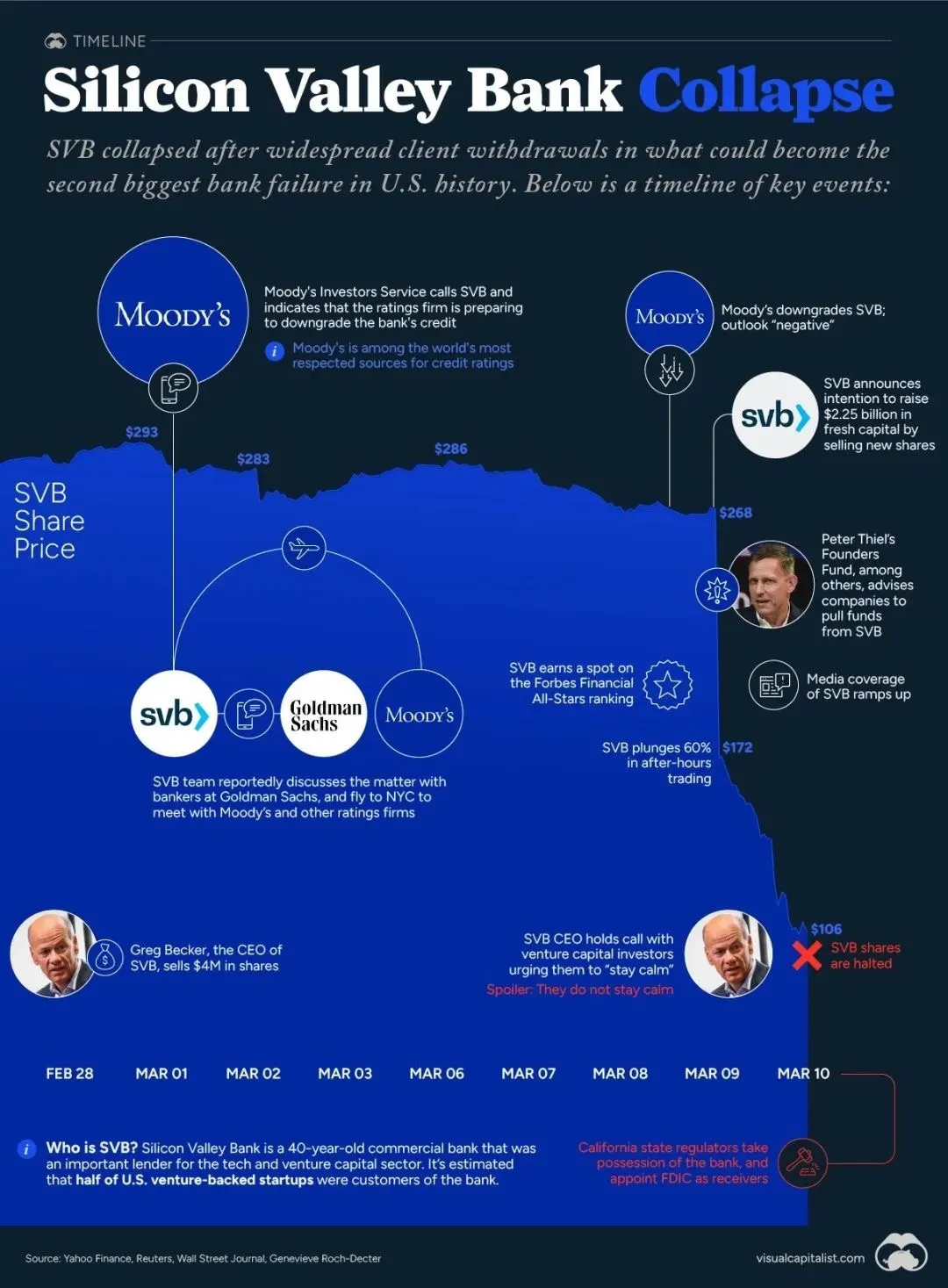
On Wednesday evening, March 8, after SVB announced plans to raise more than $2 billion, its stock price plunged 60% the next day. It fell another 60% in Friday's pre-market trading, and before it could even reopen for regular trading, Silicon Valley Bank declared bankruptcy.
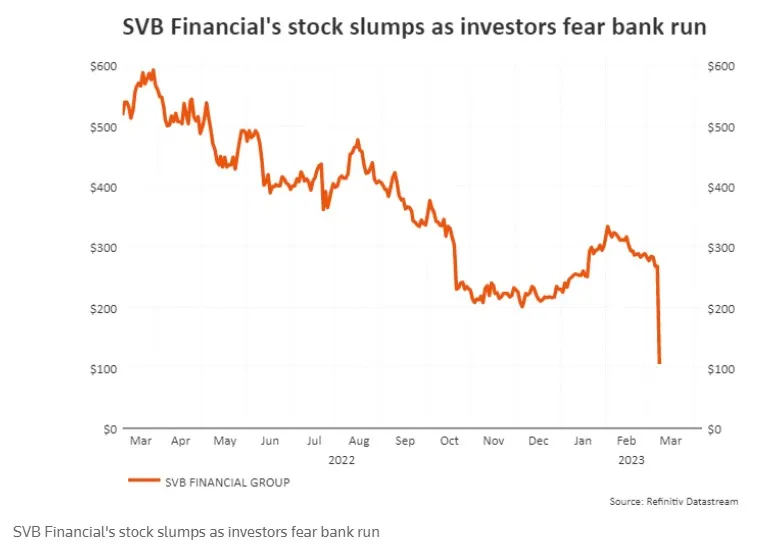
Those who said they'd buy the dip were stunned the next day.

SVB Collapses, Silicon Valley Reels
Founded in 1983, Silicon Valley Bank (SVB) was the 16th largest bank in the U.S. and the largest by deposits in Silicon Valley.
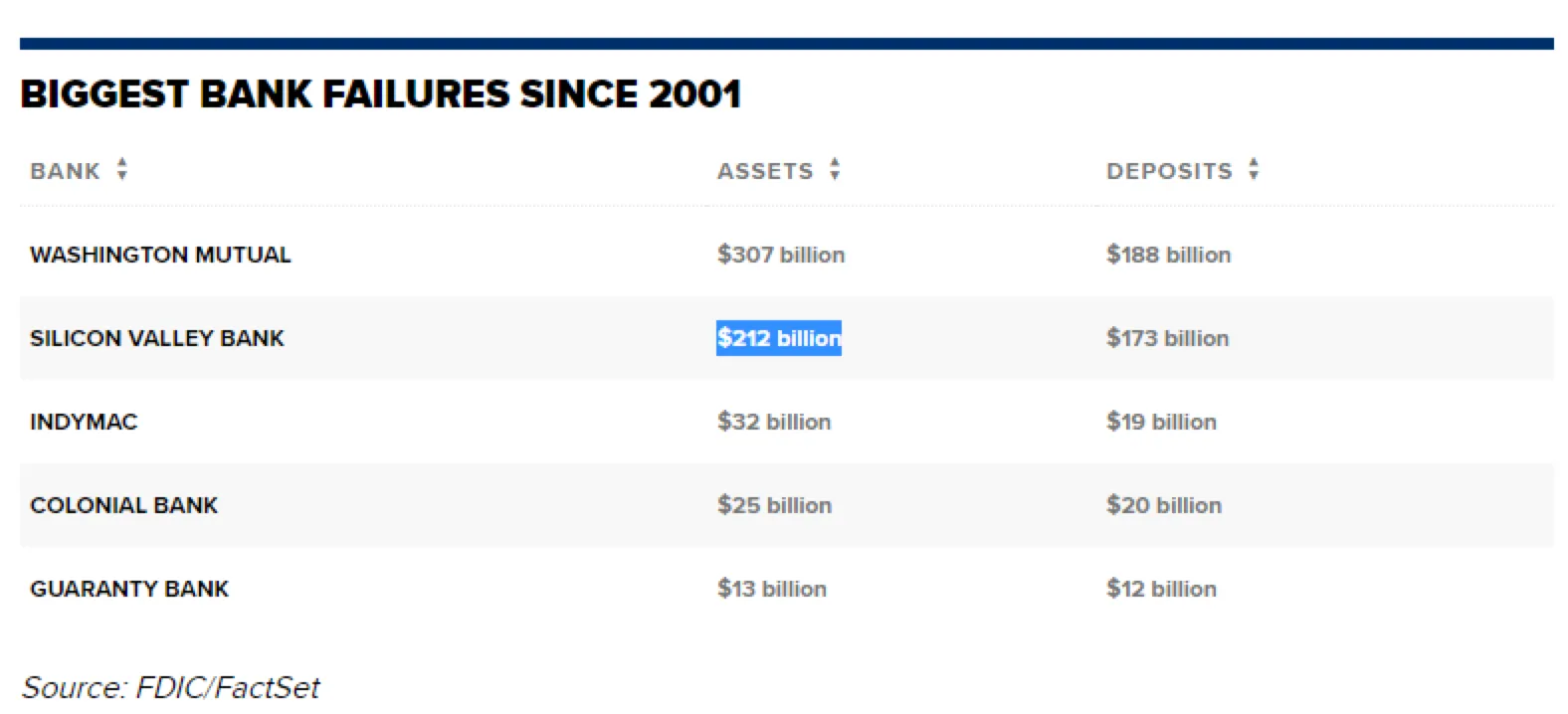
By the end of last year, SVB's total assets reached $212 billion, with total deposits of around $173 billion—on a trillion-yuan scale by Chinese standards. It was in the same league as China Guangfa Bank or Shanghai Bank.
Silicon Valley Bank became the second-largest bank failure in U.S. history, surpassed only by Washington Mutual during the 2008 financial crisis.
But unlike the 2008 subprime crisis, SVB had always maintained a strong reputation and asset quality.
SVB's clients were concentrated in tech, healthcare, private equity, venture capital, wine, and other industries. It was the go-to lender for U.S. startups, and over 95% of its clients had deposits exceeding $250,000.
Just a month before its failure, Forbes ranked SVB 20th on its "America's Best Banks" list, and Moody's had rated its loan portfolio as "conservative and high-performing."
The sudden collapse of such a reputable, conservatively run, and massive bank truly shocked the world.
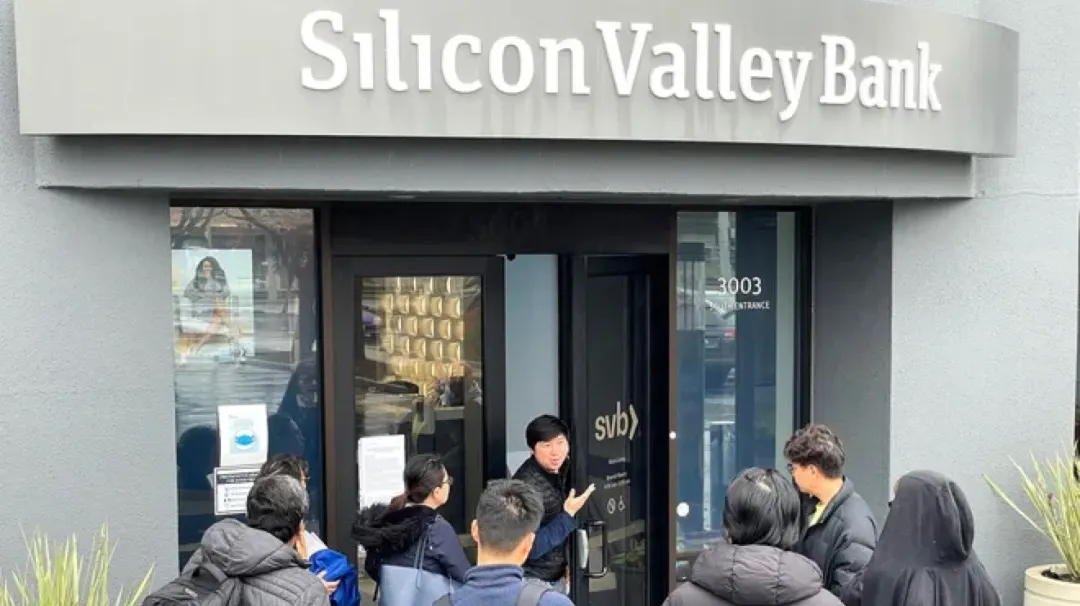
As soon as rumors spread, bank branches were mobbed by customers desperate to withdraw their money.
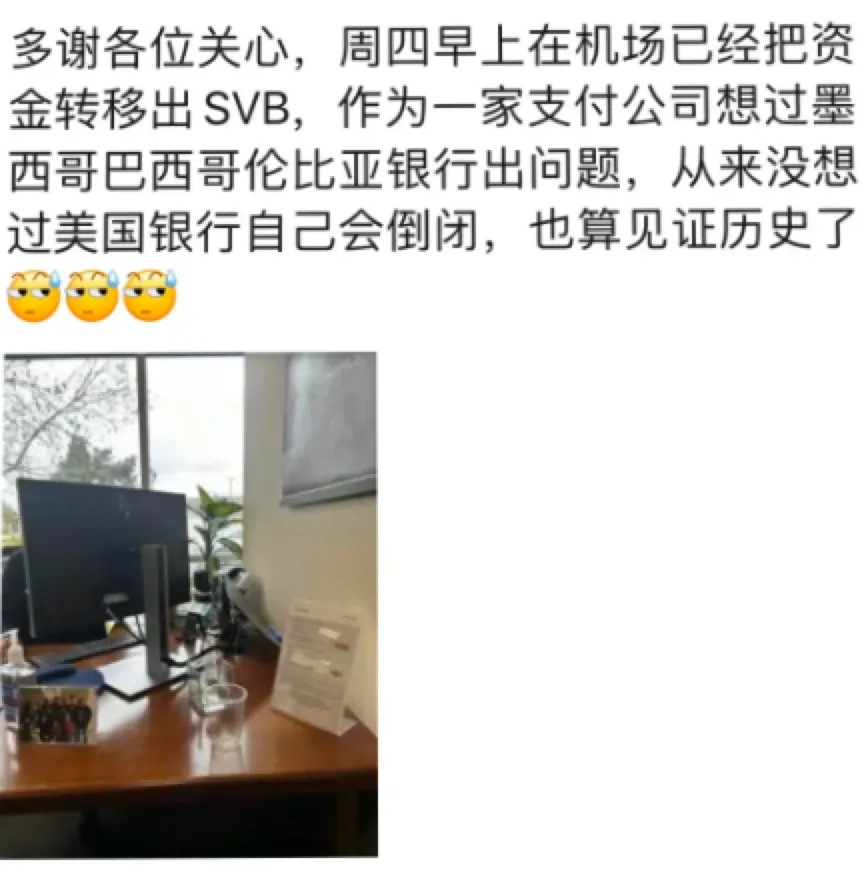
Those who managed to get their money out early were the lucky ones before the collapse.
And no wonder depositors were rushing—SVB executives had already cashed out their shares and fled.
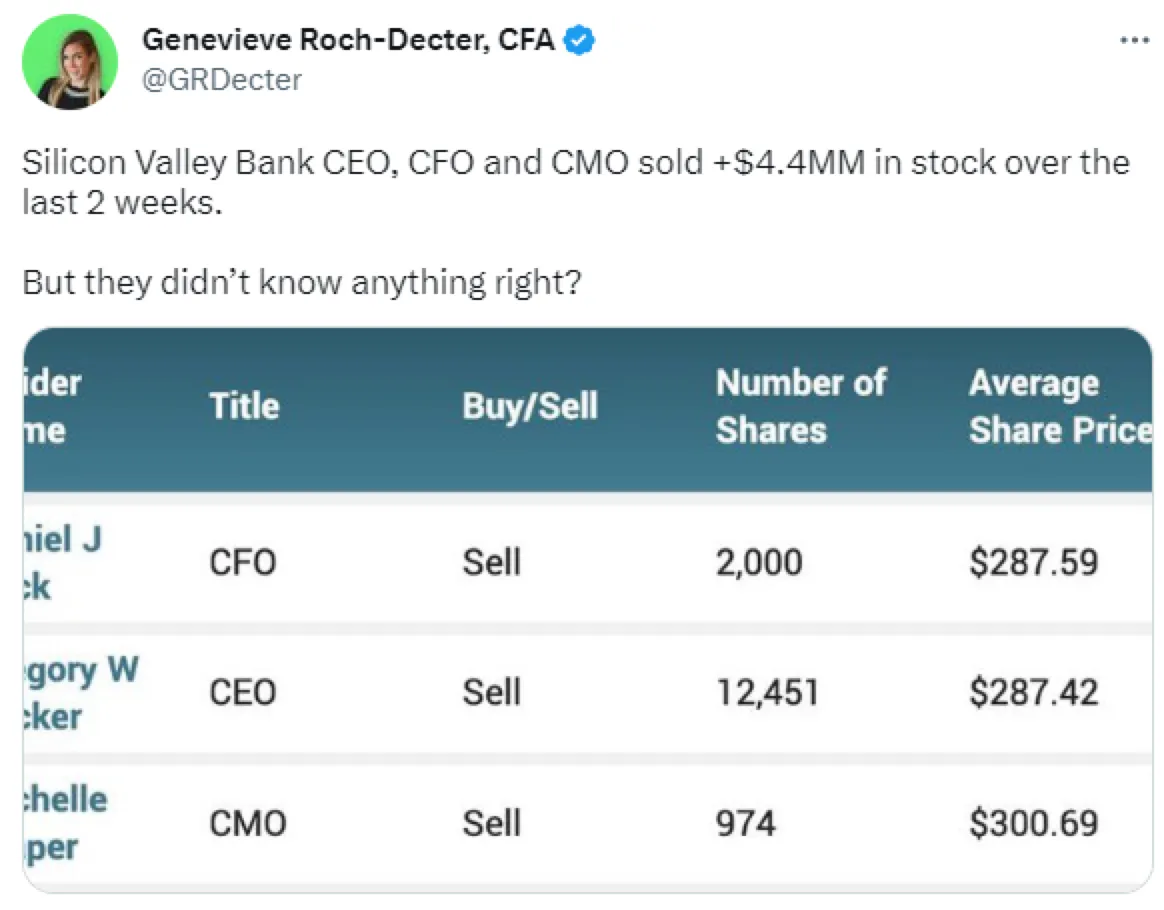
SVB's CEO, CFO, and CMO sold $4.4 million in company stock just two weeks before the crash. Their explanation? Pure coincidence, no insider trading at all 😅
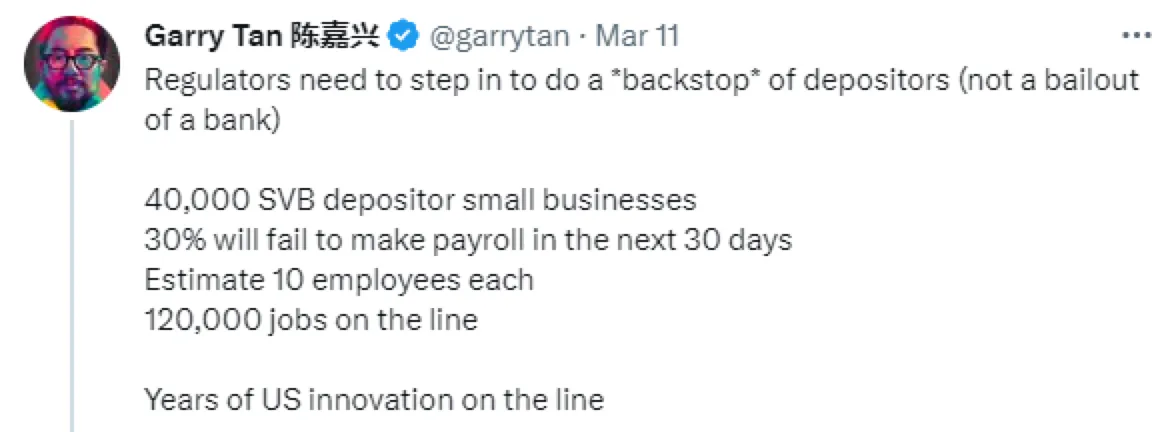
The collapse of SVB is almost devastating for the tech industry. If the government doesn't step in with a bailout, thousands of startups will face cash flow crises, struggling to pay salaries and rent, affecting more than 120,000 employees.
The FDIC can only cover depositor compensation up to $250,000, but over 95% of SVB's clients had deposits above that. This compensation is just a drop in the bucket.
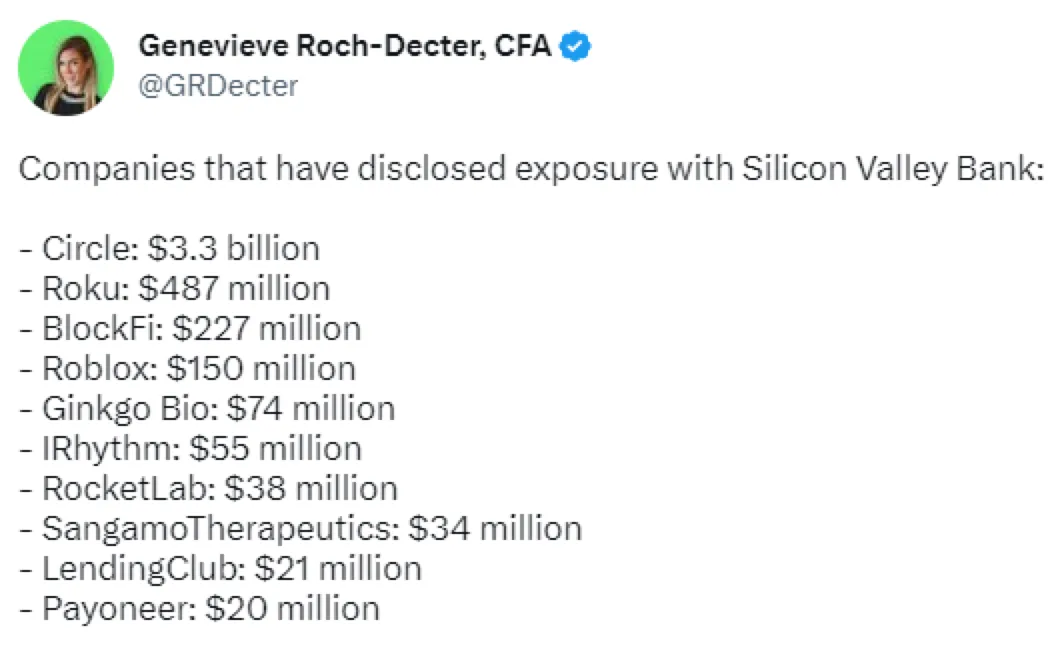
Look at the deposits some of these tech giants had at SVB:
-
Circle: $3.3 billion
-
Roku: $487 million
-
BlockFi: $227 million
-
Roblox: $150 million
............
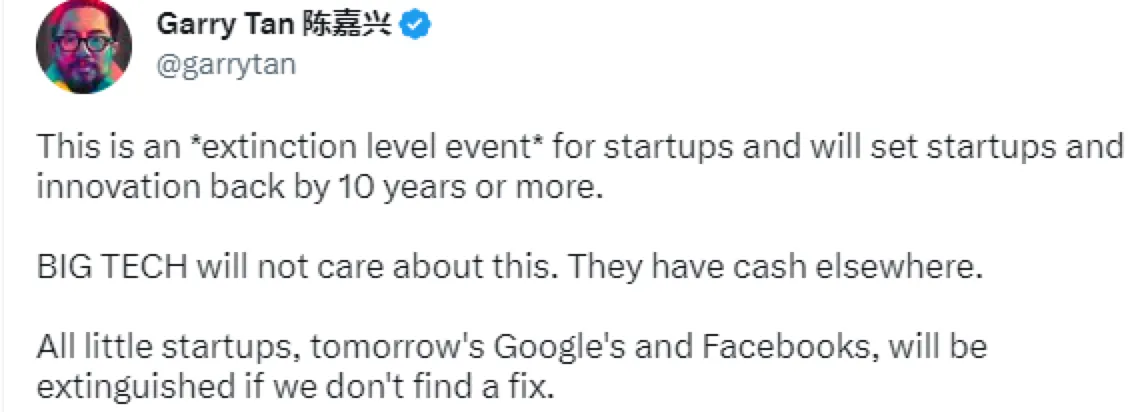
Garry Tan, CEO of the famous startup accelerator Y Combinator, said SVB's collapse would be a catastrophic blow to startups, setting U.S. innovation back at least a decade.
Crypto Bank Also Fails, U.S. Government Steps In
A financial crisis is essentially a psychological war; once panic spreads, markets can collapse quickly.
Right after SVB fell, New York's Signature Bank was also shut down, becoming the third-largest bank failure in U.S. history.
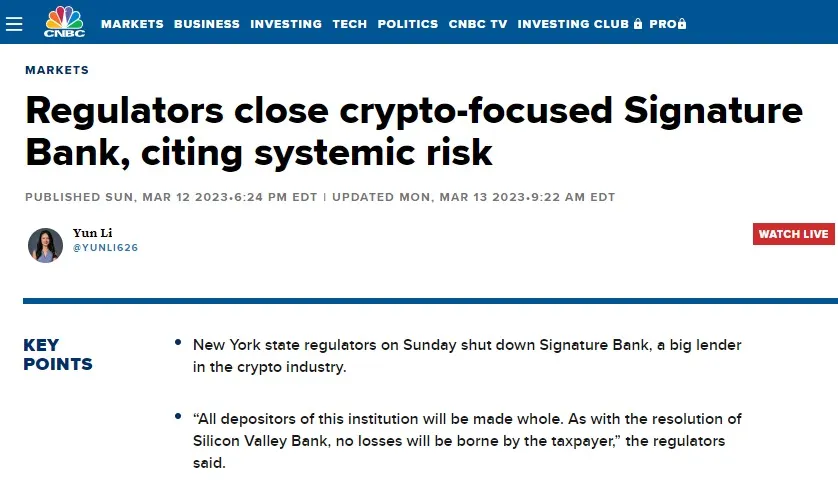
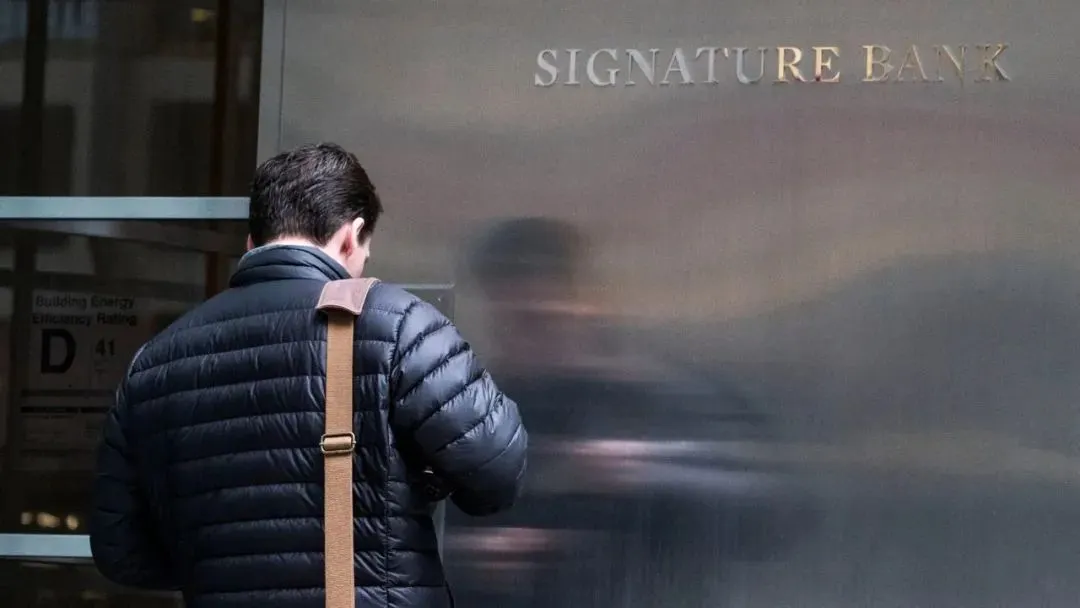
Headquartered in Manhattan, Signature Bank was one of the largest cryptocurrency banks in the U.S. As of last December, its total assets were $110.4 billion, with total deposits of $88.6 billion.
Its market cap had evaporated by 96%, with a net worth of just $4.3 billion.
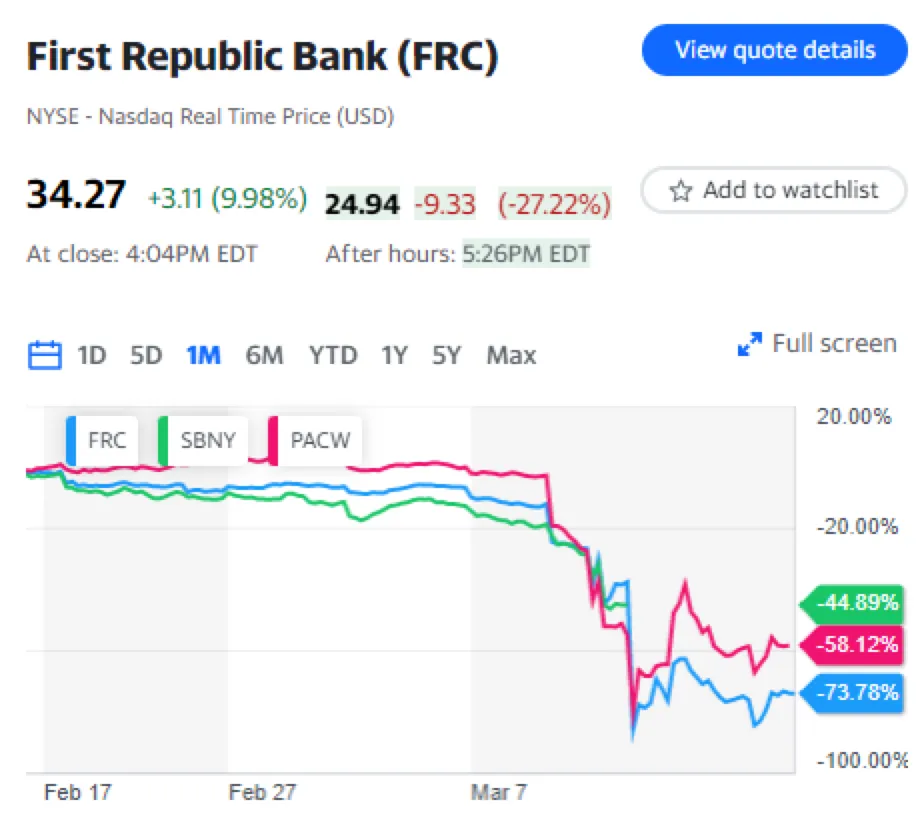
Additionally, First Republic Bank also suffered a bank run on March 12, with its stock price plummeting.
Perhaps fearing that panic would spread and a single bank failure would turn into a financial tsunami, the U.S. government finally stepped in with a rescue package.
On March 12, the U.S. Treasury, the Federal Reserve, and the FDIC issued a joint statement: Starting Monday, March 13, Silicon Valley Bank depositors would be able to access all their funds.
The statement emphasized that any losses associated with resolving SVB's issues would not be borne by taxpayers.
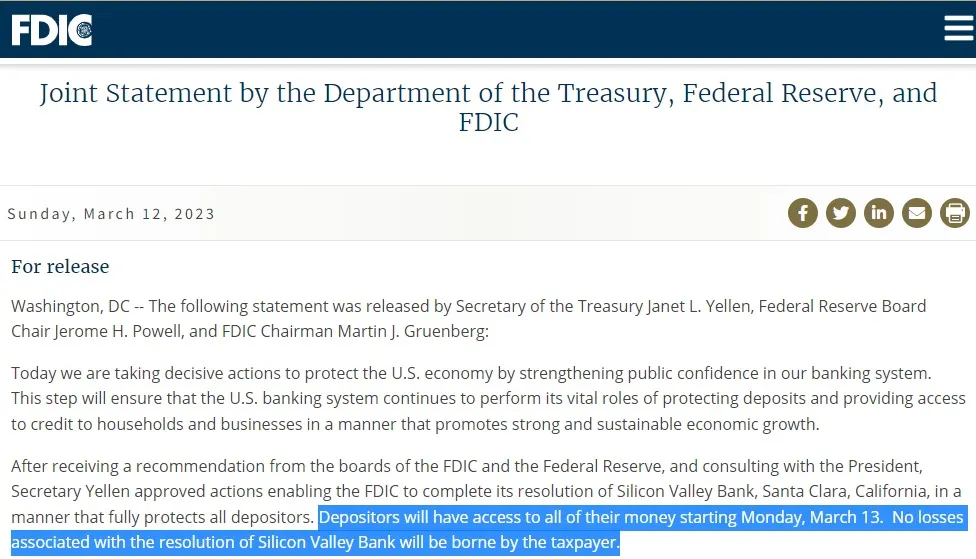
In other words: Depositors are safe.
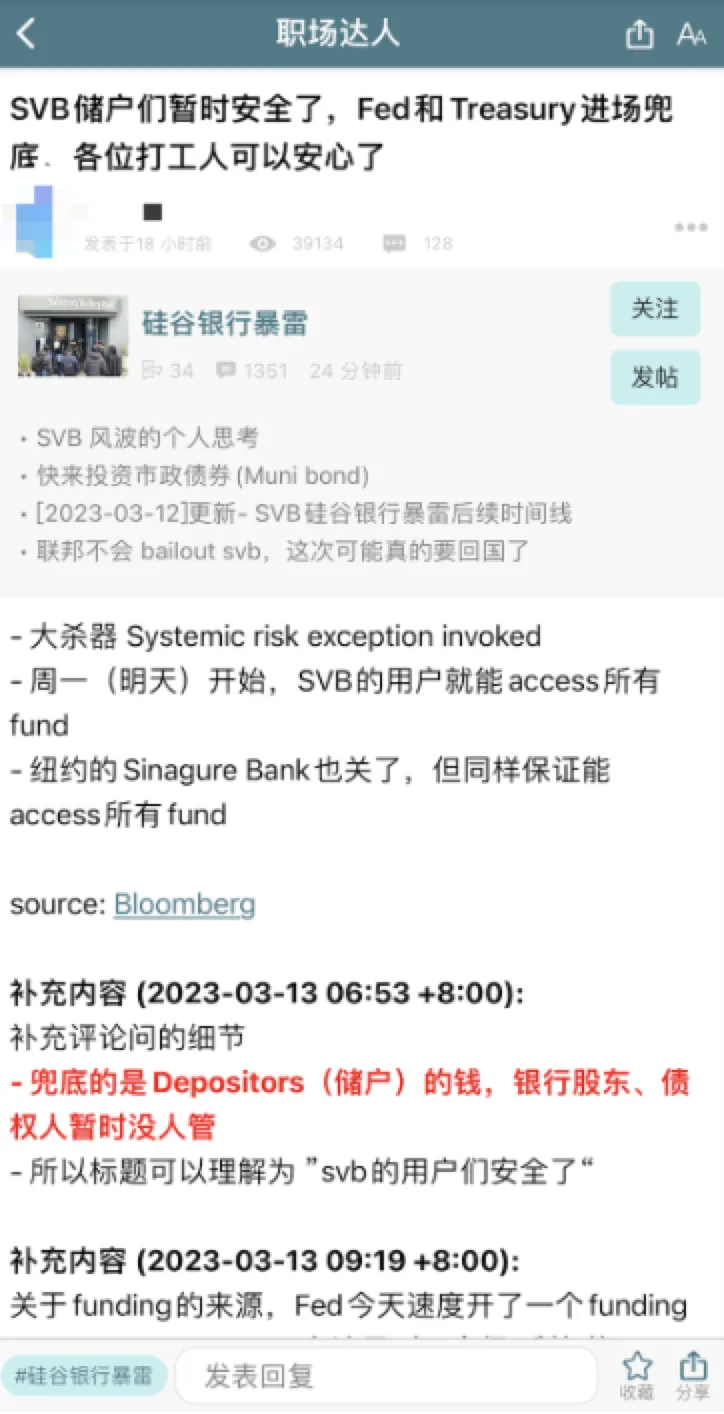
Where the bailout billions came from, we dare not ask; the answer is probably the printing press running overnight.
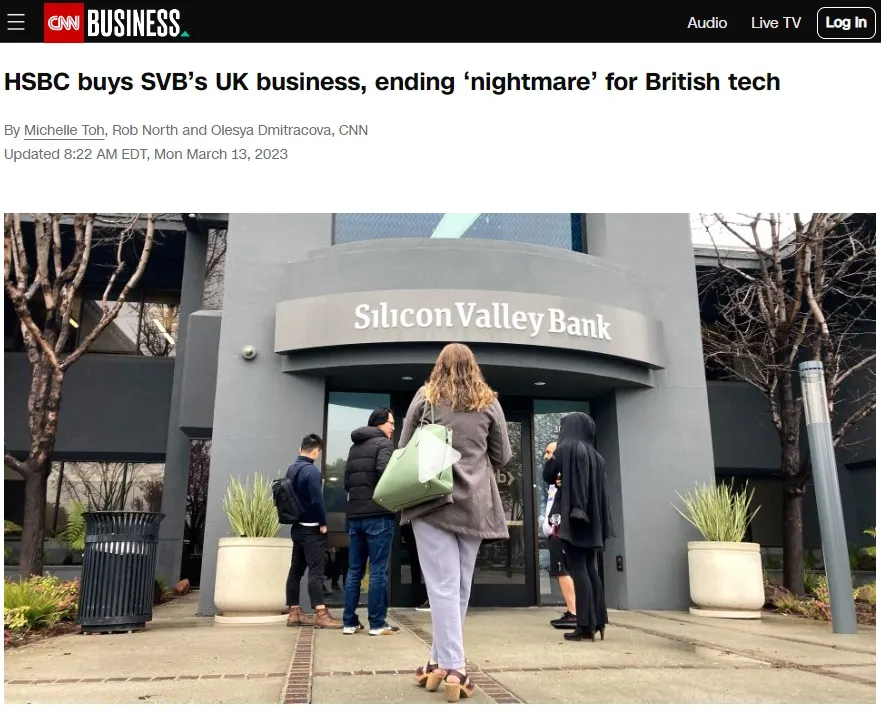
Last Monday morning, HSBC also announced it would acquire SVB's UK subsidiary for a symbolic £1, giving thousands of tech companies there a huge sigh of relief.
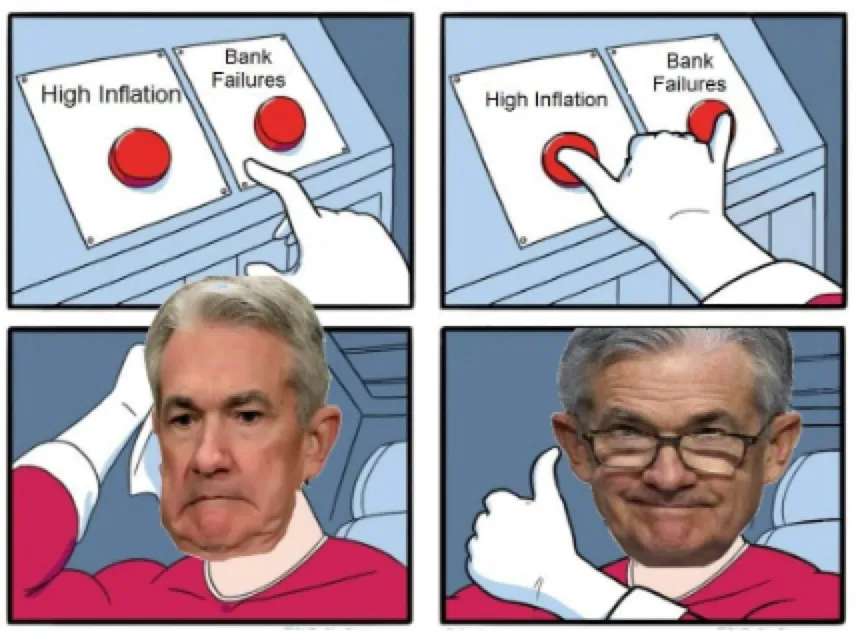
Some pessimists think this could be Lehman Brothers 2.0.
If the Fed continues to raise rates and forces a hard landing to curb inflation, more banks could find themselves in similar trouble.
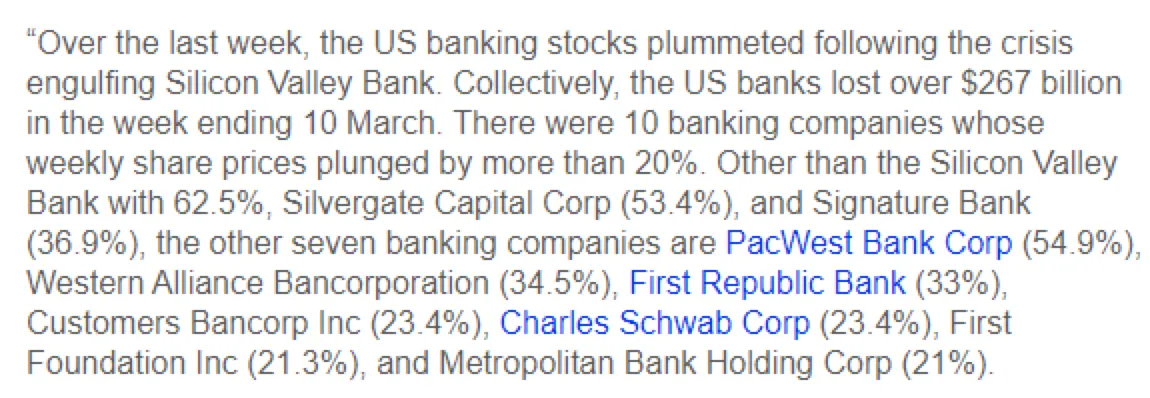
In just three days since SVB's collapse was announced last Monday, U.S. banking stocks had shed $267 billion in value. At least 10 banks saw their share prices drop over 20%, including:
-
SVB: down 62.5%
-
PacWest: down 54.9%
-
Silvergate: down 53.4%
-
Signature Bank: down 36.9%
-
Western Alliance: down 34.5%
-
First Republic Bank: down 33%
-
Customers Bancorp: down 23.4%
-
Charles Schwab: down 23.4%
-
First Foundation: down 21.3%
-
Metropolitan Commercial Bank: down 21%
Will the financial crisis replay? Not necessarily.
If the market regains its rationality, it means the backstop worked. If panic continues, institutional bailouts have their limits, and a domino effect could trigger another financial tsunami.
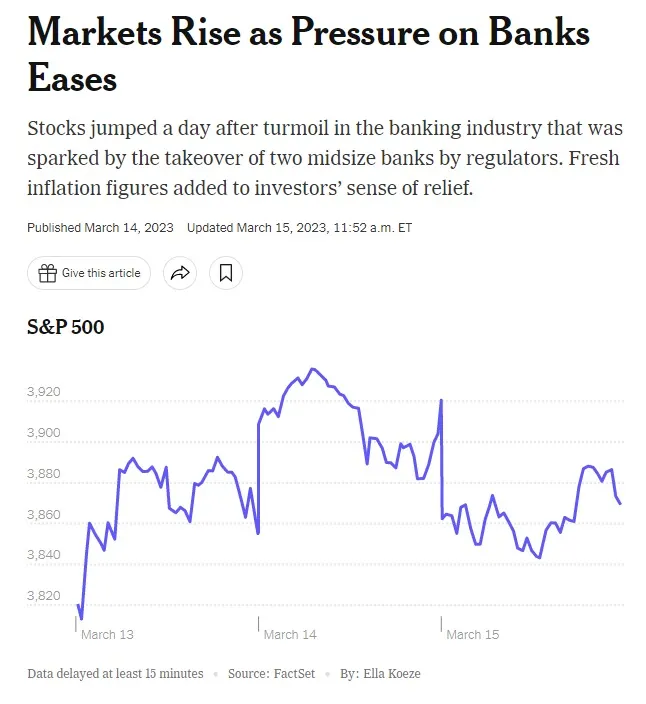
Last Monday's stock market rally—whether it was a successful rescue or a dead cat bounce—we'll have to wait and see.
Meta's Second Round of Layoffs Hits
While the financial world reels, the tech industry isn't calming down either. After various leaks, hints, and warnings, Meta's second major round of layoffs arrived as expected.
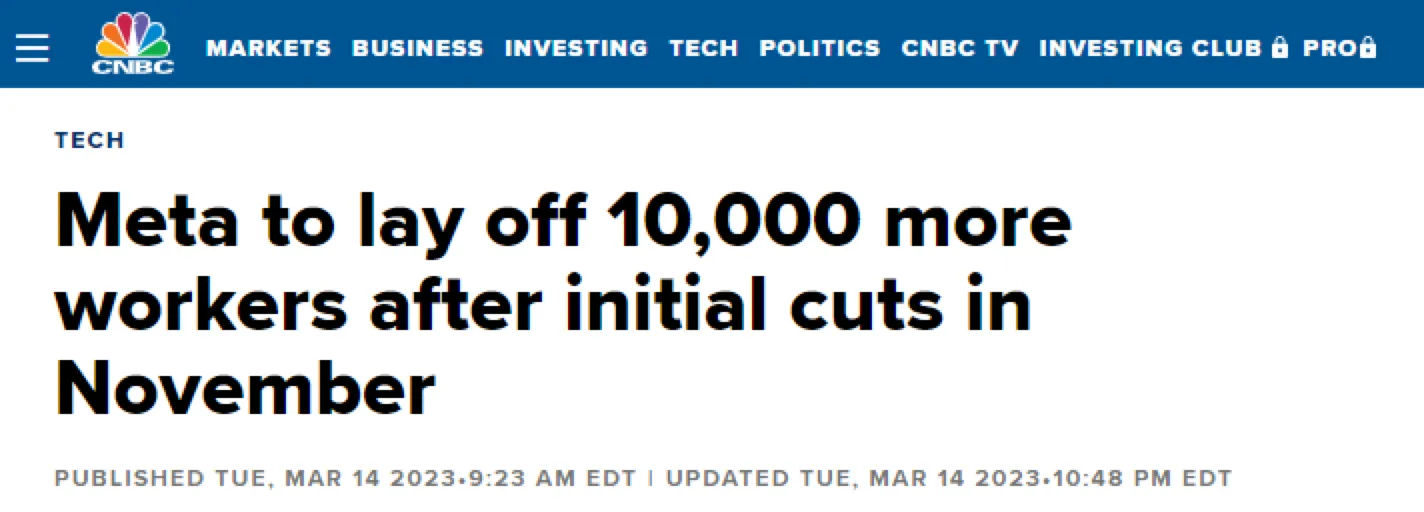
Last Tuesday, CEO Mark Zuckerberg announced that Meta would cut 10,000 jobs and close about 5,000 open positions. This follows the first round of 11,000 layoffs last November.
Meta's stock rose around 7% that day.
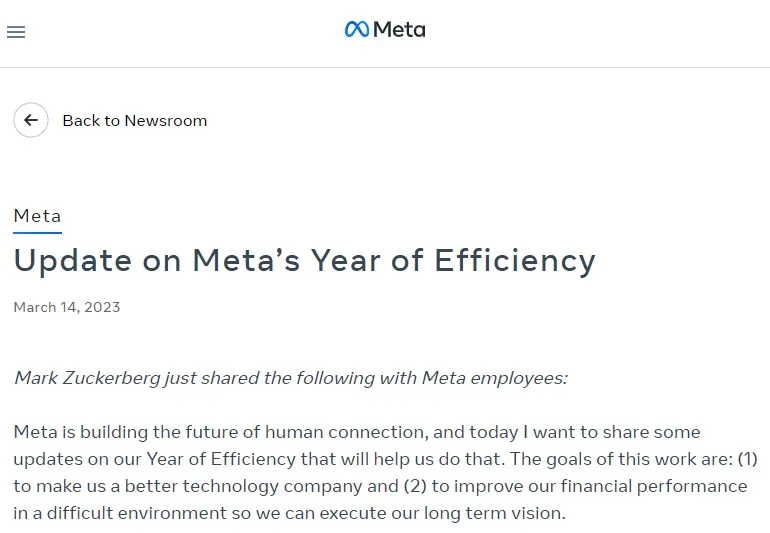
Zuckerberg said the company would restructure over the coming months to flatten the organization, cancel lower-priority projects, and slow hiring. He noted that economic uncertainty may persist for years, and the company needs to prepare accordingly.
Additionally, Meta lowered its overall spending budget for 2023 from $92 billion to $86 billion.
Zuckerberg emphasized the need for a flatter structure, leaner teams, a tech-first approach, improved efficiency, and a return to more on-site work.
Reportedly, the company will complete tech layoffs (engineers, data scientists, etc.) by the end of April and business layoffs (HR, marketing, etc.) by the end of May.
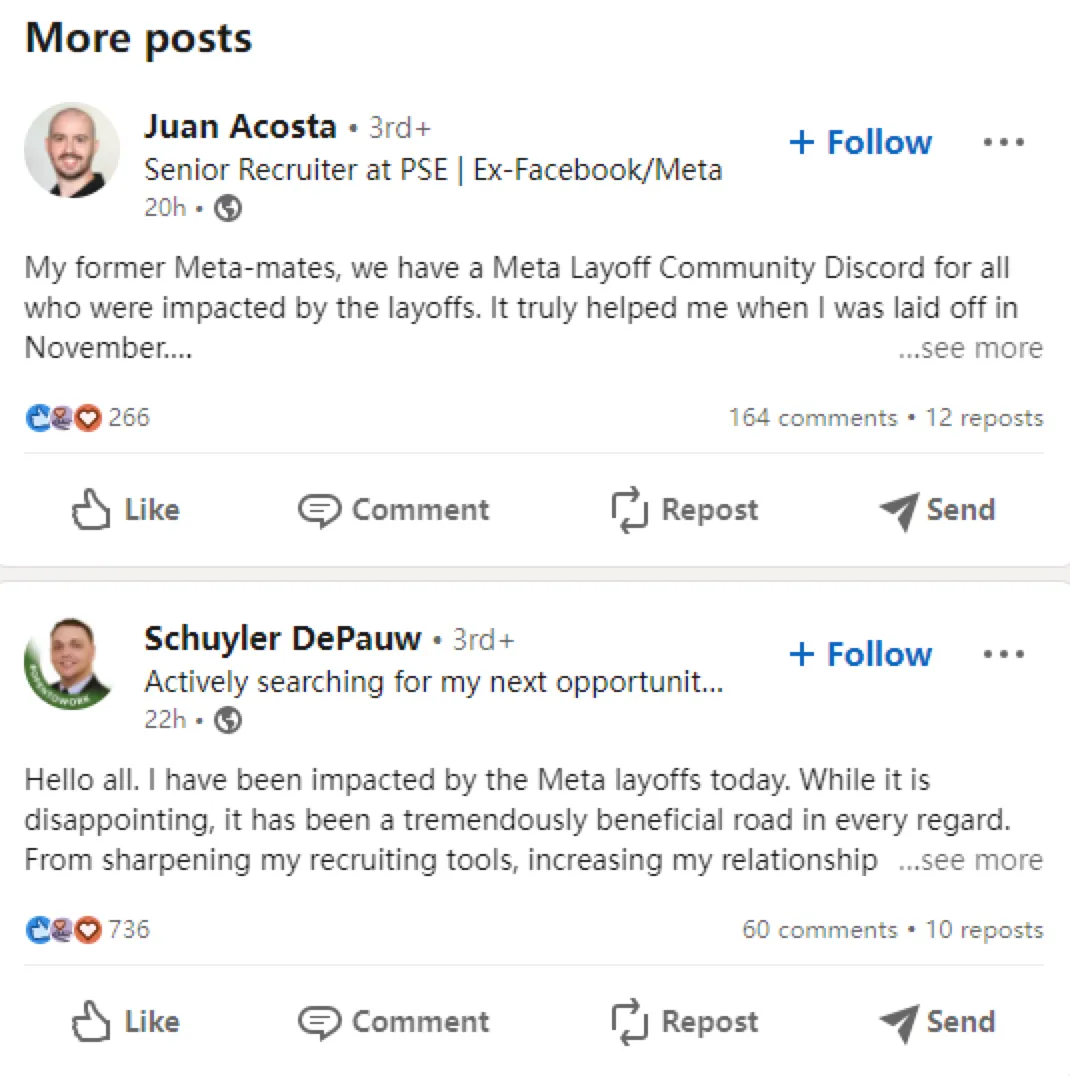
These days, LinkedIn is flooded with former Meta employees posting #opentowork.
Is the U.S. Job Market Approaching Its Darkest Hour?
For Meta, this is the "Year of Efficiency," but isn't it the same for other tech companies?
The pandemic hiring binge now has to be paid for.
Before Q1 even ends, tech layoffs have already totaled over 175,000, averaging 2,334 job cuts per day.
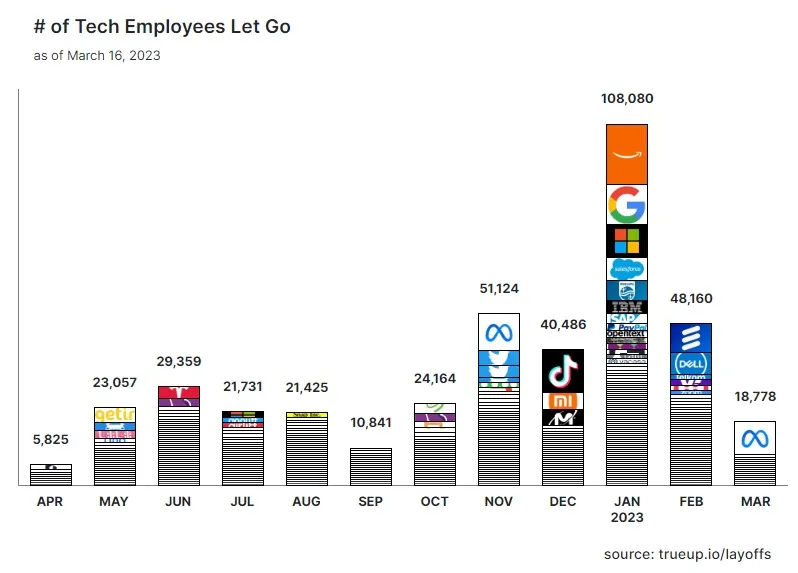
The once-envied companies like Amazon, Google, and Meta are now leading the layoffs with tens of thousands of jobs cut.
Coupled with the butterfly effect of SVB's collapse, countless people are likely to face career difficulties in the coming weeks.
Grappling with fear and uncertainty may become the new normal for American workers.
For international students, the loss of a job brings visa issues and the pressure of a new job search—harsh realities to face.
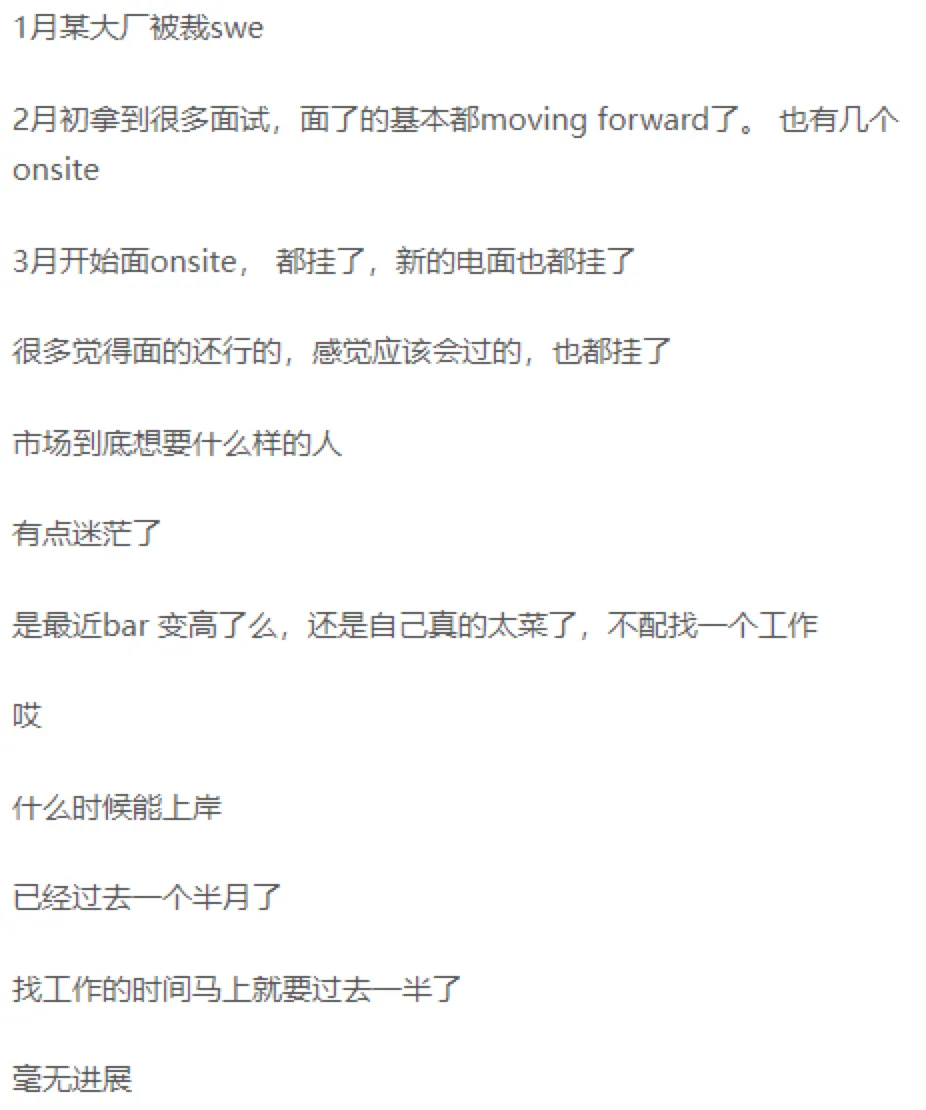
Especially for recent graduates in hard-hit areas, the near-term job hunt will be very tough. Even if they land an offer, it might be rescinded. Psychological preparation is essential.
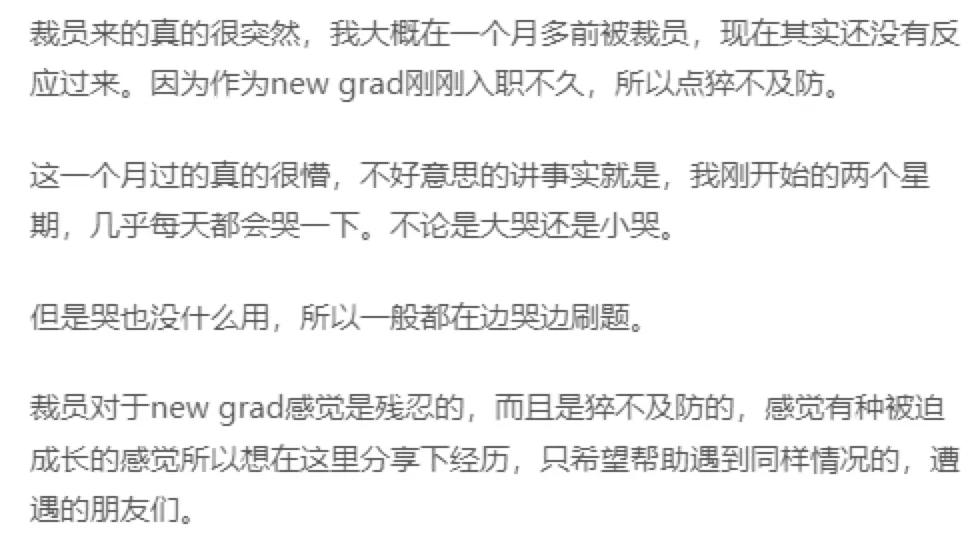
If you face job search setbacks, don't fall into self-doubt. What matters more is persistent effort and continuous self-improvement.
As employment uncertainties keep mounting, many are considering returning to school for further study. This could be an effective strategy to weather the storm; you can reapply for jobs when the industry recovers and positions open up again.
Of course, that also means intensified competition for graduate school admissions. If you decide to pursue further education, be sure to prepare as early as possible.
I hope everyone can get through this difficult period and find the path that suits them best.