The media and communication direction has long been a popular choice for studying abroad. As the first country to offer journalism and communication programs, the United States has a vast system of media-related majors. However, many students often only have a general idea of "media" when applying for graduate programs in the US. When faced with the specific sub-disciplines, they feel overwhelmed and unsure of how to choose.
Today, CheersYou(清柚教育) will break down the two main branches of media: Journalism and Communication, along with school recommendations and admission cases~ For more graduate application details, add CheersYou(清柚教育) advisor: qingyouge23 for more information!

Media Majors Are Mainly Divided into Two Categories:
1. Communication
2. Journalism
1. Communication
Communication mainly studies the ways and activities of human communication. Disciplines such as political science, economics, anthropology, sociology, psychology, philosophy, linguistics, and semantics are all related to communication. Therefore, in the process of studying Communication, you will inevitably learn about many other fields of knowledge.
As a result, American universities offer a wide range of courses in this major. For example, Boston University's Mass Communication program includes the principles and applications of public relations, the principles of persuasion, and Corporate Communication, among others.
Additionally, Communication can be combined with other majors, and some schools even offer pure Media courses. For instance, the Media Studies program at the University of California, Berkeley (UC Berkeley) includes visual culture, Television Studies, and more.
2. Journalism
Journalism is an interdisciplinary and comprehensive field, including photojournalism, newspaper journalism, online journalism, broadcast and television journalism, etc. It involves the process of editing and presenting news stories.
Journalism plays a significant role in various media such as newspapers, radio, television, and new online media. It primarily studies the history, current state, and development patterns of the journalism industry, the characteristics, functions, and uses of different news media, the relationship between journalism and society, and the management of news organizations.
Furthermore, there are extensions such as media convergence, public relations, advertising and publishing, new media, etc. From interviewing to writing, from photography to post-production, from news reports to opinion pieces—these are all skills that journalism students should master, so naturally, courses involving practical abilities are included.
Core Curriculum:
1. Reporting & Writing
This is a foundational course that starts with how to tell a story. It teaches students how to write a report from scratch, including its structure, how to reach out to different interview subjects, and interviewing tips. It also imparts practical information on topic selection, research, interviewing, and writing techniques such as building story structure, organizing language, and quoting others' words or opinions.
2. Media History, Law & Ethics
This course is more theoretical, focusing on the history of journalism and communication, as well as the professional ethics of media workers—i.e., the choices journalists need to make in real scenarios, such as how to communicate with interview subjects and how to handle issues like conflicts of interest or infringement.
3. Journalism/Communication in Practice
This is a more practical course where students conceive their own topics, find interview subjects, and turn the collected information into a complete news article, or produce a short video or audio piece, or tell a story through a series of photos. The professor provides personalized editing suggestions and also teaches filming, composition, and the positioning of people and cameras, until a satisfactory final product is achieved.
4. Specific Concentration Courses
Journalism and media students typically choose a specific direction for further study in their junior or senior year, such as video journalism, political reporting, radio/television/video/film, etc. They take advanced courses more closely related to that direction, building on the foundational knowledge acquired in earlier years.
Recommended Institutions:
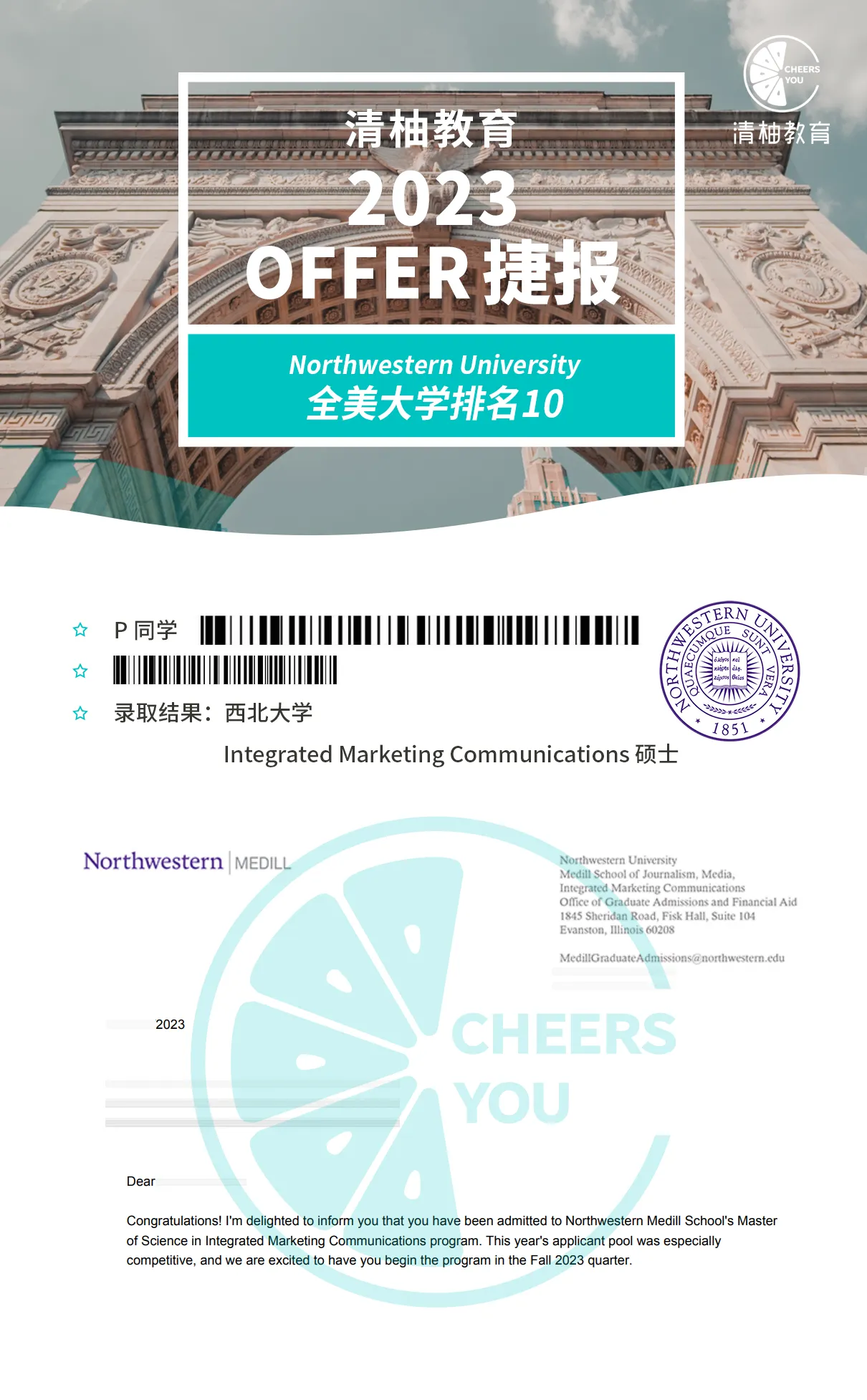
1. Northwestern University Medill School of Journalism

Among the top 15 national universities, Northwestern University's Medill School of Journalism is the only one that offers an undergraduate journalism program. The school has produced notable alumni such as George R.R. Martin, author of "A Song of Ice and Fire," and Matt Murray, editor-in-chief of The Wall Street Journal. Since its founding in 1921, Medill graduates have won the Pulitzer Prize, one of journalism's highest honors, over 30 times, and the Emmy Award, the equivalent of the Oscars in television, over 70 times. It is an absolute powerhouse in journalism education.
Official website: https://www.medill.northwestern.edu/
2. University of Southern California Annenberg School for Communication and Journalism
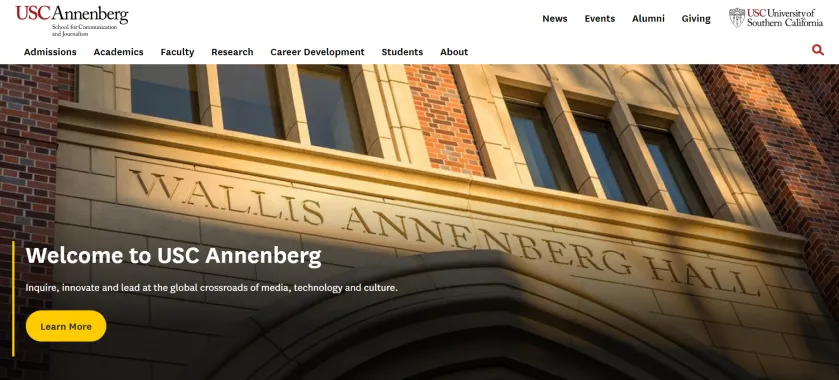
The USC Annenberg School for Communication and Journalism is ranked among the top three in the nation. It bears the responsibility of cultivating outstanding journalists and media professionals, attracting talent in areas such as media, journalism, public diplomacy, and public relations. It also leads many other American universities in teaching and scholarship. Located in Los Angeles, known as a hub of multiculturalism, Annenberg boasts a prime location and offers students excellent employment opportunities.
Official website: https://annenberg.usc.edu/
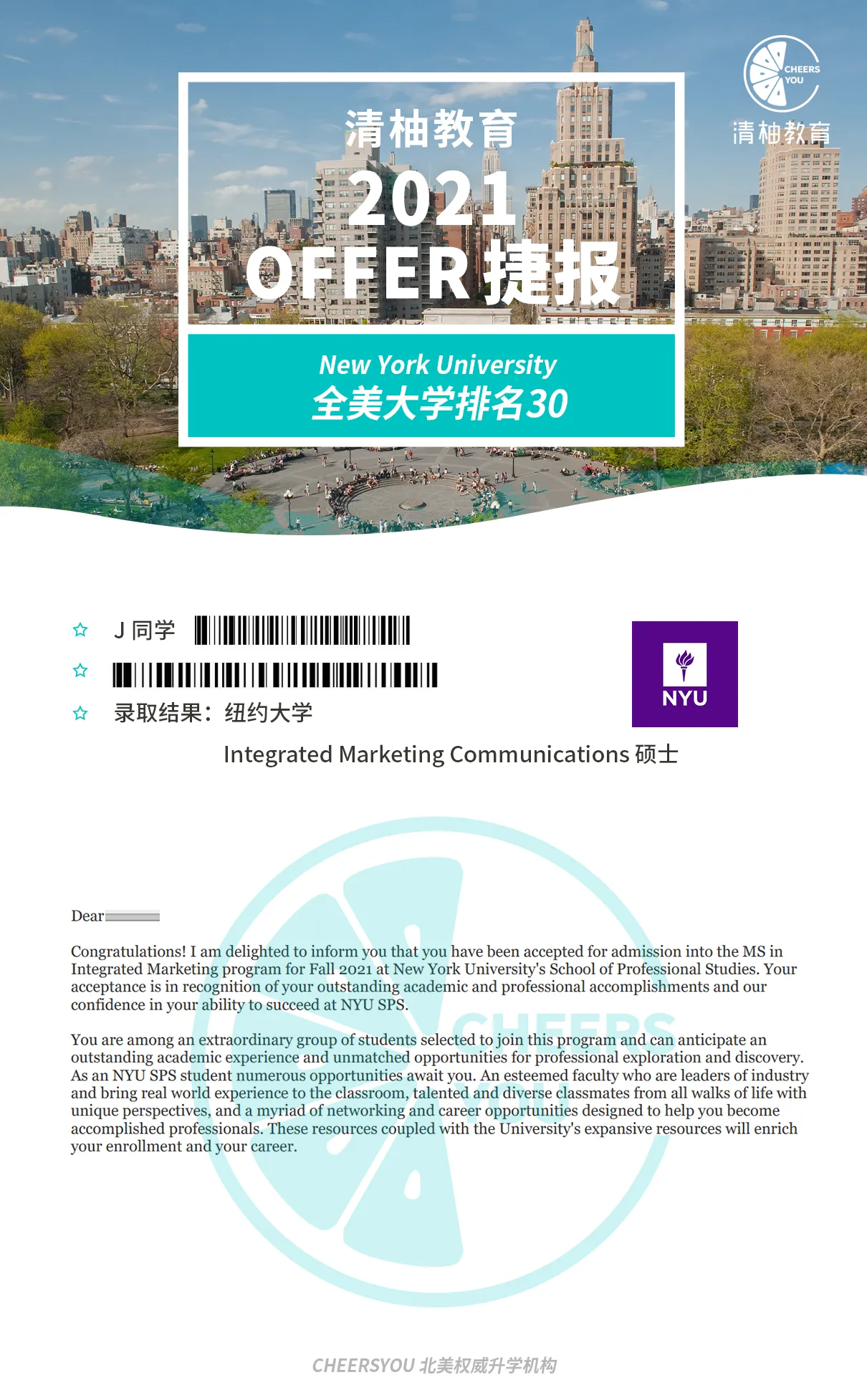
3. New York University Steinhardt School of Culture, Education, and Human Development
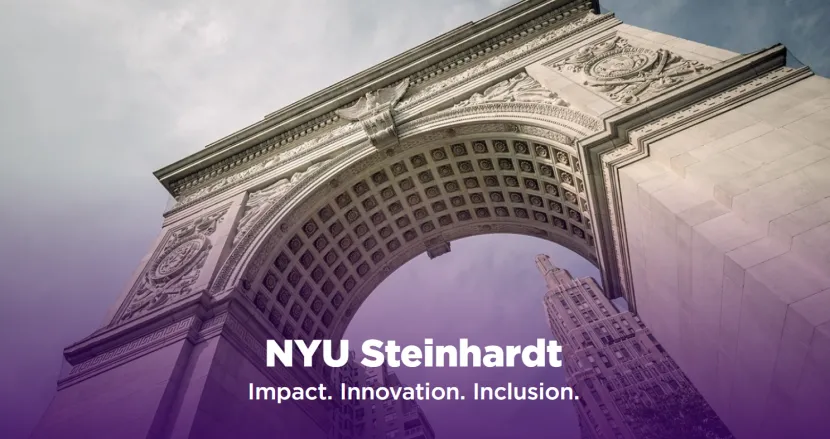
The Media, Culture and Communication (MCC) program at NYU's Steinhardt School of Culture, Education, and Human Development also ranks highly. MCC's curriculum is relatively theoretical, examining media from political, social, and cultural perspectives. Although the program's courses are primarily theoretical, the MCC curriculum is flexible, allowing a wide range of electives from across the university to be tailored to students' academic and professional trajectories.
Official website: https://steinhardt.nyu.edu/
Here are some offers for journalism and media programs~
For more graduate application details and admission case studies, feel free to scan the QR code below to inquire~