According to the latest data from Immigration, Refugees and Citizenship Canada, the number of international students studying in Canada has already returned to pre-pandemic levels.
India and China remain the main sources of international students in Canada, with students from mainland China accounting for 16.94% of all international students in the country.
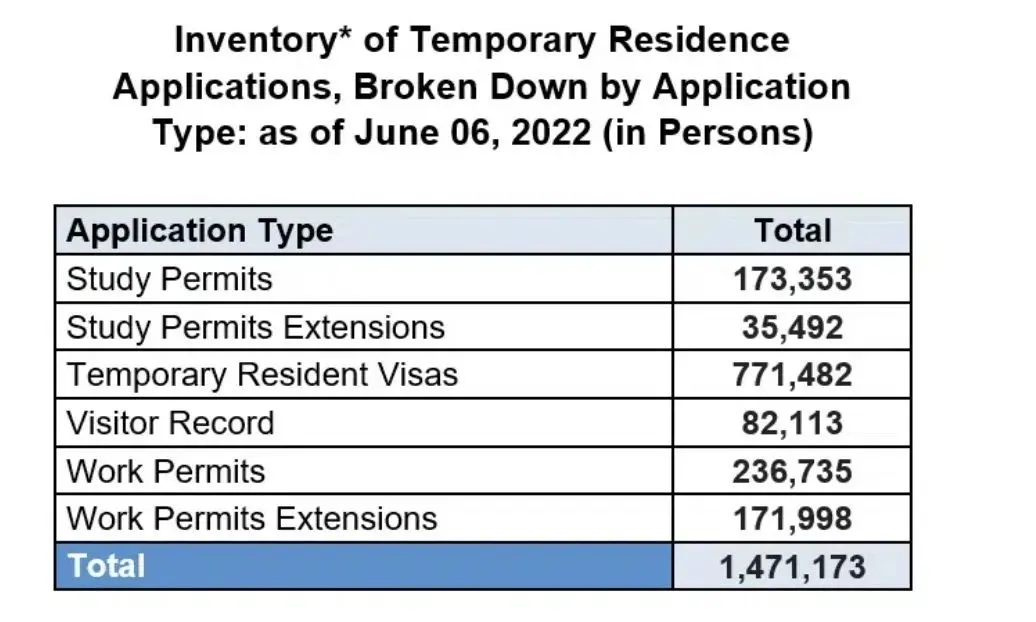
The proportion of students enrolled in master's and doctoral programs in Canada is as high as 42%. Even as the thresholds for undergraduate GPA and standardized test scores continue to rise, countless applicants still flock to Canadian graduate programs.
Study + Immigration, Canada 🇨🇦 is Irresistible
Compared to other popular immigration destinations, Canada's immigration policies are more favorable for international students.
If you study in Canada, as long as you complete a full-time program of at least two years at a designated learning institution, you can apply for a three-year post-graduation work permit (PGWP) directly after graduation, without needing a job offer.
There is no restriction on the type of institution for the PGWP—whether it's a medical/doctoral, comprehensive, or primarily undergraduate university, you can apply for the three-year Post-Graduation Work Permit (PGWP).
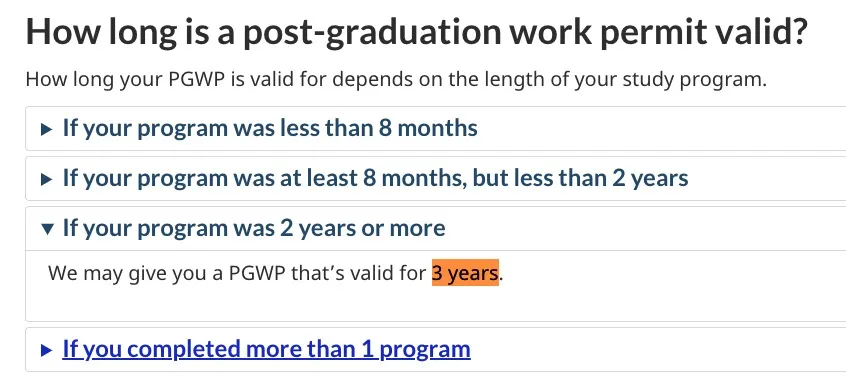
During these three years, once you have worked for at least one year, you can apply for the Canadian Experience Class immigration stream, typically obtaining permanent residency within 3-6 months.
In addition, several provinces have Provincial Nominee Programs (PNP) specifically for students. Many graduate programs at Canadian universities allow graduates to apply for immigration directly without any work experience.
It is precisely because of this dual benefit of studying and immigration that many people turn their eyes to Canada when considering graduate studies, even developing an stubborn mindset of "Canada or nothing."
Little do they know that graduate admissions at Canadian universities are not as simple as they imagine.
This year, some students shared online that with an American undergraduate degree in computer science and mathematics, a GPA of 3.7, GRE 330, and two years of work experience, they were admitted to Yale University in the U.S. but rejected by the University of British Columbia and Simon Fraser University.

While PNP programs in Canada are attractive, the competition is exceptionally fierce—even tougher than getting into an Ivy League school in the U.S.
What makes graduate admissions in Canada so unpredictable and difficult?!
.jpg?x-oss-process=style/opt-webp)
Graduate Applications in Canada: Harder Than Climbing to the Sky
Few Universities, Small Scale, Low Commercialization
Canada is vast but sparsely populated, which translates to a relatively small number of universities. The ones with significant international recognition may only be the University of Toronto, UBC, and McGill University.
Moreover, Canadian universities have not actively participated in global university rankings, with many having withdrawn from ranking systems, making lesser-known Canadian institutions even more obscure internationally.

Since most Canadian universities are publicly funded and have limited budgets, higher education inherently favors domestic students, and this preference is even more pronounced in graduate programs with fewer resources.
For prestigious universities, applicants from Canadian, Chinese, and other international backgrounds all compete fiercely, resulting in a severe shortage of spots. Less famous schools struggle to attract attention, limiting their growth. For both types, international graduate students are not seen as a priority for maximizing institutional benefit.
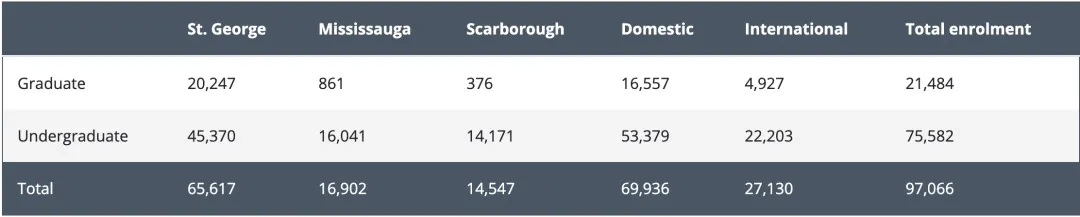
Take the University of Toronto as an example: international graduate students number fewer than 5,000, accounting for only 29%—a stark contrast to the proportion of international undergraduates. Even for international undergraduates at U of T, there is virtually no advantage when applying to the university's own graduate programs.
Additionally, many professors at Canadian universities teach both undergraduate and graduate courses, often leading to a shortage of faculty. This adds even more uncertainty to graduate admissions.
For instance, UBC clearly states on its website that sometimes students are not admitted because a suitable supervisor could not be matched or there was insufficient research funding.
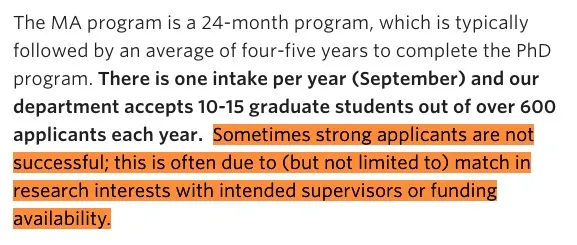
It is not uncommon in Canada to be rejected from a graduate program not because of personal shortcomings, but due to a lack of funding or faculty.
Fierce Competition: Acceptance Rates for Popular Programs Below 5%
Due to the small overall scale of higher education in Canada and the large number of applicants, admission requirements keep rising and competition is exceptionally intense.
According to data disclosed by UBC, the overall graduate admission rate at the Vancouver campus over the past five years has stayed below 20%.
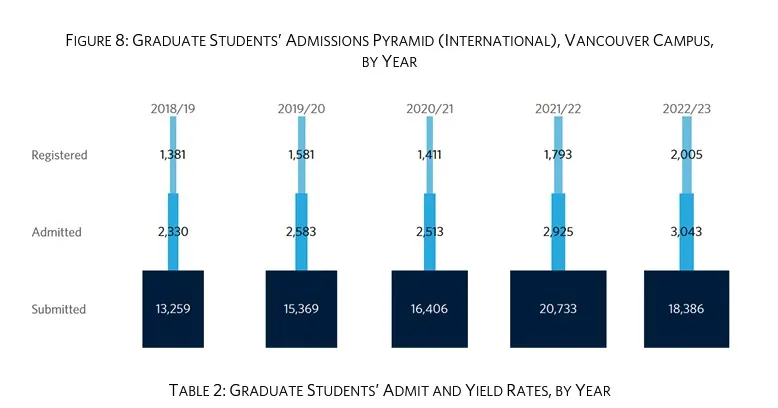
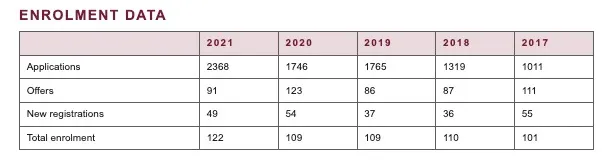
Take the popular major of Computer Science as an example: the number of applicants to CS graduate programs in Canada has grown year by year, but the number of admissions has remained flat.
At UBC's CS program, for instance, in 2017 there were 1,011 applicants and 111 admitted, yielding an acceptance rate of about 10%.
By 2021, the number of applicants had more than doubled to 2,368, but only 91 offers were made—an acceptance rate of just 3.8%.
The University of Toronto's CS graduate program also has a low acceptance rate: according to its website, the Master of Science in Applied Computing admits only 5%-10% of applicants.

Acceptance rates in STEM fields are low, and the situation in popular humanities programs is no better.
For psychology, UBC's Master of Arts in Psychology has an acceptance rate between 1.6% and 2.5%, admitting only 10-15 students from over 600 applicants.
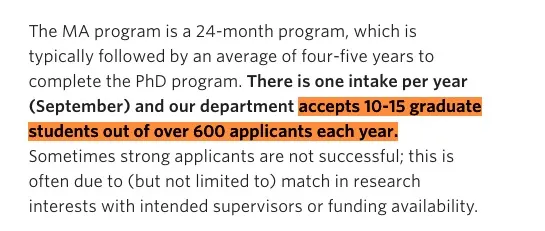
Precisely because of the high number of applicants and the low number of spots, it is even less friendly to students looking to change fields; outright rejections are common.
GPA Absolutism
Canadian graduate programs are extremely strict about undergraduate GPA—it's a definitive "hard metric." Students who receive offers usually have high GPAs.
Even for primarily undergraduate Canadian universities ranked outside the top 1000 globally, a GPA of at least 3.0 is required for graduate applications. This standard is the same as many top-30 U.S. universities.
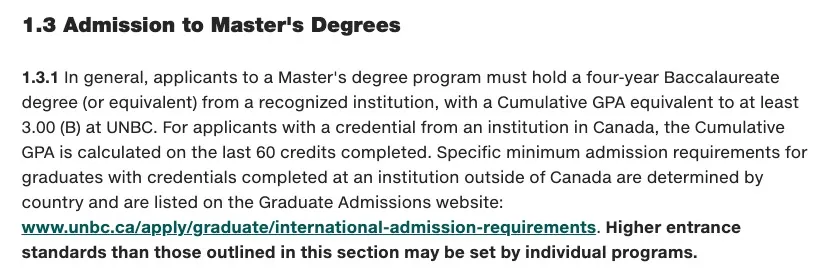
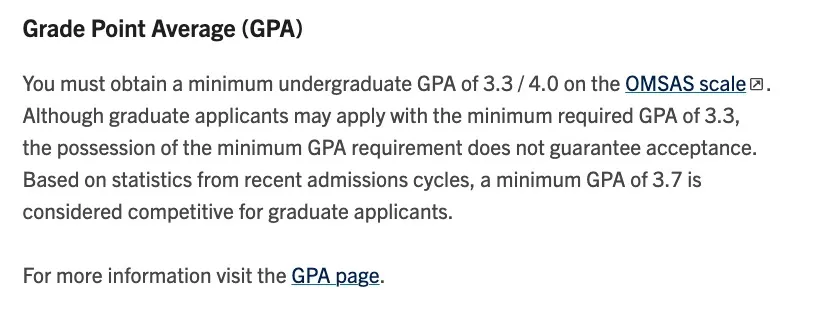
For Canada's top three universities, GPA requirements are even higher.
The University of Toronto explicitly states that a minimum GPA of 3.3 is required, but a 3.7 is considered competitive. Under U of T's grading scale, a 3.7 equates to an average of A- across all courses, which many students find difficult to maintain over four years.
Canadian universities also impose more specific and stringent GPA requirements for upper-level undergraduate courses. For example, UBC requires an overall CGPA of 76% or higher, but demands A-level grades in upper-level courses.
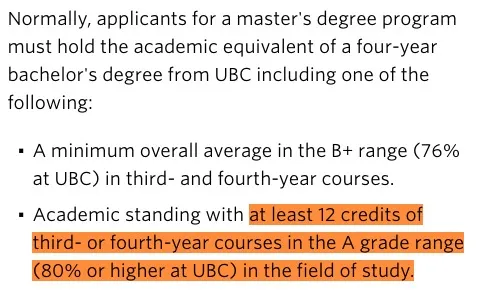
Canadian institutions not only expect to see an upward trend in grades over four years but also have clear grade requirements for advanced courses, posing a significant challenge for applicants.
Holistic Background Review Gains Importance
Although Canadian graduate programs place heavy emphasis on GPA, they don't want to admit just "bookworms."
In an era of increasingly intense competition, not only academic excellence but also well-rounded development is required. Canada, like other Commonwealth countries, is moving its admissions policies closer to those of the U.S.
In addition to GPA requirements, language proficiency, GRE scores, and internship/research experiences have all become essential.
Some programs at the University of Toronto now require non-U.S./non-Canadian undergraduate applicants to submit GRE scores. The era when GRE/GMAT were not needed for Canadian graduate applications is long gone.

At U of T's MBA program, the average work experience is 4 years and the average GMAT score is 674. Think Canadian MBAs are easy? Not at all.
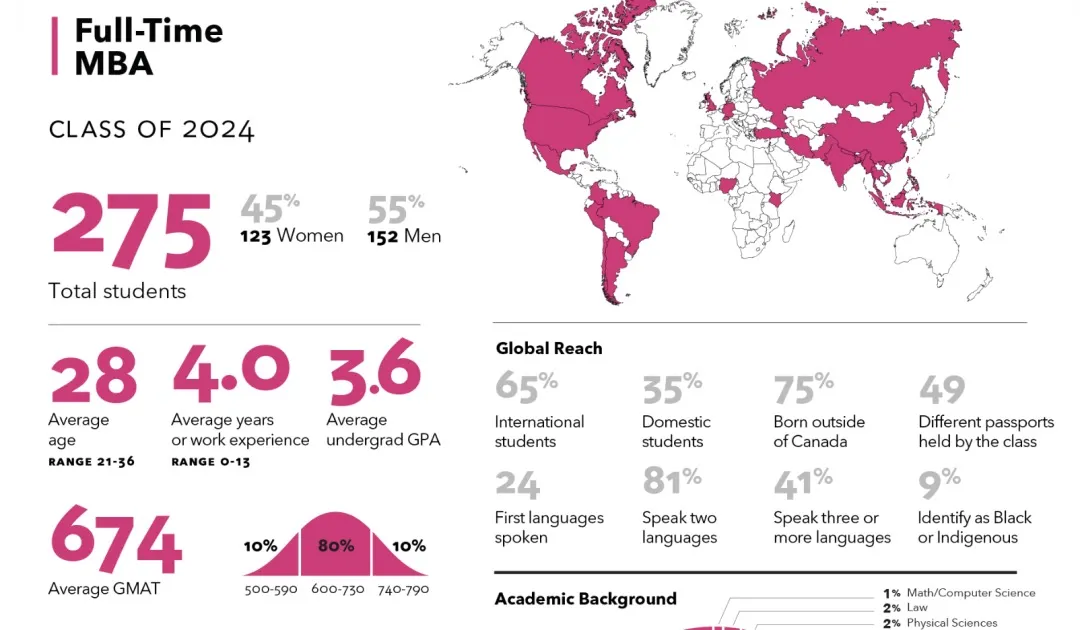
For the Master of Finance program at U of T, the average work experience is around 7 years, and most applicants also have CFA and GMAT scores. This standard even surpasses that of many top U.S. finance programs.
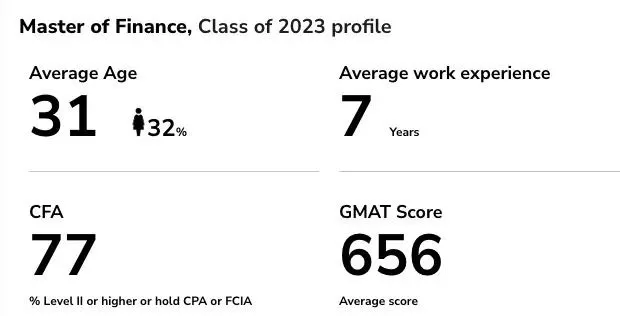
A high GPA alone can no longer guarantee admission to a top Canadian university. Every dimension must be maxed out—that's the "cutthroat" reality of Canadian graduate admissions today.
What Should I Do About Canada's Difficulty?
Due to uncertain factors like local policies and economic conditions, many people no longer apply to graduate school in just one country or region.
When applying to Canadian institutions, many students actually consider applying to universities in other countries as well to spread the risk.
Among major English-speaking study destinations, the U.S. and the U.K. offer relatively high recognition back home, making them popular alternatives for those targeting Canadian graduate schools. Some students also consider universities in Hong Kong or Singapore due to cultural similarities.
Take the U.S. as an example: it has far more universities and programs than Canada, imposes fewer restrictions on undergraduate majors, and offers a wider range of choices. Therefore, U.S. institutions often become Plan B for Canadian graduate school applicants.
Moreover, the U.S. places greater emphasis on holistic background. If your grades are average but your background experiences, recommendation letters, personal statements, and interviews are outstanding, you still have a chance to get into a top university with a low GPA—better odds than in Canada, where you might end up at a highly ranked school.
Take Johns Hopkins University, a top-10 U.S. school, for example. Its Health Care Management program has high GPA expectations, but if you excel in other dimensions, you can still pull off a stunning reversal despite a low GPA.
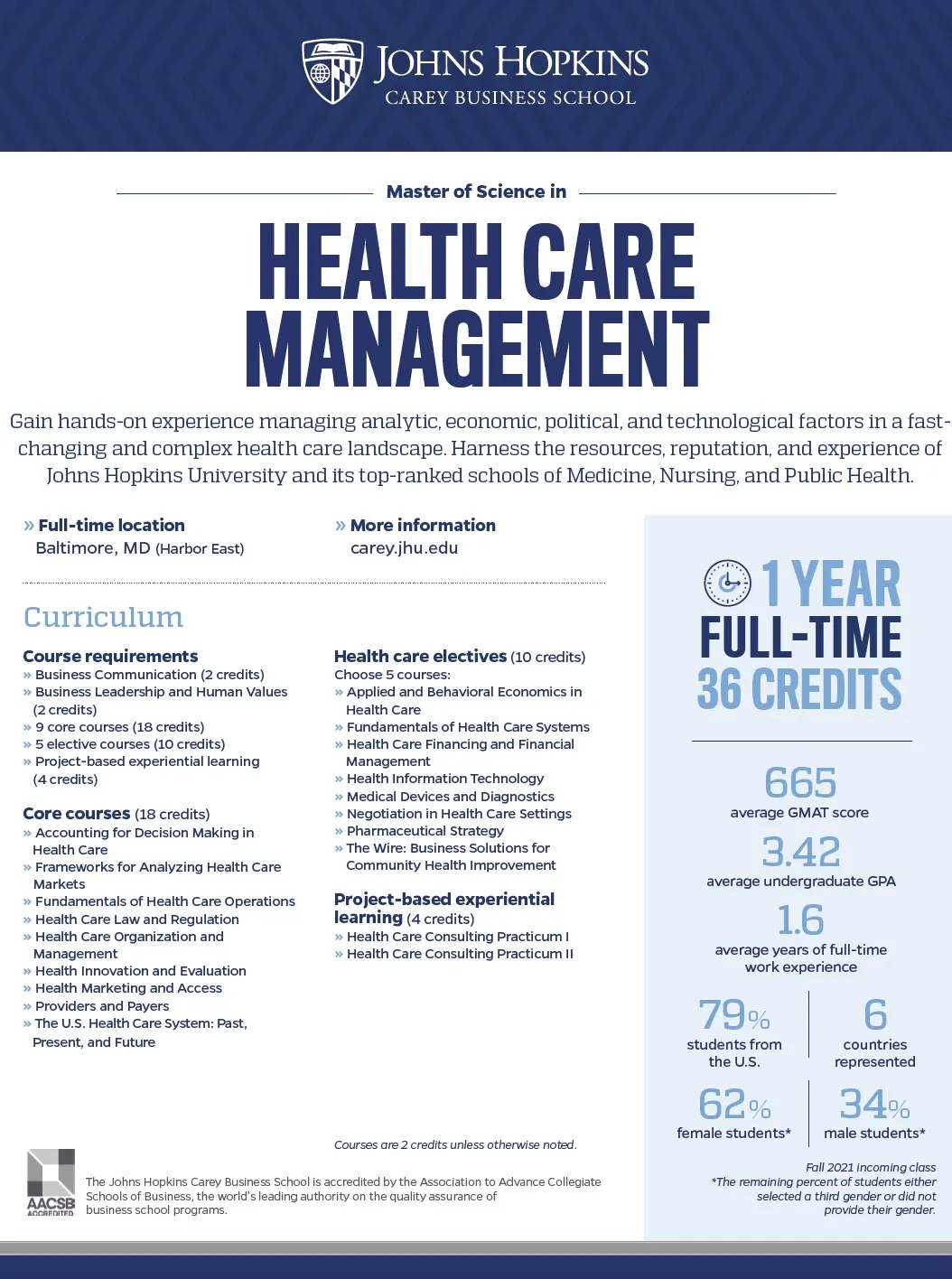
In the just past 2023 Fall application cycle, CheersYou(清柚教育) had an undergraduate student from a Canadian university who achieved the dream of entering a top-tier university with a GPA of just 2.7+.

Studying abroad has a profound impact on personal growth and future prospects. When choosing a study destination, institution, and major, you should base your decision on your own circumstances and never blindly follow the crowd.
Every country/region has its own strengths and weaknesses. In graduate applications, you must weigh your options based on your situation—both to spread risk and to avoid applying wildly.
The 24 Fall application cycle has already begun. Best wishes to everyone in securing offers from your dream schools!
.jpg?x-oss-process=style/opt-webp)