UK media programs have always attracted students globally with their excellent education quality and diverse specializations. Whether for in-depth study of media theory or comprehensive cultivation of practical skills, British media education institutions offer abundant learning resources and opportunities. The media programs at the London School of Economics and Political Science (LSE) and the University of Westminster often spark debate. For students aspiring to develop in the media field, a key question is: which is more important—practical orientation or overall institutional ranking? In this article, we will conduct a comprehensive comparison of the media programs at these two top institutions and explore the impact of practical emphasis and overall ranking on students' future development. For details on graduate application, you can add CheersYou(清柚教育) teacher: qingyouge23 for more information!

1. Introduction
LSE consistently ranks high in various media rankings and is often rated as a top media institution in the UK; the University of Westminster, though ranked slightly lower, has an outstanding reputation in the media field. The media programs at the two schools differ in teaching style. It is important to note that media is a broad field, not a single discipline. There are many sub-disciplines within media, such as journalism, advertising, public relations, etc., each with different requirements for future practitioners.
Taking Westminster as an example, its media programs cover not only areas focusing on film, television, and video production, but also various communication and media-related fields. These include Public Communication, Mass Communication, as well as Marketing Communication and Brand Strategy, among others. Similarly, LSE also offers several media programs such as Media Communication, Public Communication, and Strategic Communication.
Therefore, choosing between Westminster and LSE for media depends on personal interests and future career plans. Students should carefully consider the curriculum of each sub-discipline to determine their specialization and interest, so they can choose the most suitable school and program.
2. Curriculum
- University of Westminster
From a curricular perspective, the University of Westminster has a relatively low repetition rate of courses among media programs with different focuses. This means there are fewer foundational courses on media theory. Taking Westminster's Marketing Communication as an example, the curriculum for the two semesters of this one-year program is shown below:
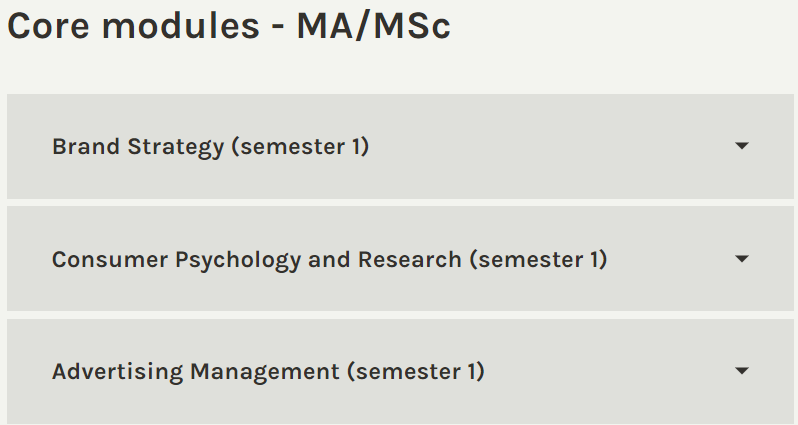
In the first semester, the curriculum is highly targeted and practical, including courses on brand strategy, consumer psychology, etc., rather than starting with academic communication theory.
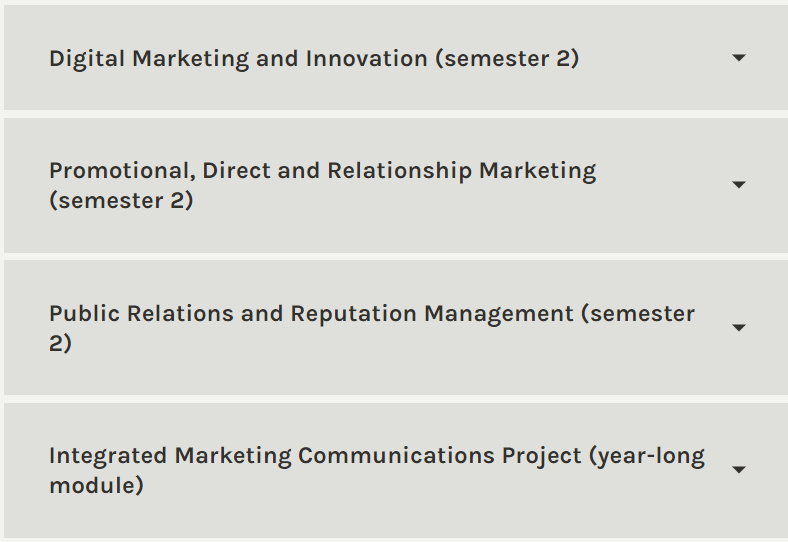
In the second semester, students will delve deeper and engage in project work on practical topics.
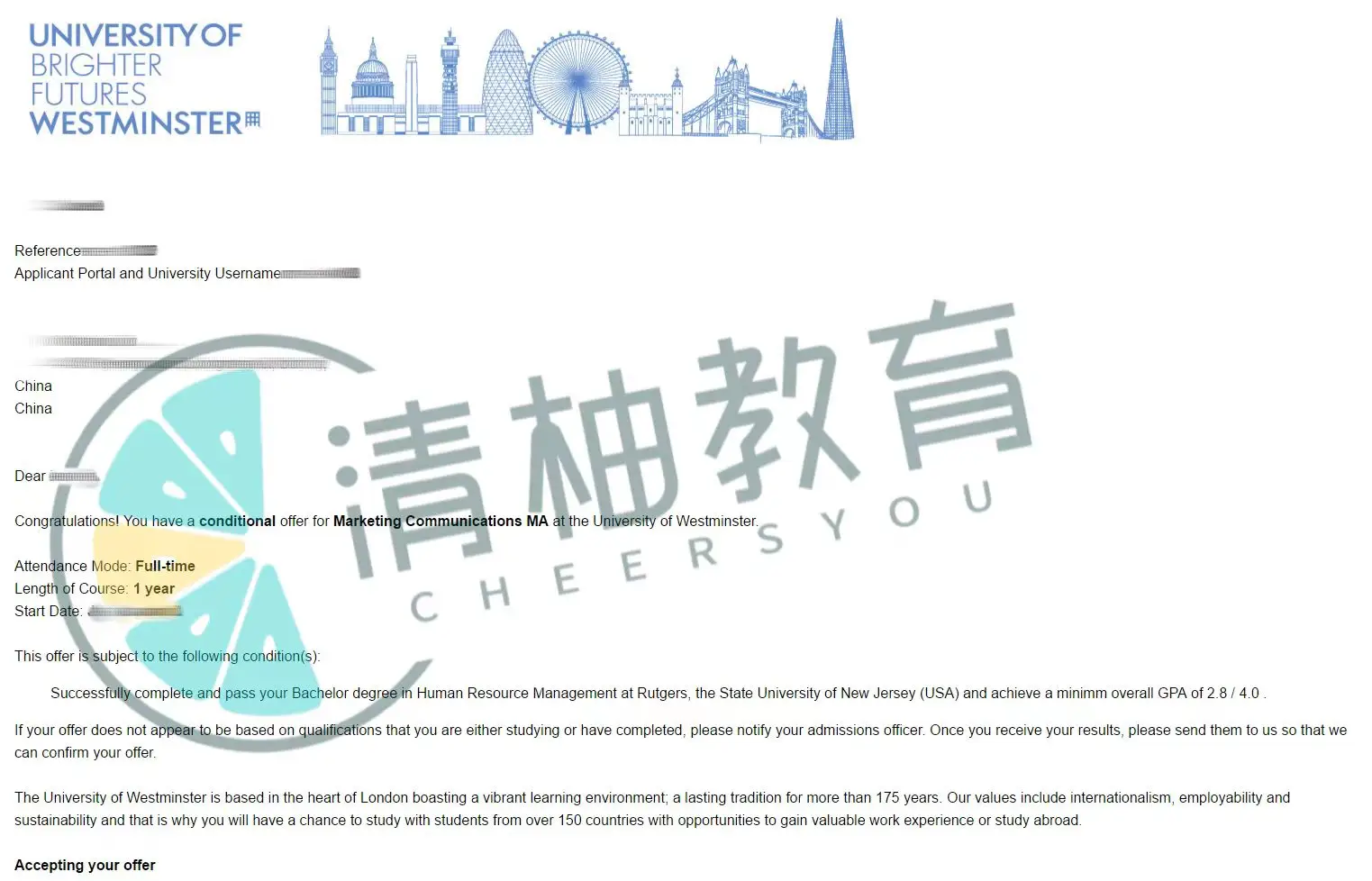
Program link:
- London School of Economics and Political Science
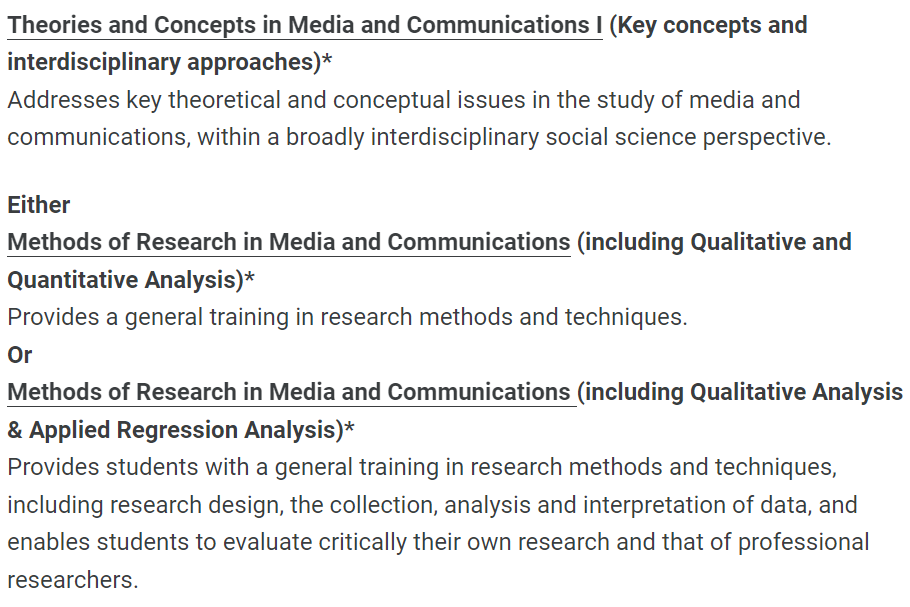
Compared to Westminster, LSE, as a long-established prestigious school in the media field, is a quintessential representative of academic communication studies. Taking the Strategic Communication program, which leans toward commercial promotion and strategic communication, as an example, its curriculum is as follows:
Program link:
https://www.lse.ac.uk/study-at-lse/Graduate/degree-programmes-2023/MSc-Strategic-Communications
From the curriculum, whether studying strategic communication or politics and communication, LSE's media programs emphasize communication theory, academic research methods, and strategic communication courses. This means that regardless of the specialization, students must master these theoretical foundations, which differs from Westminster's tradition.
Westminster's media program places more emphasis on cultivating practical skills, allowing students to gain deeper insight into future workplace challenges. LSE is more suitable for those pursuing an academic research career path. In terms of overall graduate destinations, Westminster graduates more often enter well-known UK media companies (like BBC), as they focus more on industry connections and can readily secure good internship opportunities through hard work. Westminster's alumni network is also quite developed, offering domestic students opportunities for internal referrals and other job prospects.
In contrast, LSE has relatively fewer such resources, and its alumni network is mainly concentrated in academic circles, gathering top scholars from various media fields. As a G5 university in the UK, LSE maintains a traditional academic style. For students who dislike studying theory and reading large amounts of literature, this may seem relatively dry, especially when having to write a dissertation of over 10,000 words for graduation, which many students find challenging.
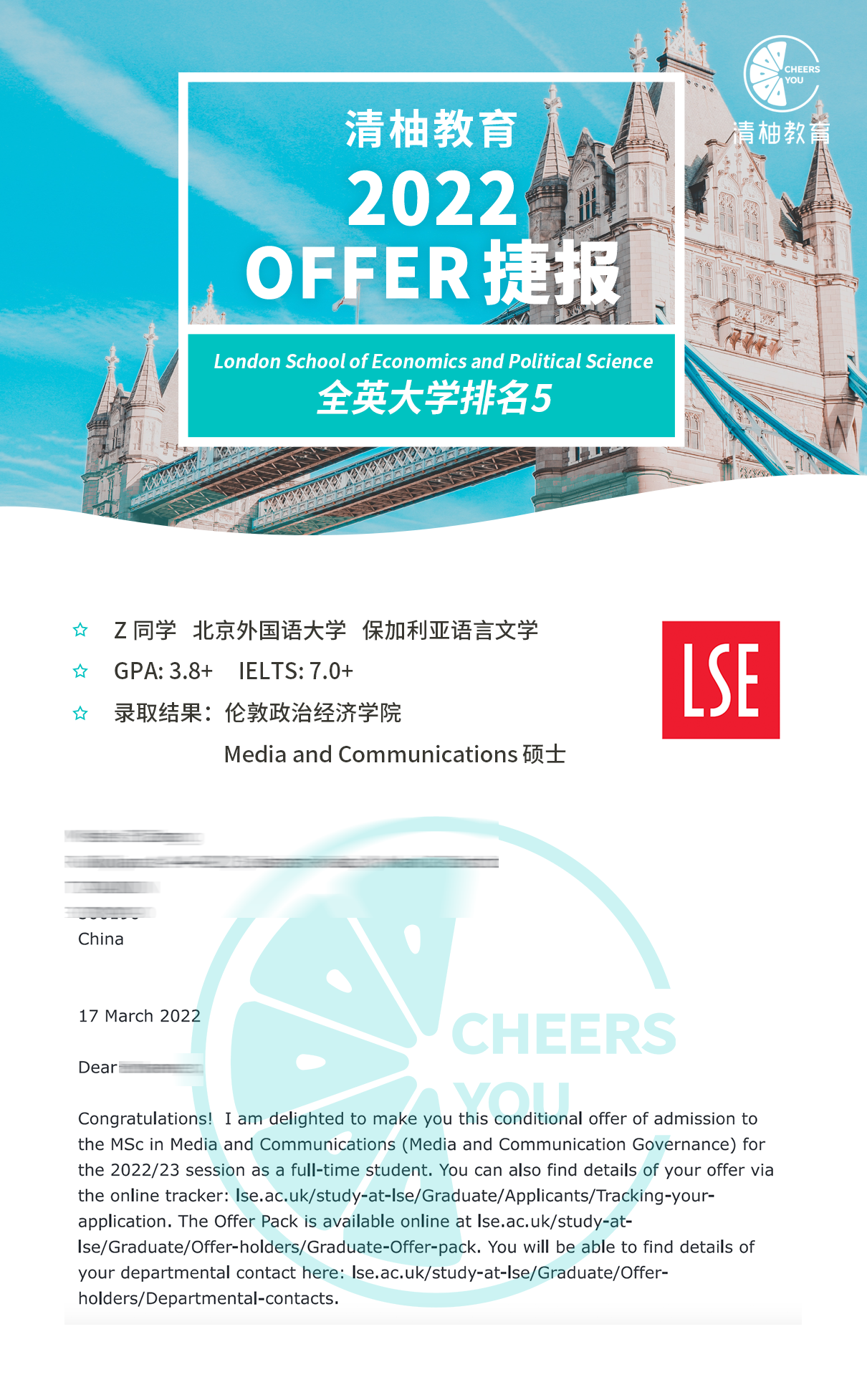
3. Conclusion
For students aiming to enter the workforce directly, the University of Westminster is a suitable choice; for those intending to pursue a PhD and work as professors or researchers, LSE is a perfect fit.
However, the proportion of students enthusiastic about theoretical research and willing to dedicate their finite youth to infinite academic development is relatively small, so the majority of students who believe in practical application would think Westminster has the advantage. However, it's not that simple! As an international student, there are considerable obstacles to finding a job in the UK!
- From the employment environment perspective, compared to mainland Europe, the overall atmosphere of the UK media industry is relatively conservative, which means that even if overseas students successfully enter the job market, they commonly face career advancement ceilings. Therefore, nearly 80-90% of media students studying in the UK eventually return to their home countries for development.
- For students seeking jobs back home, LSE, as a G5 university, enjoys strong name recognition and reputation, serving as a good stepping stone to open doors at well-known domestic companies. In contrast, the University of Westminster's lower overall ranking is a disadvantage. Especially for domestic companies with limited knowledge of the overseas market, a one-year UK master's degree carries a golden impression, and if the school's visibility is low, this impression may be further reinforced.
Taking everything into account, for students who have already immigrated and hold UK permanent residency or other long-term visas and wish to develop in the local media industry, the University of Westminster and its alumni resources are very attractive. However, if students do not have a stable long-term visa after their study visa ends and are not at an advantage when competing with locals for jobs, for typical international students whose main employment location will be in their home country, if they can gain admission to LSE, LSE offers better cost-effectiveness and more stable future development.
Even for Westminster graduates who successfully find media jobs in the UK, the number of outstanding talents who can enter big companies like BBC is still very few. Working at little-known small companies for a few years before returning to seek jobs in China will not significantly enhance the resume. Due to limited knowledge of foreign companies, HR departments in China will still focus on the alma mater.
Although what is learned at LSE may be too theoretical and not immediately hands-on, this can be compensated by actively participating in internships during holidays. After working for a while, applying for a short-term exchange program at the University of Westminster would be a good choice for career advancement.
For more application details and school selection advice, please scan the QR code below for consultation~