
In most people's understanding, transferring colleges is not possible. We even often see news reports about students dropping out of prestigious universities to retake the college entrance exam. While transferring within China is indeed difficult, it is feasible if you look to schools abroad. Whether you are studying at a domestic university or overseas, as long as you meet the requirements, you can transfer. Today, we will detail the key points for transferring to a U.S. college. If you have specific questions, feel free to consult a CheersYou(清柚教育) advisor.

1. Transferring from One U.S. College to Another
Transferring is very common in U.S. universities because many students discover new interests after starting college, realize the program isn’t right for them, or shift career goals. Another scenario is that students initially compromise on a safety school when applying, then work to improve their GPA and transfer to their dream school.
Application Timing
Generally, applying as a sophomore offers more advantages and a higher success rate than applying as a freshman:
- Goal clarity: After a full year, sophomores have a better understanding of college courses and a clearer sense of their academic and career goals.
- Preparation: You have a year to secure recommendation letters, participate in extracurriculars, research, and other activities to strengthen your profile.
- Credit requirements: Most schools require a minimum number of transfer credits that are hard to complete in just one year—unless you’re an extraordinary time manager.
- SAT scores: Many schools waive the SAT requirement for sophomore transfers.
In short, applying as a sophomore to enroll as a junior yields higher success. Also, fall admission is less competitive than spring (more programs and spots available).
One more thing: transferring within the same university system is often easier. Take the UC system, for example—transfers among UC campuses enjoy more lenient policies, while coming from outside the system is more challenging.
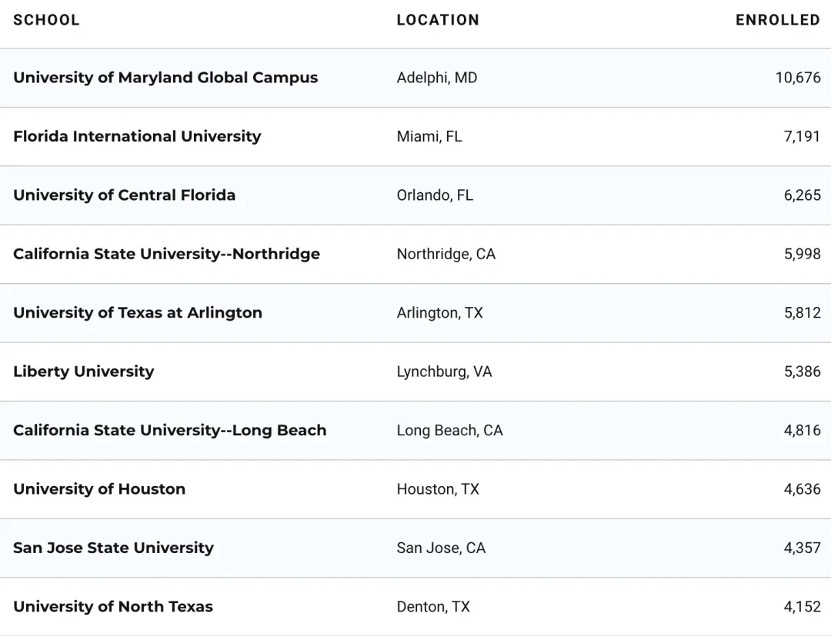
Below is a partial ranking from U.S. News 2021 of U.S. colleges with the most transfer students:
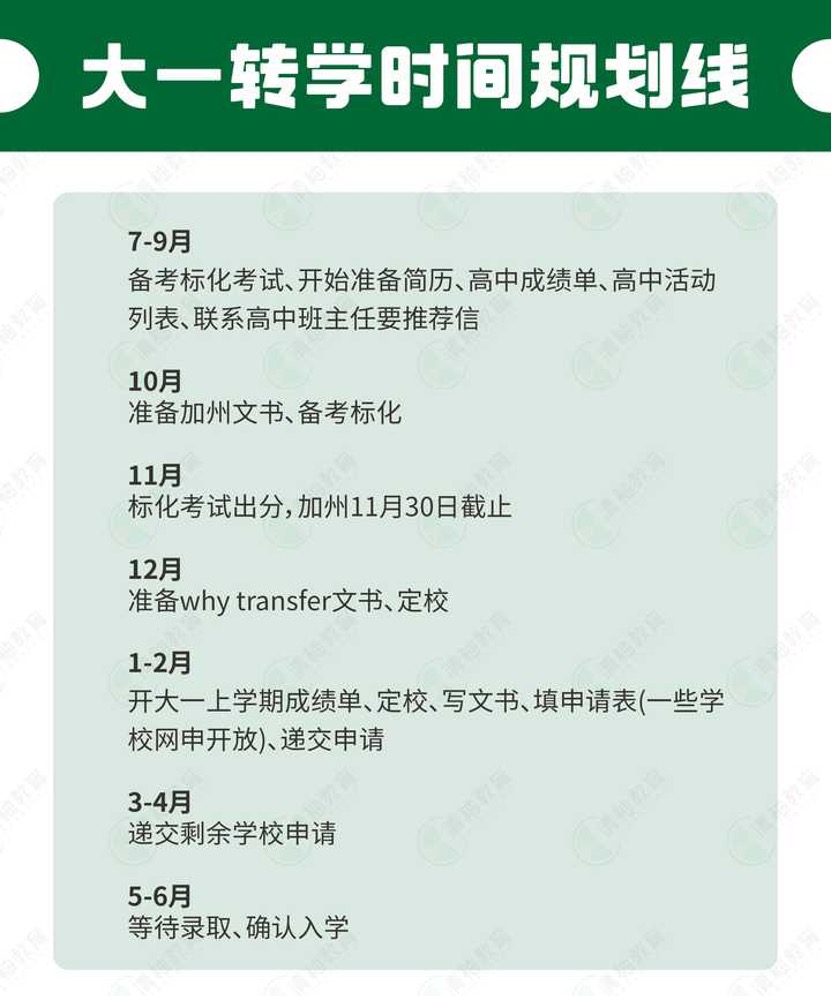
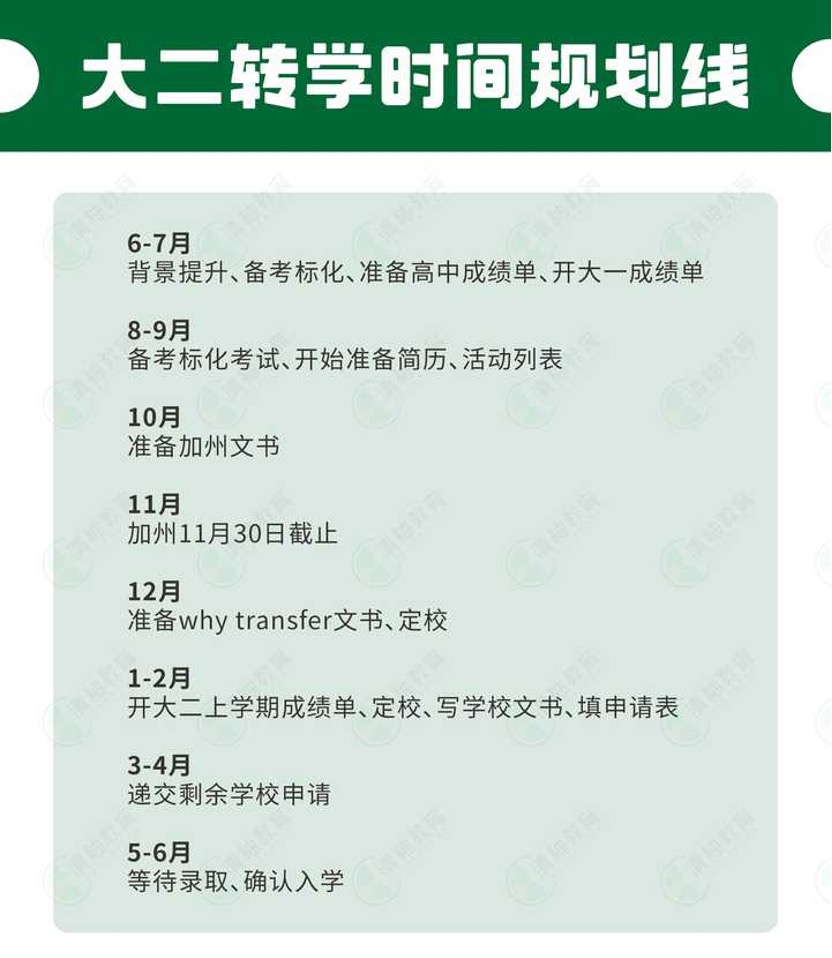
Here are the transfer timelines for freshmen and sophomores, compiled by CheersYou(清柚教育) advisors:
2. Transfer from a Chinese University to a U.S. College
Many students studying at Chinese universities also consider transferring internationally to the U.S. for better education or a more competitive résumé.
U.S. colleges do accept transfer applications from Chinese undergraduates, though the bar is higher. Applicants generally need TOEFL scores, SAT scores, and a WES evaluation, and credit transfer can be more limited. Other requirements largely mirror those for students at U.S. four-year colleges.
Application Requirements
Note: You don’t need to be from a Project 985 university to transfer. Many U.S. schools welcome transfer students, like UMichigan, USC, PSU, and OSU.
Schools outside the Top 30 often have more flexible transfer admissions than freshman admissions—that’s why many find transferring easier than applying straight from high school.
A GPA of 3.6+, TOEFL 100+, relevant coursework, and a compelling “why transfer” essay will smooth your path. For those who have already completed 1–2 years of credit, the SAT may also be waived. However, if you’re targeting top liberal arts colleges, a strong SAT score is recommended.
For Top 30 schools, high GPA, TOEFL, and SAT are essential; many CheersYou(清柚教育) admits maintain a 3.8+.
If your GPA isn’t strong or language scores are lacking, and you’re aiming for schools in the Top 60–100 or beyond, transferring may not be worth the effort. Consider your academic and career plans—you might improve your GPA and prepare for graduate school with GRE/GMAT, TOEFL, and internships instead.
3. Transfer from a Community College
Moving from a community college (two-year institution) to a four-year university is another common path. Many in China hold biases against community colleges, calling them “diploma mills,” but in reality, nearly one-third of University of California students start at a community college.
Community colleges offer distinct advantages: lower tuition and easier transfer to in-state universities, for example.
California community college students, for instance, can transfer smoothly into the UC system, often with higher acceptance rates than freshman admission—and sometimes even higher than UC-to-UC transfers.
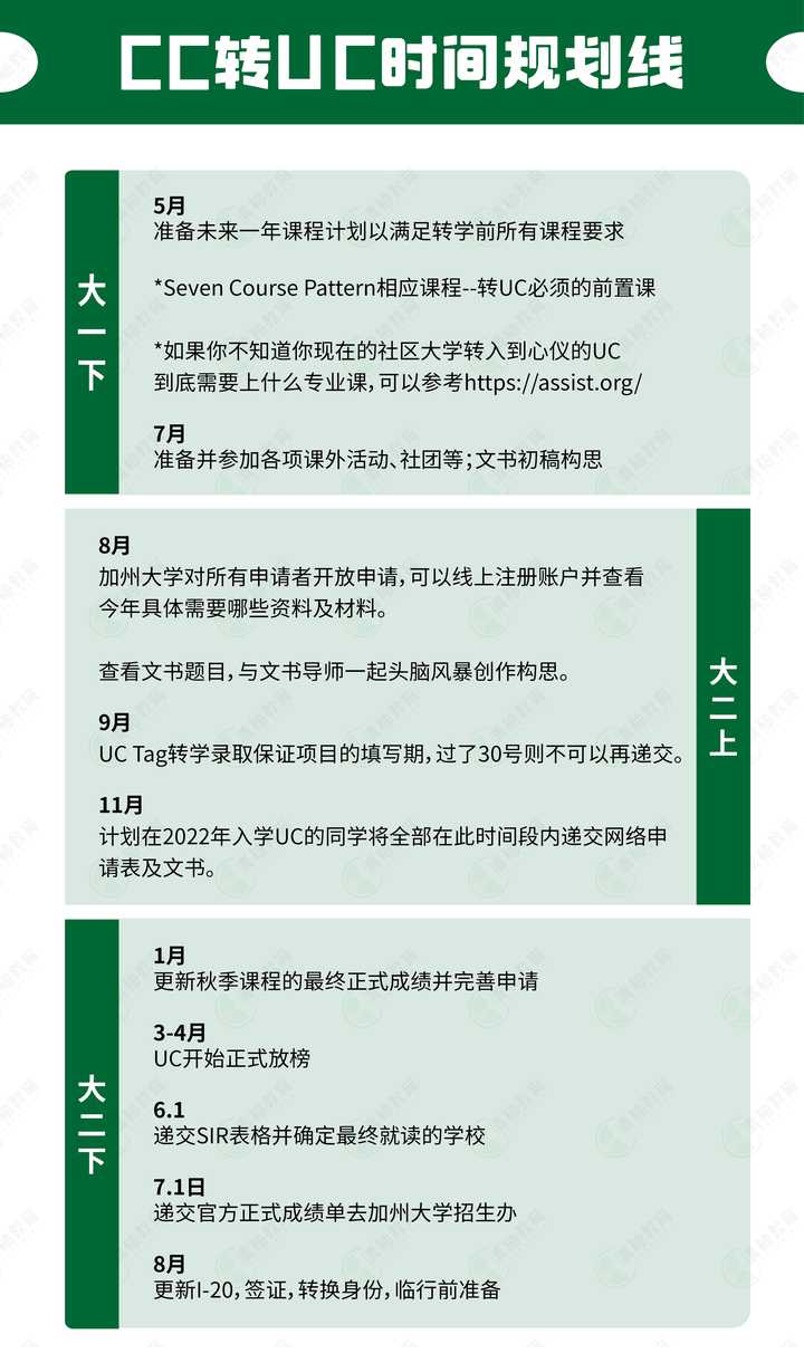
Transfer Timeline
4. Important Notes on Transferring
Freshman Admission vs. Transfer
For students already enrolled in college, applying as a freshman is not recommended.
First, freshman admission requires an SAT score. Second, it takes too much time—even if you manage to complete TOEFL and SAT in one year, you lose a year. With a transfer, you can carry over credits from your Chinese university to the U.S., shortening your time to degree and cutting costs.
Deadlines
Fall admission deadlines: California schools typically in early February, with others ranging from February to April. Apply early—don’t wait until the deadline.
(Note: If you begin the process as a sophomore and transfer as a junior, you won’t need to repeat freshman year. Even from a Chinese university, many credits can still be transferred—though the receiving school decides which courses count.)
Application Materials
- TOEFL scores
- Official high school and college transcripts (if you attended high school in China, grade 9 records are also required)
- Recommendation letters (requirements vary by school, usually one required and one optional)
- A main essay on the topic why transfer. (While this sounds straightforward, crafting an excellent transfer essay is challenging. It requires a detailed comparison between schools—you can’t simply say you don’t like your current school or its professors. Instead, cite limited hands-on opportunities or a curriculum mismatch, and explain why the target school offers better internships, workshops, or alumni networks. Including a personal story related to your field can also be very effective.)
Additionally, transfers require many small documents: middle and high school transcripts, college transcripts, syllabi, and course descriptions. Stay in close contact with schools about progress and requirements.
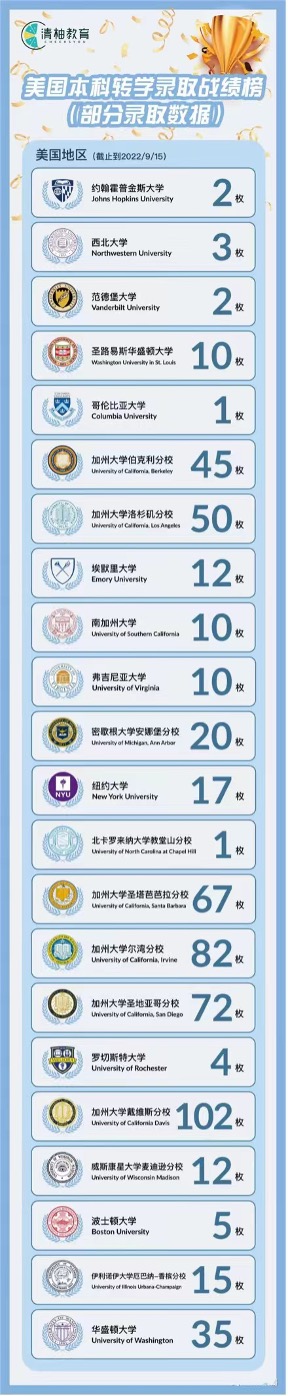
Finally, here are some of our transfer success stories for your reference!
For more information about study abroad and graduate school applications, please contact a CheersYou(清柚教育) advisor through the contact information below.