QS has just released the 2024 QS World University Rankings.
The QS World University Rankings, compiled by global higher education analytics firm QS Quacquarelli Symonds, are published annually to help prospective students identify top schools of interest.
.png)
This year, QS compares and analyzes the performance of 1,500 universities across 104 higher education systems globally.
CheersYou(清柚教育) brings you the latest rankings now!

2024 QS University Ranking Indicators
This year's QS World University Rankings evaluate top universities across countries/regions and have made the most significant improvements ever to key indicators used to assess and examine relevant data of global institutions:
Academic Reputation (30%) reduced by 10%
Employer Reputation (15%) increased by 5%
Citations per Paper (20%) unchanged
Faculty/Student Ratio (10%) reduced by 10%
International Faculty Ratio (5%) unchanged
International Student Ratio (5%) unchanged
Employment Outcomes (5%) new indicator
International Research Network (5%) new indicator
Sustainability (5%) new indicator
As an internationally authoritative ranking body, QS has always emphasized multi-dimensional indicator comparisons across institutions. Beyond academics, employer reputation and internationalization are also key focuses for QS.
Overview of the 2024 QS Rankings
Due to the major weighting adjustments, this year's QS World University Rankings have undergone massive changes!
The top five spots on the list remain familiar names, with slight rank shifts.
The top five are, in order: MIT (unchanged), Cambridge (unchanged), Oxford (up 1), Harvard (up 1), and Stanford (down 2).
This also marks MIT's 12th consecutive year as the world's #1 ranked university!

Looking across this year's list, apart from US and UK schools dominating the top, Australian universities have surged ahead, with three entering the Top 20: the University of Melbourne (14th), UNSW Sydney (19th), and the University of Sydney (19th). Australian institutions in the Top 100 also performed exceptionally well, with the University of Technology Sydney rocketing 47 places to 90th.

2024 US University Rankings
US universities still occupy half of the ranking list.
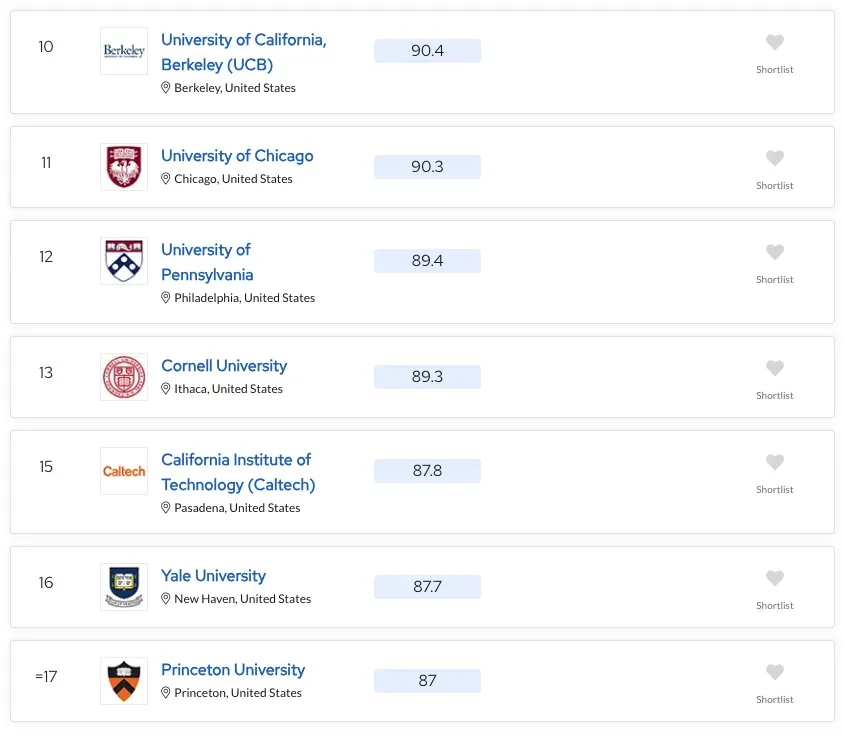
This year, those entering the Top 20 include UC Berkeley, the University of Chicago, the University of Pennsylvania, Cornell University, Caltech, Yale University, and Princeton University.
Among them, UC Berkeley jumped 17 spots from last year's 27th to break into the top 10, becoming this year's "dark horse" among US institutions.
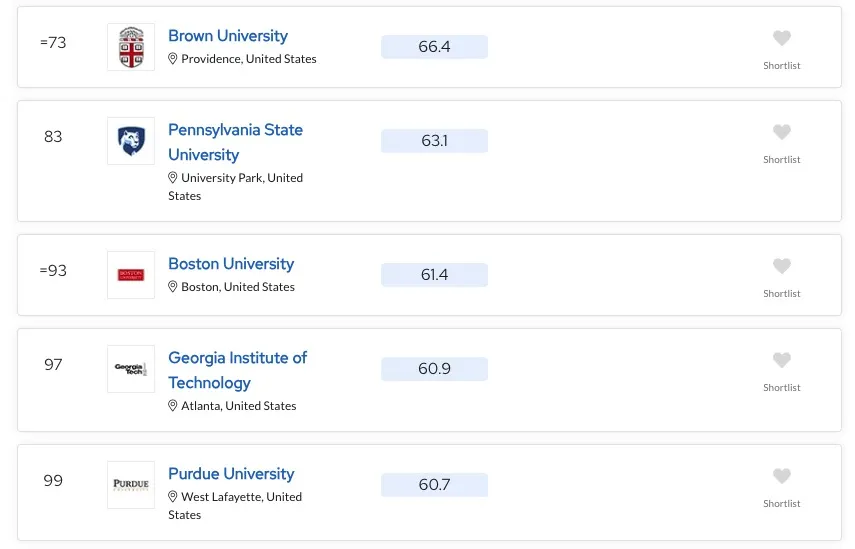
Ivy League member Brown University saw a significant drop this year, falling 10 places to 73rd. Boston University and Purdue University, which were not in the top 100 last year, successfully made it into the Top 100 this year.
2024 UK University Rankings
Among UK institutions, 17 entered the top 100, the same number as last year. Four of them are in the top 10: the University of Cambridge, the University of Oxford, Imperial College London, and UCL.
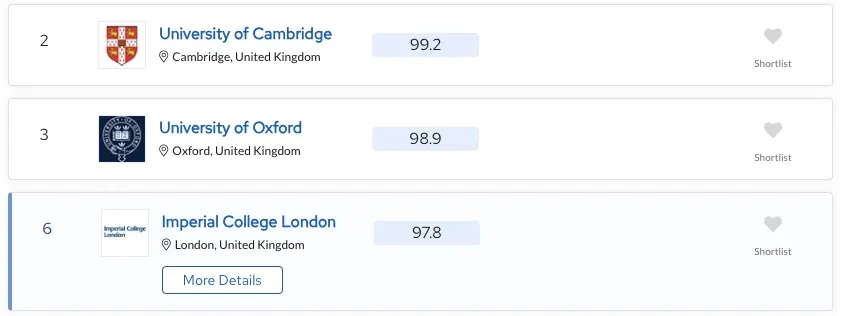
The London School of Economics and Political Science surged 11 places to 45th. The G5 group performed excellently overall, while the "Wang-Man-Ai-Wa" (King’s, Manchester, Edinburgh, Warwick) saw drops in their rankings.
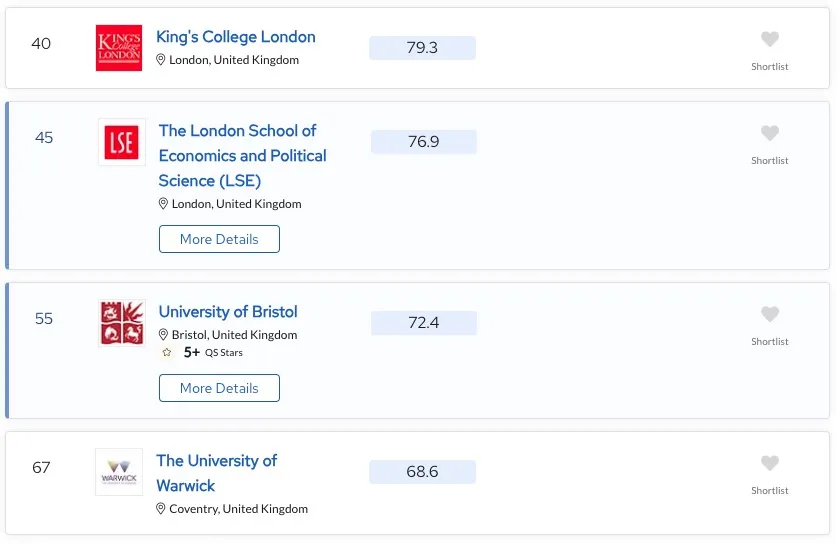
2024 Asian University Rankings
The National University of Singapore remains the top in Asia. Peking University is the only mainland Chinese university to enter the global Top 20 this year.
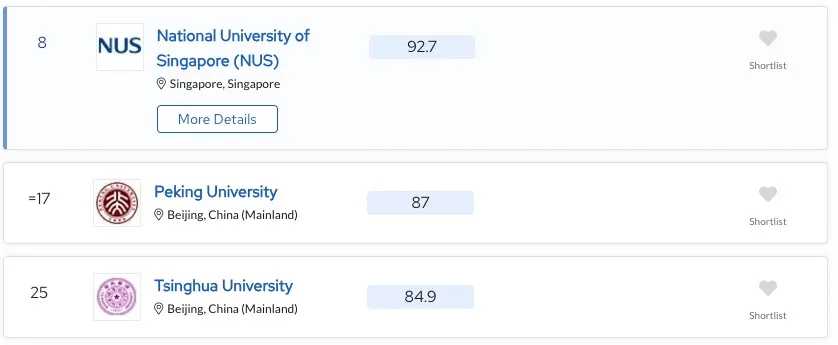
Mainland Chinese universities rank third globally in terms of the number of institutions listed, with 71 schools on the rankings, behind only the US and UK.
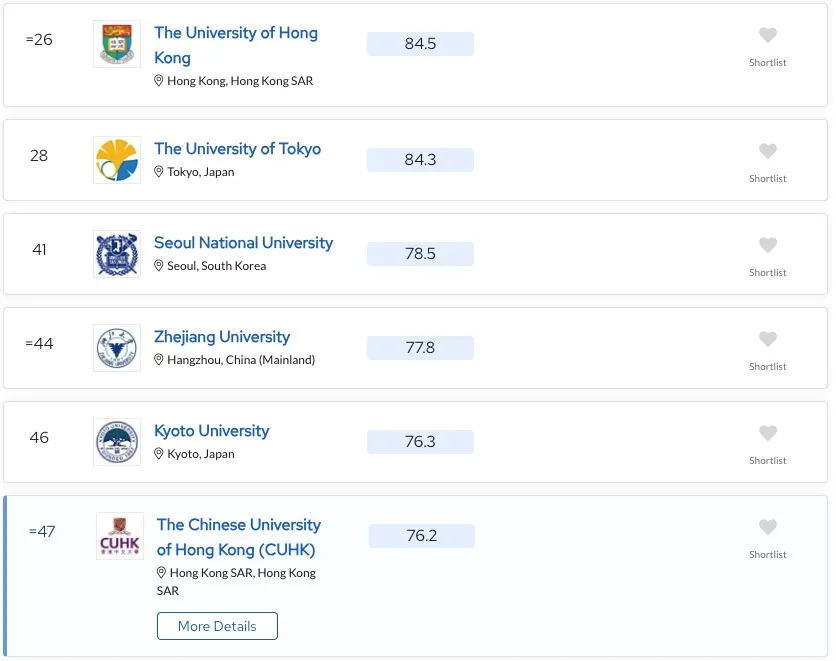
Hong Kong universities saw an overall decline in rankings this year, with only the University of Hong Kong and the Chinese University of Hong Kong making it into the Top 50.
To view the complete 2024 World University Rankings, visit the QS official website or the CheersYou(清柚教育) official website:
https://nlg.cheersyou.com/ranking/world/qs
For students considering multi-country joint applications, this latest QS World University Rankings can serve as a reference to help identify institutions of interest when making future school choices.
Of course, rankings are for reference only. Rankings themselves should not be the sole basis for university applications.
When choosing target universities, everyone should view various rankings rationally and take into account factors such as their own background and various needs, ultimately making a more reasonable and personalized choice.
Source: QS World University Rankings