The field of Electrical and Computer Engineering (ECE) in the US has a broad foundation and has experienced rapid growth over the past few decades, covering areas such as software development, hardware design, data analytics, quantum computing, and nanotechnology. Cornell and Duke universities enjoy strong academic reputations in ECE, but differ in academic nature and curriculum. Today, a CheersYou(清柚教育) advisor has compiled a comparison of Duke and Cornell's ECE programs to help students interested in focusing on electrical and computer engineering. For more details on graduate applications, add the CheersYou(清柚教育) advisor: qingyouge23!

Duke University - Electrical & Computer Engineering
.png?x-oss-process=style/opt-webp)
Project link: https://ece.duke.edu/masters
Duke's ECE program can be seen as quite similar to CS. The courses available in the CS department are largely covered in the ECE program as well. The program offers professional degrees in electrical and computer engineering. Students can choose the Master of Science degree, which involves only coursework; or the Master of Engineering degree, which includes built-in internship opportunities and additional business courses. The differences between the two degrees are described below:
.png?x-oss-process=style/opt-webp)
Simply put, the MS degree is equivalent to what we usually call a course-based degree, while the MEng degree is more career-oriented. The MEng program adds two business courses covering fundamental business knowledge for engineers and high-tech industry management. Additionally, the MEng degree offers internship opportunities, aiming to help students transition into the workforce quickly. Through these distinctive features, students receive comprehensive career development support on top of their specialized knowledge.
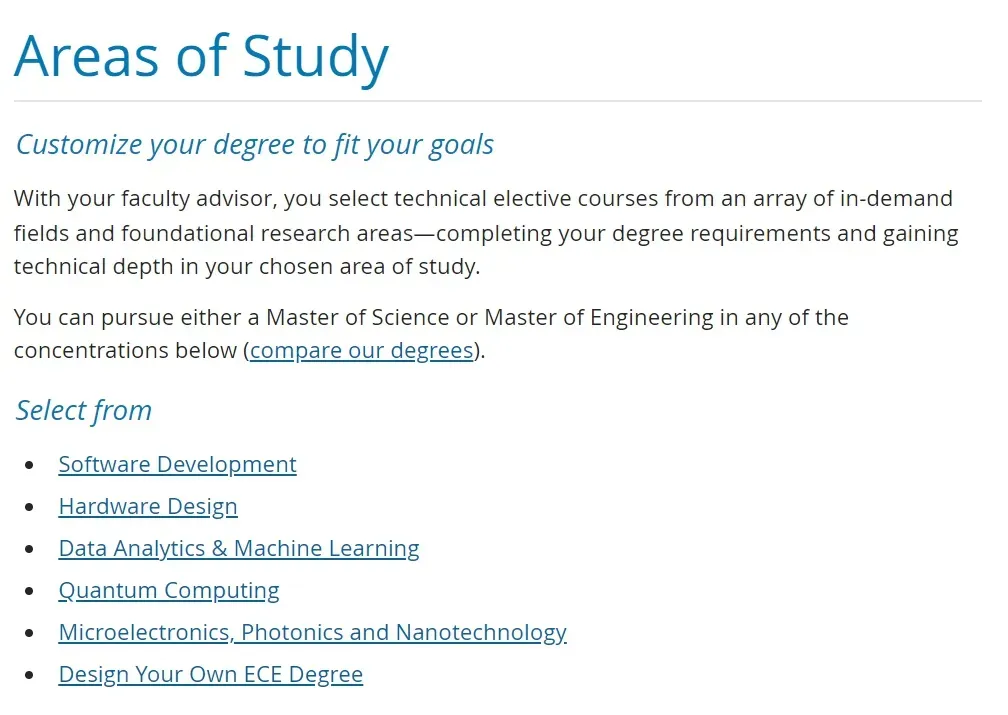
Duke's ECE research areas are divided into five main directions: software development, hardware design, data analytics and machine learning, quantum computing, and microelectronics, optics, and nanotechnology. Overall, students mainly concentrate on two tracks: software engineering (Software Development) and data analytics and machine learning (Analytics & Machine Learning). Most students do not choose other tracks.
This is because Duke's data analytics and machine learning direction ranks sixth in the nation, and software engineering and data analytics/machine learning are the best choices for career changers, offering advantages in future employment. At enrollment, the school does not require students to pre-select a specific track. The so-called tracks are naturally formed based on course selection. Once related courses in a track are chosen, students can only continue along that direction in the second semester, and courses in each direction build upon each other. This setup helps students focus and dive deeper into their chosen field.
Curriculum:
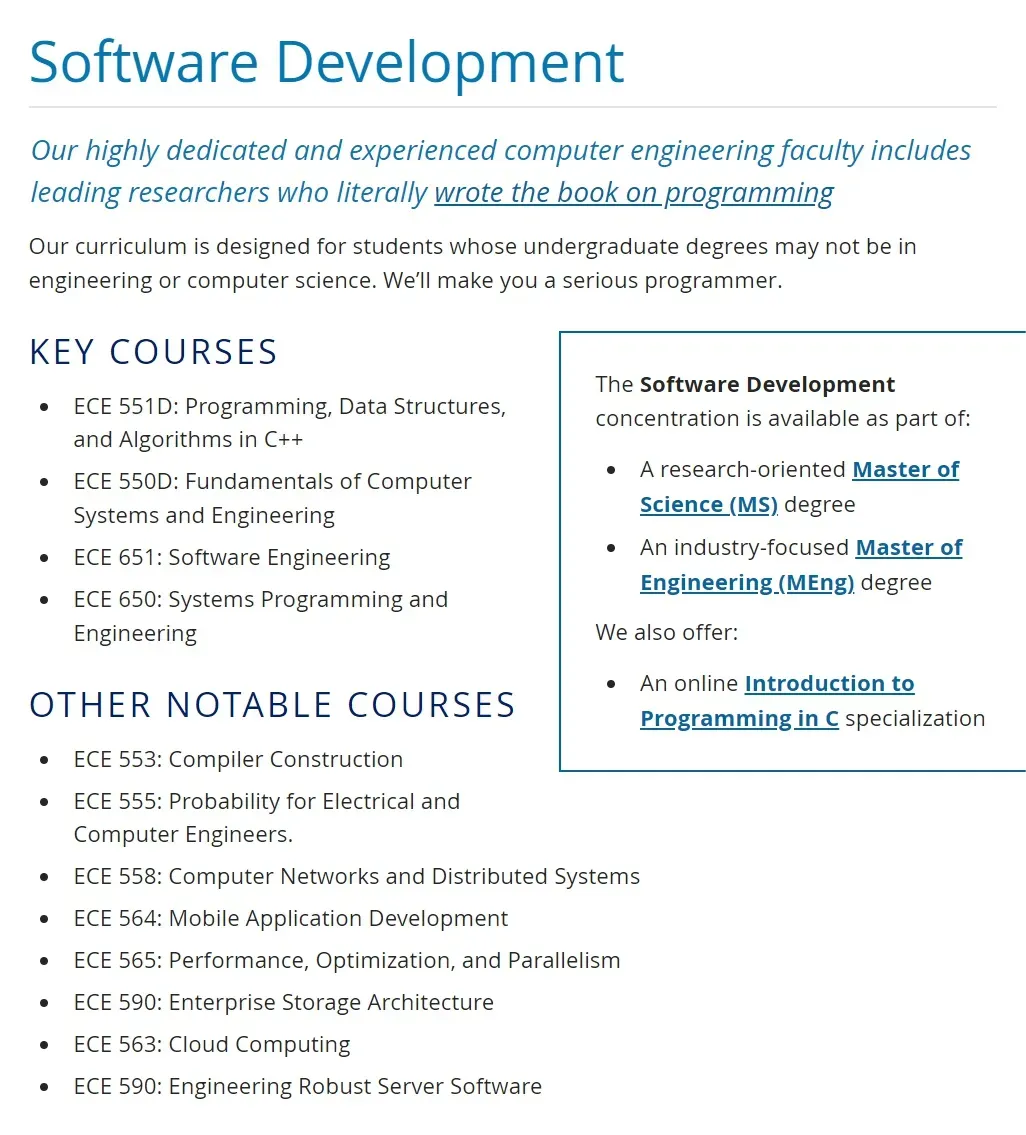
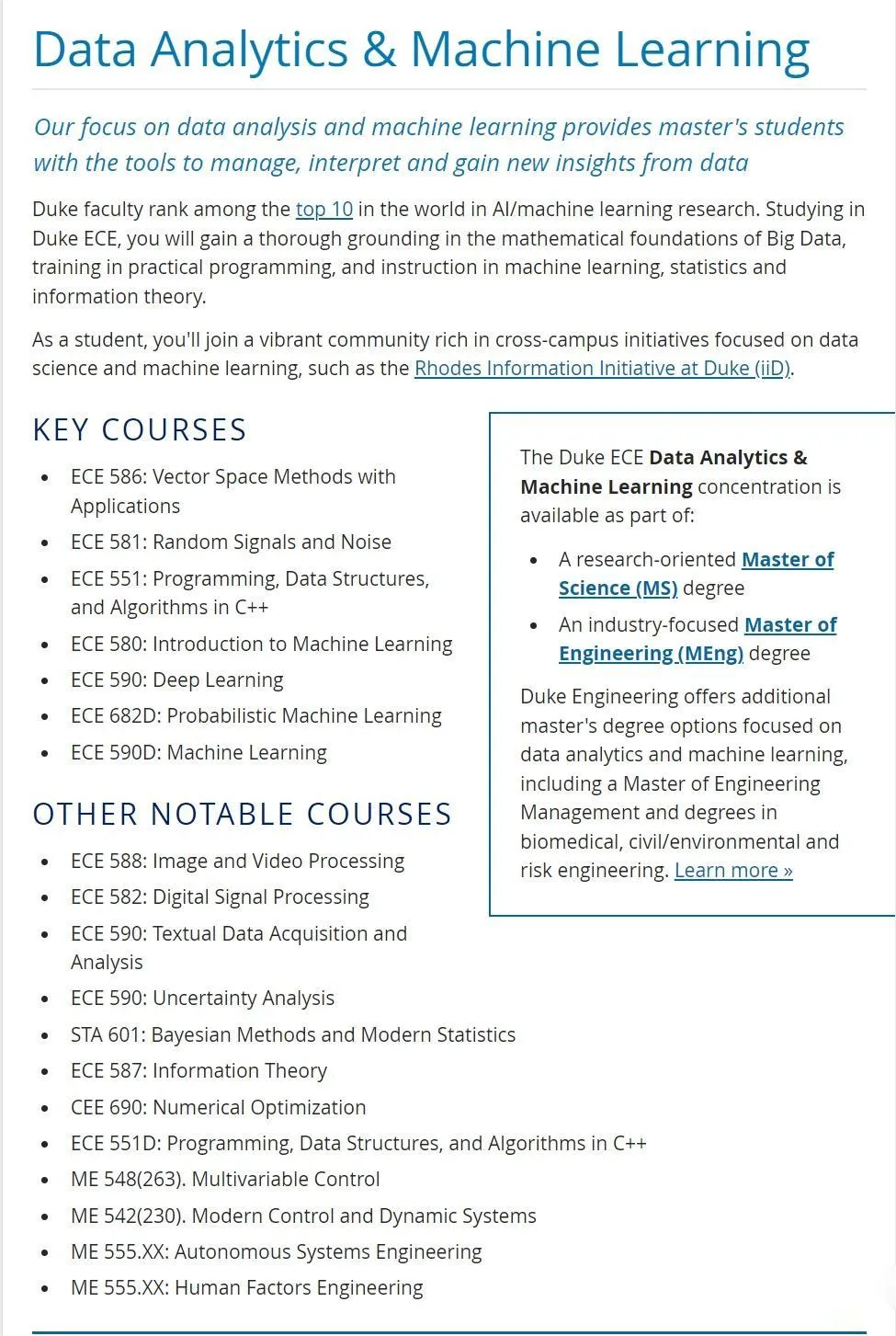
Let's focus on the courses in the software engineering and data analytics/machine learning tracks. These tracks include practical courses covering computer networks, algorithms, programming, etc. When choosing courses, if you want to study software engineering, you need to take software engineering courses in the first semester. If you take data science courses in the first semester, it will be very difficult to switch to software engineering courses in the second semester because you lack the prerequisite foundation. Unless you have strong software engineering skills and have taken advanced courses in your undergraduate studies, it is hard to switch mid-way. Therefore, when selecting courses, students need to carefully consider their interests and abilities to make appropriate choices.
Admission Requirements:
GPA: 3.7+
GRE: 325+
Language proficiency: TOEFL 100+ / IELTS 7+
Relevant internships, research, competitions, etc. are also a plus.
Careers:
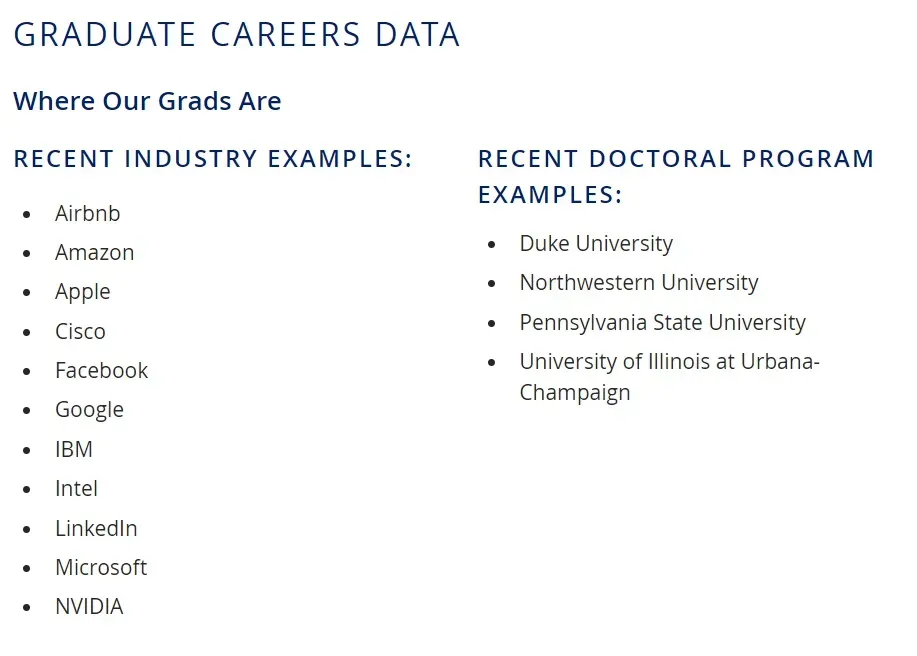
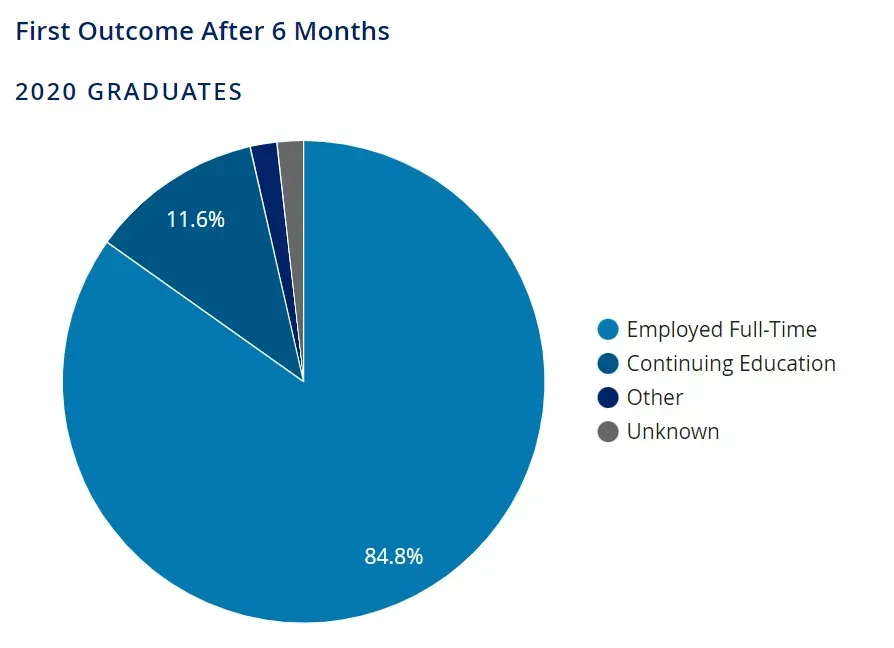
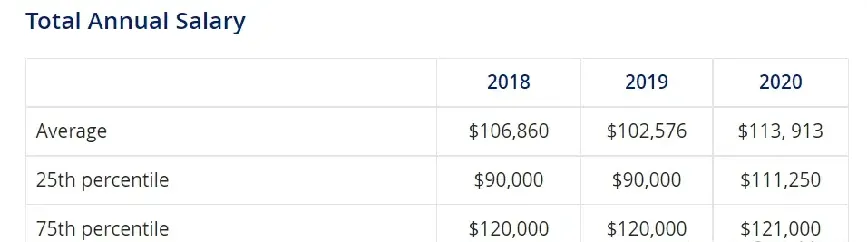
According to official data, graduates' employment outcomes are highly impressive. They have opportunities to work at well-known tech giants like Amazon, Apple, Google, Facebook, Microsoft, Nvidia, Intel, etc. Data shows that 84.8% of graduates successfully found full-time jobs, while 11.6% pursued further studies. It's also worth noting that the average salary from these opportunities exceeds $100,000. Each year, the College of Engineering hosts two large 'Tech Connect' events, which are the college's own career fairs, inviting hundreds of companies including major tech firms like Google, Facebook, Amazon, IBM, etc.
Cornell University - Electrical & Computer Engineering
https://www.ece.cornell.edu/ece/programs/graduate-programs
Cornell's ECE only offers the MEng degree, across two different campuses:
- The Ithaca campus offers diverse MEng programs that allow students to have personalized yet rigorous course selections, focusing on individual interdisciplinary research interests, with relatively higher pressure.
- The Cornell Tech campus in New York City offers an MEng program focused on digital technology with an emphasis on entrepreneurship. The program includes a series of studio courses for industry practice, and major companies like Google, Amazon, Facebook, Qualcomm, Verizon, The New York Times are located in New York, providing potential internship opportunities.
The ECE MEng at the Ithaca campus engineering college is typically the more mainstream choice, while the Cornell Tech campus mainly offers the Master of Engineering in Engineering Application under the College of Engineering.
Cornell ECE research is divided into 5 areas:
Computer EngineeringComputer Engineering
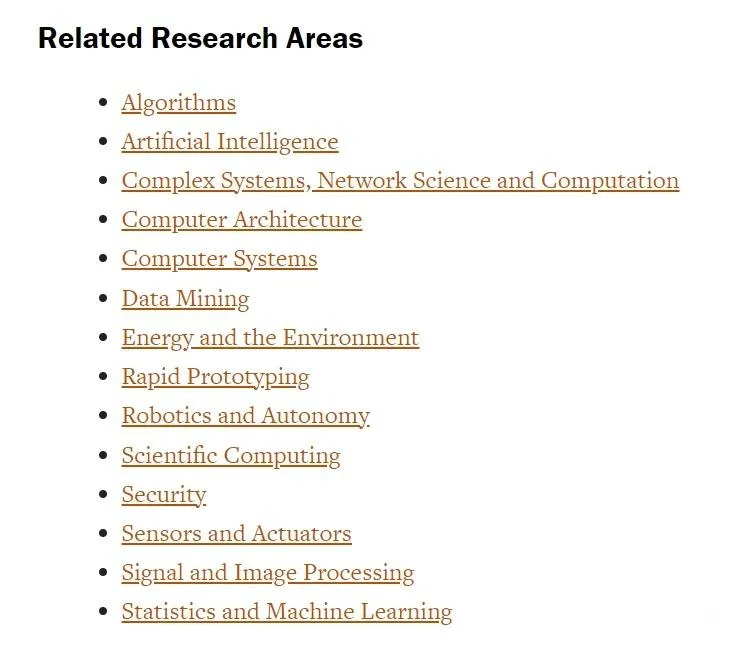
Computer engineering focuses on understanding and designing the hardware needed to perform computation, as well as the hardware-software interface. Teaching areas include digital logic and VLSI design, computer architecture and organization, embedded systems and IoT, virtualization and operating systems, code generation and optimization, computer networks and data centers, electronic design automation, or robotics.
Foundations of Information, Networks, and Decision SystemsFoundations of Information, Networks, and Decision Systems
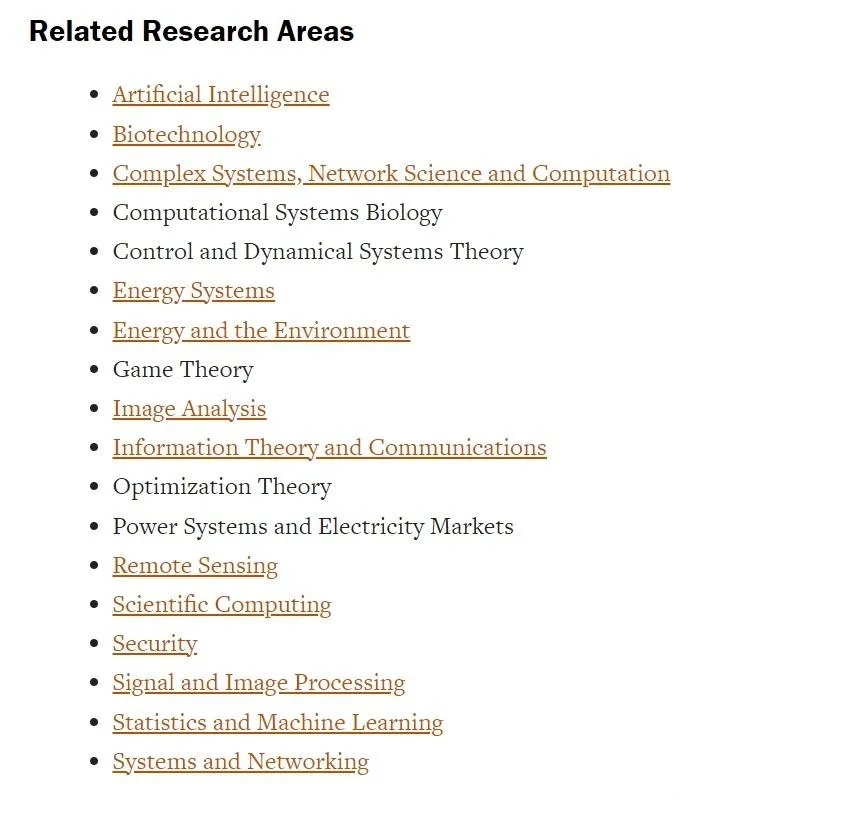
FIND research is at the forefront of applications, including network science and game theory, information theory and coding, machine learning and signal processing, optimization and control theory, power systems and electricity markets.
High Energy Density Plasma Physics, ElectromagneticsHigh Energy Density Plasma Physics, Electromagnetics
Electromagnetics involves various applications of electromagnetic wave propagation and other time-varying phenomena in the presence of electric and magnetic fields. Plasma science involves the interaction of large numbers of charged particles with electric and magnetic fields, from the surface of the sun to the inside of fluorescent light bulbs.

Solid State, Electronics, Optoelectronics, MEMsSolid State, Electronics, Optoelectronics, MEMs
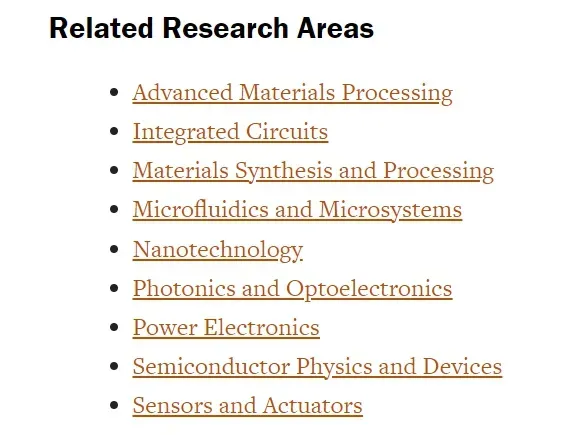
Over the past few decades, solid-state devices, integrated circuits, optical devices, and MEMS have brought about tremendous changes in high-performance electronics, enabling complex computer chips, optical communications, integrated sensors, and systems to be miniaturized to the point of implantation and/or seamless integration into the environment.
Bio-Electrical EngineeringBio-Electrical Engineering
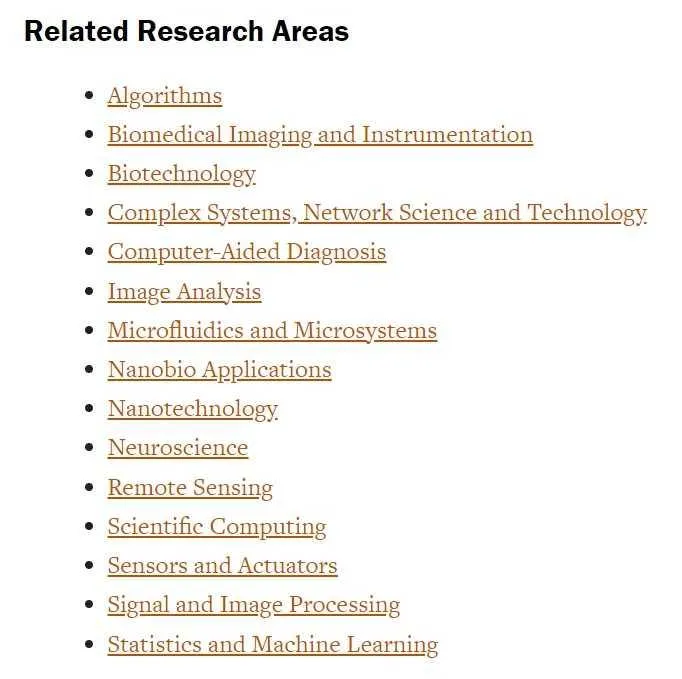
Bio and Biomedical Electrical Engineering (B2E2) includes applied and fundamental work to understand the complexity of biological systems at different levels, training students to develop new hardware and computational tools for identifying, characterizing, and treating diseases. In the physical domain, electrical engineering approaches to integrated microsystems have led to new biological and medical sensors. These sensors consist of state-of-the-art ultrasonic, radio frequency, optical, MRI, CT, and electrical impedance sensors, and the well-known endoscope in the medical field incorporates these principles.
Admission Requirements:
GPA: 3.7+
GRE: Not required, but admitted students typically achieve 325+
Language proficiency: TOEFL 100+ / IELTS 7+
Background: The official website requires a background with a bachelor's degree in engineering or science. The Cornell Tech campus even specifically requires an academic background in electrical and computer engineering, mechanical engineering, computer science, physics, applied mathematics, or a related technical field, and students should have coursework in linear algebra, signals and systems, scientific programming, probability and statistics.
Careers:
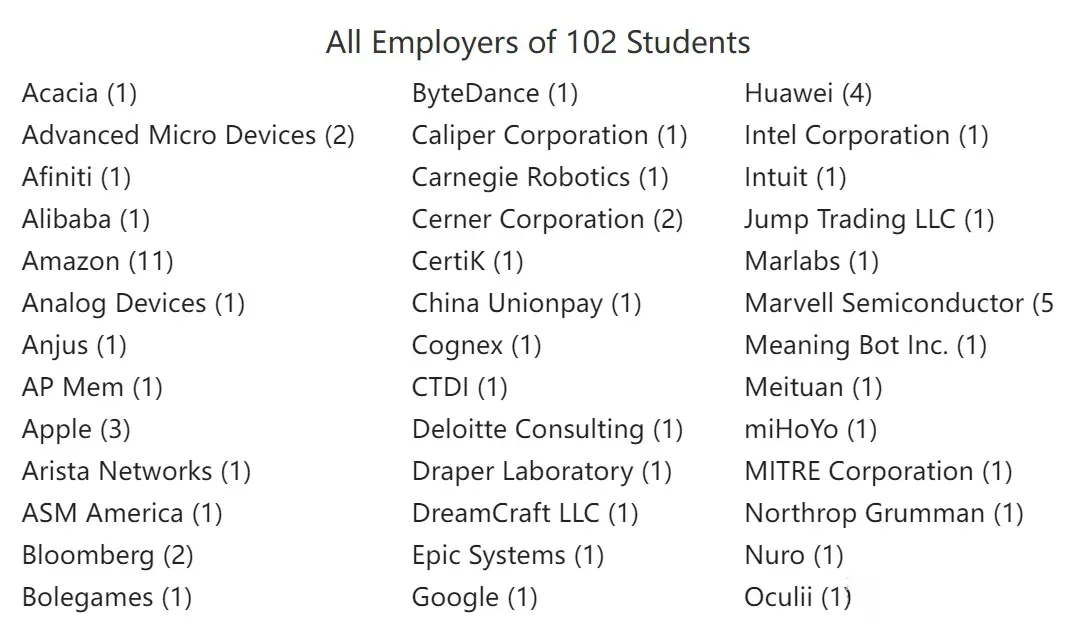
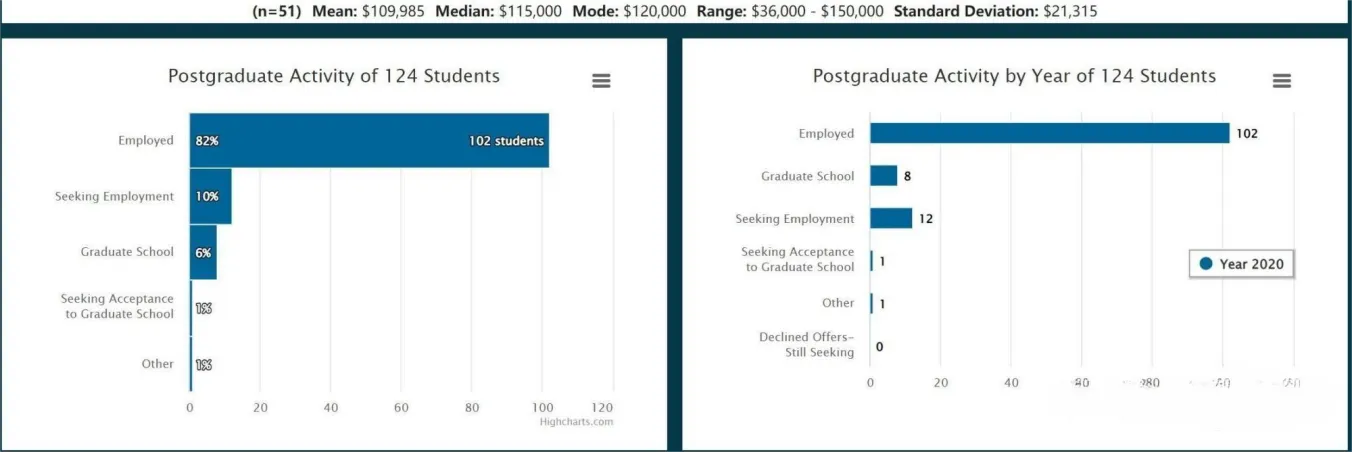
From the official data above, it's easy to see that Amazon, Apple, ByteDance, Google, Huawei, Deloitte, Intel, etc. are the main destinations for graduates, with average salaries also exceeding $100,000, and a high employment rate reaching 82%.
In summary, Duke's ECE is more suitable for career changers to software, while Cornell is more suitable for students interested in developing in the electronics field. Beyond the curriculum and career prospects mentioned, Cornell's ECE program is ranked in the top 10 in the US, showing high professional recognition, and with its Ivy League halo, its alumni resources are extremely rich. However, Cornell's MEng typically lasts only two semesters, making immediate employment after graduation somewhat rushed, and balancing coding practice, internships, and academics can be highly stressful. Duke's ECE program has a more reasonable timeline (1.5 to 2 years), which is friendlier for students who want to first find an internship and then get a return offer.
For more students interested in ECE/EE, scan the CheersYou(清柚教育) QR code below to consult a CheersYou(清柚教育) advisor~