
Top UK business schools, such as those of the G5 universities, the University of Manchester, the University of Warwick, and others, are fiercely sought-after by international students year after year. UK master's programs in business cover a wide range of fields, including finance, accounting, management, business analytics, and more. Each individual program is designed to cultivate business talent in different aspects, helping diverse student groups enhance their employment skills. This article aims to provide comprehensive information about UK business programs to help students make informed choices. For further inquiries, you can add CheersYou(清柚教育) consultant: qingyouge23 for detailed information!

1. Finance-Related
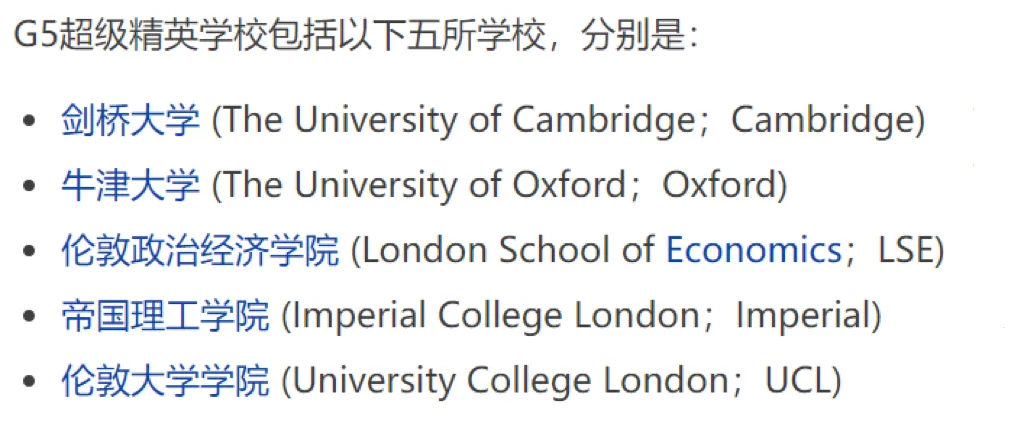
UK master's programs in business span a wide range of fields, with finance-related majors being the most sought-after. Every year, numerous students compete to apply to the business schools of the G5, Manchester, Warwick, and others.
UK finance programs are meticulously divided, covering both primary and secondary markets and their branches, such as:
- Finance
- Finance Analysis
- Finance and Risk Management
- Finance and Investment
- Banking and Finance
- Real Estate Finance
- Financial Mathematics
Some students wonder why there are so many separate programs. This is because UK taught master's programs last only one year, and the course pace is intensive. Considering that the purpose of pursuing a master's is to achieve good career development afterward, a single generic MSc Finance program cannot meet the needs of different groups for enhancing employment skills. To address this, various specialized tracks have been established.

For example, if you aim to develop in the fields of financial investment, wealth management, or securities, then choosing the Finance and Investment program will be most suitable for you, covering subjects such as risk management, securities management, global financial systems, and econometrics.
If your career goal is to become a financial engineer, working in product modeling and pricing and the like, you can opt for Financial Mathematics types of programs, which are often jointly taught by the business school, mathematics school, or engineering school.
2. Accounting-Related
Accounting programs are typically divided into several categories, such as:
- MSc Accounting
- MSc Accounting and Finance
- MSc Accounting, Organization and Institutions
- MSc Law and Accounting
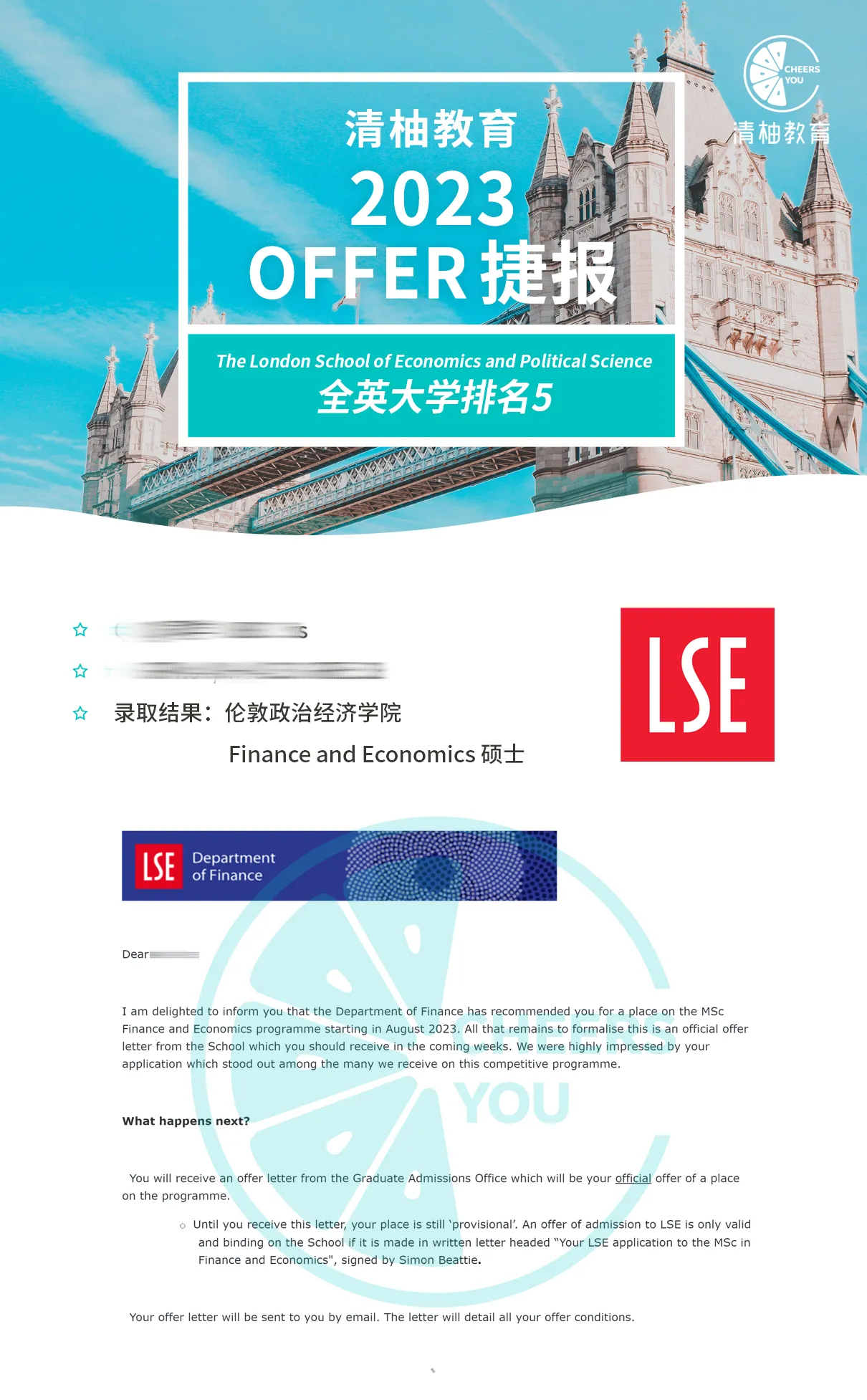
Taking the London School of Economics and Political Science (LSE) as an example, the Accounting and Finance program tends to admit students with a Finance background. Although the program name includes “Accounting,” the curriculum is primarily finance-oriented, requiring students to have a quantitative background and strong mathematical ability.
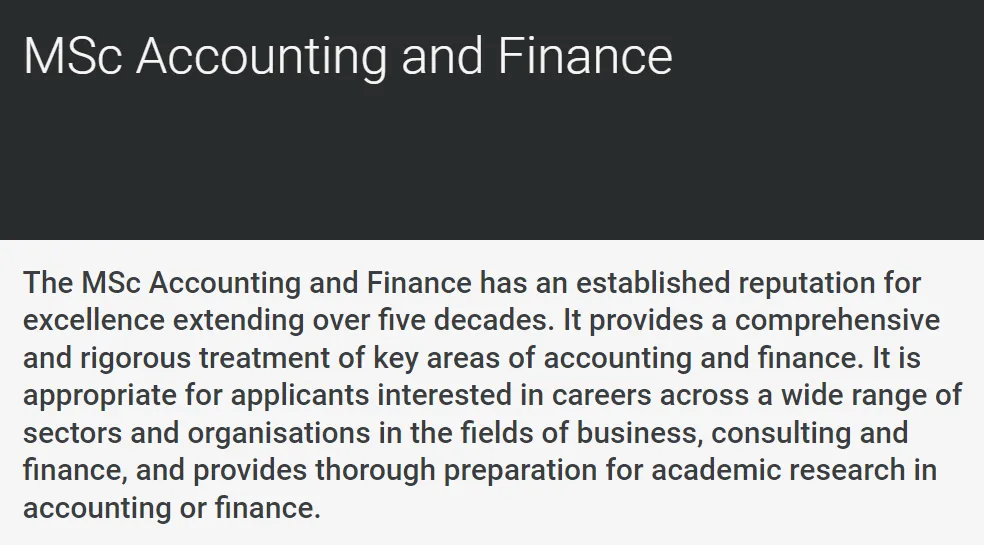
The University of Manchester’s Masters (MSc) in Accounting and Finance is a CFA-recognized program. Although it does not explicitly require a quantitative background, many students are rejected due to insufficient mathematical background.

Generally, Accounting, Organization and Institutions tends to admit students without a business background, while Law and Accounting is more inclined to admit students who studied law at the undergraduate level. However, for those with an undergraduate degree in accounting, don’t feel lost; you can consider developing towards an MSc Accounting, MSc Finance, or management direction.

3. Management-Related
Management-related majors account for more than half of UK business schools, including:
- Management
- International Management
- Human Resource Management
- Supply Chain Management
- Logistic Management
- Marketing

Most management programs are open to students with no background or a mathematical background. For students from other disciplines looking to transition to business studies, management programs are the best choice. The specific program selection needs to be analyzed in combination with the undergraduate background and interests.

4. Business Analytics
Business analytics is one of the most popular majors receiving wide attention. There are relatively few business analytics programs in the UK; universities like Oxford and Cambridge do not offer such programs. The London School of Economics (LSE) does not have a business analytics program, but its Department of Statistics offers an operations research program similar to business analytics.
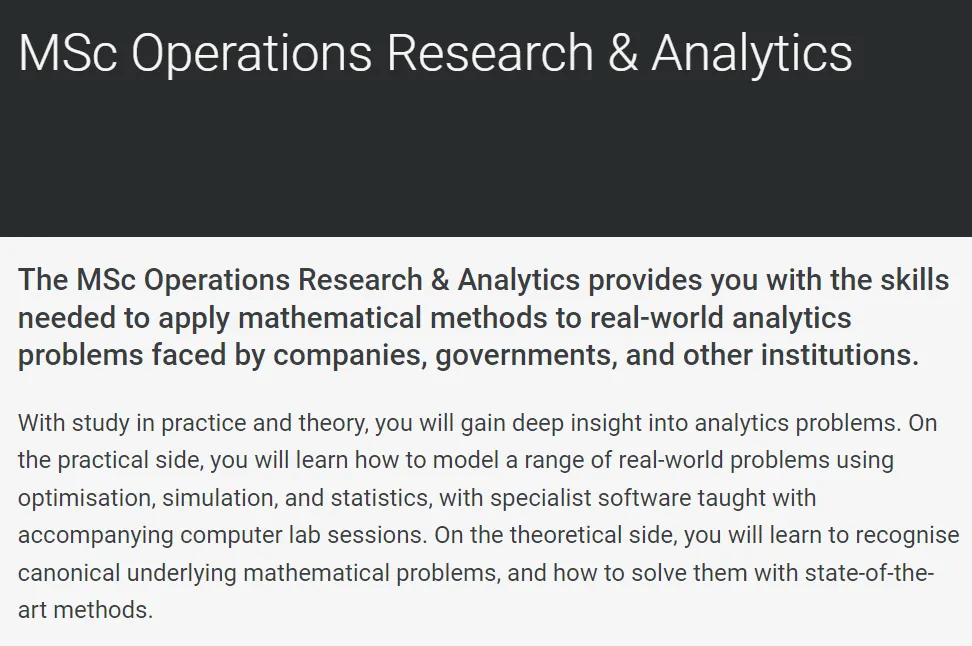
Universities like Imperial College London (IC), University College London (UCL), the University of Manchester, the University of Warwick, and the University of Nottingham offer relevant programs, each with a different focus.
The BA programs at IC and UCL are relatively inclined towards students with an engineering background, because BA itself is a combination of statistics, computer science, and business. The curriculum at these two schools is heavily CS-oriented, which may not be very friendly for business background students in admissions. In contrast, Warwick's BA program is more inclined towards students with a business background, with a curriculum that is not overly difficult; it teaches the programming languages and some data processing methods required for business analytics.

In summary, when considering program selection, you should comprehensively evaluate your undergraduate background, personal interests, and career development goals to choose the most suitable program. Strive to gain admission to a reputable university, then make every effort to enhance your employment skills; this way, both job prospects and starting salaries will be more favorable. For more school selection advice and application questions, feel free to scan the QR code below to consult~