The strong business schools in the UK can be distinguished by their overall rankings and subject reputations. Here, we introduce the business programmes and application requirements of University College London (UCL), King's College London (KCL), University of Manchester, and University of Warwick. By reading this article, applicants will gain a better understanding of these schools' business programmes and requirements, preparing them for admission opportunities. For more information, add CheersYou(清柚教育) advisor: qingyouge23 for details!

UK business schools can be categorised into distinct tiers. Here, the top UK business schools are divided into four tiers, with University College London (UCL), King's College London (KCL), University of Manchester, and University of Warwick placed in the third tier. Their business programmes enjoy global recognition, attracting outstanding students from around the world. By studying business at these schools, students will receive an excellent education and access broad career opportunities.
First-tier university analysis:
.png?x-oss-process=style/opt-webp)
Second-tier university analysis:
.png?x-oss-process=style/opt-webp)
Fourth-tier university analysis:
.png?x-oss-process=style/opt-webp)
T3: University College London (UCL), King's College London (KCL), University of Manchester, University of Warwick
University College London (UCL)
UCL excels in overall rankings, with business programmes housed within the Department of Economics, School of Management, and other faculties. Its prime location gives business graduates high recognition for employment both locally and back home. UCL's Economics (Econ) programme is particularly strong, ranking highly in the REF, just behind LSE and Oxford. If students plan to pursue a PhD in Economics, UCL Econ can serve as a good stepping stone.
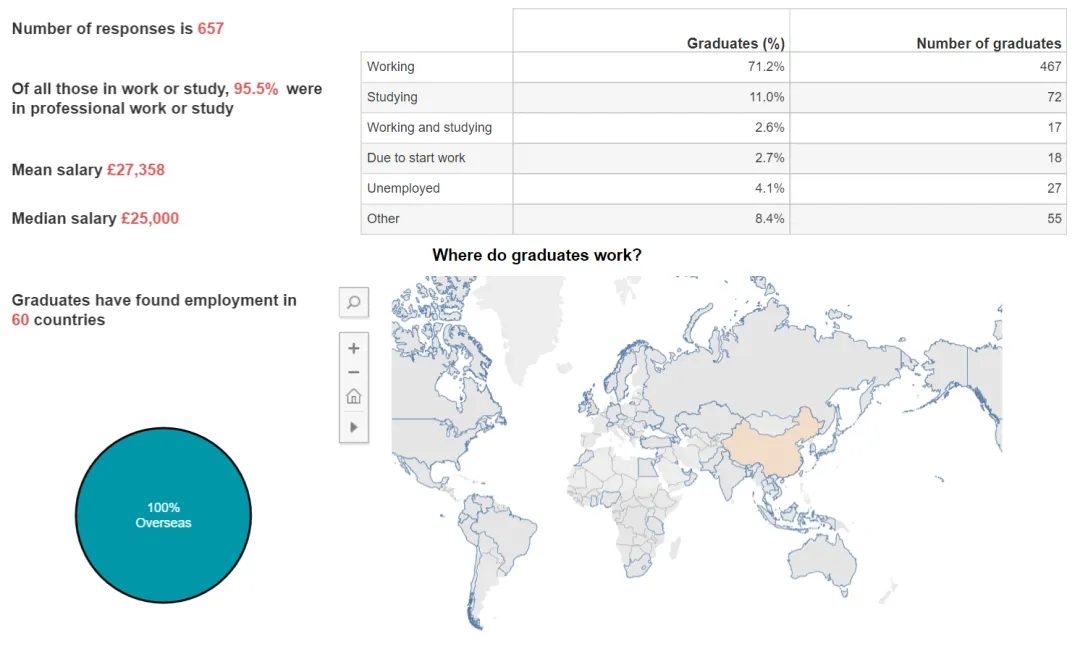
Approximately 23% of Chinese students completing a business master's at UCL stay to work in the UK, while 76% return to China for development, with an average salary of £27,000.
Application advice:
Generally, UCL only admits students from 985/211 institutions, with a recommended GPA of 85+. The overall IELTS score should be at least 7.0, with no sub-score below 6.5. For applicants from non-prestigious universities, the requirements are higher; a GPA of 90+ is recommended.
King's College London (KCL)
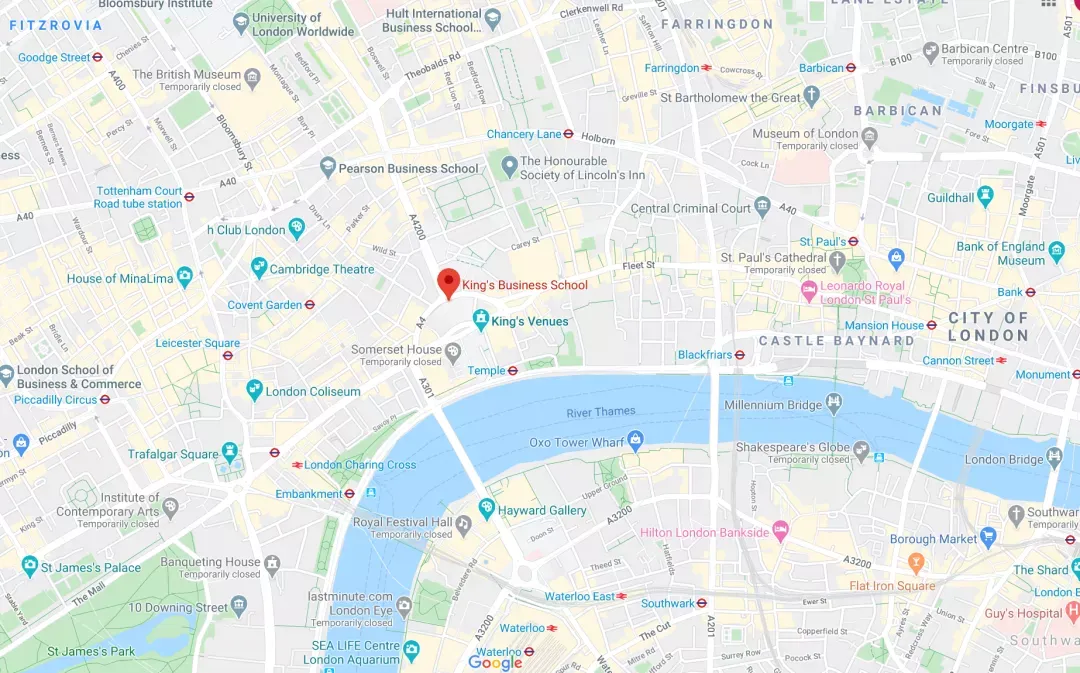
Although KCL is not part of the G5, it is one of the most difficult business schools to gain admission to in the UK. Its programmes in Economics, Management, and Marketing are highly regarded. Located between the London Eye and the City of London, the school is housed in the iconic Bush House, once the BBC's broadcasting centre where Churchill delivered speeches. The area is surrounded by countless prestigious companies such as PwC, IBM, Deloitte, McKinsey, and J.P. Morgan, offering rich business resources.
In 2019, KCL launched the Finance Analytics MSc, a fintech master's programme suitable for students with strong quantitative backgrounds who wish to learn cutting-edge analytical techniques such as big data analysis, fintech analytics, machine trading, and business risk analysis to enter the finance sector.
Application advice:
KCL tends to admit students from 985/211 universities with a GPA of 90+ and IELTS 7.0+. The criteria for non-prestigious university applicants are even stricter.
University of Manchester
Manchester Business School has a long history and is one of the two oldest business schools in the UK. The city of Manchester is the second busiest in the UK, offering convenient living, and is often called "South London, North Manchester." The University of Manchester has the largest Chinese student population in Europe; among its more than 40,000 students, about one in eight is Chinese, mainly concentrated in Accounting and Finance, Economics, and Electrical Engineering programmes.
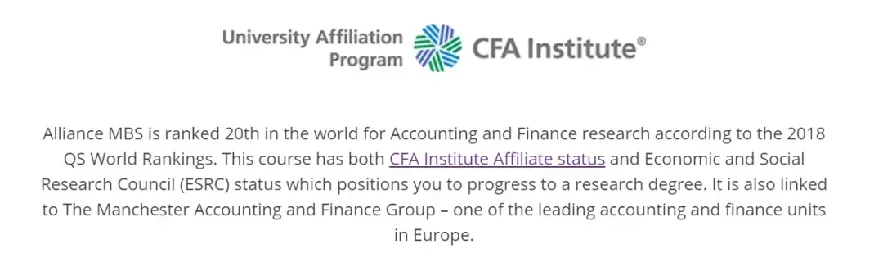
Manchester is a Chartered Financial Analyst (CFA) programme partner, and its MSc Accounting and Finance programme received the highest rating in the UK's Research Assessment Exercise (RAE). Compared with standalone Accounting or Finance programmes, Accounting and Finance offers a wider range of optional courses.
Application advice:
Manchester prefers to admit students from 211 institutions with a GPA of 80+, but also accepts strong applicants from non-prestigious universities. The overall IELTS score should be at least 7.0, with writing no less than 6.5 and other components no less than 6.0. Some programmes require a GMAT score.
University of Warwick
Located in Coventry, Warwick Business School (WBS) was the first UK business school to achieve "Triple Accreditation." Its business programmes consistently rank among the top five in the UK, and WBS is one of six UK institutions targeted by bulge bracket investment banks, alongside Oxford, Cambridge, LSE, Imperial College, and UCL.

Competition at WBS is fierce, with Management and Finance programmes being particularly hard to get into. Marketing and Human Resource Management have slightly lower competition, with acceptance rates of 46% and 49% respectively. It is important to note that the Economics programme is not hosted within WBS.
WBS's strong programmes include:
- MSc Economics
- MSc Finance
- MSc Business Analytics
- MSc Accounting and Finance
- MSc Finance and Economics
Application advice:
Warwick generally only admits students from 985/211 universities, requiring a GPA of no less than 85. The overall IELTS score should be at least 7.0, with two components no lower than 6.0/6.5 and the other two no lower than 7.0. A GMAT score of 700+ is recommended for some programmes. Applicants from non-prestigious universities are not accepted.
For more school selection advice and application queries, feel free to scan the QR code below to consult~