
Recently, the news of a Duke undergraduate donating $1 million to the school sparked discussion.
The reason for the donation was refreshingly simple:
The student had such a great experience doing research with a professor that she asked her parents to send $1 million.

An average person who enjoys a course might give the professor a 5-star rating on Rate My Professor.
A wealthy person who enjoys a course simply has their parents tip the school $1 million.
.png)
Duke Undergrad Donates $1 Million to the School
Shannon is a Duke undergrad majoring in neuroscience, with minors in global health and chemistry.
She says that during her studies at Duke, Professor White provided meticulous support—not only helping her explore her interests but also guiding her into a top lab that rarely accepts undergraduates.
Because of their daughter's outstanding experience, Shannon's parents donated $1 million—$500,000 in expendable funds and $500,000 in endowment—to Duke's Department of Psychology and Neuroscience, supporting neuroscience research, lab renovations, and faculty enhancement.
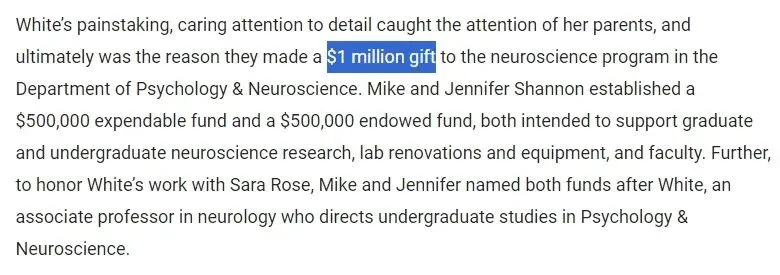
Shannon's parents explained two main reasons for the gift: their daughter's Duke research experience solidified her decision to apply to medical school, and the funds could support research into neurological diseases that their family cares about.
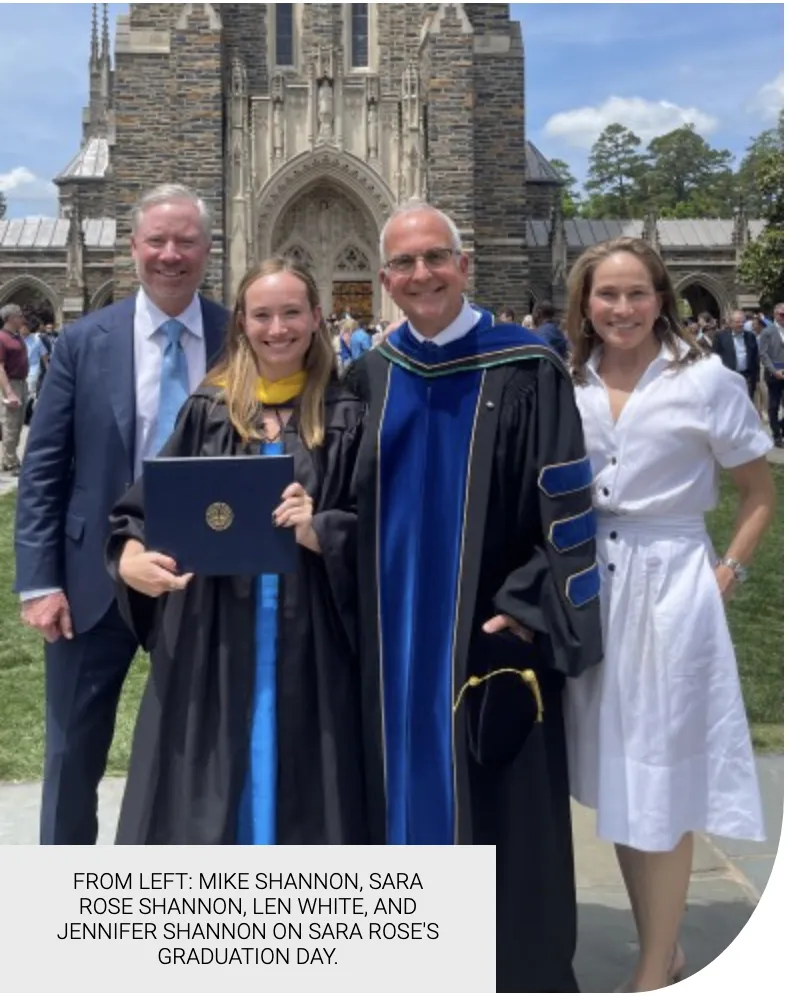
Shannon wanted to join a Duke lab—Professor White arranged admission immediately. She wanted to apply to Columbia for grad school—the professor instantly mobilized connections, crafting essays and arranging mock interviews.
It feels like being a professor at a private university is not much different from being a bank's relationship manager.
To express heartfelt thanks, Shannon's parents named both funds after Professor White.
The professor's reaction was basically: Thanks for the lab upgrade, benefactor.
Perhaps that's just the nonchalance of old money.
If they fancy a project, they just fund their own mentor—truly a "heiress brings her own resources" scenario.

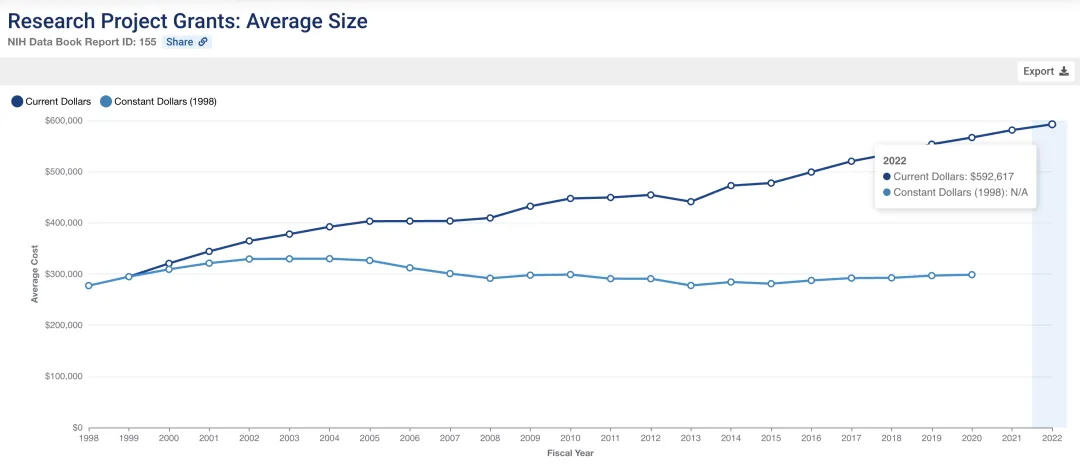
Netizens ended up debating whether $1 million is actually a lot 😅 Actually, $500,000 is more than enough for a typical lab project.

After all, the average U.S. medical research donation is just over $500,000 👇
And money aside, Shannon herself is outstanding. She attended The Spence School, a top private all-girls high school, then Duke for undergrad, and is now a grad student at Columbia.
While being exceptional on her own, she also contributes resources—the university's reaction: We'll take a dozen more students like this, please.

The Extravagant Donations of the Wealthy to Universities
When rich people donate to schools, they really go big. And the reasons are incredibly casual.
Daughter finds something interesting—donate. Alma mater anniversary—donate. Wife is doing research—donate...
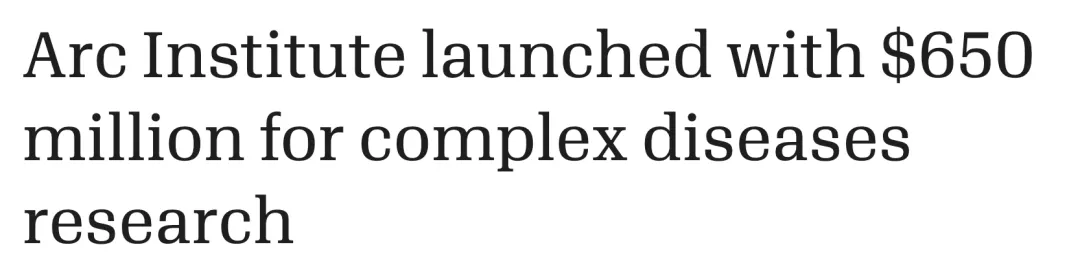
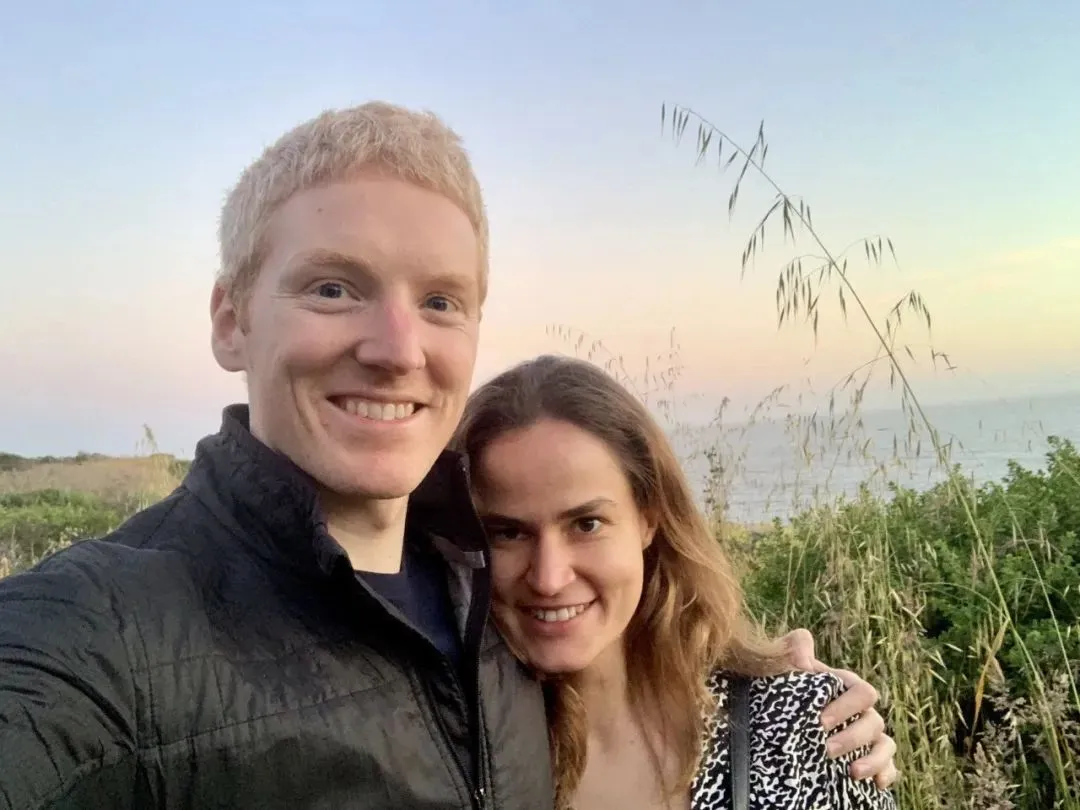
Remember that tycoon who spent $650 million to found a research institute for his wife? She was a Stanford academic who essentially achieved scholarly freedom.
Those multi-billion-dollar endowments at top U.S. universities are indeed built on such largesse. Examples of big donors naming buildings and sponsoring research are everywhere.

Johns Hopkins University
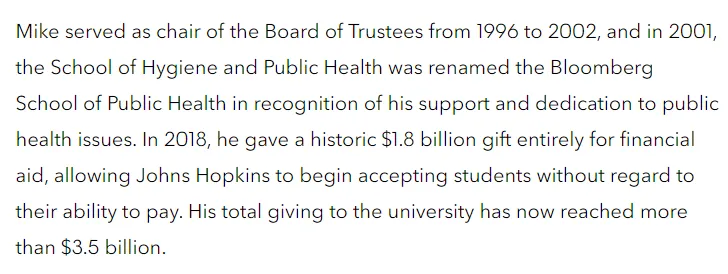
The Bloomberg School of Public Health at Johns Hopkins is named after business magnate Michael Bloomberg.
Since 2001, Bloomberg has donated over $3.5 billion to JHU, including a record $1.8 billion gift in 2018.
Harvard University
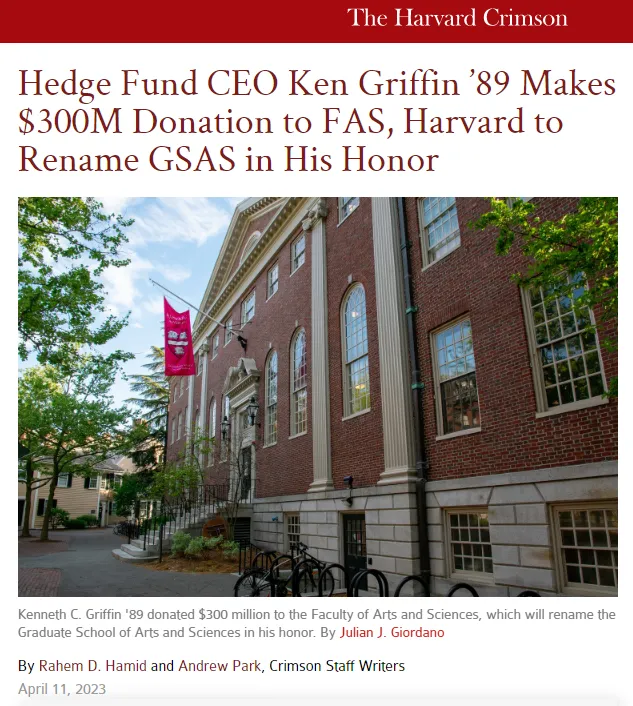
Harvard Griffin GSAS (Graduate School of Arts and Sciences) is named after Ken Griffin, who donated $300 million to GSAS earlier this year.
Griffin has now donated over $500 million to his alma mater, becoming the fourth donor in Harvard's history to have a school named after him.
New York University
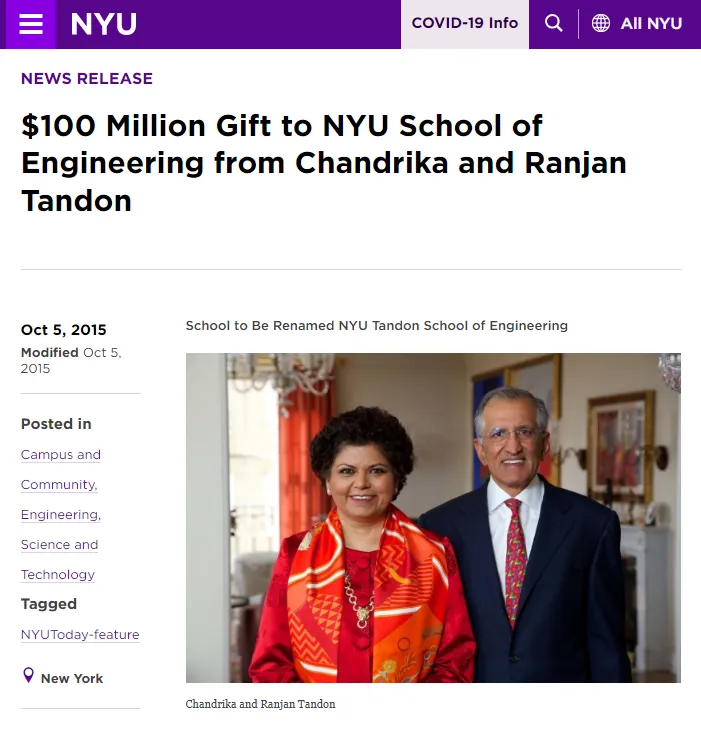
NYU Tandon School of Engineering is named after Chandrika and Ranjan Tandon, who donated $100 million in 2015 to support academic innovation and entrepreneurship.
Emory University
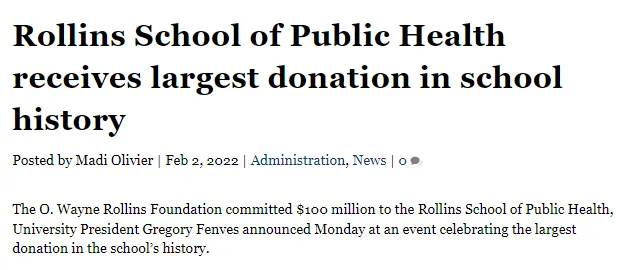
The Rollins School of Public Health at Emory is named after the Rollins family, who have donated over $125 million since 1992, including a $100 million gift last year.
University of Michigan
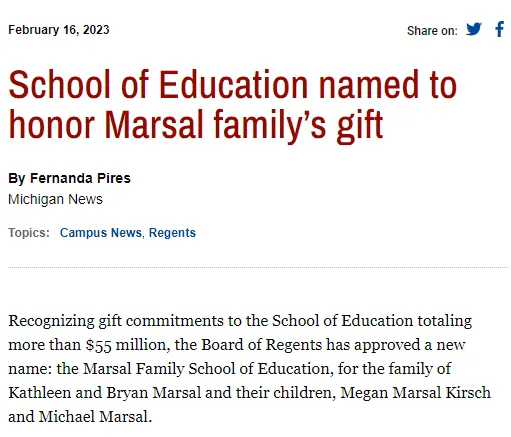
The Marsal Family School of Education at Michigan is named after the Marsal family, who have donated $55 million to date, including a $50 million gift in February.
Boston University
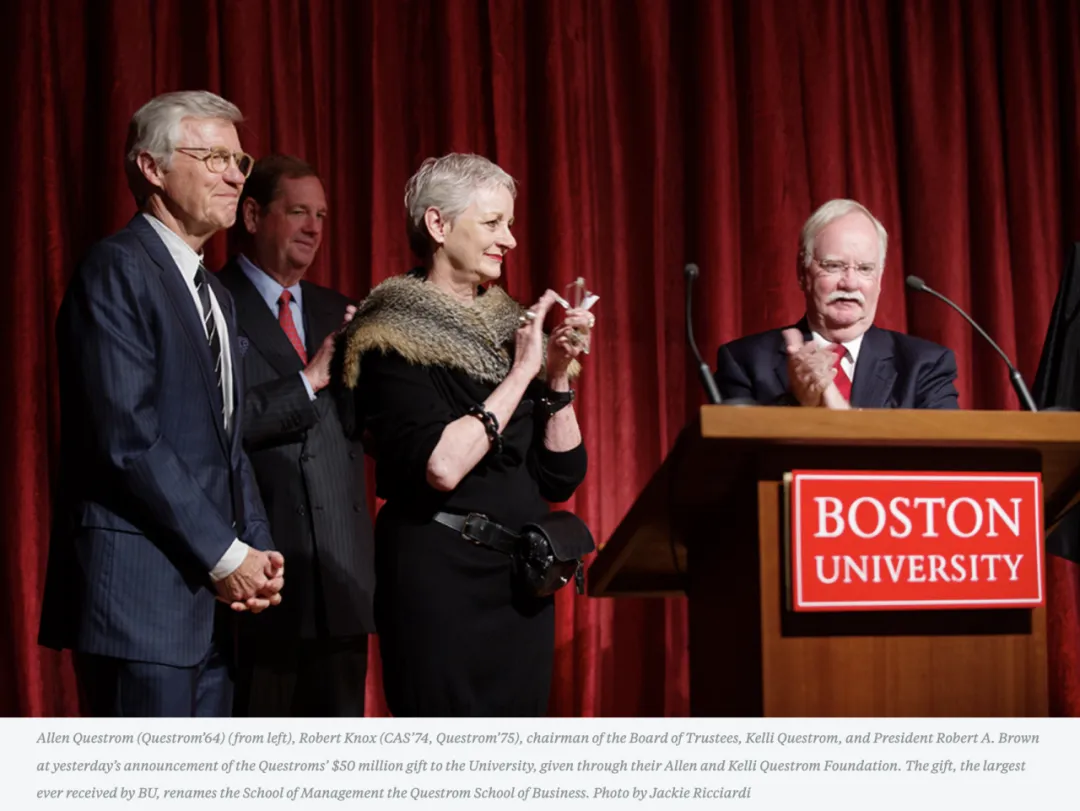
BU's Questrom School of Business is named after Allen and Kelli Questrom, who donated $50 million in 2015—the largest single gift in BU history.
University of Pennsylvania
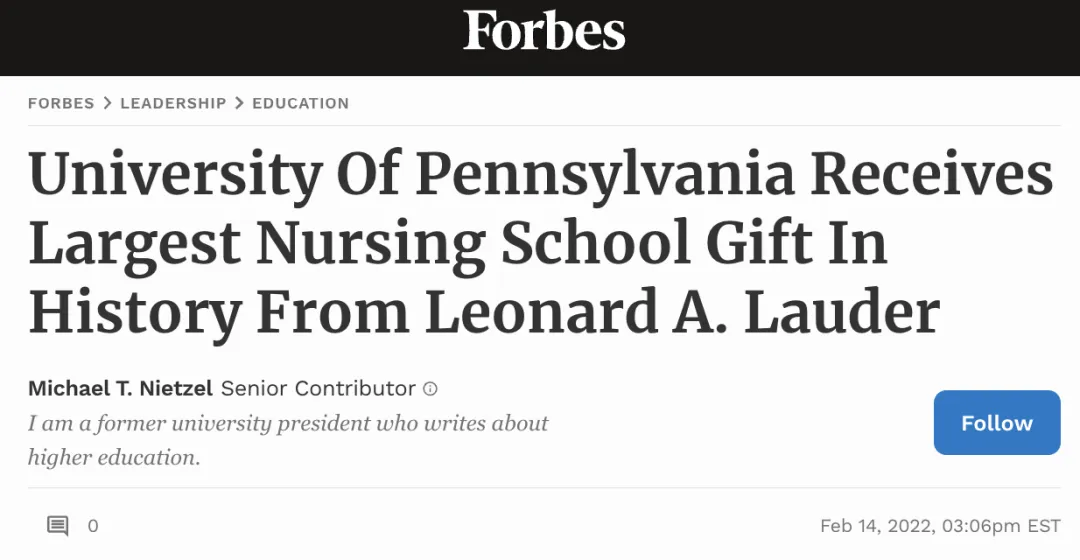
Last year, Leonard A. Lauder, chairman emeritus of Estée Lauder, donated $125 million to Penn to establish a nurse practitioner program—the largest donation ever to a U.S. nursing school.
University of California, Irvine
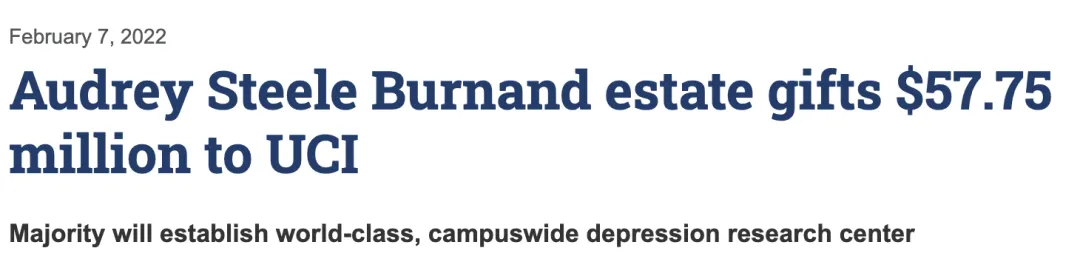
Last year, the Audrey Steele Burnand estate donated $57.75 million to UCI, primarily for research into the causes and treatment of depression—the largest charitable gift for depression research at a U.S. university.
Virginia Commonwealth University
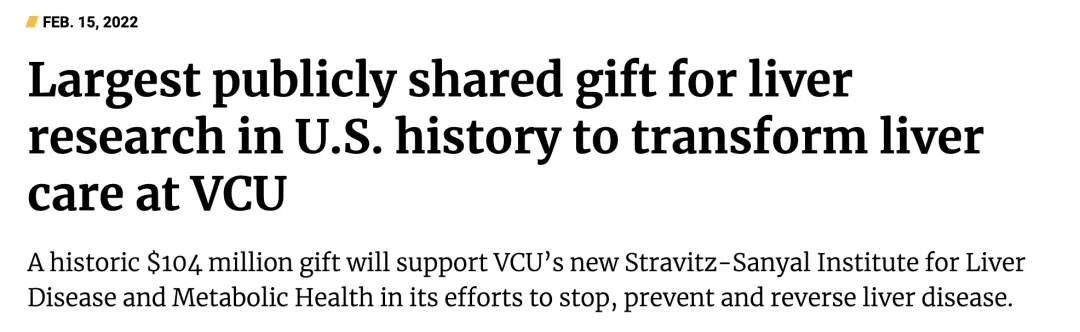
R. Todd Stravitz and his family foundation donated $104 million to VCU last year—the largest single donation for liver research in U.S. history.
University Donations: Elite Tradition or Backdoor for the Wealthy?
In American elite culture, donations circulate like blood, always flowing in some form.
Top-tier universities rely on strong financial support for academic research, faculty, student bodies, campus facilities, and abundant resources, and endowments are a crucial funding source—typically 30-40% of a private university's revenue comes from donations.
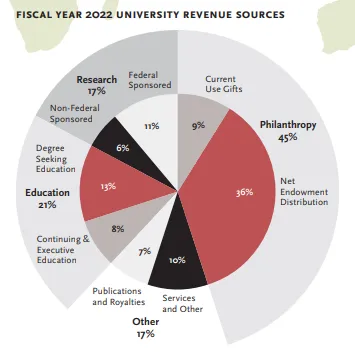
This allows top U.S. universities to amass richer resources, attracting even more donations and top students, creating a virtuous cycle that further widens the gap between elite schools and average universities.
However, the side effects of this corporate-style operation are also evident.
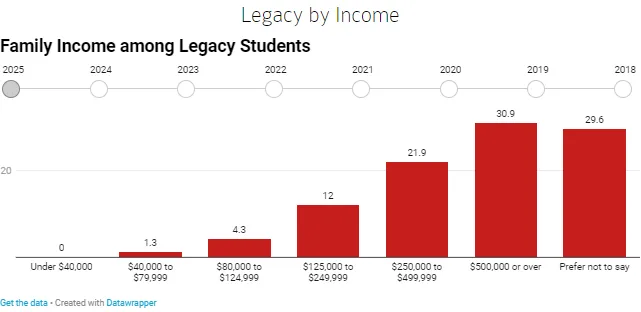
Ultra-wealthy donors can boost their children's chances of admission—effectively a guaranteed acceptance—by funding buildings.
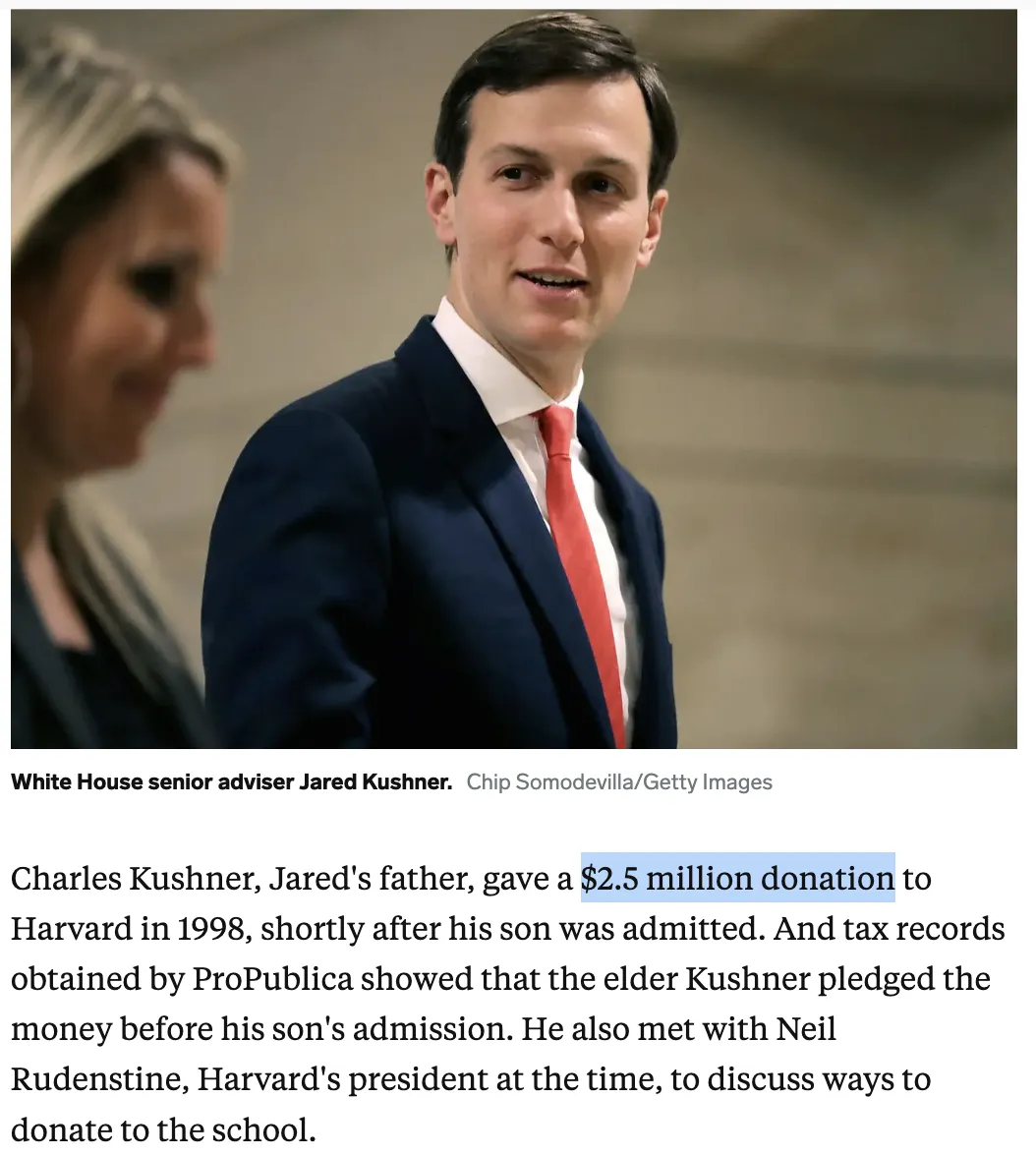
For instance, Jared Kushner, son-in-law of former President Trump, gained Harvard admission the year after his father donated $2.5 million.
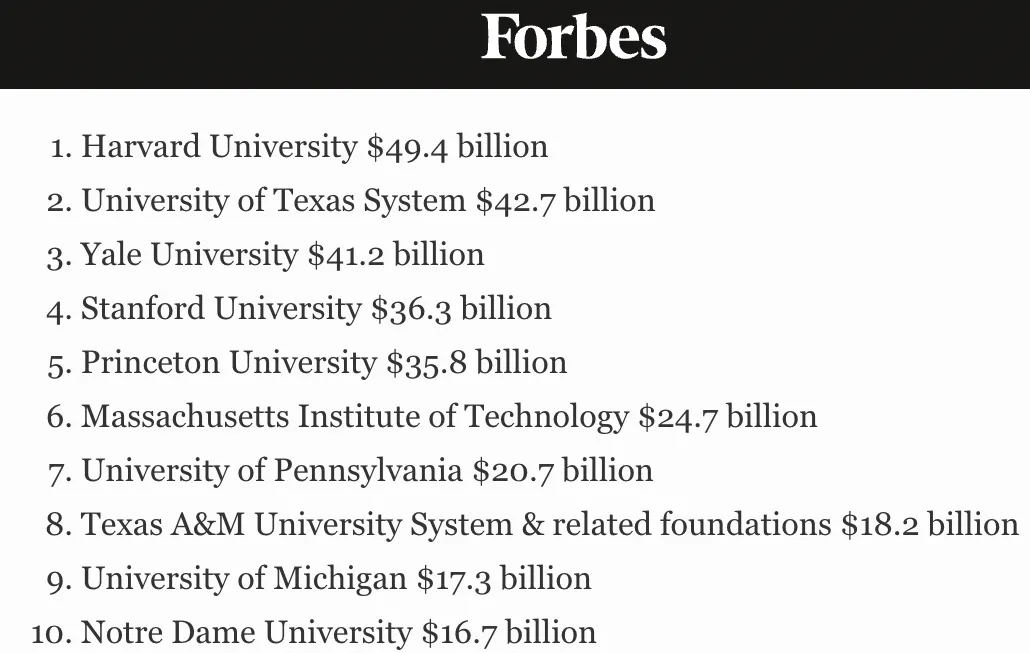
Thanks to alumni and social donations, some universities possess wealth rivaling nations. In 2022, Harvard's endowment totaled $49.4 billion.
Resources always flow toward those who already have them.
While ordinary people struggle to gain admission to elite schools, the wealthy have multiple paths.
Donations, legacy preferences, athletic recruiting... these "backdoors" into top U.S. colleges are unspoken rules everyone knows.
The "2019 U.S. College Admissions Scandal" that shocked the world laid bare the brutal truth of elite admissions.
According to U.S. prosecutors, mastermind William Singer accepted huge bribes and used fraud, cheating, and other illegal means to place 33 children of politicians and celebrities into top universities, involving $25 million.
With sky-high entry tickets, these children of privilege walked easily into elite schools.
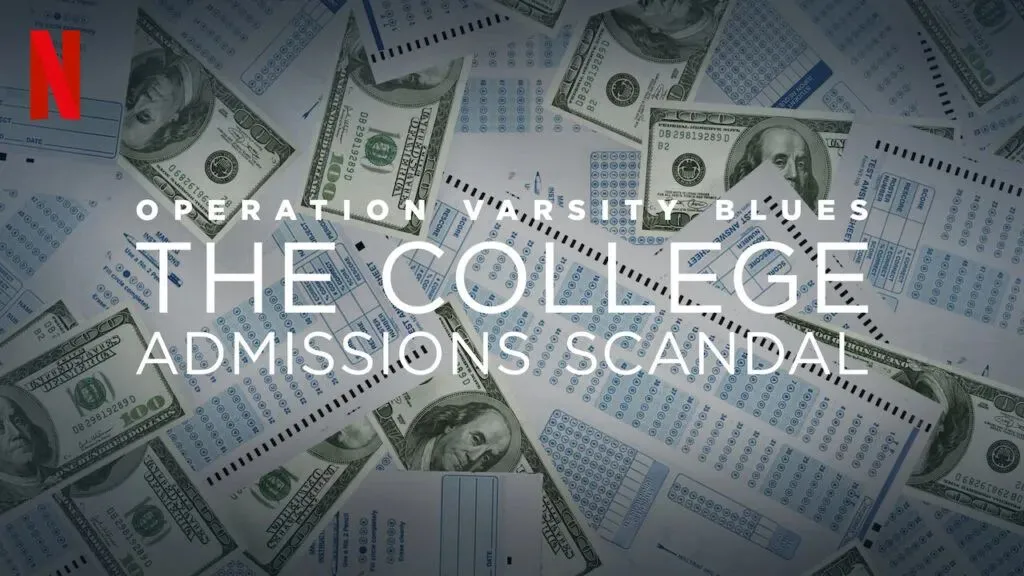
In early 2021, the documentary "Operation Varsity Blues: The College Admissions Scandal" based on this event was released on Netflix, once again exposing an inescapable scar in American higher education.
For elite universities, balancing resource optimization with educational equity remains a long road.
For universities, certain research fields require long research cycles and enormous capital and human investment—such as biology and healthcare—which genuinely need support from alumni or outside sources.
When big donors contribute, ordinary folks like us can just watch the show. If we get to benefit from donated resources, we should make full use of them and help maximize their value.
Of course, when money causes educational inequities, we must also speak up and fight for our rights, never letting money turn education on its head.