
When it comes to Carnegie Mellon University, there’s probably no computer science student who hasn’t heard of it—it can even be said to be the dream school for most CS students. After all, in terms of both academic strength and program rankings, CMU is undoubtedly top-tier. Even on the QS ranking, which has a slight bias against American universities, CMU’s computer science program ranks fifth in the world; and on the Graduate Schools CS ranking, CMU is fourth in the U.S., just behind the tied first-place Stanford, MIT, and Berkeley. So the strength of CMU’s graduate school is not to be underestimated.
But rankings alone cannot measure a school’s strength. The institution’s emphasis on academic education and the supporting facilities are all factors to consider when choosing. In this regard, CMU is second to none. Most schools have only a single department in CS, while CMU has an entire School of Computer Science, demonstrating its high level of commitment.
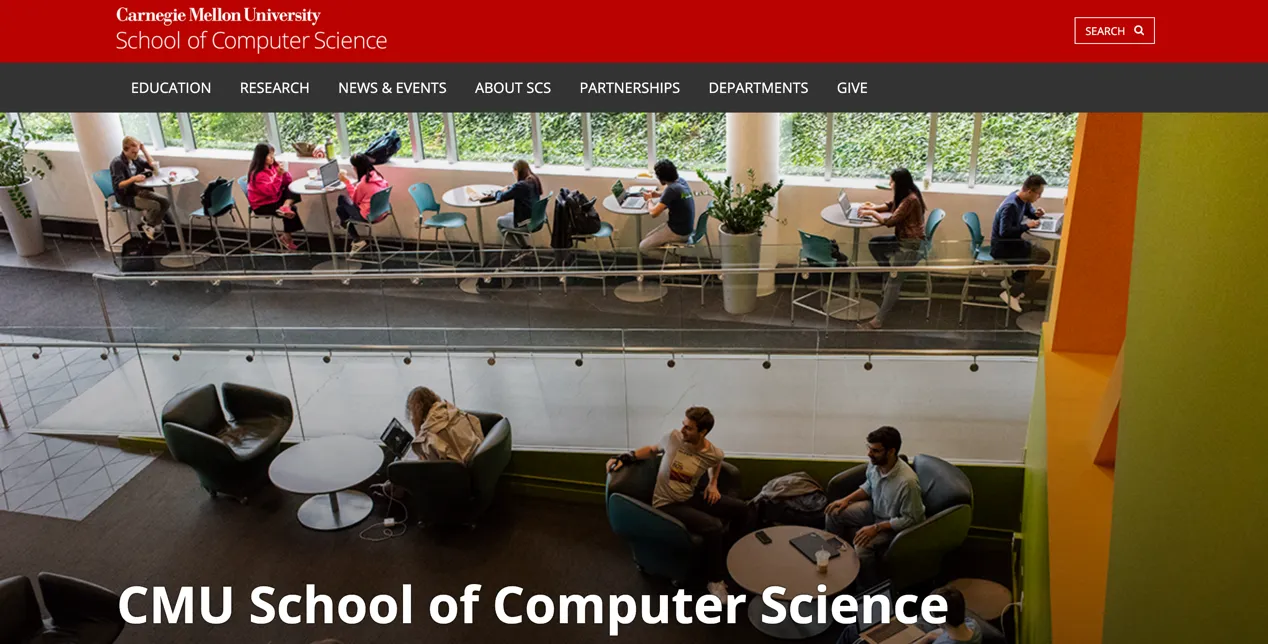
The School of Computer Science (SCS) is built around seven core departments: Computational Biology, Computer Science, Human-Computer Interaction, Language Technologies, Machine Learning, Robotics, and Software Systems, offering more than 20 programs in computer science. This level of specialization is probably unmatched anywhere in the U.S. and even the world. Specialization means greater expertise, providing targeted industry skills training and career guidance for different talents, so CMU’s master’s students are also highly competitive in the job market.
Having discussed the value of a CMU master’s degree, we naturally turn to the application difficulty that concerns everyone most. With strong programs and bright career prospects, competition at CMU is naturally extremely fierce.
Especially nowadays, North American CS master’s programs have increasingly become synonymous with perfect credentials, so does that mean applicants without such a strong background have to back off? Of course not! Below, I’ll use the admission results of CheersYou(清柚教育) students over the past few years as examples to recommend some top CMU programs for reference.
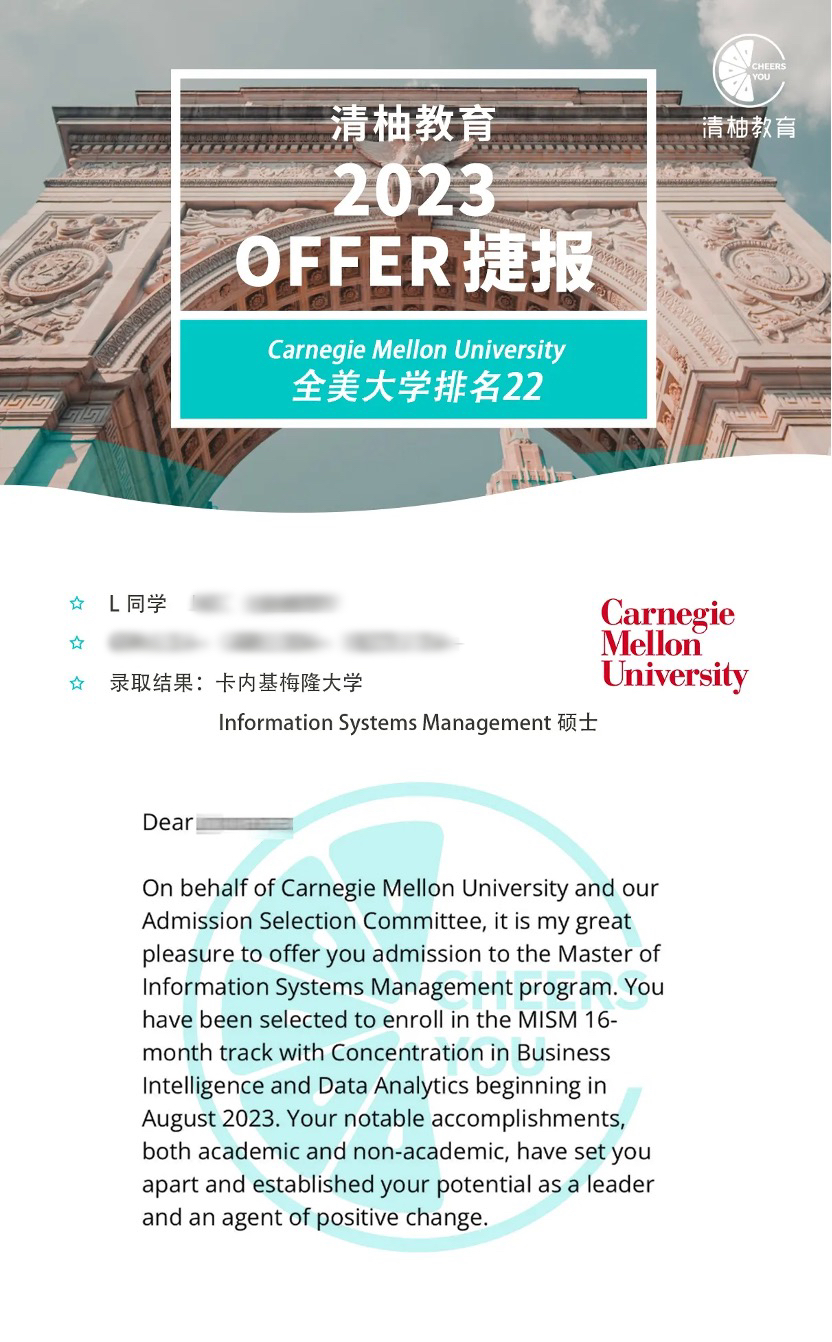
1. Master of Information Systems Management (MISM)
Program Duration: 12-16 months
Optional Track: Business Intelligence & Data Analytics (BIDA)
STEM OPT
Information Systems Management is a track more focused on database development, application, and maintenance. Especially in today’s big data economy, the Master of Information Systems Management is widely applied in areas such as information security, cloud storage and computing, and artificial intelligence, offering very broad career prospects.
2. Master of Entertainment Industry Management (MEIM)
Program Duration: 2 years
Location: First year in Pittsburgh, second year in Los Angeles
In today’s media-saturated era, the entertainment industry, powered by data analytics, has increasingly become the focal point of media development. CMU not only has strong academic support in computing but also boasts an advantageous location in Los Angeles, providing access to abundant internship opportunities. As a result, MEIM is becoming an increasingly popular choice for students aiming to combine media with emerging technologies.

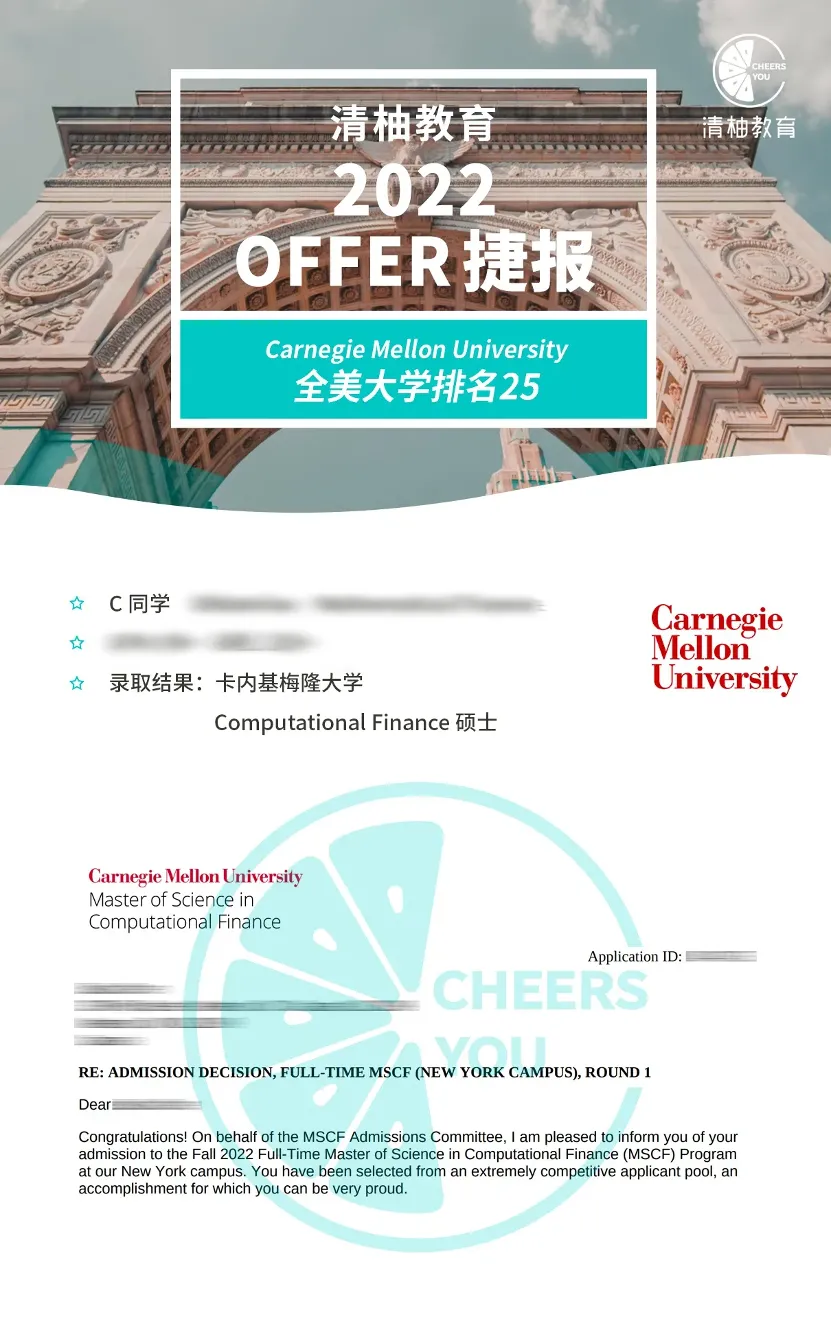
3. Master of Science in Computational Finance (MSCF)
Program Duration: 1.5 years
Location: New York and Pittsburgh
Includes a summer internship
CMU’s MSCF program ranks fourth in the U.S. on QuantNet, making it extremely strong. It is jointly taught by four departments: the Department of Statistics & Data Science, the Heinz College of Information Systems and Public Policy, the Department of Mathematical Sciences, and the Tepper School of Business. Thus, the program is built on a very solid foundation and is a quantitative finance program renowned for its top employment rates.
The above covers whether CMU’s graduate school is worth applying to and the recommended programs. For more admission case studies and questions about studying abroad and graduate school applications, you can also add the contact information of a CheersYou(清柚教育) advisor below for more details.