
This year's U.S. News college rankings have absolutely shaken everyone to the core.

Many elite private universities have fallen out of the Top 30 and even Top 50, while the fortune has shifted to public universities, with the UC system absolutely crushing it.

.png)
U.S. News Rankings Shake-Up Sparks Fierce Debate in Study Abroad Circles
The U.S. News rankings have always carried a trail of controversy, and this major reshuffling has set the study abroad community abuzz.
In the Top 10, Brown University, which was No. 13 last year, climbed into the top ten this year. The University of Chicago fell out of the Top 10, landing at No. 12, tied with Cornell (up 5 spots) and Columbia (up 6 spots).

Although Columbia has announced its withdrawal from the rankings, U.S. News still includes them regardless, basically saying, "You withdraw, but I'll keep ranking you."

In the Top 30, the UC system is on a roll. UC Berkeley and UCLA tied at No. 15, up 5 spots from last year. UC Davis skyrocketed 10 spots and tied with UC San Diego (up 6 spots) at No. 28.

While some are rejoicing, others are grieving. Washington University in St. Louis dropped to No. 24 👇

NYU and Wake Forest even fell out of the Top 30, landing at No. 35 and No. 47 respectively.

Don't assume Americans don't care about rankings. Wake Forest is in an uproar: students are talking about transferring, demanding tuition cuts, and calling for the president to resign...
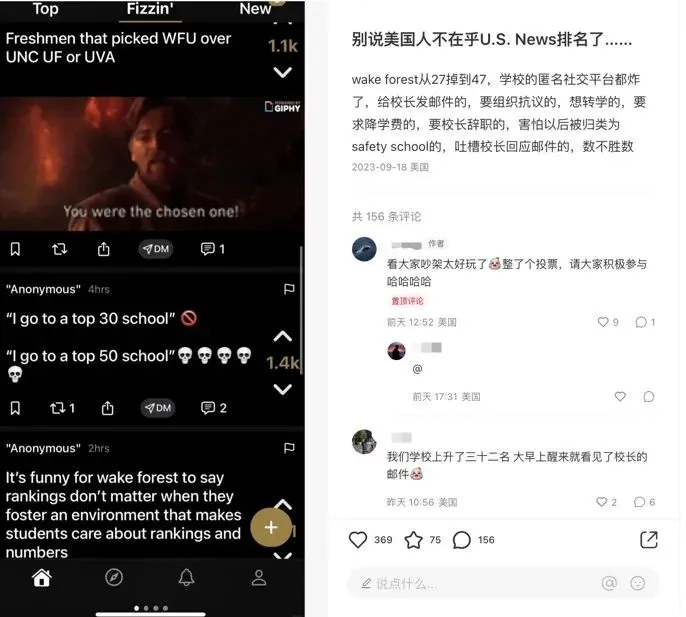
After all, with tuition and fees at $80,000 a year, who can accept dropping from Top 30 to Top 50 overnight?

Northeastern University and Brandeis fell straight out of the Top 50. Brandeis's president was so panicked that he emailed students overnight to explain the reasons 👇
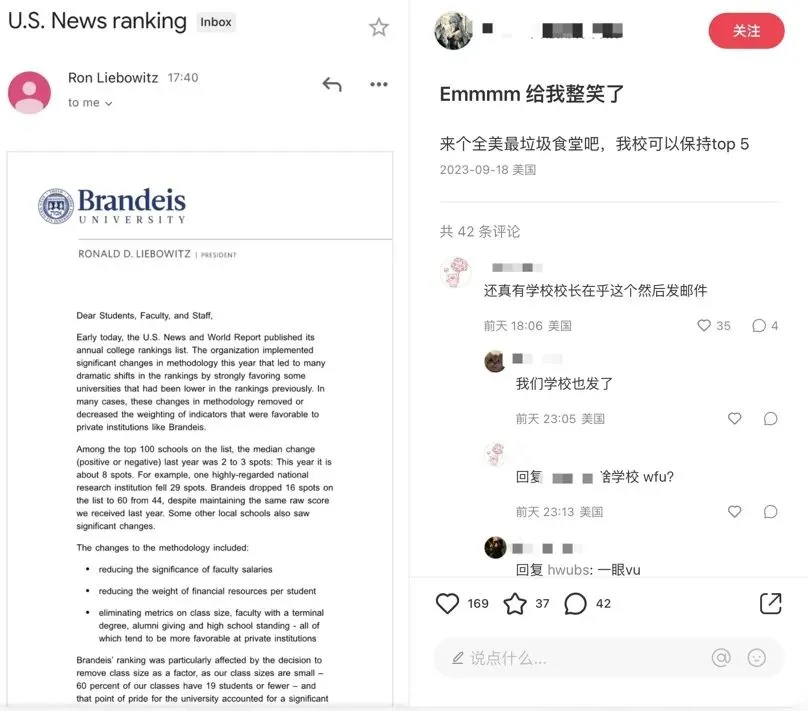
Let's be real, how can they still charge $80,000 a year when they're ranked in the Top 60?

This year's Top 50 welcomed many new faces. Rutgers University, Purdue University, University of Maryland, Texas A&M University, Virginia Tech, and others all entered the top 50, with public universities seeing a significant rise in rankings.
U.S. News's CEO stated that this year's ranking methodology saw major changes. New factors such as social mobility and post-graduation success were introduced, including metrics like first-generation college student graduation rates and post-graduation earnings comparisons. Additionally, the weight of factors closely related to disadvantaged groups, such as student loans and Pell Grants, was increased.
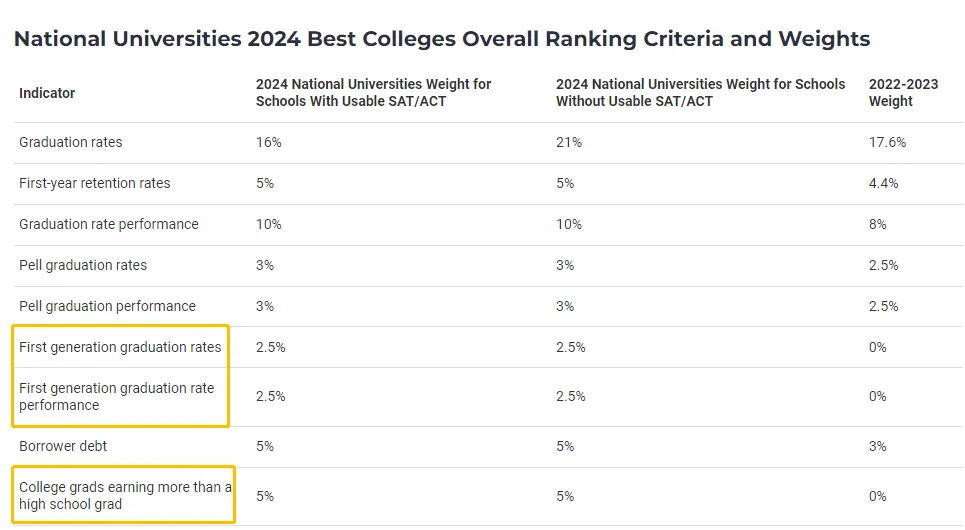
Furthermore, metrics such as class size, faculty credentials, and alumni giving were eliminated — traditionally strong areas for prestigious private universities.
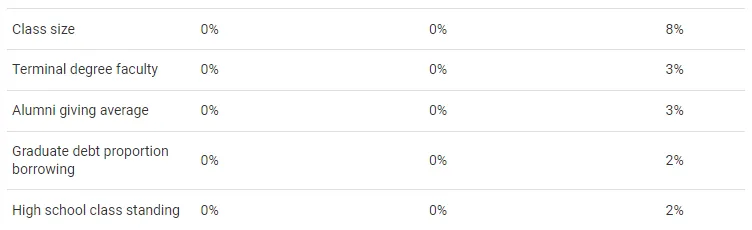
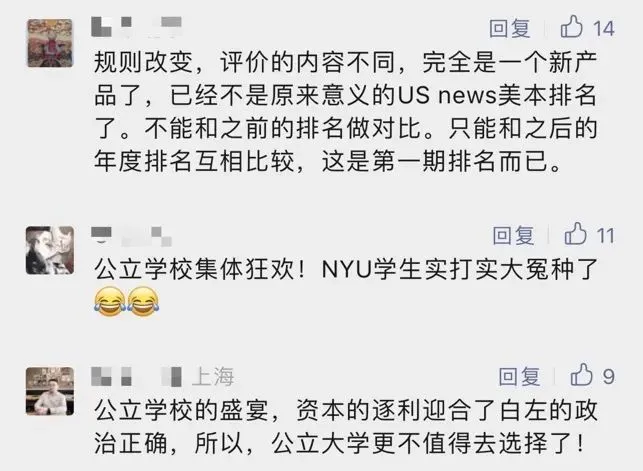
These changes in metric weightings have led to a rapid rise in rankings for many public universities. This year's U.S. News rankings place greater emphasis on educational equity and diversity, highlighting the value of higher education.
Public universities are on a winning streak. UC Davis students waking up be like: What? I'm already a Top 30 student?
Indeed, it's better to have your school level up than to level up yourself.

With this major reshuffling, U.S. News has offended many private universities and the $80,000-a-year club's wealthy kids.

Well, you rank your way, we'll apply our way.

Ivy League Schools: Quitting the Rankings, Confronting Head-On
The entanglement between universities and U.S. News is nothing new. Previously, schools, hindered by U.S. News's dominance, would grumble but still submit their data.
That was until November last year, when Yale Law School and Harvard Law School announced their withdrawal from the rankings, openly challenging U.S. News.
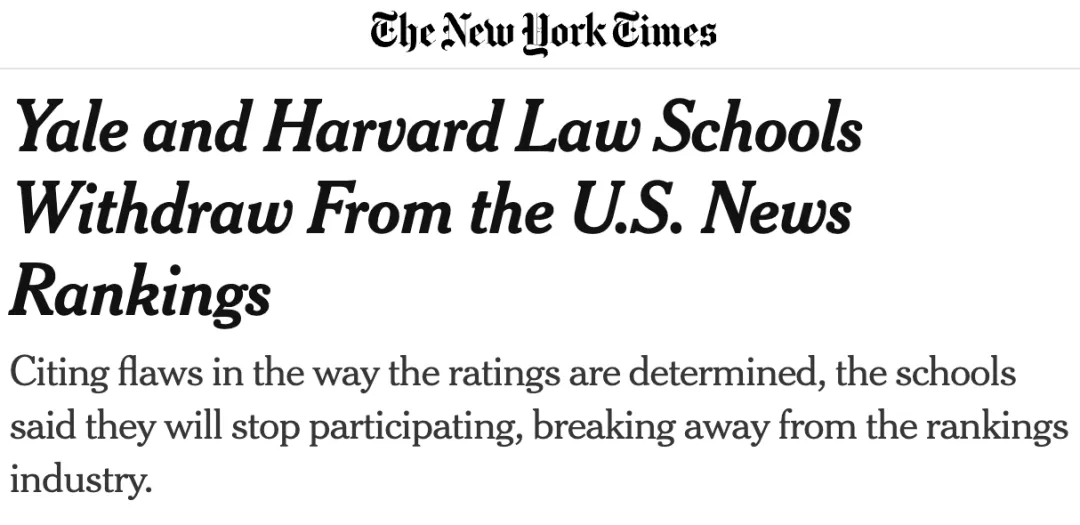
The schools stated that the U.S. News ranking methodology was flawed and misaligned with their educational philosophies. After unsuccessful communication with U.S. News, they chose to withdraw.
However, since much of the data is publicly available, and Harvard and Yale's law schools are widely recognized as top-tier, the withdrawal essentially had no impact on their rankings.
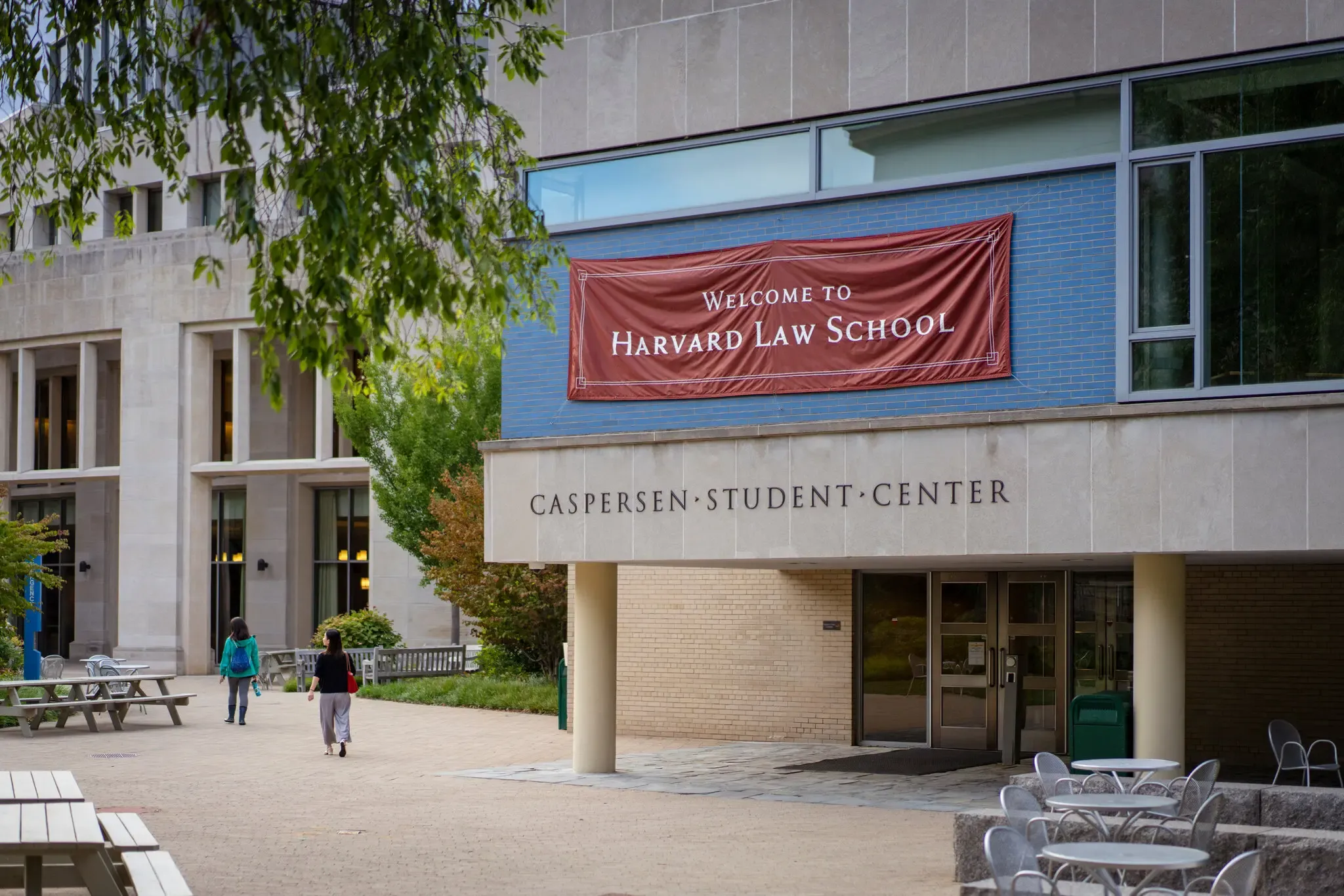
But for the public boycott of U.S. News by universities, it can be said to have opened a breach.
Following Harvard and Yale, several top law and medical schools announced their withdrawal, including Stanford, Georgetown, UC Berkeley, Penn, Duke, and others.
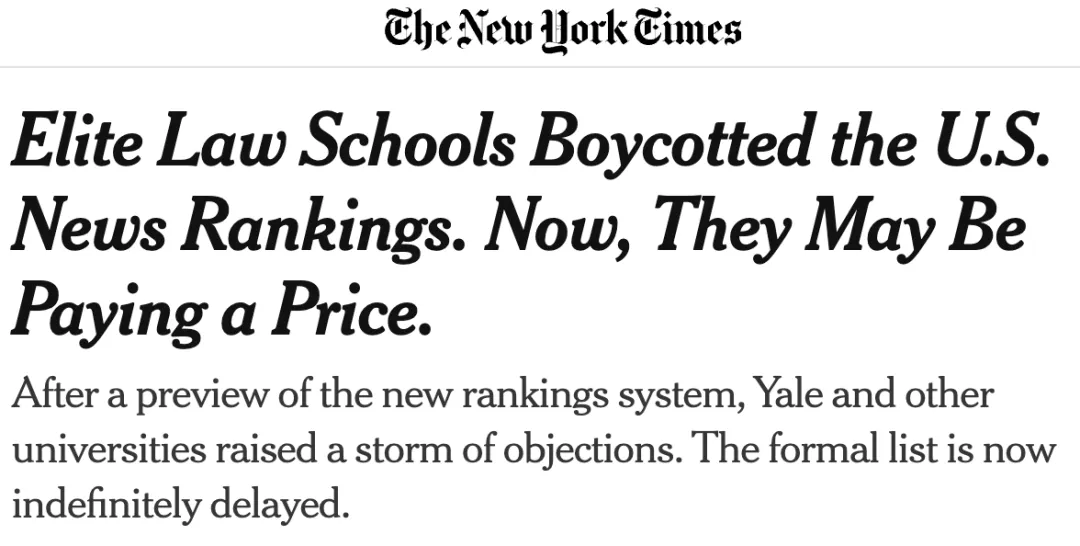
This year, Columbia University announced a complete withdrawal from the undergraduate rankings, becoming the first top university to exit the U.S. News undergraduate rankings.
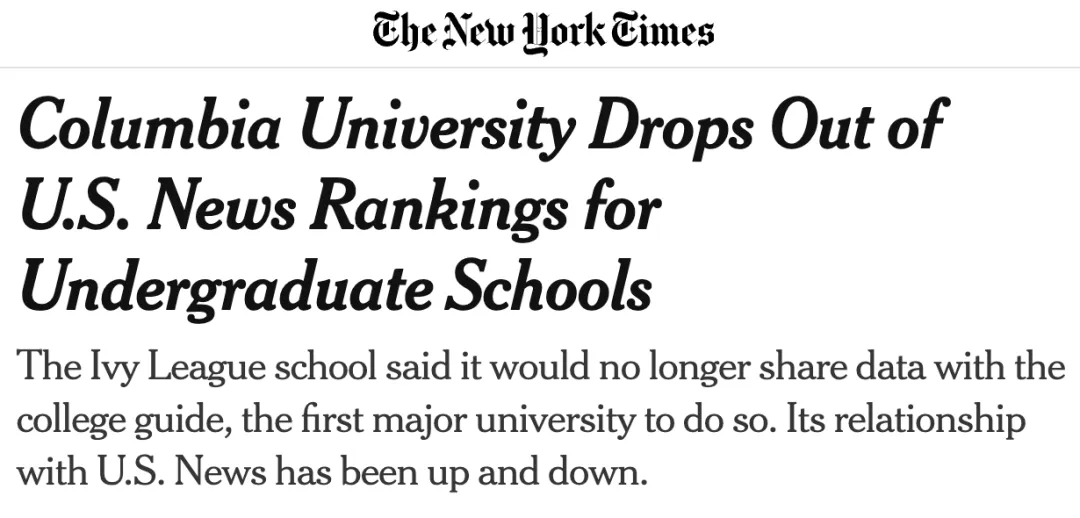
Columbia will no longer provide data for the rankings, with the school expressing concerns that the rankings may unduly influence the undergraduate admissions process.
Last February, a Columbia professor submitted a 21-page report accusing Columbia of data misrepresentation for U.S. News rankings, including class size and faculty credentials — two metrics that have been removed in this year's updated methodology.
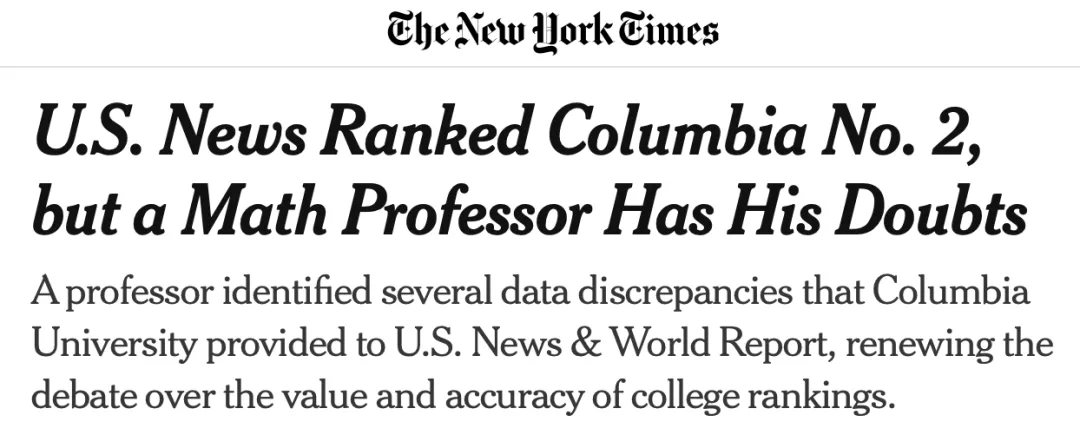
After this controversy, Columbia's ranking plummeted from No. 2 to No. 18 last year, becoming the bottom of the Ivy League.
Out of anger, Columbia this year flat-out quit the rankings, confronting U.S. News head-on.
Yet, you can quit all you want, but they'll still rank you anyway.
Regular Schools: Want to Quit but Dare Not
For top universities, withdrawing from the U.S. News rankings might be inconsequential. But for schools with less brand recognition, quitting the rankings could very well marginalize them.
Take Reed College, a liberal arts college, for example. When the school decided to stop providing data to U.S. News, its ranking plummeted from the second tier to the fourth tier.
Even if a university unilaterally declares its withdrawal, U.S. News will continue to rank them. Columbia's reputation was damaged by the ranking controversy, let alone less elite universities.
Therefore, many schools, even if not enthusiastic about rankings, still go along with the crowd. Scott Cowen, former president of Tulane University, said that unless they are top-tier institutions, ordinary universities lack the courage to withdraw from the rankings. Once they do, they risk fading into obscurity.
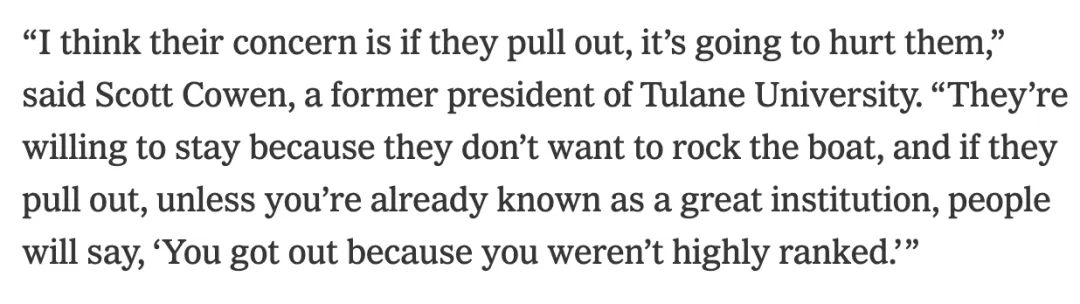
In fact, aside from Harvard, Yale, Columbia, and a few other top schools that dare to confront directly, most universities have an ambiguous stance on rankings.
For schools, the U.S. News rankings serve as a form of promotion, garnering attention and visibility to stand out among 2,500 institutions.
Even a well-known university like Washington University in St. Louis, whose medical school has already withdrawn from the rankings, still uses the U.S. News rankings as a recruitment channel.
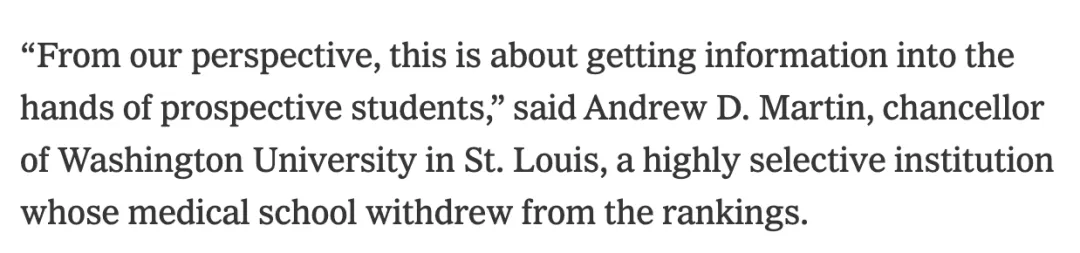
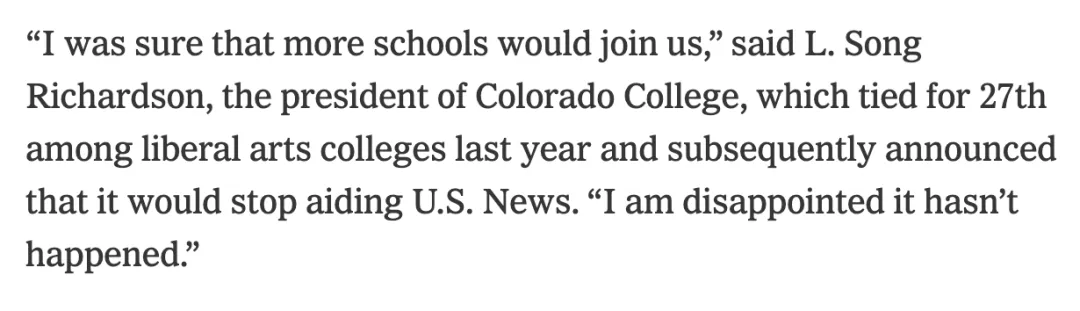
Currently, the universities that have announced a complete withdrawal from the U.S. News undergraduate rankings include: Columbia University, Rhode Island School of Design, and three liberal arts colleges, including Colorado College.
The president of Colorado College stated, "I hope more schools will join us in boycotting the U.S. News rankings. But unfortunately, few have responded."
Since its launch in 1983, the U.S. News college rankings have become one of the world's most influential university lists. Many universities have a love-hate relationship with it; despite widespread criticism of the ranking methodology and algorithms, they can't escape its powerful influence — U.S. News generates over 100 million online visits annually.
Except for Ivy League schools and the UC system, which have their own brand power and steady student demand, for most institutions, having a place in the U.S. News rankings is critical. Losing a voice in the rankings means losing students.
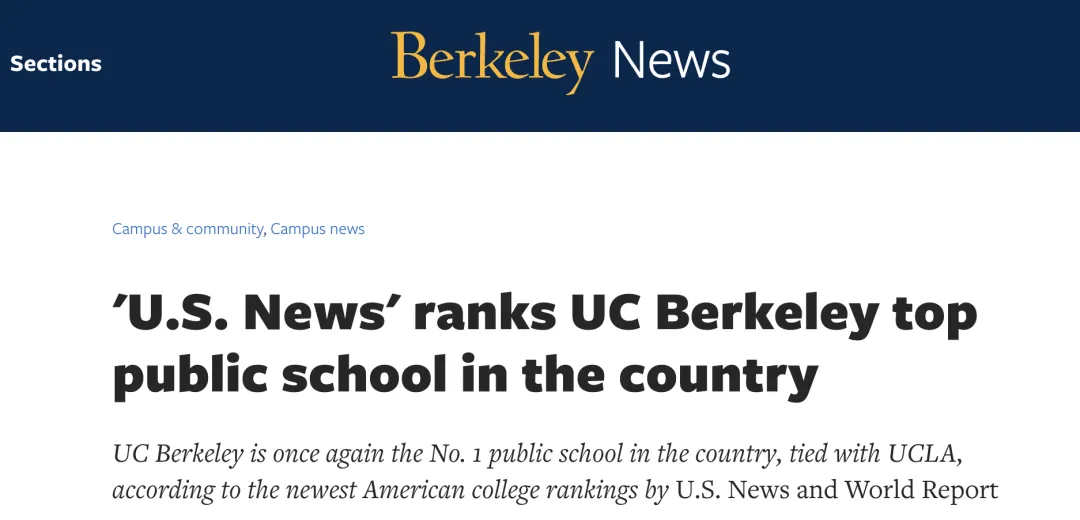
Even a public powerhouse like UC Berkeley, whose law school has announced its withdrawal, still regards the U.S. News rankings as an important part of its enrollment marketing.
The title "No. 1 Public University in the U.S." is prominently displayed in admissions brochures and on its official website.
The relationship between universities and U.S. News is symbiotic, with love and hate entwined in a strategic dance.
In reality, rankings are impossible to completely eliminate, and the education sector is no exception.
Whether for local students or international students, there is always a need for a relatively objective and authoritative ranking to help evaluate and choose schools. Where there's demand, there will be supply.
We will continue to follow how this drama unfolds. As for university rankings, the best we can do is not to overly rely on them. Rankings are ultimately just a reference; finding the university that fits you best is what matters most.