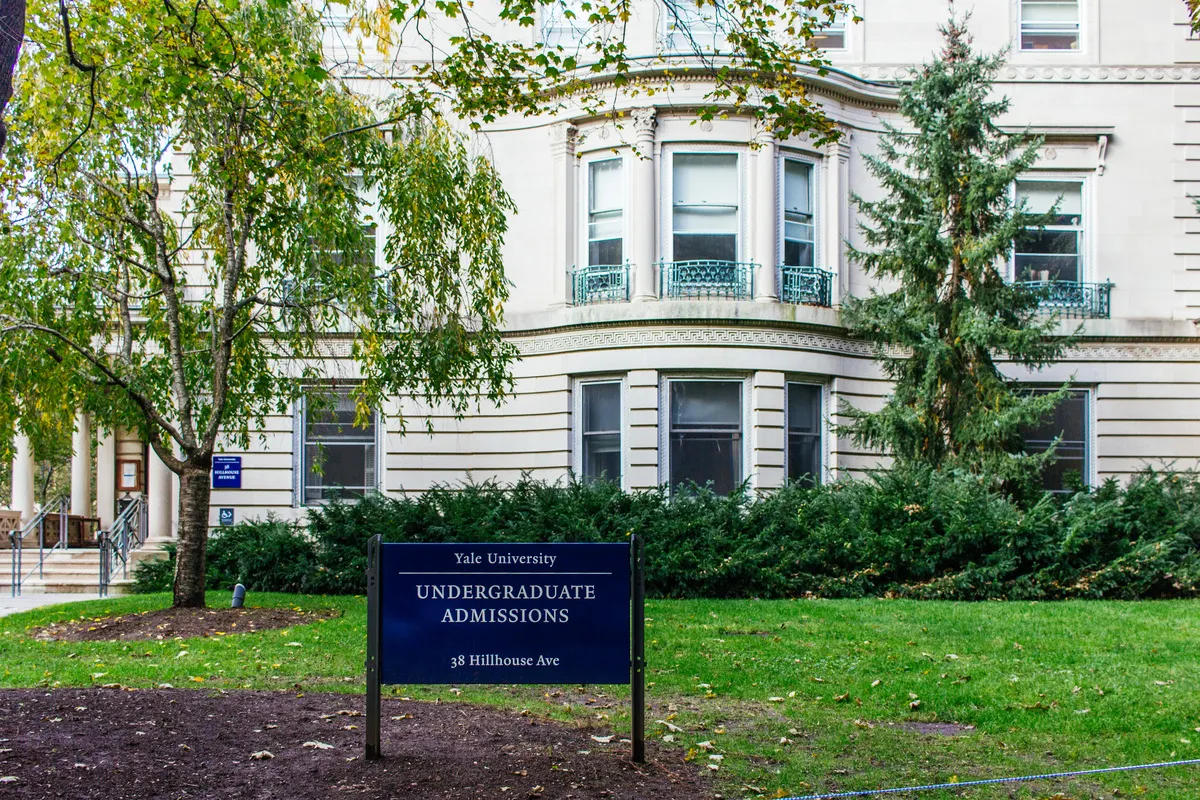
Yale University recently released the undergraduate early application data for the 2023-24 SCEA (Single Choice Early Action) cycle.
CheersYou(清柚教育) also brings you a first look and helps analyze the new trends in U.S. undergraduate applications.
.png)
Yale Early Application Numbers Second Highest in History
This year, Yale received a total of 7,866 applications in the early undergraduate round, an increase of about 1% from last year, marking the second-highest early applicant pool in the university's history.
Admissions Officers Cannot See Applicants' Race
Last year, the number of students from underrepresented racial or ethnic groups among early applicants for the Class of 2027 increased by 6%.
However, after the U.S. Supreme Court overturned affirmative action this year, Yale stated that it would not compile any statistics on such data, and admissions officers can no longer view applicants' race information.
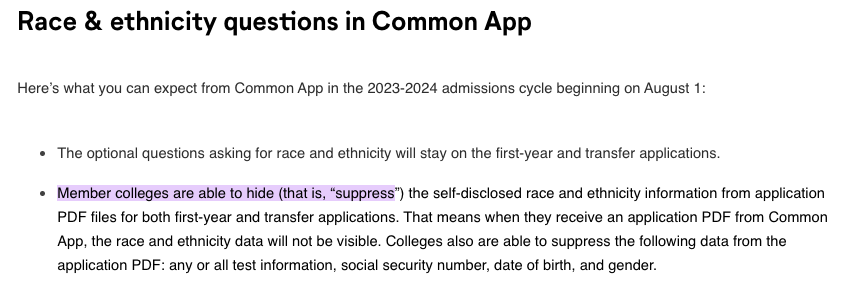
Even before the ruling, Common App preemptively announced that colleges could choose to hide the race information filled out by applicants in the online application system.
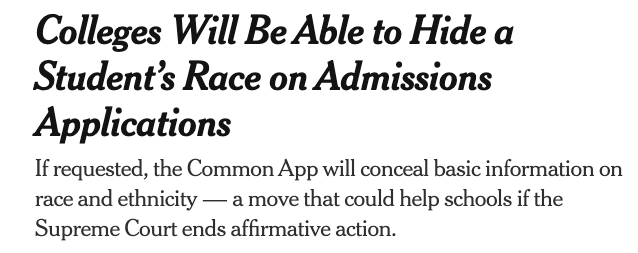
Starting from the 2023-2024 admissions cycle, colleges can hide students' race information when reading electronic materials or printing application materials. Common App had previously allowed colleges to hide test scores, SSN, date of birth, gender, criminal records, etc.
Standardized Tests Likely to Return as a Requirement
The Yale Undergraduate Admissions Office also officially stated that "this year's early applicants may be the last cohort for whom test scores are optional," and a long-term testing policy will be announced in early 2024.
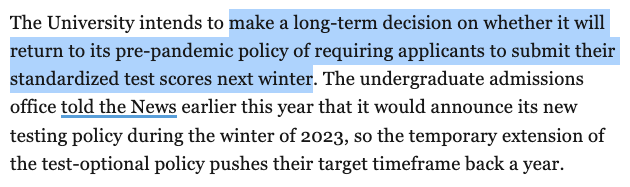
This means that in the next application season, Yale may reinstate the requirement for SAT/ACT standardized tests.
Last application season, the test-optional policy remained mainstream, but there has been a gradual trend towards reinstating standardized tests. For example, some schools have switched to a Test-Flexible policy. Unlike the neutral stance of Test-Optional, Test-Flexible leans more towards students submitting standardized test scores.
Taking Purdue University as an example, the school adopted a Test-Flexible policy last year, recommending that students submit SAT/ACT scores unless they are unable to take the test due to special circumstances.
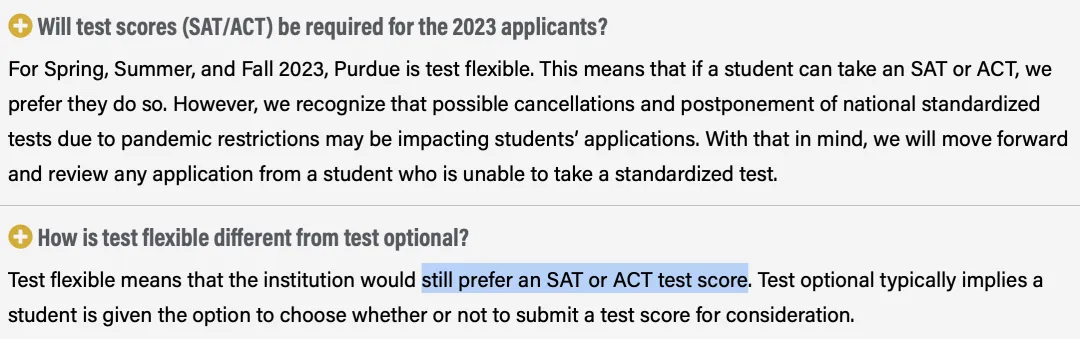
And for the 24Fall application, Purdue University has now reinstated the requirement for SAT/ACT scores.

Amid the record-breaking surge in U.S. undergraduate applicants, the standardized tests that became optional during the pandemic years are likely to collectively return as a requirement next year.
Even though most institutions still had a test-optional policy last year, Common App's statistical data shows that among the 1.1 million+ U.S. undergraduate applicants, nearly 50% still submitted their standardized test scores!
In other words, no one is resting on their laurels.
U.S. undergraduate applications are a long-term project, requiring one to three years of preparation. If you aim for top institutions, the earlier you plan, the better. From course selection, standardized tests, and extracurricular activities to application materials, everything needs to be planned in advance so you can be more relaxed during the application season.
U.S. Undergraduate Application Planning Timeline
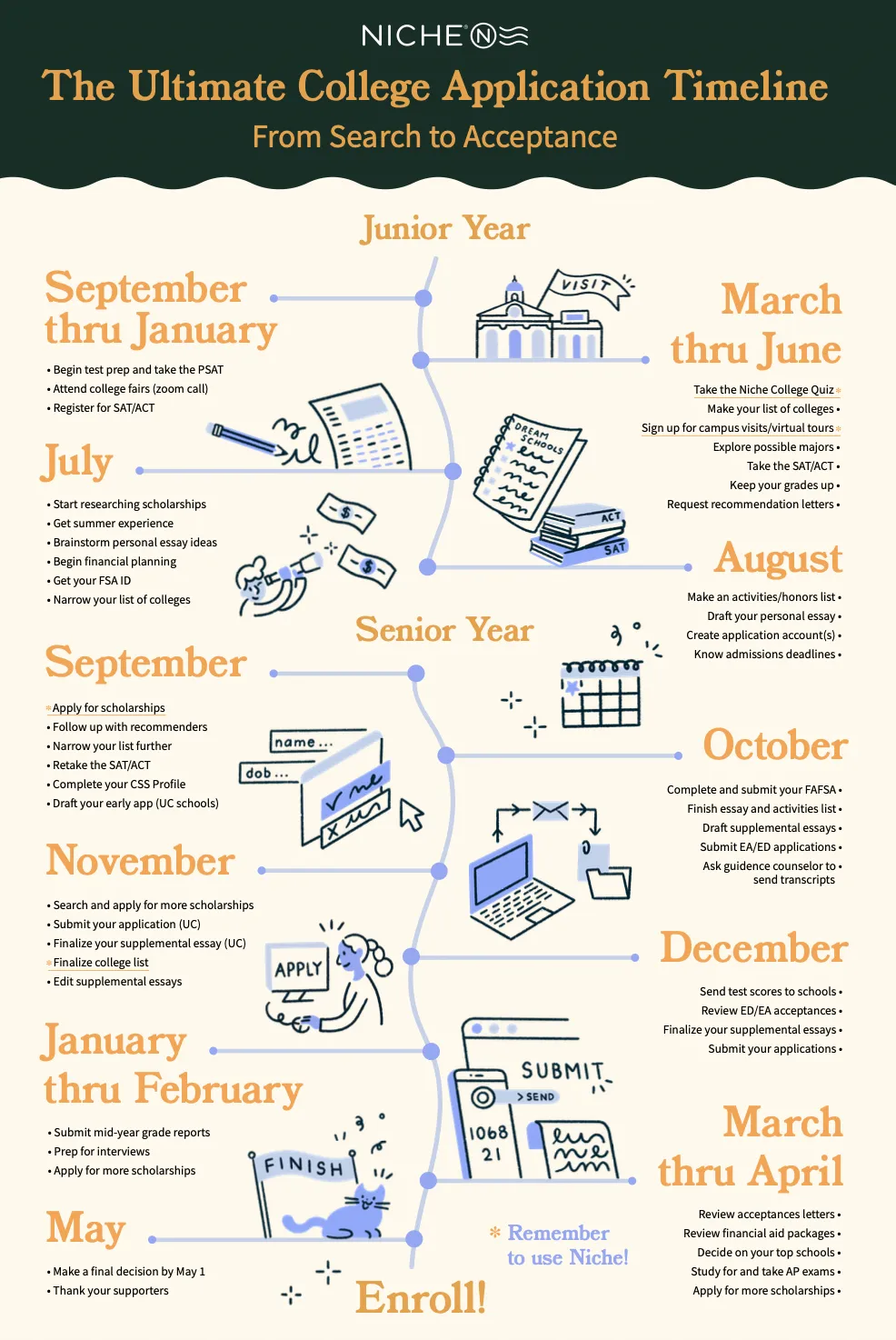
Grade 9: Cultivate Reading Habits and Explore Interests
For 9th-grade students, applying is still quite far off, but if you plan to apply to U.S. undergraduate programs in the future, you can start preparing consciously. This stage is mainly about cultivating English reading habits and exploring your interests.
New students in U.S. high schools can develop their reading and writing skills during this stage, adapt to American high school life as soon as possible, and plan and participate in sports or club activities.
Domestic students are in 9th grade at this time, with limited time, so the focus should be on maintaining school grades and preparing for high school entrance exams or further studies. Additionally, they can build English vocabulary and broaden their reading to lay a good foundation in English.
9th Grade Fall Semester (September - January of the following year)
-
Maintain and strive for excellent academic performance, discover your strengths, and improve on weaker subjects.
-
Develop good English study habits and academic curiosity, accumulate early SAT vocabulary, and cultivate critical thinking through reading.
-
Consider choosing a college counseling agency to get advice on early planning.
9th Grade Winter Break (January - February)
-
Explore your areas of interest and clarify your future goals as early as possible.
-
Make full use of available resources, participate in various activities both on and off campus, and expand your overall abilities.
-
Students with extra capacity can start learning TOEFL.
9th Grade Spring Semester (March - June)
-
Maintain GPA
-
Continue building English vocabulary and expanding reading volume.
9th Grade Summer Break (July - August)
-
Start studying TOEFL and SAT; if you have extra capacity, try taking the TOEFL exam.
-
Consider participating in overseas study tour programs to understand U.S. teaching styles and academic atmosphere, while also developing adaptability.

Grade 10: Start Preparing for Standardized Tests and Determine Your Academic Direction
For students entering 10th grade, the most important things are to maintain a high GPA and gradually determine your academic direction. Whether you are in a U.S. high school, international high school, or regular high school, you need to clarify your goals, discover your potential, and maintain excellent grades as much as possible.
During this academic year, you can fully launch your standardized test preparation, beginning systematic study of TOEFL and SAT to aim for high scores.
10th grade is relatively relaxed in terms of time, so you should participate in extracurricular activities, clubs, competitions, etc., as much as possible to comprehensively enhance your overall competitiveness. U.S. universities value the persistence of students in their activities of interest, so planning a main activity thread and ensuring depth and continuity is crucial; taking on leadership roles and contributing to the community in later grades will be even more important.
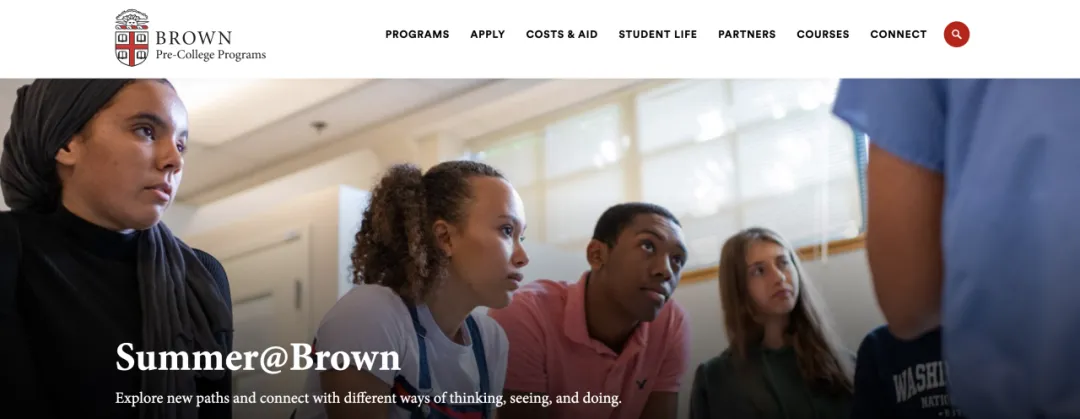
Additionally, you can start planning for summer programs. If you already have a clear idea of your major, look for summer programs that match your field, such as Duke TIP, JHU CTY, Summer@Brown, etc., to build material for your future application essays.
10th Grade Fall Semester (September - January of the following year)
-
Adapt to high school courses, plan your course selection wisely, and maintain a good GPA.
-
Continue studying for TOEFL.
-
Plan and choose to participate in on-campus activities.
10th Grade Winter Break (January - February)
-
Begin systematic study and preparation for TOEFL.
-
Participate in extracurricular activities such as winter camps, research projects, volunteer work, competitions, etc.
10th Grade Spring Semester (March - June)
-
Prepare for the TOEFL exam, review strategically or enroll in classes as needed.
-
Maintain GPA.
10th Grade Summer Break (July - August)
-
Take the TOEFL exam.
-
Start systematic study for the SAT.
-
Participate in summer programs, practical projects, etc.

Grade 11: Sprint for High Standardized Scores and Prepare for Applications
For 11th-grade students, all preparatory work for college applications needs to be completed this year, making it crucial.
First, for standardized test scores, you can make a final sprint for high scores to achieve satisfactory results. Students in U.S. high schools and American-style international schools will take the PSAT (Preliminary Scholastic Assessment Test) to compete for National Merit Scholarship qualification.
Secondly, determine your basic intended major to match with target schools, conduct corresponding school research, and understand the basic situation of the universities, including their features, strong majors, location, future career prospects, etc. Then, adjust your course selection and extracurricular activity plans based on the application requirements of your target schools.
Additionally, you should estimate the workload of college applications in advance, manage your time wisely, and you might consider choosing a suitable application agency for assistance.
11th Grade Fall Semester (September - January of the following year)
-
Maintain a high in-school GPA.
-
Engage in TOEFL sprint phase study and SAT intensive phase study.
-
Participate in on-campus activities.
11th Grade Winter Break (January - February)
-
Prepare for AP exams; register if needed.
-
Prepare summer program applications.
-
Prepare for SAT/ACT.
-
Expand off-campus activities, focus on highlight activities, and demonstrate leadership.
11th Grade Spring Semester (March - June)
-
Take the SAT/ACT exam, and sprint for TOEFL.
-
Take AP exams if applicable.
-
Preliminarily finalize your college list based on test scores.
11th Grade Summer Break (July - August)
-
Attend summer programs if applicable.
-
Take the SAT/ACT, and sprint for TOEFL.
-
Review extracurricular activities and strengthen your highlights.
-
Prepare to brainstorm and draft application essays.
Grade 12: Fill in the Gaps and Complete Applications
For 12th-grade students, you will face applications soon after the school year starts, time is tight, so you must plan reasonably.
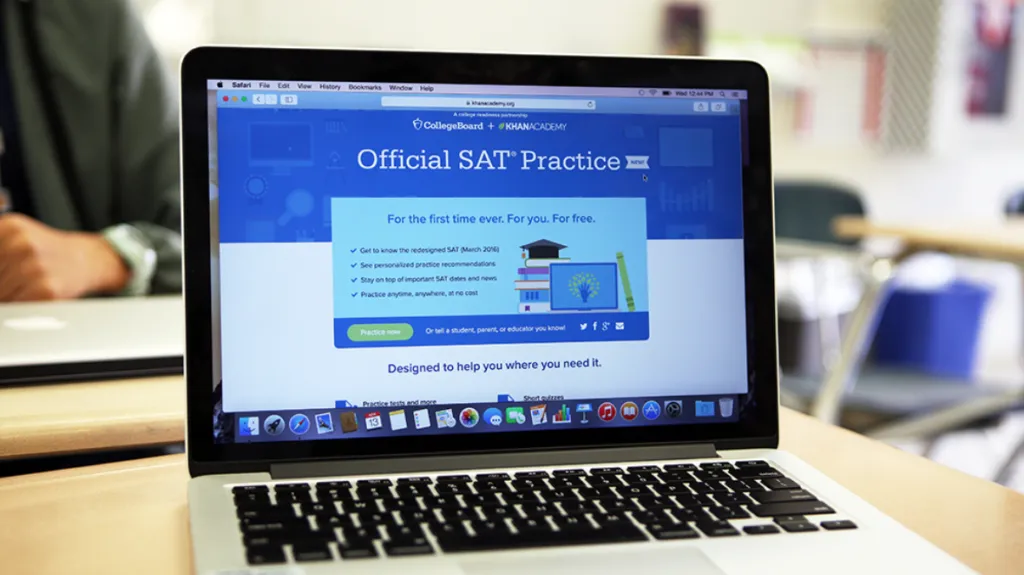
First, ideally, you should have achieved your target standardized test scores before the school year begins. If your scores are not ideal, schedule the next exam as soon as possible. If you plan to apply to Top 30 U.S. undergraduate programs, a TOEFL score of 105+ and an SAT score of 1520+ are recommended.
Secondly, determine your recommenders based on your college list and prepare recommendation letters. Essays are extremely important; you need to dig deep into your strengths, character, and academic expertise to provide material for your essays. Ideally, these application materials should be completed by September.
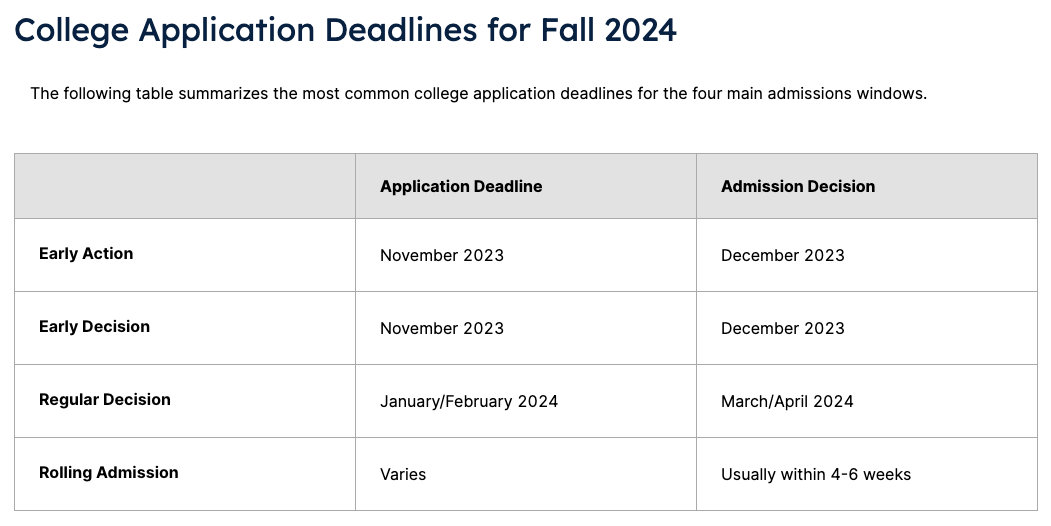
Students planning for early application (EA/ED) should note that most EA/ED deadlines are November 1st, and you need to submit all application materials, including the online application, essays, recommendation letters, transcripts, etc., before the deadline, so be sure to prepare in advance. Early application results are usually announced in December, and based on the results, you can decide whether to add a Regular Decision (RD) round.
After receiving an offer and confirming your school, you can start preparing for financial proof, visas, and other matters.
September - October
-
Finalize your SAT, TOEFL, and other standardized test scores.
-
Finalize your college list.
-
Revise, refine, and finalize EA/ED essays.
-
Complete the online application for EA/ED schools.
-
Send standardized test score reports.
November
-
Finalize essays for the UC system schools.
-
Prepare online applications and essays for RD schools.
-
Send standardized test score reports.
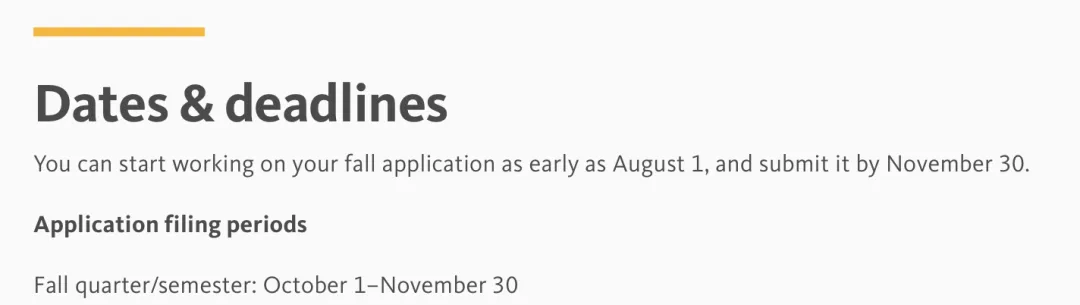
November 1/15: Most colleges' EA/ED application deadlinedate
November 30: UC system application deadline.
December
-
EA/ED results will be released gradually.
-
Refine online applications for RD schools and finalize essays.
-
Send standardized test score reports.
January 1-15 of the following year: Most colleges' RD/ED2 application deadlinedate
February of the following year
-
ED2 results are released.
March of the following year
-
RD results are released gradually.
May of the following year
-
Compare offers and accept the most preferred university.
-
Prepare visa, financial proof, and various materials required by the school, and wait for enrollment.
It is a widely acknowledged fact that U.S. undergraduate applications are becoming increasingly competitive.
Everyone must choose schools wisely, fully prepare application materials, achieve satisfactory standardized test scores, and try to apply early.
We wish everyone a fruitful application season with offers from their dream schools!