
If finals season had an annual review, the award for most drama would definitely go to Canada!
UBC had too few exam papers printed, McGill had a power outage for nearly an hour during exams, and at the University of Alberta, the fire alarm went off in the exam gym, forcing students to stop writing with just 15 minutes left.
Those are nothing compared to what happened at the University of Toronto, where finals reached a new level: a Chinese international student was arrested right in the exam hall on suspicion of sexual assault, assault, death threats, unlawful confinement, and other criminal acts.
Just after the incident, eyewitnesses recounted the details on Little Red Book (Xiaohongshu).
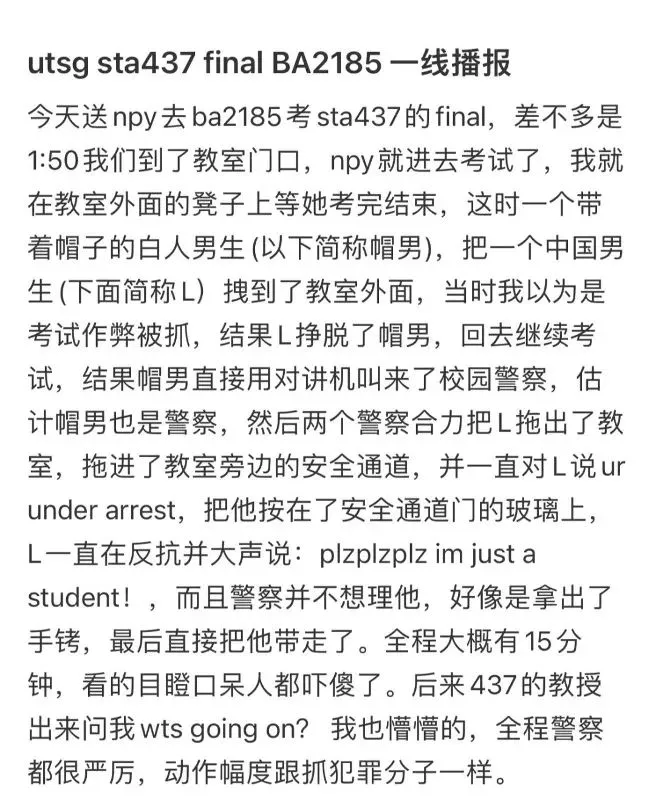
Soon, gossip about the man sparked heated discussions; many students asked for the PDF version under various posts, and even proxy test-taking rings snuck in promotional messages amidst the comments.

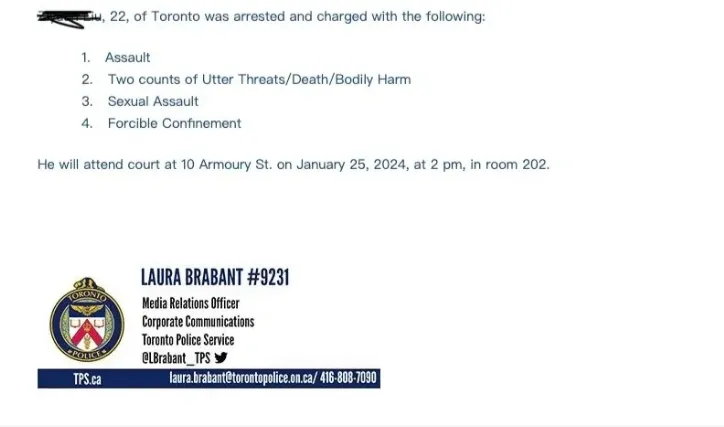
Shortly after, the Toronto police confirmed the news. A 22-year-old named Liu from Toronto was charged with assault, two counts of unprovoked threats/death/bodily harm, sexual assault, forcible confinement, and other crimes, and is scheduled to appear in court at 2 p.m. on January 25, 2024, at 10 Armoury St.
Meanwhile, the University of Waterloo wasn't calm either. Although less sensational, it affected a wide range of students: they actually misprinted the exam papers, and many students left the exam hall "full of regret".
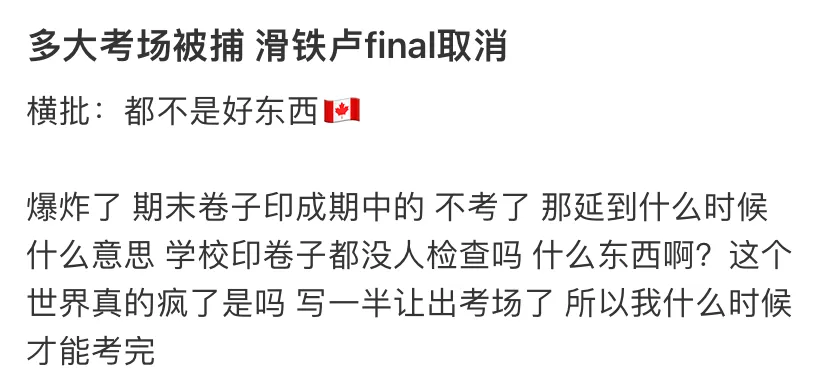
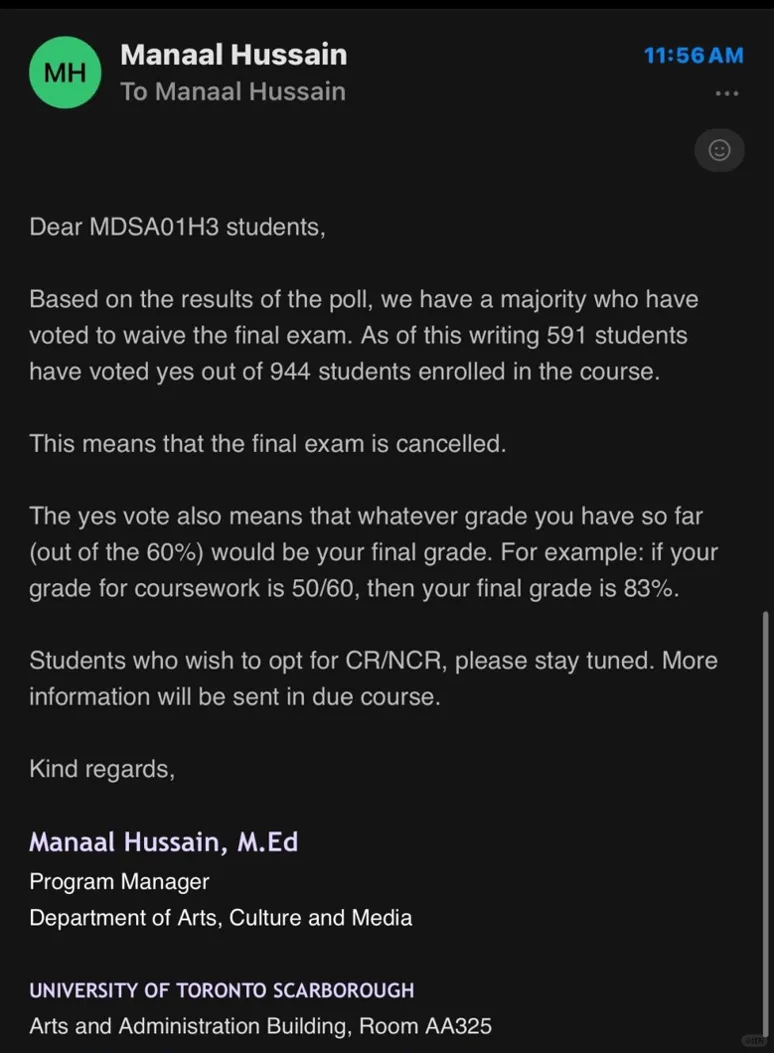
Aside from these involuntary cancellations, there were also voluntary ones initiated by students.
In an online Media course at UTSC, the professor mysteriously disappeared halfway through the semester, so students voted to cancel the final exam for that course.
But that's not where this finals season's drama spectacle ends. Recently, large numbers of international students protested unfair grading outside the University of Toronto, holding signs and even camping overnight.
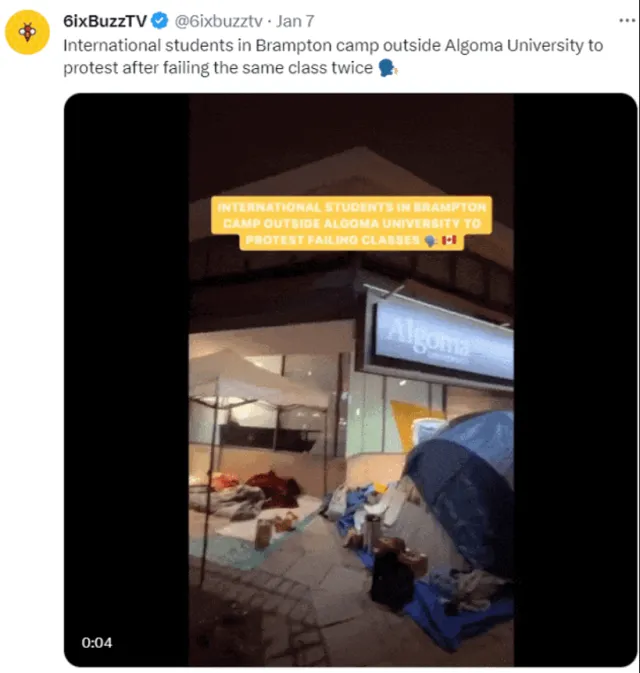
Participants explained: as international students, their tuition is already four times that of other students, and professors were deliberately lowering grades to earn re-examination fees, which led to this large-scale protest.
Under such academic pressure, it's not surprising that many students look for shortcut ways to pass their final exams.
Dancing on the Academic Red Line
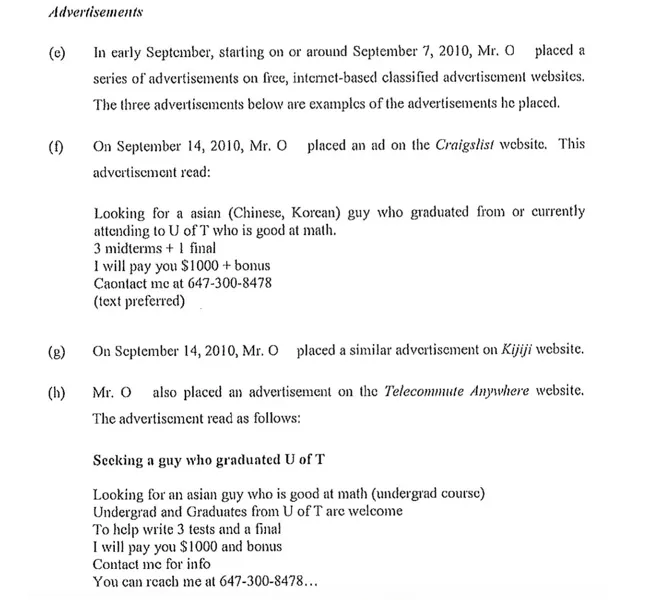
Recently, the University of Toronto's official website displayed past Academic Offense cases, revealing cheating behaviors that were truly jaw-dropping, like something out of a crazy drama...
These included openly advertising for proxy test-takers on Kijiji, blatantly challenging academic integrity;
and a TA who escorted three students to the restroom, ostensibly to prevent cheating, but actually engaging in a "hidden in plain sight" scheme to help them pass answers.
There was even someone who fabricated a TA, forged quiz papers, and gave themselves a quiz – the level of drama was over the top!
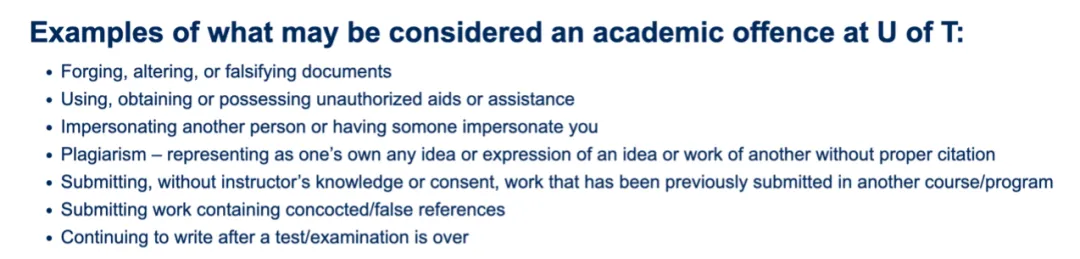
Of course, crossing the academic red line will ultimately come with corresponding consequences.
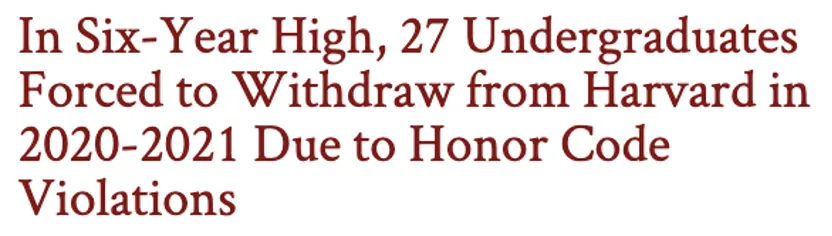
Previously, in 2021, Harvard's "Addressing Academic Dishonesty" incident resulted in 27 students being forced to withdraw, 56 students placed on probation, 10 students receiving warnings, and 6 students disciplined by their instructors – a severe crackdown on plagiarism and exam cheating.
In fact, cheating is common both before and after enrollment, and has even spawned a grey industry chain. The most famous is the world-shaking Singer case, which was even adapted into a film.
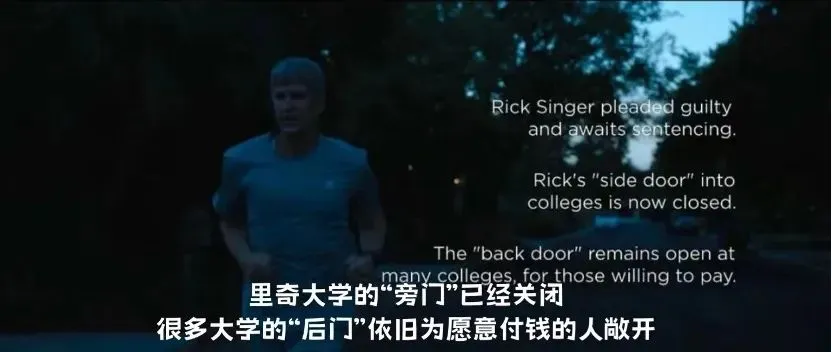
There is also such an industry chain among the Chinese community. A Chinese international student who graduated from UCLA, Liu Cai, was arrested by the FBI for establishing a TOEFL proxy test-taking company; he was only 23 at the time.

It can be seen that taking shortcuts may bring short-term gains, but crossing the academic bottom line will certainly come at a cost. In response, various countries have introduced policies and laws to combat academic misconduct.
Iron-Fisted Policies Against Academic Misconduct Worldwide
United Kingdom: Essay Mill Services Ruled a Criminal Offense
The Quality Assurance Agency for Higher Education in the UK, which maintains academic standards, found at least 932 websites providing cheating services.
.jpg?x-oss-process=style/opt-webp)
To tackle academic fraud at its root, the UK's Department for Education declared that essay mills would be considered illegal: any institution providing educational services to students over 16 that offers, arranges, or advertises essay-writing services for profit would be deemed a criminal offense.
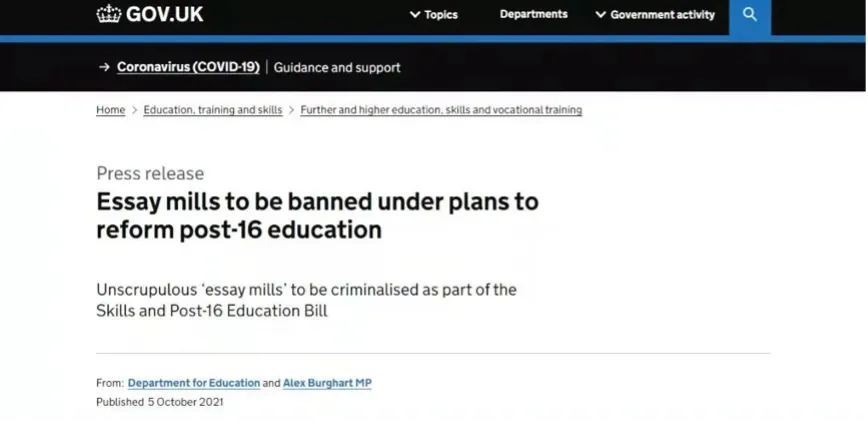
Skills Minister Alex Burghart firmly stated: "Essay mills are entirely unethical, profiting from undermining the hard work of most students. We are taking steps to ban these cheating services."
Australia: 2 Years in Prison, $200,000 Fine, and Expulsion
The Australian Department of Education has proposed a draft law targeting contract cheating services, under which anyone providing academic cheating services could face two years in prison or fines of up to AUD 200,000.
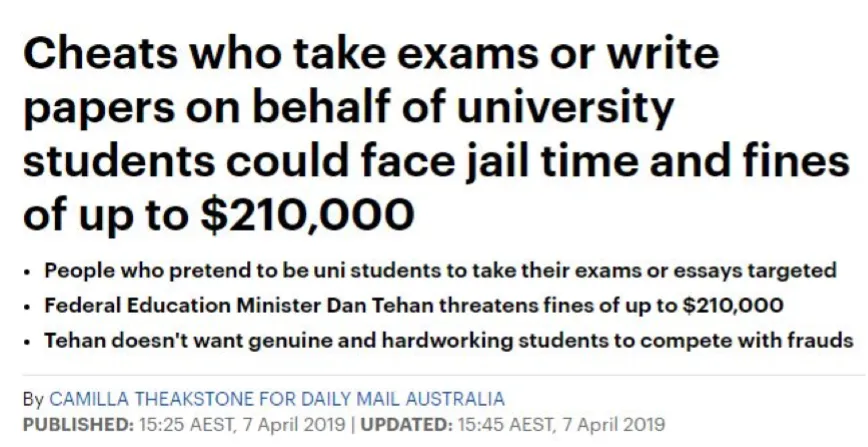
Additionally, many Australian universities have jointly announced that anyone caught using contract cheating services will be immediately expelled and have their student visa revoked. Students with such a record will also be unable to apply to other Australian schools in the future!
China: Revocation of Degrees and Records of Dishonesty
The Ministry of Education's "Measures for Handling Academic Misconduct in Theses and Dissertations" clearly stipulates that having someone else write or writing a thesis for someone else is considered academic fraud, and if discovered, both the degree applicant and the ghostwriter will be penalized.
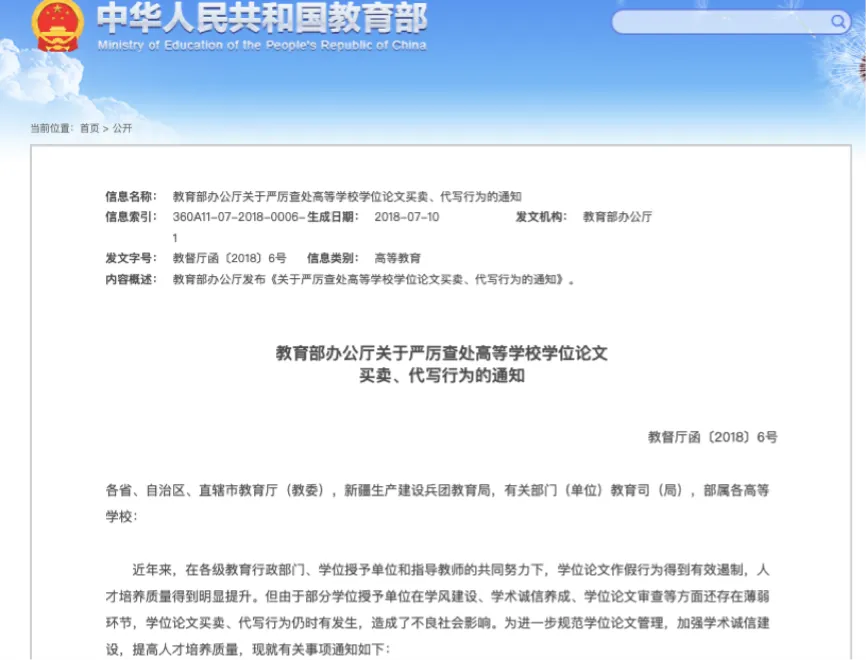
Students involved in buying or writing theses will be expelled; if they have already obtained degree certificates or diplomas, those will be revoked in accordance with the law.
Revoked degree certificates and diplomas that have been registered will be canceled, and the education authorities will declare them invalid.
The revocation of domestic degrees and the record of fraudulent behavior will also severely impact a student's future study abroad applications.
Japan: Deportation, Expulsion, Degree Revocation, and Prison Sentences
According to the 2023 June college entrance exam guidelines issued by Japan's Ministry of Education, Culture, Sports, Science and Technology (MEXT), proctors must pay special attention to candidates' hands and the position of their glasses (due to previous incidents where candidates cheated using "camera-equipped glasses").
If a candidate is caught cheating during an exam, they will be immediately removed from the exam room and disqualified from taking other exams. Their scores for all subjects will naturally be invalidated, and they may even be deported.
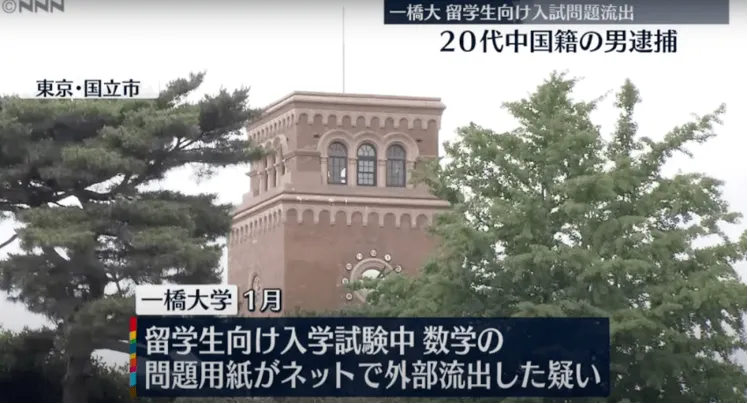
For serious proxy test-taking or impersonation, needless to say, penalties such as deportation, expulsion, and degree revocation apply. Most severely, under Article 159 of the Japanese Penal Code, it constitutes the crime of forging private documents, which can result in imprisonment ranging from 3 months to 5 years.
Uphold Academic Integrity, Be a Civilized Finals-Taker
Honesty and trustworthiness are principles we should all adhere to. Especially for international students who represent their country, it's even more important to maintain a good image and strictly uphold the academic bottom line. Never act on a false sense of luck.
Once a student is found to have committed academic misconduct, the basic penalties include retaking courses, suspension, or probation. In severe cases, they may face outright expulsion, visa revocation, and deportation, leaving them unable to complete their studies – a loss outweighing any gain.
Finally, we hope you all plan your studies well, so that future exams go smoothly, and your academic journey is filled with green lights all the way!