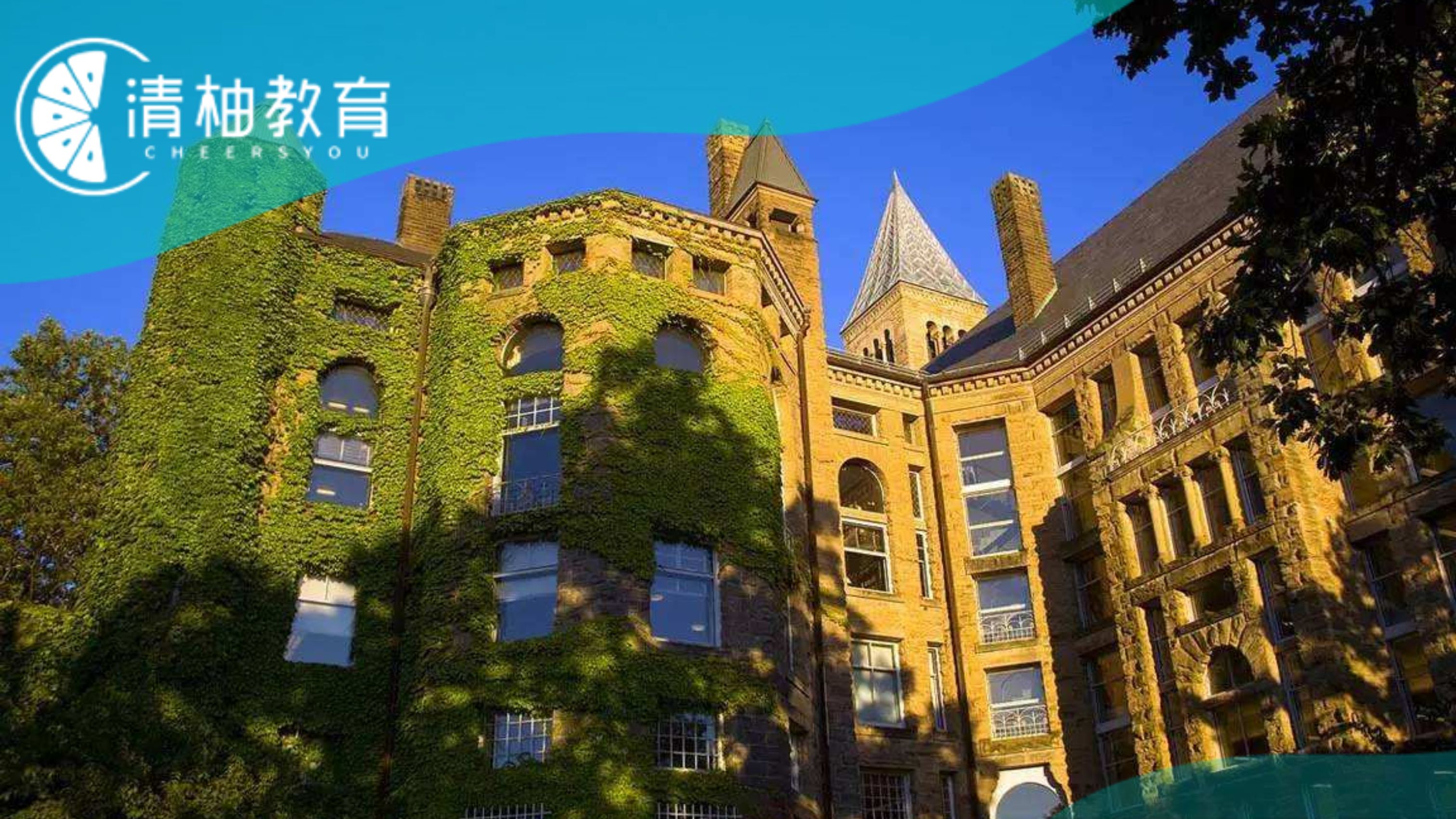
Columbia University's Master of Science in Electrical Engineering is one of the oldest EE programs in the U.S., having made outstanding contributions to the foundational research of modern radio communication, control engineering, and multimedia coding. Columbia's EE program enrolls around 180 students each year, more than half of whom are Chinese. The university's admissions do not heavily weigh undergraduate institution prestige; many students from 211 universities have been admitted. Whether you have broad interests and want to explore different directions, or plan to pivot to computer science (CS) in the future, or aim for research, or are career-oriented, Columbia's EE resources can meet your needs.Students who want to learn more or have other questions can also scan the QR code below to add a consultant for one-on-one consultation.
.png?x-oss-process=style/opt-webp)
I. Program Overview
Columbia's Master of Science in Electrical Engineering (EE) is a highly regarded program, ideal for students who wish to switch subfields within EE or use EE as a springboard to transition into computer science (CS). Unlike programs at other schools, Columbia's EE program has no required courses and does not assign a specific learning path for each student—it's entirely up to personal interest and preference. The standard duration of the EE program is 1.5 years, with a research-oriented option lasting two years. Applications are accepted for both fall and spring semesters. Most applicants choose fall entry and complete the program requirements in three semesters, finishing coursework in December and officially graduating in February to receive their diploma.
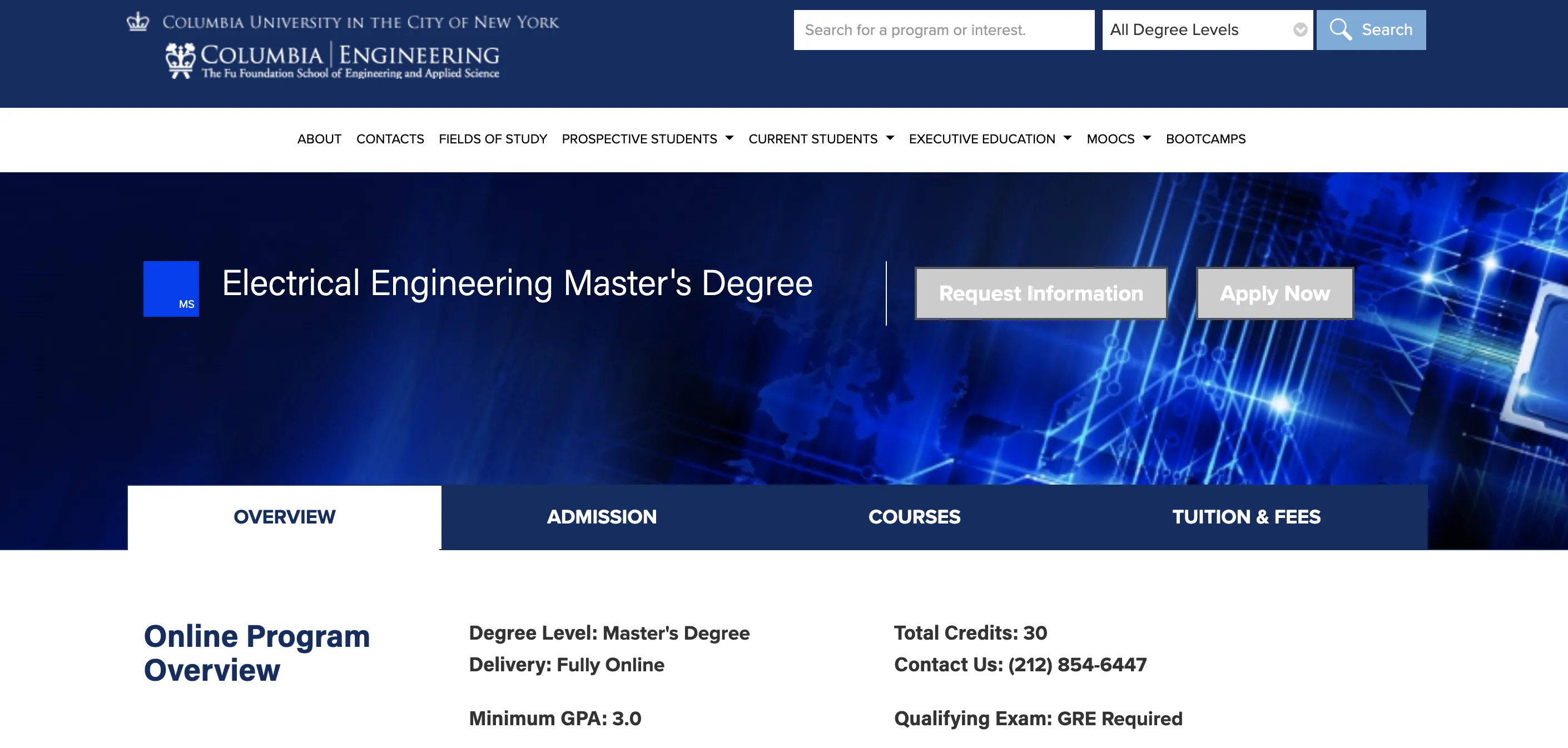
Official website link: https://www.cvn.columbia.edu/program/columbia-university-electrical-engi...
II. Curriculum
In terms of curriculum, Columbia's EE program is extremely flexible, allowing students to choose courses based on their interests. For example, if you want to delve deep into a specific area, you can select relevant courses. Similarly, if you wish to broaden your horizons, you can take courses from other fields. The program requires students to complete 30 credits; typically each course is 3 credits, meaning at least 10 courses must be taken. Columbia requires full-time status in non-graduating semesters, so most students adopt a 4+4+2 course pattern. Those with intentions to pivot into CS can opt for more software-oriented courses.
III. Admission Requirements
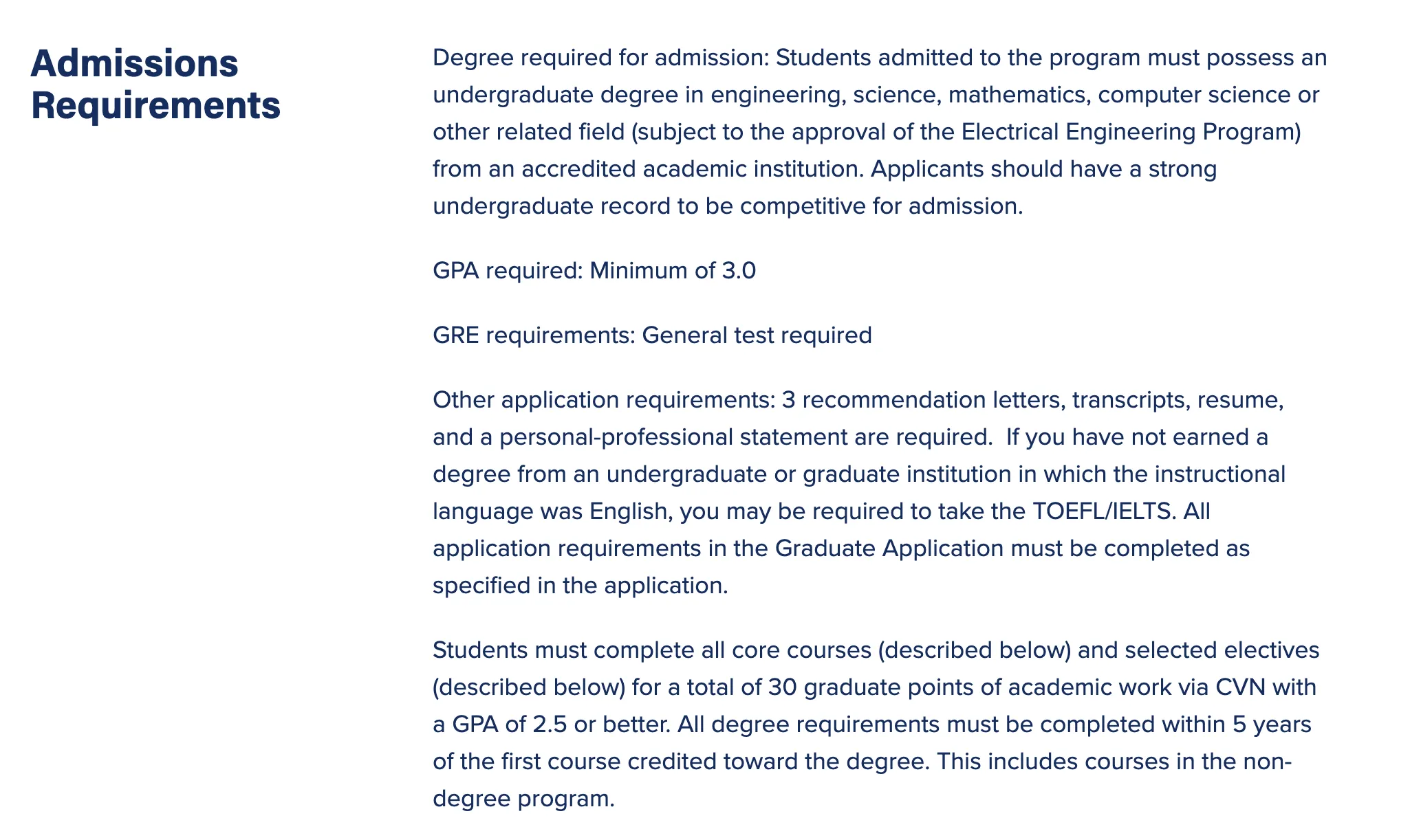
Columbia has a strong academic atmosphere, and the overall academic caliber of students is high, with good undergraduate institutions and backgrounds. When applying to the EE program, you need to submit:
Transcripts
Three letters of recommendation
GRE scores
Personal Statement
Resume/CV
Complete the corresponding interview
$85 application fee
IV. Career Development Prospects
The employment prospects for Columbia University Electrical Engineering Master's graduates have always been very promising. The school has excellent partnerships with numerous well-known enterprises and institutions, providing students with broad job opportunities. At the same time, New York, as a global economic and technology hub, offers rich internship and employment resources. Many graduates secure high-paying jobs immediately after graduation and experience sustained career growth.
In addition, the Columbia Electrical Engineering Master's program has a large and active alumni network. The school values the development and utilization of alumni resources, regularly organizing various alumni events to provide students and graduates with opportunities for networking and collaboration. Alumni have achieved remarkable success in various fields, and their experiences and resources provide important support for students' career development.
For more questions about studying abroad and graduate school applications, you can also add the contact information of the CheersYou(清柚教育) consultant below for detailed information.