
As a niche but distinctive option for studying abroad, applying to archaeology programs at top UK universities is an unconventional path that offers both academic excellence and access to unparalleled resources—such as the British Museum and Cambridge University Library—which house vast collections of historical artifacts and documents essential for archaeological research. CheersYou(清柚教育) consultants have compiled key information on archaeology programs at two prestigious UK universities: Durham University and the University of Edinburgh. For in-depth insights or any questions, you can also scan the QR code below to speak one-on-one with a consultant.
.png?x-oss-process=style/opt-webp)
1. Durham University
Durham University's archaeology program enjoys a high reputation in the UK and internationally. It offers a range of archaeology courses spanning from prehistoric times to the modern era, covering various regions and cultures.
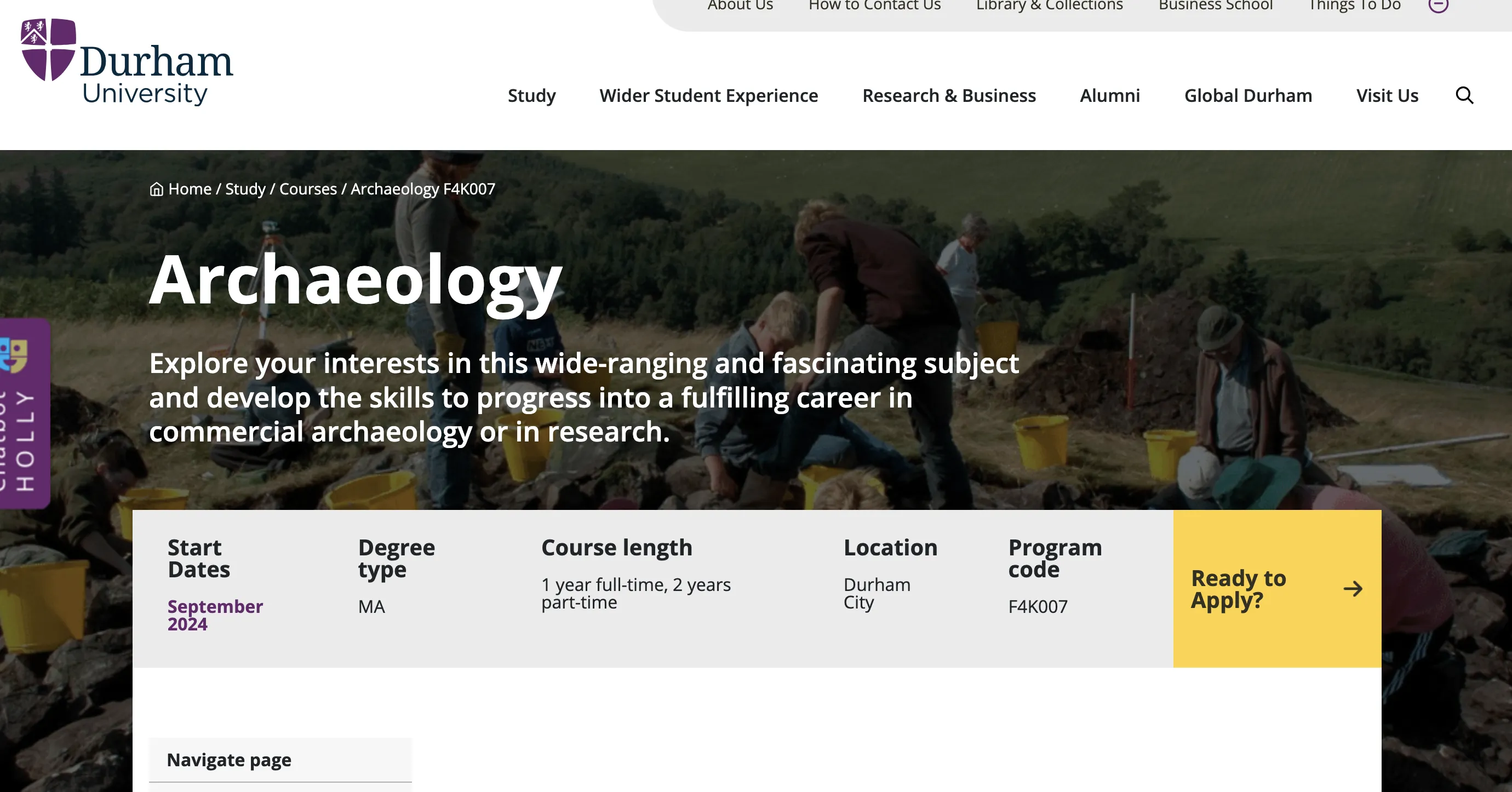
Official link: https://www.durham.ac.uk/study/courses/archaeology-f4k007/
The MA Archaeology program offers six specializations:
- Landscape Archaeology
- Prehistoric Archaeology
- The Archaeology of Egypt, Near East and Asia (ENEA)
- The Archaeology and Heritage of East Asia (AHEA)
- Classical and Roman Archaeology
- Medieval and Post Medieval Archaeology

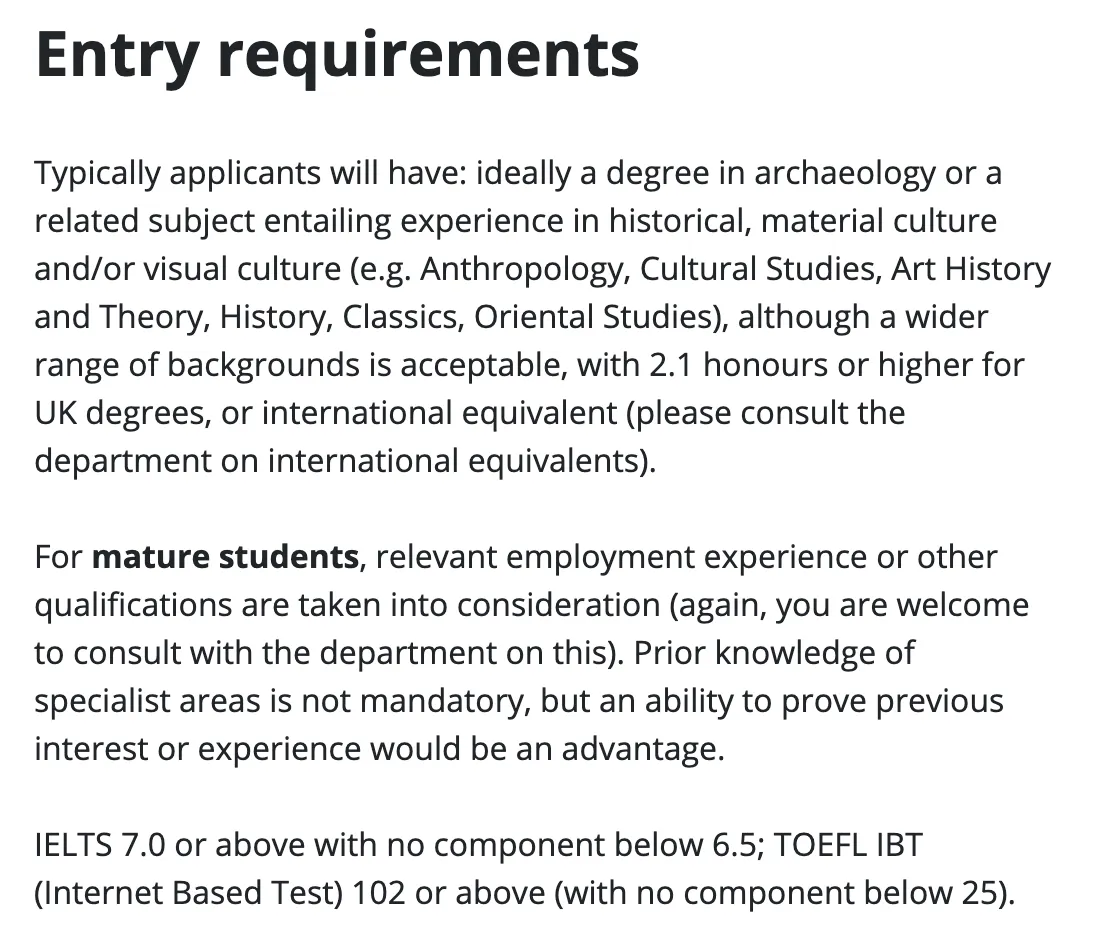
Admission requirements:
-
Academic background: Applicants are typically expected to hold a bachelor's degree in a relevant field such as history, anthropology, or classics. If your undergraduate major is not directly related, you may still apply if you have relevant coursework or research experience.
-
Grade requirement: Durham usually requires an undergraduate average of at least a 2:1 (Upper Second Class Honours) or equivalent, though specifics may vary by intake and program.
-
English proficiency: Non-native English speakers must provide proof of English language ability, such as IELTS. Normally, an overall IELTS score of 6.5 with no sub-score below 6.0 is required.
-
Personal statement: Applicants must submit a personal statement outlining their interest in archaeology, relevant experience, and reasons for choosing Durham's program.
-
References: Two letters of recommendation are usually needed, preferably from previous instructors or professionals in an archaeology-related field.
-
Portfolio / research proposal: Some specializations may require a portfolio or research proposal to demonstrate research capability and interests.
-
Interview: In some cases, applicants may be invited for an interview to further assess their potential and suitability.
2. University of Edinburgh
The Classical Art and Archaeology program at the University of Edinburgh is a highly interdisciplinary field that integrates art, culture, history, and archaeology. Students delve into ancient artworks, trace the development of civilizations, and master the methods and theories behind uncovering historical sites. Guided by world-leading experts, they may also participate in archaeological excavations and cultural heritage conservation projects, experiencing history firsthand.
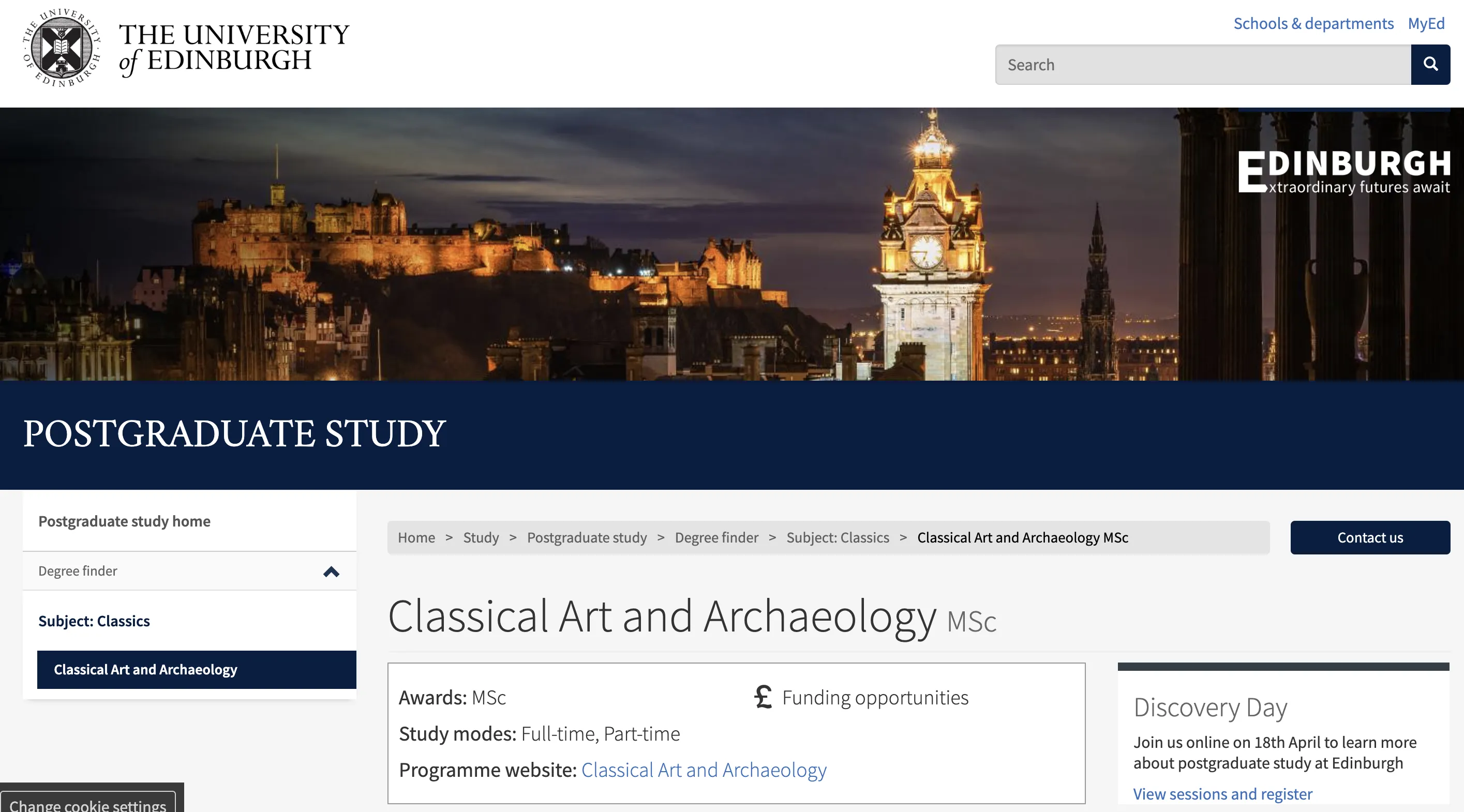
Official link: https://www.ed.ac.uk/studying/postgraduate/degrees/index.php?r=site/view...
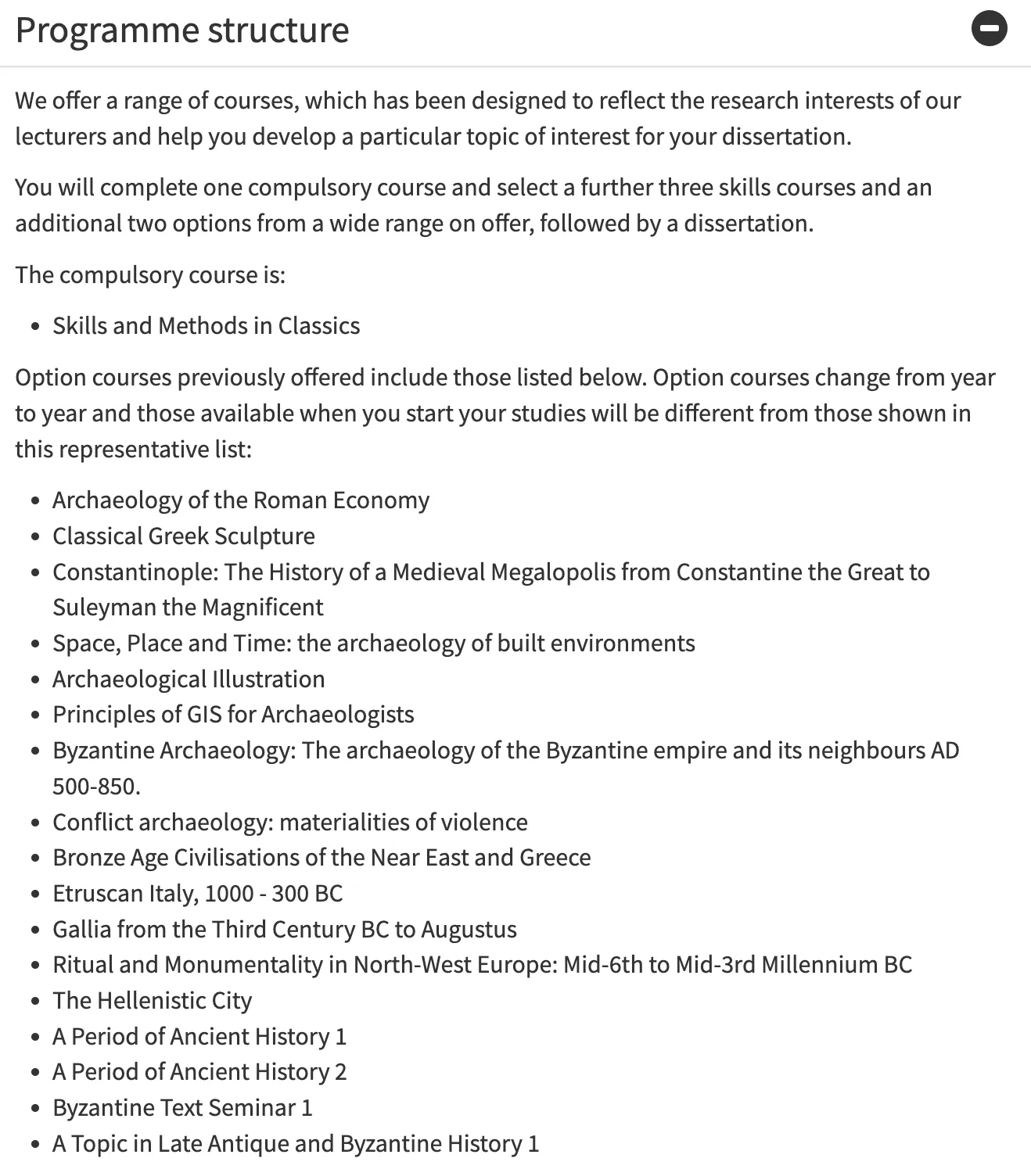
The Classical Art and Archaeology curriculum typically includes these core modules:
- Introduction to Classical Art and Archaeology: Provides foundational knowledge of classical art and archaeological contexts.
- Ancient Greek Art and Archaeology: In-depth study of Greek art styles, architecture, sculpture, and ceramics.
- Roman Art and Archaeology: Explores Roman artistic achievements, architecture, and cultural heritage.
- Archaeological Methods: Teaches essential skills in fieldwork, data analysis, and conservation.
- Ancient Civilizations Studies: Analyzes social structures, religious beliefs, and economic activities of ancient cultures.
- Late Classical and Early Christian Art: Examines artistic developments from the late classical period to the early Christian era.
Students can also choose from a range of optional modules—such as archaeology of specific regions, ancient literature, or historical linguistics—to deepen their expertise. Edinburgh encourages hands-on involvement in real excavation projects, enhancing research skills through practice.
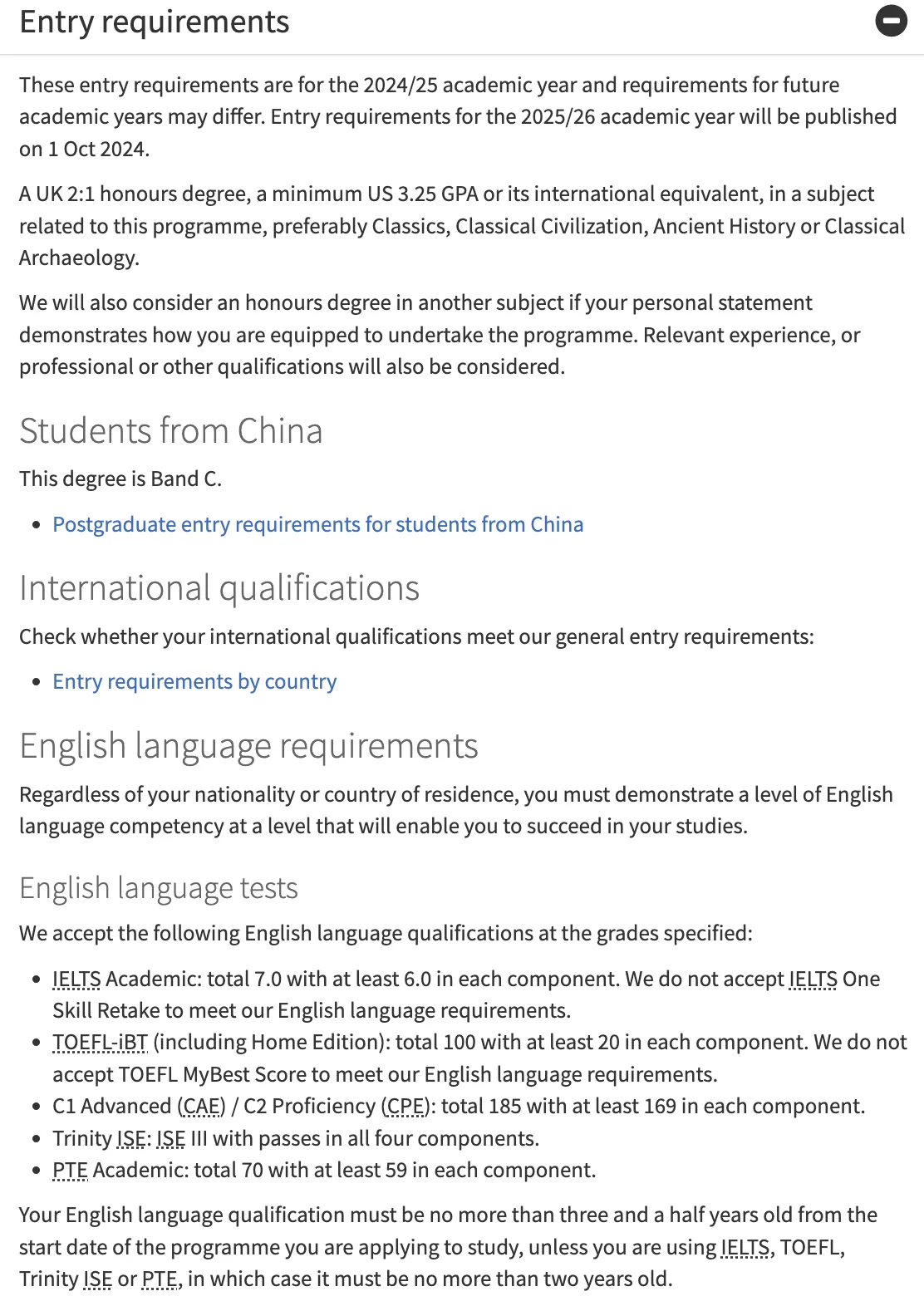
Applicants usually need a bachelor's degree in a related field such as art history, archaeology, classics, or a relevant humanities/social science discipline. Detailed admission requirements are as follows:
In terms of career prospects, graduates of Edinburgh's Classical Art and Archaeology program enjoy a wide range of options in the job market. They can find employment in museums, galleries, art institutions, cultural heritage management, and higher education. Specific career paths include:
- Museum and gallery staff: Responsible for collection management, exhibition planning, and educational outreach.
- Cultural heritage conservation specialist: Involved in site preservation, restoration, and management.
- Academic research and teaching: Conducting research and teaching in classical art and archaeology at universities or research institutes.
- Publishing and media: Writing articles and books on classical art and archaeology for publishers, magazines, or media outlets.
- Government cultural departments: Participating in policy-making, cultural project planning, and international cultural exchange activities.
- Private collections and auction houses: Assisting private collectors in managing art collections or working in auction houses.
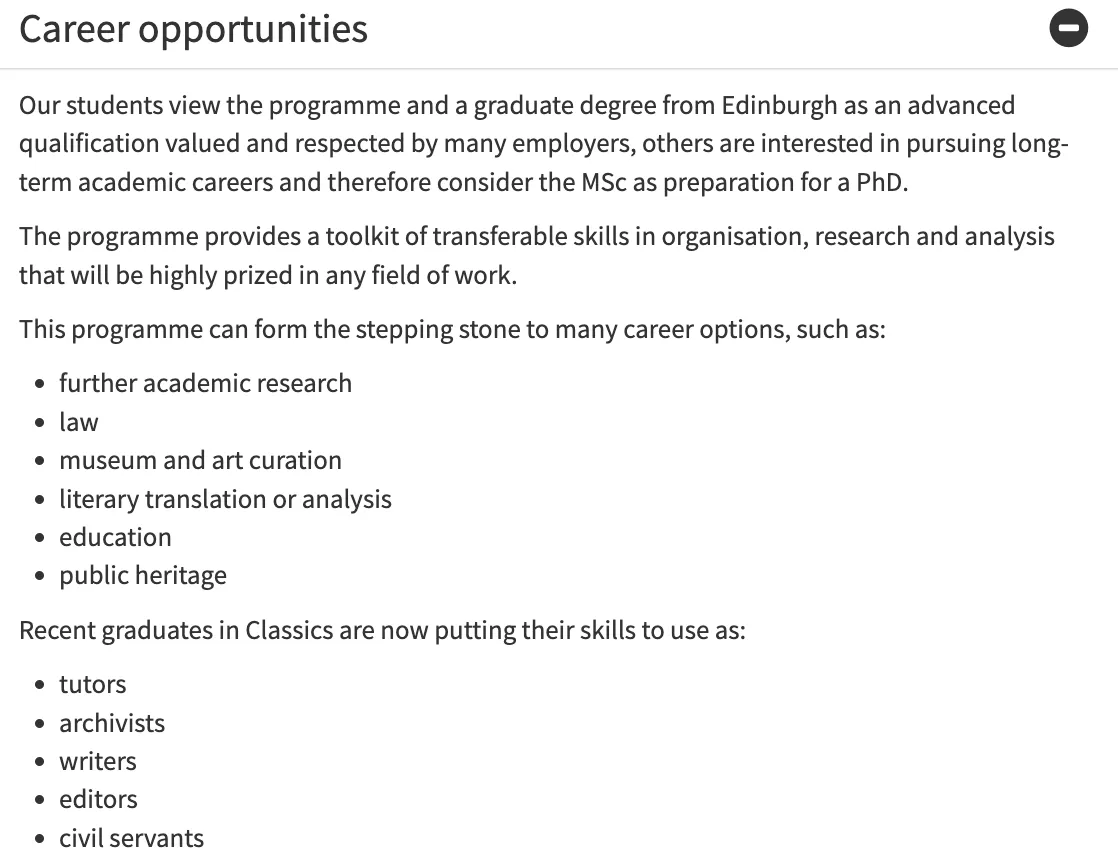
Moreover, graduates may choose to pursue further studies, such as a PhD, to advance their research ability and academic standing. Thanks to the program's outstanding teaching quality and research strength, Edinburgh equips graduates with a solid foundation for success in their chosen fields.
For more questions related to study-abroad and graduate applications, you can also add the contact information of the CheersYou(清柚教育) consultant below.