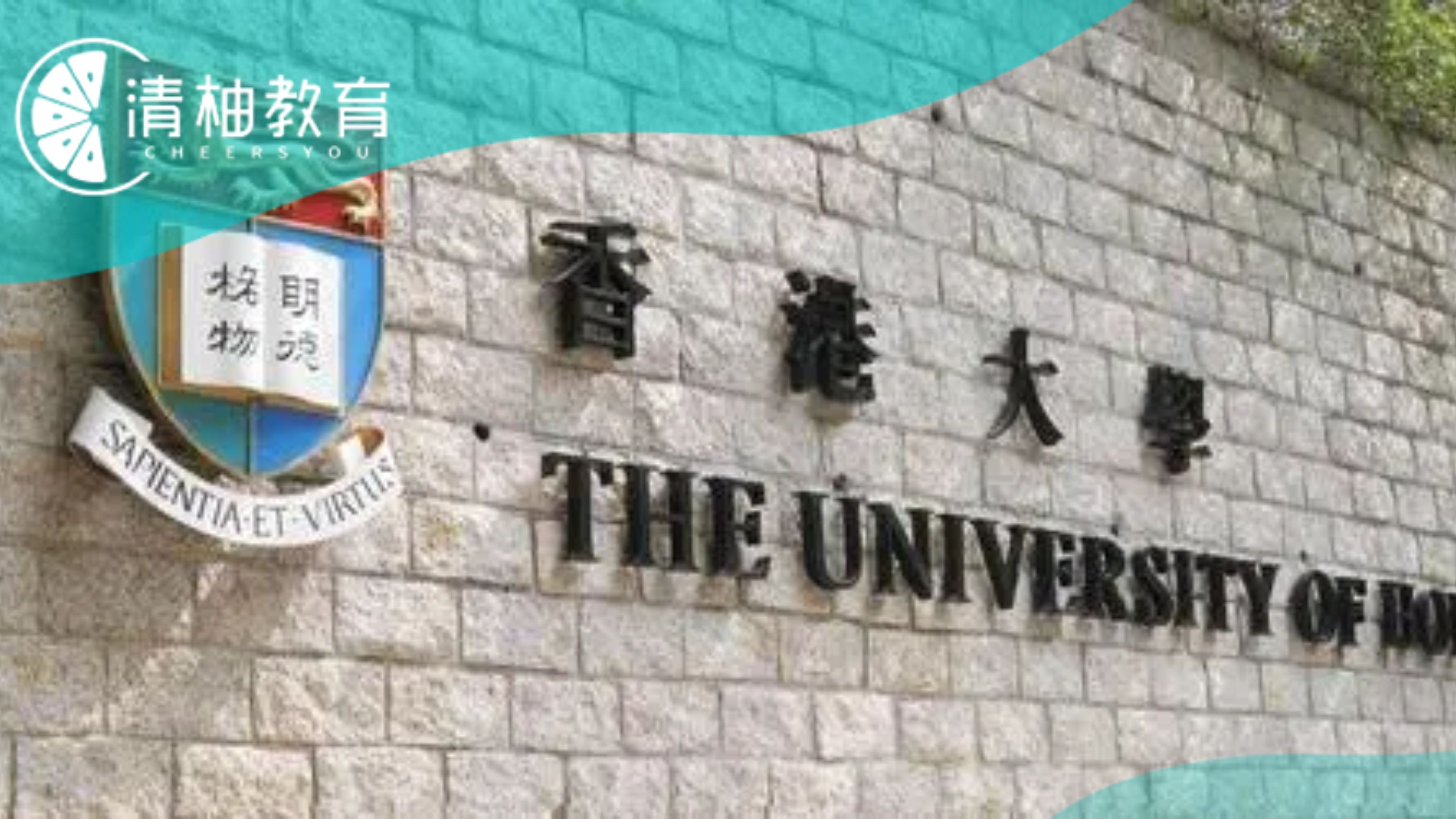
The academic atmosphere of the University of Hong Kong's Buddhist school is very strong. Its Buddhist studies program has two tracks: the Master of Buddhist Studies (MBS) and the Master of Buddhist Counselling, both unique and in-depth master's degree programs. Today, we will mainly introduce the HKU Master of Buddhist Studies. For more questions, you can also scan the QR code below for a one-on-one consultation.

I. Program Overview
The University of Hong Kong's Master of Buddhist Studies program aims to deeply explore the essence of Buddhist philosophy and examine its significance and value in modern society. The program covers not only the interpretation of Buddhist scriptures but also integrates multidisciplinary perspectives from modern philosophy, psychology, sociology, etc., providing students with a comprehensive and in-depth learning platform.
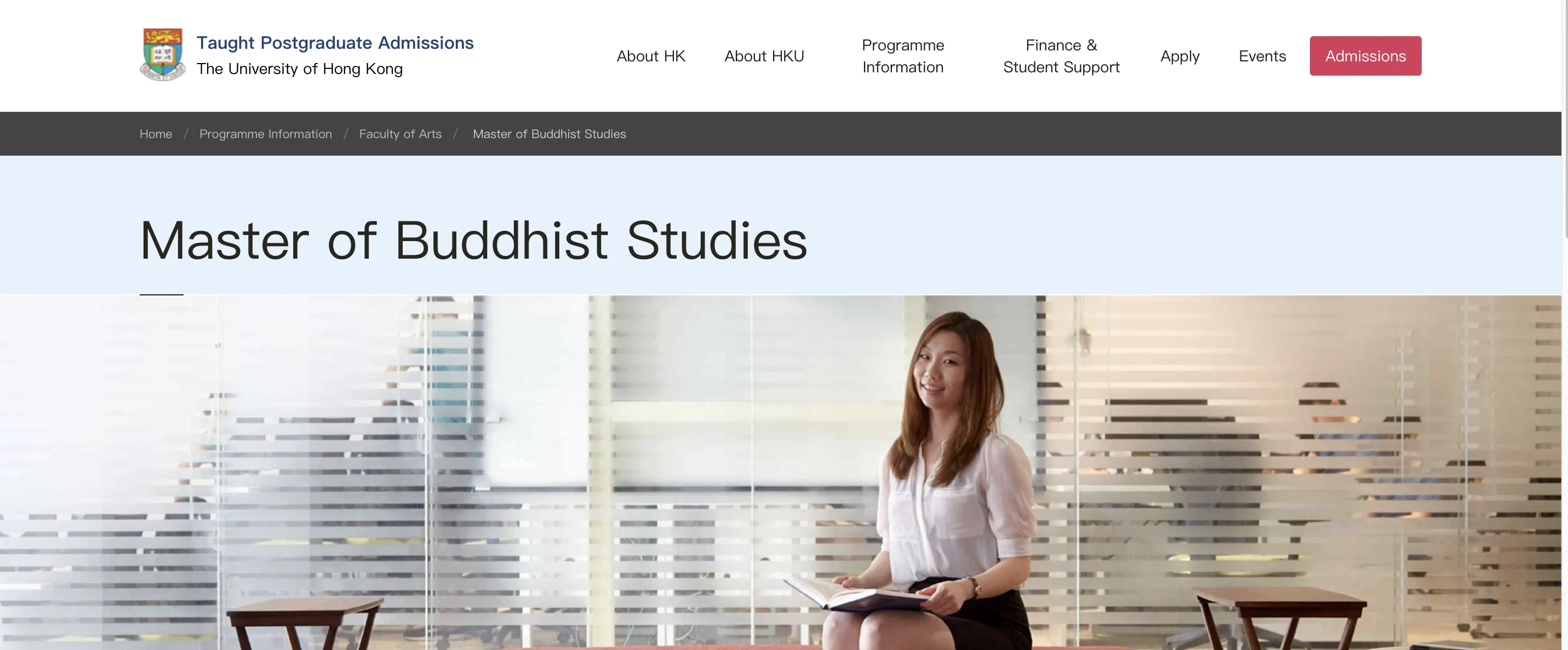
Official Website: https://admissions.hku.hk/tpg/programme/master-buddhist-studies
II. Curriculum
The MBS curriculum is rich and diverse, covering areas such as the foundations of Buddhist philosophy, Buddhist history and culture, Buddhist art and literature, and Buddhism in modern society. The course content is also highly diversified, encompassing various schools of Buddhism, including language courses in Pali, Sanskrit, and Tibetan. Students can choose courses according to their interests and research directions for in-depth study. Additionally, the program emphasizes practical teaching, organizing activities like meditation retreats and Buddhist cultural field trips to allow students to experience Buddhist wisdom in practice.
.png?x-oss-process=style/opt-webp)
III. Admission Requirements
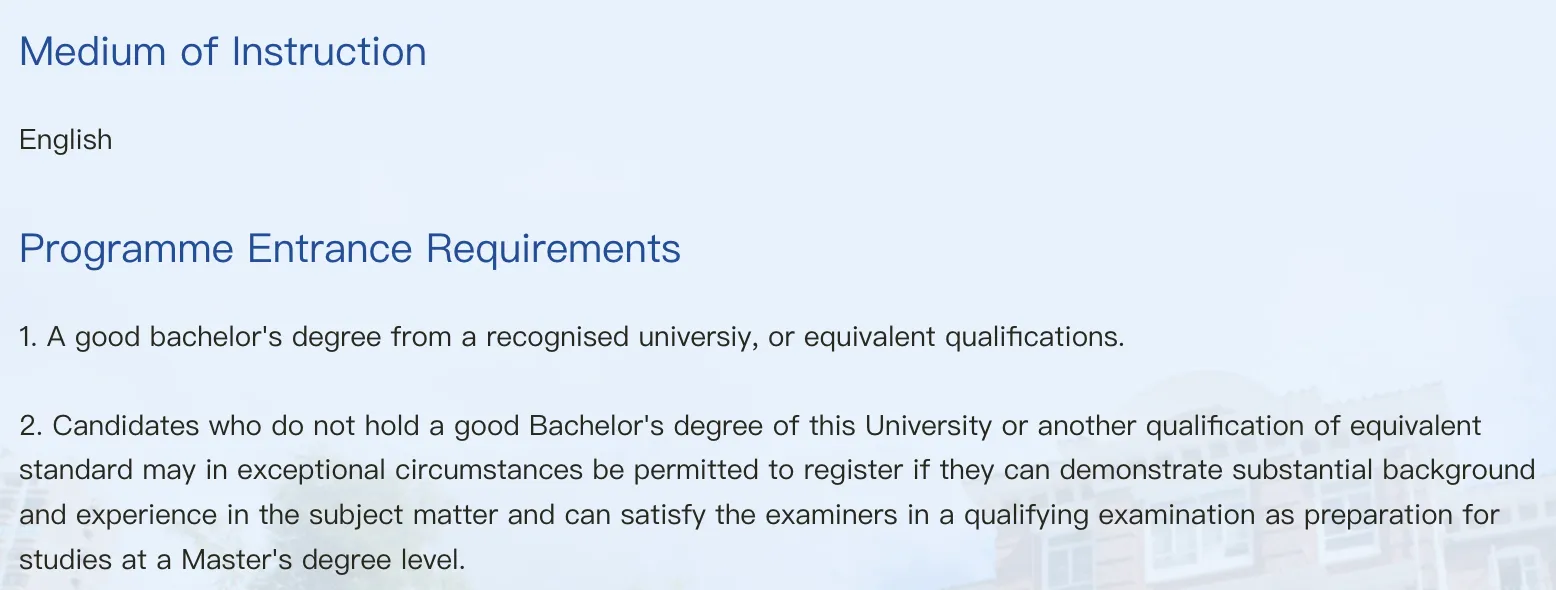
The HKU Master of Buddhist Studies program has relatively high admission requirements. Applicants need to have a relevant academic background, such as a bachelor's degree in philosophy, religion, Oriental studies, or related fields. They must also have a good command of English, with the ability to read and comprehend English literature proficiently, as the program is taught entirely in English. Additionally, applicants are required to submit a personal statement outlining their interest in Buddhism, research motivation, and future career plans.
IV. Career Prospects
Graduates of the HKU Master of Buddhist Studies program have broad career prospects. They can pursue academic research and become experts in Buddhist studies, take up teaching positions in religious institutions to promote Buddhist culture, or leverage their professional strengths in government, corporate, or other sectors, contributing to social harmony and stability.
In summary, the HKU Master of Buddhist Studies program is an academic institution full of challenges and opportunities. Through in-depth study and research, students can appreciate the profundity and charm of Buddhist philosophy, laying a solid foundation for their future development.
For more admissions case studies and inquiries about study abroad graduate applications, please add the CheersYou(清柚教育) advisor below for detailed information.