U.S. college tuition is going up again this year!
The $80,000 tuition era is over—the $100,000 Club is the new rich-kid standard.

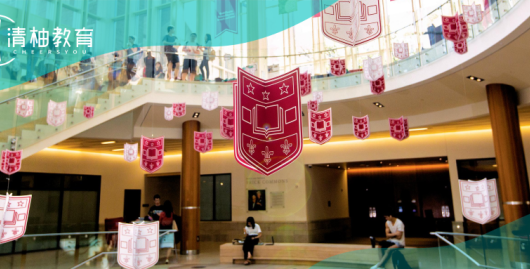
Vanderbilt University's tuition for Fall 2024 is approaching $100,000. Looks like that controversial new logo really did cost them.
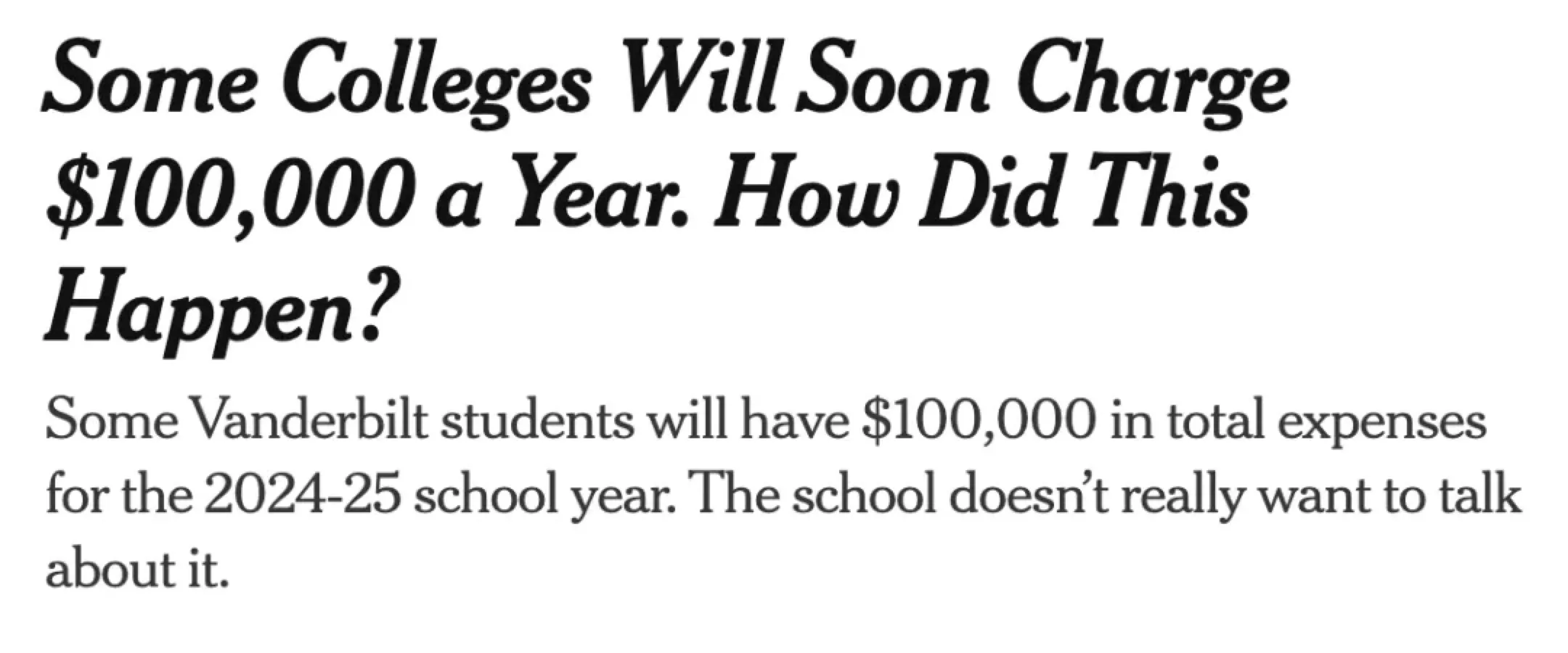
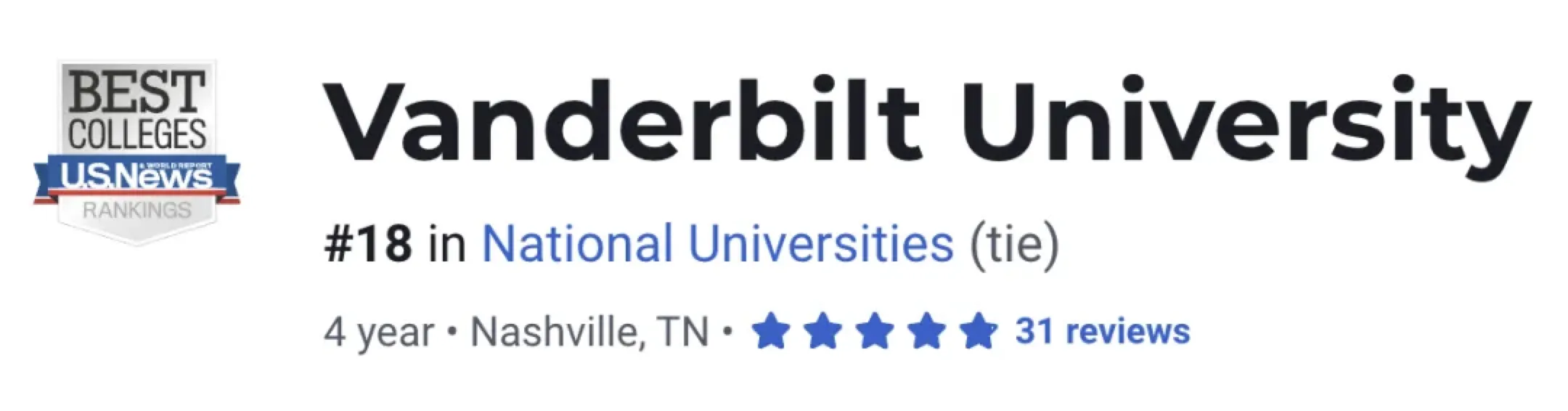
The school dropped five spots in the U.S. News rankings this year but its tuition keeps climbing. Is a Top 20 education really this expensive now?
North American Universities: Tuition Soaring
In the 2024-25 academic year, universities across North America are hiking tuition sharply again.
United States:
This year, U.S. college tuition is skyrocketing—USC, NYU, Tufts, and the University of Pennsylvania all exceed $90,000.
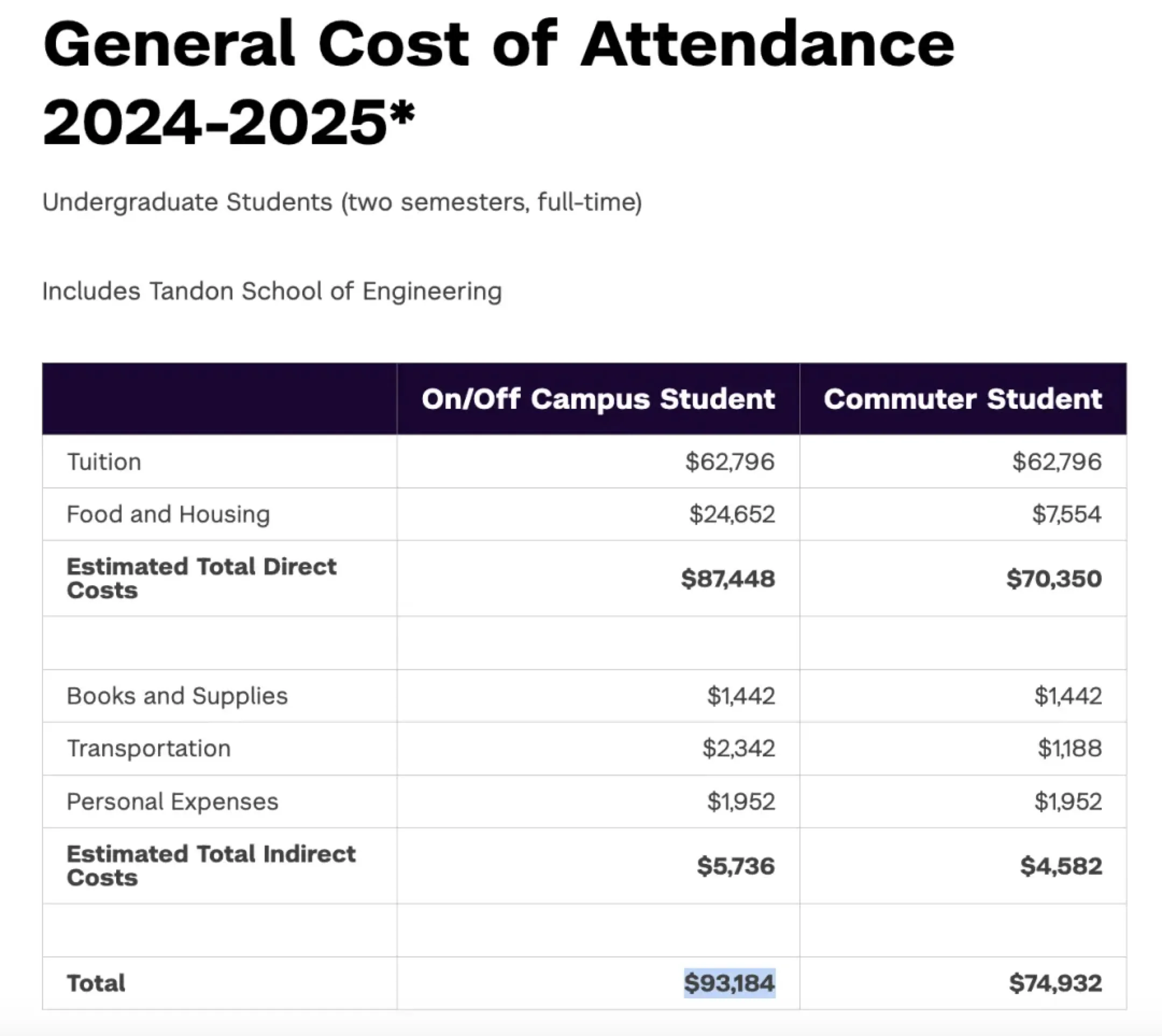
NYU, a favorite among wealthy students, has always been known for its high tuition. For the 2024-25 year, NYU's total cost has reached an annual $93,184.
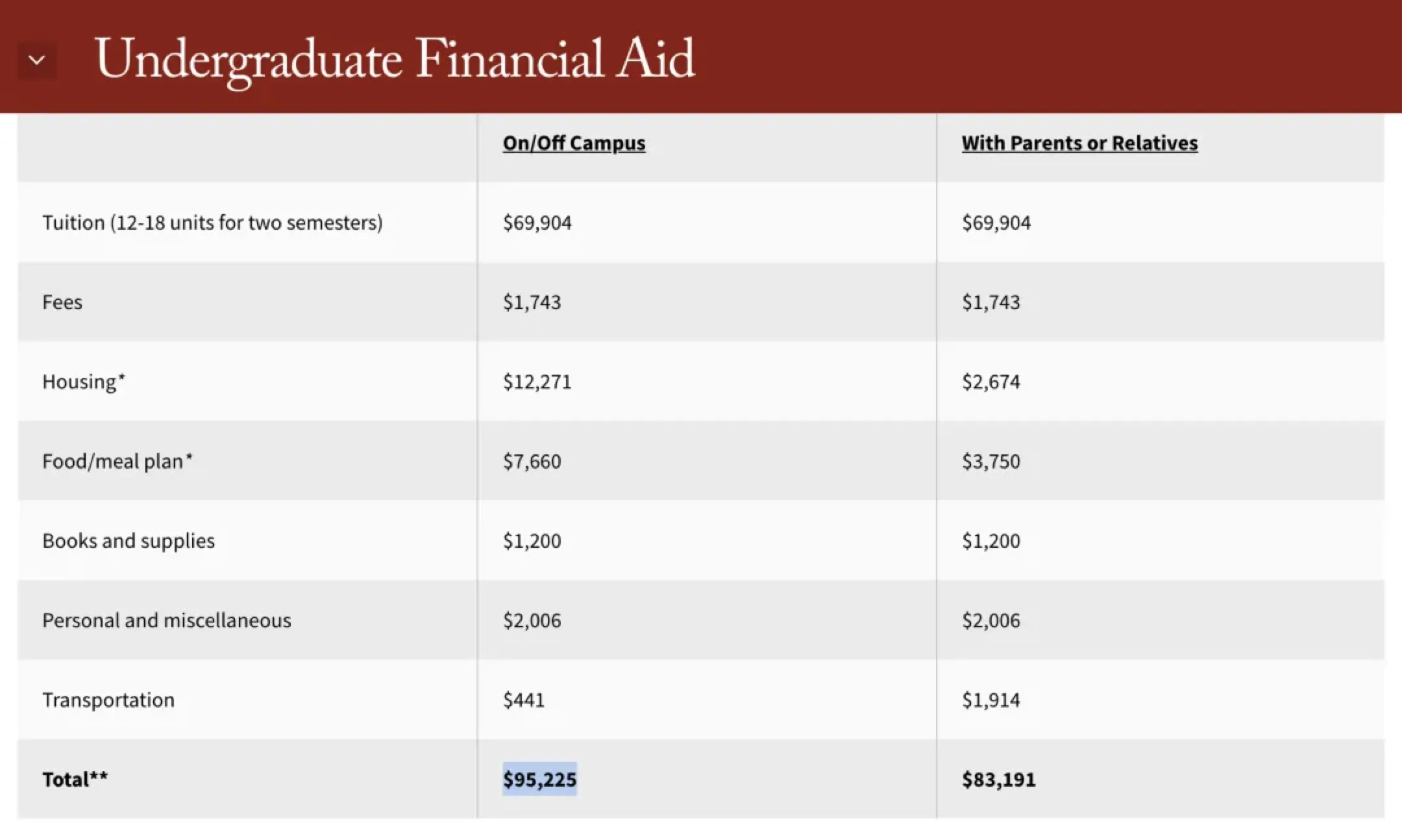
USC's tuition and fees hit an annual $95,225:
UPenn's is $92,288:
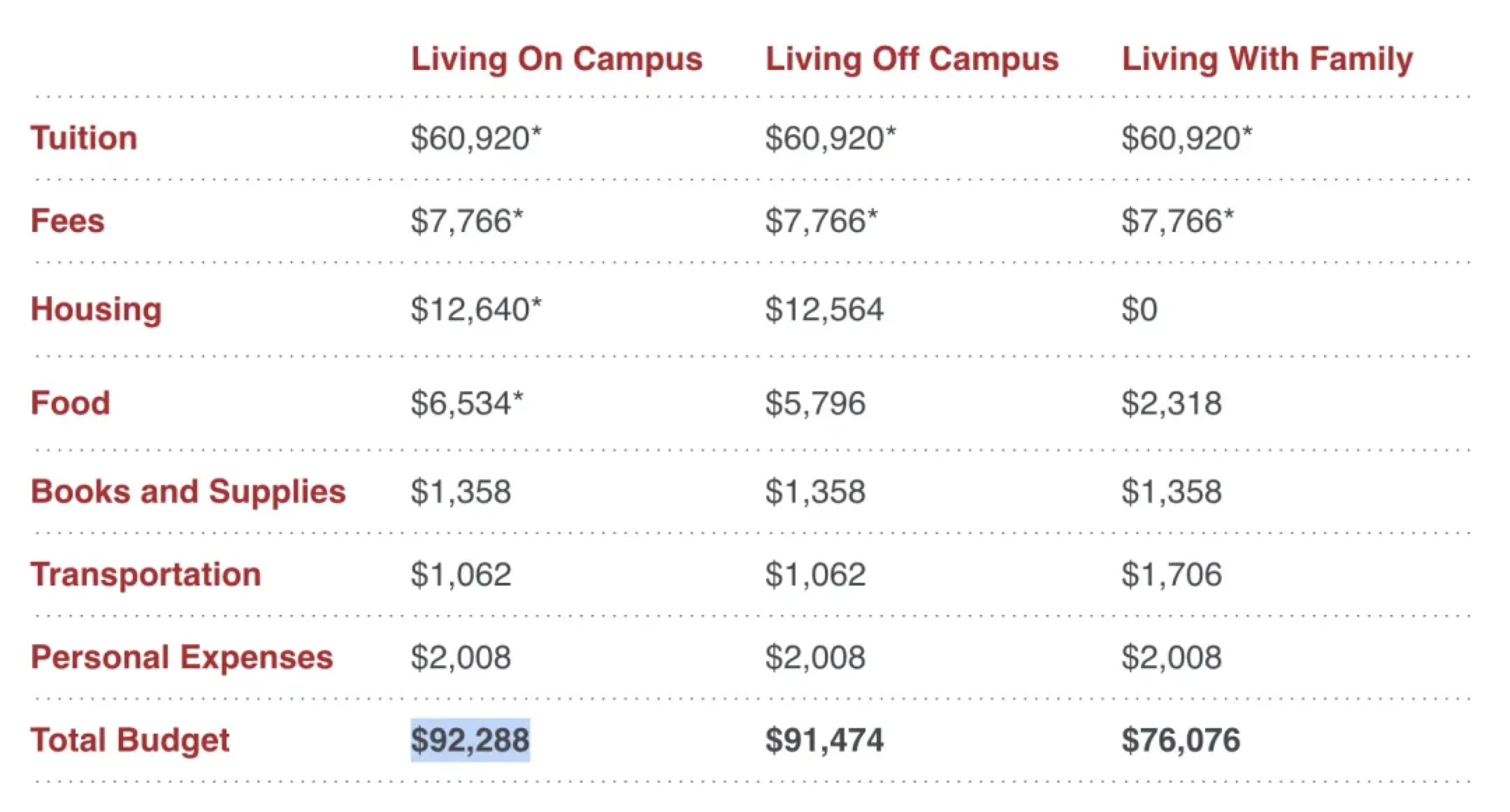
Tufts: $92,167:

Yale University's total cost also approaches $90,000 per year:
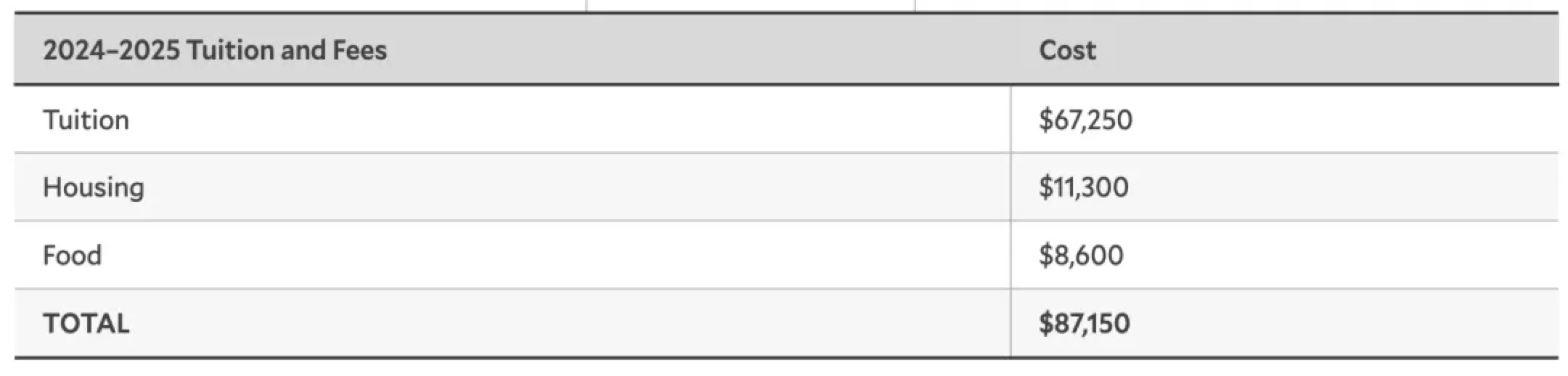
Though far above the average private university tuition reported by the College Board, these top-tier costs reflect the ever-rising cost of living and education in the U.S.
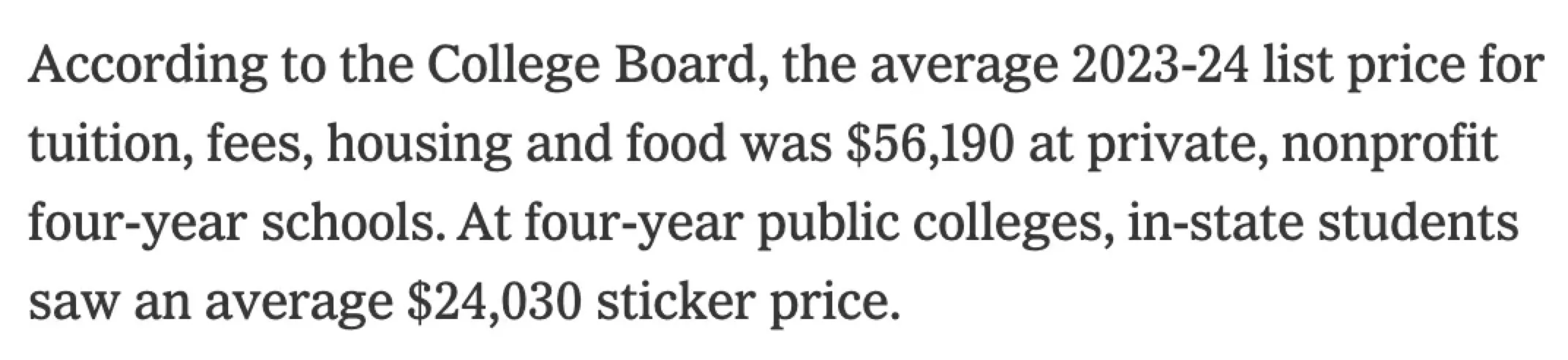
College Board data shows that in 2023-24, the average tuition at four-year private U.S. universities was $56,190, and at four-year public universities, $24,030.
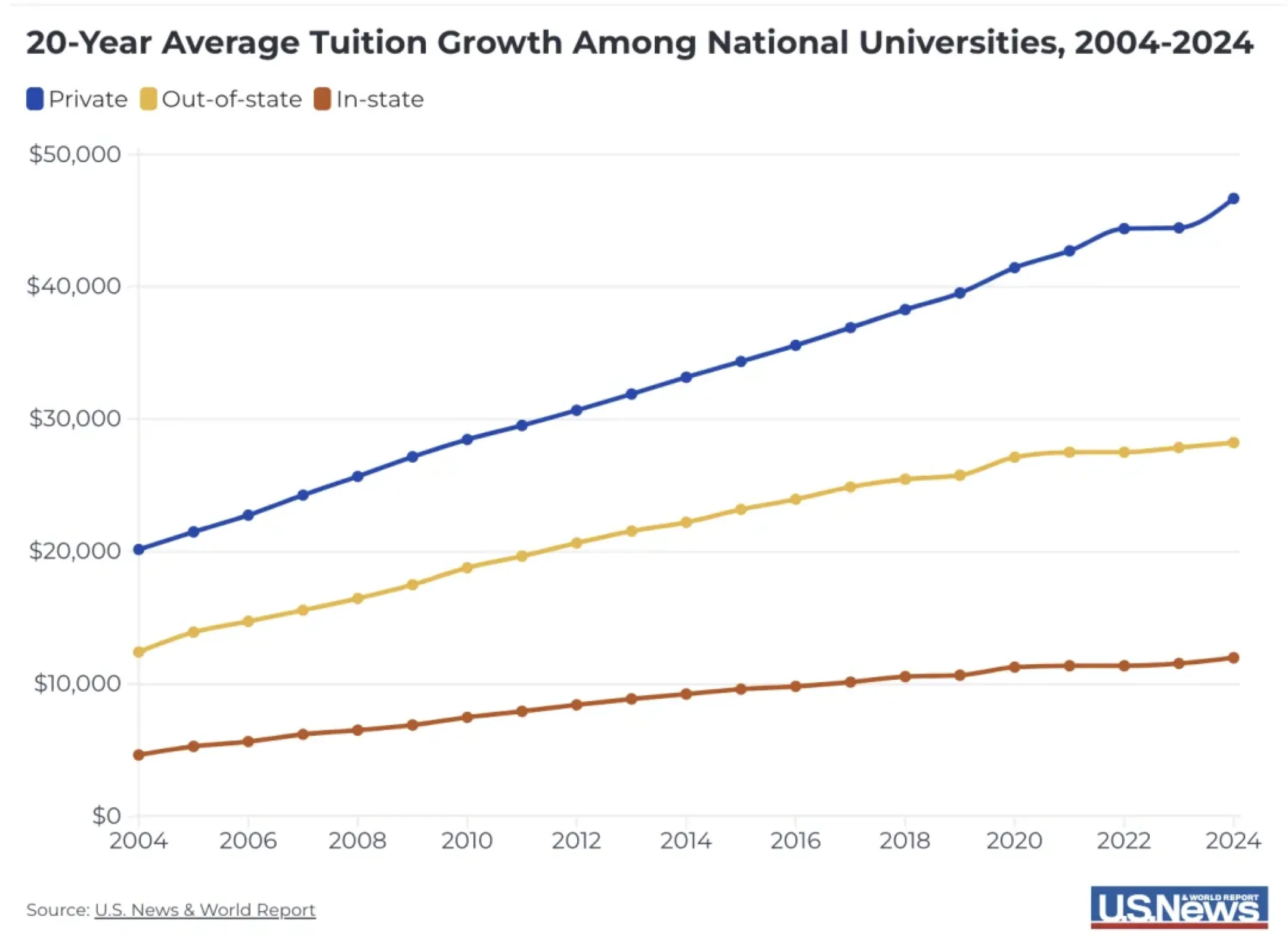
U.S. News data shows that over the past 20 years, private university tuition has risen 132%, while out-of-state and in-state public university tuition have increased 127% and 158%, respectively.
Today, only wealthy American families or international students can afford to pay full tuition.
More and more people are questioning whether such an expensive college education is worth it.
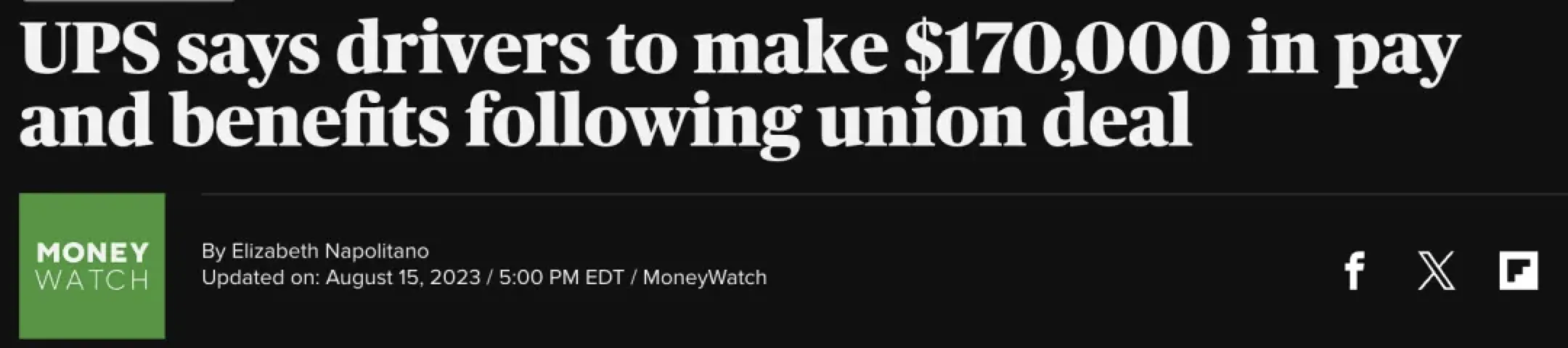
After all, in the U.S., a UPS driver can earn $170,000, while top university grads face a job market that feels like The Hunger Games.
Canada:
It's not just the U.S.—Canadian university tuition is also skyrocketing.
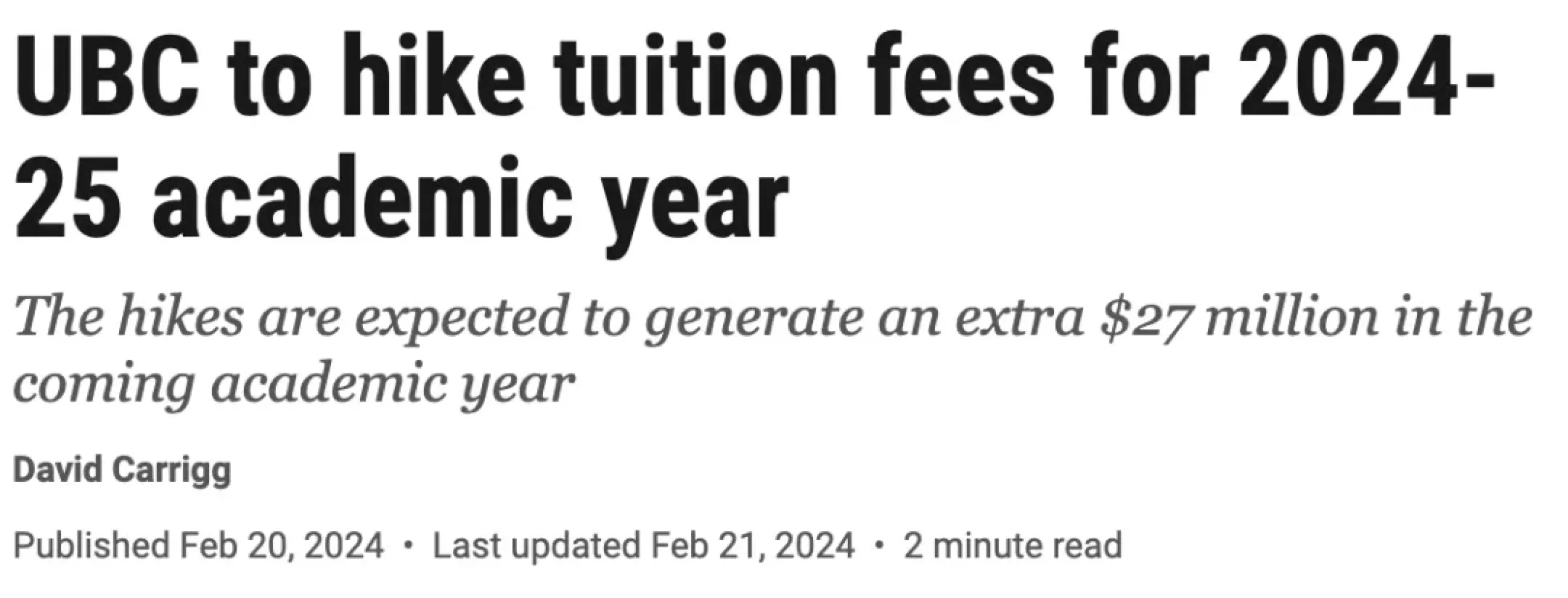
UBC announced a tuition increase starting this May, with domestic students expecting a 2% hike and international students a 3%–5% hike over last year.
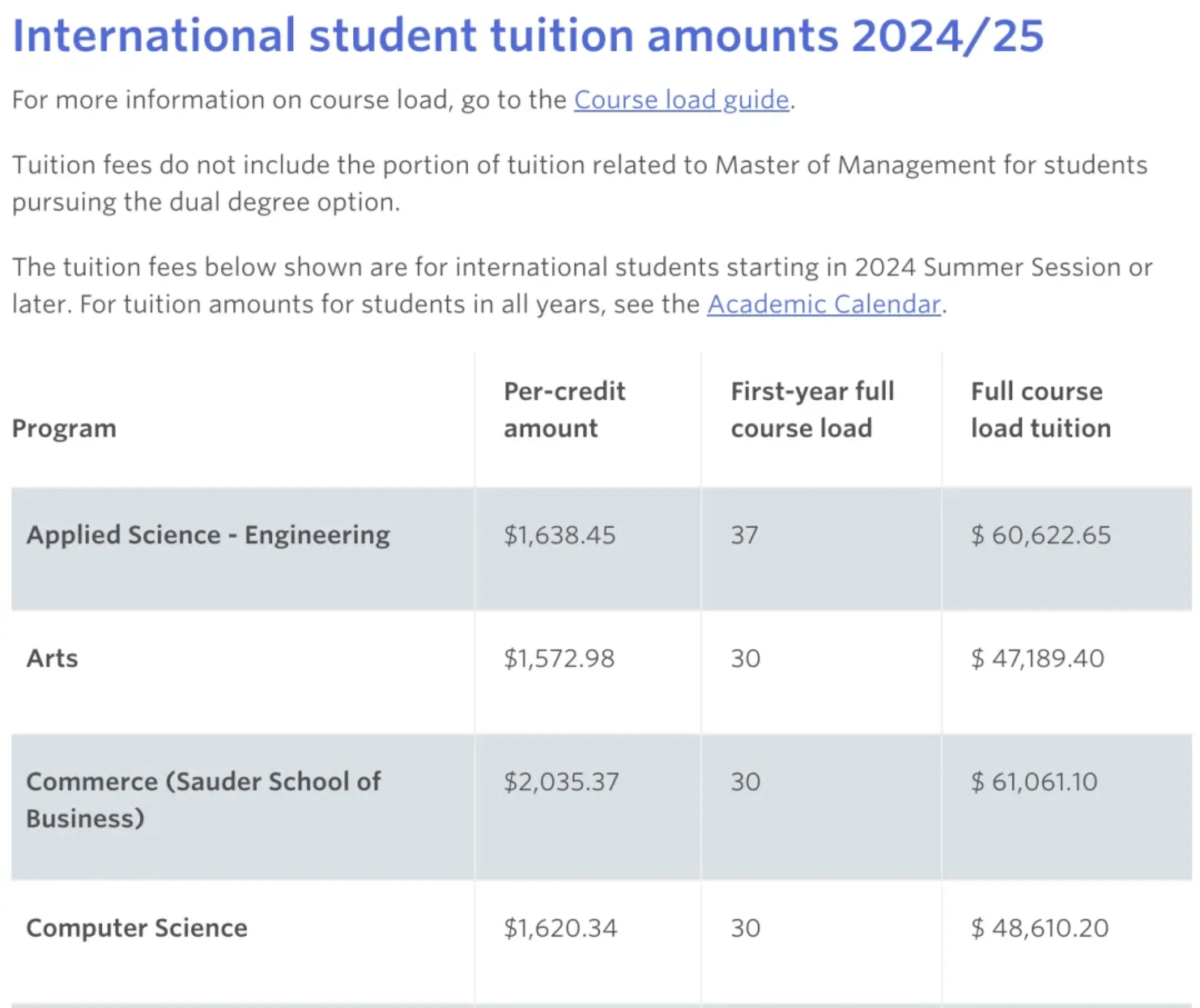
In 2024-25, UBC's international tuition has surpassed CAD 47,000 per year, with business and engineering programs exceeding CAD 60,000.
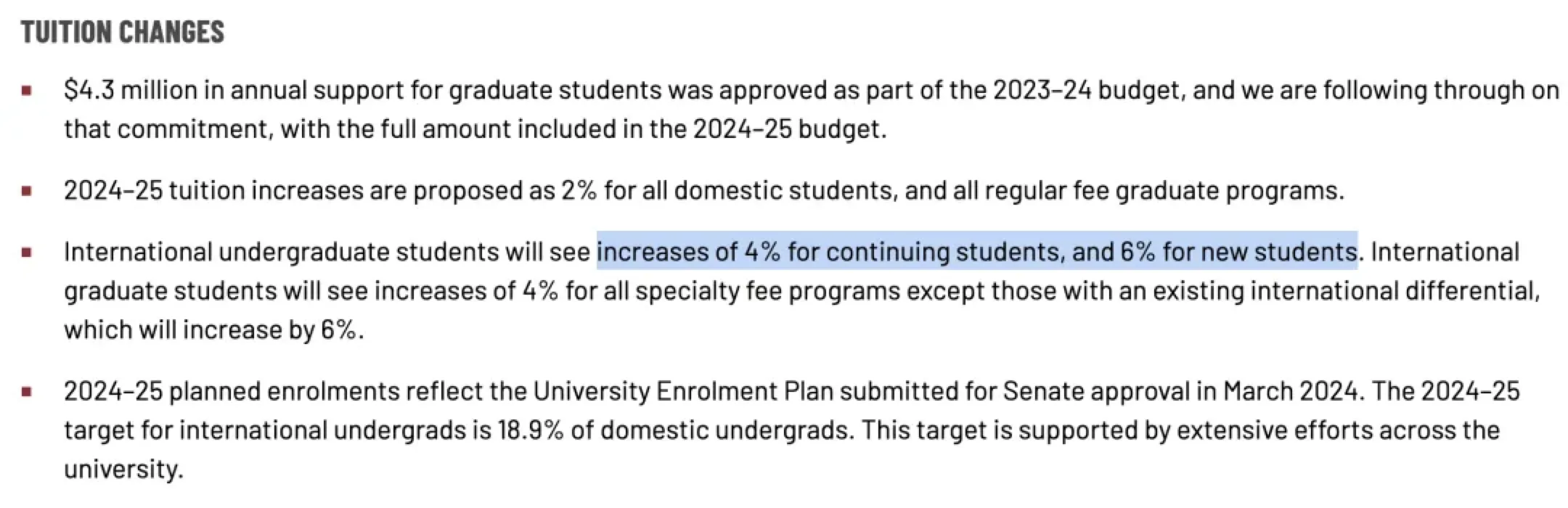
At Simon Fraser University (SFU), international tuition was CAD 50,941 last year; this year the school plans a 6% increase for incoming undergrads and 4% for continuing students.
The University of Victoria (UVic) currently charges international students CAD 32,885; the school plans a 6.75% increase for 2024-25.
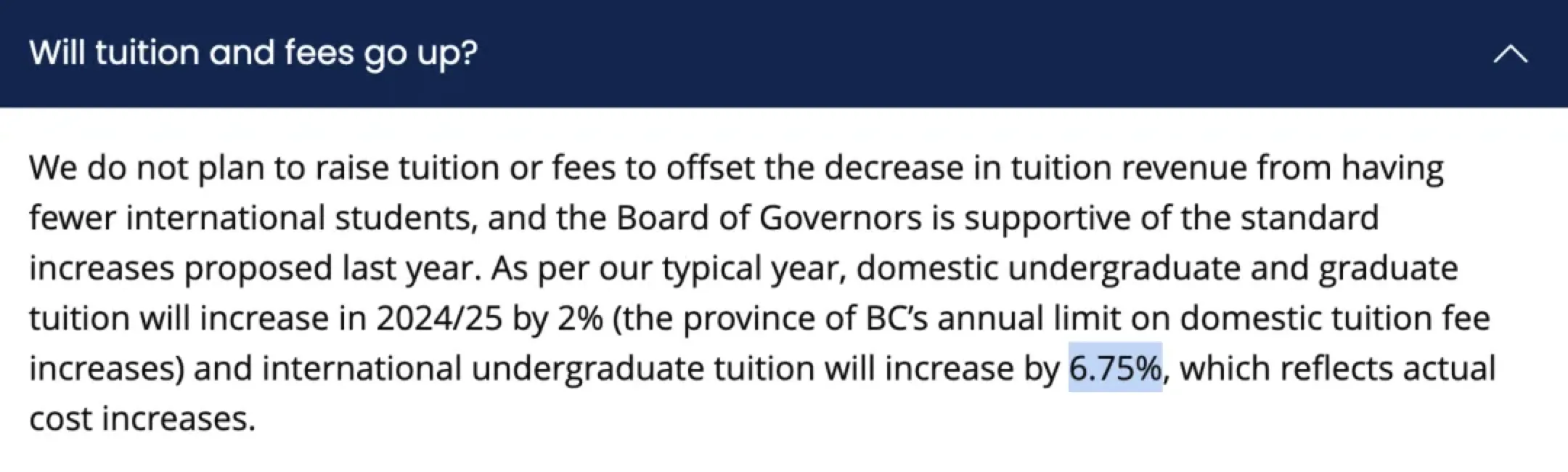
International tuition is already several times higher than domestic fees, and yet it faces the steepest hikes—like fleecing the proverbial fat sheep.
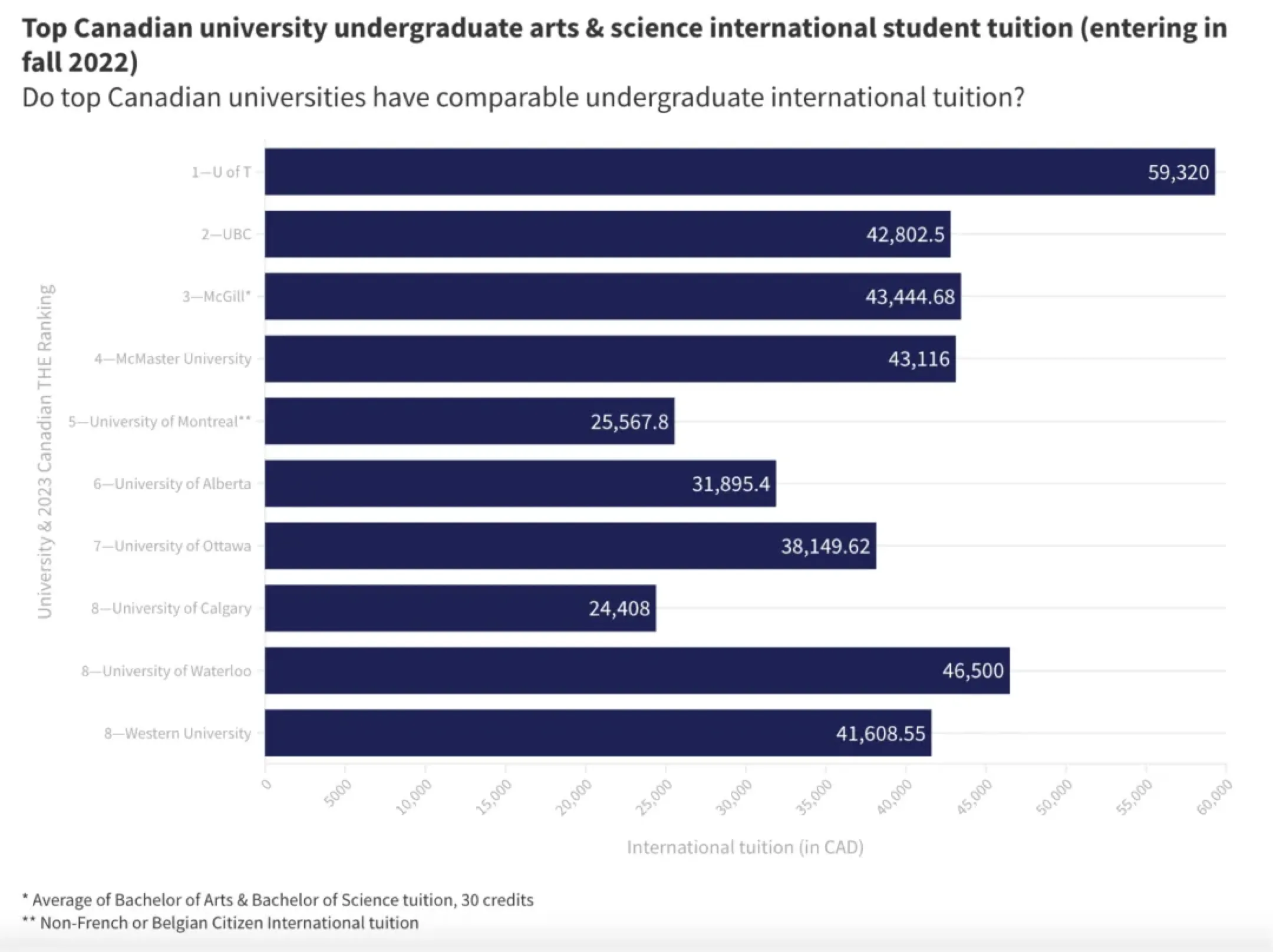
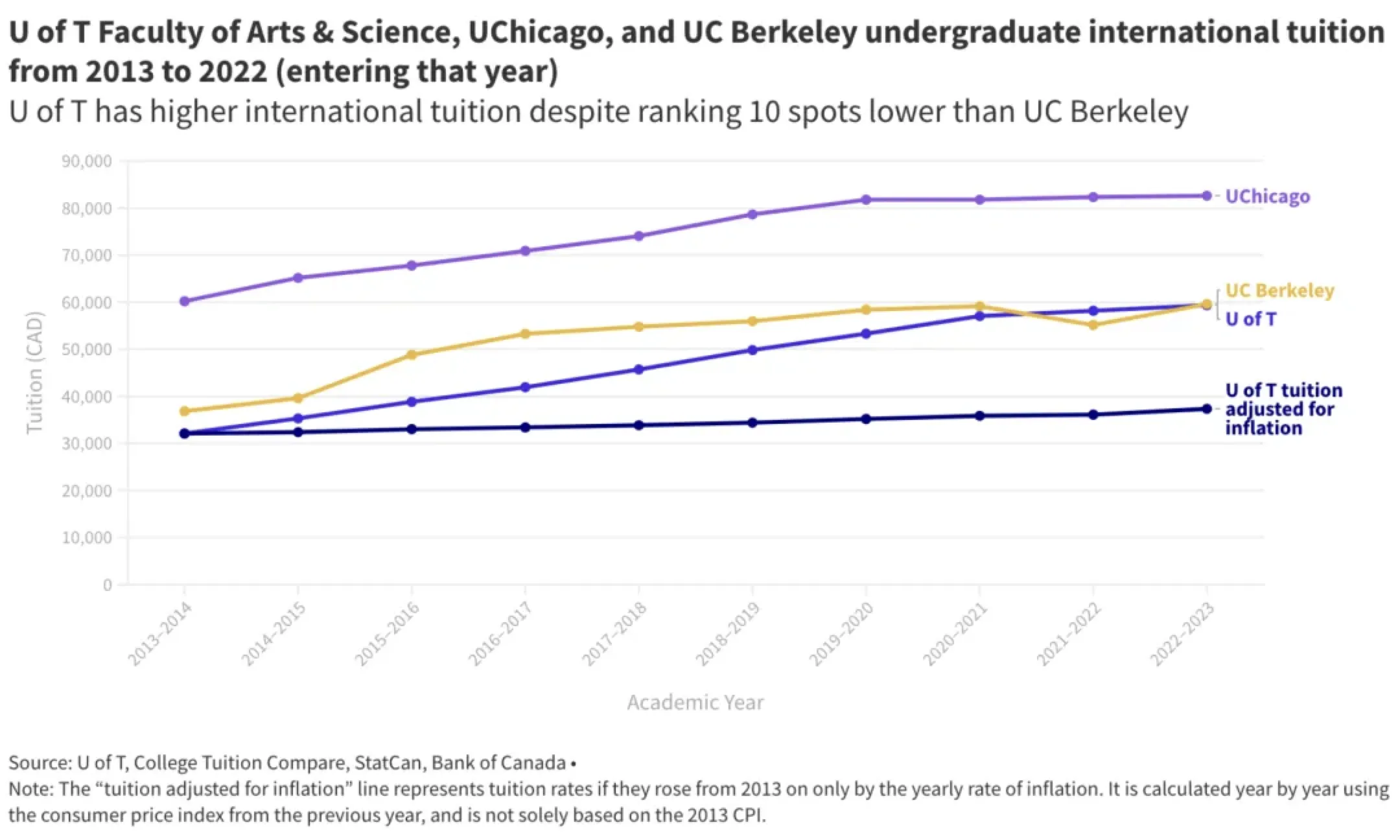
Tuition at Canada's top study-abroad destinations—U of T, UBC, McGill, Waterloo, Western—all exceed CAD 40,000, with U of T far ahead of the pack.
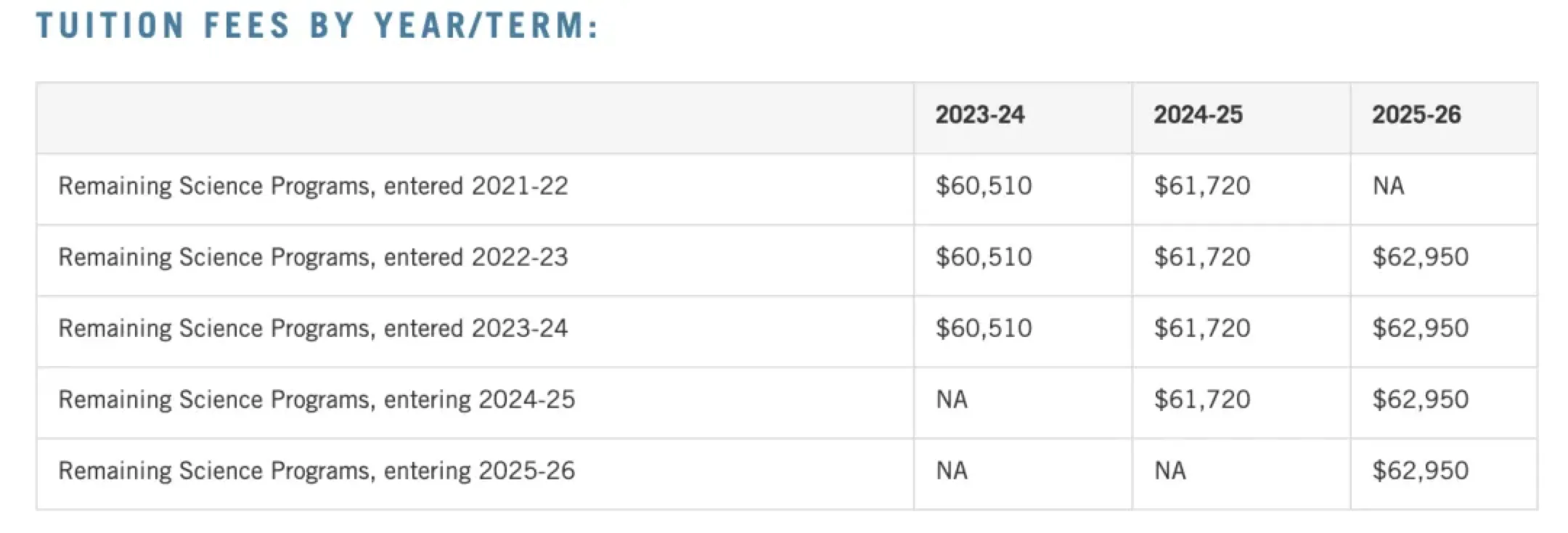
U of T's 2024-25 tuition is CAD 61,720, rising about 2% annually.
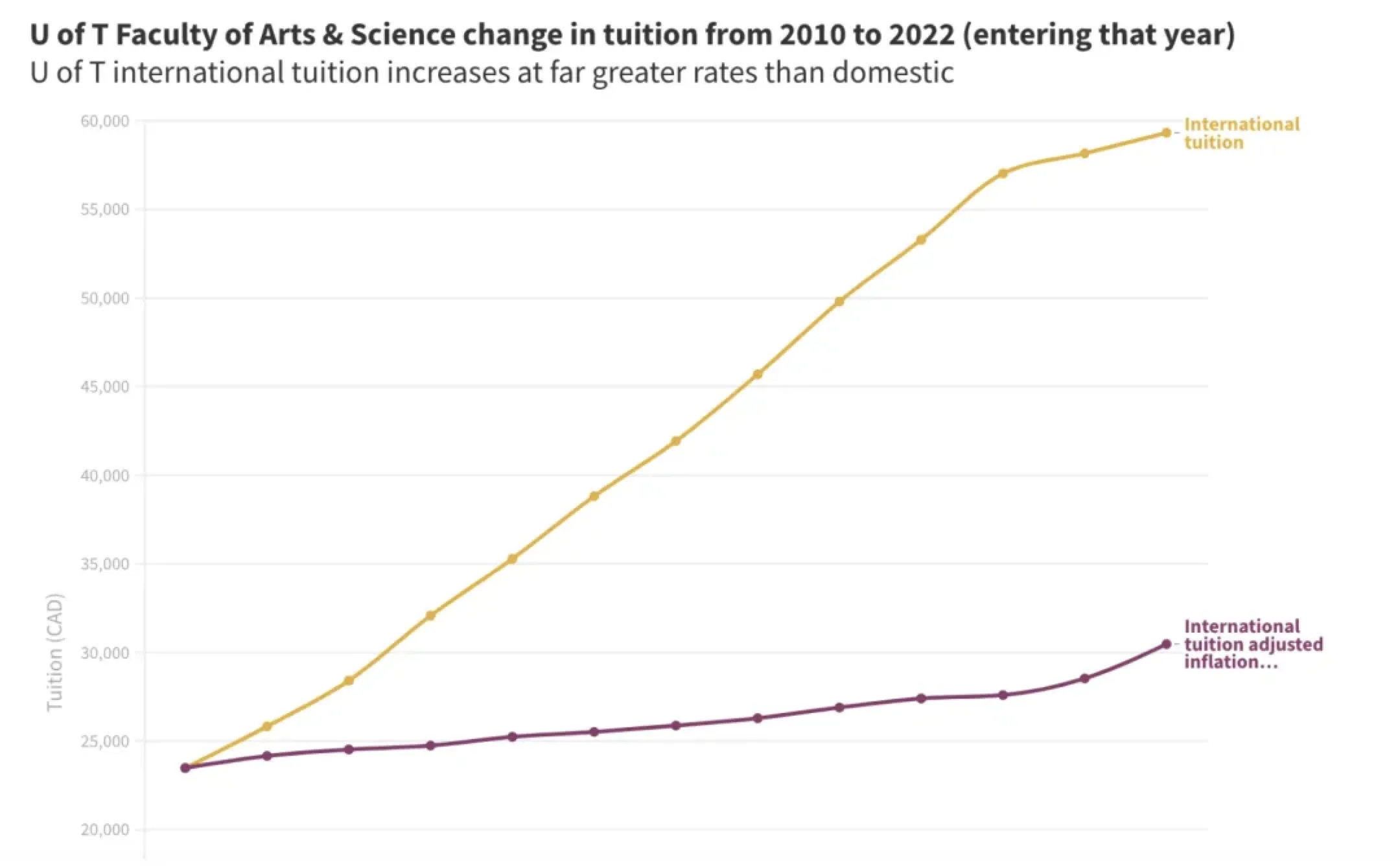
Over the past 12 years, U of T's international tuition has nearly tripled, climbing from CAD 23,000 past the CAD 60,000 mark.
By contrast, domestic students pay just CAD 6,100 a year, with increases almost negligible.

Now U of T's international tuition is aligning with its American counterparts, matching UC Berkeley.
Why Are Tuitions Soaring?
The question: why is tuition climbing so relentlessly?
Inflation is a major factor—U.S. college tuition rises about 5% annually. If you factor in inflation, the real increase over the past 20 years is:
- Private universities: 40%
- Public universities (out-of-state): 38%
- Public universities (in-state): 56%

With high inflation, schools face rising operating costs for faculty salaries, facility improvements, etc.
For some small liberal arts colleges, even $100,000 tuition can't cover the full educational cost per student.
Williams College notes that the cost to educate each student is often $50,000 more than the tuition paid.
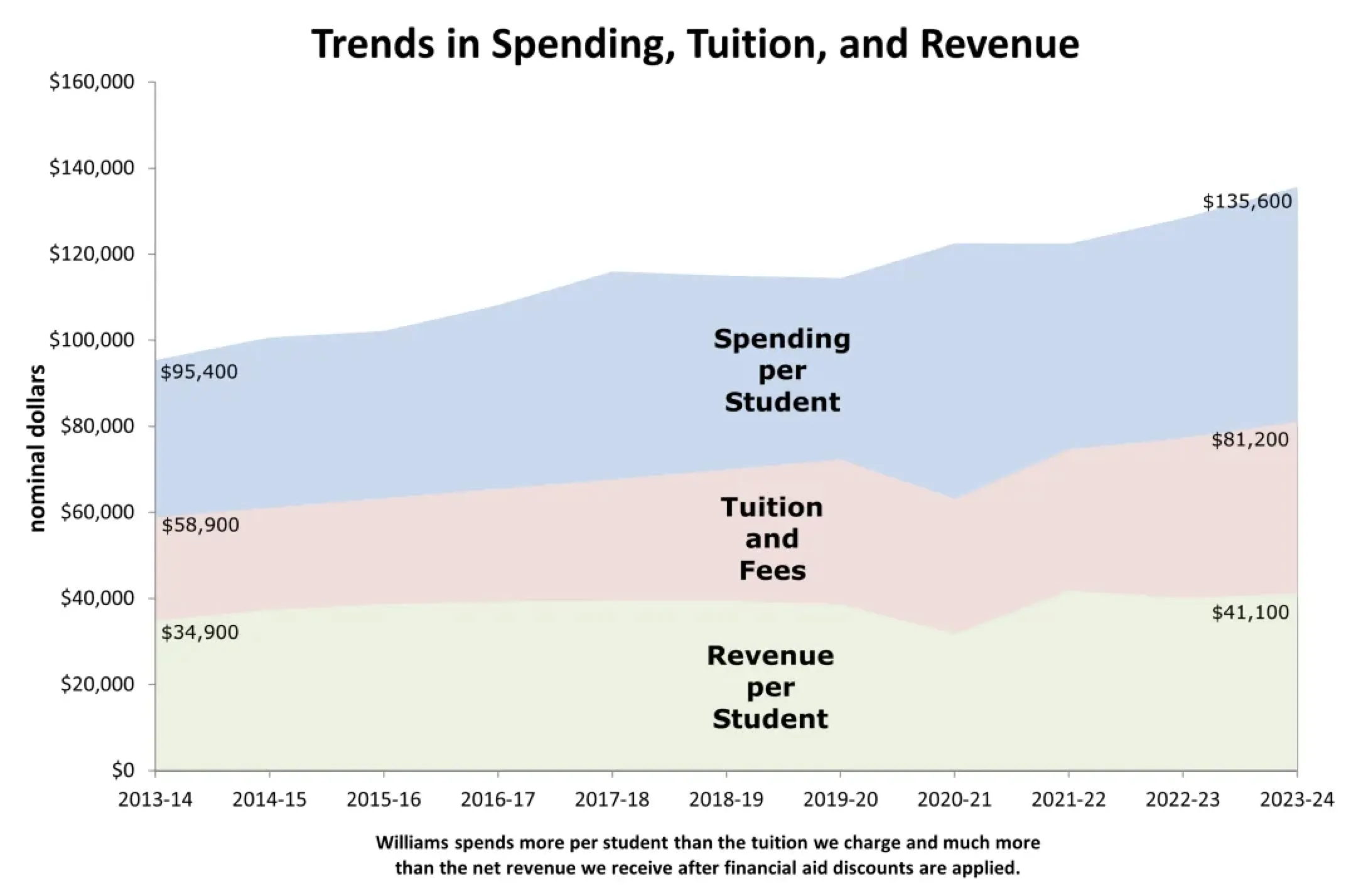
These small, elite private colleges often lack the massive endowments of large universities, making them more tuition-reliant.
Yet a $100,000-a-year price tag can scare off many applicants from ordinary families. Even with scholarships or loans, the burden remains heavy.
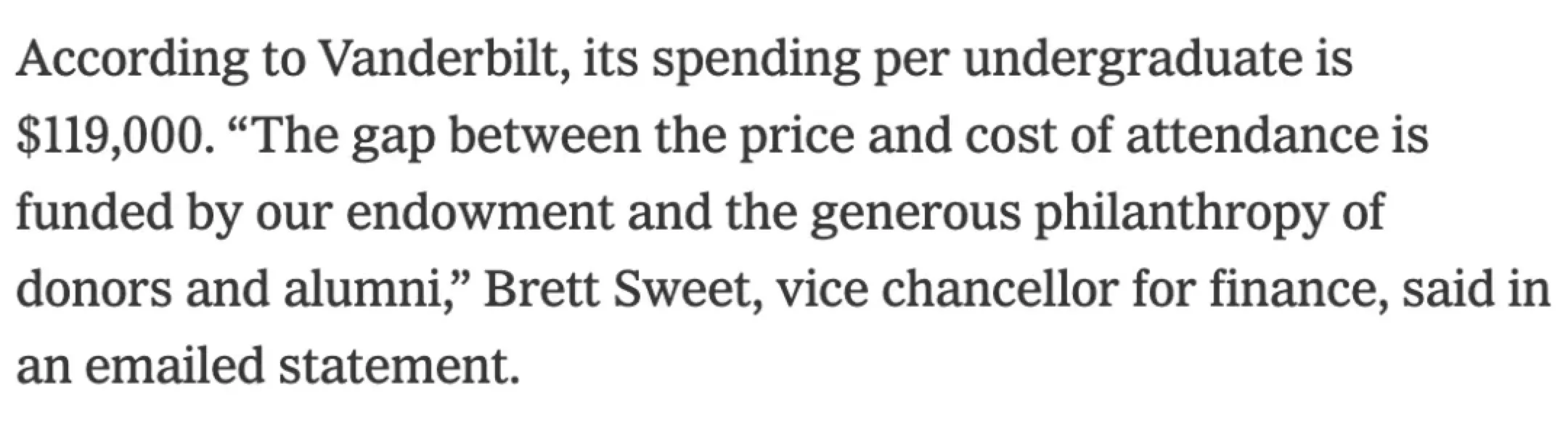
Vanderbilt reports that the actual per-undergraduate expenditure is about $119,000. The gap between tuition and cost is filled by the university's endowment.
Vanderbilt's total endowment currently stands at $9.2 billion. About 26% of the university's annual operating expenses come from the endowment and go toward student aid, etc. In the 2022-23 academic year, 65% of undergraduates and 85% of graduate students received financial aid.

Vanderbilt's total endowment currently stands at $9.2 billion. About 26% of the university's annual operating expenses come from the endowment and go toward student aid, etc. In the 2022-23 academic year, 65% of undergraduates and 85% of graduate students received financial aid.
Opponents of tuition hikes argue that administrative bloat drives up employee salaries and, in turn, tuition.
Reportedly, the CSU system plans to raise tuition 6% annually for the next five years starting in 2024-25, for a cumulative increase of 34%.
This year, students at California State University (CSU) protested the hikes.

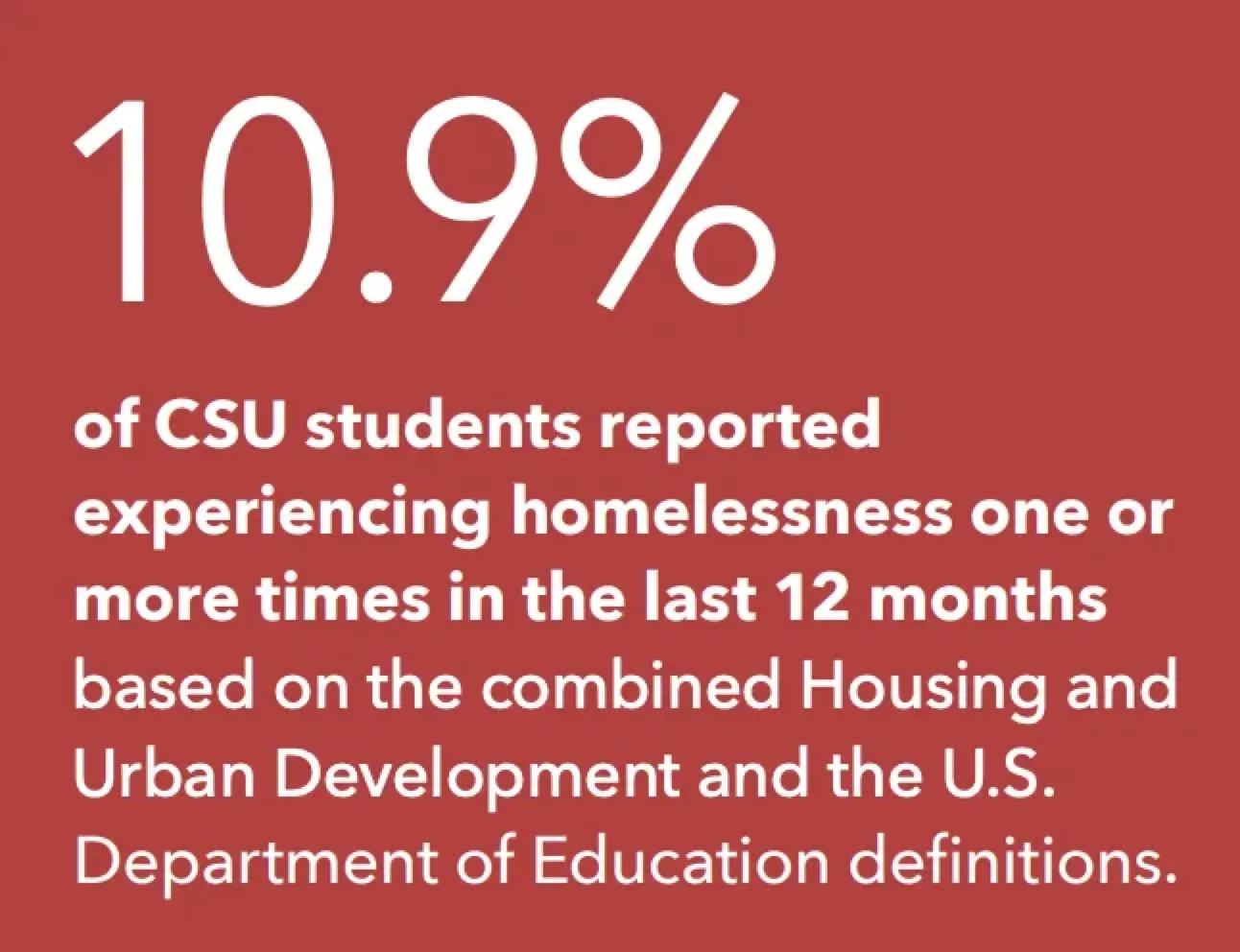
In expensive California, with soaring prices, rent, and living costs alongside tuition, an estimated 10% of local students may become homeless and 41% will face food insecurity.
Last year, media reported that Australian university food banks were overwhelmed. Students queued in long lines at food pantries just to get a full meal.
These students juggle multiple jobs to barely cover rent and living expenses while trying to pay off loans.
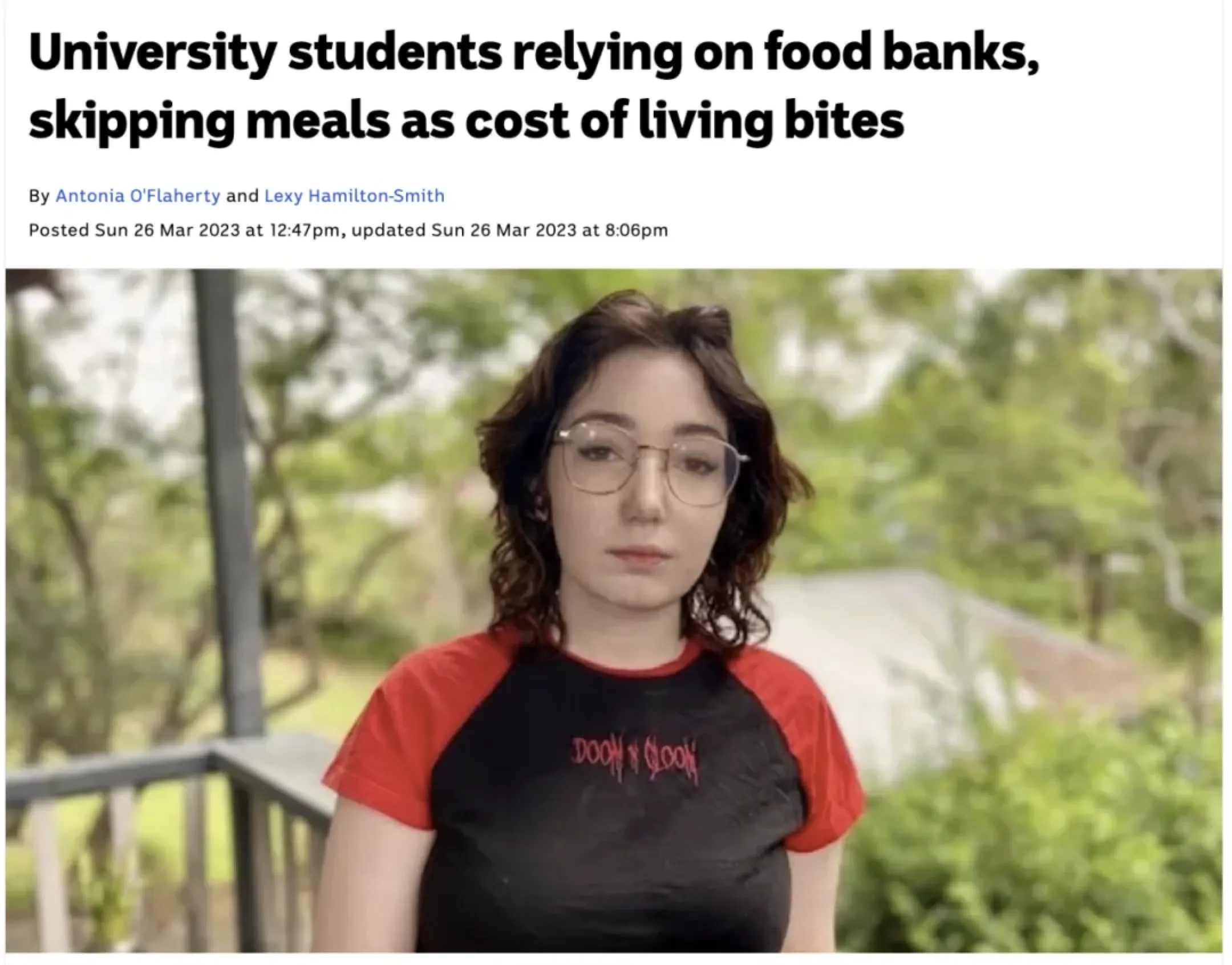
On one hand, universities' operating costs keep climbing; on the other, average students face high debt and diminished returns. Surging tuition imposes a heavy burden on both domestic and international students.
Is the $100K Club Worth It?
So are these $100,000-a-year private U.S. universities worth it? Or more to the point, how many can actually afford them?
Higher education is a long-term investment, but one must consider the return.
Vanderbilt's 2023 graduates had a 94.7% employment rate and a median salary of $85,000.

NYU Tandon School of Engineering's 2023 graduates had a 91% employment rate and an average annual salary of $110,116.
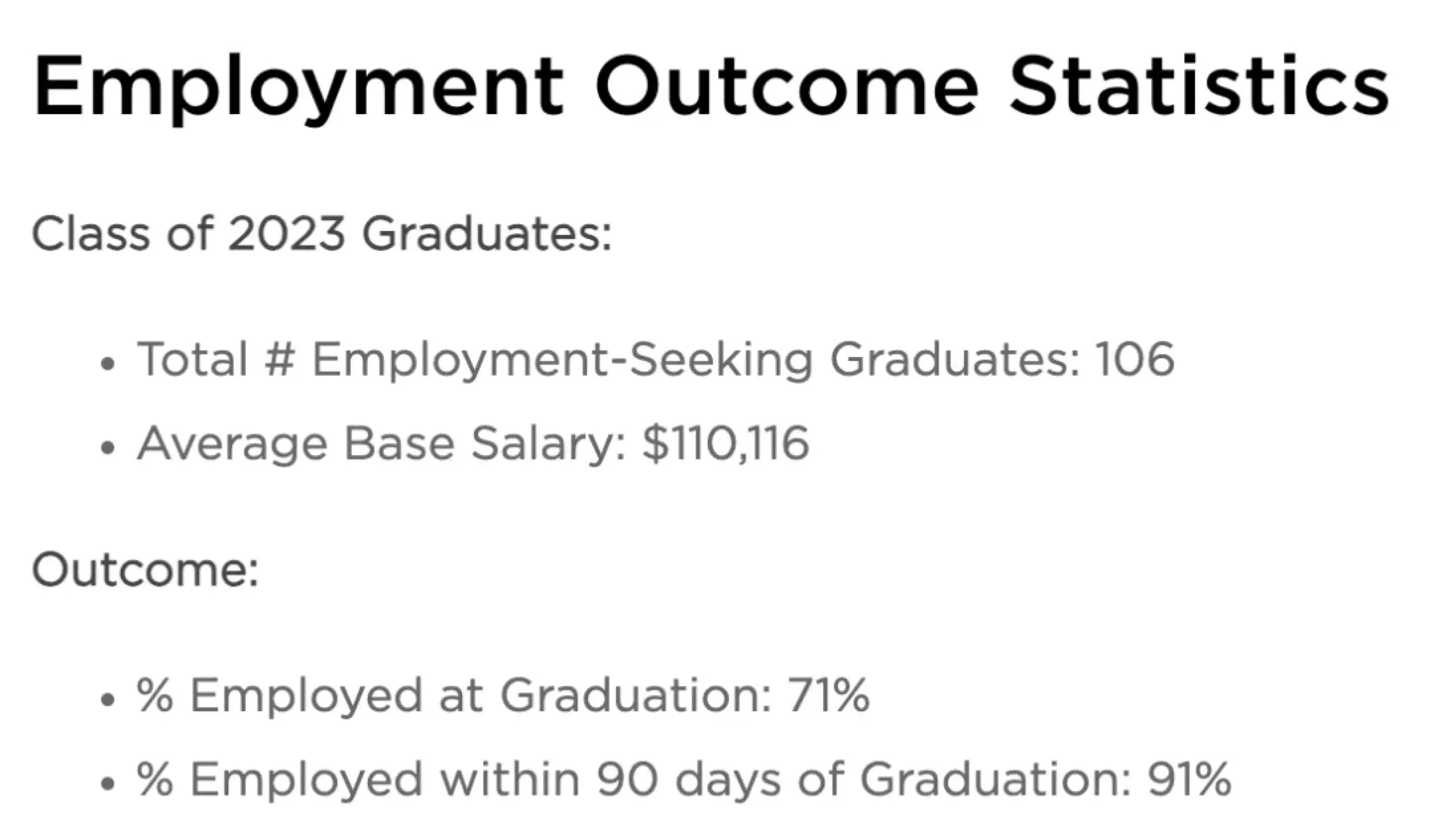
It seems these $100K Club schools can pay off relatively quickly? But actually, if you attend a cheaper university for engineering or CS, your post-graduation salary might be similar.
Take San José State University (SJSU), for example. With its proximity to Silicon Valley, 2023 CS graduates earned an average of $118,807.
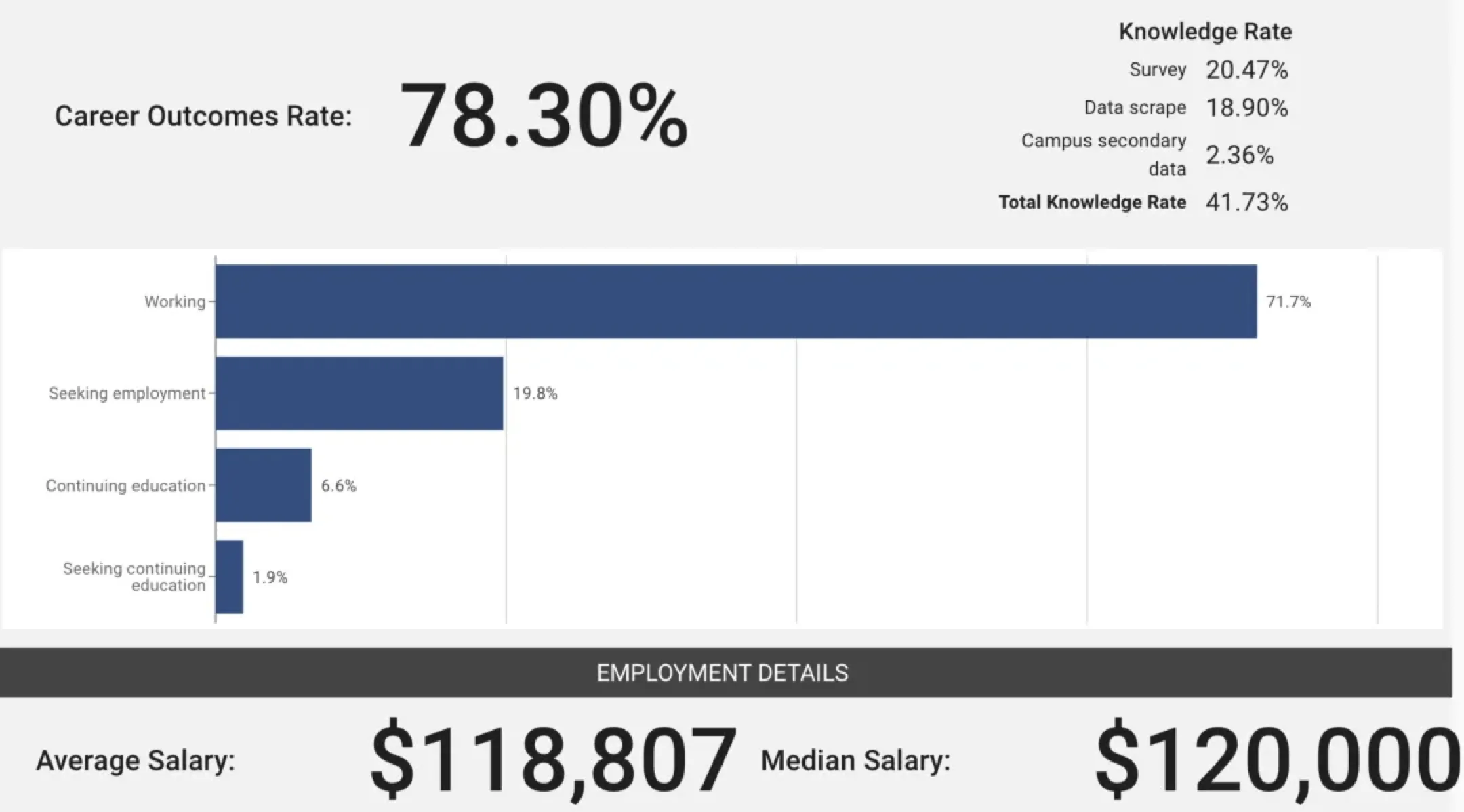
Moreover, SJSU's international tuition is $46,073—roughly half that of the rich-kid club, offering great value.
But the school ranks outside the top 100, so how many Chinese families are willing to send their children there?
NYU, USC, Vanderbilt, UPenn... these $100K Club members are like Chanel raising prices 7% a year—a handbag still sells for $10,000 and people happily buy. In a sense, it's a matter of willing buyer, willing seller.
For students at top New England boarding schools, a path through elite private schools is a necessity for their social circle.
For most ordinary families, however, these universities are luxury goods.
After all, international students' money doesn't grow on trees. How many stories have we heard of spending millions on a U.S. degree only to return home and earn a few thousand a month?
Studying isn't easy—here's hoping everyone studies hard and has no regrets.
And we hope schools will think more of their students and ease the financial burden of tuition.
.png?x-oss-process=style/opt-webp)