
In today's data-rich society, the formulation and evaluation of social policies increasingly rely on skills in data analysis and data science. The MSSP program (Master of Science in Social Policy) at the University of Pennsylvania, by integrating the Data Analytics Certificate, provides students with a unique learning platform aimed at cultivating social policy experts with data-driven decision-making capabilities. This innovative program design not only broadens the curriculum, extending the study period to three semesters, but also officially incorporates the STEM designation, further enhancing the program's academic and career value. A CheersYou(清柚教育) consultant has compiled detailed information about this liberal-arts-friendly SP2 program. To learn more details and for more questions related to graduate applications, you can also scan the QR code below for one-on-one consultation.

I. Program Overview
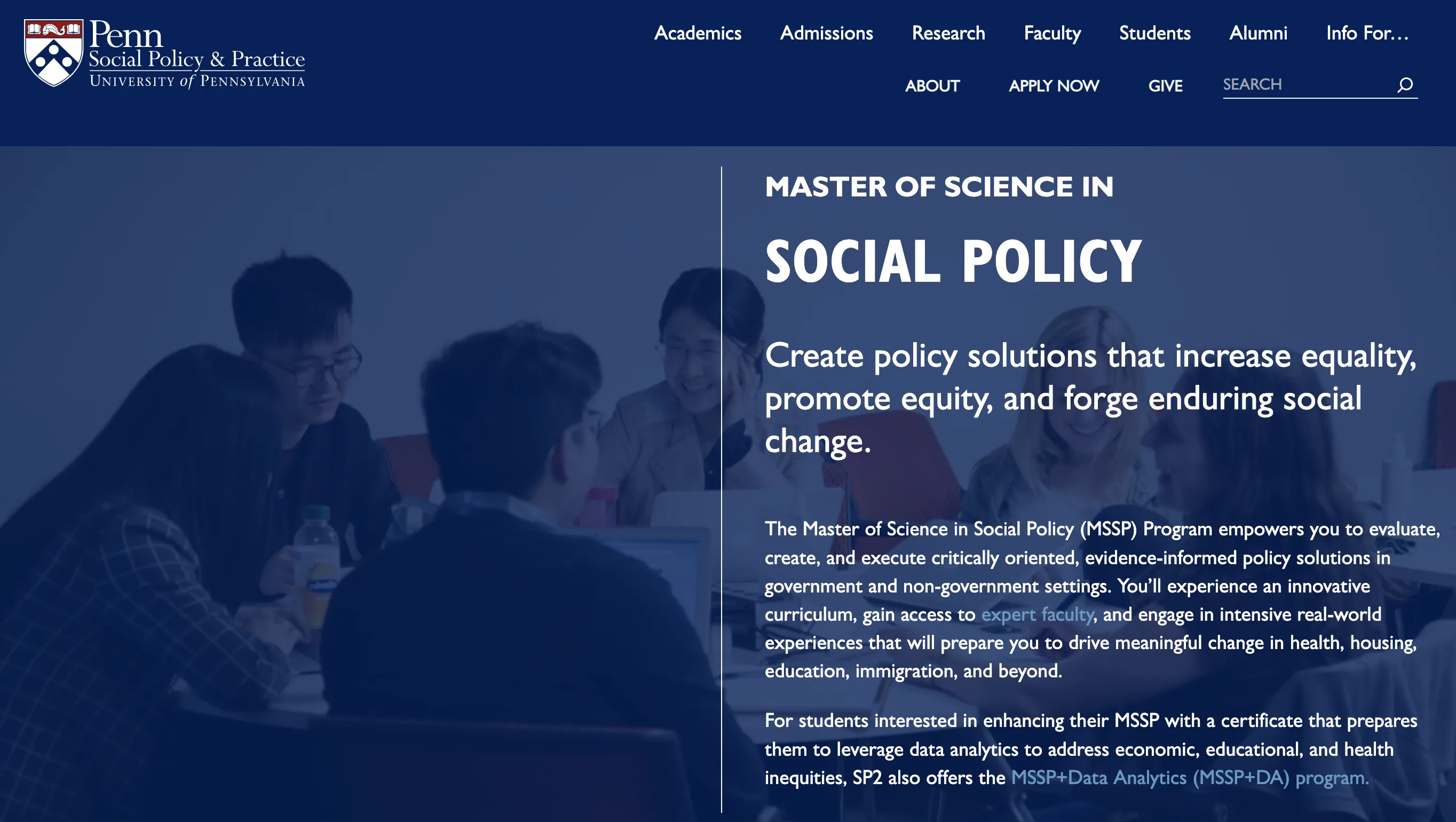
The University of Pennsylvania's MSc in Social Policy program, hosted by the School of Social Policy & Practice, aims to equip students with professional skills in social policy analysis, design, and evaluation. The curriculum covers multiple areas such as public policy, social welfare, health policy, and education policy, enabling students to understand the complexity of social policies from various perspectives and develop the ability to address social issues.
Official website: https://sp2.upenn.edu/program/master-of-science-in-social-policy/
II. Curriculum
The core courses remain focused on the theory and practice of social policy, but the newly added data analysis courses offer students a more comprehensive perspective, helping them understand the role of data in policy-making. Students will learn how to use data science methods to evaluate policy effects, forecast social trends, and solve social problems. This interdisciplinary learning experience not only enriches students' knowledge structure but also opens up more possibilities for their future careers.
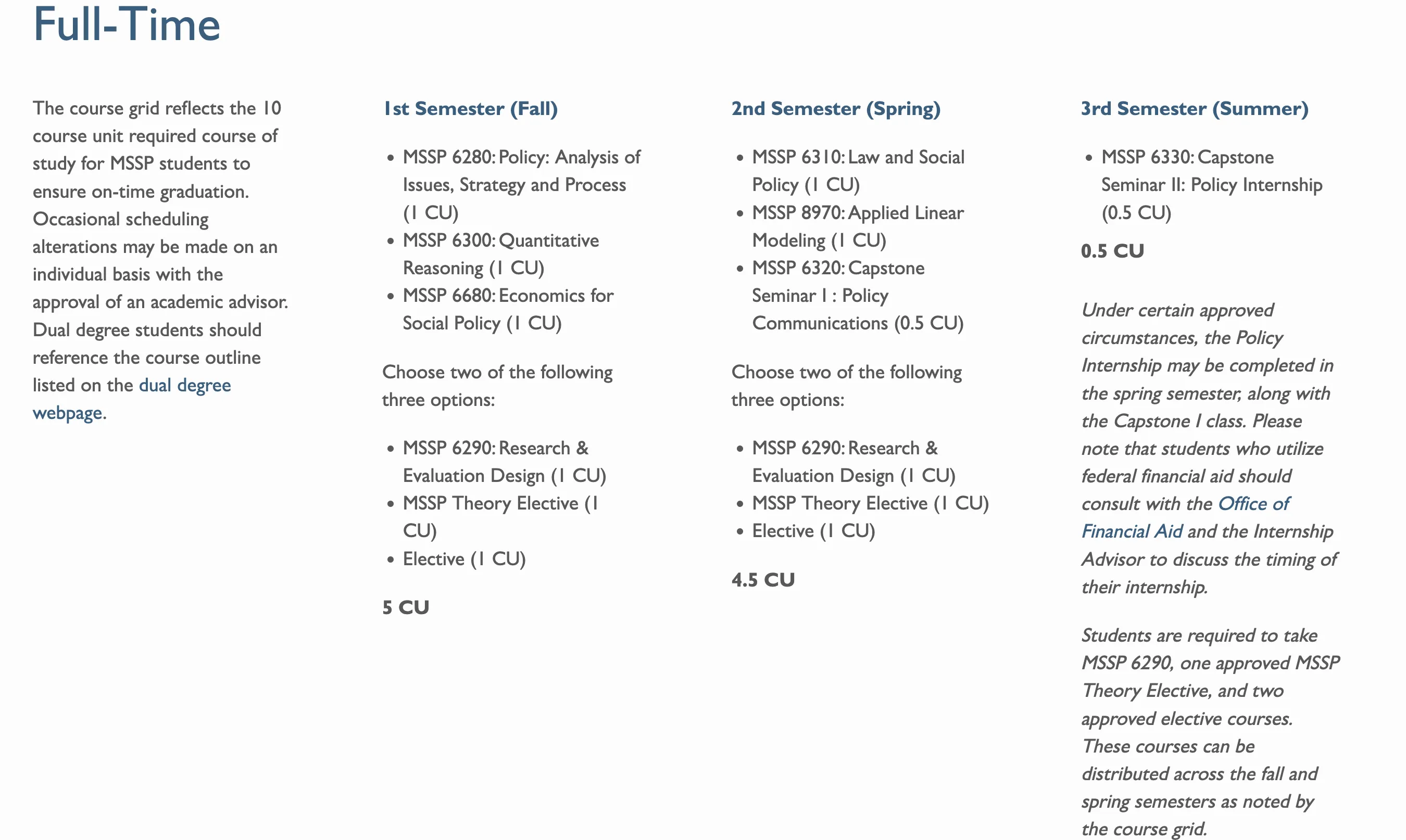
The combination of the MSSP program and the Data Analytics certificate means that students will have the opportunity to delve into cutting-edge technologies such as data analysis and machine learning, as well as programming languages and tools like SAS, Java, Python, GIS, and ArcGIS. Mastery of these skills will enable students to effectively process and analyze complex social-policy-related data, providing more precise and scientifically based evidence for policy-making.
III. Application Requirements
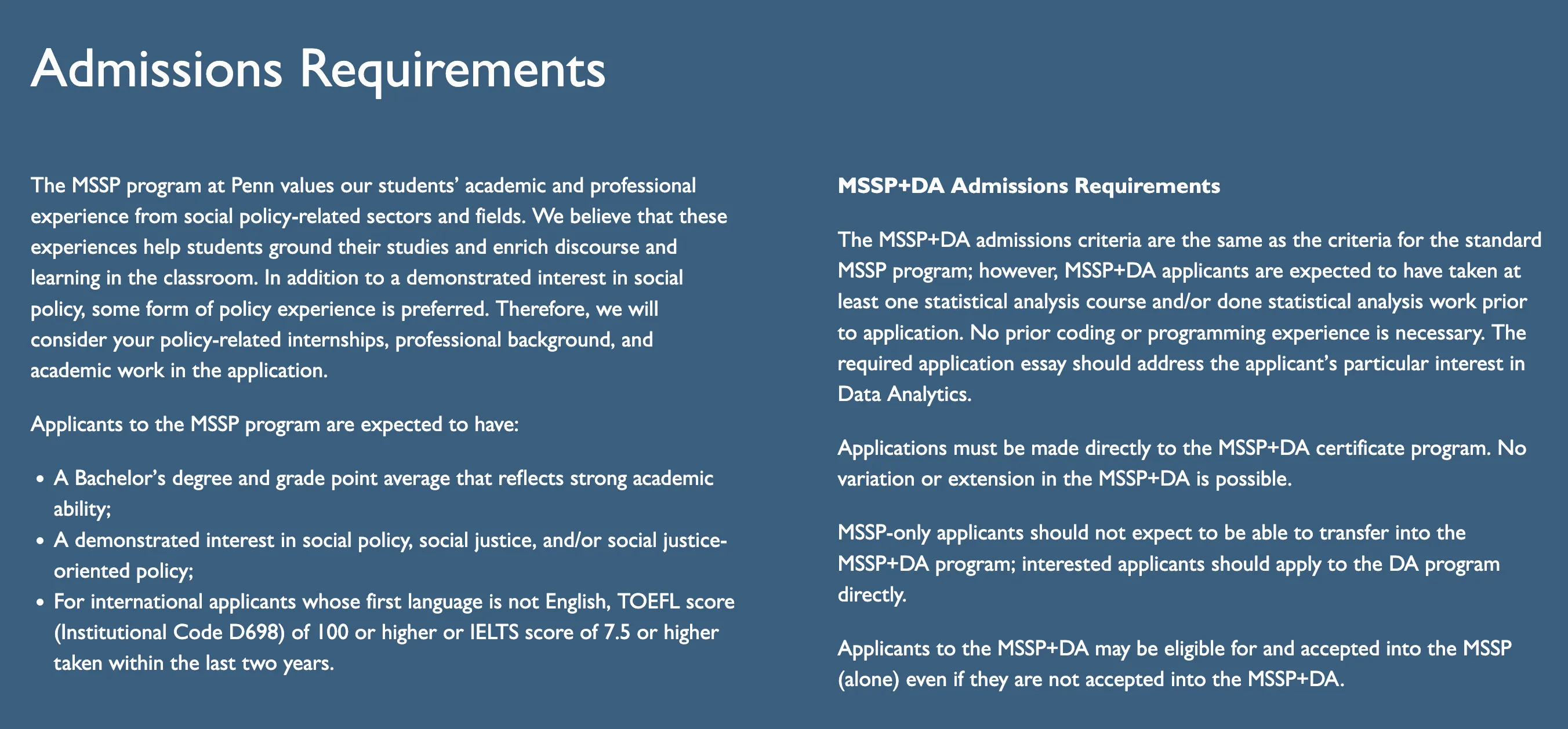
Applicants to the MSSP program need to meet the following criteria:
- Possess a bachelor's degree and a GPA reflecting strong academic ability;
- Demonstrate a strong interest in social policy, social justice, and/or social-justice-oriented policies;
- For international applicants whose native language is not English, a TOEFL score (institution code D698) of 100 or higher, or an IELTS score of 7.5 or higher (taken within the past two years).
MSSP+DA Admission Requirements
Admission standards for MSSP+DA are the same as those for the standard MSSP program; however, MSSP+DA applicants must have taken at least one statistics course and/or have conducted statistical analysis work prior to applying. No coding or programming experience is required. The required application essay should explain the applicant's specific interest in data analysis.
Applications must be submitted directly to the MSSP+DA certificate program. No variations or extensions to MSSP+DA are permitted.
Applicants who apply only to the MSSP should not expect to be able to transfer into the MSSP+DA program; interested applicants should apply directly to the DA program.
Even if not admitted to MSSP+DA, MSSP+DA applicants may still be eligible for (separate) admission to the MSSP program.
IV. Internship Opportunities and Career Development Prospects
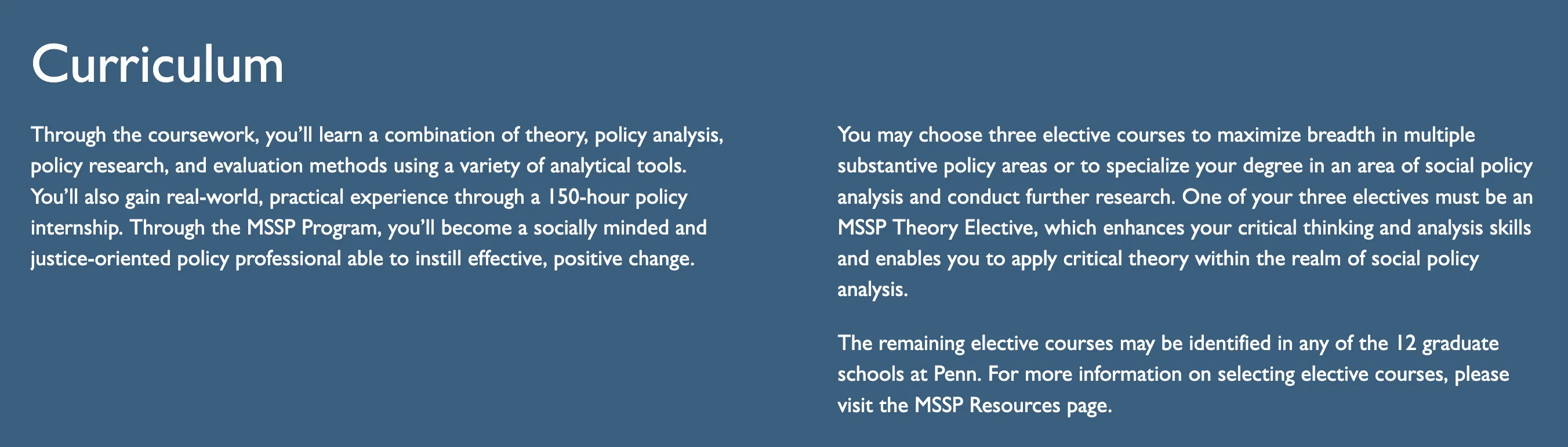
The MSSP+DA program places a special emphasis on hands-on learning, providing students with data-analytics-oriented policy internships that require at least 150 hours of work. These internship experiences not only allow students to apply what they have learned in the classroom to real-world settings but also provide valuable opportunities to network with industry experts and build professional connections. Graduates will be equipped to work in government agencies, non-profit organizations, research institutes, and private enterprises, becoming practitioners and leaders in data-driven social policy.
For more admissions cases and questions about studying abroad and graduate applications, you can also add the contact information of a CheersYou(清柚教育) consultant below to learn more.