
Cornell University's Master of Engineering (MEng) in Biomedical Engineering is a highly interdisciplinary graduate program designed to cultivate the next generation of designers and innovators in medical technology and biomedical devices. As a prestigious research university, Cornell's Department of Biomedical Engineering brings together top scholars from various disciplines, whose research spans cutting-edge fields such as tissue engineering, nanotechnology, biomaterials, neural engineering, diagnostic imaging, and therapy.For detailed program information and more questions about graduate applications, you can scan the QR code below for a one-on-one consultation.

1. Program Introduction
This program emphasizes interdisciplinary collaboration, encouraging students to work with faculty and students from the College of Medicine, College of Veterinary Medicine, and College of Agriculture and Life Sciences. This unique academic environment fosters innovation and translational medicine, realizing the unique role of biomedical engineering as a bridge connecting engineering and physical sciences with biology and medicine.
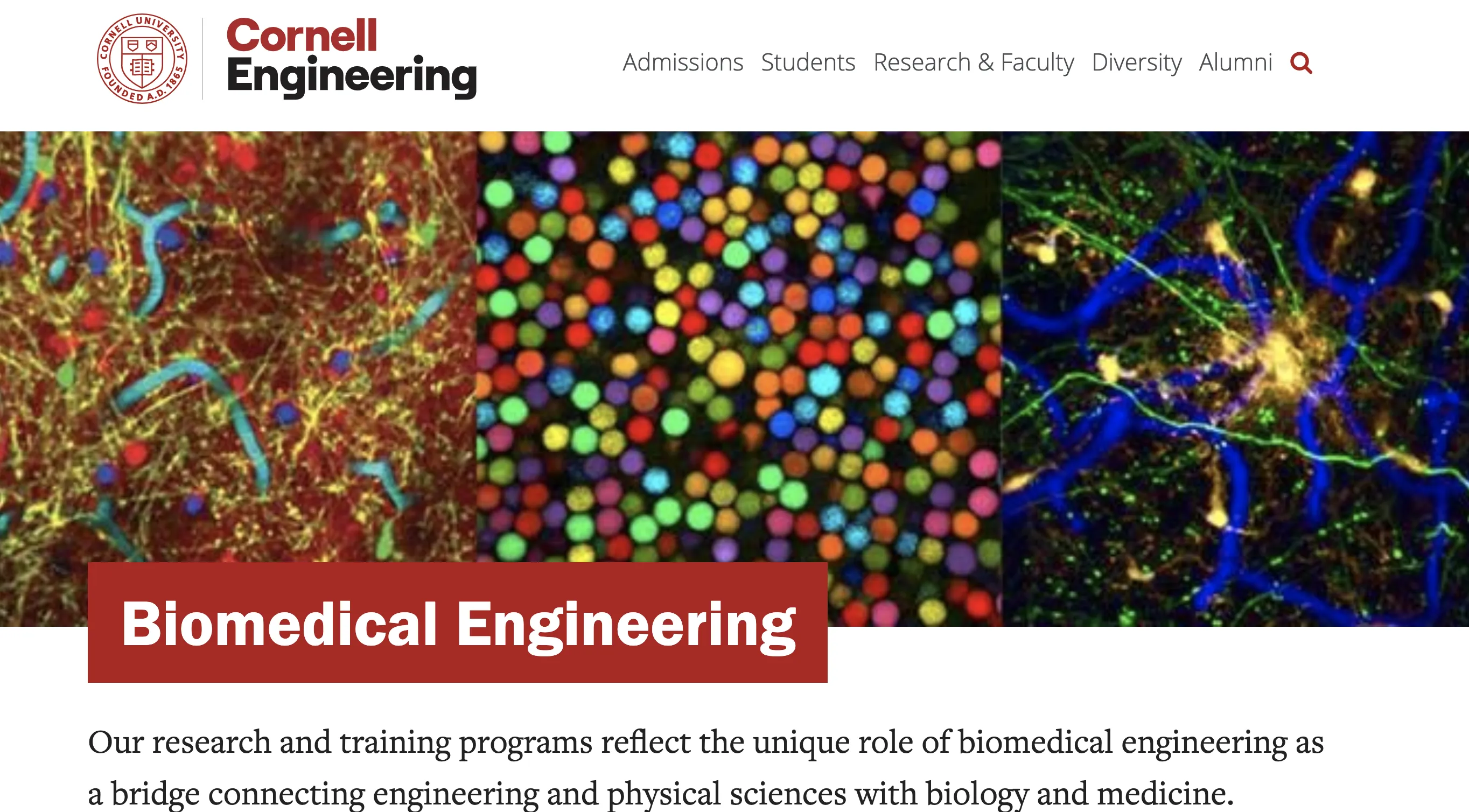
Official website: https://www.engineering.cornell.edu/biomedical-engineering
2. Curriculum
The MEng in Biomedical Engineering curriculum is rich and diverse, encompassing both fundamental science courses and advanced engineering and technical training. Students can choose to specialize in a specific area based on their interests, such as:
- Biomaterials and Tissue Engineering
- Biomechanics and Kinesiology
- Molecular and Cellular Bioengineering
- Medical Device Design and Manufacturing
- Imaging and Signal Processing
- Systems Biology and Computational Biology
In addition to the required core courses, students must also participate in seminars and workshops to stay informed about the latest research developments and exchange insights with peers. The program also includes a research thesis or design project aimed at cultivating independent research capabilities and practical problem-solving skills.
3. Admission Requirements
Prospective applicants to Cornell's MEng in Biomedical Engineering typically need to meet the following basic requirements:
- Hold a bachelor's degree in a related science or engineering field (biology, chemistry, physics, mathematics, mechanical engineering, electrical engineering, etc.)
- Minimum TOEFL score of 90 or IELTS 6.5 (for non-native English speakers)
- GPA of at least 3.0/4.0
- GRE scores are not mandatory, but can enhance application competitiveness
- Letters of recommendation (typically 2-3, preferably from academic advisors or employers)
It is worth noting that the admissions committee prefers candidates who demonstrate strong research interest and potential, so any relevant research experience, laboratory work, or internships will be considered advantageous.
4. Career Prospects
Graduates of Cornell's MEng in Biomedical Engineering are highly sought after in the job market due to their solid professional foundation and innovative spirit. After graduation, they can pursue a variety of careers, such as:
- R&D engineer at medical device companies
- Work in pharmaceutical companies on drug delivery system development
- Serve as technical consultants or researchers in medical institutions
- Join biotech startups to drive the commercialization of new technologies
- Continue to pursue a Ph.D. and embark on a scientific research career
Given the trends of global population aging and the increasing burden of chronic diseases, the market demand for biomedical engineering professionals is expected to grow continuously in the coming years, offering graduates broad career prospects and lucrative compensation packages.
In the 24Fall application season, our students also secured offers from Cornell's MEng in Biomedical Engineering. To learn more details and for more admitted student cases, you can add the CheersYou(清柚教育) advisor's contact information below for detailed information.