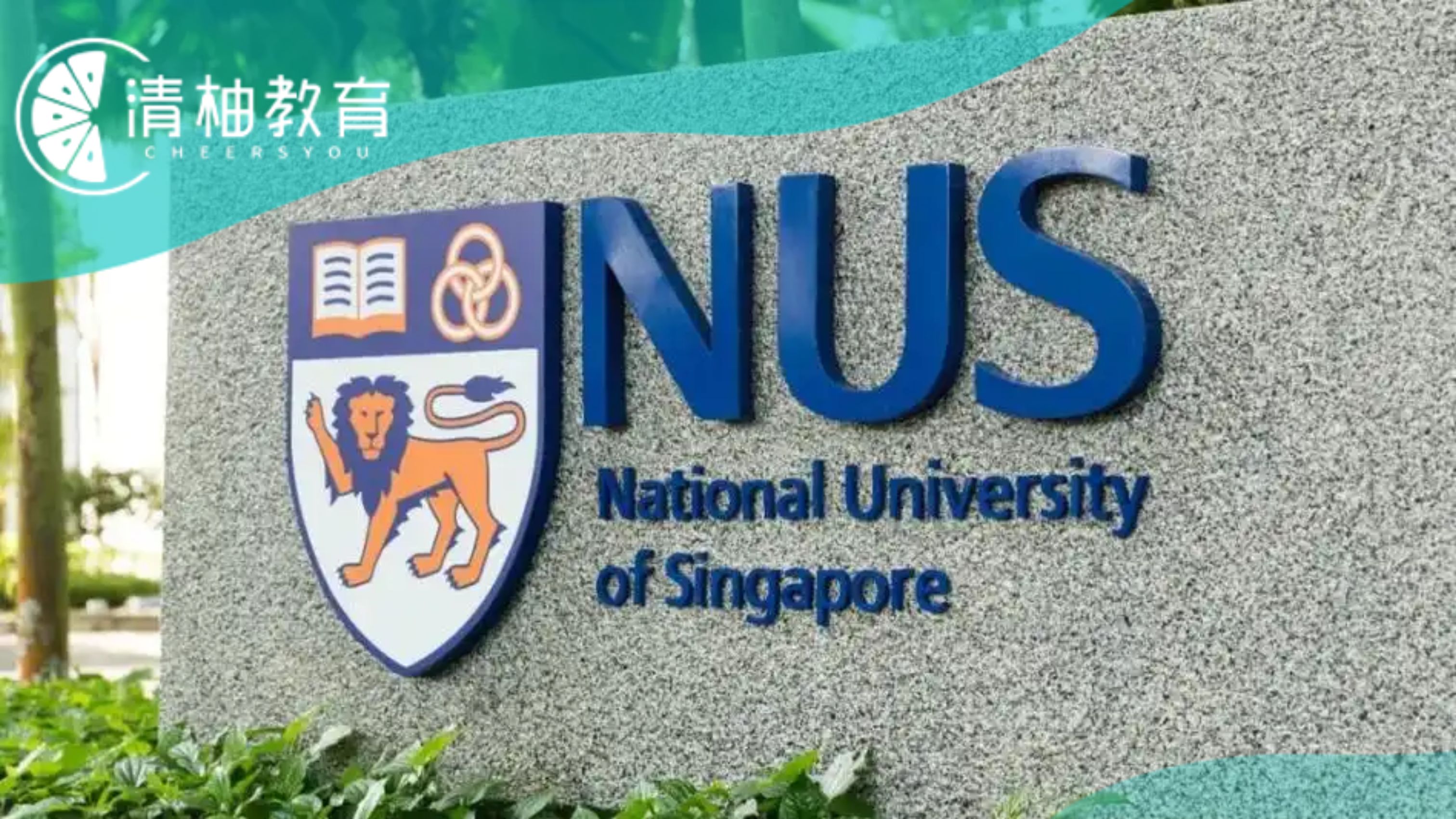
The continuous innovation and development of the National University of Singapore (NUS) in the field of artificial intelligence (AI) has attracted widespread attention. In Fall 2025, NUS will launch a brand-new master’s program – the MSc in AI for Science. The AIS program aims to cultivate high-quality talent with scientific knowledge and AI skills, promoting deep integration of scientific research and technological innovation. Below, we provide a detailed introduction from four aspects: program overview, curriculum, admission requirements, and career prospects.For more details and related questions about graduate applications, you can also scan the QR code below for a one-on-one consultation.
1. Program Introduction
The MSc in AI for Science program is under the Department of Physics, Faculty of Science at NUS, and the curriculum is designed to cultivate the next generation of scientists, applied mathematicians, and engineers capable of leveraging AI tools for innovative and data-driven scientific discovery. The AIS curriculum covers machine learning and deep learning, emphasizing their applications across various scientific fields such as physics, chemistry, and biology. The program not only enhances students’ data analysis skills but also enables them to master the “bilingual” capability of AI and science, so they can excel in AI-related careers in both academia and industry.
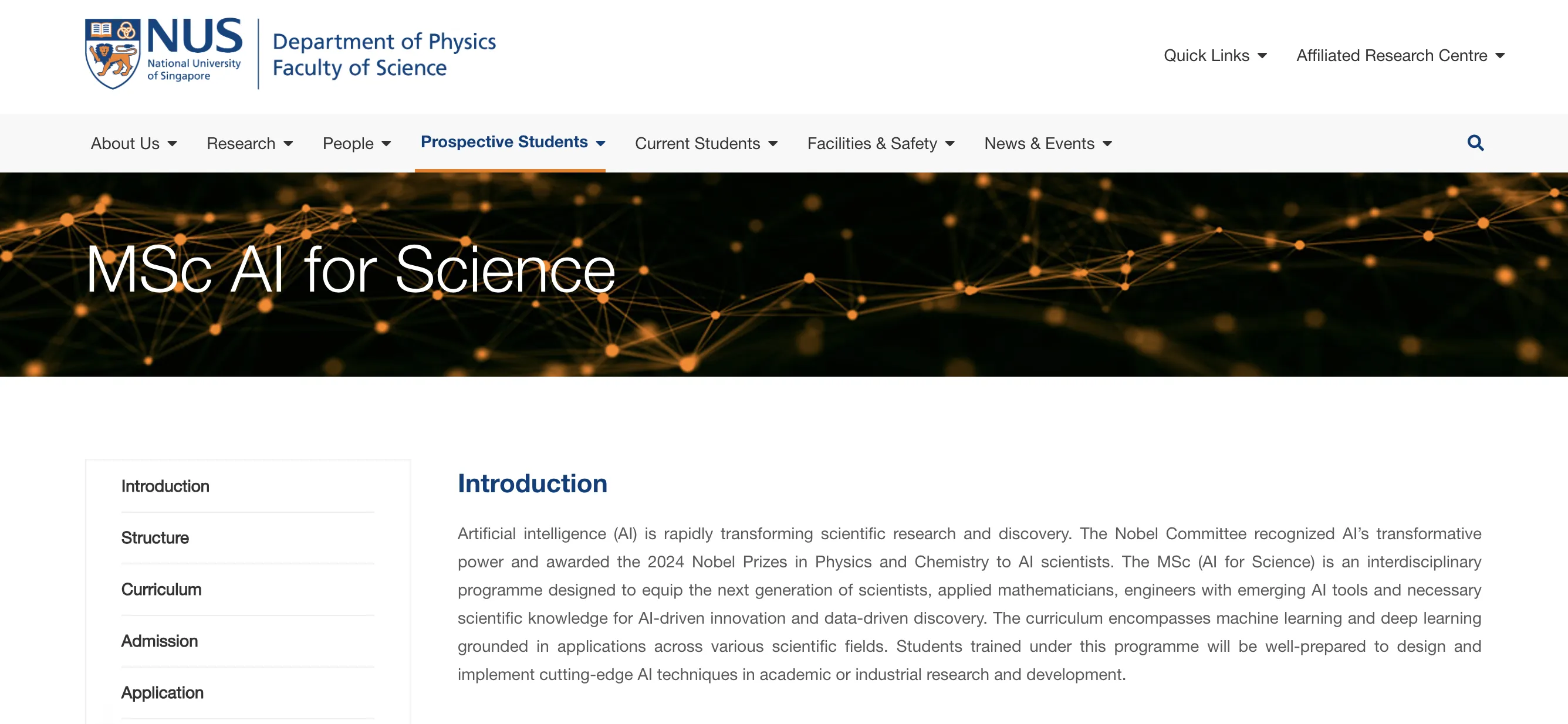
Official website: https://www.physics.nus.edu.sg/student/msc-ai-for-science/
2. Curriculum
Students must complete a total of 40 credits for the program, including 16 credits of required core courses and at least 16 credits of AIS elective courses. Additionally, students may choose to take up to two 4000-level courses (8 credits) from other departments in the Faculty of Science, or two 5000-level courses (8 credits) from other departments, subject to approval. The curriculum of the MSc in AI for Science includes required and elective courses as follows:
Required Courses:
- Applications of AI for Science
- Practical Machine Learning for Scientific Discovery
- Foundations of Deep Learning
- AI for Science Seminars
Elective Courses:
- AI in Astrophysics
- AI in Bioimaging
- Special Topics in AI for Science
- Machine Learning in Research Projects
- Industry Practice in AI for Science
- Numerical Algorithms and Applications
- Quantum Information and Computation
- Bayesian Statistics and Machine Learning
- Analysis and Modeling of Complex Systems
- AI in Chemistry
- Deep Learning and Applications
- Text Processing and Analysis with Machine Learning
- Natural Language Processing in Data Science
- AI in Pharmaceutical Applications
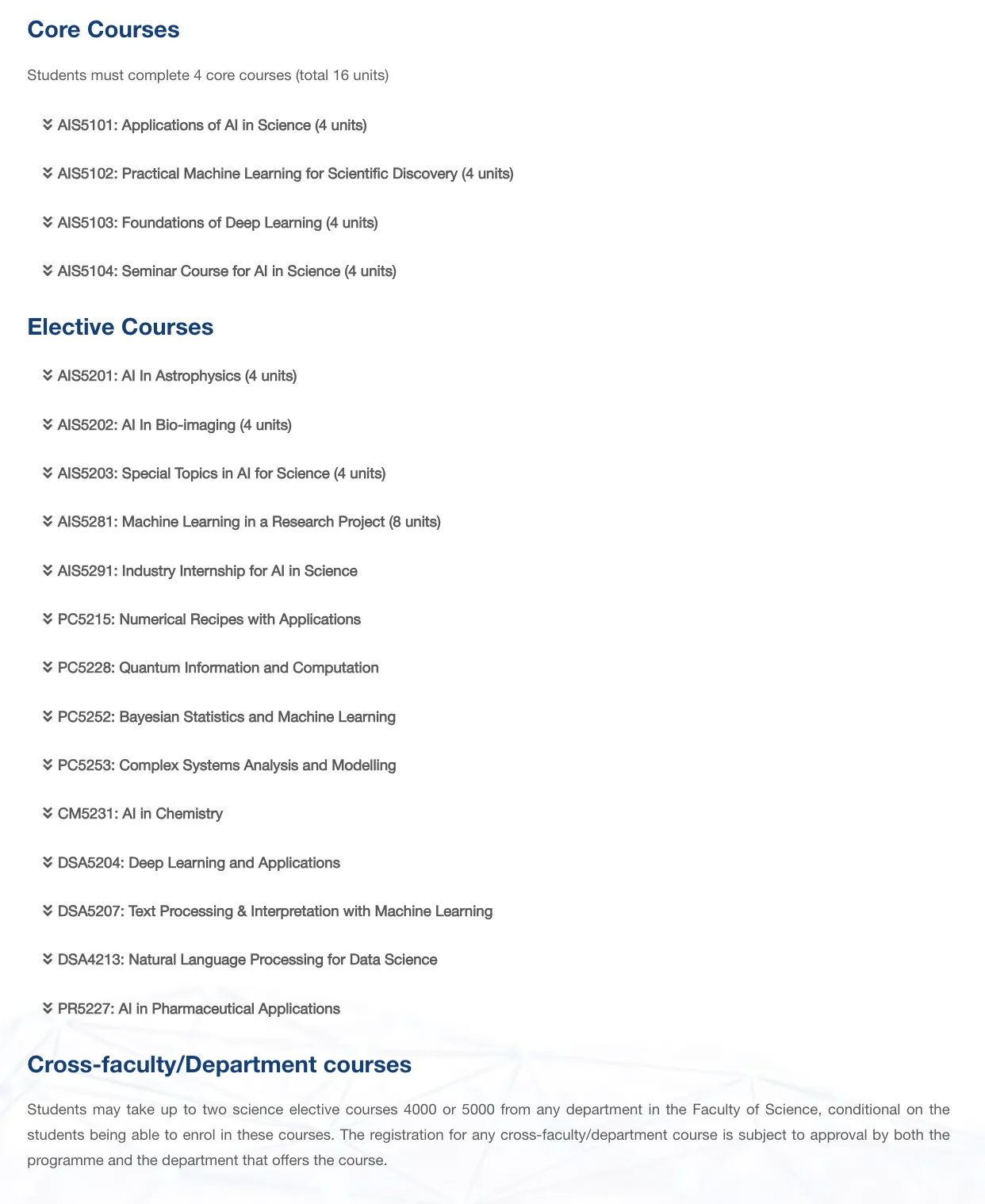
Through a diverse curriculum, students will gain a solid theoretical foundation and rich practical experience, laying a solid groundwork for future career development.
3. Admission Requirements
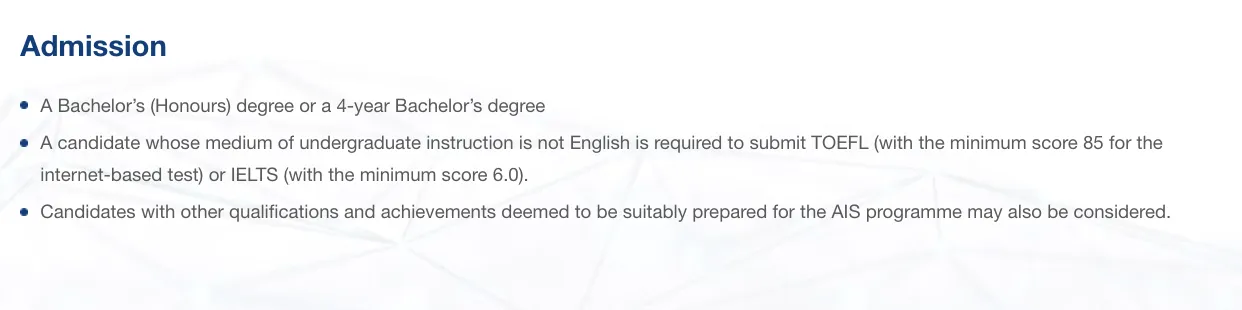
Applicants for the MSc in AI for Science program must meet the following requirements:
- Degree Requirement: Must hold a bachelor’s degree or above.
- Academic Background: No restriction on major, but a strong quantitative foundation is required.
- Language Proficiency:
- TOEFL: Overall score of 85 or above
- IELTS: Overall band score of 6.0 or above
- GRE: Not required
The application period is from November 19, 2024, to March 15, 2025. Prospective applicants should prepare the relevant materials in advance.
4. Career Prospects
With the rapid development of AI technology, graduates of the MSc in AI for Science will have broad career prospects in both academia and industry. The program is designed to cultivate talent with data-driven research capabilities, and graduates will be able to find ideal career opportunities in the following areas:
- Research positions in universities and research institutes
- AI R&D roles in technology companies and startups
- Data analysts in pharmaceutical and biotech companies
- Data scientists in the financial industry
- Policy researchers in government and non-profit organizations
The MSc in AI for Science program provides students with a diverse learning platform, cultivating their professional abilities at the intersection of AI and science to support their career development worldwide. As AI technology continues to advance, this new program at NUS will make significant contributions to promoting scientific research and technological innovation.For more admission cases and questions about studying abroad and graduate applications, you can also add the contact information of the CheersYou(清柚教育) advisor below for more details.