
The Master of Science in Finance (MSF) program at Johns Hopkins University (JHU) has long been a subject of debate. It is a graduate curriculum designed to cultivate professionals with a solid theoretical foundation and practical skills in finance. The program typically attracts students seeking advanced study in finance, particularly those aiming for careers in investment banking, asset management, financial consulting, and related fields. Based on our previous application cases, the admission standards for the JHU MSF program have gradually increased, especially in GRE scores, which are typically expected to be 330 or above. While GPA requirements are relatively flexible, the overall profile of applicants is still highly valued, including academic project experience, extracurricular activities, and work or internship experiences. These can demonstrate an applicant's leadership, teamwork, and practical abilities. Today, we will analyze the program's value in detail from the perspectives of curriculum and application requirements. For more details and any questions related to graduate school applications, you can also scan the QR code below for a one-on-one consultation.


Official Website Link: https://carey.jhu.edu/programs/master-science-programs/ms-finance-full-time
I. Curriculum
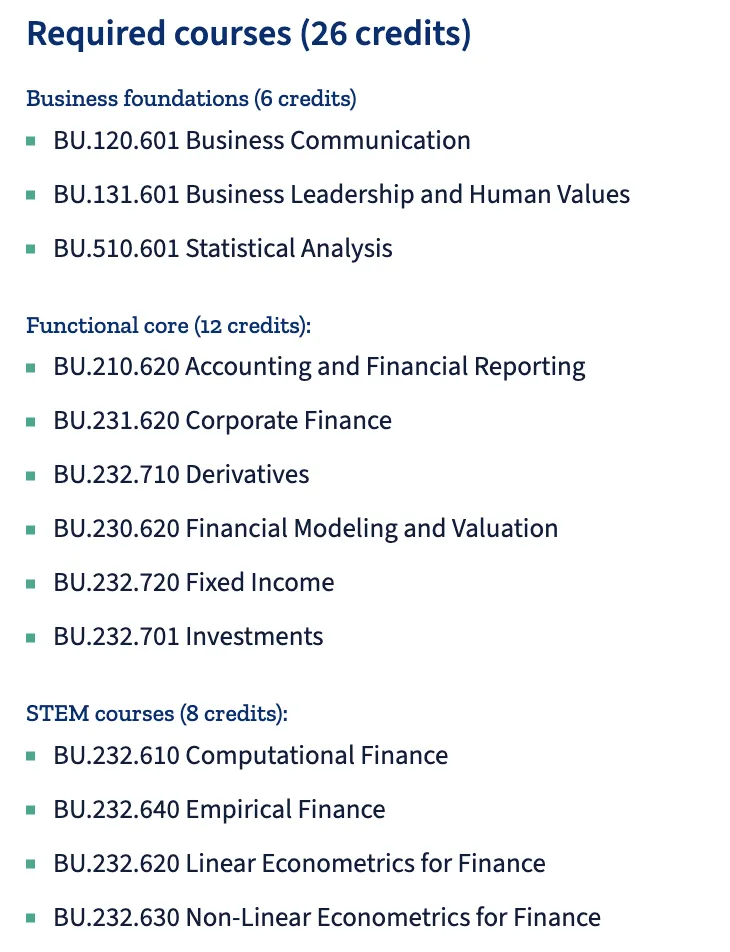
The JHU MSF curriculum is flexible and diverse, covering many important aspects of finance. The program is 12 months long, divided into five terms: fall I, fall II, spring I, spring II, and summer, each lasting 8 weeks. Students are required to complete 36 credits and 18 courses.
The curriculum not only includes traditional financial theories but is also increasingly oriented toward financial econometrics and quantitative analysis, which is one reason the program has earned STEM designation. STEM certification not only enhances the program's academic reputation but also provides international students with 24 months of Optional Practical Training (OPT), greatly boosting their competitiveness in the U.S. job market.
1. Core Courses
Core courses include but are not limited to the following:
- Financial Theory and Practice: Students learn the fundamental operating mechanisms of financial markets, portfolio management, and risk management.
- Econometrics: The course emphasizes data analysis and modeling, helping students master statistical tools to analyze financial data.
- Derivatives Markets: Introduces pricing and trading strategies for options, futures, and other derivatives.
- Corporate Finance: Delves into key financial decisions such as corporate financing, capital structure, and mergers & acquisitions.
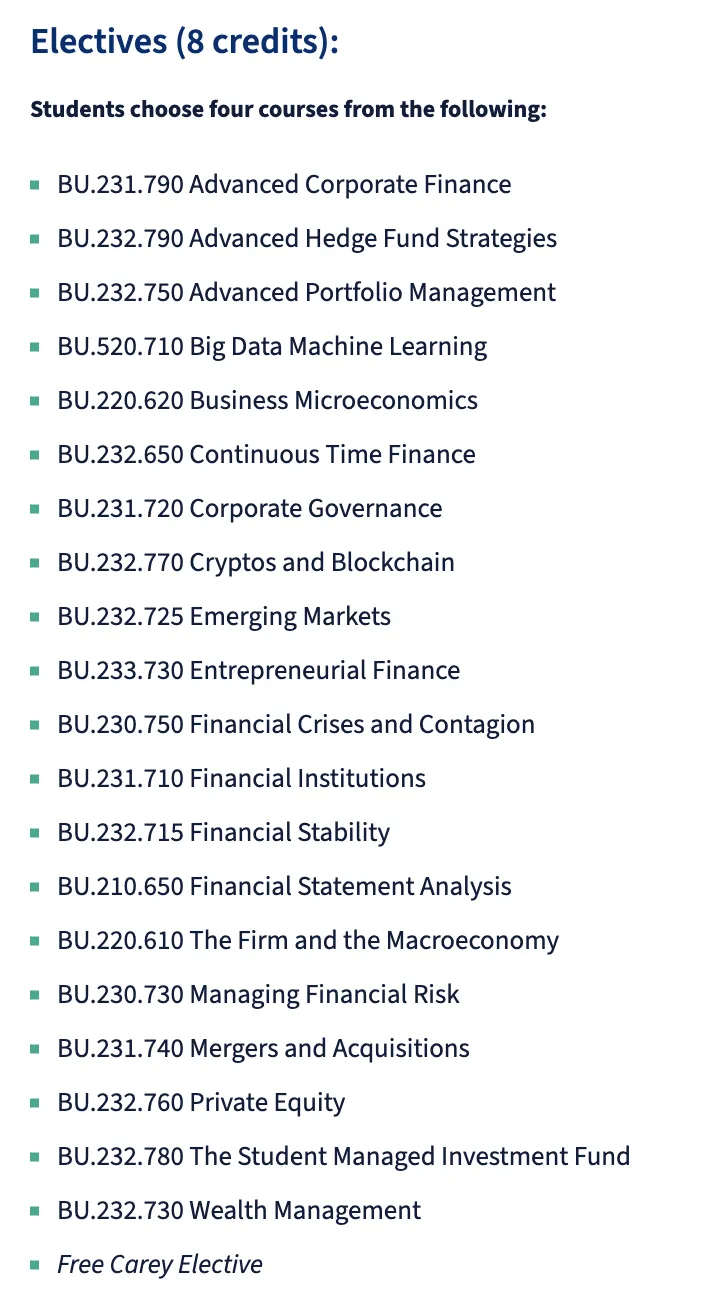
2. Elective Courses
The program also offers a wealth of elective courses, allowing students to choose based on personal interests and career directions, such as:
- Financial Technology: Explores the latest developments in FinTech and its impact on the traditional financial industry.
- International Finance: Analyzes the dynamics of global financial markets and their effects on national economies.
- Investment Banking: Studies the operational models of investment banks and their role in capital markets.
II. Admission Requirements
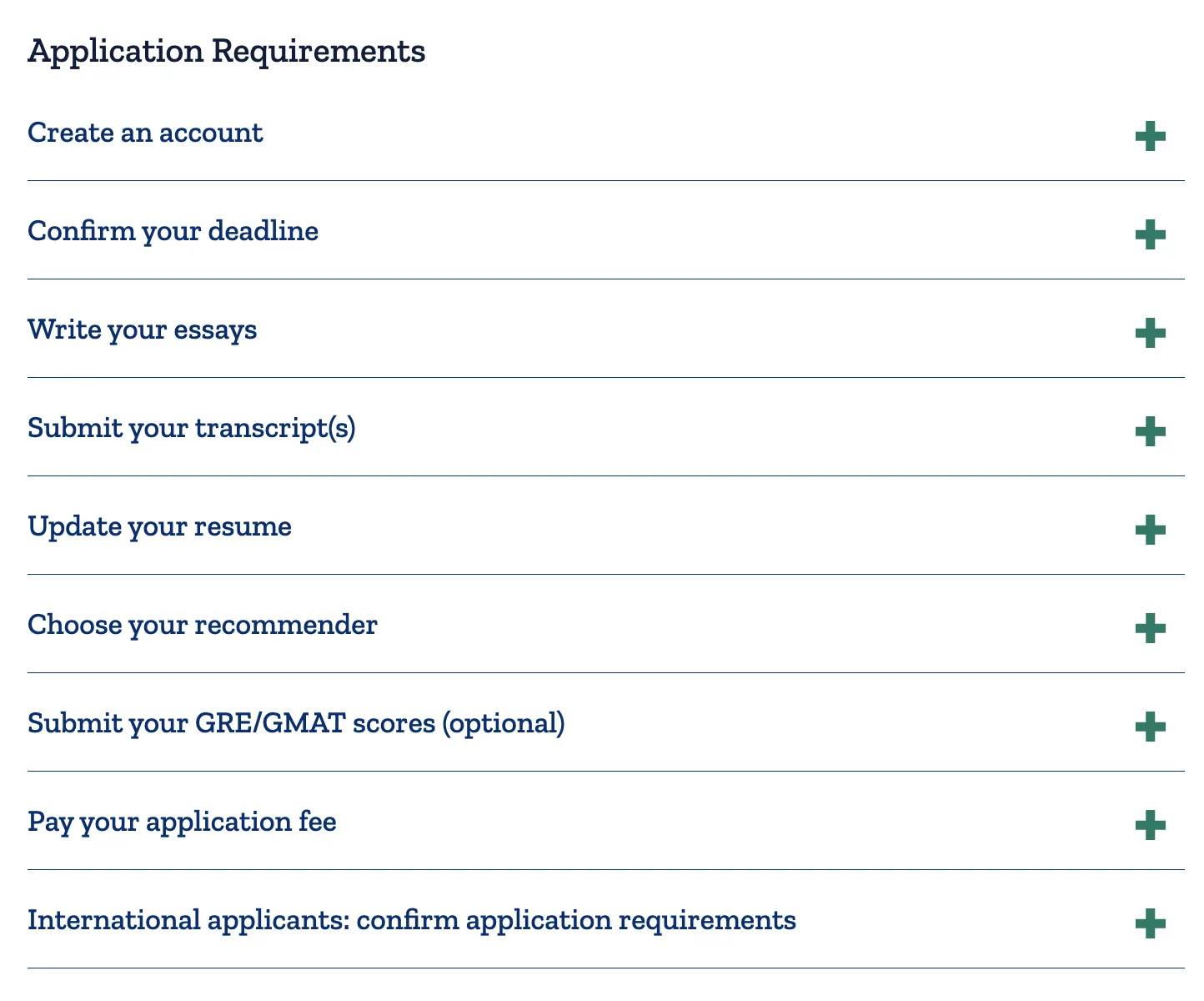
Applicants to the JHU MSF program must meet certain conditions, primarily including:
- Academic Background: A bachelor's degree in a related field such as finance, economics, or management is typically required. While GPA requirements are relatively flexible, a score of 3.2 or above is generally recommended.
- GRE Scores: In recent years, GRE score expectations have risen, with a recommended score of 330 or above to enhance competitiveness. However, work experience may waive the GRE requirement.
- Practical Experience: Applicants should have relevant work or internship experience; typically, 2-3 related experiences are recommended to demonstrate practical abilities and understanding of the finance industry.
- Letters of Recommendation and Personal Statement: These are required to showcase the applicant's academic capabilities, career goals, and passion for the finance field.
III. Learning Experience
The JHU MSF program emphasizes integrating practice with theory. While engaging in coursework, students can also participate in various internships and projects to enhance practical skills. The program offers multiple opportunities for industry collaboration, allowing students to deepen their understanding of financial markets through case studies, simulated trading, etc.
Additionally, the school regularly organizes industry lectures, career development events, and networking sessions, inviting industry experts to share their experiences, helping students expand their professional networks and stay informed about industry trends.
IV. Career Prospects
Upon completing the JHU MSF program, graduates have broad career prospects in finance. Many graduates secure ideal positions in investment banks, asset management firms, consulting companies, etc. Thanks to the program's STEM designation, international students can benefit from extended OPT after graduation, providing more opportunities for career development in the U.S. Positions include but are not limited to:
- Financial Analyst: Responsible for analyzing market trends, evaluating investment projects, and providing decision support.
- Risk Management Specialist: Focuses on identifying and managing financial risks to ensure stable operations in complex environments.
- Investment Advisor: Provides investment advice to clients, helping them achieve financial goals.
- Financial Consultant: Offers financial planning and management advice to businesses, optimizing their financial structures.
Furthermore, Johns Hopkins University's extensive alumni network and close ties with industry provide graduates with abundant employment resources and opportunities.
Overall, the Johns Hopkins University MS in Finance program, with its rigorous academic framework, rich curriculum, and strong career development support, is an ideal choice for many students aiming to advance in the finance sector. Whether in academic research or practical application, the JHU MSF program provides a solid foundation to help students stand out in the fiercely competitive finance industry.
For more admission cases and questions related to studying abroad and graduate applications, you can also add the contact information of the CheersYou(清柚教育) advisor below for more details.