
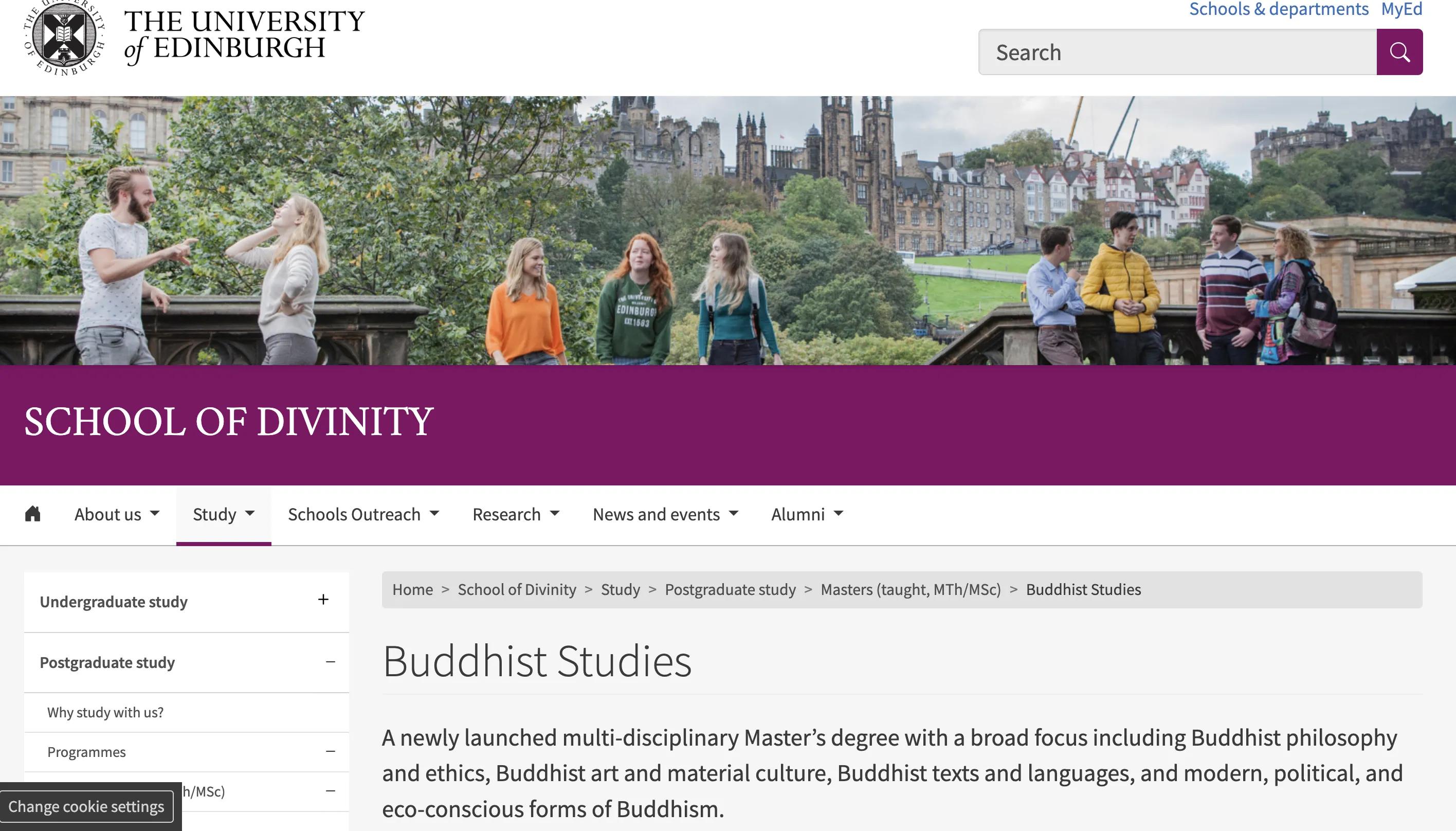
The University of Edinburgh has launched a new MSc Buddhist Studies this year. The program draws on the interdisciplinary scholarly network "Edinburgh Buddhist Studies (EBS)" within the School of Divinity. Programme Director Dr. Paul Fuller emphasizes that the degree adopts a unique interdisciplinary approach, covering a wide range of geographical, linguistic, and historical perspectives in Buddhist studies, aiming to help students rethink how Buddhist thought and practice have shaped Asia and modern culture. The program not only focuses on academic research but also encourages students to engage in practical projects to enhance their understanding of Buddhist culture. For more details and any questions regarding graduate applications, you can also scan the QR code below for a one-on-one consultation.

Curriculum
The curriculum of the MSc Buddhist Studies includes compulsory and optional courses. Compulsory courses include:
- Perspectives on Buddhist Studies: Methods and Themes
- Research Methods in Theology and Religious Studies
- Research Methods: Buddhist Studies
- 15,000-word Dissertation
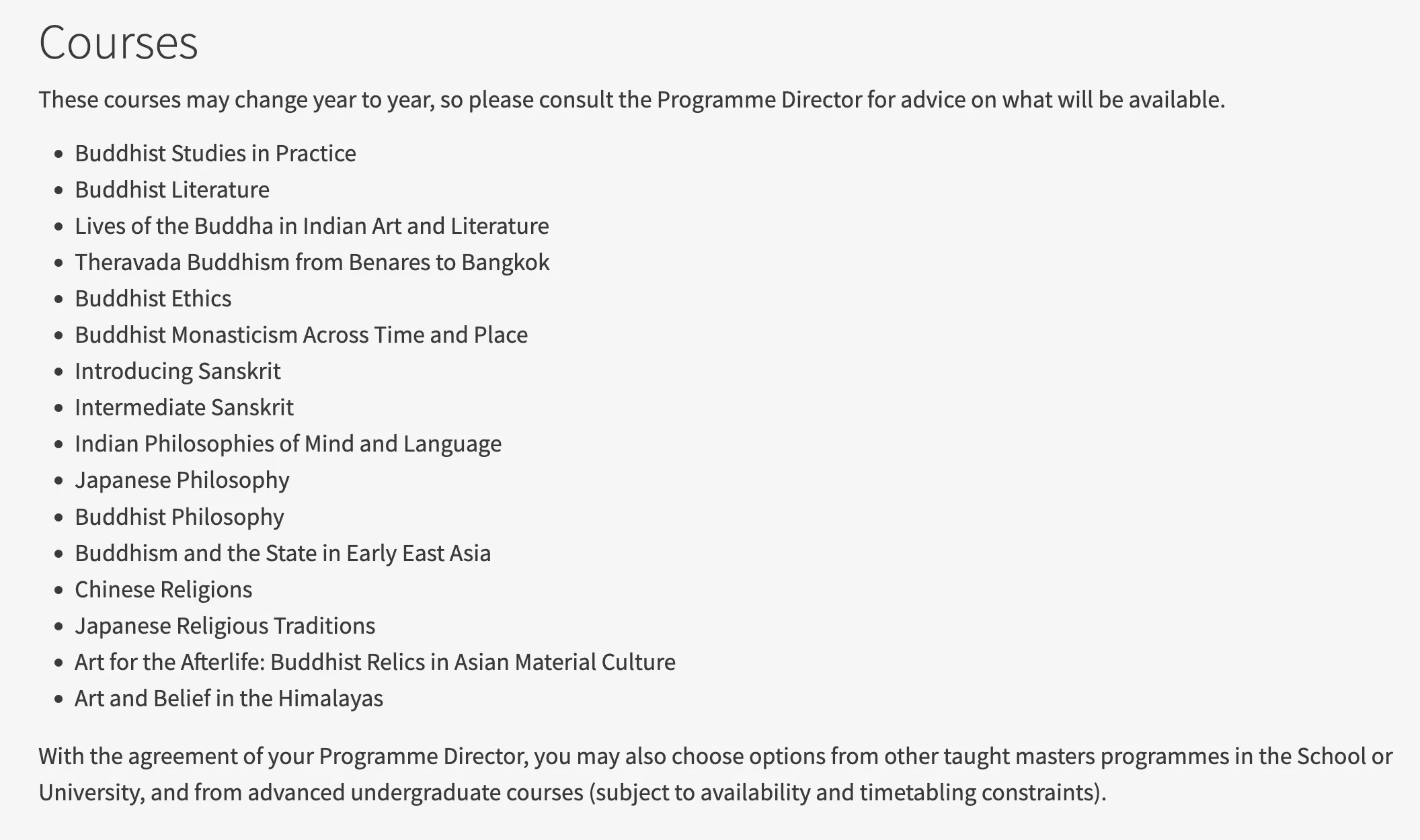
Optional courses cover a wider range, encompassing Buddhist thought from different geographical regions and historical periods, philosophy and ethics, Buddhist art and material culture, Buddhist texts and languages, including:
- Buddhist Studies in Practice
- Buddhist Literature
- The Life of the Buddha in Indian Art and Literature
- Buddhist Monastic Institutions Across Time and Space
- Buddhist Ethics
- Japanese Philosophy
- Buddhism and the State in Early East Asia
Additionally, the program includes 'Buddhist Studies in Practice,' allowing students to participate in real-world projects such as exploring the Buddhist collections at the National Museum of Scotland.
Admission Requirements
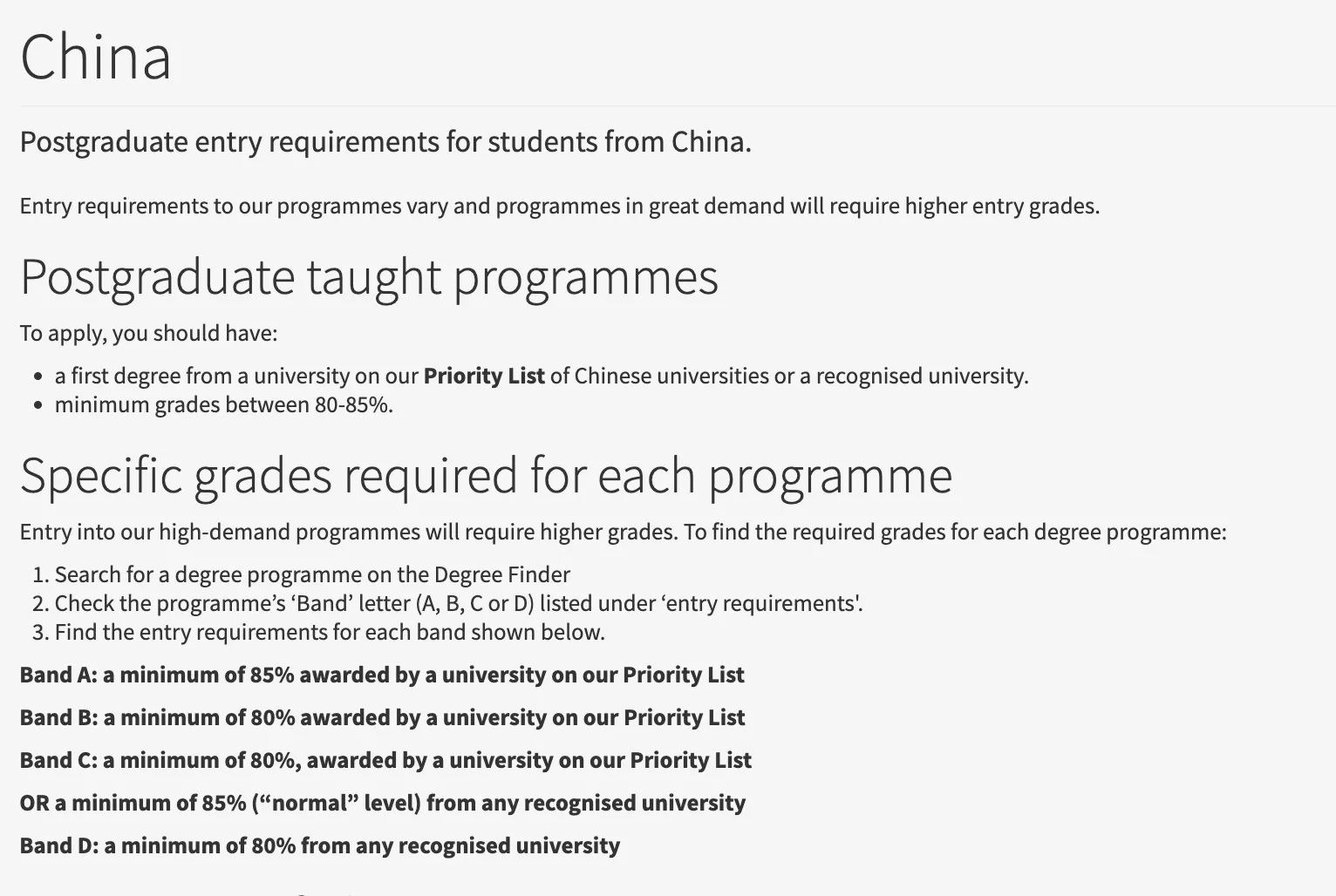
The program will open for applications in the Fall 2025 admission cycle; specific application details have not yet been updated. Based on past experience, applicants are expected to have a relevant academic background. Students from priority institutions typically need an average score of 80 or above, while those from non-priority institutions need 85 or above. Prospective applicants are advised to stay updated on the program's latest news and prepare the necessary materials.
The official website also specifically outlines application requirements for Chinese students and the priority list, which can be viewed via the link below.
Official website link: https://www.ed.ac.uk/studying/international/postgraduate-entry/asia/china
Career Prospects
Graduates of the MSc Buddhist Studies can find employment opportunities in various fields. Due to the interdisciplinary nature of the program, graduates possess a broad knowledge base and skill set, enabling them to work in education, cultural institutions, museums, non-profit organizations, and government departments. Specific career paths include:
- Higher education teacher or researcher
- Museum curator or educator
- Manager of cultural exchange and cooperation projects
- Social researcher or consultant
- Non-governmental organization project coordinator
For more admission cases and questions related to studying abroad and graduate applications, you can also add the contact information of the CheersYou(清柚教育) advisor below for more details.