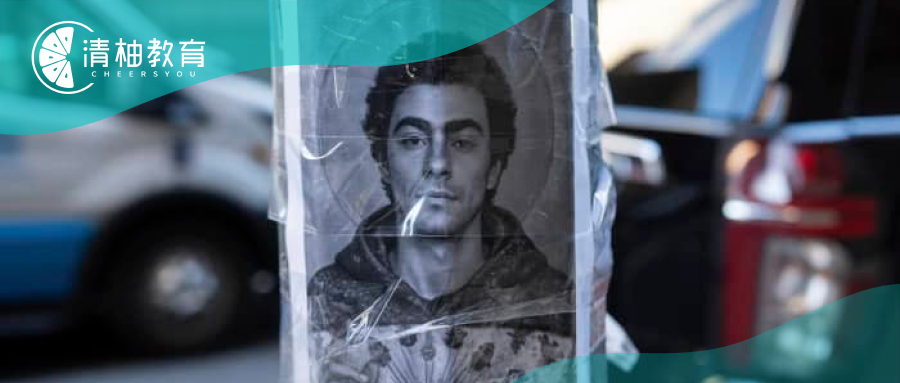
The assassination of a U.S. health insurance CEO has seen one twist after another.
Earlier this month, the CEO of UnitedHealth Group's UHC was shot and killed on a New York City street.
Brian Thompson was 50 years old and earned a staggering $10.2 million annually.
Many Americans have responded with near-universal cheers—people have long been at their wit's end with health insurance.
UHC's claim denial rate is as high as 32%, far exceeding the U.S. average.
Moreover, the company introduced AI algorithms this year, further hiking the denial rate.
On the shell casings left at the scene were the words: Delay, deny, defend.
These are the very terms insurers commonly use when refusing claims, making the shooting feel more like a reckoning.
As the shooter's identity was uncovered, netizens exclaimed: This is a modern-day Batman.
UPenn Trust-Funder, a Modern-Day Batman?
Twenty-six-year-old Luigi Mangione is a UPenn academic star and third-generation heir to a fortune spanning real estate, nursing homes, golf clubs, hotels, radio stations, and charitable foundations—a prominent Maryland family.
Born with a silver spoon, Luigi graduated from the elite all-boys Gilman School, ranking first in his high school class and delivering the valedictorian speech at graduation.
He then attended the University of Pennsylvania, completing both a bachelor's and a master's in just four years, majoring in computer science with a minor in mathematics. He founded a game club at UPenn and was a member of a fraternity.
A third-generation heir, an Ivy League academic star, and the notorious killer of a health insurance CEO—netizens declare: This is the real "Purple Star" of 2024.
The hashtag "Free Him" briefly topped U.S. trending topics.
Netizens: UPenn never disappoints; it's terrifyingly good in this lane.
Other Ivy League grads become corporate drones in investment banks; UPenn grads become heroes in prison.
Netizens: The reputation of North America's Slytherin stands firm—destination after graduation: Azkaban 😅.
CS whiz + CEO shooter: Luigi has set UPenn student forums ablaze.
"Harvard has the Unabomber, UPenn has the CEO killer."
"Despite everything, he's still the most mentally stable UPenn graduate."
"I hereby declare Luigi the most handsome UPenn alum ever to go to prison."
"Is this the kind of good looks that not even the hellish course CIS 1600 can tarnish?"
"Help—he was also a TA for the notoriously tough CS course CS 121!"
"A shining light of engineering!"
"Is it too late to follow bro on LinkedIn now?"
After the incident, Luigi's LinkedIn followers surged, and he became a folk hero.
Italian men will do anything for style—he gave himself away at McDonald's while flaunting his looks.
When his prison jumpsuit photo was released, netizens quipped: He makes it look like Hermès 😅
Luigi's lawyer currently believes there's no clear evidence proving he is the shooter.
Netizens: This lawyer looks like a sly old fox—there's hope for the handsome guy to get off.
Americans are actually donating to his defense, hoping he'll win his case.
The internet has gone mad, and so has the media.
TV stations are doing live broadcasts outside the prison, with inmates shouting "Free Luigi" through the bars 😅
After all, Americans admire strength—even in prison, Luigi exists like a hero.
It's not entirely a case of looks overriding morals; vigilante justice is indeed wrong, but it has sounded a wake-up call for America's health insurance system.
An elite rebelling against elites—he was able to transcend his own class and empathize with ordinary people, carrying out his beliefs in a nearly self-destructive way. It is genuinely moving.
The gun was 3D-printed by himself; his target was clear, and he involved no innocent bystanders. After the incident, he was calmly arrested. With such execution, willpower, and a sense of justice that transcends personal interests, it's fair to say he would succeed at anything.
The person who reported Luigi, leading to his arrest, is said to be an elderly, gray-haired McDonald's employee—precisely the kind of person insurance companies prey on.
Yet that elderly man never received the FBI's $50,000 reward—the boomerang came back that fast.
The McDonald's where Luigi was arrested was review-bombed with one-star ratings by netizens.
Burger King took a jab: We don't snitch.
Elon Musk retweeted: He should have gone to Burger King 😂
Netizens: Hope Musk saves Luigi.
It's not entirely baseless—after all, they're both UPenn alumni.
Netizens: UPenn F4—America is saved.
UPenn Alumni: Ruling America
UPenn alumni dominate every sphere in America.
Netizens: UPenn changes the world; Harvard and Yale grads are just worker bees.
Donald Trump
Trump graduated from UPenn's Wharton School with a bachelor's in economics. A well-known real estate developer, he has been elected President of the United States twice.
Elon Musk
Musk earned a dual bachelor's degree in economics and physics from UPenn. A globally renowned entrepreneur and founder of Tesla, SpaceX, and other companies, he drives advances in clean energy, aerospace, and artificial intelligence.
Warren Buffett
Buffett studied at UPenn's Wharton School for two years. Dubbed the "Oracle of Omaha," he is Chairman and CEO of Berkshire Hathaway and one of the world's most successful investors.
Sundar Pichai
Pichai holds a master's in engineering management from UPenn. He serves as CEO of Alphabet and its subsidiary Google, holding immense influence in the global tech industry.
Nassim Nicholas Taleb
Taleb earned his MBA from UPenn. A prominent thinker and financial expert, his book The Black Swan has gained worldwide attention.
Ivy League Grads and Crime Bosses
Today's internet generation celebrates intellectual attraction, so it's no wonder Luigi has been idolized.
Among Ivy League graduates, there's no shortage of high-IQ criminals—sometimes even more thrilling than the movies.
MIT: Casino Blackjack Ring
A group of MIT students used mathematical probability to design a system that won millions of dollars at multiple U.S. casinos—the real-life inspiration behind the movie 21.
Columbia: Drug Trafficking Case
In 2010, five Columbia University students ran a campus drug network using sophisticated electronic payments and encryption to evade police surveillance. They designed a virtual account system to mask money flows, dubbed by authorities as a "campus-style dark web marketplace."
So-called high-IQ crimes are ultimately just for entertainment—they're not the right path.
While we engage in lighthearted banter, we shouldn't blindly glorify such acts. Let's hope everyone strives to be a positive beacon for their school.