
In the flourishing field of biomedical engineering, Boston University's Master of Science in Biomedical Engineering program has attracted significant attention. This program offers a high-quality and unique learning path for students eager to delve deeper into biomedical engineering. Next, we will elaborate on four aspects: program introduction, curriculum, application requirements, and career development prospects. For more details and other grad school application questions, you can also scan the QR code below for one-on-one consultation.

1. Program Introduction
Boston University's Master of Science in Biomedical Engineering, offered by the Department of Biomedical Engineering in the College of Engineering, is an interdisciplinary program designed specifically for students from non-traditional engineering backgrounds. The program combines Boston University's strengths in medical research (e.g., collaboration with Boston Medical Center) and engineering technology to cultivate interdisciplinary talents capable of addressing complex problems in the healthcare field.
The program typically takes two years to complete, integrating theoretical instruction with practical application to develop students' comprehensive abilities in biomedical engineering. Boston University has profound academic heritage and cutting-edge research facilities in biomedical engineering, allowing students to access top-notch research resources and industry trends. Through this program, students not only master core knowledge and skills in biomedical engineering but also cultivate innovative thinking and practical problem-solving abilities, laying a solid foundation for future career development in this field.
Official website: https://www.bu.edu/eng/academics/explore-degree-programs/master-of-scien...
2. Curriculum
- Foundational Courses
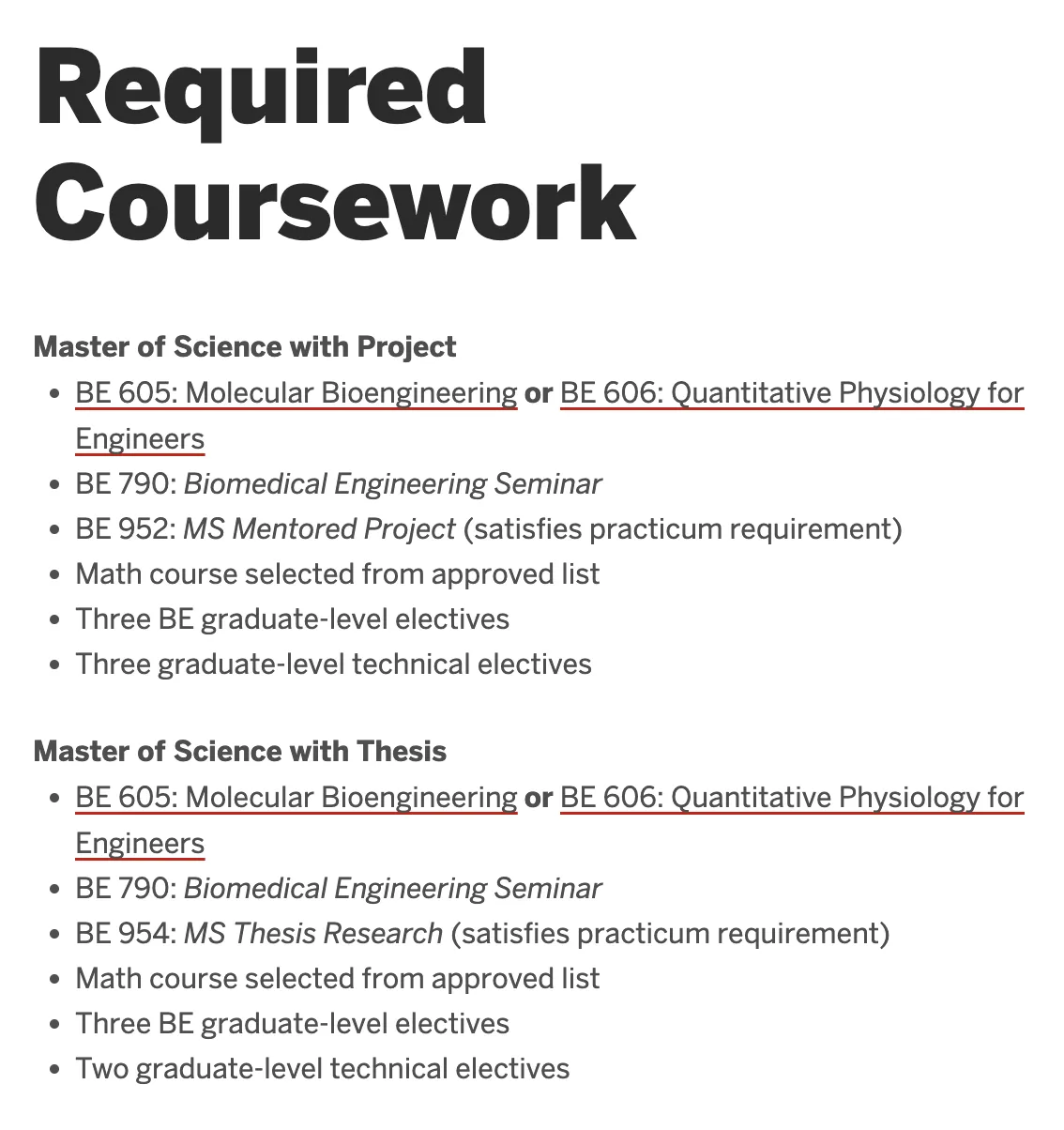
- Fundamentals of Biomedical Engineering: This course builds the overall framework of the biomedical engineering discipline, covering basic concepts, development history, and main research directions, helping students quickly establish a preliminary understanding of the field.
- Basics of Biology and Physiology: Given the close connection between biomedical engineering and biology/physiology, this course focuses on teaching fundamental knowledge such as cell biology and human physiology, enabling students to understand the operating principles of biological systems and providing necessary support for subsequent specialized courses.
- Engineering Mathematics and Physics: Strengthens students' knowledge base in mathematics and physics, covering advanced mathematics, probability theory and mathematical statistics, engineering mechanics, etc., providing mathematical and physical tools for applying engineering principles to solve biomedical problems.
- Core Specialized Courses
- Biomedical Signals and Systems: Focuses on the acquisition, processing, and analysis of biomedical signals, as well as the design and application of related systems. Students will learn how to use digital signal processing techniques to interpret and diagnose physiological signals such as ECG and EEG.
- Principles of Biomedical Imaging: Delves into the principles and applications of various biomedical imaging technologies, such as X-ray imaging, magnetic resonance imaging (MRI), and ultrasound imaging. Students will understand the working mechanisms of imaging equipment and methods for image reconstruction and analysis.
- Biomaterials and Tissue Engineering: Explores the properties and performance of biomaterials and their applications in tissue repair and regeneration. Students will learn how to design and prepare biomaterials with good biocompatibility, and study the construction of tissue engineering scaffolds and cell culture techniques.
- Elective Courses
- Neural Engineering: Focuses on engineering research of the nervous system, including neural interface technologies, neuroprosthetic design, and neural rehabilitation engineering, providing in-depth learning opportunities for students interested in the treatment and rehabilitation of neurological diseases.
- BioMEMS (Biomedical Microelectromechanical Systems): Introduces the design, fabrication, and application of biomedical microelectromechanical systems, covering areas such as microfluidic chips and biosensors, cultivating students' ability to develop miniaturized biomedical devices.
- Medical Device Regulations and Ethics: Enables students to understand the regulatory requirements and ethical issues involved in the entire process from research and development to market launch of medical devices, fostering awareness of compliance and ethical standards in practical work.
3. Application Requirements
-
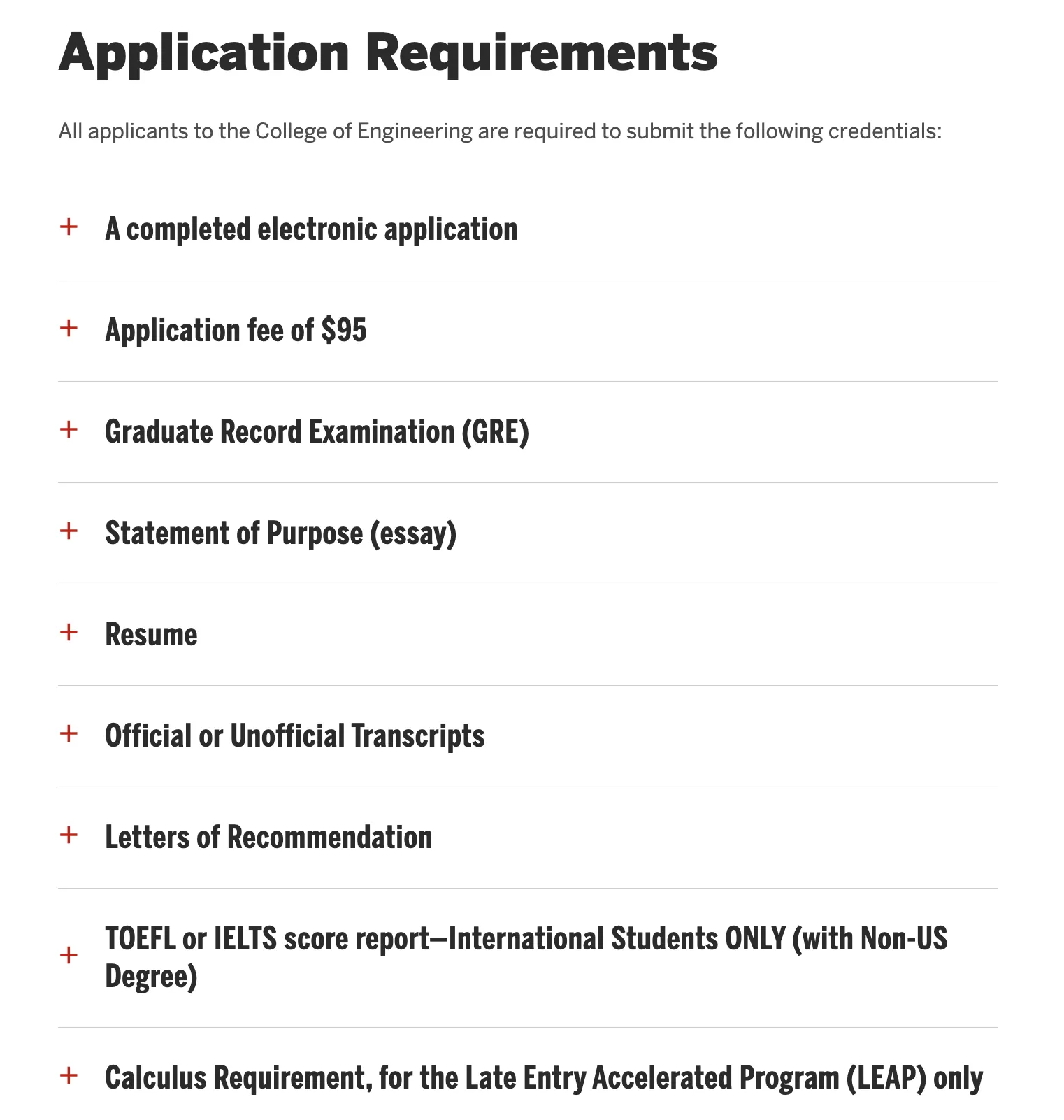
Academic Background: Bachelor's degree or higher, any major, but must have foundational courses in mathematics (calculus, linear algebra), physics, or life sciences. Applicants without an engineering background need to supplement engineering courses through the LEAP program.
-
Standardized Test Scores:
-
Language: TOEFL ≥ 90 (with section minimums: Reading ≥ 21, Listening ≥ 18, Speaking ≥ 23, Writing ≥ 22) or IELTS ≥ 7.0.
-
GRE: Required; no minimum score set, but the average for admitted students is about 315-320.
-
-
Application Materials:
-
Personal statement (explaining interdisciplinary learning motivation and career plans).
-
3 letters of recommendation (recommended to include academic mentors and industry references).
-
Transcripts (require WES evaluation; GPA recommended ≥ 3.0/4.0).
-
Resume (highlighting research, internship, or relevant project experience).
-
-
Deadline: Fall admission deadline is January 15 (scholarship applications must be submitted by December 15).
4. Career Development Prospects
-
Industry Distribution:
-
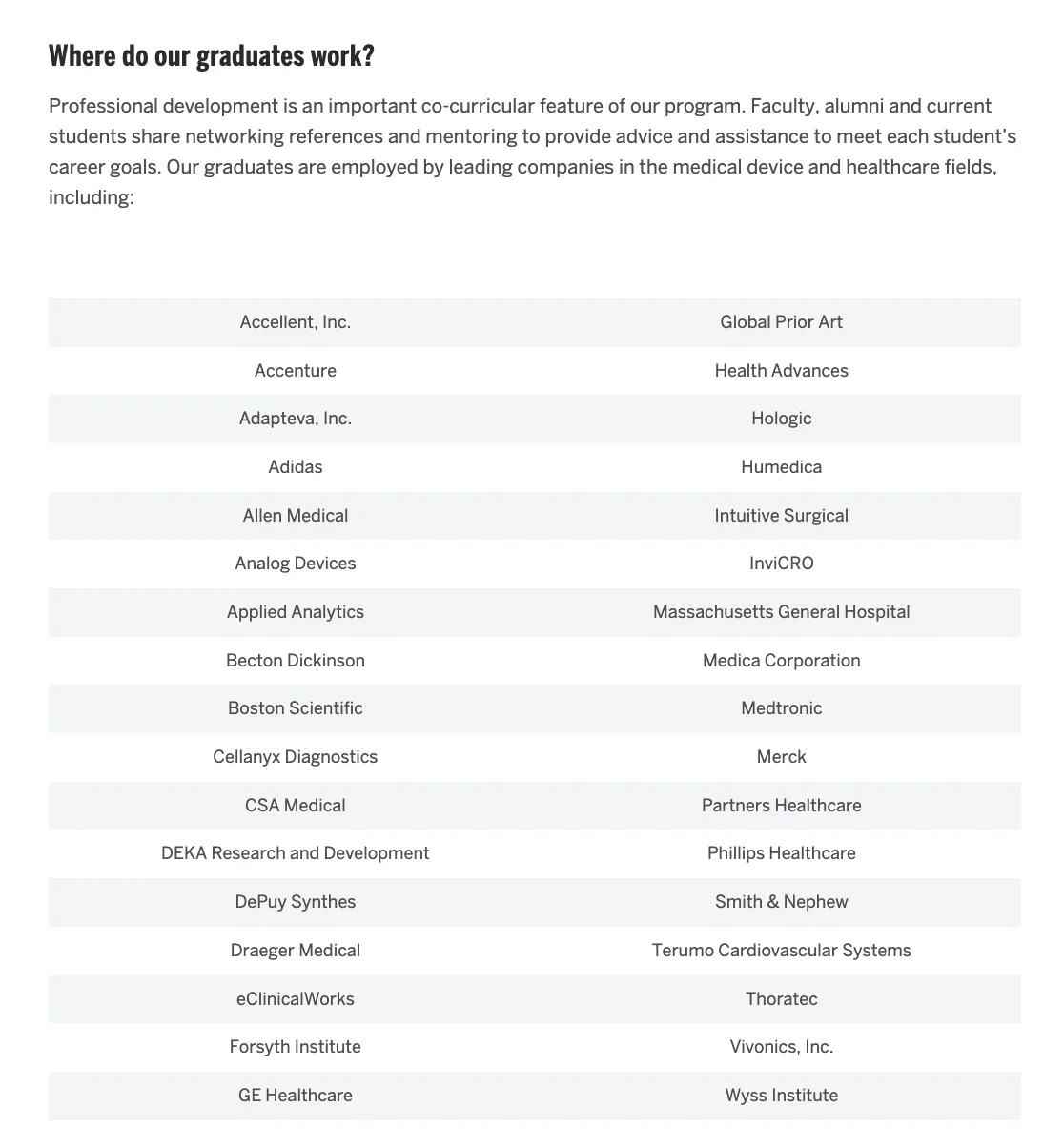
Medical Technology and Devices: Companies such as Johnson & Johnson, Medtronic, and Boston Scientific, working on R&D and testing of medical devices.
-
Biopharmaceuticals and Health Tech: Involvement in gene therapy and drug delivery system development; representative companies include Pfizer and Moderna.
-
Academic and Research Institutions: About 25% of graduates choose to pursue PhDs, focusing on areas such as bioengineering and neuroscience.
-
-
Salary Level:
-
According to U.S. Bureau of Labor Statistics data, the average annual salary for biomedical engineers is about $95,000, and senior practitioners can earn over $120,000.
-
-
Career Support:
-
Boston University provides career guidance, alumni network, and industry partnership resources (such as the Boston medical innovation ecosystem).
-
International student employment rate exceeds 85%; typical positions include clinical engineer, bioinformatics analyst, medical consultant, etc.
-
In the 25fall application season, CheersYou(清柚教育) students have already received offers from this program. To learn about application timelines and backgrounds (tl and bg), as well as more admission cases and grad school application questions, you can also add the contact information of CheersYou(清柚教育) consultants below for detailed information.