
As a U.S. “Public Ivy” and top-tier global research university, the University of Pittsburgh’s MS in Bioengineering leverages its dual-core interdisciplinary advantage of “medicine + engineering” and consistently ranks among the top 20 biomedical engineering programs in USNEWS. Anchored by the University of Pittsburgh Medical Center (UPMC, a world-class healthcare institution) and the innovation resources of Carnegie Mellon University, the program focuses on cutting-edge areas such as medical device development, regenerative medicine, and neural engineering, cultivating well-rounded talents with both research depth and industry practice capabilities. Graduates command an average starting salary over $85,000; the STEM designation secures 36 months of OPT, and the international student employment rate in the U.S. exceeds 80%. In the following, we elaborate on the program introduction, curriculum, admissions requirements, and career prospects. For more details and other graduate application related questions, scan the QR code below for one-on-one consultation.

1. Program Introduction: The Golden Intersection of Medicine and Engineering
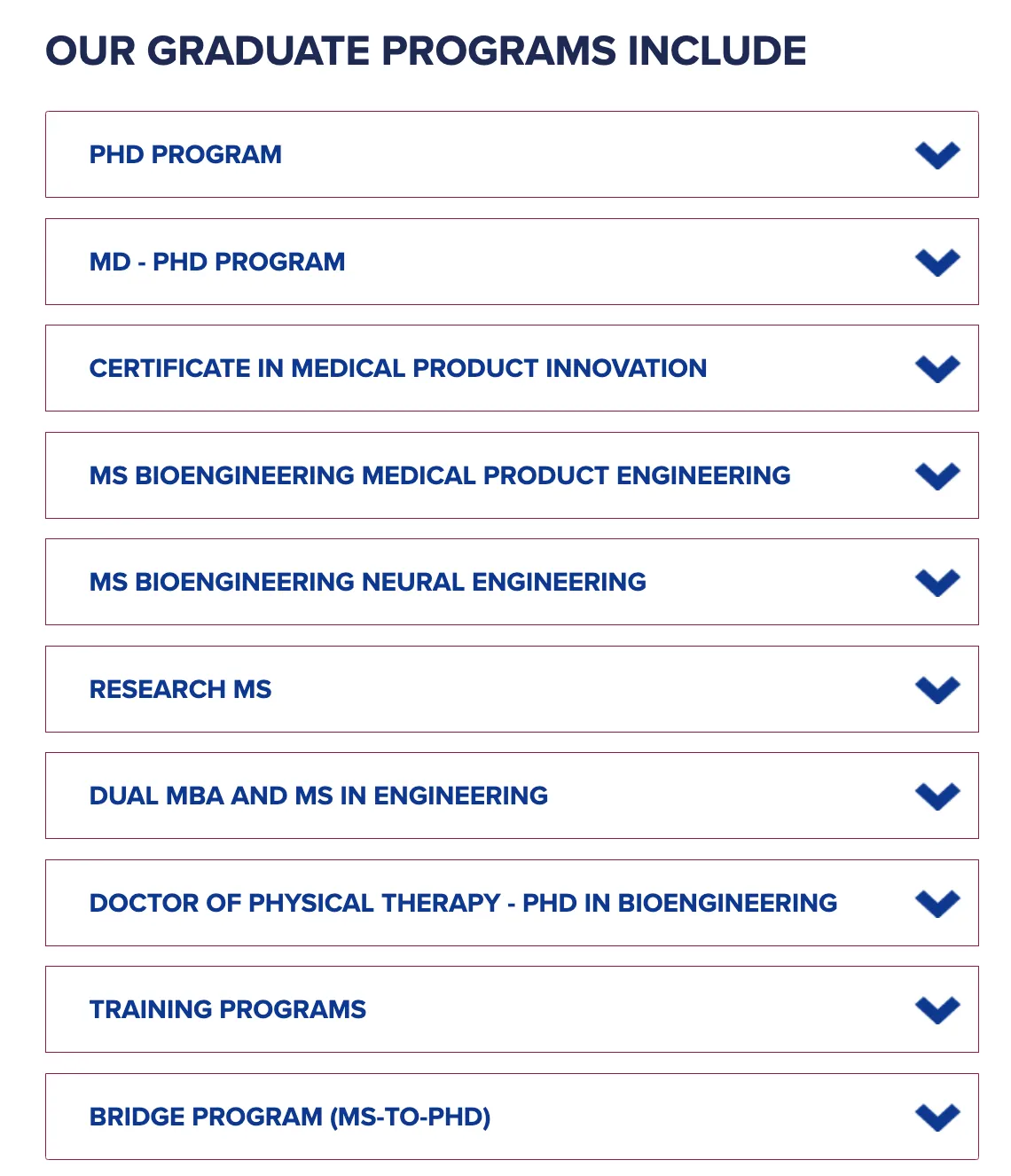
The University of Pittsburgh’s MS in Bioengineering is offered by the Department of Bioengineering and provides dual tracks: Research MS and Professional MS, dedicated to addressing core challenges in healthcare. The program deeply integrates UPMC’s clinical resources with the engineering school’s technical strengths, creating a “lab-hospital-industry” triadic cultivation system.
-
Core Advantages:
-
Top-notch Research Platforms: Boasts electromagnetic laboratories and intelligent medical device development centers; students can participate in NASA-collaborated projects or research funded by the U.S. Department of Energy.
-
Flexible Duration and Pathways:
-
Research MS: 2 years, requires 31 credits (including 6 credits for thesis), suitable for academic pursuits or PhD transition.
-
Professional MS (Medical Product Engineering): 1 year, 30 credits, includes medical product design, entrepreneurial law courses, and industry internship, leading directly into medical device companies.
-
-
Cross-university Collaboration: Can take courses in robotics and artificial intelligence at Carnegie Mellon University, expanding cross-disciplinary skills.
-
STEM Designation: Graduates enjoy 3 years of OPT, significantly enhancing competitiveness for U.S. employment.
-

Official website: https://www.engineering.pitt.edu/departments/bioengineering/
2. Curriculum: Full Coverage of Technical Depth and Industry Demands
The curriculum is divided into core courses, elective tracks, and practical modules, totaling 30–31 credits, emphasizing equal weight on theoretical innovation and engineering application:
-
Core Courses:
-
Biostatistics for Engineers: medical data analysis and hypothesis testing methods.
-
Medical Product Innovation: full-process practice from clinical needs analysis to prototype testing.
-
Biomaterials & Tissue Engineering: design and application of regenerative medicine materials.
-
-
Elective Tracks:
-
Neural Engineering: brain-computer interfaces, neural signal processing, and machine learning algorithms.
-
Medical Imaging Technology: optimizing MRI and CT image diagnosis via computer vision.
-
Biomechanics and Rehabilitation Engineering: prosthetic design and development of sports rehabilitation devices.
-
-
Practical Modules:
-
Industry Internship: recommended entry into partner companies such as Johnson & Johnson and Medtronic, participating in 6–12 week full-time projects.
-
Capstone Project: team-based solution of real clinical problems; results can be used directly in job portfolios.
-
3. Admissions Requirements: Dual Screening of Academic Background and Career Potential
-
Academic Background:
-
Undergraduate GPA ≥3.5 (4.0 scale); background in engineering, biology, chemistry, or physics required. Non-engineering applicants need to make up prerequisite courses in mathematics and engineering.
-
The Professional MS (Medical Product Engineering) accepts cross-disciplinary applications with GPA ≥3.0, but must demonstrate interest in the medical industry.
-
-
Standardized Tests:
-
Language: TOEFL ≥80 (no sub-score requirements) or IELTS ≥7.0 (the School of Engineering minimum is 6.5, but the Department of Bioengineering requires 7.0).
-
GRE: required; recommended Quantitative ≥158; average admitted score 320+.
-
-
Application Materials:
-
Personal statement (must specify research direction, e.g., “smart prosthetic development” or “medical imaging algorithm optimization”).
-
3 letters of recommendation (recommended to include research advisor and industry recommender).
-
Transcripts (WES verification required; non-double first-class universities recommend GPA ≥3.6).
-
4. Career Prospects: Core Tracks in Medical Technology and Bio-innovation
Graduates, with their combined engineering and medical background, enjoy top-tier employment competitiveness in the U.S.:
-
Industry Distribution:
-
Medical Device Giants: Medtronic, Johnson & Johnson, Boston Scientific, in product R&D and clinical trials (average annual salary $90,000+).
-
Biopharma and Gene Therapy: Pfizer, Moderna, leading drug delivery system development.
-
Research Institutions: approximately 30% of Research MS graduates pursue PhDs, covering neural engineering, computational biology, etc.
-
-
Career Support:
-
Career Services: resume polishing, mock interviews, and alumni referrals; over 40 industry recruitment events annually.
-
Geographic Advantage: Pittsburgh is a national medical innovation hub, adjacent to UPMC and the Carnegie Mellon University innovation ecosystem.
-
The University of Pittsburgh MS in Bioengineering, with its top-tier medical-engineering crossover resources, flexible academic paths, and high industry recognition, serves as a golden springboard for medical technology elites. Whether aimed at deep academic innovation or leading industrial frontiers, Pitt provides a platform to enhance global vision and practical skills.
In the 25fall application cycle, CheersYou(清柚教育) students have already received offers from this program. To learn about application timelines and backgrounds, more admission cases, or other study-abroad and graduate application questions, add the contact details of a CheersYou(清柚教育) advisor below.