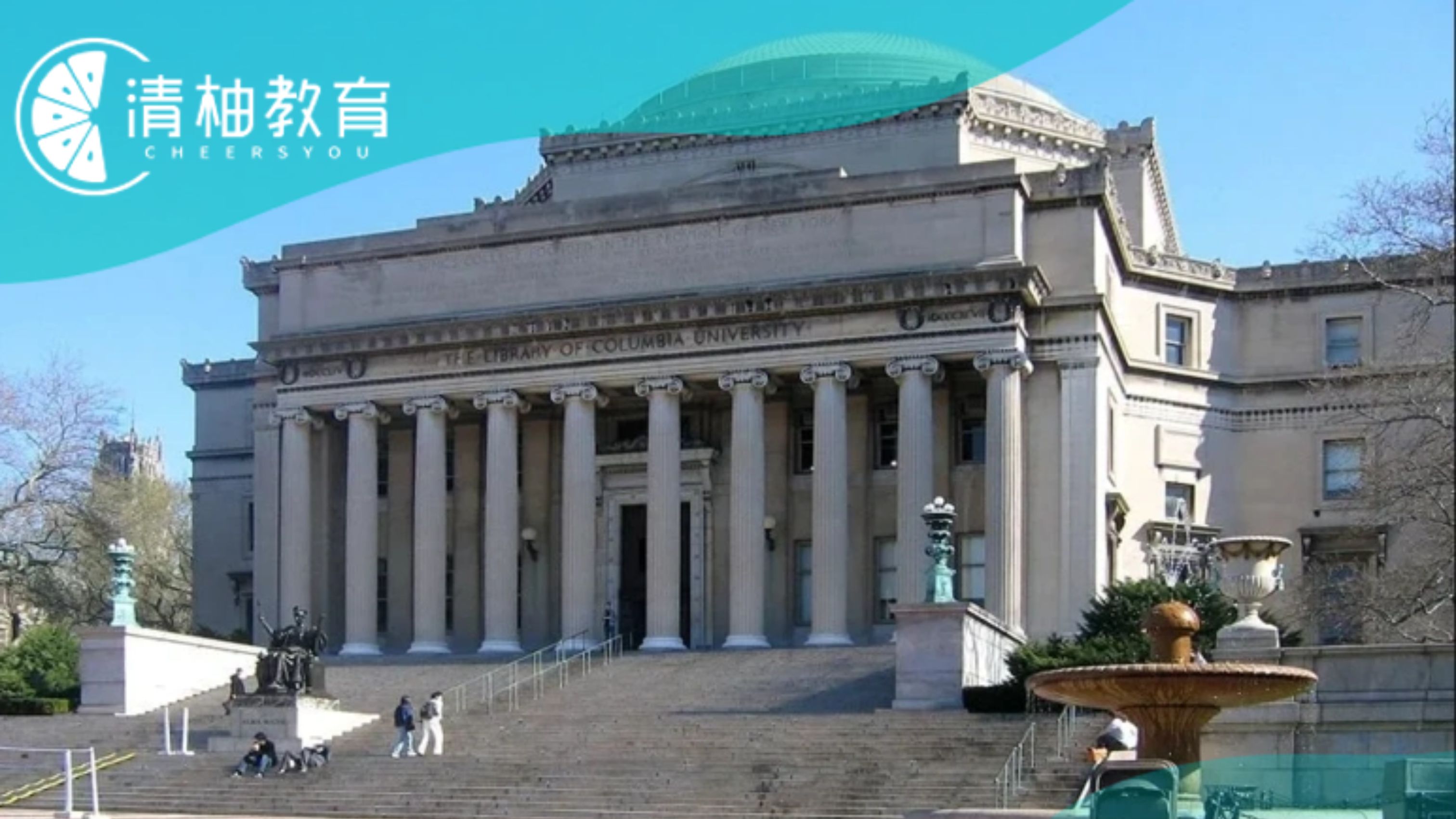
At a time when the climate crisis is profoundly affecting human society, Columbia University's MA in Climate and Society (MA in Climate and Society) has become a benchmark program in the global response to climate change, thanks to its interdisciplinary training system driven by the dual cores of "science + society." As a 12-month intensive STEM-designated program, it leverages the top-tier research resources of the Columbia Climate School and the advantages of its New York location, focusing on climate science, policy design, and risk management to cultivate interdisciplinary talents capable of translating complex climate information and promoting equitable solutions. Graduates earn an average starting salary of $85,000, international students benefit from 36 months of OPT, and the U.S. employment rate exceeds 75%. The following will elaborate on four aspects: program introduction, curriculum, admissions requirements, and career prospects. For more details and other graduate school application questions, you can also scan the QR code below for one-on-one consultation.

I. Program Introduction: A Global Perspective at the Intersection of Science and Society
Columbia University's MA in Climate and Society is offered by the Climate School, aiming to address complex challenges posed by climate change to health, food security, energy systems, and other fields through interdisciplinary coursework and practice. The program emphasizes translating climate science principles into actionable policies and business strategies, supplying decision-making talent to governments, non-profits, and corporations.
-
Key Advantages:
-
STEM Designation: Graduates are eligible for 3-year OPT, significantly enhancing their career development opportunities in the U.S.
-
Compact and Efficient Curriculum: A 12-month full-time program covering 6 core courses, a summer internship, and a capstone project, balancing academic depth with practical experience.
-
Interdisciplinary Resource Integration: Students can take elective courses at the School of International and Public Affairs (SIPA) and the School of Engineering, and participate in collaborative research projects with organizations such as the United Nations and the World Bank.
-
Inclusive Admissions: Accepts applicants from diverse backgrounds in natural sciences, social sciences, and humanities, encouraging students from non-climate fields to transition.
-
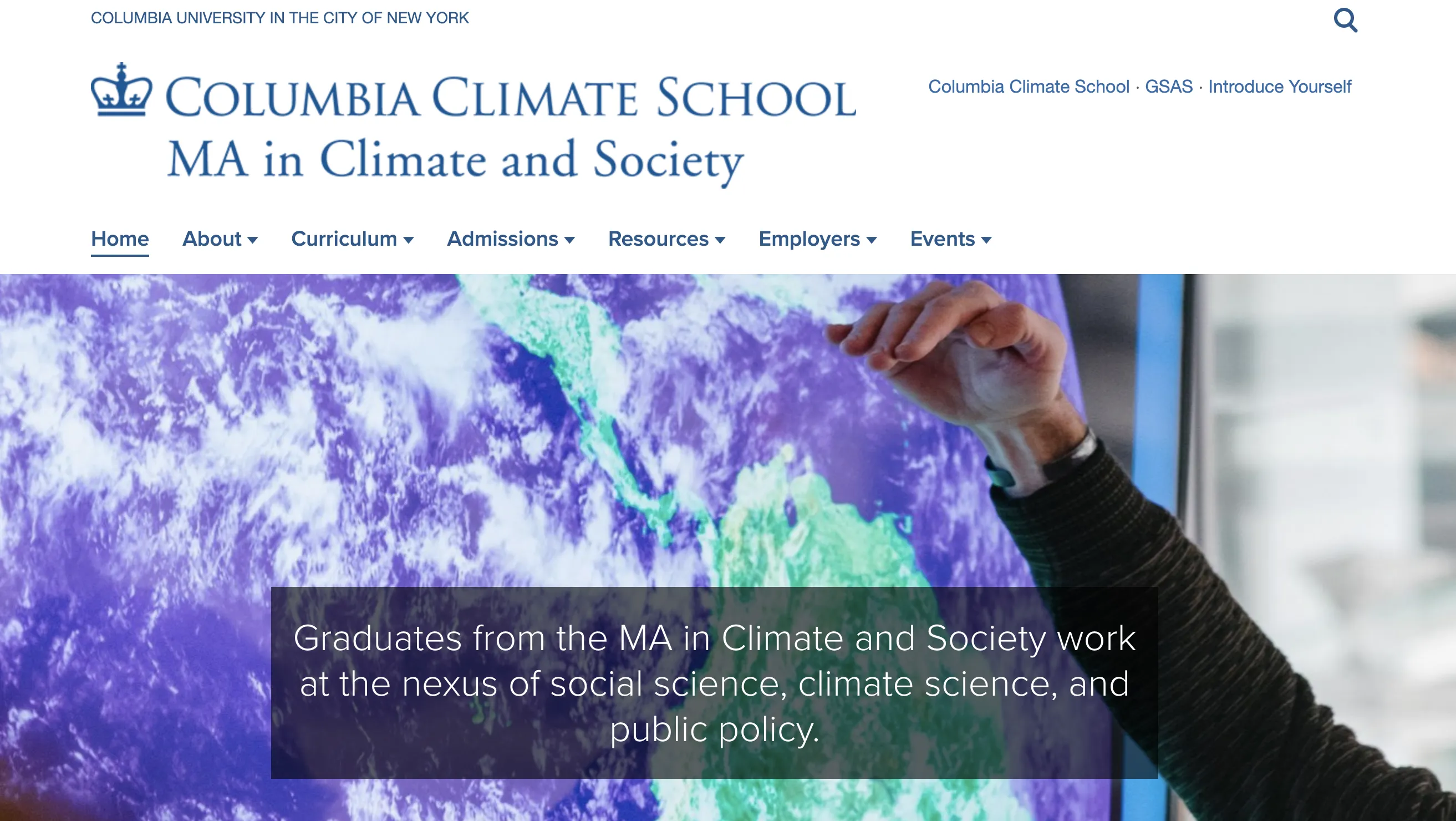 Official Website Link: https://climatesociety.climate.columbia.edu/
II. Curriculum: Comprehensive Coverage of Scientific Theory and Applied Practice
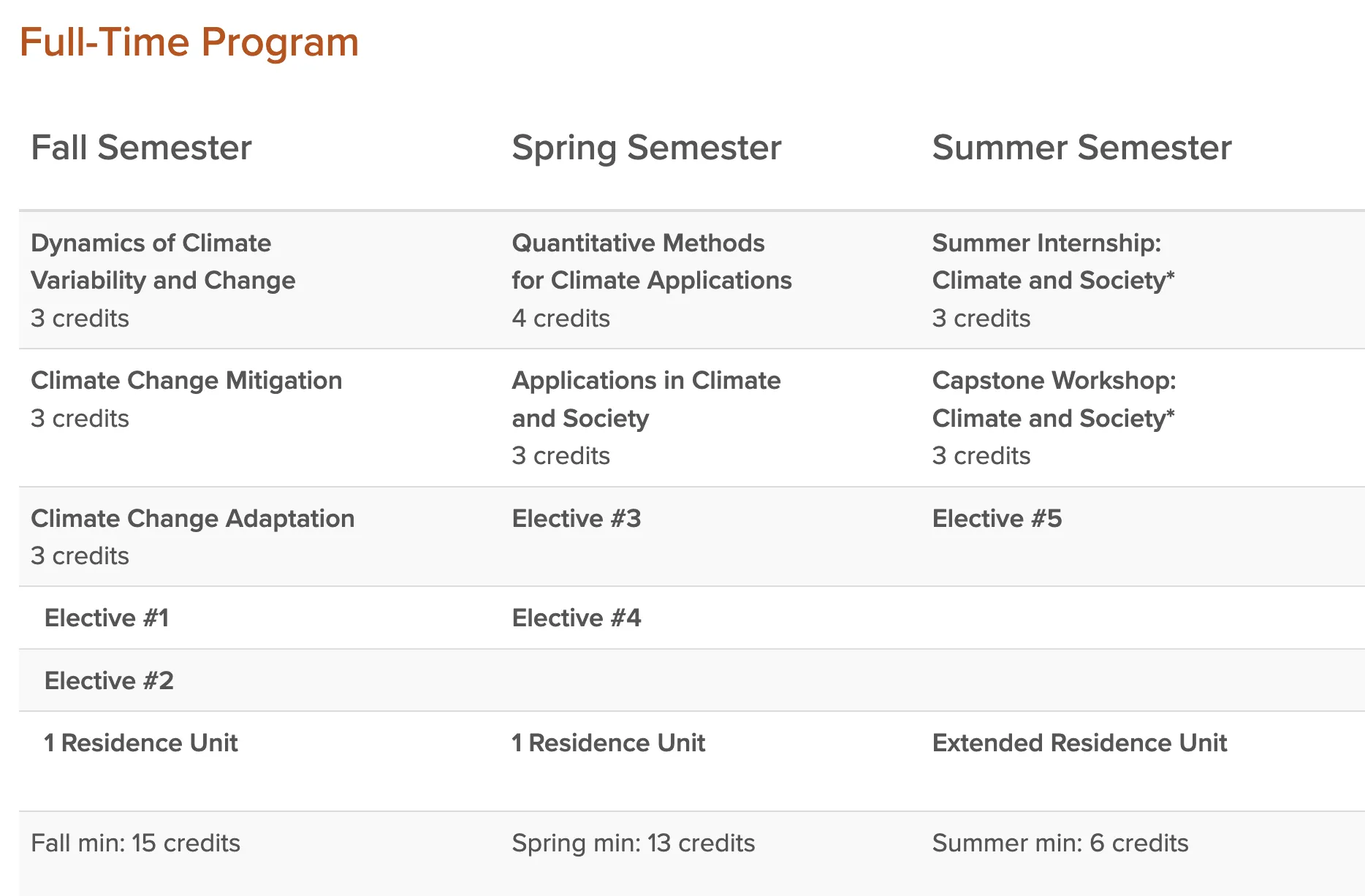
The curriculum is divided into core courses, elective courses, and a capstone project/internship, requiring a total of 36 credits, with an emphasis on data-driven and policy design skills:
-
Core Courses:
-
Climate Variability and Climate Change Dynamics: Analyzes the physical mechanisms and predictive models of the climate system, cultivating the ability to interpret scientific information.
-
Climate Change Mitigation: Studies decarbonization technologies, carbon pricing mechanisms, and international climate agreements (e.g., the Paris Agreement).
-
Climate Change Adaptation: Analyzes disaster risk management, community resilience building, and climate justice frameworks.
-
Quantitative Methods for Climate Applications: Master R/Python tools for climate data analysis and statistical modeling, covering extreme value theory, geospatial analysis, etc.
-
-
Elective Concentrations:
-
Climate Finance and Economics: Carbon accounting, green bond design, and ESG investment strategies.
-
Climate Communication and Policy: Learn science communication skills, develop climate policy and public advocacy plans.
-
Climate and Health: Study intervention strategies for climate-related health risks such as heatwaves and infectious diseases.
-
-
Practical Modules:
-
Summer Internship: Intern at organizations such as the World Resources Institute (WRI) or the U.S. Environmental Protection Agency (EPA), participating in climate policy evaluation or technology development.
-
Capstone Project: Team-based work to develop solutions for real-world climate challenges, such as urban climate adaptation planning or carbon neutrality technology promotion.
-
III. Admissions Requirements: Emphasis on Academic Potential and Diverse Backgrounds
-
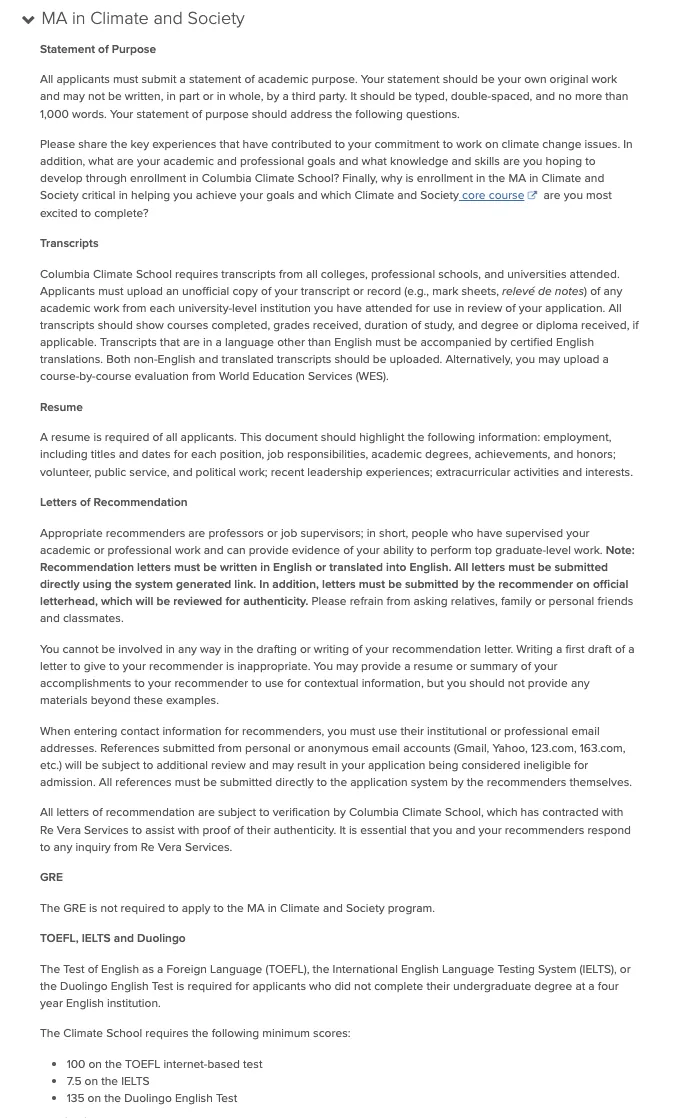
Academic Background: A bachelor's degree or higher in any field, but basic coursework in climate science or quantitative subjects (e.g., statistics, economics, environmental science) is preferred.
-
Standardized Test Scores:
-
Language Proficiency: TOEFL ≥ 104 (with section scores ≥ 26) or IELTS ≥ 7.0 (with section scores ≥ 7.0).
-
GRE: Required, with a recommended Quantitative score ≥ 160.
-
-
Application Materials:
-
Personal Statement (2-4 pages, explaining your interest in the climate field and career goals, such as "advancing climate justice in developing countries" or "designing urban carbon neutrality pathways").
-
3 Letters of Recommendation (preferably including academic advisors and internship/work supervisors).
-
Writing Sample (7-30 pages, demonstrating research or policy analysis skills).
-
IV. Career Prospects: Key Drivers of Global Climate Action
Graduates, armed with combined "science + policy" skills, find employment across the public sector, non-profit organizations, and international corporations:
-
Industry Distribution:
-
International Organizations and Government Agencies: United Nations Development Programme (UNDP), National Oceanic and Atmospheric Administration (NOAA), leading climate policy design and evaluation.
-
Non-profit Organizations and Think Tanks: World Resources Institute (WRI), The Climate Group, driving climate initiatives and sustainable development projects.
-
Private Sector: McKinsey, Microsoft, serving as sustainability consultants or ESG analysts.
-
-
Typical Positions:
-
Climate Policy Analyst (average salary $80,000), Renewable Energy Project Manager ($80,000), Renewable Energy Project Manager ($95,000+), Climate Communication Specialist ($75,000).
-
-
Career Support:
-
Columbia's Career Center offers resume optimization, alumni referrals, and industry-specific recruitment events, hosting over 20 employer presentations in the climate field annually.
-
The alumni network spans the core circles of global climate action, with over 40% of graduates promoted to management positions within three years.
-
Columbia University's MA in Climate and Society, with its top-tier interdisciplinary resources, STEM designation, and high social impact, has become a strategic choice for talent in the global climate field. Whether leading international climate policy or driving corporate green transformation, this program provides students with a career springboard that combines scientific rigor with practical innovation. In the fall 2025 application cycle, CheersYou(清柚教育) students also received offers from this program.

To learn about application timelines and backgrounds, as well as more admission case studies and graduate school application questions, you can also add the contact information of the CheersYou(清柚教育) advisor below for more details.