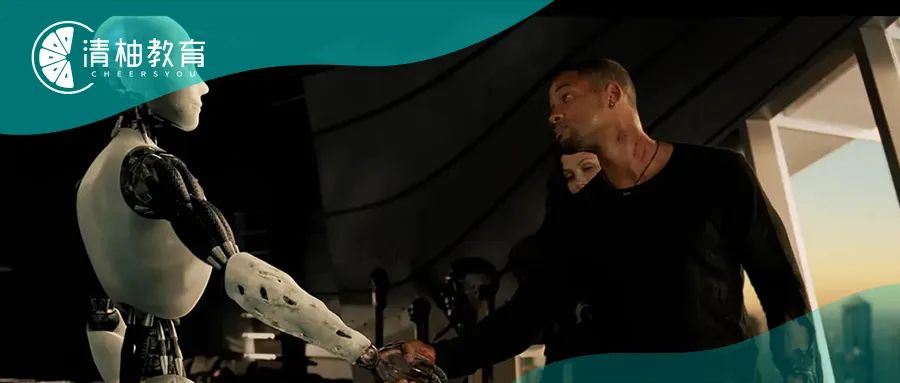
Today, the development of AI is like a runaway horse, unstoppable. Discussions around AI technological innovation and the future employment landscape are heating up,
In this era of rapid AI advancement, what kind of jobs will not be replaced has become a question in many people's minds.
Just as parents are still debating whether to push their children into the fiercely competitive AI track, they turn around and find that many children from elite families have already started learning traditional skills like acupuncture...
The answer is that this profession has a promising future, relying on hands-on skills and clinical experience that AI cannot replace anytime soon!
Recently, the McKinsey Global Institute, a top consulting firm, released a report on the future of work. The report shows that by 2030, 27% of jobs in Europe and 30% in the U.S. could be replaced by generative AI, and between 2030 and 2060, as much as 50% of existing occupations could be replaced by AI, accelerating career transitions by about a decade.
Source: McKinsey official website
Although AI advancements bring certain employment panic, new technologies will also drive growth in demand for new positions.
So for international students, against the backdrop of rapid AI development, how should they choose a field of study that meets contemporary demands while offering long-term career prospects?
STEM Talent Demand Doubles
According to the answers in the McKinsey report, first, jobs requiring advanced data analysis, mathematics, IT, programming, R&D, engineering, and other such skills will undoubtedly see significant growth. These are what we commonly refer to as STEM skills.
Source: McKinsey official website
According to the U.S. Bureau of Labor Statistics, between 2020 and 2030, the U.S. will still have 820,000 new STEM job openings. The growth rate of technical positions is expected to be twice that of the overall workforce.
Source: sthree
To retain more relevant professionals, the U.S. offers graduates of STEM-certified programs up to 36 months of OPT work authorization.
Moreover, every year the list of STEM (Science, Technology, Engineering, Mathematics) majors is adjusted and expanded, offering students an increasingly broad range of application directions.
Computer Science (CS)
Computer science is undoubtedly the cornerstone of AI development; future breakthroughs in AI depend on the continuous innovation of CS professionals.
CS graduates are in high demand in tech, finance, healthcare, and other fields, with career options including software developer, data scientist, network engineer, systems analyst, and more, generally commanding high salaries.
Recommended Focus Areas:
-
AI & Machine Learning
-
Software Engineering & Cybersecurity
-
Database & Data Mining
Recommended Universities:
-
Massachusetts Institute of Technology
-
Stanford University
-
University of California, Berkeley
-
Carnegie Mellon University
-
University of Illinois Urbana-Champaign
Electrical Engineering (EE)
This field covers core technologies that even AI cannot master. After all, AI robots still need sensors and control chips to function, and the national push for semiconductors, new energy, smart grids, and more all depend on EE engineers.
Recommended Focus Areas:
-
IC & Chip Design
-
Power & Energy Systems (Smart Grid & Renewable Energy)
-
Embedded Systems & IoT
-
Quantum Computing & Optoelectronics
Recommended Universities:
-
Massachusetts Institute of Technology
-
Stanford University
-
University of California, Berkeley
-
California Institute of Technology
-
Carnegie Mellon University
-
University of Illinois Urbana-Champaign
-
Georgia Institute of Technology
Biomedical Engineering (BME)
BME, as an interdisciplinary field emerging in the age of medical technology, requires professionals with hardcore engineering skills, medical knowledge, and clinical experience—such multidisciplinary talent is irreplaceable even by advanced AI.
Moreover, with tight regulation and rapid development in the healthcare industry, job opportunities will only increase, making it a true iron rice bowl among STEM majors.
Recommended Focus Areas:
-
Biomedical Imaging & AI-Assisted Diagnostics
-
Pharmaceutical Engineering
-
Bioinformatics
-
Biomechanics & Rehabilitation Engineering
Recommended Universities:
-
Johns Hopkins University
-
Massachusetts Institute of Technology
-
University of California, San Diego
-
University of Michigan, Ann Arbor
-
University of Pennsylvania
Environmental, Social, and Corporate Governance (ESG)
An increasing number of ESG programs are now also classified under STEM. Against the backdrop of increasingly severe global climate change, resource shortages, and other environmental issues, ESG—focusing on environmental, social, and corporate governance principles—offers new ideas and directions for corporate sustainable development.
Moreover, in the context of rapid AI development, the ESG field actually has even brighter prospects, because it addresses value judgments that AI cannot replace. Governments worldwide are also introducing policies to encourage ESG development.
Recommended Focus Areas:
-
Sustainable Development Management
-
Social Impact Investing
-
Corporate Governance & Business Ethics
-
ESG Risk Management & Compliance
Recommended Universities:
-
Columbia University
-
Stanford University
-
Yale University
-
University of Michigan, Ann Arbor
-
New York University
The Higher the 'Human Touch,' the Less Likely to Be Replaced by AI
Aside from those hardcore technical professions, in this era dominated by AI, humanity's true core competitiveness lies precisely in those 'imprecisely' human traits.
Like wildly creative imagination, nuanced and acute empathy, and the ability to make quick decisions in chaos. Therefore, in the future, jobs that require more of the 'human touch' will be harder for algorithms to replace.
Arts & Creative Industries
AI can generate images with one click, but it cannot inject true 'soul.' The creative industries need human unique aesthetics and emotional expression.
Innovative design, immersive art, and film and television production—these fields now need 'AI creative commanders' who understand technical implementation while safeguarding the humanistic core. Riding this wave of 'AI + creativity,' art programs with 'Technology' or 'Digital' in their names are taking off!
Recommended Focus Areas:
-
Visual Arts
-
Film Production
-
Design (Graphic Design, Fashion Design, Industrial Design, etc.)
-
Creative Writing
Recommended Universities:
-
University of Southern California
-
New York University
-
University of California, Los Angeles
-
Rhode Island School of Design
-
School of the Art Institute of Chicago
-
California Institute of the Arts
Education & Training
The education field attaches special importance to personalized teaching and emotional interaction. In this regard, AI can never replace the intuitive communication and emotional resonance unique to human teachers. This irreplaceability is especially evident in educational innovation practices and cross-cultural teaching contexts.
Demand for education professionals in traditional education, online education, corporate training, and other areas continues to grow, especially in educational technology and educational consulting, which have strong market prospects.
Recommended Focus Areas:
-
Educational Psychology
-
Special Education
-
Educational Technology
-
Educational Policy & Leadership
Recommended Universities:
-
Stanford University
-
Harvard University
-
University of Pennsylvania
-
University of California, Los Angeles
-
Columbia University
Hospitality & Luxury Management
Top-tier consulting, private banking, luxury management—these fields have never been about 'standardization' but about network resources and interpersonal insight.
Hospitality and tourism management, high-end customer service and experience design, luxury brand marketing, and customer experience and service design are the core tracks in the high-end service industry, with strong demand for specialized talent, particularly emphasizing cross-cultural communication and personalized service. In future industry development, AI can only serve as an auxiliary tool.
Recommended Focus Areas:
-
Hospitality & Tourism Management
-
Luxury Brand Marketing
-
Customer Experience Design
Recommended Universities:
-
Cornell University
-
Pennsylvania State University
-
New York University
-
Washington State University
In the era of rapid AI development, interdisciplinary talents will be increasingly valued, as their capabilities span multiple fields, enabling them to solve complex problems, adapt to rapidly changing environments, and possess traits that are difficult for AI to replace.
In recent years, new programs launched by universities and curriculum reforms in many existing programs have increasingly focused on cultivating students' multidisciplinary skills.
The AI era is full of challenges but also brimming with opportunities. I hope every international student can seize these opportunities and find their own path to growth.