King's College London (KCL) offers the MSc in Affective Disorders, housed in the Institute of Psychiatry, Psychology & Neuroscience (IoPPN). It is the world's first interdisciplinary master's program dedicated to mood disorders. The program provides systematic academic and practical training for mental health professionals, researchers, and students wishing to deepen their understanding of affective disorders. The following sections detail program overview, curriculum, application requirements, and career prospects. For more details and additional application-related questions, you can also scan the QR code below for a one-on-one consultation.

1. Program Overview
Affective disorders—including depression, bipolar disorder, and anxiety disorders—are a major component of the global disease burden. KCL's MSc in Affective Disorders focuses on these common but complex mental illnesses, covering their characteristics, assessment methods, etiology, treatment challenges, and frontier research advances.
The teaching team consists of internationally leading clinicians and scientists. Students have the opportunity to undertake clinical observations in the Affective Disorders Service of the South London and Maudsley NHS Foundation Trust, gaining close-up insight into patient treatment processes. The program also emphasizes research skills development, and students must complete an independent research project exploring a specific aspect of affective disorders.
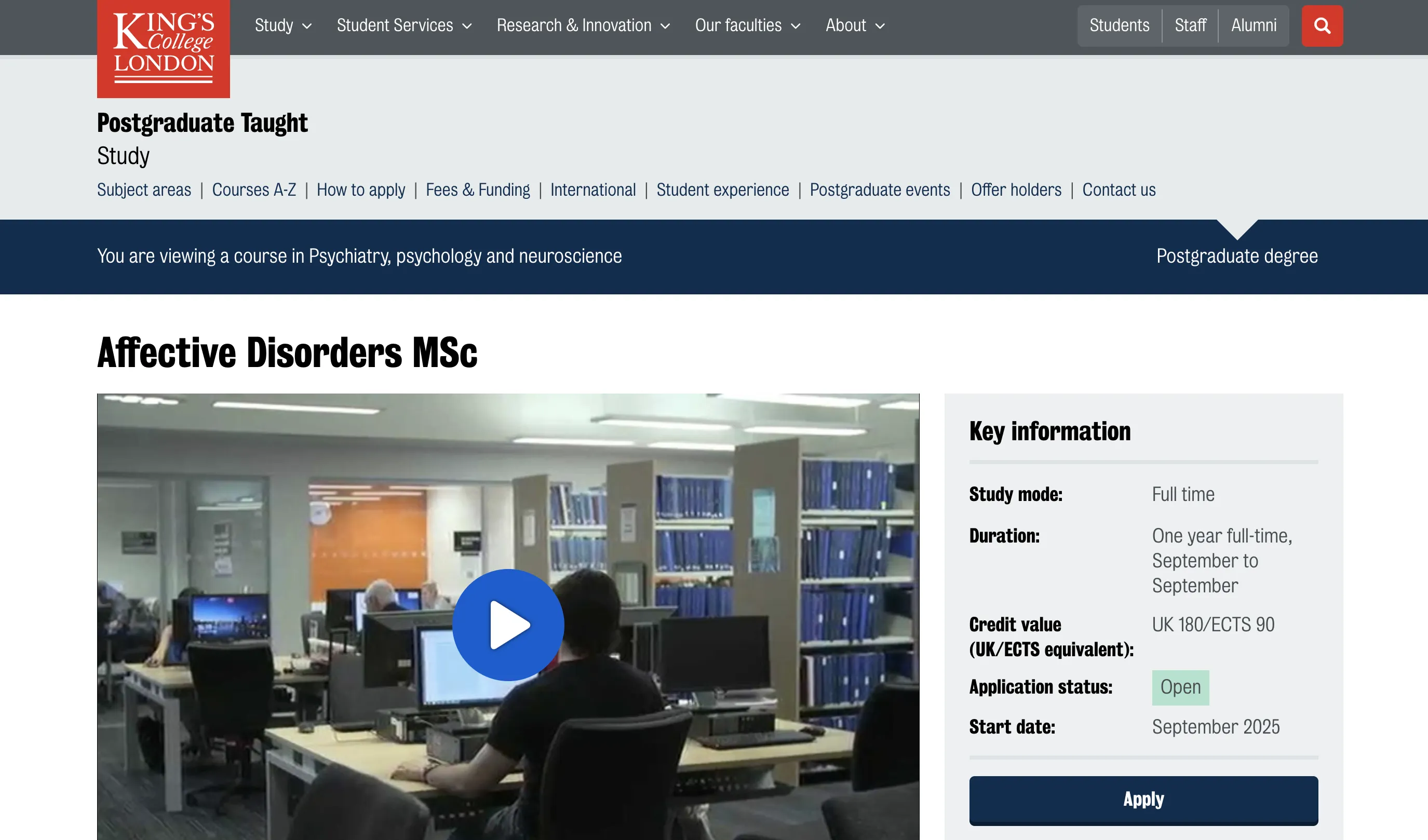
Official website: https://www.kcl.ac.uk/study/postgraduate-taught/courses/affective-disord...
2. Curriculum
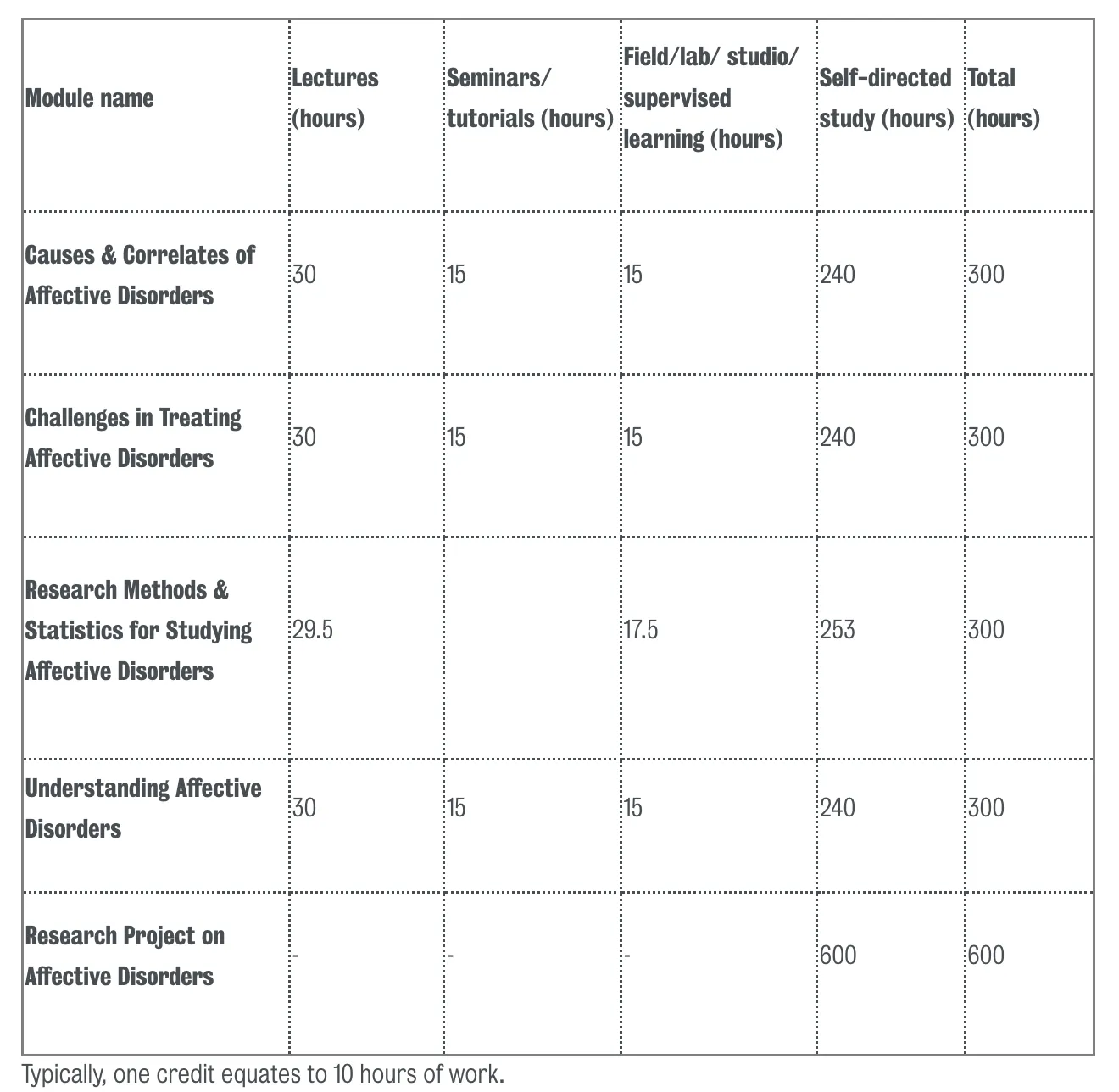
The program is 12 months, full-time, with a total of 180 credits, divided into the following modules:
Core modules (120 credits total):
-
Understanding Affective Disorders (30 credits): Introduces the definition, classification, and assessment of affective disorders.
-
Causes and Correlates of Affective Disorders (30 credits): Examines biological, psychological, and social factors in affective disorders.
-
Challenges in Treating Affective Disorders (30 credits): Analyzes current treatment limitations and future directions.
-
Research Methods & Statistics for Studying Affective Disorders (30 credits): Teaches research design, data analysis, and statistical methods.
Research project (60 credits):
-
Research Project on Affective Disorders: Students independently complete a research topic related to affective disorders under supervision, developing research skills.
3. Application Requirements
Academic requirements:
-
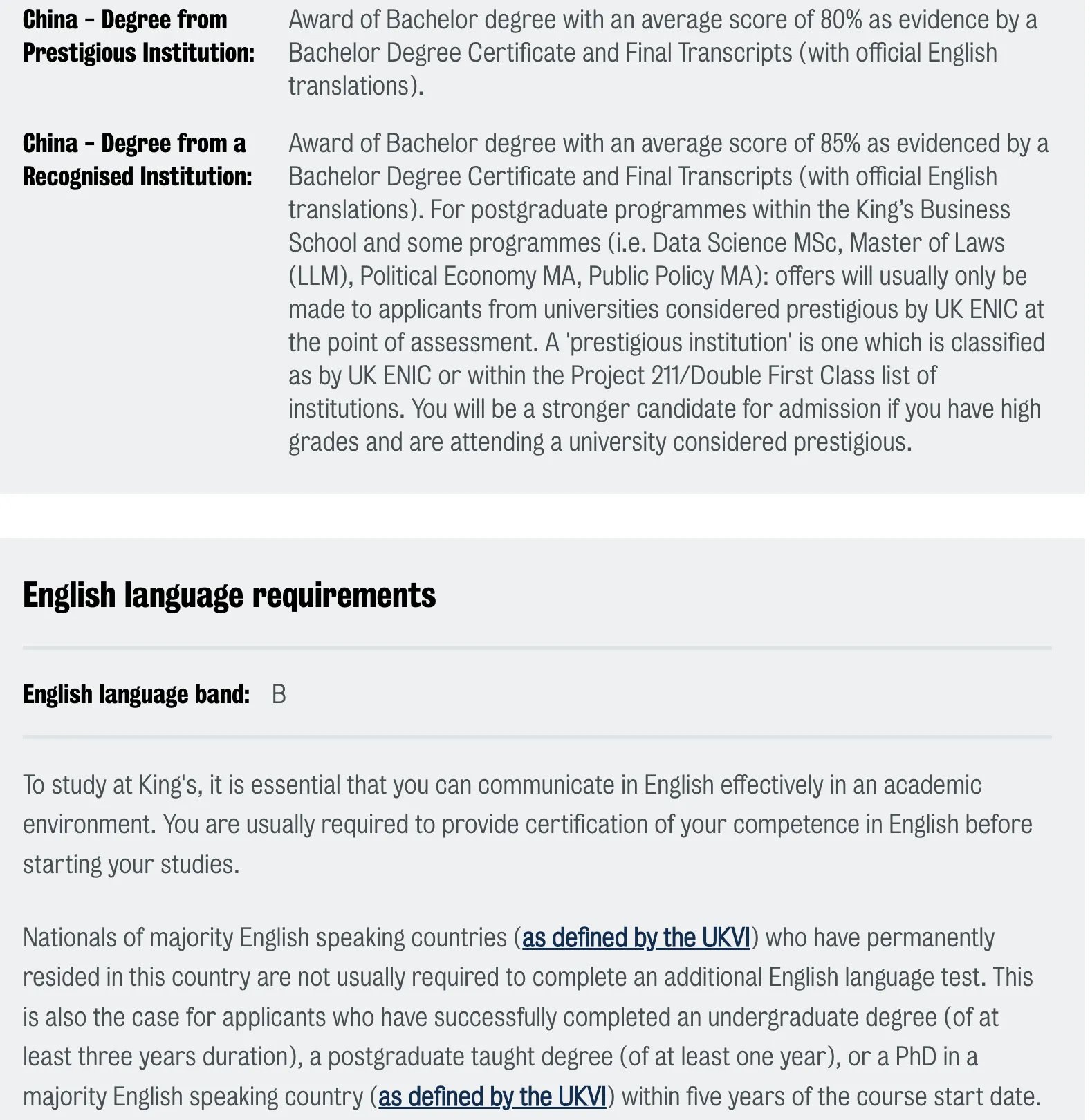
Degree background: Normally a 2:1 honors degree (or overseas equivalent) in a relevant subject, such as psychology, nursing, pharmacy, biomedical sciences, neuroscience, or medicine.
-
Other circumstances: Applicants with a lower degree classification or an unrelated major may be considered if they can provide significant relevant work experience or a relevant postgraduate qualification (e.g., master's or postgraduate diploma).
English language requirements:
Non-native English speakers must provide one of the following English language proficiency proofs (Band B):
-
IELTS: Overall 7.0, with no sub-score below 6.5.
-
TOEFL iBT: Overall 100, with writing at least 25 and other subs at least 23.
-
PTE Academic: Overall 69, with no sub-score below 62.
All English language test scores must be obtained within two years before the course start date.
4. Career Prospects
Graduates of this program will have a solid understanding of the concepts, theories, and practices in affective disorders, and can pursue the following career paths:
-
Clinical mental health practice: Such as clinical psychologist, psychotherapist, mental health counselor, etc.
-
Research and academia: Conducting research on affective disorders at universities, research institutes, or healthcare organizations, or continuing for a Ph.D.
-
Policy-making and public health: Participating in the formulation and implementation of mental health policies in governmental or non-governmental organizations.
-
Pharmaceutical and healthcare industry: Engaging in product development, clinical trials, or marketing in pharmaceutical or medical technology companies.
-
Science communication and publishing: Creating and disseminating mental health-related content in scientific journals, media, or publishing houses.
Some specific roles taken by graduates include: hospital clinical treatment program lead, child mental health practitioner, mental health recovery worker, inpatient ward assistant psychologist, third-sector organization support worker, epidemiology and biostatistics research assistant, etc.
In the 25fall application cycle, CheersYou(清柚教育) students have also received offers for this program. To learn about application timelines and backgrounds, as well as more admission cases and study-abroad application questions, you can add the contact details of a CheersYou(清柚教育) advisor below for more information.