The Master of Public Policy (MPP) program at the University of Toronto's Munk School of Global Affairs & Public Policy is designed to equip students with empirical analysis and policy-making skills. Combining theory and practice, it is ideal for those aiming to advance in the public policy field. Below, we detail the program overview, curriculum, application requirements, and career prospects. For more information and any graduate application questions, you can also scan the QR code below for one-on-one consultation.

1. Program Overview
-
Degree: Master of Public Policy (MPP)
-
Duration: Two years full-time
-
Mode of Instruction: In-person classes at the University of Toronto's main campus
-
Commencement: September each year
The program emphasizes practical and applied policy-making, covering microeconomics, macroeconomics, legal analysis, political science, and quantitative policy analysis methods. Students are also required to complete a three-month paid internship between the first and second years.
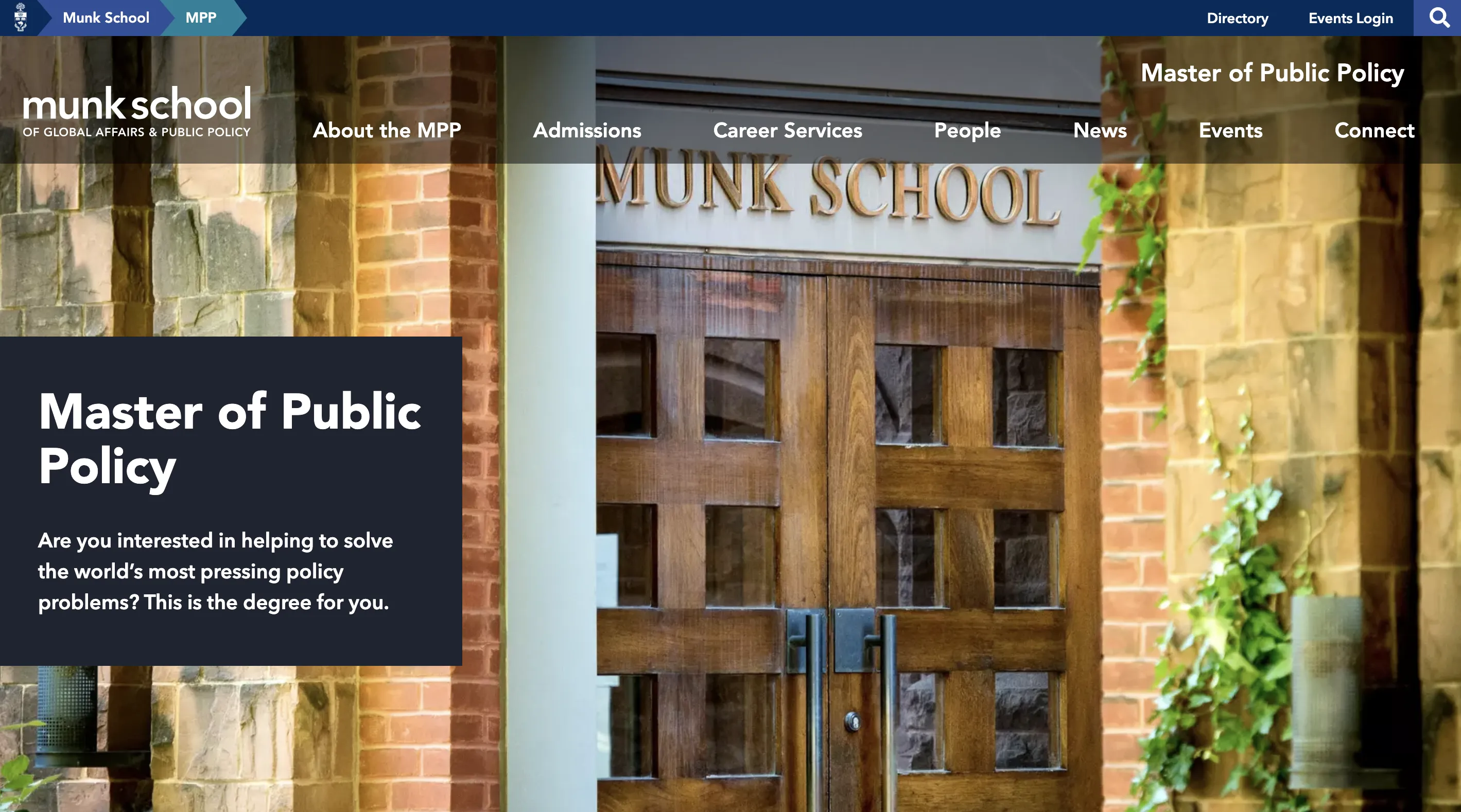
Official Website: https://munkschool.utoronto.ca/mpp
2. Curriculum
The MPP program requires completion of the following courses:
-
Core Courses:
-
Microeconomics
-
Macroeconomics
-
Legal Analysis
-
Political Science
-
Quantitative Policy Analysis Methods
-
-
Elective Courses:
Students can choose five electives based on their interests, covering domestic policy, law, and international policy. Courses may be taken at the Munk School or other graduate departments at the University of Toronto.
-
Internship:
A mandatory three-month paid internship is required between the first and second years. Internship hosts include the Canadian federal public service, Ontario public service, City of Toronto, City of Mississauga, as well as numerous NGOs and think tanks.
-
International Exchange:
In the second year, students can apply to study at partner institutions in Europe and Asia, including the Hertie School of Governance in Berlin, Sciences Po's Paris School of International Affairs in France, the Lee Kuan Yew School of Public Policy in Singapore, and the National Graduate Institute for Public Policy in Japan.
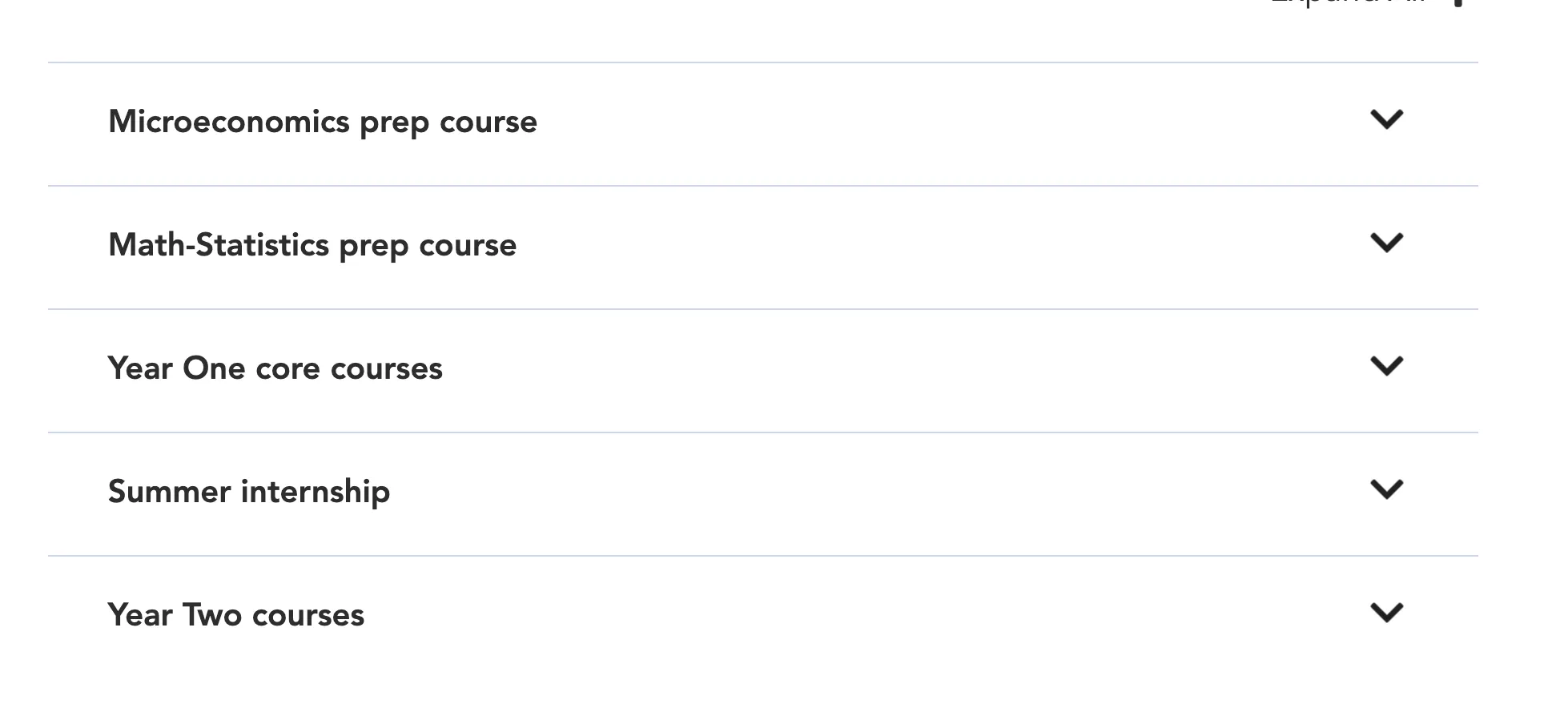
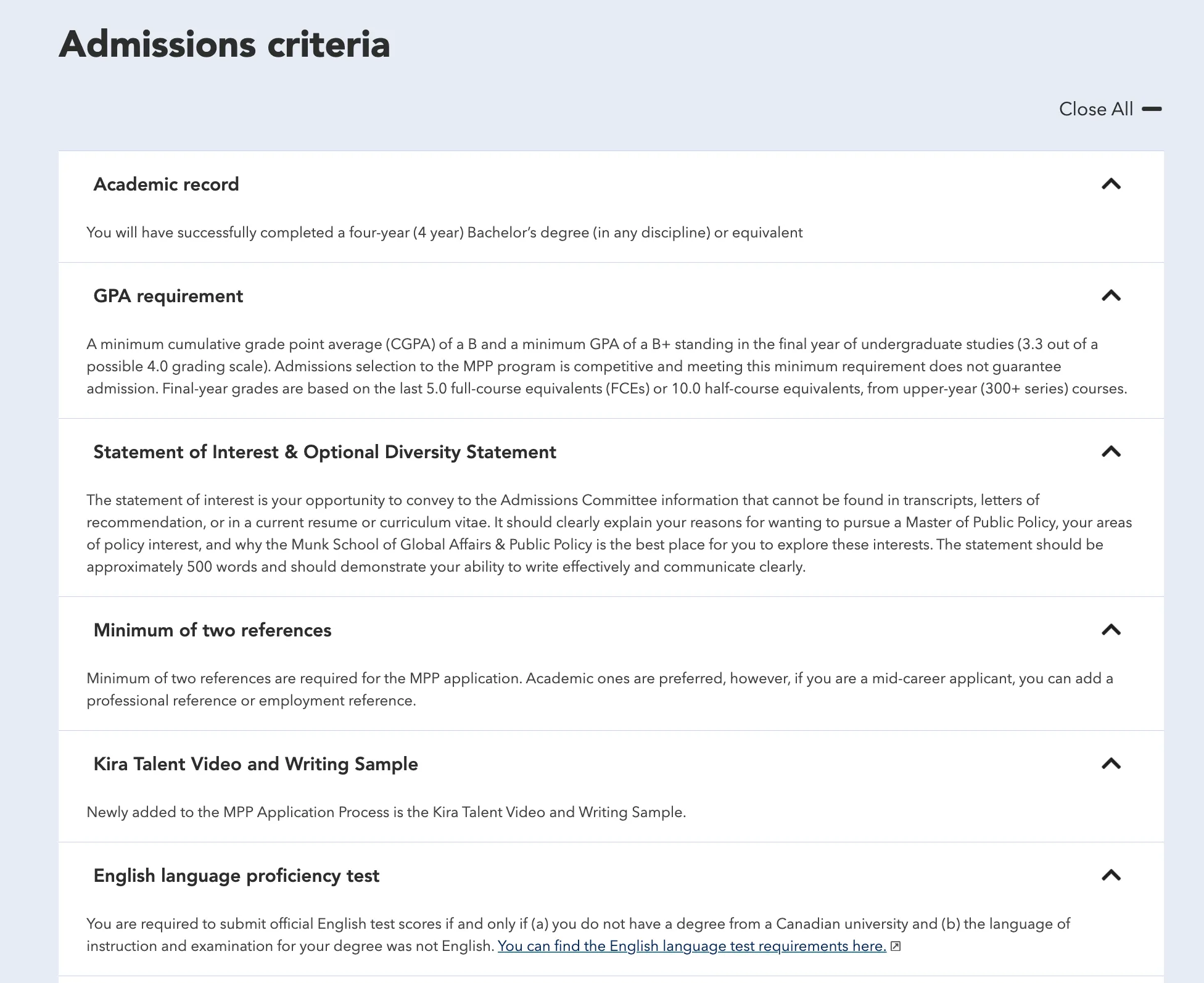
3. Application Requirements
Academic Requirements
Applicants must hold a bachelor's degree from a recognized university with strong academic standing.
English Language Proficiency
Non-native English speakers must provide one of the following:
-
TOEFL iBT: minimum score of 100
-
IELTS: overall band score of at least 7.0
Application Materials
-
Online application form
-
Personal statement
-
Letters of recommendation
-
Resume/CV
-
Transcripts
-
English language proficiency proof
The application deadline is usually in January each year; please refer to the official website for exact dates.
4. Career Prospects
MPP graduates possess strong policy analysis and formulation skills, leading to diverse employment opportunities in the public, private, and nonprofit sectors.
Career Paths
-
Government policy analyst
-
NGO program manager
-
Consulting firm policy advisor
-
International organization policy researcher
Graduates can work at the Canadian federal government, Ontario provincial government, City of Toronto, World Bank, United Nations, and similar institutions.
Salary Levels
Based on public policy salary data in Canada, average annual salaries for related roles are approximately:
-
Policy Analyst: around CAD 70,000 to 90,000
-
Senior Policy Advisor: around CAD 90,000 to 110,000
Actual salaries vary by experience, industry, and organization size.
In the 25fall application cycle, a CheersYou(清柚教育) student received an offer from this program. To learn about application timelines and backgrounds, view more admissions cases, or inquire about graduate study abroad issues, add the contact information of a CheersYou(清柚教育) consultant below.