Recently, a Reddit user shared their resume that successfully landed interview invitations from multiple top tech companies. With a learning mindset, I planned to study this resume closely, but after reading it, I was completely speechless!
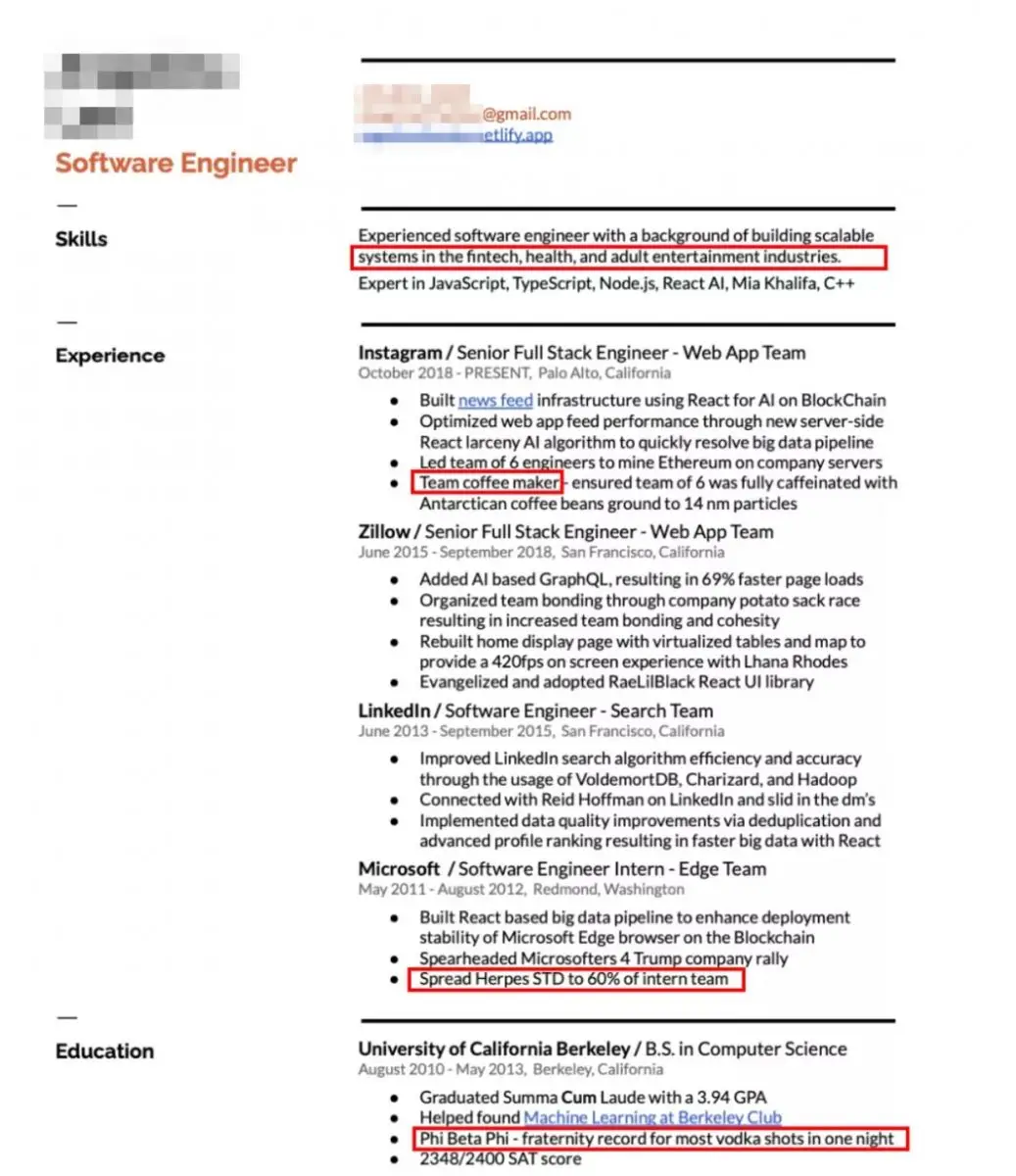
The resume listed various bizarre experiences, such as providing coffee for the team while working at Instagram, setting a record for the most vodka shots consumed in one night at a fraternity, and even claiming extensive experience in the adult entertainment industry, with adult film actresses’ names listed among “skills.”
But none of these topped the most outrageous entry: from 2011 to 2012, she spread STDs to 60% of the interns at Microsoft…
However, this very resume actually received a 90% response rate from Big Tech companies!! Including Notion, Apartment List, Quizlet, Outschool, LiveRamp, Airbnb, Blend, and other well-known firms.
In reality, this resume was just an experiment by that individual to see whether recruiters actually read resumes when selecting candidates. The answer is now pretty obvious.
For many companies, filtering by job-specific keywords is the most efficient screening method. If keywords match, the resume likely passes; as for other prank content, they probably never even saw it.
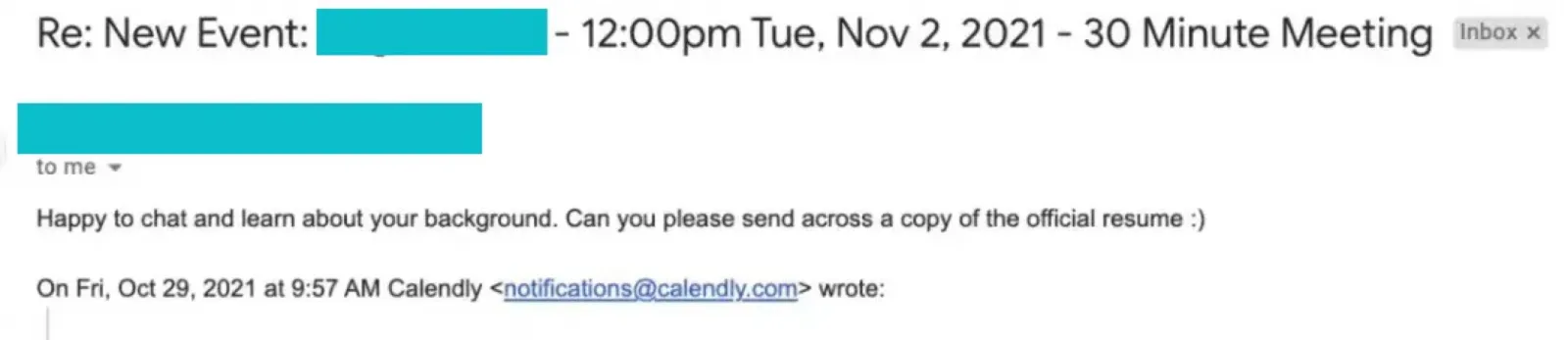
Of course, some recruiters were amused by this bizarre resume and expressed willingness to chat, but asked that a proper resume be sent first :)
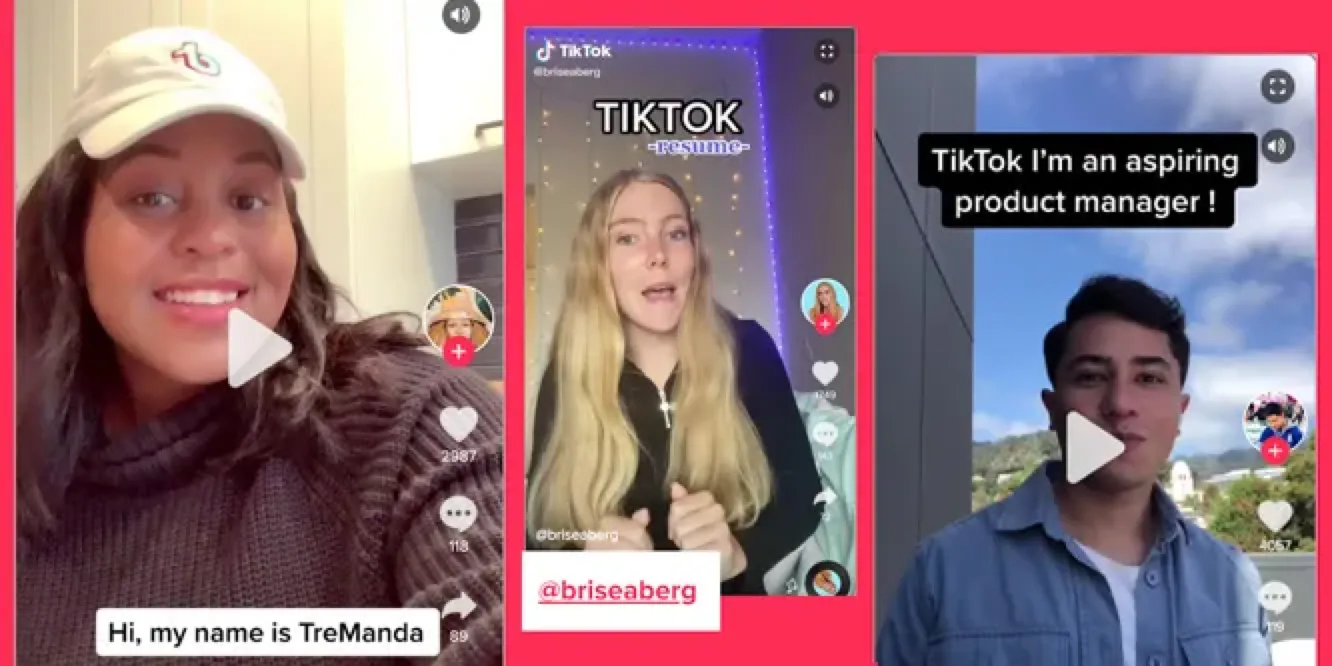
While netizens are playing with resume text, tech giants are also pushing new formats. TikTok recently launched video resumes, encouraging people to showcase their skills and work experience in more authentic and creative ways.
This pilot project for video resumes has also opened doors for Gen Z Americans to companies like Shopify, Chipotle, Target, WWE, Alo Yoga, and others.
The resume battle in the job market is getting more and more intense. Setting aside the humor and entertainment, we can see that personalized resumes with distinctive highlights remain a winning weapon.
Looking at study-abroad applications, what is the situation with resumes in this context?
Resume vs CV in Study-Abroad Applications
1. Resume
This is the most common type of personal resume, usually no more than one page. It generally includes academic background, work experience, campus activities, skills and certifications, etc., with the aim of showing the admissions officer your fit with the program.
2. CV (Curriculum Vitae)
A CV, or curriculum vitae, is typically longer than a resume and places more emphasis on academic achievements. It broadly summarizes your educational background, awards, research capabilities, etc., and is mostly used when applying for academic and research positions.
For current study-abroad applications, the difference between a CV and a Resume is actually not significant. Because you certainly can’t produce a lengthy CV like a university professor would.
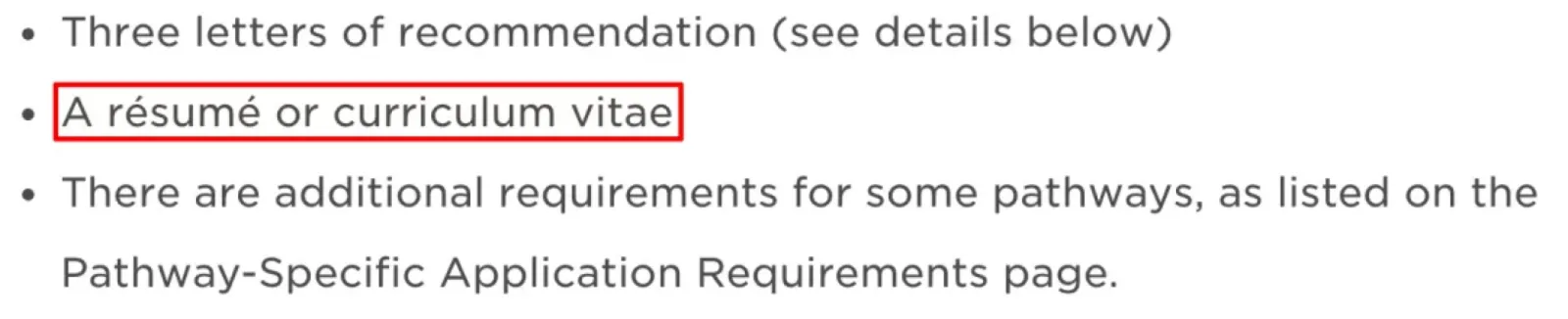
Many programs explicitly state “Resumé or Curriculum Vitae” in their application requirements. So students applying to graduate school generally just need to prepare one standard resume.
However, crafting such a customized resume that showcases an applicant’s qualifications as much as possible within a short format is no easy task.
Common Resume Mistakes in Study-Abroad Applications
1. Is more experience always better?
Whether applying to schools or jobs, it’s important to include as much information aligned with your target field as possible. But everyone should be clear: not every experience belongs on your resume.
For work experience, relevance > prestige > quantity; for volunteer activities, prestige is more important. For example, Columbia University’s Master of Social Work program explicitly requires deeply engaged experience related to social work. In such cases, a volunteer role at the United Nations carries more weight than serving as a local community volunteer, and is more likely to be recognized by admissions officers.

2. Is more detail always better?
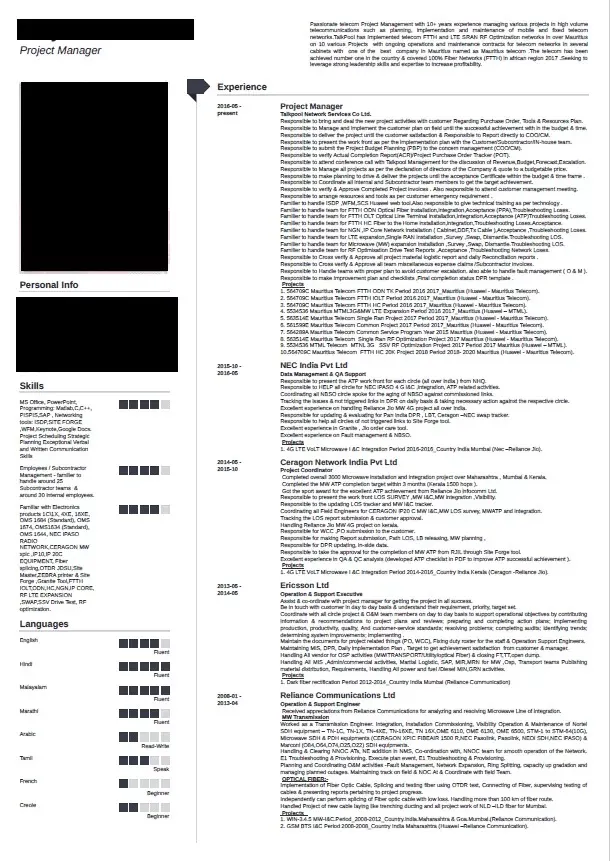
Using bullet points to expand on experiences is a good thing, as it can highlight different capabilities. But remember not to treat your resume like a personal statement. If the details are too numerous and trivial, it will only make the admissions officer think you merely scratched the surface of those projects without deep involvement or contributions.
For describing experience details, generally follow the Purpose–Action–Result framework: why it was done, how it was done, and what was achieved (with quantified data).
An overly detailed resume
3. Can you just write one resume?
“One resume for all applications” is a common misconception among many applicants. When applying to different programs, you should tailor your resume accordingly.
For instance, including a part-time job at Starbucks is useless for a Statistics program application. Conversely, for someone applying to a Film program, experience as a video blogger is quite valuable.
Different schools and programs have different requirements; your resume needs to have a clear focus. Placing the relevant background experiences into the appropriate resume is the right approach.
Explaining a Resume with an MIT Template
Many university websites actually provide resume guides. Let’s use MIT as an example to provide some guidance.
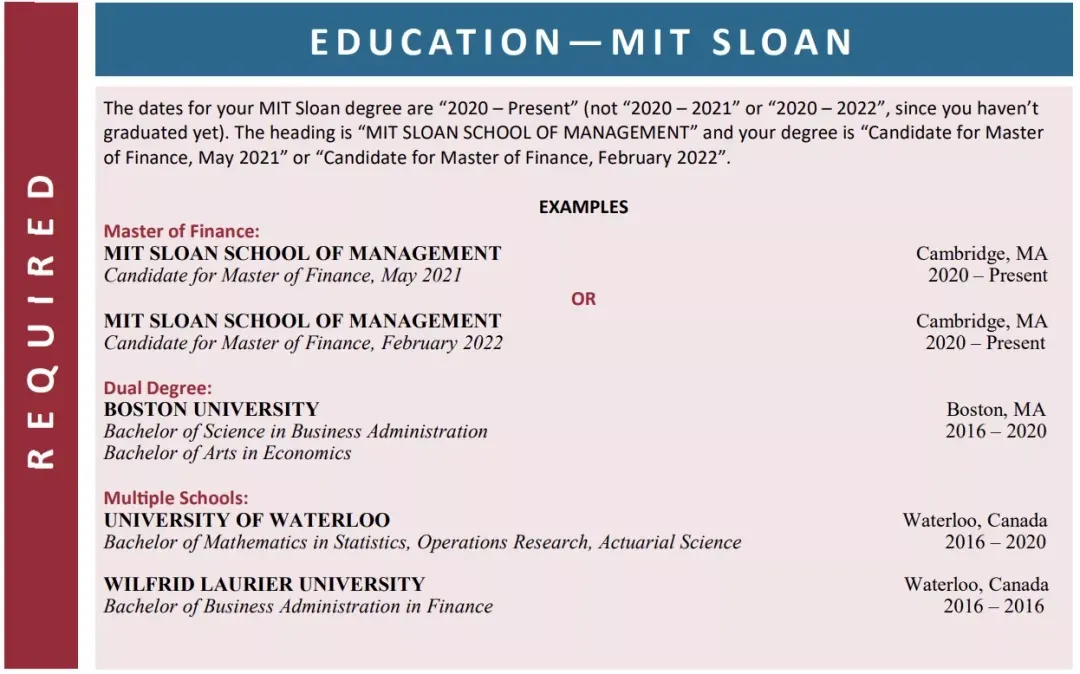
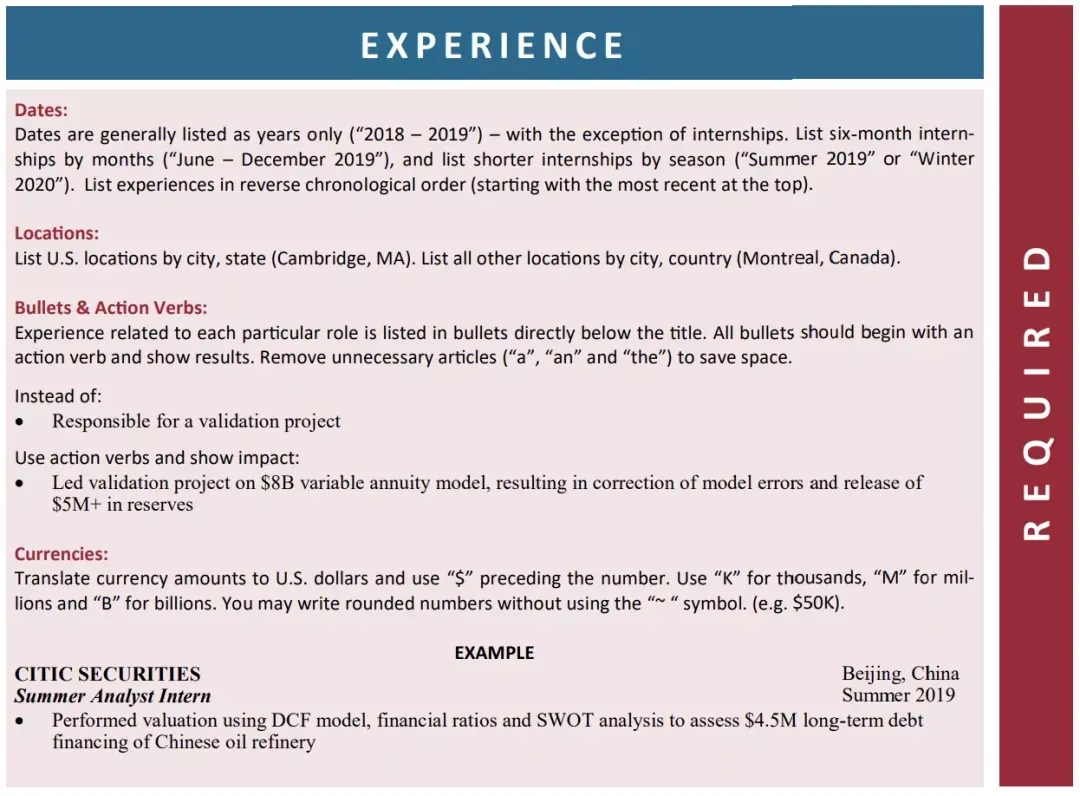
It specifically mentions formatting conventions for dates, locations, currencies, and the importance of bullets and action verbs. For example, “led validation project on $8B variable annuity model” demonstrates your professional ability much more clearly than “responsible for a validation project.”
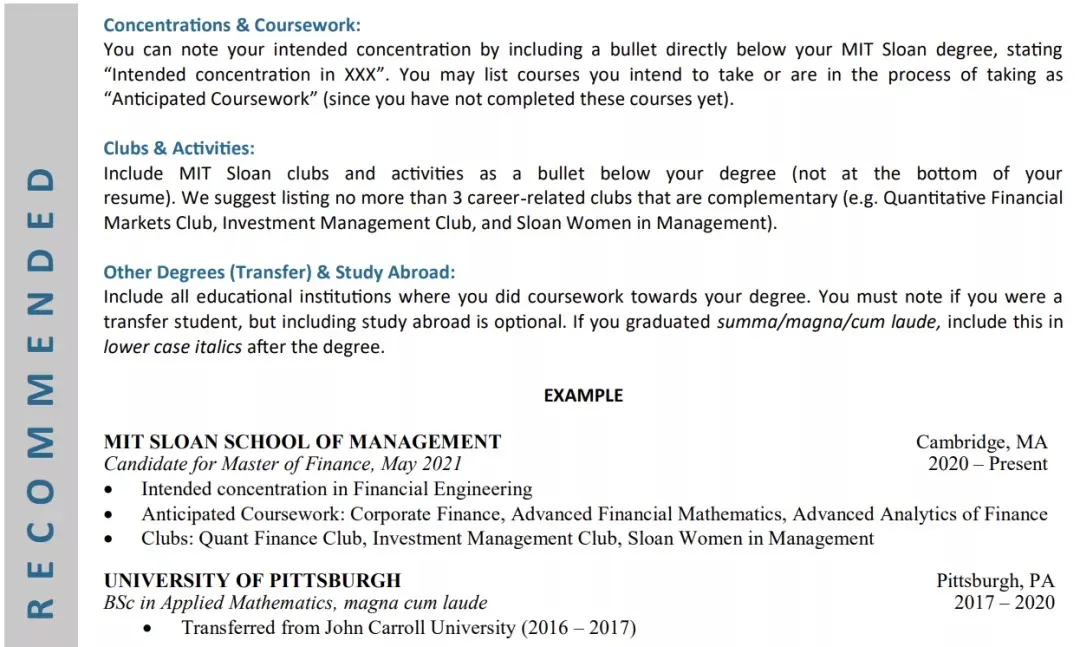
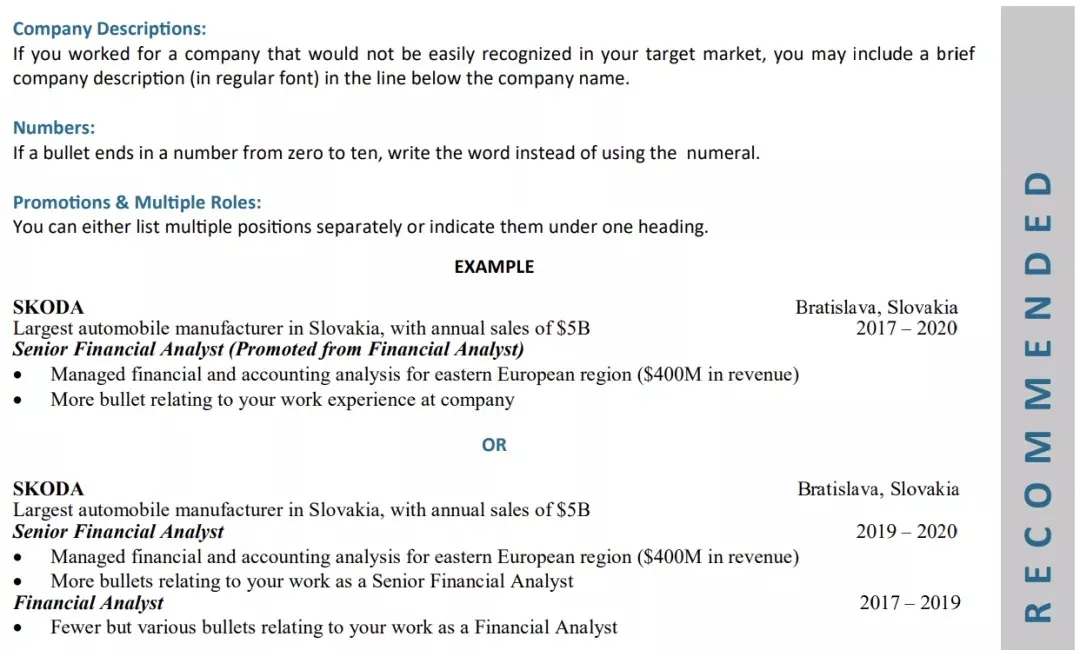
There are detailed requirements for describing major coursework, extracurricular activities, and company information.
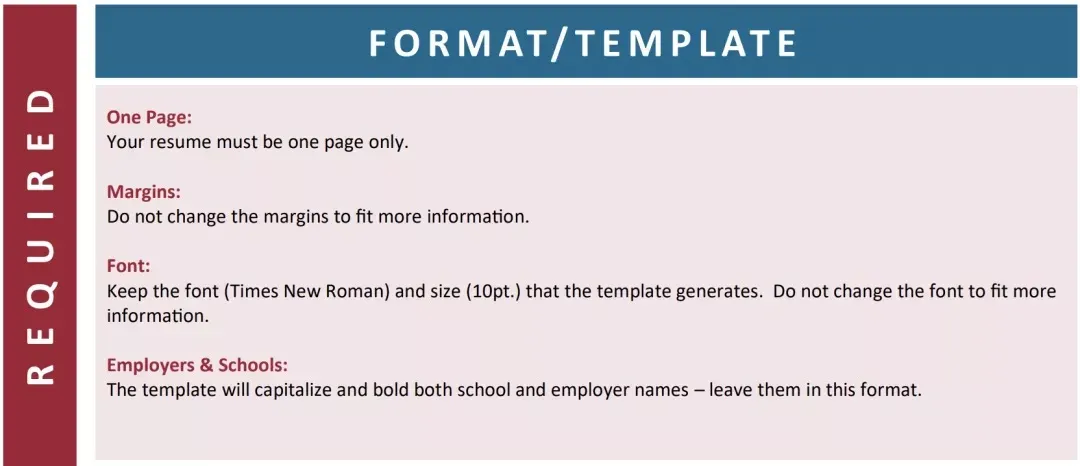
Finally, formatting issues are mentioned, such as keeping the resume to one page, not altering margins, font type and size, and the use of bold and capitalization for proper nouns—all of which require attention.
Although a resume describes your own life experiences, truly crafting one that makes an admissions officer’s eyes light up requires not only enriching your experiences but also mastering certain resume-writing skills to better demonstrate your qualifications.
A resume is a personal business card, and the value of this card needs to be carefully created and polished by yourself.
Starting to build your resume early brings only benefits. I hope these tips help you. I also strongly encourage students to make use of school resources, such as career centers, to get relevant assistance.